


JohnMo
-
Posts
13308 -
Joined
-
Last visited
-
Days Won
200
Everything posted by JohnMo
-
 ESBE make a few versions, I got an ESBE CUA110, super cheap of eBay and the three port valve and actuator. Just run Salus auto balance actuators on each loop, always powered on to give a fixed dT. Removed all the room thermostats as they just added nothing to control of room temps. Just have a single thermostat in the hall.
 -
Sort of, but it runs in the background weather compensated. Heat pumps cycle at low loads, so the average flow temp drops anyway. So although mixer is trying to control 28,if the flow is below 28 because it on an off cycle it gets what it gets. So mean flow temp through the UFH drops. The ESBE mixer has two set points, T and T2. So have a house thermostat set at 20, above 20 the ESBE runs at T and targets 28 deg, if the house drops below 20 (sub zero temps), it goes to T2, which is set to 36, so it can take whatever the flow temp from the HP which is based on WC curve. The WC is set for the fan coil.
-
That's a lot of pipe and a lot of loops. My 6kW heat pump circulation pump has a duty point 16L/min, which my 7 loops and fan coil use the rate up. Your issue will be having the flow rate available to satisfy lots of loops and radiators. Mixing down from 35 to 26 may actually get you out of hole, as there will be lots of water recycling within the UFH system instead of all going through the heat pump, which I think would start to cause issues requiring a buffer and additional pumps. Defrost don't seem to an issue, with a mixer, because it takes the heat required from the return water, I believe.
-
Really doesn't make a huge difference once flow temps get below 30. I am on 300mm centres and have the flow set at 28 in to the UFH via a mixer. If I was at 100mm centres I think my flow would have been 26. The other issue not talked about is you cannot get the heat pump to run reliably below 30 anyway with UFH (or I can't). Reason is the heat pump does cycle on off at low loads, it requires around 8 degree temp difference between target and return temp to initiate a restart. House is at 20.5 degs, floor is slightly warmer. So if I run the heat pump at 28, I need the return flow at below 20, which is cooler than the floor and cannot happen. First time I tried, heat pump ran for an hour, got to target temp and stopped, then sat idle for the next 12 hrs as the floor was never going to drop to 20 degs or below as the house was warmer than that. So I run a slightly elevated temperature and mix down to 28. Or you batch charge the floor at an increased temperature and use as a storage heater.
-
It would be unusual to have a mixed system without a mixer on the UFH. Get a suitable mixer for for low flow temps, ESBE electronic or IVAR low temp mixer and you can flow any temps you like elsewhere. Something like the ESBE mixing doesn't need any mixing so for me works better. I flow between 30 and 36 to a fan coil and 28 into the floor without issue using the ESBE. You zero need for a buffer. If you are well insulated your upstairs rads may never come on anyway.
-
It is an issue, no ideal of a practical way to fix - your stair will be sucking heat away from the house for ever more.
-
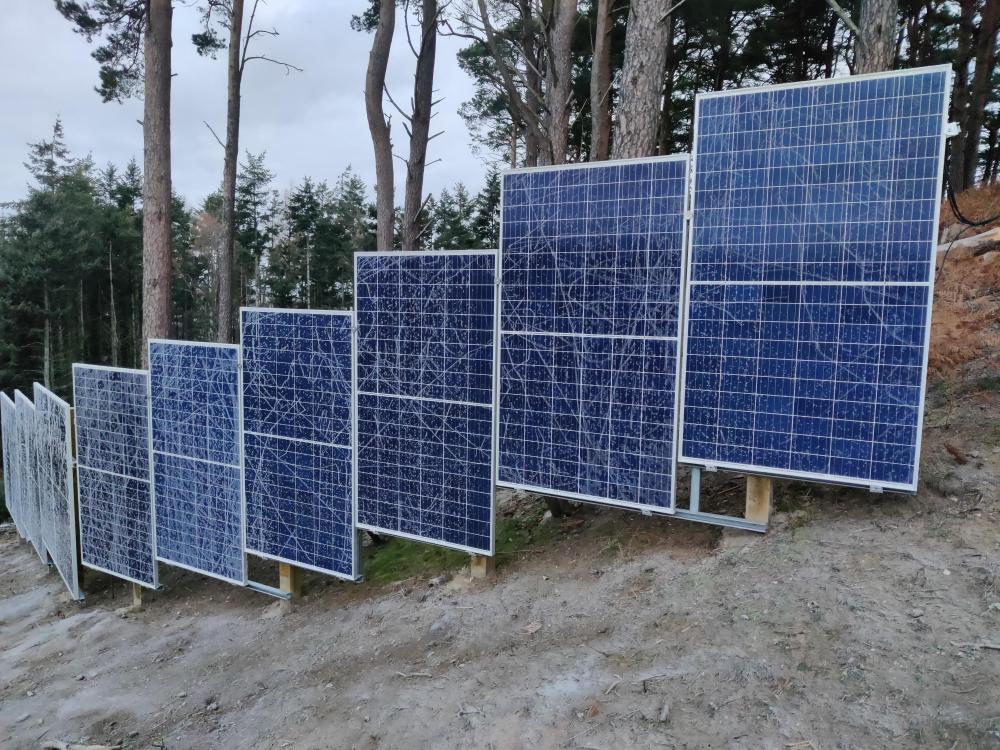
Really wouldn't bother doing movable panels, the complications aren't worth the effort. Just decide what you want out the system. I wanted decent winter performance, not really bothered about loads of excess generation, I can't sell in the summer. So I went vertical panels, they are good in winter (if the sun's out) and pretty good in summer.
-
Won't worry over it, just run at a lower temperature - problem fixed.
-
As I said if the oscillating is on the house side the ASHP circulation pump is not related to the issue, the buffer hydraulically separates the two sides of the system. Why not switch off all the pumps on the house side of the buffer and revert the ASHP back to it's original settings. That should leave one pump running (?) and nothing else. If the issue goes away or remains, you know which side of the buffer is the issue is coming from.
-
Are you sure you don't have a mid point valve/actuator instead of a diverter?
-
@rhymecheat You have two sides of the buffer, each side has hydraulic seperation. If you have oscillations of the house side of the buffer it's not related to the ASHP circulation pump, only the house side pumps. Switch you UFH off, does the oscillating stop?
-
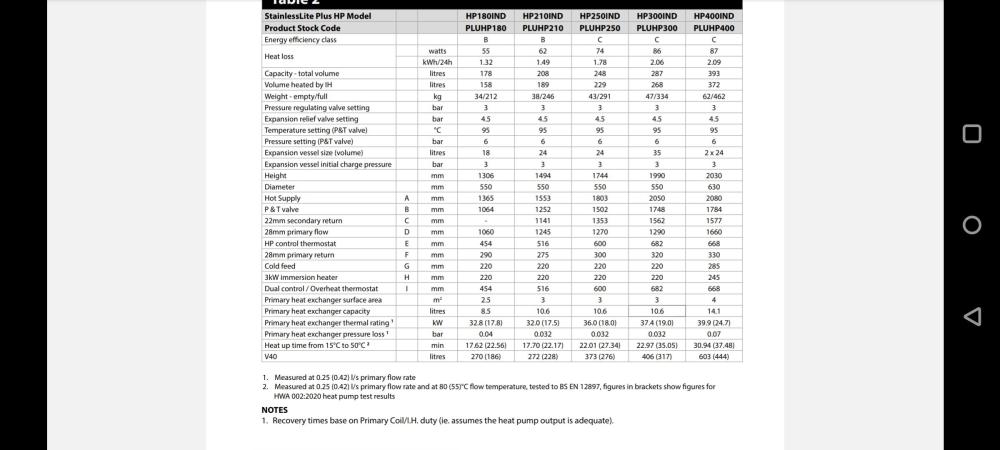
Gledhill data as I had on the computer for heat pump cylinder, reheat time given for two flow temps So for a 210L cylinder at 80 degree flow, reheat time is 17 mins or with 55 flow 17 mins. A standard boiler cylinder from Gledhill is 32 mins reheat time at 80 degree flow.
-
ASHP with RHI - Restrictions on Other Heat Sources?
JohnMo replied to Barnacles's topic in Air Source Heat Pumps (ASHP)
No ideas to your questions, but the way you run the ASHP has a huge impact on the energy consumption and costs, small changes seem to go a long way. Not letting your house get too cool for one, then just setting the flow temp to drip feeds to keep with the heat losses. -
Lot of pumps. Change to constant speed, lowest speed you can get away with and not have flow drop of the flow meters. If you only have UFH the pump after the buffer is possibly not needed as the UFH will draw from the buffer itself. One oscillation time period, it will either oscillate or or won't.
-
Definitely sounds like you have two pumps not hydraulically separated and both set to modulate. Both end up chasing their tails. Would suggest the one controlled by the heat pump is left in modulation mode the other (UFH) set to a fix duty point at the lowest speed you can. The UFH dT is set via flow meter on each loop, not by pump speed variation. If you want a set dT install Salus self balancing actuators, but leave the UFH pump set to a fixed speed.
-
Do yourself a favour and go onto heat geek site and read up on legionnaires, if you consume all your hot water daily there is zero point doing the cycle. If it's vented cylinder you are going to have bigger losses as you have a vertical pipe out the top of the cylinder. Insulate with 25mm wall thickness foam. As a side note - Insulation with gaps isn't any good. So make sure the mitred ends match up with the next piece and tape all the joints nice and tight together, along the length and at the corners - use electric insulating tape. Take the insulation a good couple of meters away from the cylinder. Go to a plumbers merchants they do 2m lengths. Use 19 or 25mm wall thickness at valves or compression joints use 35x9 insulation.
-
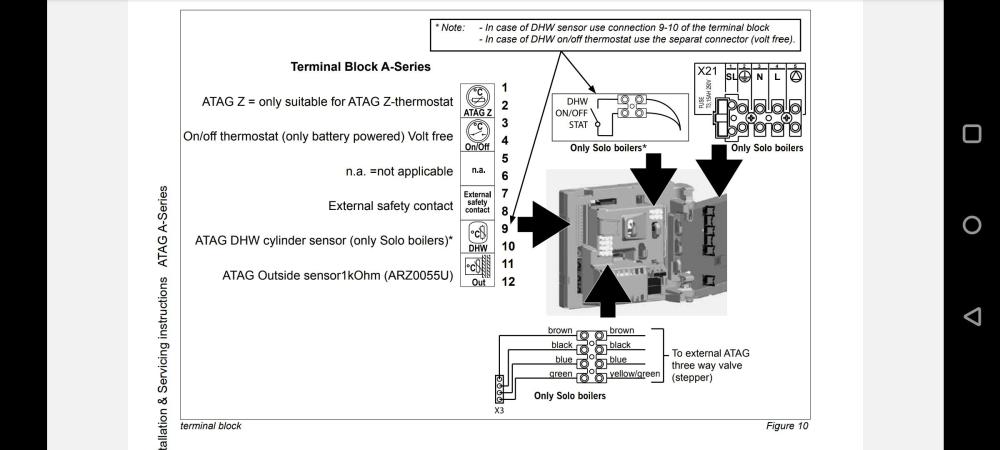
Look at the cylinder datasheet it should have that information. You need to look at the boiler manual not the cylinder manual. X plan uses a 3 port diverter, S and Y use either mid point valve and a two port or two 2 ports valves. Cheap boilers maybe don't do X plan, this is an Intergas wiring for X plan. X-Plan-diagram-Rapid-HRE-Eco-RF-low-voltage-option-V1.pdf And an Atag boiler all the connections are within the boiler Last thing you want to do is run hot water in 28mm, as it will never get to the taps. Mine comes out the top of the cylinder in 22mm, goes into a tee and is reduced to 15mm (Hep2O), one side goes to the kitchen and the other side to a manifold and then to shower room, 2x ensuites and a utility room.
-
Kitchen & Static Pressure
JohnMo replied to rjhorton's topic in Mechanical Ventilation with Heat Recovery (MVHR)
Pressure drop calculation takes the worst case duct, not all the ducts added together. So when calculating all the shorter lengths you can ignore, the longer lengths you calculate and take the worst one - that is is your pressure drop. So you do during commissioning the longest run the terminal stays fully open and you adjust the shorter duct pressure drops with the adjustable terminal to get the flow you need. -
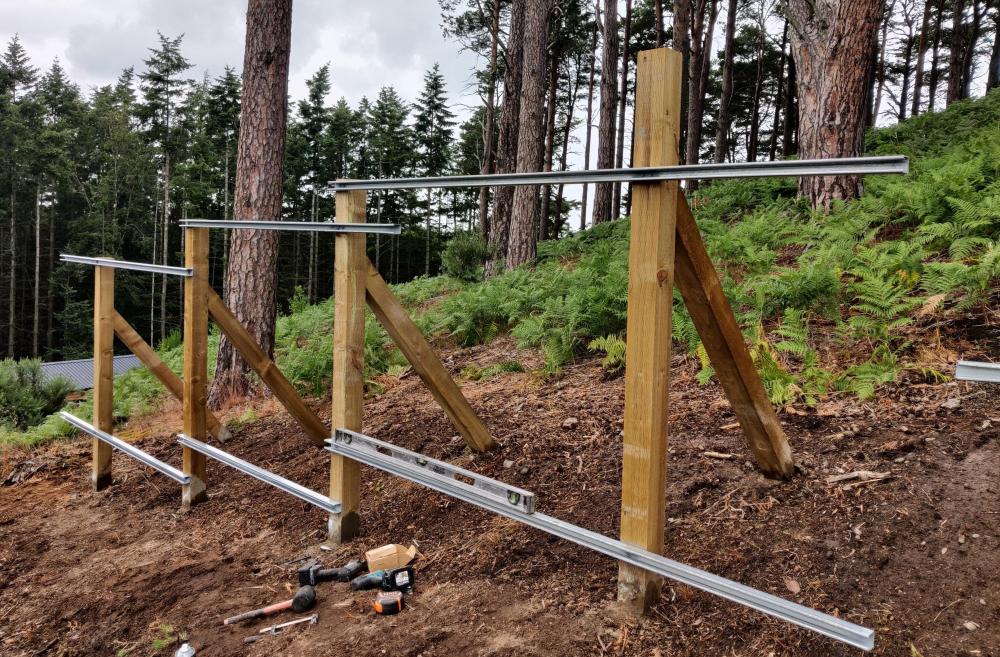
I used 4" posts with a 45 deg support on each post. All post-creted in place. Then unistrut horizontal to mount the panels to. Had 70 mph winds the other day and few other storms - no issues so far.
-
Have a 45 degree array on house also, but it is generally generating 1/3 or less the vertical generation, at this time of year.
-
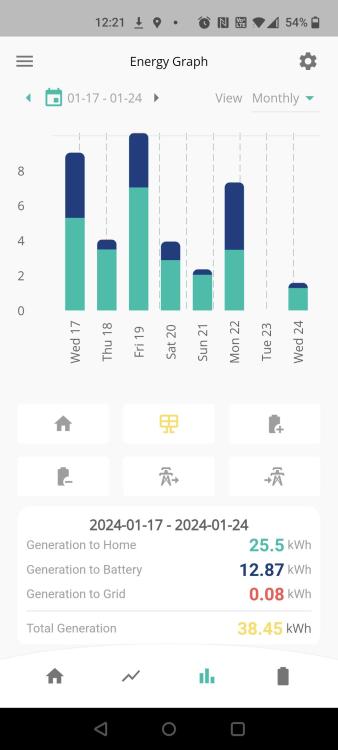
Last 7 days generation, generation to grid actually goes into hot water. On cold frosty morning
-
Did 9kWh the other day from my vertical panels. Well pleased. Was just generating 3.2kW between the clouds, but wife has dishwasher and washing machine on, so that's all disappearing very quickly.
-
Forgot to mention at the moment we are doing hot water via immersion during cheap rate as a trial for a few days, while I get the weather compensation curve setup. Found there is quite a delay restarting CH mode after DHW mode, while everything cools down from 50+ to low 20s to enable restarting CH mode.
-
We also have UFH in the main part of the house, the fan coil is in a summer house we always keep hot. UFH used as a big buffer. I would normally batch charge the floor in the house on cheap rate, but doing that we had issues with the fan coil and heat pump short cycling during the day, fan coil stopped heating effectively. So have reset back to weather compensation running 24/7. For this to work we have set the WC to match the fan coil (10 degs OAT 31, -6 OAT 36) and use an electronic ESBE mixer for the UFH in the house. ESBE mixer can run two different temperatures (T and T2) via a volt free contact. Our house thermostat moves the control point between T and T2, depending if the house is above or below 20 degs. T is set for a fixed flow temperature of 28 deg and T2 set to 36 so it takes whatever flow temp is available from the heat pump. So above 20 in house, fixed flow temp, below 20 variable flow temp (based WC curve) Today it's 7 degs OAT, flow temp is about 31.5 from ASHP, house mixer about 80 to 90% open flowing 28 degs, heat pump is cycling 30 mins on, 30 mins off. During an off cycle the flow temperature drops to about 23 degs before the heat pump restarts, so mean temperature is just below 30.
-
Oil boiler, stick in a thermal store, draw UFH from that via pump and mixer. You can have as many or few zones as you wish. But smart controls with UFH are a waste of money. So keep it simple. Oil boiler happy with a thermal store, as it can run for as long as needed and will nit short cycle. But the thermal store needs to larger than UVC, also get one with a decent size DHW coil or heat exchanger, so you don't need to run the TS really hot.




