
JohnMo
-
Posts
12470 -
Joined
-
Last visited
-
Days Won
179
Everything posted by JohnMo
-

Weather Compensation and Defrosting
JohnMo replied to ReedRichards's topic in Air Source Heat Pumps (ASHP)
Why not do away with the conventional UFH mixer and just use a 3 port mixer with actuator to give you full control of the flow temperature to the floor. A normal UFH mixer always mixes a percentage of return water into the hot water. A 3 port mixer doesn't. Reuse the pump and top adapter piece to the manifold. Instead of running the pump 24/7 could a simple room thermostat be used to give a feedback loop? Or run a pump sniffer cycle for 10 mins an hour. -
Weather Compensation and Defrosting
JohnMo replied to ReedRichards's topic in Air Source Heat Pumps (ASHP)
Just so you are using the correct information - Condensation point is measured on the return water temperature ,not the flow water temp. -
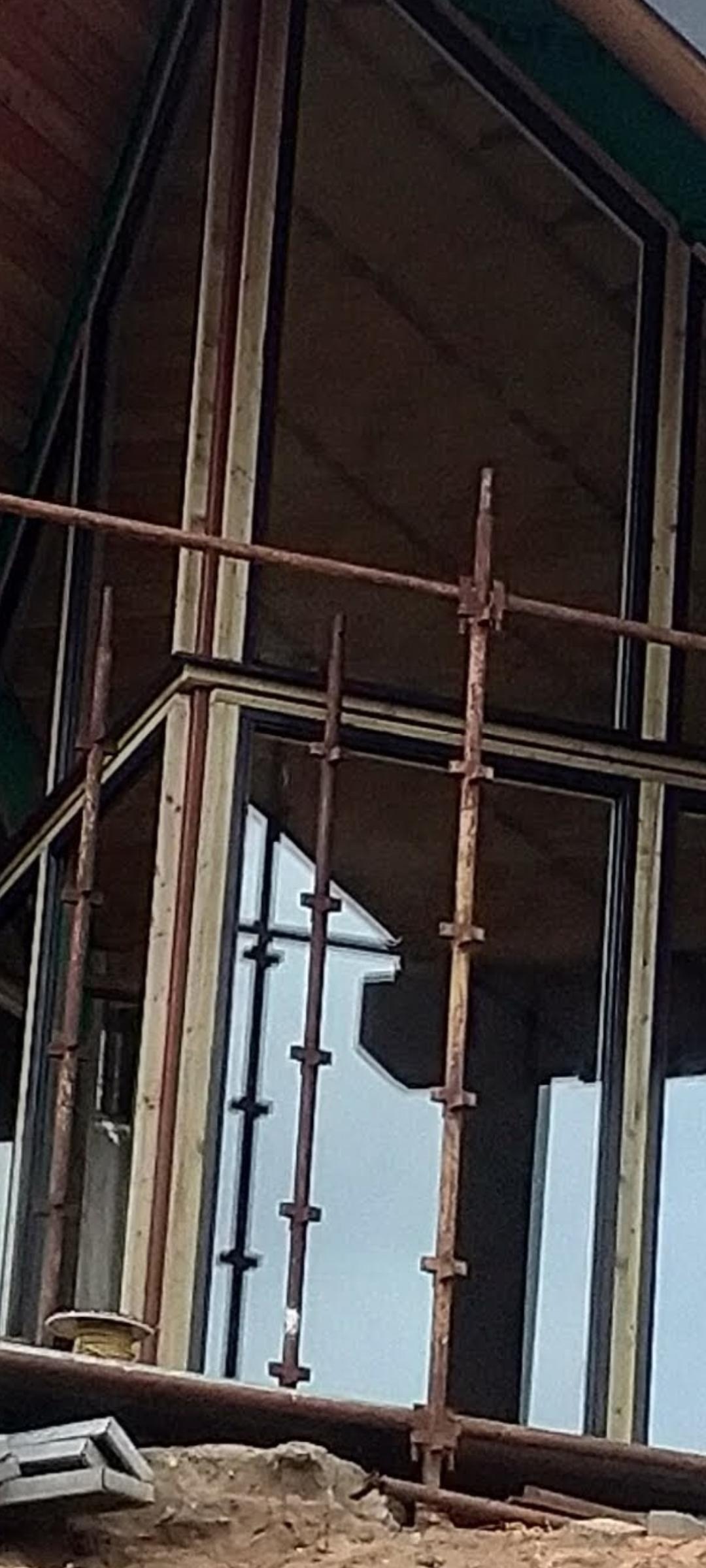
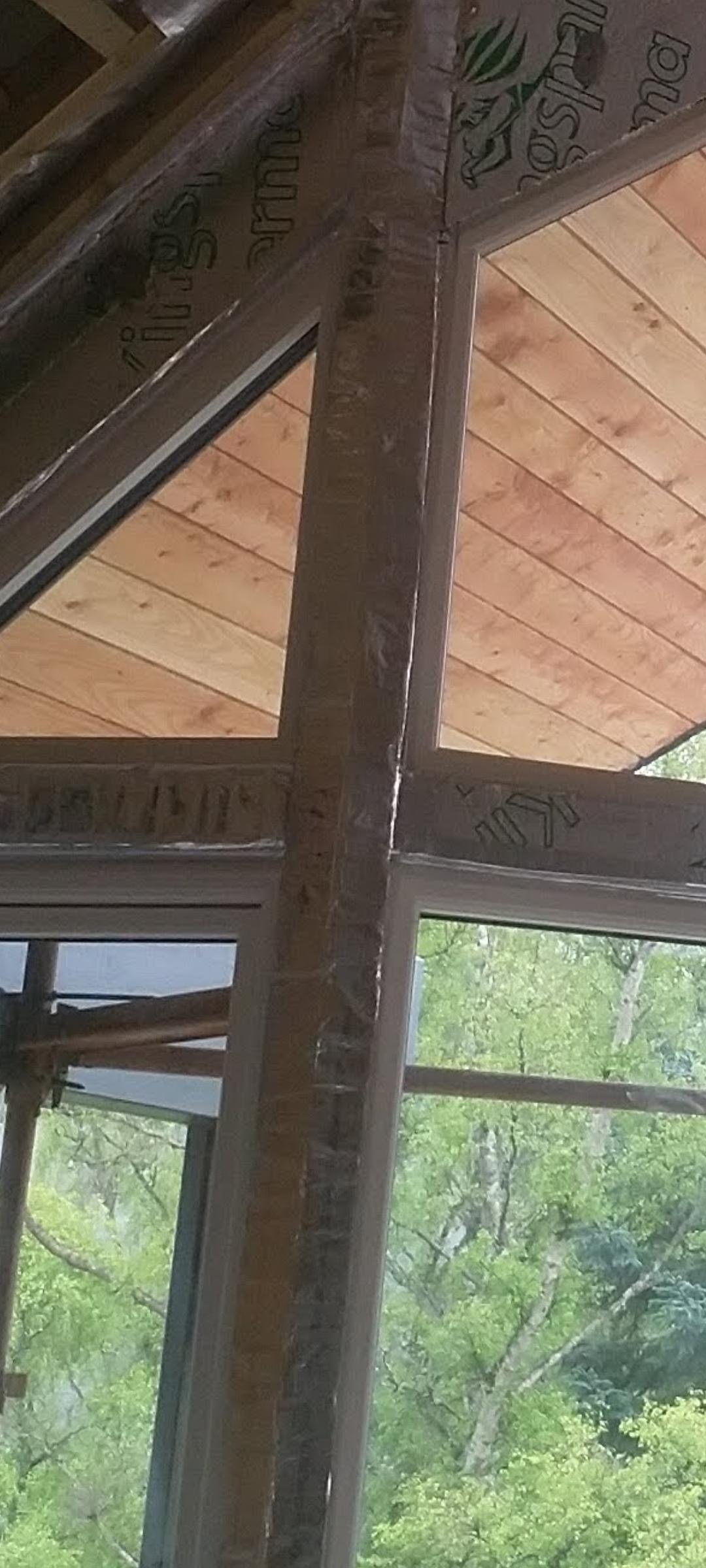
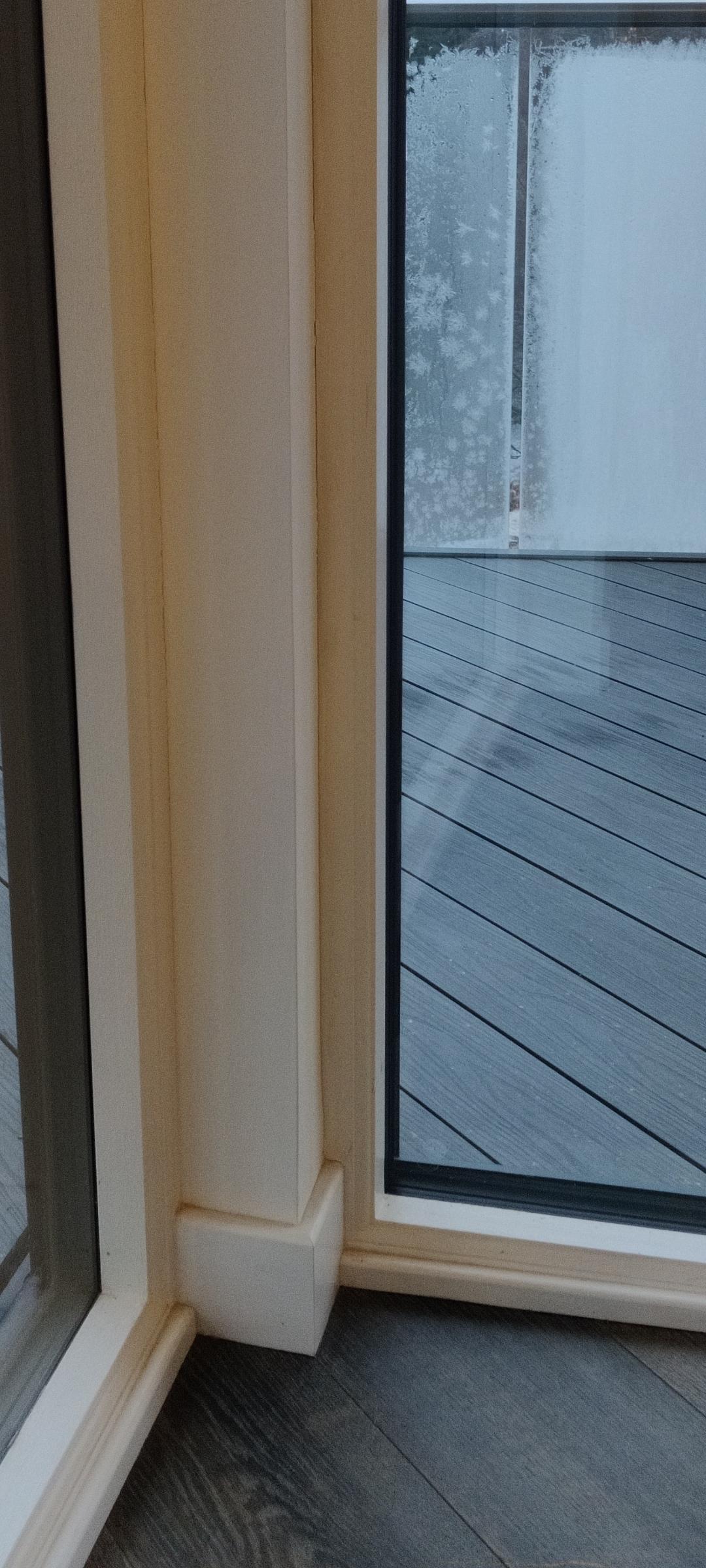
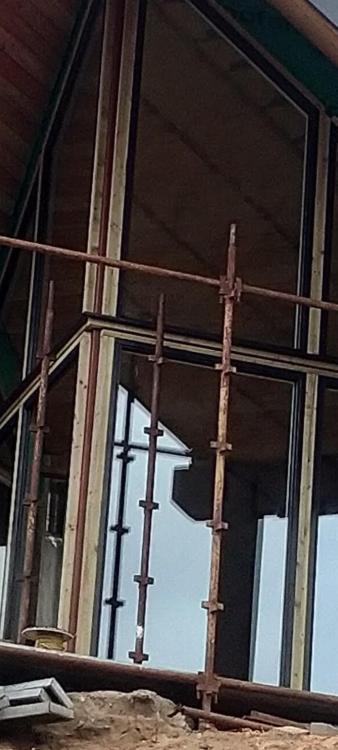
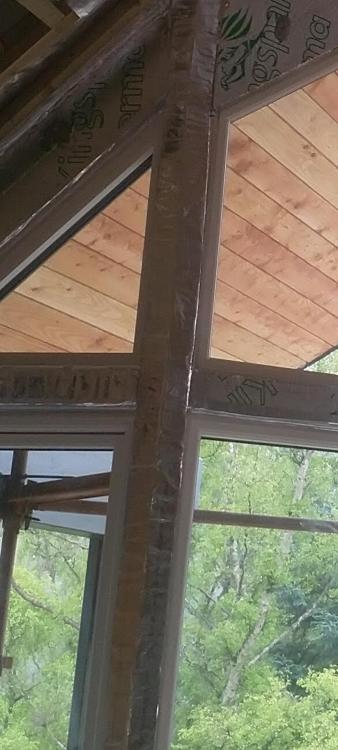
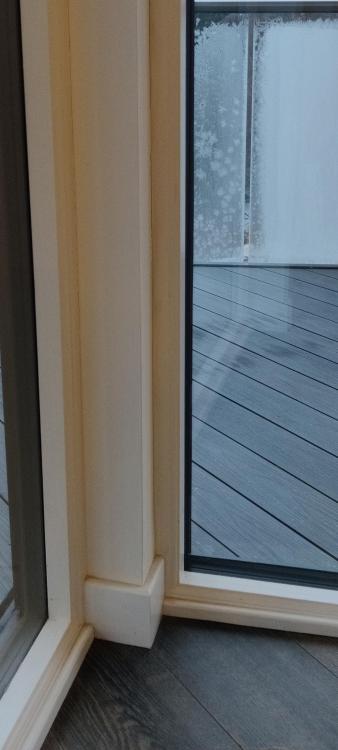
We used a combination of PIR and Aerogel. We put wood battens on the outside of the steels and the windows sit inside the wood - not the steel. If you look up the thermal resistance of various materials and the thickness you are using you can build the whole window structure without cold bridges. Some screenshots first outside view, all the gaps between the wood was later foam filled, steel is 90mm square. Inside, mostly 25mm PIR. Fully taped. Couple of years later
-
Weather Compensation and Defrosting
JohnMo replied to ReedRichards's topic in Air Source Heat Pumps (ASHP)
Isn't defrost a given, when you get down to about 4 deg? So why keep moving settings, once you have made a change isn't it just left where it is for the next time? -
Lessons learned from last ready - getting ready for cold snap
JohnMo replied to Conor's topic in Air Source Heat Pumps (ASHP)
I have managed to use 47kWh all in today (6kwh from solar), but was messing with thermostats and managed to leave one in manual: so have had the heat pump running for about 6 hrs more than planned, without realising. But currently -7 outside and due to drop to -9 in the next hour or so. But floor is well charged with heat. -
Have continued this on a new thread
-
Possibly not - a normal condition all heat pumps do it. If you want to compensate for it increase the flow temp a degree or so. Or install a buffer in the flow line (2 port) 60 to 70mm isn't thin screed.
-
That's all the electric stuff done. The thermostats (2x) installed and working, the ESBE controller, mixing valve and actuator have all been hooked up and working during a dry test. Pump control is via the mixer valve microswitch, when mixing valve is closed i.e. no heat required, pump switches off. The closed mixing valve is a tight shutoff so will function as zone valve also. Buffer filled with 20% antifreeze mix. It will have the by-pass valve installed and will be installed on the garden room side of a 2 port actuated zone valve. So only engaged with with a garden room heating only. ESBE controller will manage the house flow temperature based on house temperature, you can set two temperatures and time them. You can limit the max flow temp so as not to damage anything. Using the controller dry, if the target temperature is higher than actual temp, over a 10 minute period the the mixer fully opens the hot flow and closes the recycle flow. Am using the house and or summer house thermostat, so either can switch on the heat pump, both are required to have no heat demand to switch off the heat pump.
-
Think the insulation of hot water return piping is a bit of a historic issue or if you install without proper controls. If you run on a timer and thermostat at a time period you are likely to use the hot water, not much of an issue without insulation. If you want it running hot all the time, the heat loss us going to be ridiculous without insulation. Horses for courses really, use common sense.
-
Heating manifolds are not the same as those suitable for DHW hot and cold. Get the right one for the right service. Pert-al-Pert, doesn't have a memory so easier to run from point to point. Straighten and it stays straight. Follow your boiler installer instructions on piping materials and if you can use plastic close to the boiler.
-
Logging OVO Actuals Data and Octopus Agile Half-hourly Prices
JohnMo replied to TerryE's topic in Boffin's Corner
Pricing look pretty high at the moment, when compared to the normal E7 rate from Octopus of £0.1516 (0.30 to 07.30) and £0.34 for all other hours. -
MVHR ducts and manifold
JohnMo replied to Apple's topic in Mechanical Ventilation with Heat Recovery (MVHR)
You really don't want supply and exhaust in the same room, you need the air to move around the house,the longer the travel paths the better. So think in terms of supply in the far corner of a room (from door) and extract in another room again in the far corner. Longest flow path is good, short flow path bad. -
MVHR ducts and manifold
JohnMo replied to Apple's topic in Mechanical Ventilation with Heat Recovery (MVHR)
Few comments Lots of bedrooms and not much living space. Be careful of over ventilation it's nearly as bad as under ventilation, can dry out the air a lot in cold weather and wasteful energy wise. Kitchen diner, why so many supply and extract points, your kitchen needs around 47m3/h, so one extract is more than capable of that. Same for a few of the bedrooms that have multiple outlets - no need (you are ventilating based on the areas likely number of people), you just need one supply point that will wash across the room. Locate supply and extracts as far from doors and openable windows as possible so there is no short circuiting of air flow. First start with the flow required for each room, the flow for wet areas will be extraction, for dry rooms supply. Some areas will flow through instead of direct supply air, for example corridors and stairs. You need to be supplying and extracting the same amounts. You need to map the way the air will move around the house, so supplying x m3/H, where does it go, does the flow path purge all the air. For example a couple of rooms around the kitchen area will have zero flow with the current scheme. -
System volume for expansion vessel size
JohnMo replied to Sillychuckie's topic in Central Heating (Radiators)
Your unvented cylinder is not included, but the coil volume is. If you have a plumber coming, get him to do sizing and purchase. He will be going to the plumbers merchants anyway I suspect or they will deliver to him. You have to be suitably qualified to work on Unvented cylinders, not a DIY job. The cylinder will have all the parts required including its own expansion vessel. -
Lessons learned from last ready - getting ready for cold snap
JohnMo replied to Conor's topic in Air Source Heat Pumps (ASHP)
Nice toasty -7 last night for us, with a high of -1 forecast today and -8 tonight. But plenty of clear sky so hopefully a decent amount of solar to power the heat pump -
Weather Compensation and Defrosting
JohnMo replied to ReedRichards's topic in Air Source Heat Pumps (ASHP)
Just compensate with flow temperature Two givens when using a heat pump without a sizable buffer. When the heat pump cannot modulated any further it shutdown and when it defrosts, it shutdown. Both events cause the flow temp within the heating system to drop. Therefore the mean flow temperature is lower over the heating period. So just add a degree or so to the heating curve to fix it or add a buffer. Nothing complex needed, 30 seconds to move the heating curve. -
Air?
-
Weather Compensation and Defrosting
JohnMo replied to ReedRichards's topic in Air Source Heat Pumps (ASHP)
I believe Nibe take this into account. I think they alot a quantity of heat and then make up for defrosts. Could be wrong. -
Pumps needed with ASHP and can a area be to small for UFH?
JohnMo replied to Bruce's topic in Underfloor Heating
You mentioned you will have a total volume of 40, but initially 30L. Assume the 30L is the upstairs, you will keep on. You really need about 60L engaged water to keep the heat pump happy and not short cycle when it's not that cold. If your chosen heat pump says different all good; they will normally specify a min flow rate and min water volume. -
20% more cold air will overwhelm the warm air coming out and therefore not heat the incoming air as much. Once you get that sorted you will see a good increase in efficiency.
-
Pumps needed with ASHP and can a area be to small for UFH?
JohnMo replied to Bruce's topic in Underfloor Heating
Without any zoning you are going to short cycle a 6kW heat pump with only 40L, so you need to add volume. Best way is a volumiser or a two port buffer across supply and extract. You will need a volume of circa 60L engaged volume. If you want heat out of you bathroom do the centres as close as you can, so a spiral pattern is best. Add an electric towel rad also. Running direct from heat pump can be done, just need to make sure the you are comfortable with getting some hot water in the floor when yiu have finished DHW heating. To run on the heat pump circulation pump, you need the buffer/volumiser as mentioned above not a 4 port. Some info on buffers attached Kensa Buffer.pdf -
I purchased the same gauges as yourself and had similar rubbish results. The heat exchanger is designed to see equal flow on supply and extract, if it doesn't you get a bad efficiency result. So I got out the flow meter and found the supply flow was set too high, I adjusted it and the room supply is now 4 to 5 degs warmer. Just looked at an hour later and extract and supply to rooms is within a degree.
-
Lessons learned from last ready - getting ready for cold snap
JohnMo replied to Conor's topic in Air Source Heat Pumps (ASHP)
Really depends on if you have standard rate electric or one of the time of use tariff. We have E7 so there are advantages (most the year) to run flat out for hours, then off. However today I have just let it run all day. -
Lessons learned from last ready - getting ready for cold snap
JohnMo replied to Conor's topic in Air Source Heat Pumps (ASHP)
If you size that way you normally include an immersion in the scheme, to make up any performance shortfall at low ambients. Then let the heat pump manage how it is operated. That's some electrical consumption for a day and a bit. Mine also has been doing plenty of defrosts, I batch charge the floor and it's been playing catch up today, as I let the floor temp drop a little too much. So it was running flat out from 0.30 am to around 1pm, defrosts last night 25 min to 45 min apart. It's now doing the normal run for 20 mins - 20 mins off. Haven't minded much as we have generated nearly 5kWh today from PV and the solar thermal is also adding. -
Couple of observations. Set back is very large for a heat pump, for it to cope your flow temps will be way higher than you really need. You normally set it back a couple of degrees only. For heat to spike that much you either have the temperature reader way to close to the heat source or it's direct electric heating. Reading close to source as above reply. The thing is, are you are trying to flow way to hot for the heat pump and it's just cycling on and off, as it can't dump the heat quick enough.