
JohnMo
-
Posts
12470 -
Joined
-
Last visited
-
Days Won
179
Everything posted by JohnMo
-

When is a self build house considered completely built?
JohnMo replied to iMCaan's topic in General Construction Issues
Read the rules, not sure you need an EPC for a new self build as you as ready comply with building regs. But you can get an as built EPC once air water tight, plasterboarded / plastered etc. -
Semi-rigid ducting tight bend
JohnMo replied to jayc89's topic in Mechanical Ventilation with Heat Recovery (MVHR)
Bends do not affect velocity calculation, but they do change the pressure drop calculation. 90 deg elbows and follow the insulation would get my vote -
ASHP & UFH in these freezing temps
JohnMo replied to ashthekid's topic in Air Source Heat Pumps (ASHP)
Your logic is flawed. To achieve the DHW set point your heat pump will run hotter say up to around 50 to 55. Your heat pump will start flowing at a lower temp when it starts to do DHW. Basically it flow at return temp plus dT, as dT decreased it will step up flow temp until it hits set point for the cylinder. DHW is only a small proportion of your total energy use, so get the heating system flowing as low as possible, let the heat pump sort out DHW. -
Green circle area is where you need it. The lockshield valve before the pink circle is used to balance the flows I believe. Limits the amount of hot water escaping and being allowed in, so after the lockshield is the wong place.
-
Not sure. If they are you could leave as is. Where was it connected too?
-
Take you are looking at this thread So a few issues that jump out Top manifold is flow to floor, this should have the flow regulators, so top and bottom manifolds need to swopped over. The pump and thermostatic valve are in the correct position and flow direction. The other issue is your thermostatic valve needs some feedback from the top manifold and I do not see the sensor wire or probe. The sensor operates as a simple set point controller if the return water is too cool the thermostatic valve opens and let's warm water in, if the floor is hot enough the thermostatic valve closes. Improvements you can make. Swop the top and bottom manifold. Leave all other components in original positions. Get the correct thermostatic valve. Would check you have a sensor pocket at the outlet piece from the pump, should be a deep 10 to 14mm hole.
-
As mentioned get it wet. A steamer can normally be hired. They make it a quite easy job. Or a sponge and soapy Water. You will need a 3" flat scraper also. There'll be plenty of YouTube videos I am sure. Two issues are woodchip, takes ages. The other is either painted wallpaper or wipe clean with an almost waterproof finish. You can get a spiked roller, this pin pricks the surface and lets water/steam in to do it's work. Or you can go carefully and score with a hobby knife. Have done plenty of removing of wall paper, hate the stuff.
-
In the house no, but adding it the garden room yes, a fan coil or a couple of radiators would have been better suited to use pattern.
-
Use a stop cock.
-
All the drawings and the functionality is there (in the thread), yours is either correct or not. Side things on this side or the other of the manifold has little to do with functionality.
-
The thing with UFH is you are generally heating many tonnes of concrete, it takes ages. The longer you leave it off to cool down and the colder it is outside, the longer it takes to heat up. Boilers and heat pumps don't let you rush either. They generally run to maintain a return temperature to flow temperature differential, set point is a secondary set point. So if the water coming out the floor cold, the boiler or heat pump doesn't get to target flow temp for ages (I let my floor completely cool when it was -7 outside, it took 20 hrs before the heat pump hit target flow temp). Slowing things down more. You possibly need to look at how you operate the heating of the floor, overshooting room temp indicates you have the flow temp set too high. Would guess you try to heat for a couple of hours, off most the time. Long and slow or loads of heat in managed chunks if the screed is thick enough and use as a storage heater.
-
Another thread on this same subject about a month ago in the UFH section I think.
-
Not very sure, have 200mm of polystyrene below. And the same at the sides. So only really one way to go and it's up. Have flow through the pipes so that's not the issue have dT across supply and return. Pipe spacing is 125mm. Think the thermal resistance upwards is just too high. At 40 degs flow temp I should be putting out twice the required W/m2, that is required to heat the building. So will resort to electric heater and maintain 15 degs and then heat as required after that. I should have just installed a couple of 1000mm x 400mm rads and run at a max temp of 35 to 40, job done. That's my plan for next year. Done enough messing this year. Agree with @Iceverge above for this thread. UFH over rated. Size the rads for DT 20 as per the link below. https://www.heatgeek.com/do-i-need-to-upgrade-my-radiators-for-a-heat-pump/ Heat pump ready good for gas boiler efficiency.
-
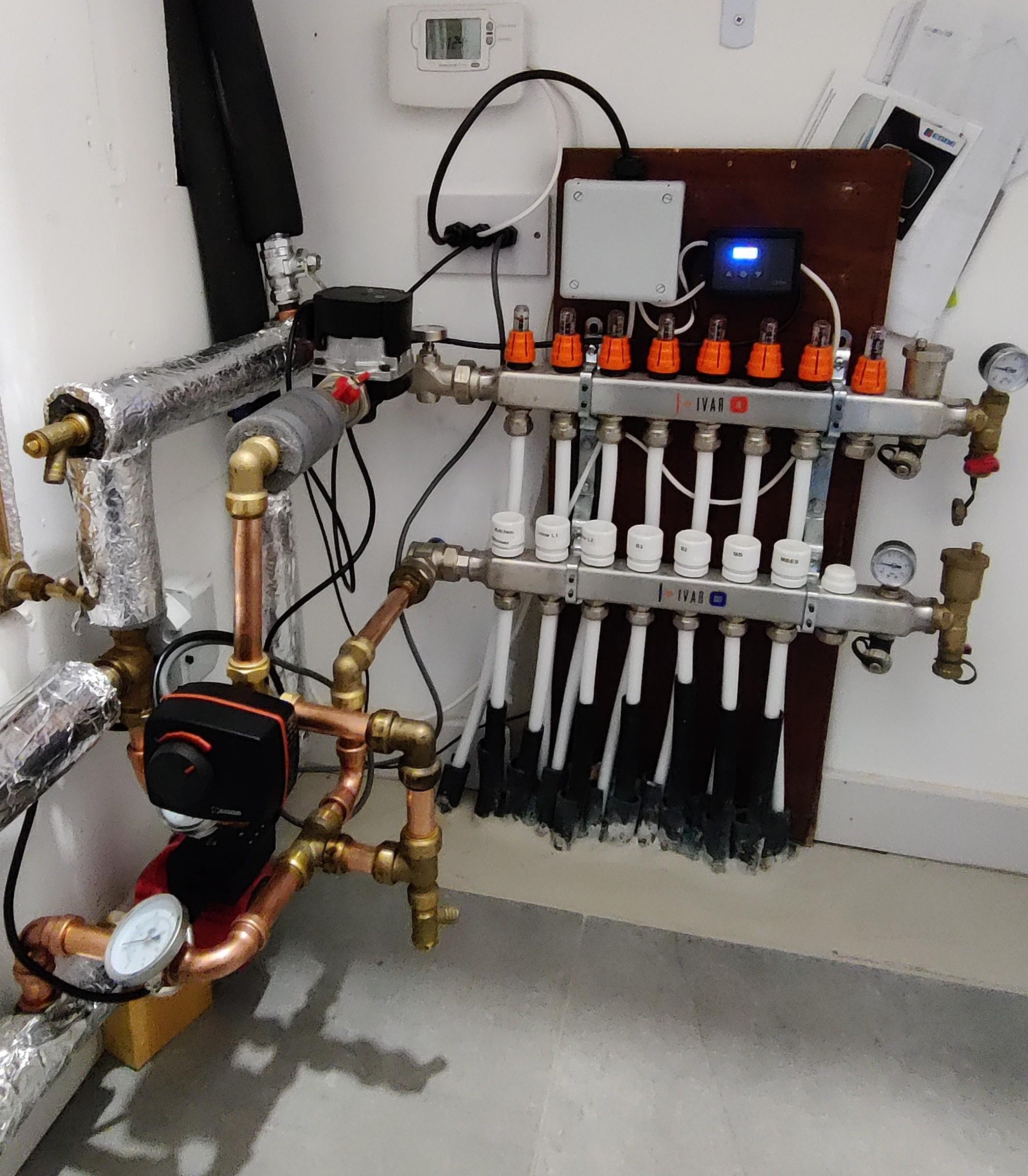
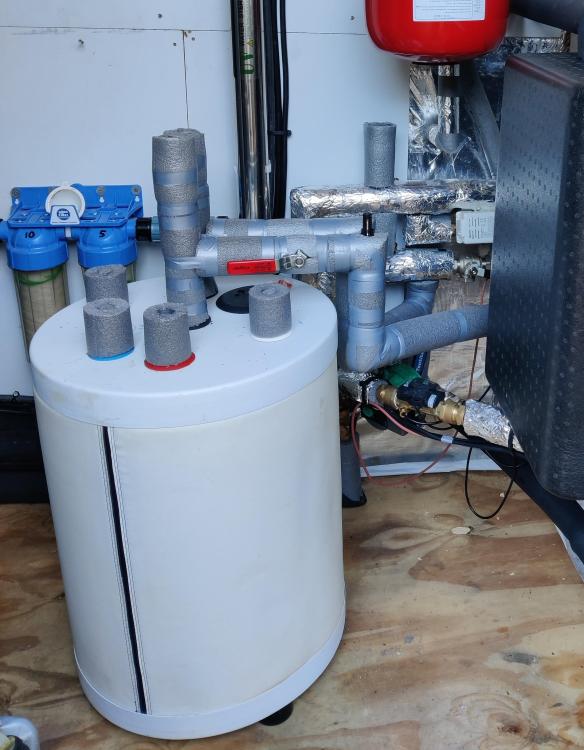
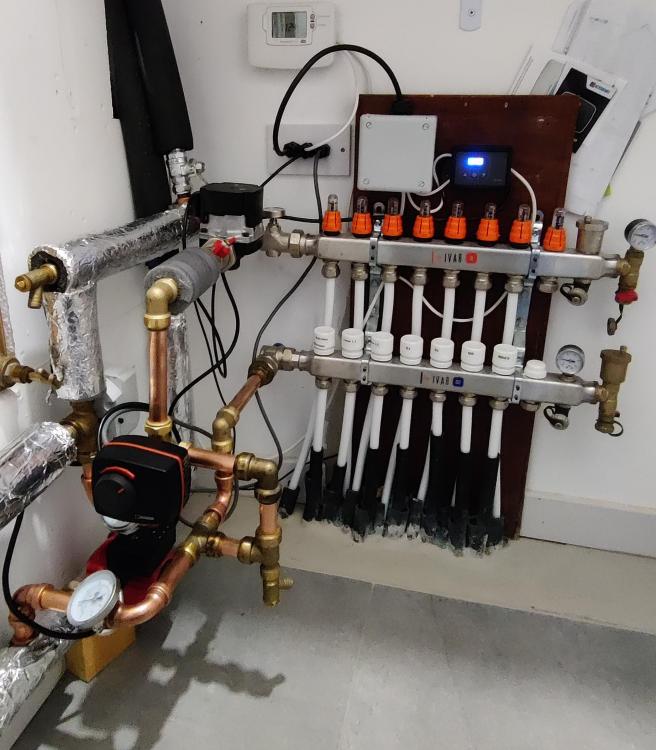
So everything install a few days ago. With mixed results, couldn't get the garden room UFH to provide enough heat, to heat the room, above 12 degs. So have decided to use the floor heat to limit downwards heat loss, it will act passively not call for heat or switch it off, if on. House UFH with ESBE electronic mixer is great. Basically decided to run in set temperature mode, so it controls flow temp. It allows two flow temperature to be set (T and T2) T2 is activated by external timer. T2 temp is run during E7 period. The mixer remains fully open with zero mixing of returns until it sees the flow temp, above set point and then it starts to move to allow more and more mixing until it maintains a fixed target flow temp. This allows me to run a maintenance flow during the day below the WC curve and by setting the T2 target above any normal flow temp, I can charge the floor based on WC curve without interference of the mixer during the night. The buffer with this setup is required, as the mixer almost fully closes off the hot water inlet when controlling flow temp in the day. Repurposed 50L pre heat cylinder. Pipe with red handle water is added to top of cylinder, the other pipe behind water withdrawn at bottom of cylinder. Circulation pump downstream of ESBE mixer. Pump mounted on IVAR manifold adapter, with temperature gauge and isolation valve. Insulation prior to pump has controller temp probe.
-
Mistyped, should read high flow temperature. Unfortunately even with 40 deg flow temperature the floor still feels cold to touch.
-
I would not bother with the UFH, not had a good experience with the UFH trays similar to those suggested. Seem to need very flow temps to get any heat output.
-
This has all the tech data for a typical ASHP, shows detailed info on CoP for heating and EER for cooling at different outside and flow temperature etc. Technical-Bulletin-i-32V5-1.pdf
-
Clean Heat Market Mechanism to incentivise heat pumps
JohnMo replied to LnP's topic in Air Source Heat Pumps (ASHP)
Not really looked, overall didn't get much use, we had/have about 3 power cuts a year, from 2 hours to about 6 hours. We have a big battery now, so power outages are less noticeable. -
Interested in a Heat Pump...
JohnMo replied to Slippin Jimmy's topic in Air Source Heat Pumps (ASHP)
For your low usage I would just consider DHW heated on E7 or time of use tariff. Same for the heating use your heating system but in place of the gas boiler heat with an immersion. Either in a small buffer vessel with an immersion inside or a couple of Willis heaters in duty/standby. Heat pump, install would require new radiators, big cylinder and an outside unit. A even with the grant a contribution from yourself and the house pulled apart. -
Interested in a Heat Pump...
JohnMo replied to Slippin Jimmy's topic in Air Source Heat Pumps (ASHP)
That's not even 5kWh a day including your hot water. Would expect the hot water only would account for that amount of gas. So about £215 a year including standing charge? -
Lessons learned from last ready - getting ready for cold snap
JohnMo replied to Conor's topic in Air Source Heat Pumps (ASHP)
Just found myself in the same position. Had an extended ASHP run a couple of days ago and yesterday the house thermostat switched off the heating at 8.30 am. The temperature haven't been above zero for a few days and a couple of days at -7. We had also been using the log burner. All good thinks me. It's cold but I decided to make some mods to the heating system to allow me to flow at a higher temperature to heat the summer house also. Fired up the heating just before tea time yesterday and found the flow temp way lower than set point. Think what's happened is floor has lost it's temperature and I am having to recharge it, the very low return temps are not allowing the flow temperature to increase to set point; heat pump is managing dT. Over last 18 hours we have had quite a few defrosts and the flow temp has increase 3 degrees. Still some charging up to go. -
Clean Heat Market Mechanism to incentivise heat pumps
JohnMo replied to LnP's topic in Air Source Heat Pumps (ASHP)
Even if it was needed; as long as the system volume is suitably sized to give a good turn over of water, a normal heating regime is good for sterilising anyway. If you are turning over most the volume of the cylinder each day looks like to store at any temp you want. But if you have a huge cylinder and low usage there could be issues.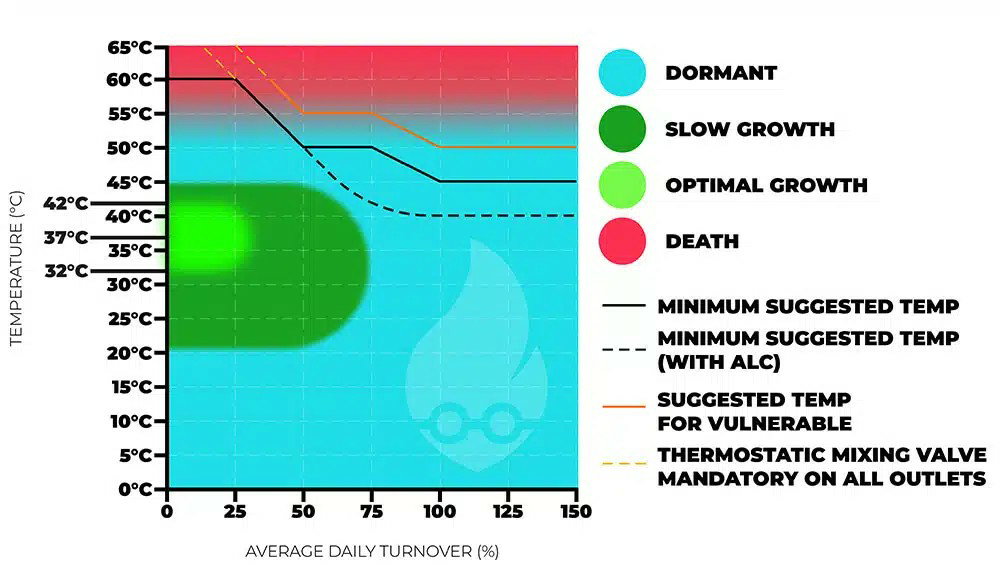
-
Clean Heat Market Mechanism to incentivise heat pumps
JohnMo replied to LnP's topic in Air Source Heat Pumps (ASHP)
No worse than the above options. -
Clean Heat Market Mechanism to incentivise heat pumps
JohnMo replied to LnP's topic in Air Source Heat Pumps (ASHP)
We've got a generator - got it prior to the heat pump, but it runs the heat pump with no issues. -
Clean Heat Market Mechanism to incentivise heat pumps
JohnMo replied to LnP's topic in Air Source Heat Pumps (ASHP)
We have had -7 degs for the last 12 hours and it's not going above -5 degs until around midnight. We had a CoP just under 3 overnight. Heating has been off since 08.20 as house was up to temp. All the heating and DHW was heated at 15.16p per kWh. So gas would have to be under 5p per kWh to be cheaper but it costs 7p. So no reason a heat pump cannot be cheaper than gas. Plus I was running the heat pump yesterday afternoon for free - as we were generating over 3kW for a few hours All heating is off unless you have a battery or generator, doesn't matter if it's gas or electric (unless it's a charged up storage heater)