
JohnMo
-
Posts
12471 -
Joined
-
Last visited
-
Days Won
179
Everything posted by JohnMo
-

Does ASHP work for older people on blood thinners?
JohnMo replied to CalvinHobbes's topic in Air Source Heat Pumps (ASHP)
But you can get some good days, although quite short. This year we did Christmas day on boxing day and our lunch was all cooked via solar. The yellow is solar generation, green consumption, and blue below the zero line is battery being charged. The red is import electricity. We get a texts - do you power? we answer yes, but the mains is down, similar the other days mains water was off, but we use a borehole.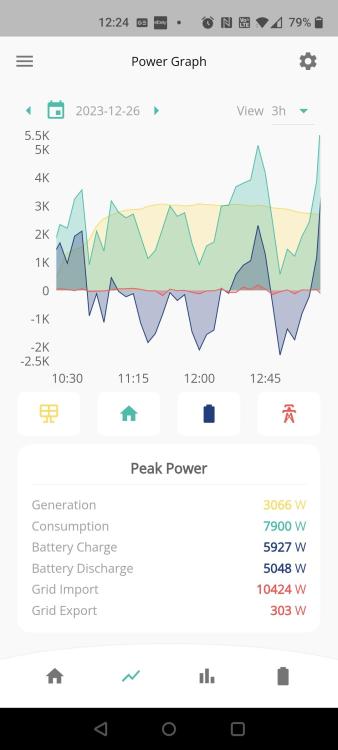
-
Simple don't overthink it Draw up plans, get a design stage SAP report. It will pass or fail BR requirements. If you feel you would like to improve or change things at the design stage, the assessor will update. Build house, get an as built SAP done - finished. Comment - tell the architect what you want to achieve, basic building Regs (daft in my opinion) or an A or something in between, he should know enough to make it happen, if he doesn't think about moving architect.
-
City plumbing has panels at £35/m2 incl. Vat. That's cheaper than people selling second hand.
-
As Dave says, but I have the extract at the other end of the kitchen and have a foam filter mesh inside to catch anything that may get into the duct work. Rarely need to use the cooker hood.
-
Critique my MVHR plans - round 2
JohnMo replied to Sparrowhawk's topic in Mechanical Ventilation with Heat Recovery (MVHR)
Yes -
Critique my MVHR plans - round 2
JohnMo replied to Sparrowhawk's topic in Mechanical Ventilation with Heat Recovery (MVHR)
You could do a cascade system downstairs to simplify duct routes etc. Downstairs, supply air to lounge, via 2x coanda nozzles, high on wall next to dining room. A further outlet would be to office (7m2). The 6.8m2 office would have a transfer fan in the wall from first office to second office). This could be a dMEV type fan or something like this which works on demand only. https://www.ventilationland.co.uk/en_GB/p/brink-indoor-mixfan-co2-controlled--up-to-70-mh/17927/ Extracts leave as you have them. Upstairs leave as is. Flow rates, you need to balance overall flow and extract - you don't need to balance downstairs/upstairs extract and supply by floor, any excess will go via the stairs. With two people in the house your flow rates overall can be 0.3ACH or slightly lower. Coanda nozzles high on wall looks like this (my lounge made by zehnder) and fit direct onto 90mm duct.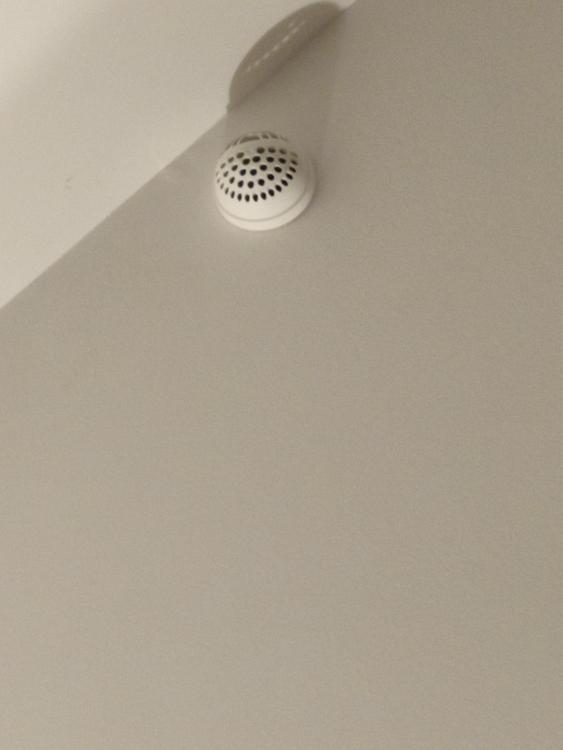
-
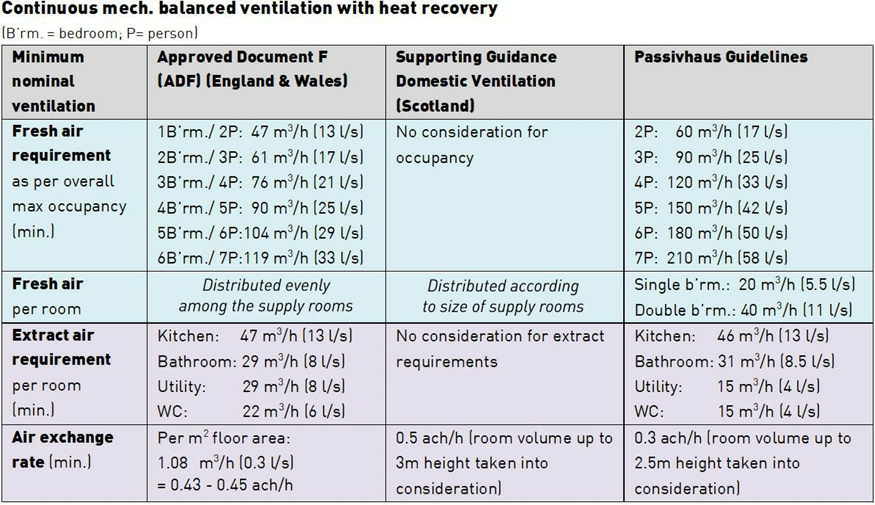
I did our bedroom to passivhaus flow rates, the other bedrooms that are not normally occupied, so treated as single bedroom rates. 40 for ours and 20 for the others. Your wardrobe is likely to flow through the bedroom, so take away what ever goes in there away from your bedroom figure, so the total becomes 40. Increase your lounge figure, to 40 to 45. Is your dining part of the kitchen or a separate room? If part of the kitchen are you getting flow through that area via a doorway etc. Look at where the air goes in and the likely exit point, see if air will pass through areas so it provides the ventilation for free
-
You just don't need them in a well insulated house, unless you are logging something. They are required for heat sieve houses, that foolishly install UFH and have to flow stupidly high temperatures. A simple low hysterisis room thermostat is all you need - just one for the whole house.
-
Does ASHP work for older people on blood thinners?
JohnMo replied to CalvinHobbes's topic in Air Source Heat Pumps (ASHP)
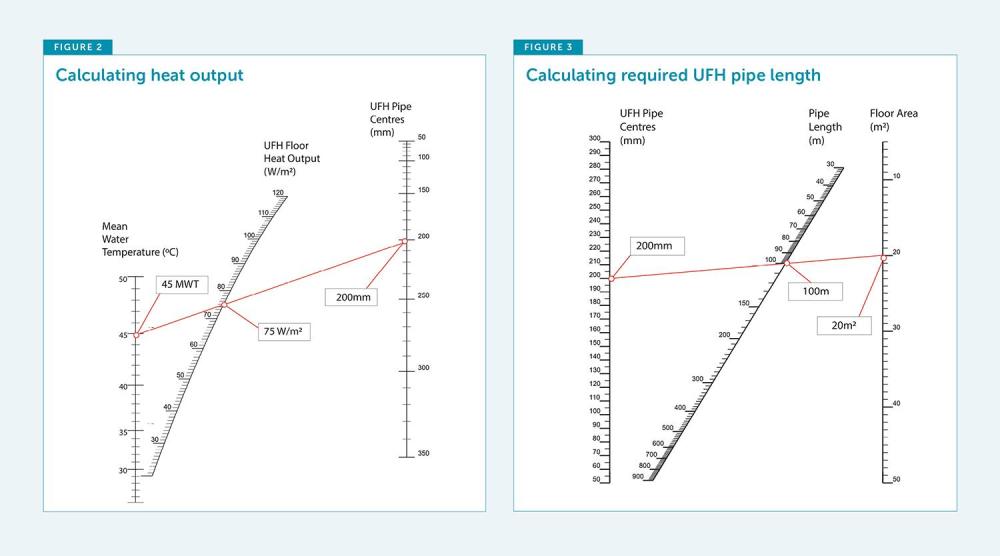
The CoP heating temperature came from a Maxa heat pump technical manual. The UFH I found on the internet somewhere. But the figures seem ok, match LoopCad reasonable well. -
Does ASHP work for older people on blood thinners?
JohnMo replied to CalvinHobbes's topic in Air Source Heat Pumps (ASHP)
Trying to sort out fact from opinion is difficult. You need facts to be informed. Something to read, my heat pump performance table for flow temp and outside temp, CoP and power needs. What you see at flow temps below 35 CoP is good at almost any outside temp. Another document that shows UFH output at different pipe centres and heat outputs at different mean flow temps. ASHP heat flow with delta T of 5 to 6, so the mean temperature is flow temp -2.5 to 3, when using table. W/m2 is highest heat demand, divided by the area of the floor.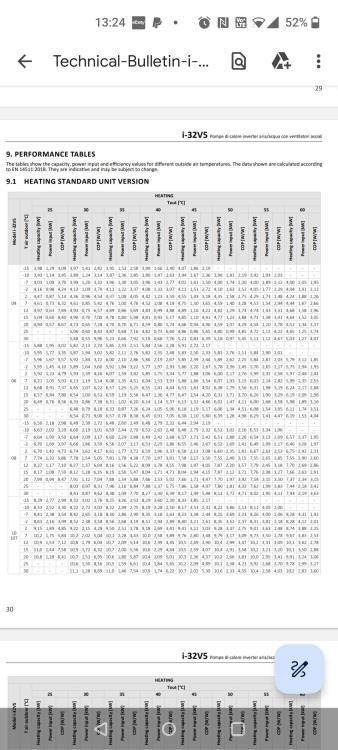
-
Sounds more like a room thermostat setting not a flow temp. Your flow temp is more likely to high 20s to anything above that. Did you check the moisture content in the floor before laying?
-
Does ASHP work for older people on blood thinners?
JohnMo replied to CalvinHobbes's topic in Air Source Heat Pumps (ASHP)
Exactly. You are building a passivhaus not a barn. Your temperature will not move more than a degree a day and that's without heating on. I am not passive and have the heating on overnight, temp doesn't vary more than 0.5 Deg until the heat comes on again. Stop listening to people filling your head with nonsense. Two weeks ago you were asking if you needed heat in a passivhaus, then I need an oil boiler because the ventilation man said xyz, now you are fretting that you will not get enough heat. So as @Conor says. -
Tempest heat pump water storage tank Aquastat ?
JohnMo replied to Cyberfruits's topic in Air Source Heat Pumps (ASHP)
But most cylinder thermostats are dual thermostats so no additional wiring is required. But that is only applicable to a heat pump or X plan with a 3 port diverter. If it's a mid point valve an additional 2 port is also required to protect the cylinder - a self closing 2 port. -
Only thing to watch is long lengths can have quite a pressure drop. Look on the internet for duct data sheets, most the good brands will have install guidance on max length and flow and how ducts you need. Makes it really simple. Coanda supply nozzles can allow you use much short lengths of duct, but depends on house layout if they are appropriate or not. The most difficult bit is the apportioning of flow in each room to get the correct balance between flow and extract. I found this useful
-
You will have a nominated person in BC to do your inspections etc. he would be your first port of call. But he may say what I say below. But once you have submitted warrant drawings and they have been approved, i.e. you have been given your building warrant, any change to the design and approved drawings has to be approved by BC. I had a couple of things not per drawings and had to submit new drawings for approval. But I was also told by my architect and by our ground works contractors that zero bends were allowed, any change of direction was via an inspection chamber only.
-
Do you want it to be insurance approved - as most will not be.
-
You really need to start using appropriate thread titles, so you get the correct people reading and making comments. As it's a new thread you may still have time to change it
-
boiler behaviour,please let me know your thoughts.
JohnMo replied to Post and beam's topic in Boilers & Hot Water Tanks
I would have thought it combines a few things, temperature, rate of rise - because the fault code all relates to the system being dead headed, little or no flow. -
boiler behaviour,please let me know your thoughts.
JohnMo replied to Post and beam's topic in Boilers & Hot Water Tanks
No it was the lack of airflow, to cool the brake enough that caused the 2965. -
How to fill / seal gaps between skirting and hard floor?
JohnMo replied to embra's topic in Decorating
The smaller gaps should remain as they are to allow expansion and contraction of the wooden floor boards. If you seal the completely it will look great for a short while and the look rubbish with a few weather changes. -
I would set the ach rate at 0.2 for now. From the looks of it you will have a ventilation issue. Intermittent fans and trickle vents will not give you enough ventilation with everything sealed up. Upgrade the vent fans to dMEV, these run at a very low rate all the time. Greenwood CV2GIP are cheap as chips of eBay, Ulta quite, have smart humidity sensing and boost automatically. You need one of these in each wet room. Your trickle vents will end up closed because standard vents are rubbish. So you need to upgrade to humidity sensing or self regulating. https://brookvent.co.uk/humidity-control/ https://renson.net/en-gb/products/ventilation/window-vents
-
Typo maybe?
-
Basically the same stuff, different trade names. Buy at the best price, shop around I got mine online came direct from the factory. Prices vary daily so you need to do your legwork to find the best price. But was 70% cheaper than I could get locally.
-
It's unlikely you will have 0.5 ACH unless you are running MVHR, if that's the case add 90% in MVHR efficiency. If not MVHR how are you ventilating? What is your target airtightness?
-
Are you certain you have filled the spreadsheet in correctly? Sound a huge heat loss for 90m2. What air change figure have you use?