JohnMo
-
Posts
13308 -
Joined
-
Last visited
-
Days Won
200
Everything posted by JohnMo
-
What's that mean?
-

Solar Heated Hot Water Cylinder Heat Loss Overnight
JohnMo replied to BobRK's topic in Boilers & Hot Water Tanks
I came across heat traps when I was looking for a solution to similar issue I had. Found they are mandatory in most of North America.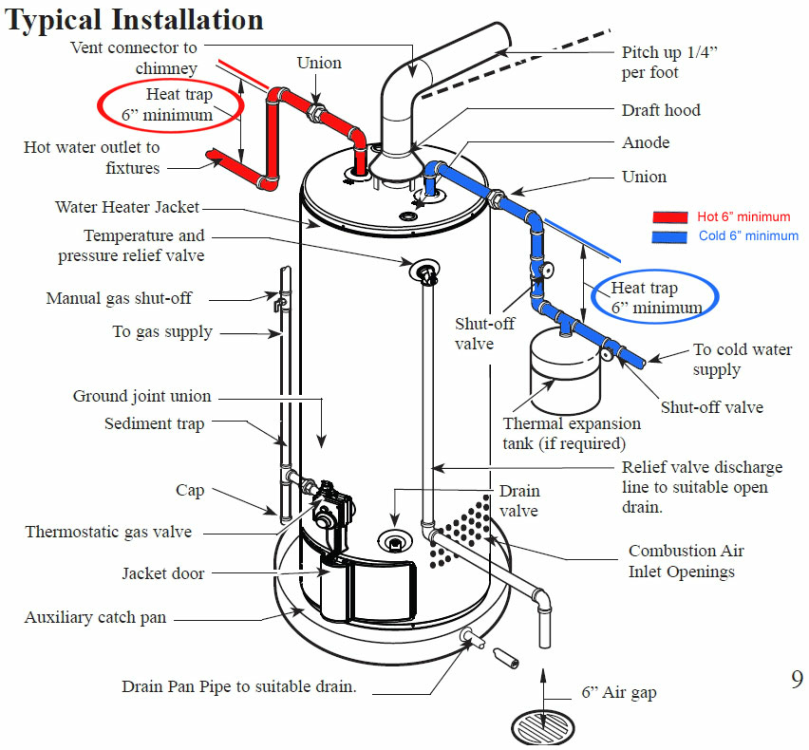
-
Solar Heated Hot Water Cylinder Heat Loss Overnight
JohnMo replied to BobRK's topic in Boilers & Hot Water Tanks
You need to form a heat trap at the cylinder, otherwise a thermo syphon just starts as soon as the pump goes off. A heat trap is a vertical drop in the pipe for 150mm, then horizontal for about 150mm and then vertical. You need this on both pipes connectors to the cylinder coil -
Anyone using VDI 2035 spec for heating water in an ASHP. Been looking at it seems a smart way to go. No chemicals to turn into a muddy soup, good heat transfer etc. Monitor with a simple conductivity meter and pH meter to control to quality of the water going into and in the heating system By monitoring Conductivity (80 to 1550 microsiemens) Ph 8.2 to 10 And Scale products below 300ppm Any one using are there issues? What if any fitters are you using Do you top up via an Ion exchanger or just tap water (of suitable quality)?
-
Always have masking tape on site, has many unusual uses. Or better still a first aid kit.
-
Mitigating Risk With Upfront Payments To Timber Frame Companies?
JohnMo replied to thefoxesmaltings's topic in Timber Frame
Will go on the computer and try. Maybe it's not straightforward on the phone -
I did the same, pulling your finger off the nail is the worst bit. Then realising the best thing you have on site is masking tape, to stop the bleeding and a rubber gloves - So you can finish the job without getting blood everywhere.
-
Mitigating Risk With Upfront Payments To Timber Frame Companies?
JohnMo replied to thefoxesmaltings's topic in Timber Frame
I have tried but for some reason can't work out how to do it? Any pointers -
Mitigating Risk With Upfront Payments To Timber Frame Companies?
JohnMo replied to thefoxesmaltings's topic in Timber Frame
Not sure why, nearly every house in Scotland is timber build! -
Samsung ASHP Compressor turning itself off
JohnMo replied to Julian S's topic in Air Source Heat Pumps (ASHP)
They all have them, but some also look at crankcase temperature as a permission to start the compressor. It may not have an error code for it. We are also well insulated and ran the heat pump mostly in the E7 cheap period, but even then used a lot more than expected although very cheap energy. This year I am doing straight WC and compare. Our WC curve is something like 26 @ 10 OAT and 31 @ -5 to see how it goes. With Cosy I would just reduce target temp a couple of degrees during expensive period. And maybe uplift target during really cheap periods. Get your WC curve right it will modulate itself well. -
Samsung ASHP Compressor turning itself off
JohnMo replied to Julian S's topic in Air Source Heat Pumps (ASHP)
The cost tariff but confuses me are you saying at -10 you only run the heat pump for a couple of hours? If you are only running on a set tariff period I would check your programmes to check what's occurring. If your system has cooled to sub zero temperature it will take hours to recover. That's why it's pump cold water around. Things to check crankcase heaters, if the crankcase isn't warm no start. In sub zero temps don't switch it to standby or off. Cosy isn't really designed for heat pumps (heat pumps and battery yes) running for short bursts is no use . -
Daft thing with all these reports they miss one fundamental If we and others had not installed PV or wind (expect the same sort of paper on wind), the grid would not be decarbonised and we would still be reliant on coal etc. So the end state of reports like this is in 2030/2050 if we are net zero or close to it, is no renewable energy source makes sense. It should only be compared against say a carbon emitter, which is what it is displacing, not a mix of other non carbon emitters. Normal for this type of report it's sh#te in, sh#te out. Maybe it was written by or for the Telegraph, they seem to love this sort of thing.
-
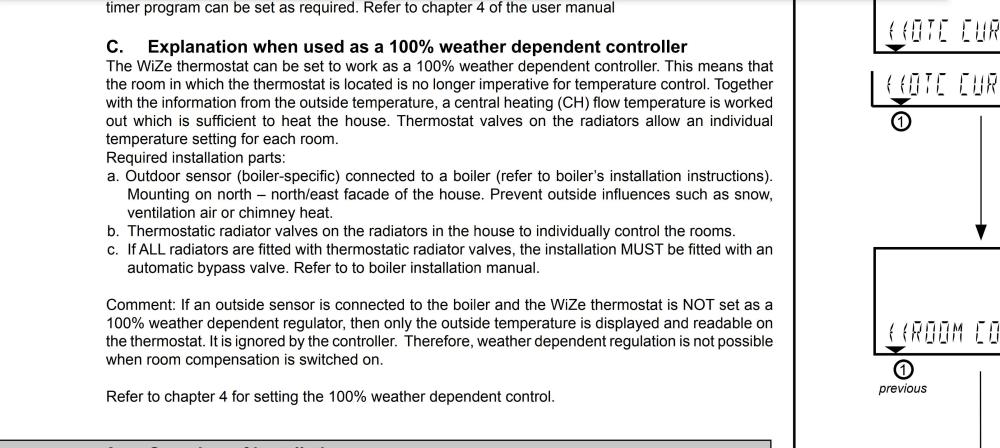
Even without room stats or any radiator valves the following happens. WC flow temp is closely matched to heat loss, adding just enough energy toto keep up with overall heat loss. The boiler is doing a couple of things to manage flow temp, trying to stay to target flow temperature and maintain a fixed delta between flow and return. So steady state it just ticks away. Start your fire, the follow occurs 1. Room temp and eventually house temp goes up. 2. The delta between room and radiator or UFH decreases, so heat output reduces 3. Return temp to boiler is higher 4. Boiler modulates the output to return the dT between flow and return. 5. As things get warmer the boiler cycles off. 6. Boiler circulation pump continues, as fire goes off and room cool, boiler will cycle back on. So you have a flow temperature target of 30 degs. The boiler will have a hysterisis around the 30 degs to help stop cycling to much. So say 5 degs above and below. So it allows the flow temperature to go up to say 35 and then it stops the heating cycle, when the flow temperature gets down to 25 it starts it's heat cycle again. Remember the boiler is also managing the flow return delta. So your room temp goes up because the sun's out or your fire is on. As water flows through a radiator it gives off heat and has an expected dT say 5 degs. Water goes in at 30 and out at 25 normally. If the room gets hotter from your fire, the radiator cannot give it's heat off as easily so the dT reduces to 3. Now boiler will slow it's self down and add less energy to get it's delta back in to equilibrium. The above only occurs well on a low temperature system, if your expected flow temp are above 50. You will need to think about TRVs on most radiators (not all). But you don't want ones that will just go open or closed you want modulating ones. This is what my boiler manual says on the subject.
-
Managing building control in a non-standard way…
JohnMo replied to Omnibuswoman's topic in Building Regulations
I would first fix everything, then building control can inspect. Then do plasterboard and second fix on a room by room basis. But you would have no electricity until second fix was finished for the electric in most rooms. Plumbing could be sorted using a manifold for hot and cold. You just need an isolator for each wet room and then branch distribution within the room. -
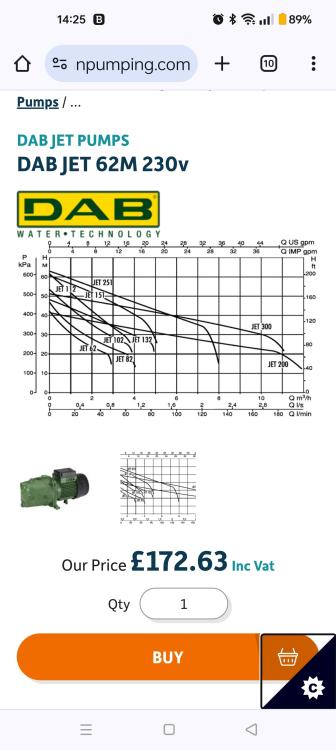
Just test against it's pressure flow curve. At full speed and closed head (zero flow) it should produce around 5 Bar (check your curve for exact pressure or head). If your making close to 5 Bar your connected correctly and achieving full speed
-
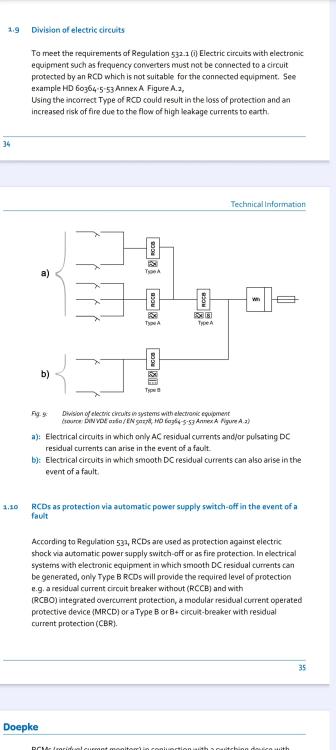
Also found this in their technical guide. This requirement may be driving the additional CU so the heat pump can have a Type B RCD and the rest of the house etc a Type A.
-
Removal of insulation is to be frank a daft idea. Making the ceiling vaulted may add to the issue, as you have more trapped hot air. We use - keep the sun out with blinds first. Then - Opening windows and doors to get cross ventilation. We are also in a bungalow I see no issue opening windows, when you home. Cooling is also used.
-
Excellent result. Different world in Scotland we had 23 our hottest day.
-
Just read this and then looked at my install, it has type B MCB and Type A RCDs. So I need to upgrade to type B RCD I believe. https://professional-electrician.com/technical/18th-edition-rcd-requirements-for-heat-pump-installations-doepke/
-
Housewrap, or roofing underlay on garden office?
JohnMo replied to Tony K's topic in Garages & Workshops
Basically you can use roof breathable membrane on either wall or roof, but you can only wall breathable membrane for walls (not suitable for a roof). Wall specific is a lower spec overall. You need to be specific here, are you talking breathable or non-breathable? -
Mine (Maxa) says "recommended to install a type B differential switch, the installation of a different type switch could give rise to untimely trips." Vaillant instructions states (section 7.3) "To protect people, type B universal-current-sensitive residal-current circuit breakers must be used if these are stipulated for the installation site." So pretty consistent.
-
Go on to Google play and download CDM Wizard and do all your construction phase risk assessments. Print them out, keep on site and issue to contractors.
-
You made a point that on the first run you only made 1.2 and then added a pressure vessel and then got 2 bar. You seemed surprised, so was only commenting why it was the case and so other reader that have no clue about pump curves could follow. Also suspect looking at the pump curve for your pump you were measuring dynamic pressure not static. Or running at slow speed.
-
Council wants me to move fence on my property
JohnMo replied to craig johnson's topic in Landscaping, Decking & Patios
Possibly if it doesn't comply with regs. -
Pump run on pressure and volumetric flow curve. The more flow the lower the head developed. If you are running out of an unrestricted pipe it will never develop much head. So for example the Jet 62, produces around 16m head (approx 1.6 bar) at full flow and 40m head or 4 bar against a closed discharge.