


JohnMo
-
Posts
13308 -
Joined
-
Last visited
-
Days Won
200
Everything posted by JohnMo
-
Could it be the power to garage has just tripped off? If it hasn't would it not be easier to just kill the garage power at the house consumer unit? But not sure it will help anyway either killing power or cutting wire. Obviously no side door to get access via?
-
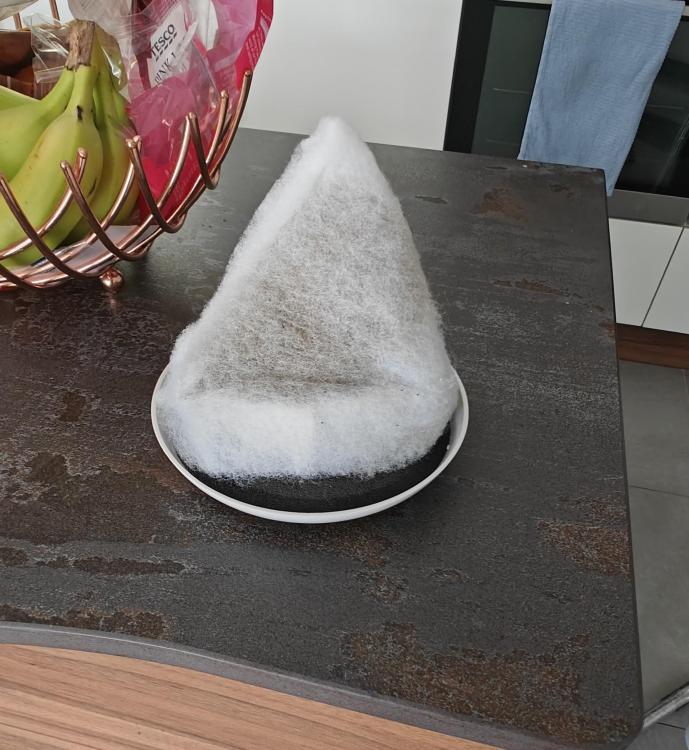
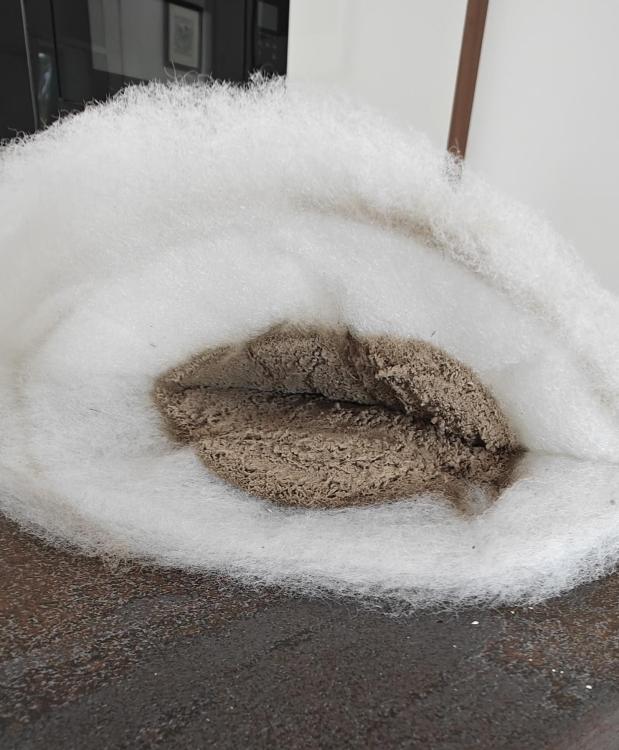
Grease filter goes in dishwasher. Carbon filter goes in the oven to be regenerated. As said before we hardly use the extractor at all and we find zero need except for really smelly stuff. Our kitchen MVHR filter sock (after 6 months installed - top is the outside the duct side, bottom is inside, showing dust ect from the room. Why do we need to question the norm? Where is your evidence that a normal house (with MVHR or other suitable ventilation system) suffers from poor IAQ. Most houses don't even ventilate correctly and suffer mould, which I suspect is way more hazardous to health - than an extract on recirculation with decent grease and carbon filter, positioned at the correct height for effective performance, so you don't need to run the fan at full speed. Everyone is free to do what ever they feel is correct for them. Personally think everything is getting OOT, I have said my view, so will leave it there.
-

Solar Heated Hot Water Cylinder Heat Loss Overnight
JohnMo replied to BobRK's topic in Boilers & Hot Water Tanks
What you haven't mentioned is how the puppies run that are connected to the heating coil. If they go upwards or horizontal you will get thermal gradient and it will extract heat from the cylinder on a continuous basis as you describe. A photo of your cylinder would be helpful. -
This what Passivhaus say on the subject 05_extractor_hoods_guideline.pdf
-
No they pocket £7500 and charge you another £ lots of thousands, if you are not careful. Unvented cylinder was bought last year from City plumbing, it was about £805 plus vat last August. Came with 3 port valve. ASHP, is Maxa i32-V5. Sold normally in UK by Viessmann (around £4500). Billy bargain from eBay, after plenty of research, £1300. Came new in box and original packaging from Italy via a UK company. Need rubber feet, flexible hoses etc as well. Bought all that in 2022, but prices aren't much different, around £200 UFH came from outsourced energy shop. (Prices are now cheaper than I paid) Current prices IVAR 8 port manifold £163. 2 x 300m pert-al-pert £560, plus a few other bits and bobs £100. You can claimed back, so prices above are plus vat. Except ASHP which came from eBay so vat paid.
-
Even without the the grant with careful shopping, keeping the ASHP install really simple for best efficiency also, you install unfunded sub £5k for everything. Ours install as it is at the moment (as simple as it can be) would have cost us about £3100 including the UFH. It includes a 6kW ASHP, 210L UVC, 195m² of UFH and manifold a bit of pipe and insulation. Have a thermostat in the house and it switches between heating and cooling. Our neighbour just paid £4k just to replace a gas boiler.
-
Sorry how is that "keep it simple" a thing but simple. Easy answer - Keep it simple - don't fry everything. Then you don't generate the pollutants.
-
I found that when I was looking. Thanks for the drop info, have ordered a bottle.
-
PV is a different discussion so maybe best to separate from the ASHP one. Get people to survey and see what they say. Many seem to up size a few radiators, over size the heat pump, set the flow temp too high and install either a low loss header or buffer. Fill the house with thermostats and add as much inefficiency as humanly possible. 1. You want a heat pump closely matched to heat loss (plus allowing time to heat DHW) 2. A 3 port diverter valve A heat pump cylinder (big 3m² or bigger coil) 3. Radiators sized to allow as low as practical flow temp. Size bedroom rads to get to 18 degs or add trv's to these rads only. 4. ASHP controller You really need need nothing more for best efficiency.
-
So decided to install a permanent TDS and Conductivity meter and use Litmus Paper for pH. The one I got from Amazon read a range of pH from 6.2 to 9.0 in 0.4 steps, so should be just fine. PH strips were £13 from Amazon TDS and Conductivity meter £72 delivered from https://www.osmotics.co.uk/lsm-100-commercial-grade-ec-tds-monitor.html?srsltid=AfmBOoqFcuTcWCe4eDl0kmA0H5AQqIF1z8Tk2OK6b2HGYpfNUt08T7Re 10" clear filter £25 Clear refillable resin insert £8 Some fittings £8 2x 1lt, £32. Total spend around £170. I will have in-line monitoring also within that cost, instead of having to drain a sample and test; so I can keep on top of the system very easily. The parts will be used as a filler unit first, via a flushing point, then modified to make a top up unit at the top up point. Total spend is around £70 cheaper than a cartridge top up unit from Viessmann Direct. And if I wanted a new cartridge they are around £140. Loose media is £16.
-
I read exactly the same when I was researching our build.
-
Model 6 Insulation at roof rafter level, make the loft a warm space. No need to ventilate the loft space or insulation to floor except for noise. Floor whole area. Have a ledger board on two walls, span with suitably sized timber on joist hangers. Ridge beam and cut roof rafters. Mineral wool Insulation between joists and under draw in PIR with joints taped, and or, vapour control and airtight layer taped at wall. Breather membrane above and batons and tiles.
-
Missing some details Floor insulation - seems to be zero Wall build up details missing Ventilation missing You seem to have a shower with zero space to stand to use it. Why? Even if you did it would soak the toilet etc. if you are doing a wet room where is the details of how you propose to keep the water out out of the structure?
-
They have not been on here since June 2023, so you may not get a response.
-
Rules of thumb are generally wrong when you go into detail. Will all depend on the ratio of frame to glazing unit. If you know the actual glazing unit U value and the ratio of frame to glass you could work out the frame U value. Then back calculate to the new glazing and U value. Suspect it will be a bit of rubbish in rubbish out.
-
Can you build a quality home for £1500 per sq M in 2024?
JohnMo replied to ScottishPete's topic in Costing & Estimating
If you can't do quality builds with the economy of scale, of 12 units you are doing it wrong. No house builder would exist. Asking the question - says are you the right person for the job. You should have plans for site, plans for each building and each should be fully costed. Without that level of detail, you are boomed from day one. Comparing one off build costs, where every different build method has been used, some all contractor, some no contractor and anything in between, to a development is nuts. Why, why not good quality, and better than building regs insulation etc. building a good building is a selling point, people see and feel the quality and say that's my next home. Quality sells itself, demands a premium price and really costs very little extra per m2 to build. Basic demands a low price, cost nearly as much to build as a good build. Save money by building smart, lots of common features and designs, so they are repeats with minor changes to give individual feel. Why not make the kits on site yourselves? -
Larger "Spark Gap" means fewer heat pumps
JohnMo replied to LnP's topic in Environmental Building Politics
They were around in the late 90s or early 2000s. Mostly in thin film amorphous. If you want them still sold slightly different spec. -
You need a gauge or tester. Will be looking for that next. Quick look looks like about £30.
-
If you are not doing DHW then maybe not an issue. But the heat geek text says " salt based softened water. The different makeup of the water can mean the self-alkalization process settles above 10 which is not healthy for aluminium systems and can affect the warranty of boilers that have heat exchangers made of it." May be worth getting some litmus paper and testing where you are. Industry has a big issue with most grades of stainless steel in saline environments when the temperature hits 60 degs and get what is called pitty corrosion. Basically for pin holes in the metal. Most likely the ASHP heat exchanger will be stainless.
-
Larger "Spark Gap" means fewer heat pumps
JohnMo replied to LnP's topic in Environmental Building Politics
But the press want to make a bad story of renewables, so that message is never passed on. They like a good NIMBY story. Just need a law like Singapore - which is basically "for the greater good" NIMBY's are basically ignored and have zero say. Government quietly gets on with making things better, the population accepts and reaps the benefit. -
Not really pretentious, just a standard, bit like saying building regs xxxx.
-
Doesn't that add to the conductivity. Not an issue for plastic pipe. Stainless in the heat exchanger - with salts and 60 degs can lead to putting corrosion, which could be an issue. Could you also get bug growth?
-
So been looking and it seems a good little project. Everything labeled as VDI 2035 seems to come at a premium price, so been looking at alternatives to get very low conductivity water, with hopefully a suitable pH. So have ordered 10" clear filter housing with 3/4" ports. With Hozelock fittings. A refillable housing for DI resin media. Purolite MB400IND Mixed Bed Indicator DI resin - which is 60% Anion/40% Cation. The Anion increased percentage should strip out the CO2 to hopefully leave a slight alkaline water. So idea is flush system with my hard water to get the glycol out. Then flush via the resin filter with low conductivity water. Then leave in place connected via the fill and flush manifold for any top-up required. And use the garden hose connector to give top ups.
-
What for a year or month?
-
Home grown Scottish Larch. Keep the travel miles down.



