


JohnMo
-
Posts
13308 -
Joined
-
Last visited
-
Days Won
200
Everything posted by JohnMo
-
Step back and think. Why do I insulate? To keep warm inside the house and the cold outside. You insulate to form an envelope without gaps around the whole building. Any insulation inside that envelope isn't for thermal reasons it's for noise control.
-
 Can only agree with @DevilDamo If you can't do the drawings yourself, get them professionally completed. Actually take a moment to think about what you want and need. You can only do it correctly once. With a decent set of drawings that you get quotes against, you know what you should be getting from the builder. If they don't deliver you can make out things right. £6k is neither here nor there and as your architect says, you will save more than that.
 -
Not really comparing apples with apples. The mortgage issue is retrofit applied to non vapour open membrane and generally using closed cell foam. Once moisture is in the structure there is no way fir it to get out Ours is vapour open, breathing membrane for upwards transmission of vapour, the vapour shield below to stop moisture entering. My roof in the photos


-
For my bath and showers I placed a largish rectangle of insulation where I thought I didn't want concrete for drains. I pinned this the lower insulation and made sure it would be flush with the finished level of concrete. When I was ready to sort the bathroom wastes I dug out the insulation, did the drains and then back filled those areas with fresh concrete.
-
Why is that a good fit. We have a 45 degree slope in one direction and 12 degrees in another direction, with pozi rafters, there were zero issues with construction. We spray foamed 350mm deep. Done in a day and a half to complete 250m² give or take. All cut back ready for VCL.
-
As said best is I got mine from outsourced energy shop. Decent prices, good delivery. Best system is a simple system. I have no pumps, mixers, no zone valves, no wiring centre. Just a manifold and pipes. https://www.outsourcedenergy.co.uk/shop/
-
Is a cooker extractor necessary with MVHR
JohnMo replied to SBMS's topic in Mechanical Ventilation with Heat Recovery (MVHR)
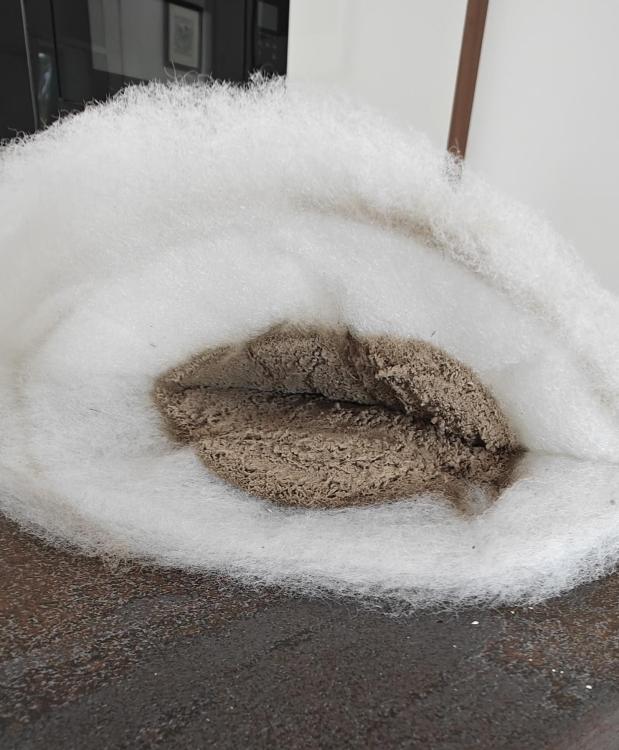
No not really. Your hob extract will also have a grease catcher. You place the MVHR extract away from hob and use a filter sock inside the terminal. They are G4 or G5 filter rating. Mine come out completely dry, but full of dust. Sock installed over internal workings of the terminal (been in place force months) Inside sock after 6 months.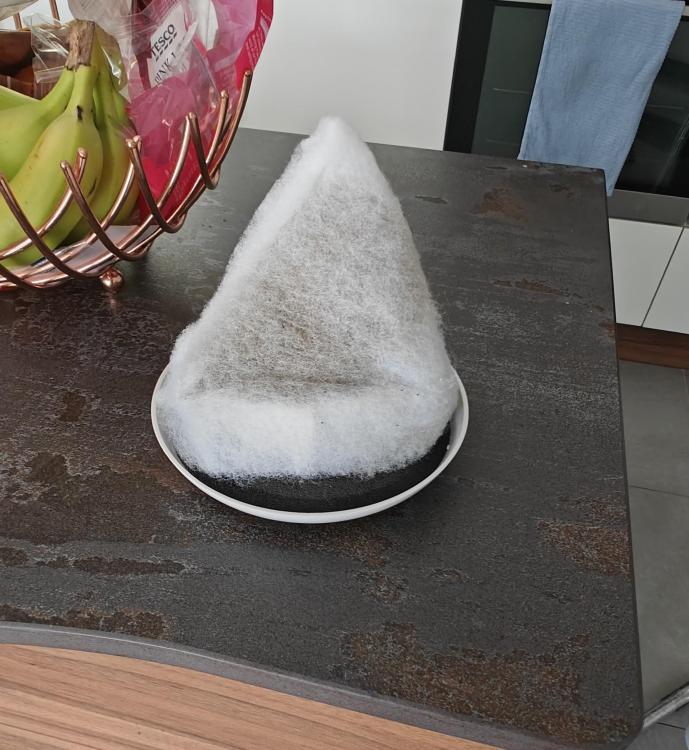
-
Have good think - is the right direction to go? You should really move the dpc 150mm above ground level. I would go back to the architect and get a proper solution.
-
Responsive equals high flow temperature, which is the opposite to what is required for a heat pump. 16mm pert-al-pert, plenty of insulation below and screed/concrete above. Then once the heating season starts add low temp heat continuously. A good gas boiler the same process.
-
Moisture barrier on OSB before glue down wood floor?
JohnMo replied to markocosic's topic in Wood & Laminate Flooring
Liquid DPM, epoxy based? Paint or roller on. -
Or rent?
-
Is a cooker extractor necessary with MVHR
JohnMo replied to SBMS's topic in Mechanical Ventilation with Heat Recovery (MVHR)
Have you actually thought your theory though? MVHR takes air from outside it's filtered, the likelihood of COVID being drawn in is zero irrespective of filter quality. The room air is extracted and only filtered to keep ducts and heat exchanger free of dust build-up. This air is then removed from the building and dumped outside. So other than the intake filter on the MVHR where else are you installing F7 filters? MVHR does not recirculate air, it is removed and replaced with new. -
The most important but you are missing, is the distance from the hob to the extractor. The larger the distance the more useless the extract becomes. Most installer just do what they have always done, you need to read the manual then insist the installer sets the height correctly to the minimum height for your hob type.
-
Sorry way more details needed New or retrofit Heat source Heat loss Floor buildup Heat loss
-
Self built hybrid heating and hot water system
JohnMo replied to JohnMo's topic in Boilers & Hot Water Tanks
Out of interest what boiler are you going for? There are ways around an oversized boiler, run everything heating wise fully open, add a volumiser. Or with a gas boiler just use a thermal store. Then size really doesn't matter. If you do have a system boiler do priority demand hot water, with weather compensation or/and room compensation for heating. -
Decking wall plate and potential bridging of DPC
JohnMo replied to LukeParmenter's topic in New House & Self Build Design
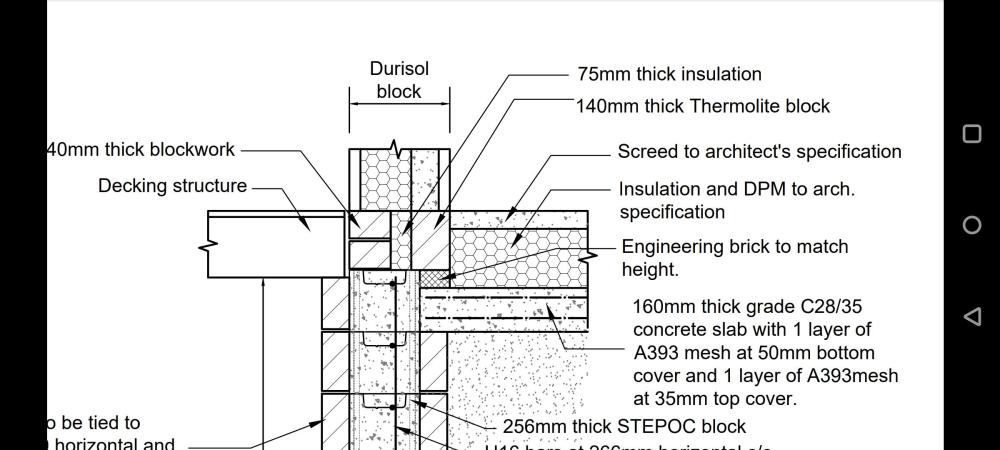
I'm with @Bozza on this. The deck should not be above DPC or the sill. The wall plate should be below dpc also. Why have a wall plate at all, have blockwork from the foundation for the decking structure to sit on. Sit the wood on DPC, and simple angle brackets to hold everything in place. Notice have nothing by your door and this solution would fix that also. Not the best image, but if you zone you will the idea. From our plan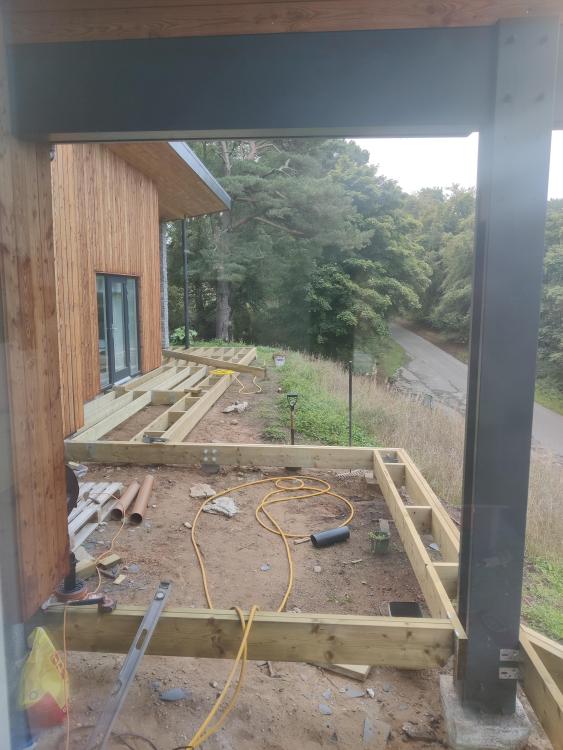
-
Are they not using the 2020 EPC yet which account for the changes in electricity CO2.
-
I would instruct the solicitor to ask for a plan and timescale from the sellers to sort the issues. If that timing suits yourself wait, if it doesn't move onto another property. That would also require dedicated water supplies and any other shares utilities, such as toilet waste. Big issue for me is that lots of corners cut where you do see, what about what you don't see?
-
Not true in Scotland, all property requires an EPC listed or not. You cannot list the property it until complete. It's part of the sellers pack. Maybe that should be rolled out across the UK (another thing cancelled by the Tories) There are lots of grants for those people available now! My wife's sister had external insulation and PV on her roof via the council, government are throwing £7500 at people to install heat pumps. They are also paying for upgraded gas/oil boilers. People just need say YES come and do my house. Sitting on hands doesn't get you anywhere.
-
Or maybe send to jail, and possibly the same for the home owner where it can be demonstrated, they knowingly went that route - jumping from E to C and little or no work done to improve things on the property.
-
Not sure it is, you can have many varieties of building and designs. Big builder build small boxes because they are easy and they people willing to pay high prices for them. And most were built by the landed elite, that also sat and made the rules for the rest of us to follow. Labour was cheap and they lived in squalor, health and safety - didn't matter they were cheap labour. Materials taken out the ground by more cheap labour. Still is but we now import it so it costs more. But we pretend it's not.
-
It's a business renting out property, so why shouldn't you give people a minimum standard of accommodation and utility bills that are affordable? If your picking up the utility bills that may be different - but pretty sure you would make changes quite swiftly to limit your outgoings. The renter, can't do it themselves, it's not their property they are not in the same position as the rest of the population. Unfair for your bank balance, but if you don't like it, sell up! You have a choice the renter doesn't. In Scotland they charge extra taxes for buying a second home administration is done by the buyers solicitor. To sell you have to have a current EPC, so tax the seller in the same way if they don't produce an EPC at C or better admin done by the sellers solicitor, charge 10% of the house sale value. That may get them to sort things out. I would allow planning on a property either unless the whole property was C or above after work was completed. Except on listed property which are different ball game and need a little extra thought.
-
Should be as it always pointing at the correct angle and direction. A fixed panel is in the correct (best) orientation for an hour or so - maybe per year. But the DNO treats your fixed system, as always producing full inverter name plate values for export purposes. Which is a little disconnected from reality.
-
I would get it all done by someone else. Krypton isn't quite 3G but reasonably close with good frames. Frames can make or break a good U value.
-
True, but do they all need to be local, could it be a "National" instead of "Local". We pay for every LPA and all the local management and logistics, could we get more bang for the pound by nationalising some of the scope?







