
JohnMo
-
Posts
12470 -
Joined
-
Last visited
-
Days Won
179
Everything posted by JohnMo
-
I'm with @Russell griffiths, you have good cold bridge below your door. Notice you don't even have an insulation upstand for your concrete, that's an omission. You need an insulation material in the door threshold that can take structural loads. Compacfoam would be a good solution. You can screw this to the blockwork as you would have done with the wood.
-

Fabric and ventilation heat loss calculator
JohnMo replied to Jeremy Harris's topic in Heat Insulation
See the equivalent wind speed on the chart half way down this page https://efficiencymatrix.com/how-can-air-leakage-testing-help-you/#:~:text=As seen in the graph,to a 5km%2Fh wind So the equivalent of a 32km/h wind, but the point was it's applied to every surface at the same time - when it's windy the wind normally comes from one direction, not all at once. 32km/h is a fresh breeze, so pretty windy. -
Worcester Bosch Combi GSHP PV Eddie integration.
JohnMo replied to gustyturbine's topic in Ground Source Heat Pumps (GSHP)
The house loads including the heat pump are drawn first from the battery then the grid or if the loads are over the inverter capacity from battery and grid at the same time. In winter the pv will give you next to nothing most days, when it's sunny the solar day is short, so the kWh captured isn't huge. -
Same ballpark our problem site - 195m2, 0.09 U value, strip foundation with reinforced concrete slab. £32k Strip foundations reinforced at the front 2m wide (due to being at edge of a hill), insulated stub walls, 200mm with 2x rebar reinforced concrete, 200mm PIR insulation (U value 0.09) 70mm upstands and 100mm fibre reinforced finished slab. Included materials, time and concrete pump lorry twice.
-
So what are you trying to find out, where to get best efficiency i.e. smallest panel for a given output (generally the expensive one on the list) or best value? Or something different? What do you want the list to do? Panels are generally obsolete just after you buy them, so perhaps the lists don't exist anymore!
-
When running weather compensation the thermostat is there as a limit stop. It's not for room temperature control, it's for limiting room or house max temperature via solar gain for example. This thermostat is set to 23 degs if you want a room at 21. So it's always on. With WC (water law) on the heating just flows at low temp all the time. The heat pump will cycle on and off when heat demand is less than lowest modulation allowed. This is normal. The important bit is you don't try and switch on and off all the time as it's then playing catch up and using way more energy than it needs to. If the house gets to warm or to cold the water law temp needs to be adjusted. I see you mentioned you have a passivhaus, your rate of temperature change is low. UFH is fine, it just a matter of controlling it and really is just a big energy store. It just drips heat into the house in a comfortable way. It's also self controlling as the floor temp should not be more than a couple degs hotter than the house. Blasting heat as suggested by your architect is nonsense in any system or house type.
-
Low transmittance glass for skylight
JohnMo replied to Bancroft's topic in General Construction Issues
Your talking safety and standard stuff, this is about a blind in a skylight -
Low transmittance glass for skylight
JohnMo replied to Bancroft's topic in General Construction Issues
The likelihood of the building inspector getting down to this level of detail is zero. Include whatever they want on the plans as long as you can retrofit, if they push it at the final inspection, all good you can retrofit. -
Not exactly sure where the upper water level actually is. When they drilled they hit some water at 6m, but had to go down to 35m to get lots of it. Total head unsure, that would depend on the current water level. But with the amount of water we have had it could be quite high. Say 6m, plus 25 (0 to 2.5 bar) plus couple of meters pipe losses. So about 32 to 35m.
-
There are several ways do things First low flow (about 20L/min) and big storage (300L is quite large with 150L usable capacity), or high flow 40L/min and small storage. Then there is pump location submerged or not. Not submerged requires care to ensure the net suction head available and required marry together. Get it wrong you cavitate the pump. My pump is down hole 34m (vertical lift) and 25m to pump house and then upto 2.5 bar in accumulator, flow rate is 40L/min it pulls 1200W also. Note: Looking at my central heating pump on speed 3, it flows 1m3 and pulls 33W, so there must be low wattage pumps out there.
-
Fridge in hallway / fire regs and ventilation
JohnMo replied to makingprogress's topic in Building Regulations
+1 -
Posts for raised decking: timber or plastic?
JohnMo replied to Lift span's topic in Landscaping, Decking & Patios
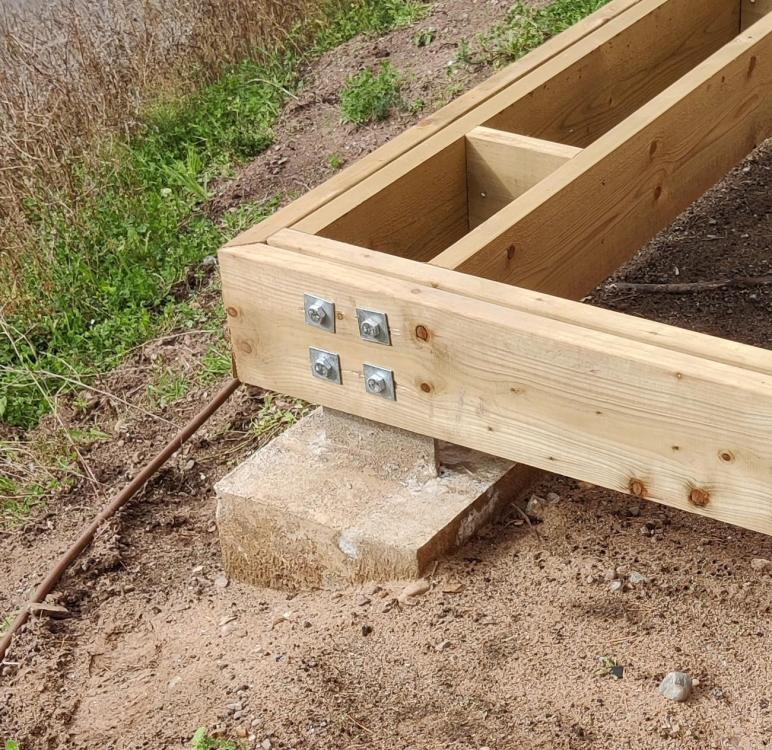
I think some of the where about 3 to 4m. But we have a similar arrangement holding down our roof overhang and they must be about 7 to 8m. -
Ours is a fixed speed, think it's a 100L accumulator. Works fine. Fixed are way cheaper than variable speed and for domestic use fixed speed is fine. If your using a 300L accumulator a VSD pump would run most it's life at full speed anyway. So why bother with the complications and additional expenses. With those suction and discharge heads you are only going to pull 10s of watts anyway, with the right pump.
-
Fridge in hallway / fire regs and ventilation
JohnMo replied to makingprogress's topic in Building Regulations
I would just omit all together, putting a fridge in a sealed room? Transfer what you want cold on a daily basis to the normal fridge, like everyone else does. -
Fridge in hallway / fire regs and ventilation
JohnMo replied to makingprogress's topic in Building Regulations
Hi no image. I would put in utility, get BC sign off then put it where was best for me. But not sure in a hallway would be my first option. -
We did concrete, but did it before the walls went up. Not sure all screeds can be done in a 100mm, so you have to do some investigation. Hopefully someone will be along to answer in more detail.
-
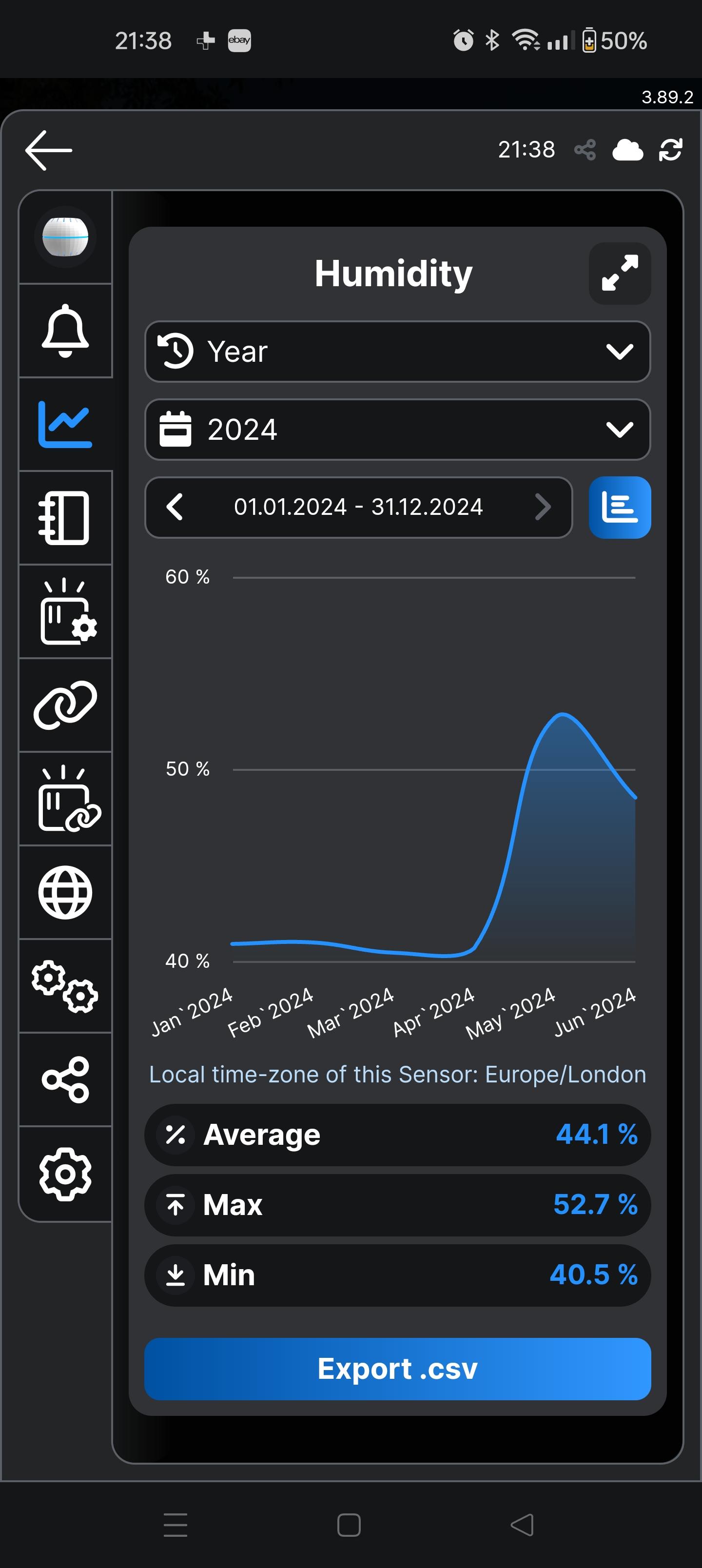
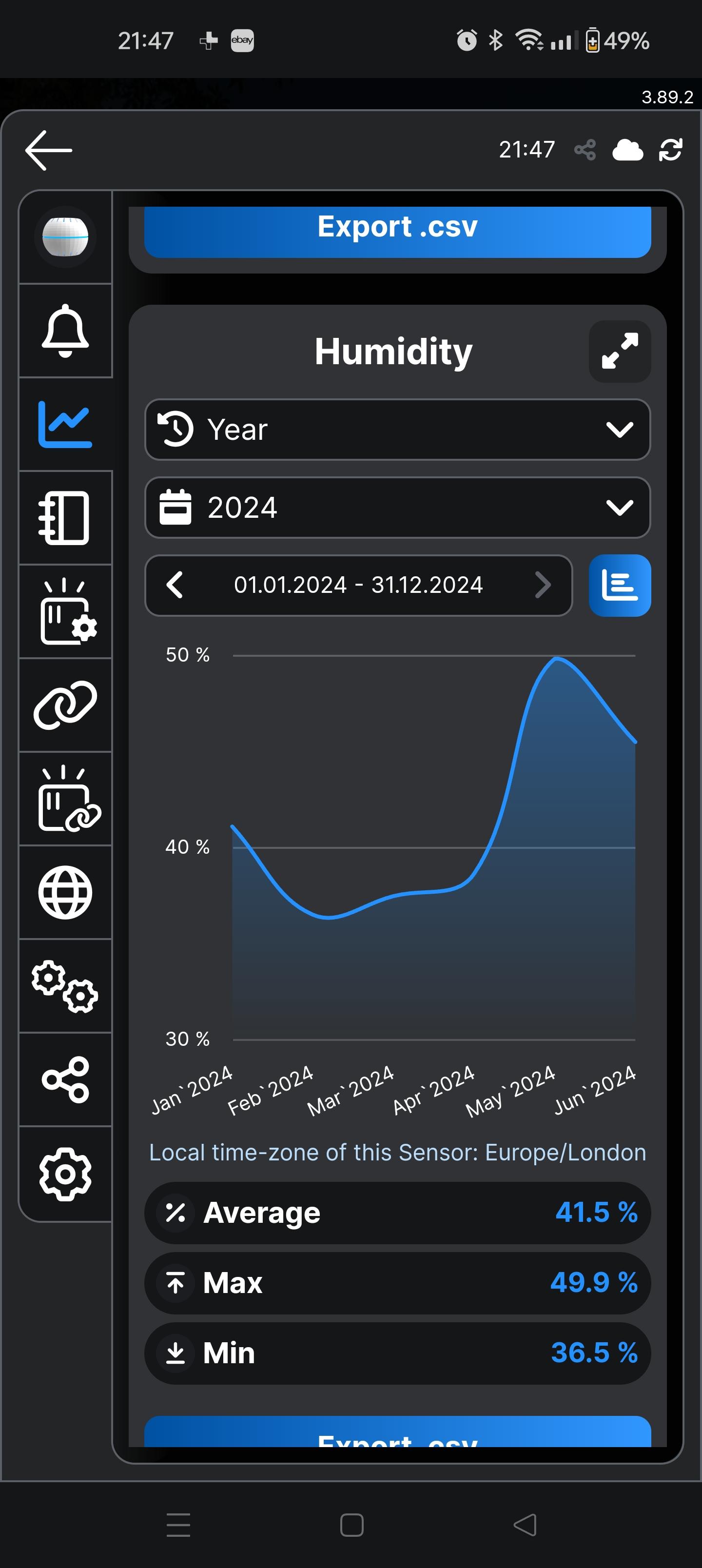
@ProDave @thaldine our house is sitting at 42% RH currently and its 21.5 degs, we have had a bedroom window open all day and lounge windows open this evening. But outside is 79% humidity and 7 degs. It's interesting to see the difference between the enthalpy HE compared to stock heat exchanger.
-
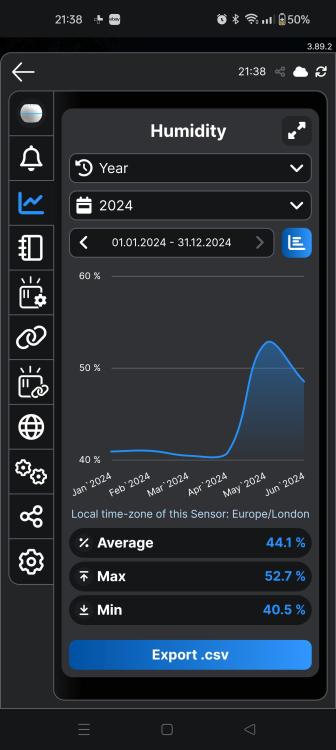
This is a couple of trends of house and summer house. The house is MVHR (but not enthalpy). The second is a heated summer house with dMEV. The trends run from January and you can see when the heating was switched off there is a jump in RH humidity. But it does show an almost flat line in the house. Reducing ventilation rates would fix this. Something like Fresh-R ventilation will do this automatically as it does MVHR based on demand of humidity and CO2 sensed from the extract. House - MVHR Summer house with dMEV.

-
Posts for raised decking: timber or plastic?
JohnMo replied to Lift span's topic in Landscaping, Decking & Patios
You really should be getting a structural design done for the decking and the balustrade structure. Didn't realise the fall was quite that much. You have several issues Decking lift in the wind Balustrade wind and protection loadings Decking collapse due to loading or pulling away from the ledger board To name a few -
Posts for raised decking: timber or plastic?
JohnMo replied to Lift span's topic in Landscaping, Decking & Patios
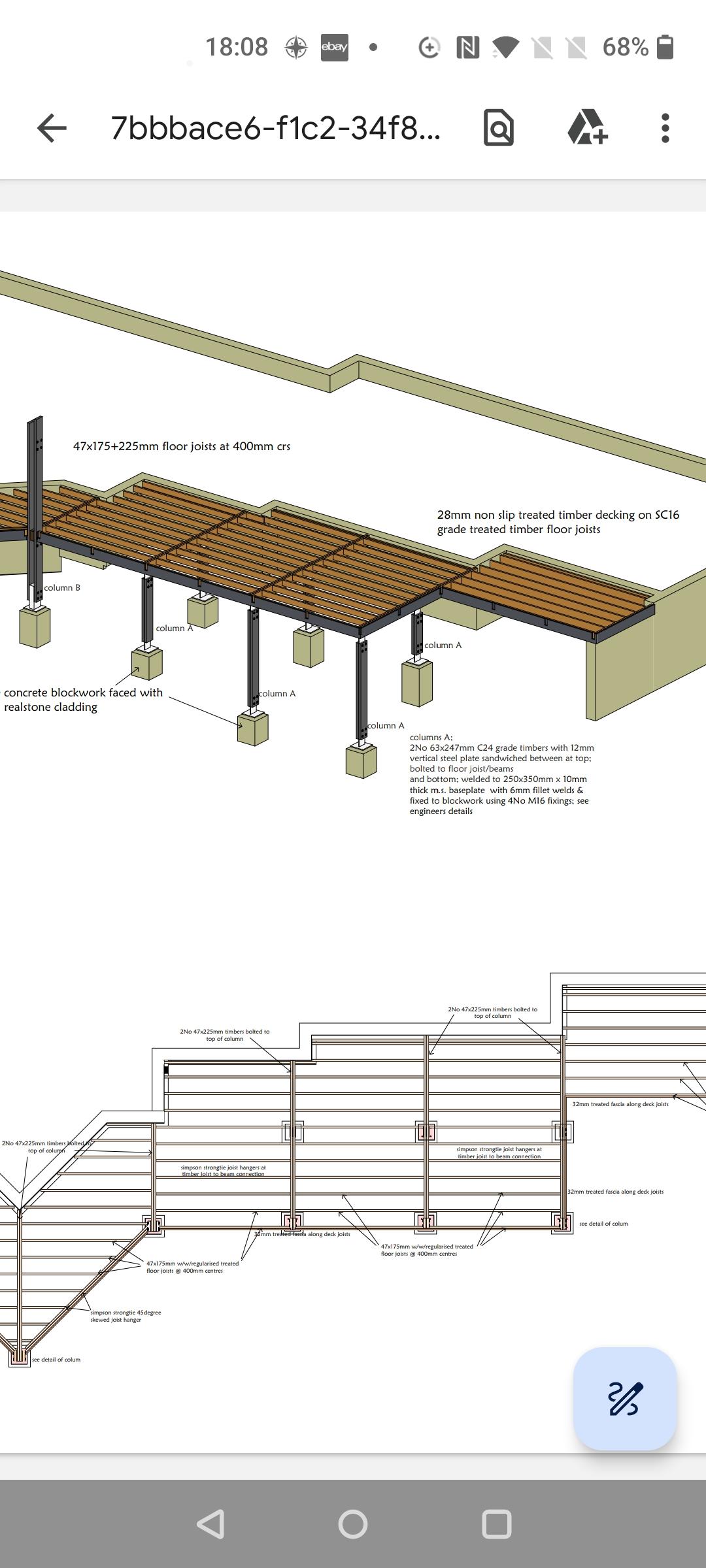
A snippet of our drawings for our deck structure, we moved the hill about instead of a big support structure. Fairy simple steel, galvanised and wood between.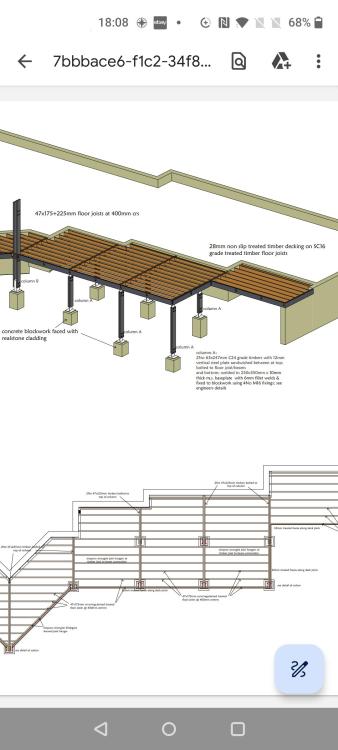
-
Fabric and ventilation heat loss calculator
JohnMo replied to Jeremy Harris's topic in Heat Insulation
Not sure that is correct From Passivhaus The Passive House criteria allow buildings to go by either criterion - the 15 kWh/(m²yr) heat demand OR the 10W/m² heating load. So heat source doesn't really matter, the actual energy delivered to house that matters. -
Block and beam for timber frame aiming for passivhaus
JohnMo replied to Barny's topic in Timber Frame
FYI a twin frame, is a Larson truss. A structural element and non structural to hold the additional insulation. -
ASHP pipework in floor below the insulation - any guidance?
JohnMo replied to AAA's topic in Air Source Heat Pumps (ASHP)
That should work -
I would go UFH, which tends to radiate heat unlike radiators. However any heated house will lower the relative humidity. But a little fine tuning of ventilation rates should assist with that and maybe an enthalpy heat exchanger in the MVHR.
-
Posts for raised decking: timber or plastic?
JohnMo replied to Lift span's topic in Landscaping, Decking & Patios
Flat steel plates embedded in concrete or on concrete pads. The sandwich in wooden framework