
JohnMo
-
Posts
12469 -
Joined
-
Last visited
-
Days Won
179
Everything posted by JohnMo
-
WC, is matching flow temperature to outside temp. So as it gets colder the flow temperature increases to compensate for the increased heat losses. A curve would normally start at 20 degs outside and the minimum flow temp of the heat pump, which is normally 25. Then the design flow temp of your house. If you don't know this set to 35 at -6 say as a start point. Move all room stat settings to a few degrees warmer than you want the house or room. To fine tune, leave the warm weather setting alone and only adjust the cold weather end and only flow temperature. So if your heating is on, and if it's to hot in the house trim the flow temp down and vise versa if to cold. Only make an adjustment once per day and generally no more than 1 deg initially then parts of a degree after. Once set you are done. If after the above a room is warmer or cooler than you like, you adjust the loop flow on the UFH manifold, increase the flow to make action warmer and decrease to make cooler. Use the thermostats as room limit stops, so set a degree or so warmer than target. It sounds like your heat pump is big for the house, so leave the buffer for now. How you doing the above on your heat pump - not sure
-
https://forum.buildhub.org.uk/topic/34444-humidity-activated-trickle-vents/
-
I use a Greenwood fan in our heated summer house. It's the second unit we tried the first one fitted (another make) was noisy. Humidity tracks very closely what the main house does with MVHR. Our house is mostly 3G except some glazed doors, which are Krypton 2G. Don't let them pass 1.4 Uw as high performance, they just comply with minimum Scottish building regs.
-

Bulk water needed, cost advice please
JohnMo replied to Post and beam's topic in General Self Build & DIY Discussion
Ask them to supply, they just need an IBC, builders generally have then kicking about. If not look on Facebook Marketplace or gumtree, IBCs normal sell for about £50 to 100. Then fill yourself or again ask them to. -
Is your ground levels below the damp proof course? Have you done any landscaping outside that may have changed ground levels? What ventilation measures do you have? How long have you lived there? Is this a recent thing or been there quite awhile?
-
No, it tells you nothing about the window unit performance. Agon triple glazed units all have the same Ug number. So you need a proper ventilation strategy. Can I suggest the following dMEV. You need a fan in each wet room, and no trickle vents in those rooms. All dry rooms have trickle vents. The trickle vents need to be self modulating and or reactive to humidity. dMEV fans run at a very low rate call the time and the ones I am going to suggest are silent and automatically adjust speed when sensing a humidity rise and go back to a slow speed when cleared. The only need power to them. dMEV fans - use Greenwood cv2gip. Self modulating trickle vents, have a search on here via Google. The window people may just look back at you blankly. As your NE Scotland give Wood Kraft in Elgin a call also, they make wooden windows. Did ours. Another alternative to 3G is 2G krypton filled. That will give you Uw of 1.0 with the right frame.
-
Why do you need two stats in the same room? That is just a waste of time and your money. If the UFH is in one big room you only need one thermostat at most. Your issue could be the stats RF signal band could be just interfering with each other. Make it a single zone and get rid of the second thermostat. I would suspect your gas boiler is short cycling a lot, with the house zoned so much, but that's another issue.
-
Sorry it makes no sense, the UV light is last thing in the system. Pump start logic is a lagging indicator, as pressure vessel is the supply, the pump tops up the pressure vessel. You are over thinking, they are designed to stay on, not switch on off a few thousand times a year. You will pay more for bulbs and monitoring than you save in energy. Plus there is a heat up time, as it requires to heat mercury to emit the UV light.
-
Not really that practical, basics are House at 20, floor has to be at or above 20. Your return temp will be at or close to the average floor temp before a compressor cycle starts. So then you would need a minimum of 35 flow temp. Not practical, too hot, poor CoP. Not really the longer you run generally the hotter you run, the worse the CoP. Great CoP isn't the only parameter it's also cost to run and comfort. Big screed and overshooting target temperature isn't comfortable, you can take 12 hrs to cool down, then you undershoot target temp. Bigger/thicker the screed floor the more gentle or very well controlled you need to be, to eliminate yo-yo temperatures.
-
My thoughts are Really depends on how you sized the heat pump if it's massively over sized it may work, if not you are going to have a cold winter, especially when it gets to sub zero, with those settings. DHW will always have priority, so hot water will take 1 to 1.5 hrs out of a time slot. So you only have 1.5hrs for heating in the buffer DHW time slots. You have 8 hrs of heating on your schedule, less DHW, depending on your cylinder setting that could heat twice so let's say 2.5hrs has gone. So now 5.5hrs max schedule is left. A 6kW heat pump will do 5.5 x 6 so 33kWh aporox. If you have a design heat load of 4, that is 4 x 24, so 96kWh required at say -3. You would have a short fall of 63kWh of heat. So may not be enough heat on a 7 Deg day. I would set to full weather compensation, but set an override thermostat or timer to set back during the really (tea time) expensive period. Not a fan of the Cosy tariff, it really is a battery tariff, being miss sold.
-
Monitioring hardware/software recommendations
JohnMo replied to Dam0's topic in Air Source Heat Pumps (ASHP)
A quick look you get everything you need out the box. Last 3 items on the list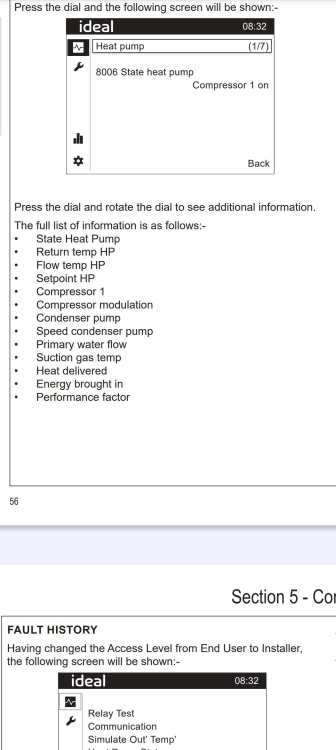
-
Big battery at 40kWh. What area of if NE Scotland? I'm near Elgin.
-
There are 3G and there are 3G. First you need to compare the Uw values. Frames make a huge difference in window performance. If the company will not give you that value find another. The value they may quote is Ug this us only the glazing element. Tell tail of good uPVC is look at a frame cross section and it should have many small air pockets in the frame profile. Bad ones have one or two. The installer makes a big difference, most can be or are poor. Ask non leading questions to dig out of the company, details of they install the windows. They really need to have every gap filled with foam to get rid of cold bridging. New thread for you to start is ventilation, making house airtight is good, but not addressing the ventilation strategy an omission, that leads to issues. Ventilation strategy will also feed in to the final design of the windows.
-
We have a local depot and used them quite a bit. But I generally always priced checked. But some costs were very high, example - their decking boards were 3x the price I paid. Insulation I got elsewhere, way cheaper. You have to shop around. Yes makes it straightforward, but not necessarily always good value.
-
First check the amps generated are ok on the new panel for the max allowable amps for the inverter. A write up here, worth a read. https://explorist.life/using-mismatched-solar-panel-sizes/
-
Monitioring hardware/software recommendations
JohnMo replied to Dam0's topic in Air Source Heat Pumps (ASHP)
I use a Danfoss Sonometer heat meter, this is hooked up to a level 3 open energy monitor system. https://shop.openenergymonitor.com/level-3-heat-pump-monitoring-bundle-emonhp/ All the configuration work was done for me by open energy monitor, their service was great. -
Monitioring hardware/software recommendations
JohnMo replied to Dam0's topic in Air Source Heat Pumps (ASHP)
Mine is easy - temperatures, flow, return and outside, that's it. -
Monitioring hardware/software recommendations
JohnMo replied to Dam0's topic in Air Source Heat Pumps (ASHP)
Basics are You need to be able to read instantaneous electric consumption in Watts, you need to be able to read flow rate and flow and return temps at the same time. That will give you instantaneous CoP, with a few calculations. You need outside temp also. It's better to able to log and see a period of time, as there are plenty of variables that for ever change. Instantaneous CoP is useful, daily CoP is also useful, as is the CoP while running. Your controller may give this info or most of it. It is normally to include everything in the system electrically in the inputs, so controller, pump, valves etc. Exact numbers aren't that important, repeatable numbers are. You will be comparing your system to it's self with slight variations to settings. Good CoP comes from Lowest flow temp, but also from lowest cycle start temperature so the controller can the widest dT for as long as it can. Great CoP doesn't necessarily mean low running costs it a fine balance. Heat pumps cycle especially at low loads, managing these cycles is useful to running costs -
Remember PIR is more flammable than wood. If they don't want wood not due PIR will be any good either.
-
Monitioring hardware/software recommendations
JohnMo replied to Dam0's topic in Air Source Heat Pumps (ASHP)
I have just installed this https://shop.openenergymonitor.com/level-3-heat-pump-monitoring-bundle-emonhp/ Came already configured so all straightforward. Makes comparison test runs very easy to measure and understand. But not cheap. -
If that is the case, I cannot see. You need a check valve in the hot water outlet (top of cylinder) to prevent reverse flow, as cold water pressure could be higher than hot water cylinder pressure.
-
Can you do this? So long as it's opentherm you should be able to. https://www.ephcontrols.co.uk/section/pdhw/ Or as shown on this video. Cheap and should work.
-
A few issues unrelated to the question The pipe exiting the tundish is supposed to have a continuous fall, to comply with G3. Yours goes horizontal which does not comply. If it's 22mm you are only allowed it to be a max of 9m less 0.8m for each elbow. There are a minimum of 3x elbows visible so max length allowed is 6.6m. not sure where the pipe goes off the edge of the photo. But maybe too long? Insulation has way to many gaps. This needs to be sorted, plus better corner joints. All joints should be tight. Plus if outside the heated envelope it looks like thicker insulation would help. As @John Carroll says cold water feed is not correct. The combined valve has a check valve within it, the balanced cold water feed is taken upstream of the check valve. In it's current location you are likely getting a reverse flow through the cylinder when both hot and colder water are asked for. 3 things to sort Connect cold to balanced port on combination valve. Sort tundish discharge pipe. Full instructions are in your cylinder manual. Sort insulation.
-
Drain at threshold and Hardcore to buildup levels. Not really sure what you are asking. But to increase insulation thickness the whole floor would increase in height including the block work under the wall. A 100mm block on its side under the 140mm, would lift the whole house 100mm. Increase insulation depth and make it a thick screed? Plenty of different ways to do it, just think it through.
-
If your boiler only does a single flow temp no advantage over S plan. Most boilers will have options or optional kit that will allow weather compensation. If you add this you can then adapt to PDHW. This basically switch WC off when doing DHW. You would need to share info on your boiler make model or have a read through the manual