


JohnMo
-
Posts
13299 -
Joined
-
Last visited
-
Days Won
200
Everything posted by JohnMo
-
I've a strong suspicion you are just going around in circles. You change lots and still have shortish cycles as you dump more and more heat into the floor. You need to allow the floor to buffer heat, then STOP adding more heat. Your current approach is like driving a powerful car against a speed limiter. I'm My approach is set thermostat at 21 to force start boiler. Let it run chasing 21 for about 4 hrs, then reduce thermostat to 20.5, for an hour or 2. Most the time the boiler switches off when the thermostat is moved to 20.5. Then set to 20, boiler switches off. Once set to 20 the floor stabilises and you get some overshoot as the floor releases it's energy. Our heating stopped at 7.30 this morning and by 11 the house was sitting at 20.7. Depending on heat loss, area and depth of screed you may need to heated once or twice a day heats. But it gives a huge heat sink for the boiler to work against. In reality excluding solar gain we have less than 0.5 Deg fluctuations in temperature.
-

Sewage treatment plant - air blower electricity costs
JohnMo replied to David Essex's topic in Waste & Sewerage
Get some solar PV, they will supply the energy for free during most days -
Sewage treatment plant - air blower electricity costs
JohnMo replied to David Essex's topic in Waste & Sewerage
Your treatment unit would become a storage tank. The system uses aerobic digestion, switch off the air it would go anaerobic. So you have turned your unit into a sh@te storage tank, not a treatment plant. Would likely get carry over, of untreated sewage to soak away. -
Which way does the fan on your ASHP face?
JohnMo replied to low_and_there's topic in Air Source Heat Pumps (ASHP)
Yes - most the noise is pushed forward by the fan. You don't want to install with air pushing towards a wall. You get air recycling of cold air coming back round and that reduces CoP and changes the defrost onset temperature for the worse -
Obviously your boiler link will be deleted following ASHP install. I would heat from borrowed house circulation water. Let thermostat open valve only but not call for heat. Or you will end up having a small zone dominating how the heat pump runs, which isn't good.
-
I really wouldn't go more than 15mm, you just don't need any bigger.
-
This is what they have said 3x If you are unable to obtain an MCS certificate for your installation, we will not be able to offer you an export tariff at this time. We are in the very earliest stages of trialling a solution for non-MCS customers. If you'd like to hear when this is available, pop your name and email down here: https://octopus.typeform.... Not sure if it's an issue with a smart meter that has no signal? Or another issue. Have used the link they provided each time and it's just repeat conversation.
-
New Home - "Upgrade" to Weather Comp or OpenTherm??
JohnMo replied to Barnacles's topic in Central Heating (Radiators)
Did you get it working? -
What do your structural drawings say?
-
If you are operating single zone why the actuators? You need a pretty dumb thermostat nothing with TPI control just on or off, ideally with adjustable hysterisis. With UFH the thicker the screed the smaller the hysterisis you need. Otherwise you get big swings in temps - under and over target room temp. If you need a thermostat at all depends on how you intend to operate. Weather compensation? Fixed flow temp? Batch charge during cheap rates?
-
Tried 3x with octopus without MCS just not interested, said bluntly no each time. Have full structural drawings, electrician sign off and MCS install cert for battery. Can tick everything box - but big NO. So don't bank on it, in any calculations.
-
Are we targeting ASHP's at the wrong market?
JohnMo replied to ProDave's topic in Air Source Heat Pumps (ASHP)
There is a school of thought that ASHP should be sized at least 10% bigger than design required, just to help cope with defrosting. Living with a heat pump 100% oversized (I do) isn't an issue. You just operate as appropriate. Doing weather or batch charging, I have done both with zero issues. Most situations an ASHP is designed for -3 degs. So no where near the oversizing required for the top of Scotland, where you could be designing for -10. A larger heat pump also seems to bigger range of modulation than a small one from what I've seen. Not sure that is true. If you are air tight and can provide proof of it and proof of other improvements, not sure there is an issue. Most of the issues are down to assessors or so called designer with no clue. Or owner thinking they know better because they like a house at 16 degs. It's tax payer money (£7500) so needs to fit for purpose if you sell in two years time. Then there is homeowners wanting to operate as they did with the gas boiler, short on time control over multiple zones. Most the buying public really aren't ready for a heat pump, they have been fed on rubbish information for years, saying zones good, high flow temps and short operation windows are fine. So running at low flow temperature for long periods just sounds wrong (and so will be very expensive). Heat pumps as currently sold, are a rich man's play thing, even after grants, the prices quoted to install are in the general daft and well beyond the general person.h. Building well, in the first place, fixing issues with poor housing stock (insulation and airtightness or bulldozer) are the first fix. Second is education of installers and general population (most would have zero interest in both categories). As @Roger440 pushing people into energy poverty isn't an answer. Rant over -
Are we targeting ASHP's at the wrong market?
JohnMo replied to ProDave's topic in Air Source Heat Pumps (ASHP)
kw or more correctly kW. So say 2kW for 24 hrs is 48kWh, so a big uplift in cost. This also goes away from the statement of direct heating is rubbish. So if everyone goes this path, grid comes to standstill on a coldish day. -
Are we targeting ASHP's at the wrong market?
JohnMo replied to ProDave's topic in Air Source Heat Pumps (ASHP)
In 99% of households this just isn't required, just heat the water to 50, it's no longer an issue anyway. Most houses run on chlorinated water (like or not), if you have an unvented system also, how does legionella get in? Is that a real comment, add in loads of defrosts at anything approaching zero, sounds like a good system performance will prevail - NOT.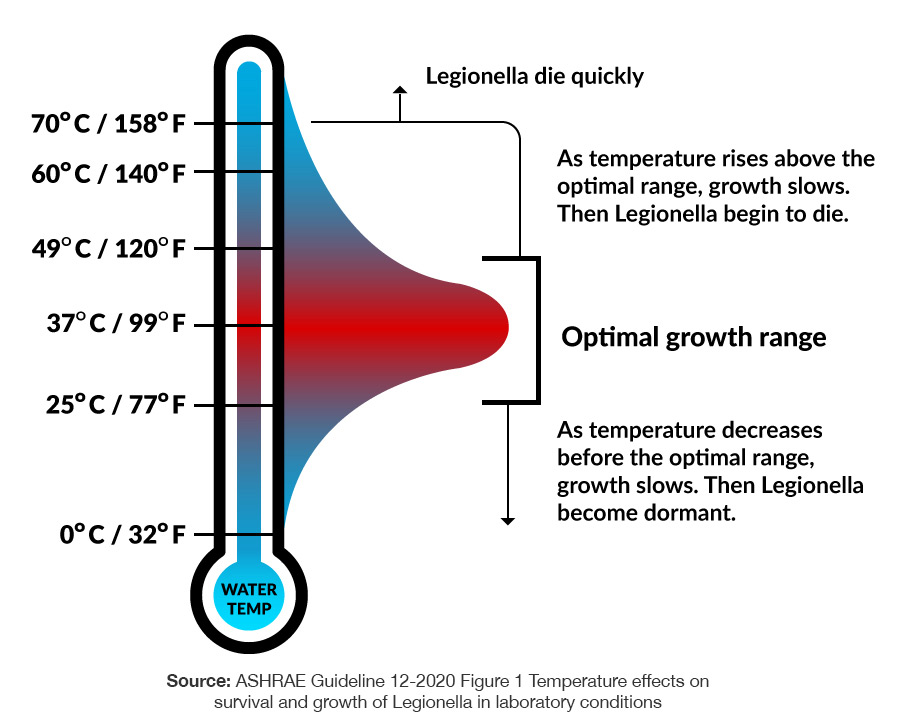
-
Are we targeting ASHP's at the wrong market?
JohnMo replied to ProDave's topic in Air Source Heat Pumps (ASHP)
Some parts of UK cities provide distributed heating systems knot many), many countries also. A new housing scheme should be built around this approach, not some ad-hoc boiler or heat pump decision. CO2 charging mechanism already exist within the tax system and have done for a decades or so. -
Are we targeting ASHP's at the wrong market?
JohnMo replied to ProDave's topic in Air Source Heat Pumps (ASHP)
I just said a way So a new gas appliance has the same playing field as a heat pump. I would apply those limits to ALL heat pumps also. R290 can pump out 70+ degs, but at a CoP hit so why allow it. -
Are we targeting ASHP's at the wrong market?
JohnMo replied to ProDave's topic in Air Source Heat Pumps (ASHP)
Exactly, if you don't want people to use direct electric heaters or gas, slap 100% sales tax (plus vat) at point of sale on those commodities. Zero tax, at point of sale, on those items you want people to use. Scrap the grants. I would go further Force manufacturers to limit temperature output in heating mode to 45, and hot water mode to 60 for all heating appliances, sold to UK market. Stops use of S and Y plan overnight. Heating mode would made via Opentherm and/or weather compensation only, both methods are to be provided as standard, this would include all heat pumps. If manufacturer has their own version they can provide that as well as the minimum required standard of Opentherm and WC. Hot water cylinder below 180L minimum coil size 2.5m² and above that size a min 3m². -
Cycling is part volume and the other more critical is having somewhere to take heat away - the heating system. An example is trying to push low flow temps through small radiators, they just don't have enough heat transfer area to transfer the energy generated to the room. So heat source cycles as that is all it can do. In this situation you would install radiators with about 3 to 4 times the surface area and the system works. Your system is having a first cycle helped by having to heat a bigger volume (volumiser). But you are not really dumping the heat to the house, I suspect the heat loading in the floor is running full, the house heat loss is way smaller than the continuous heat being supplied. The heat flow through your UFH is about 1.2kW per loop. But depending on room heat losses a lot of this will be recycled water, so may not all come from the boiler. So 4x loops at 2.5 l/min, so y The Salus actuator will target that dT. Suggested action Leave system as is Manually switch off boiler or UFH until house cools to about 20, then switch boiler or UFH back on again see what happens. If you get a long run your solution couple simply batch charge the floor - use as a storage heater.
-
A couple of images. The first is the boiler firing in a small loop and not getting to the heating system. When in normal running the flow temp is 38.5. at about 1.15 a pump stopped, flow temp increases 5 degs, then refires at 30. No setting changes but normal running, against a full open heating system. Second image a few hours previous to above. Restart is 26 degs. So I suspect your engaged heating system is just to small to move the heat away. The mixer is just pushing most of the water straight back into the boiler.
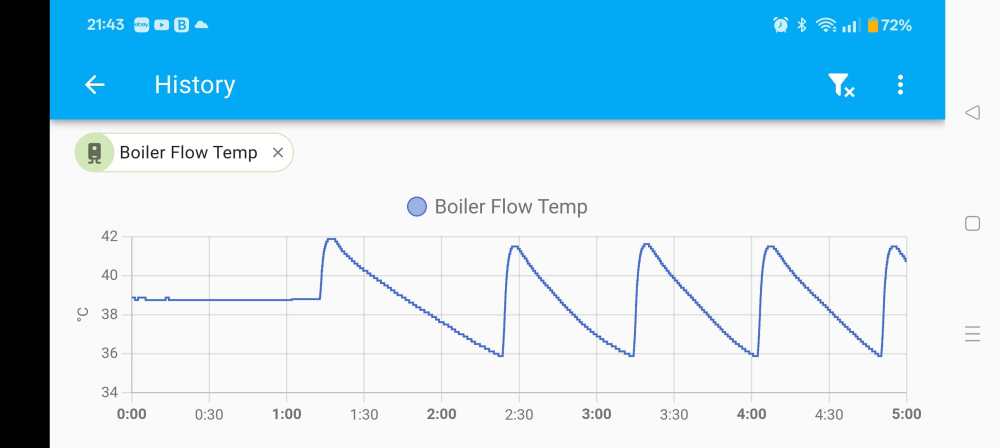
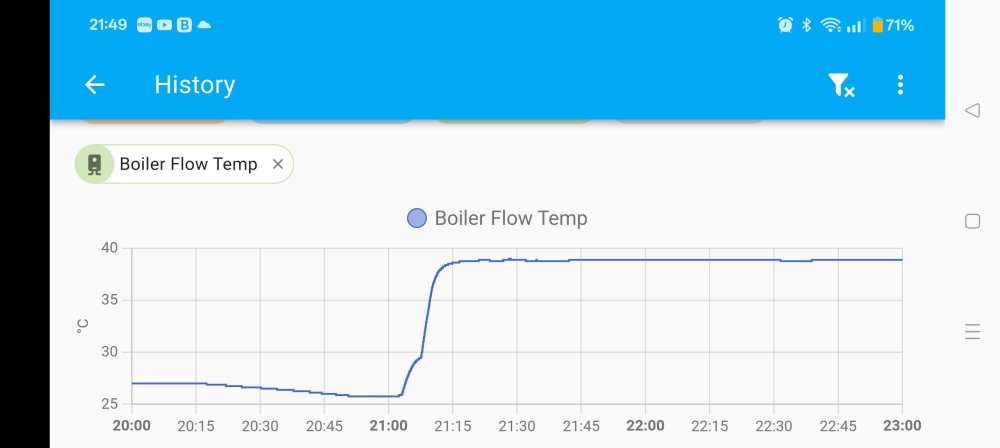
-
My routing was quite onerous, once in the house already had 22mm plastic pipe (12m each way), no easy way to replace. So just use a close coupled tee (28mm to existing 22mm) and additional pump. Pump is powered with diverter valve. Works well. Pump £100-150. Two 28 to 22mm tees. 6kW will heat cylinder in about 45mins.
-
You just undo the pipes on the manifold that feed the loops on the conservatory. You then blank the manifold ports. Positive isolation sorted. Let them install ASHP, reconnect pipes later if you want. Thermostat and valves can remain in place, as they do nothing now.
-
What are you actually getting for this, if you already have UFH? Or am I missing something?
-
Installer and Cylinder decision - BG or Heat Geek?
JohnMo replied to km94's topic in Air Source Heat Pumps (ASHP)
Gee people have more money than sense. £20k for a heating system. -
Get other quotes, don't mention the conservatory is heated. £7500 + £5300. For house that has UFH already? That's bonkers as normal. Or is it £5300 on total, so zero cost to you?
-
Pretty normal to a mismatch in supply and extract count. The important bit is the correct supply or extract, whichever the greater, then match both supply and extract flow rates.




