MortarThePoint
-
Posts
2168 -
Joined
-
Last visited
Everything posted by MortarThePoint
-
T&G chipboard flooring fixing over ply diaphragm
MortarThePoint replied to Rick734's topic in Floor Structures
I'm pondering what force the nail from the nail gun would clamp the plywood to the joist with in that first gluing operation. I'm much more familiar with screws, but I expect the nails should make for a tight joint which is what you need to avoid an excessively thick glue layer. The Chippy will definitely want to use his nail gun for this bit so I wouldn't be suggesting screws unless someone more knowledgeable than me has concerns. -
T&G chipboard flooring fixing over ply diaphragm
MortarThePoint replied to Rick734's topic in Floor Structures
Gluing and nailing the plywood feels OK, but I'd glue and screw the T&G to the plywood at the joists. Then the screw is clamping both the plywood and the T&G to the joist. So yes it's gluing the T&G to the plywood, but only at the joists. I'd also glue at the T&G short edges if not at joists, already gluing if at joists. That would add strength and may avoid need for noggins. -
T&G chipboard flooring fixing over ply diaphragm
MortarThePoint replied to Rick734's topic in Floor Structures
Curious as to why the SE has specified the plywood at all. Squeaks come from rubbing and if both the plywood and the T&G are glued at the joists there shouldn't be any scope for rubbing -
Self build laziness
MortarThePoint replied to Pocster's topic in General Self Build & DIY Discussion
I've wasted many hours going round merchants to get the odd thing here and there. I think my appetite for not getting in the car extends to about £6. How much is the the Toolstation rapid delivery? -
Air tightness advice required for masonry build
MortarThePoint replied to ruggers's topic in Ventilation
Key areas as we wet plastered the walls. If we'd gone for and dab I'd have fully covered. We have a membrane on top of precast concrete GF subfloor so I painted from that up about a block's height (225mm). The FF is hollow core (HCF) so painted about a block's worth down from that to encompass the ceiling void. Focused on joints between HCF at walls, perhaps should have sealed along whole joint. On FF painted up from HCF about a block's worth and down from top of wall plate about 150mm. Also painted up floor to ceiling all wall corners. I used Intelligent Membranes tape on windows followed by Passive Purple and then their Pink Grip. +1 for Adam being a top bloke. We don't have MVHR and am not aiming at PH standard, but did want to do a reasonable job of air tightness. -
Air tightness advice required for masonry build
MortarThePoint replied to ruggers's topic in Ventilation
I've used Passive Purple quite a lot Aero barrier looks interesting, but I'd worry about my windows getting covered in gloop -
It looks like a great approach for lightweight buildings like garden offices. I'd want the load spread a bit more than they appear to though. Looks like tops 200mm diameter hole every 1.2m which makes for a pressure of (1.2m*1.2m*1.5kN/M2) / (3.14*0.1m*0.1m) = 69kPa Which I expect would high to bear in the alluvium
-
You can get a funny looking spread base for Sonotubes as well: Metal music not mandatory
-
I've started another thread about a different approach that doesn't suit your desire for a more substantial foundation, but is interesting:
-
Another thread (link below) made me wonder about simple garden room foundations. This led me to discover the Rod System which looks interesting. Does anyone have any experience of the long term stability. The rods are concreted into the ground and don't go very deep so that makes me wonder. The loading won't be high, but would be interesting to know. Could be made adjustable for later correcting any movement but that doesn't appear to be done. In the US, you often see people using Sonotubes which are e.g. 12" cardboard tubes put into an augered hole and filled with concrete. These can go much deeper, but could still have a rod system at the top, though that's not how the US guys seem to do it. They have the tube/concrete stick out above grade and then bracket or bolt the timber directly to the concrete. It's cheap to hire an auger machine in the US due to how common this approach is (e.g. for decks). Flexible approach: Example of fitting timber base onto rods: Close up of parts: Another example: Sonotubes:
-
Consider a raft Foundation: https://forum.buildhub.org.uk/topic/12840-outbuilding-foundations-raft/ What you've dug already could be a large ring beam
-
Agreed, I went with Screwfix for most of my cable. Sockets and switches from Edmundson though all in one order
-
Edmundson are good and can normally work on the price for you. The key is volume. Making fewer bigger orders. There are also some good online only options. Careful though, you'll pay a lot of attention to cable prices which are normally well matched, but it's all the other bits where they claw back margin. I've paid an eye watering price for SWA glands before with a shrug from the guy at the counter.
-
Herringbone 8 flooring needs <=2mm and >=150kPa, so went with the QA 2mm 0.1 tog version (Elite QAU-TTE-01) there.
-
Opinions on best way to drop a ceiling
MortarThePoint replied to Thorfun's topic in General Construction Issues
I've seen the Casoline system one the website before and it's what the architect suggested. If I recall it has a larger minimum void. Gyplyner worked well. I used brackets like GL9 under concrete which worked well with concrete screws and packers to tweak (default 3mm then fine tuned later as needed). I don't know requirements of flats -
Associated costs of self-build mortgage.
MortarThePoint replied to flanagaj's topic in Self Build Mortgages
Mixture I think. I've been happy with my independent one. Strict but very helpful -
Associated costs of self-build mortgage.
MortarThePoint replied to flanagaj's topic in Self Build Mortgages
Building control can be carried out by private companies too which has injected a bit of 'customer service' into both the private and LABC -
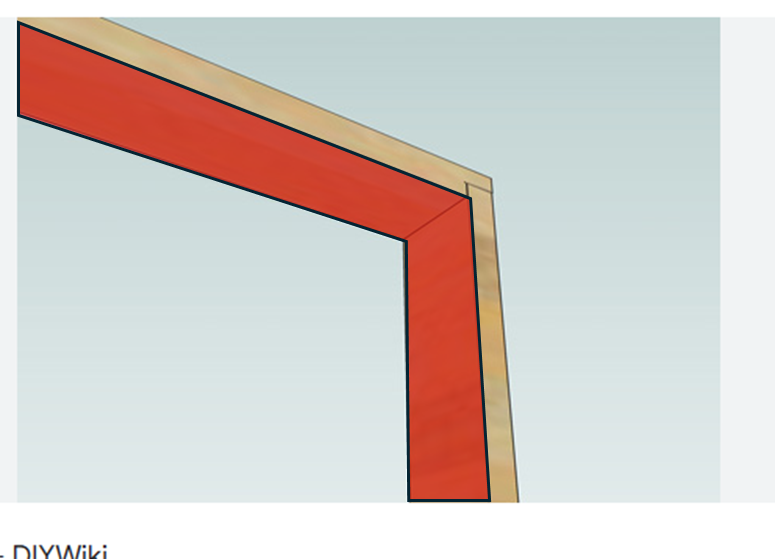
Oh dear, I've made a mistake here then. Painter is in and busy painting and I am a while away from having doors on site let alone hung. I guess that leaves me these options: Fit the door stops where I hope they should be and let the painter at them Have the door linings painted along with the architrave and skirting, then fit painted door stops later and hope the joint can then be tidily painted over to make the join disappear Somehow not paint the door lining face (i.e. the bit shown red below)
-
I need to fit before having the doors because the decorator is here and can paint along with the architrave, lining, etc. I don't have the doors yet. Can I trust the thickness specification of the door manufacturer? They're fd30 doors and 45mm thick ( most manufacturers do 44mm thick but Deanta are a tad thicker it seems). I was thinking to leave 1mm for 'paint' so recess the stops 46mm from Door lining surface. What do I do if the doors end up thinner or thicker?
-
Do people generally use a butt joint or mitre joint in the corners of the door stops a door lining?
-
Recommendations for internal doors?
MortarThePoint replied to markharro's topic in Doors & Door Frames
Did you have any success finding formaldehyde free doors or indeed any that have any sort of certification (M1, A+, Carb2, etc)? -
A handy specification that may go unnoticed is 'punctual conformability'. Nothing to do with ability to be on time, but the ability to cope with small defects. No idea what the 'resistance to large ball' specification means. Parador appear to call this "Compensation for punctual unevenness" and their 500 product (2.6mm thick) has a figure of 1.15mm. I'm going with TimberTech Elite Plus 3mm, also 0.1tog but more available, which is 3mm thick and has 1.5m of 'punctual conformability' Sorry @Nickfromwales, good advice about UFH but we're going to pop insulation over it in some rooms. Laminate and underlay should total 1tog or less which is a R-value of about 0.1 m2.K/W which in my mind I compare to the Rsi value that is likely around the same. Many have questioned my putting UFH upstairs and I think this is an example of where it's going to give me options. Compromises, compromises.


-
It could go up an if not liked or goes bad get taken down easily
-
Does look good I wonder about peel & stick being a good compromise
-
We've got to the stage of proceedings where 'client management' is a significant challenge. In that I mean trying to keep my wife happy. I need drawings, dimensions, products and decisions whilst she lives in mood boards and options. This isn't a picture of my wife but, I am getting used to this expression and worse: She is keen on having wall paper in a couple of places: Hallway, above shaker panelling Downstairs loo, above v-groove cladding I am sold on the panelling / v-groove but not the concept of wallpaper. A painted wall with pictures on looks much nicer to me and feels a better way to have the 'interest' that wallpaper adds since the pictures can be changed and don't damage the wall. It's very easy for wallpaper to end up kitsch. Also, I don't think I have ever seen wallpaper that hasn't started to lift at the joins. Am I rightly concerned about wallpaper or should I get back in my box.