Thorfun
-
Posts
4891 -
Joined
-
Last visited
-
Days Won
36
Everything posted by Thorfun
-
Can a slab be too thick to have UFH pipes in it?
Thorfun replied to Thorfun's topic in Underfloor Heating
thanks again Dan. really appreciate it. -
Can a slab be too thick to have UFH pipes in it?
Thorfun replied to Thorfun's topic in Underfloor Heating
ahh....ok. I get it now. I assume that the caps wouldn't affect it's accuracy on temperature reading then? -
Can a slab be too thick to have UFH pipes in it?
Thorfun replied to Thorfun's topic in Underfloor Heating
hmm...but I don't have any soil pipes going under the slab like you did so I feel I need to run the sensors back to the plant/comms room rather that to where a wall will eventually be built and sticking up from the slab. again, talking about sensors in the slab at the moment so once they're in they're not coming out! -
Can a slab be too thick to have UFH pipes in it?
Thorfun replied to Thorfun's topic in Underfloor Heating
but the sensor is out the end of the conduit so it's in contact with the slab, right? so, therefore it won't pull out as it'll be concreted in? -
Can a slab be too thick to have UFH pipes in it?
Thorfun replied to Thorfun's topic in Underfloor Heating
like this? https://www.ebay.co.uk/itm/124433541502?hash=item1cf8d1297e:g:mTsAAOSwPKlfqoC- how would you know if the quality is any good though? or do you simply install lots of them and if one fails then just disconnect it and wire up a different one! -
Can a slab be too thick to have UFH pipes in it?
Thorfun replied to Thorfun's topic in Underfloor Heating
if I knew what you were talking about it might be better. but, I think you're saying that I should forget the Wunda probes and either get the Loxone ones or buy cheap versions of a DS18 sensor online. -
Can a slab be too thick to have UFH pipes in it?
Thorfun replied to Thorfun's topic in Underfloor Heating
thank you. will do more reading on this instead of my day job today. ? -
Can a slab be too thick to have UFH pipes in it?
Thorfun replied to Thorfun's topic in Underfloor Heating
just spoke to Wunda technical support and their probes have 2 wires and he said they're not proprietary and should work with other systems. they work with the Heatmiser systems that Wunda also supply so I see no reasons why they shouldn't work with Loxone. @Dan F I do notice that the Loxone ones have 3 wires though. do you know what the benefit of that would be? @Rob99? maybe this is something you would know about? -
Can a slab be too thick to have UFH pipes in it?
Thorfun replied to Thorfun's topic in Underfloor Heating
that's great. thanks guys. I'll do some more research on the probes before pulling the trigger today or tomorrow. -
Can a slab be too thick to have UFH pipes in it?
Thorfun replied to Thorfun's topic in Underfloor Heating
not worked it out nor know the answer to the other questions! can't find much information about them on the Wunda website either (https://www.wundatrade.co.uk/shop/home/quick-shop/wundatherm-quick-shop/controls-quickshop/floor-probe/#) -
Can a slab be too thick to have UFH pipes in it?
Thorfun replied to Thorfun's topic in Underfloor Heating
this is very true. but if I want to test the pipework before the pour I need a manifold, right? although from the reading on here the pre-pour testing of pert-al-pert pipe doesn't really seem necessary. -
Can a slab be too thick to have UFH pipes in it?
Thorfun replied to Thorfun's topic in Underfloor Heating
that's a great idea using the pipe as a conduit for the probe. cheers! those Loxone probes seem to be double the price of the Wunda ones which are probably double the price of generic ones. any obvious reason to go for the Loxone ones over the non-Loxone ones? -
Block and beam floor buildup for insulation?
Thorfun replied to puntloos's topic in Sound Insulation
I'd like to take credit for it but that wasn't me! ? -
looks like you need to use some of it to charge your phone! ?
-
Can a slab be too thick to have UFH pipes in it?
Thorfun replied to Thorfun's topic in Underfloor Heating
in the slab or on top of the slab? I ask as it they're in the slab then most seem to come with 3m cable at most so I'll have to support them some how to keep them out of the way for the slab pour which could be a pain -
I really don't want to know about @pocster's 'electric toys' that he uses in the dungeon but I am also interested in where the stored power in the battery went overnight?
-
Can a slab be too thick to have UFH pipes in it?
Thorfun replied to Thorfun's topic in Underfloor Heating
I’m happy to pay £800 for peace of mind. If we never use then great! But at least the pipes are there if we do. thanks for the de-coiler tip. Will look in to it. definitely having UFH on the ground floor but still undecided about the first floor. If it turns out the pipe and manifold are only around £800 then I might just lay it anyway. But that’s definitely a decision I can make a lot further down the line. -
Strip footing and eps slab for timber frame?
Thorfun replied to DragsterDriver's topic in Foundations
sounds like a risky and stressful situation! I wish you the best of luck with it all. as much as I love the idea of the insulated slab (and it appears you do too) it just might not work for everyone. and so maybe a more 'traditional' approach to the foundations would suit you better so you're not so reliant on the lead time for the EPS and you can get the foundations and block and beam floor in and then worry about insulating as the build progresses? as far as I know you can still detail the potential cold bridges out using that route (although I am in now way a builder or very knowledgable in all of this!) so it might be worth considering. -
Can a slab be too thick to have UFH pipes in it?
Thorfun replied to Thorfun's topic in Underfloor Heating
and that is the important question that I don't know the answer to! but, I wonder if you really need to know the temperature of the slab deeper than near the top anyway as the heat will end up rising to the top of the slab anyway. and if you're measuring for running an ASHP in cooling mode and are worried about condensation at the pipes then the pipes are near the top of the slab as well. would those 50mm difference between putting the probe at UFH pipe level in the slab or on top of the slab under the finished flooring really make much of a difference in the grand scheme of things? -
Strip footing and eps slab for timber frame?
Thorfun replied to DragsterDriver's topic in Foundations
I agree with @Russell griffiths and get everything done while waiting for planning. yes it is a risk if they don't approve then you'd have wasted money and have to get things redone. but if you're in a rush then those are the risks you'll need to take. otherwise, you'll have to wait until planning is approved and then get all the calculations and designs done. for us it took about 8 months after planning approval to get the building regulations drawings done and submitted. but our build is pretty complicated with all the different aspects that need to be considered. I'm sure a simpler build wouldn't take so long. -
Strip footing and eps slab for timber frame?
Thorfun replied to DragsterDriver's topic in Foundations
also, just to add, our groundworks company are going to be using Stylite EPS and they also do the L shapes so maybe we will be having them above ground. I'd better add it to the list of questions I have for them but as we need to get the basement built first that stage is months away. https://www.styrene.co.uk/view_full_product/passive_foundation/stylite_passivehaus_foundation.html sorry for the confusion on this! reading back it seems I don't know what I'm talking about.....which is probably true! I do know 100% for sure we're not using 'L' shaped pre-cut pieces for the basement as this is what's being done. for the above ground I'm not exactly sure what will be being done. so I apologise again for the confusion. now I look at the SPI website and see the L shape pieces maybe we are doing that above ground after all.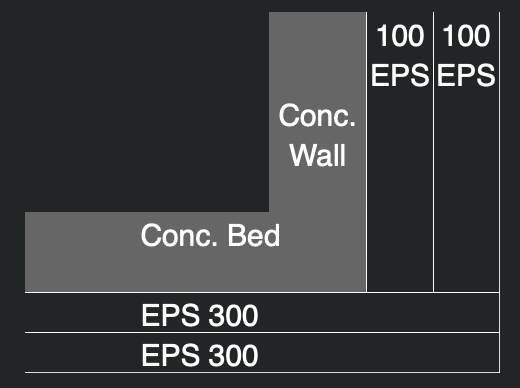
-
Strip footing and eps slab for timber frame?
Thorfun replied to DragsterDriver's topic in Foundations
take the base layer out beyond the slab and put up stands of EPS? if you're concerned then just get a company to design a pre-cut version. takes the risk away. it's been almost 5 months since Brexit so maybe the initial teething issues I hit have been resolved by now. you never know unless you ask. -
Strip footing and eps slab for timber frame?
Thorfun replied to DragsterDriver's topic in Foundations
should say that all of this will/should be designed by your structural engineer. what works for one might not work for another and might be overkill for someone else. -
Can a slab be too thick to have UFH pipes in it?
Thorfun replied to Thorfun's topic in Underfloor Heating
I guess I could also use an angle grinder to cut a narrow and shallow groove in to the slab to accommodate the probe after the pour as well? -
Strip footing and eps slab for timber frame?
Thorfun replied to DragsterDriver's topic in Foundations
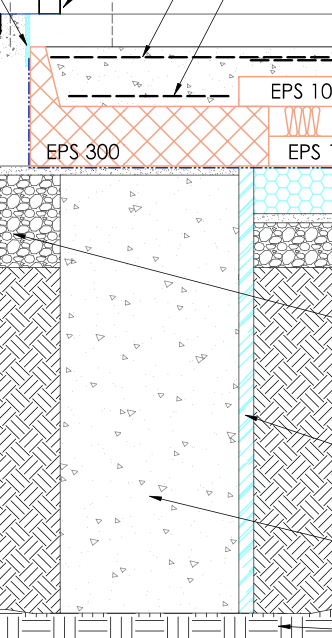
no (at least not if I understand the question!). it will be the same as the Kore system just not preformed and not using the 'L' shaped pieces of EPS at the edges. e.g. This is how TSD designed it using the Kore system for the above ground arms: you can see the insulation sitting on the trench fill with the slab poured within the insulation. but we won't be using the 'L' shaped pieces with the upstand at the edge. at least that's what I believe at the moment. we're definitely not using 'L' shaped pieces on the basement so I presume it's the same above ground although that could all change.