


Thorfun
-
Posts
4891 -
Joined
-
Last visited
-
Days Won
36
Everything posted by Thorfun
-
Airtightness membrane for Tony Tray.
Thorfun replied to crispy_wafer's topic in General Self Build & DIY Discussion
that's interesting as I thought the inner layer was a vapour control layer to stop vapour leaving the building? I know the smart ones let vapour in during the summer but wasn't sure that was entirely necessary in our climate. -
these guys https://robinsofherstmonceux.co.uk/supplies/aggregates/ do recycled concrete cobbles (2" - 4"). think I'm going to ask the groundworkers to use this stuff.
-
our SE has said we can't use the clay spoil as the walls aren't designed for the load that clay will give.
-
a basement 'shouldn't' affect planning even though the local council may try. our local planning office suggested that our total living space was disproportionate to the existing building and we should get rid of the basement. when we pointed out that the basement isn't visible so how could it possible be taken in to consideration they backed down. a few others on here have had that experience as well. But....there's never any guarantees when it comes to dealing with the planning office.
-
Also found this recycled stuff https://soilsandstone.co.uk/recycled-aggregates/recycled-shingle-gravel/ think this is the sort of thing that @Bitpipe used. Wonder if that might be cheaper still? ?
-
Found out they’re suggesting it is graded 50 to 75mm size.
-
That’s what I’ve heard before. And chalk is a limestone. But does 1+1=2? but maybe it’s the dust in limestone that causes it to clog? And so a washed and suitably graded chalk might not clog?
-
This is a very good question and hopefully someone smarter than me will be along soon to assist. I assume if it did it would be the crushing that allows it to happen as isn’t chalk permanently permeable in its natural form in the ground?
-
Not sure on the grading sorry. What would a suitable grading be?
-
the structural engineer has designed free-draining stone as our backfill material for around our basement walls. The groundworker is giving me an option between shingle and graded crushed rock chalk. the rock chalk is cheaper. what are peoples opinions of which is best to use and why? I will ask the SE but as it's Sunday that will have to wait so I thought I'd ask the knowledgeable folk on here to get opinions as part of my own research.
-
Airtightness membrane for Tony Tray.
Thorfun replied to crispy_wafer's topic in General Self Build & DIY Discussion
So that would be one of the ‘smart’ membranes? Like the Intello Plus? -
Airtightness membrane for Tony Tray.
Thorfun replied to crispy_wafer's topic in General Self Build & DIY Discussion
Don’t most manufacturers do their own version? e.g DuPont/Tyvek, Proctor, SIGA, ProClima, Protect, Gerband etc. with so many options it’s hard to know where to start but (as well as the recommendations above) you could check the Passiv House Institute? https://database.passivehouse.com/en/components/list/airtightness_system -
https://www.ecowho.com/tools/r_value_to_u_value_calculator.php
-
does all your plant fit in to that? our plant room is 3.3m x 1.3m but we have a separate room for our comms and electrics (1.7m x 1.3m) and was a little worried about fitting everything in to the plant room.
-
Recommended foundation method for Clay soil nr trees
Thorfun replied to JD44027's topic in Foundations
our BC said that she would send off the SE calculations to the BC engineer to look over. -
I have been quoted £50/m2 for labour and materials for internal block walls, in the SE. spoke to another bricklayer and he said that seemed reasonable. hope that gives an indication as to how expensive it is down here. feel sorry for my kids as they won't be able to afford to buy their own houses so luckily there'll be enough room for them to stay with us for as long as they need!
-
House is overheating
Thorfun replied to Savage87's topic in Mechanical Ventilation with Heat Recovery (MVHR)
so you're suggesting that the MVHR is brining in hot air making the house hot? I would've thought sun streaming through a window would cause a greater increase in internal temperature? -
Recommended foundation method for Clay soil nr trees
Thorfun replied to JD44027's topic in Foundations
I can only advise you to speak to a structural engineer. our building control needed to see structural engineer calculations for our build (a lot more complicated though) but I presume that'll be the case for even a simple build. -
so that'll be about £36/m2 down here in the South East then, if we're lucky. ?
-
House is overheating
Thorfun replied to Savage87's topic in Mechanical Ventilation with Heat Recovery (MVHR)
can you stop the heat getting in? i.e. reduce solar gain -
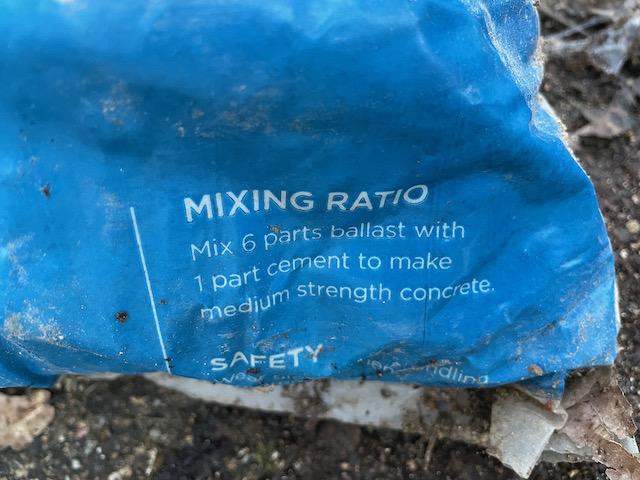
interesting you say that as you're right that the cement bag says 4-1 with ballast mix but the ballast bag says 6-1. so I just made it up as I went along. like you say, it's just a light weight GRP box.
-
so I didn't learn this today but what I've learnt over the last few weeks that the basement contractors have been on-site is that there isn't a problem that can't be solved with a hammer. rebar in the way? smash it with a hammer formwork dirty? smash it with a hammer nut won't tighten/loosen enough? smash it with a hammer I'm surprised tool manufacturers make any money as it would seem that the hammer is the one stop tool that will fix anything and anything else is just superfluous to requirements.
-
nope. just thought I'd mention it as I was having a discussion with the guy between Anhydrite screed (which we've been specified) at 50mm and sand and cement at 70mm. thought it was interesting that it's normally stated that 70mm minimum for sand and cement but with the chicken wire (or possibly fibres added to the mix) you could go thinner.
-
this is what I thought as well but I was talking to an old plasterer/screeder and he said that sand and cement screed can be thinner if you put chicken wire in the screed!! not sure if he was winding me up or not though. I guess anything is possible. ? @nod you ever heard of this?
-
thank you! just the information I needed. appreciate it. :-)


