


Onoff
-
Posts
21182 -
Joined
-
Last visited
-
Days Won
207
Everything posted by Onoff
-

The Build - Stone work commences
Onoff commented on Redoctober's blog entry in Our Journey North of the Border
I love the way the regularised corner stones contain and frame the organic looking stones. -
Just a random example that there are some videos for the make.
-
There's a few Siamp & Abacus videos on YouTube. For example:
-
What make are they?
-
Do you mask the tile to be cut with the grinder? Numpty question maybe, just thinking if the cutting debris can damage the tile surface. Do you ever clamp say a wooden fence to the tile to act as a cutting fence for the diamond blade to run against? Dry cut I assume so a little dusty I imagine! Does it get a squirt from a plant spray or anything?
-
Got one, and a tile file. Aye don't fink so bruv! Too much like hard work.
-
Still only laying dry mind!
-
Will probably go that way if I've a non serrated diamond disc that small. Come to think of it I've still got a bunch of those tungsten carbide grit jigsaw bits you recommended ages ago. I'm thinking they could come in handy! https://www.toolstation.com/shop/Power+Tool+Accessories/d80/Sabre+%26+Jigsaw+Blades/sd2581/Tungsten+Carbide+Grit+Jigsaw+Blades/p67688
-
OK people, how best to cut this square out? The cuts from the edge I can do on the wet saw, it's the joining line I'm stuck on! Score with the Rubi? Cut freehand with the small angle grinder? And should I maybe drill a hole each end with the arrow head bit to stop the "crack" when it goes? Cheers
-
Let's just say it was wasted on me...
-
Did think that but nope, no threshold.
-
Git! I've been thinking the row from the top of bottom? 2nd in from left or right?
-
Wanna see a f**k up? Not only is it miles out, I did it as an L shape and forgot it needs to wrap round into the cupboard in a "U"!
-
???
-
The Build - Stone work commences
Onoff commented on Redoctober's blog entry in Our Journey North of the Border
Don't get too disheartened, once that stone's rendered it'll look completely different! -
Laying out for the dry run. OMG this is boring! Too much of the same does me in!
-
Well impressed with these sharpening stones! It's really tidied some of these edges allowing a white chamfer the same as the factory edges.
-
Is tanking membrane "sticky" to enable this?
-
Help with kitchen renovation/ 1st house.
Onoff replied to zoothorn's topic in Bathrooms, Ensuites & Wetrooms
For a cheaper job as in no skimmng, you can "tape and fill" using tapered edge plasterboard. See how the edge of the board tapers: You butt two of these together and end up with a wide depression at the joint. Means if the board edge is seriously damaged you can get away with it You run a strip of self adhesive mesh tape up the joint then fill it with jointing compound (ready mix or powdered) using one of these: https://www.screwfix.com/p/forge-steel-taping-knife-10-/7427C? That in theory fills the depression with the main face of the board either side of the joint. The idea is minimal sanding is then required before you paint. -
Help with kitchen renovation/ 1st house.
Onoff replied to zoothorn's topic in Bathrooms, Ensuites & Wetrooms
Fag packet sketch but THINK when you set your battens out with regards to corners! The ends of the boards need support for a start. Although 400 centres on the main run its less in the corner to make the join centre of a batten. 25mm pb screws would be fine. You can get special bits for the screws so you don't drive too deep into the board. You need to be a little more delicate cutting 9.5mm board out for sockets etc. I use a multitool. You can get away with a SHARP Stanley but try not to break out the back too much or it'll weaken the cut hole and you could get sockets pulling off if you use dry lining boxes. You can cut partly thru then cut from the other side to finish off. I neat pva any such holes cut in pb. You could likely use std 32mm metal back boxes screwed to the original wall tbh with 25mm battens and 9.5mm pb. Coving...won't the new boarding to up over that area?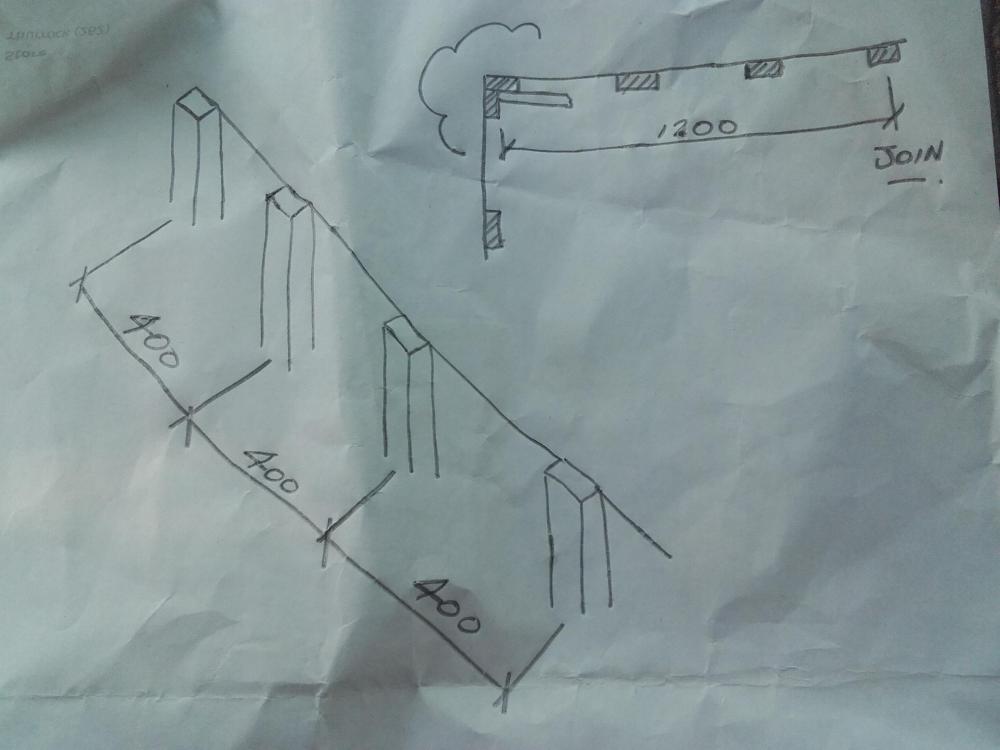
-
Is there a way to incorporate the blue Geberit wall drain membrane into the tanking system as I do that? Could I say prime the Aqua Panel and concrete floor then stick the blue Geberit membrane to the floor and wall with the first coat of tanking membrane whilst still wet? The Geberit video appears to show a smear of what we assume is tile adhesive on the concrete then the membrane is pushed into that. A further smear goes over that. If I do it that way do I THEN apply the tanking primer over that?
-
CT1 FIRST? I thought it went primer/strip/tanking/tiles/grout THEN a bead of CT1 where the wall tiles meet the floor tiles... ?
-
Can't resist a freebie!
-
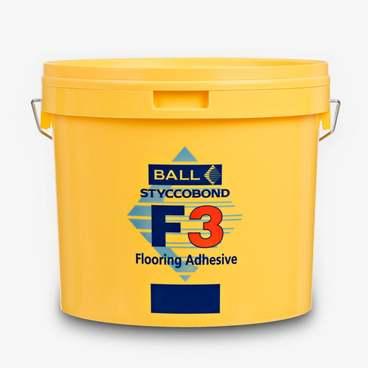
Is this stuff any good as a primer? Guessing not. 30L being thrown out though one 15L might be blown. Where would you use it? It's not that tacky stuff for carpet tiles is it?
-
Can I "stop 'n start" with tanking? I'm thinking, given the advice, to do the 1.3 x 1.3 floor area, pocket edges and filled joints with membrane. Then tape the wall to floor junction - that'll be +3m of the tape used up o/of 10m. Option to tape the vertical joints either side of the mitre...I think I should? (Leaves me 7m of tape for round the bath). I was thinking tape the joint between the flat (marine ply) deck the bath sits on, up the mrpb wall at the back and the ply on the long side: The reason I'm asking about stopping 'n starting is I'm probably getting another bottle of primer and full bucket of tanking membrane but not until next Friday. Thinking I could do the rest of the floor then... Maybe even do the tanking and get the wet room corner tiled now?




