


Russdl
-
Posts
1785 -
Joined
-
Last visited
-
Days Won
6
Everything posted by Russdl
-
???
-
@dpmiller thanks for that link, I didn't't see that post when I was searching. I'll check... @ProDave The problem is, I can't achieve any flow rate of any significance.
-
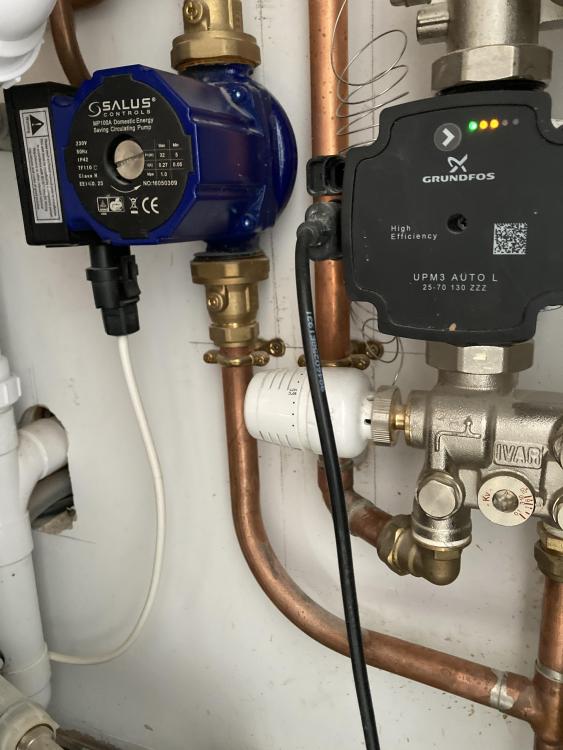
i don’t have those design flows or any idea how to calculate them. Is there a rule of thumb? A short distance above the blue Salus pump are the twin Willis heaters. The blue pump is the return from the manifolds into the bottom of the Willis heaters. The black Grundfos pump is between the supply and return manifolds of the UFH as you can probably see from the picture. No, and I’ve put the Salus pump back into ‘Auto’ as the ‘HD2’ setting made not a jot of difference. Any idea why it’s doesn’t seem to be handling it in my setup? My two shorter runs which by my (probably incorrect) calculation require 0.75l/min are set to about that. The other 9 loops which require 1.75l/min and more are fully open and barely registering 0.5l/min.
-
With all 11 loops open my flow rates are way below 1 litres/min and I'm trying to get 2.25 to 2.5 litres/min on 5 of the loops. Is it that our pump isn't up to the job or has the pump not been set up correctly? Or is there something else going on?
-
@Radian I’m sat here looking at it whilst it’s running and the third yellow LED is occasionally lighting up so I guess it increases the performance automatically (I certainly can’t find any way of changing it manually). I’m sure it’ll do 100m with ease but something is not quite right somewhere in my 823m.
-
The blue Salus pump was set to ‘Auto’ but its now set to ‘HD2’ which is the highest constant pressure curve.
-
The black Grundfos pump is set to ‘Constant Pressure 3’ which is the highest it can be set to. However the displayed 1 green and 2 yellow LED’s in the picture show that it is on ‘medium low performance’. I have no idea how to get it to 1 green and 4 yellow LED’s (high performance) which may be all I need to do?
-
@Radian thanks for confirming that. Ive got 11 loops. The longest being 98m which requires 2.5l/min flow, the shortest 28m so 0.75i/min. With all the loops open fully I get barely a reading on any of the flow gauges. If I close them all except 1 loop I can get up to 2.5l/min on the only open loop but the rate quickly reduces if I open up another loop. I think the pumps are set up correctly but what is the correct sequence for setting up the flow rates? If it's just 'turn it on and adjust the flow rates' then I'm stuffed. If there's more to it than that what is the correct sequence?
-
I'm assuming the same, but I thought I'd better start with the basics and check what flow rates i should be aiming for in the first place.
-
Our Willis heater based UFH doesn't seem to be working as advertised. The problem as far as I can see it is that the flow rates through the various UFH loops are nowhere near high enough and I can't get them any higher. We have a total of 11 loops and as I understand it the flow rate through the various UFH pipe loops should be 0.5 litre/min per 20m pipe, so for example one of our pipe runs is 90m long so it should have a flow rate of 2.25 litres/min. First question, is the above correct?
-
@JohnMo I know with certainty which duct does what so there’s no issue there. I wouldn’t mind one but I don’t think it will help with this specific situation. No, all water pipes are through internal walls/floors and any condensation appears on the window panes. Sadly we didn’t despite all the promises. I’ve been wondering about a hidden leak but if that were the case I would have thought it would have shown by now.
-
@PeterW I don’t agree that it’s a complete red herring. As the link says “...up to 75% moisture recovery...” I completely agree that it needs to be properly commissioned to be able to investigate further. I hope it doesn’t need industrial drying, mainly because of the pie.
-
Yes you do. Well, I’m pretty sure I did, just need to find it in my files. I fitted the required restrictor rings, switched it on and as all seemed completely hunky dory I moved the commissioning aspect all the way to the back burner and beyond. That could prove to be mistake number two (of the MVHR mistakes - there are many others). The commissioning will be brought to the front of the hob and set to boost soon.
-
No, it was all my own doing. That seems like a great idea, I can look into that. Actually, already thinking about it whilst typing. I can measure the RH at the supply vents compared to the intake air before it gets into the MVHR which I’ll be able to do easily. I would expect the supply RH to be higher with the bypass because of the enthalpy but I should be able to see how much higher and then take it from there. Thanks for the idea ?? I could also measure the exhaust RH each side of the MVHR unit. @Adsibob, you’re a genius! (I guess I’ll need the temperature at each reading as well, and then wonder what I do with numbers I get - apart from post them here to be deciphered)
-
Out of interest @joe90 how long ago did your last ‘wet trade’ finish?
-
Thats my gut feeling but it still doesn’t quite add up as others on here have enthalpy units and don’t seem to experience the same problems, @joe90’s experience is similar but his windows are 2g so that may explain his occasional condensation. It was cold again last night and there was condensation on most windows (some with thick curtains, some without) We went for the enthalpy expecting future occupancy to be low as I work away a lot. Maybe that was a mistake. Maybe the house does need to dry out further as suggested in this thread (I hope not, humble pie sounds revolting). Investigations are ongoing, but at a slight pause as I’m out of area at the moment.
- 131 replies
-
- 1
-

-
- triple glazing
- condensation
- (and 3 more)
-
We have the same tap. Water softener goes to the hot feed. Combimate ’conditioned’ water goes to the boiling water/filtered water/cold feed. Everything we drink is ‘conditioned’ as soon as the mixer is moved away from full cold to slightly warmer/hot it adds more and more softened water, fully hot on the mixer is fully softened hot water. No sign of scale on the tap but not opened the boiling water tank yet to see what lies inside.
-
I take your point, probably aimed at brick and block and we're timber frame but the point is - it takes a long time. Can't do that, the UFH doesn't seem to be working properly. I'll start another thread on that little issue when I get a roundtoit (the house isn't cold though) I'm starting to feel bullied, I'm off to Tesco's to get some Humble Pie to pop in the fridge ready in case I need it. Which is the number one priority. When that box is ticked nothing else really matters (its just a bloody difficult box to tick!)
- 131 replies
-
- 1
-
-
- triple glazing
- condensation
- (and 3 more)
-
All extracts will suck a bit of tissue against the valve and on all supplies you can feel the flow (when it’s on a high setting). As it happens the main offender does, an almost identical window in the room directly below doesn’t have thick or heavy curtains and on cold days it will also have condensation on it, so I don’t think curtains have any part to play in it.
-
@dpmiller whilst it’s not been properly commissioned it supplies where it should supply and extracts where it should extract. What I don’t know is if it is supplying and extracting the amount of air it should be.
- 131 replies
-
- 1
-
-
- triple glazing
- condensation
- (and 3 more)
-
That was going to be my default position but the damn things backed me into a corner, I've got a patio to do, I don't have time for this niff-naff and trivia! Plus work want me to 'work'! There's not enough hours in the day.
- 131 replies
-
- 1
-

-
- triple glazing
- condensation
- (and 3 more)
-
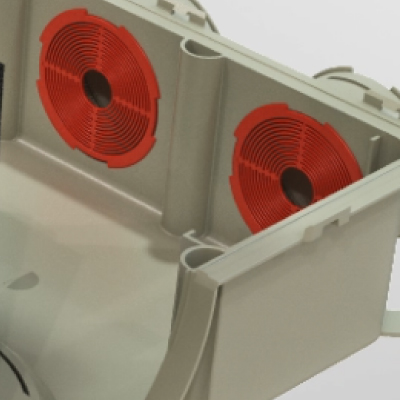
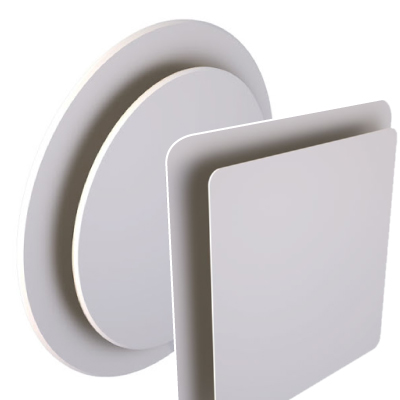
I hear you, I hear you, and I'm very grateful for your (and everyone else) input but I honestly don't think the house is or could still be 'wet' despite what the RH levels say, If it transpires that that is the problem then I will whack some Humble Pie in the microwave and scoff it live on air. I kind of agree there. I can't see how it's going to change much. I'm looking suspiciously at the enthalpy heat exchanger but others on here seem to be using those without issue. The only other culprit (if it's not a 'wet' house) has to be the machine itself. It was a 'special order' so perhaps it's been put together incorrectly... That restriction is done in the manifolds at the MVHR end of things with the red restrictor rings, popping out as many as the supplier dictated. I got those restrictor calculations checked twice so I'm fairly confident in them, I'm also fairly confident the correct restrictor ring is over the correct duct in the manifold. The valves in the room also have adjustment, which in theory shouldn't be required, it's those that are set to 0 at the moment, so they can be adjusted to restrict flow further as required That'll hopefully happen soon with the help of a very kind man who has also lent me a CO2 monitor which has been up and monitoring for a few hours. That CO2 monitor shows that when the MVHR is on a low setting the CO2 readings are high, when the MVHR is on a high setting the CO2 reduces quickly - so air is moving in the right direction. And I'm sure the house isn't 'wet'. ?

- 131 replies
-
- 2
-

-
-
- triple glazing
- condensation
- (and 3 more)
-
Yep, that’s on the cards but I’m a bit grumpy that I can’t work it out myself. Got those. All set to 0 at the moment which allows maximum airflow.
-
@Adsibob I installed them but overlooked the measuring of duct lengths that I’d installed. When it was finally all ready to be turned on (long after the ducts had been installed) I used a vacuumed cleaner to suck a bit of foam tied to a length of string down each duct (worked brilliantly) and then measured how much string zipped down each duct. They definitely all go where I think they go.
- 131 replies
-
- 1
-
-
- triple glazing
- condensation
- (and 3 more)
-
Actually, there's no way that can happen unless something is knackered inside the MVHR unit...

