


Russdl
-
Posts
1783 -
Joined
-
Last visited
-
Days Won
6
Everything posted by Russdl
-
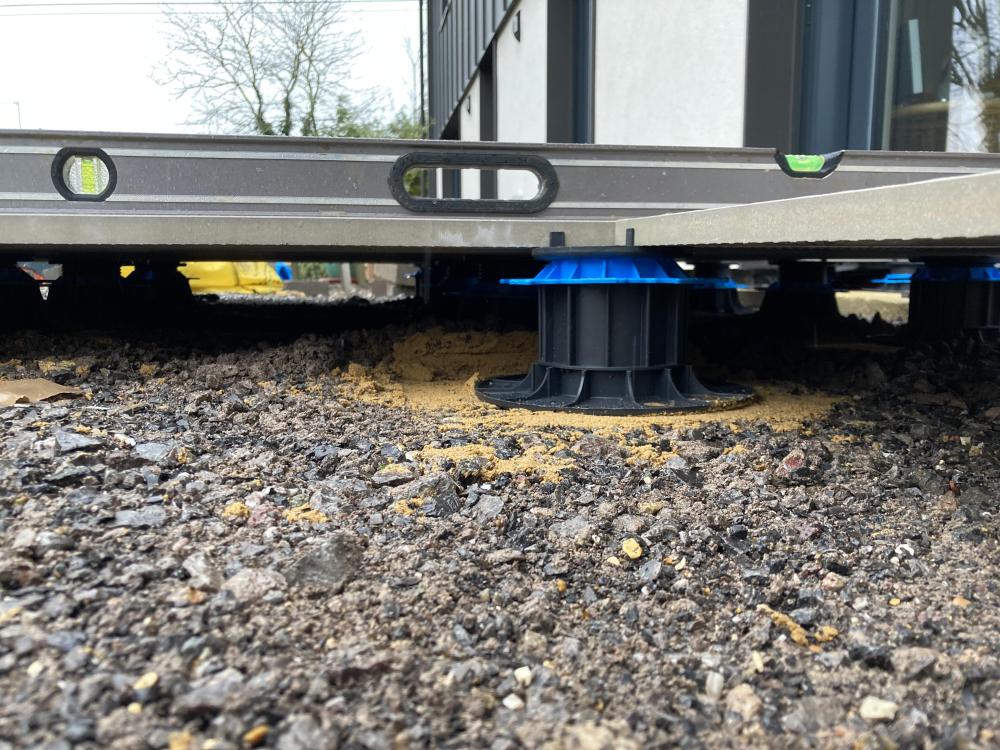
@markharro you can get all manner of pedestals and as far as I’m aware you can put anything on them, our porcelain tiles are very heavy - no issue. Some have articulated tops to allow fall/make up for an uneven sub base - overkill I think. I used the cheaper ones and sand to level the base. Word of warning though, they’re not cheap, but if you’re DIYing then they will save a fortune over employing someone else to f*ck up your patio. If you go down this route let me know and I’ll provide all the hints and tips that I have/remember. Not sure what you’re asking there but we had compacted type1 which was all over the place, I got it vaguely level and then let the height adjustable pedestals do the rest, bit of sand underneath the base for final levelling (with a tiny fall) and jobs a good ‘un. Google ‘patio pedestal system’ or some such thing and you be inundated with results.
-
They do. And it can be really crappy underneath, I’ll find a photo. We’ve got 20mm porcelain tile, still looks like new after 2+ years our previous experience with stone is the new look didn’t last long and the grouting loved to make a little space for a weed or three.
-
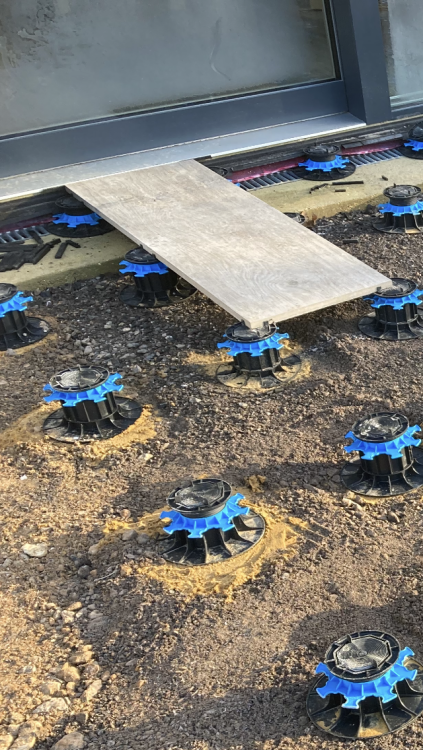
Not necessarily ’really low down’ just underneath the door drip which would be below your blue bricks. I’ll try and dig out some photos. Either way, you’re going to have to dig down and then your original drain will work, apart from: Where are they then? Above the blue bricks?? Deep underground? Picture. That’s a premium over an Aco, no doubt but whilst it’s no real help I (and probably others on here) have made some expensive purchases that weren't absolutely necessary and have kicked ourselves afterwards.
-
For you to do what we did would take a bit of digging out of that hard core but I reckon it could work, even with a normal patio construction. Is there a drain under there somewhere? Clearly that: should be connected to a drain.
-
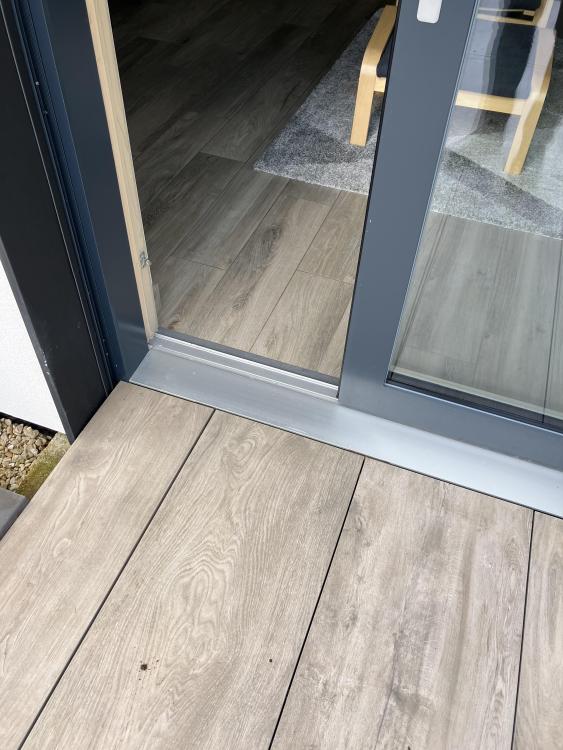
I don’t see the blue bricks. I wonder if you can do it the same way we did. I set an Aco drain below the door drip and then used pedestals for the patio. All the water off the door goes into the Aco and the patio goes right up to the door. All the water on the patio falls down the gaps in the tiles, thanks to the pedestals.
-
Why would someone build this here?
Russdl replied to Adsibob's topic in New House & Self Build Design
I guess you’ve got rid of your car then? -
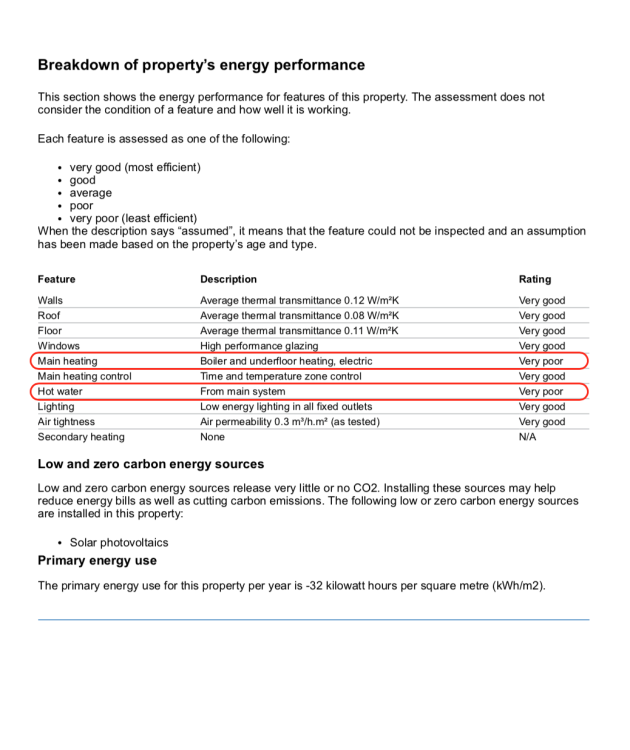
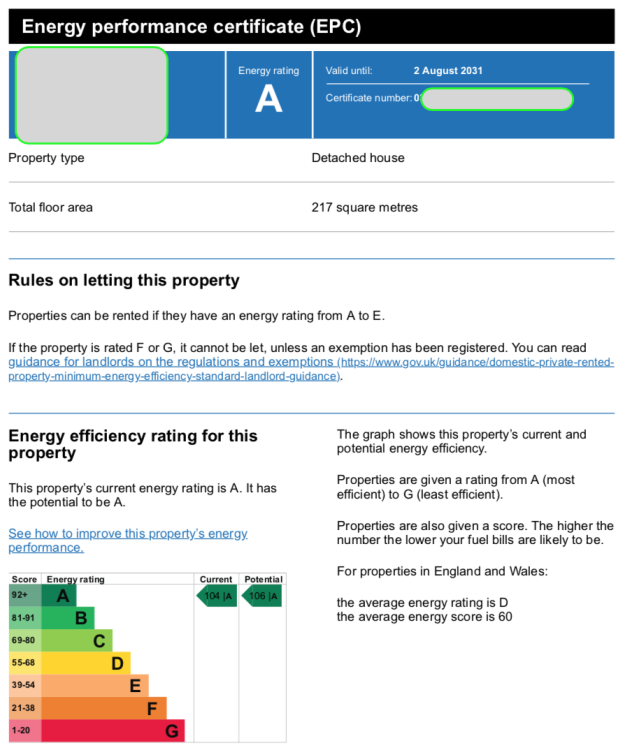
Here’s my ‘Breakdown of property’s energy performance’ so @oranjeboom can compare. Clearly the Willis heater/Sunamp combo did us no favours but we obviously did ok on their score sheet all the same.
-
Actually, that was a typo, we got an A104 not A103. I was surprised considering the Willis heater Sunamp combo and despite not holding these ratings in particularly high regard I couldn’t resist a brief moment of smug self satisfaction. Indeed.
-
-
Should we put a sink in the island or against the wall?
Russdl replied to CalvinHobbes's topic in General Plumbing
You can lead a horse to water… -
Should we put a sink in the island or against the wall?
Russdl replied to CalvinHobbes's topic in General Plumbing
Perhaps it’s worth revisiting that vague recollection? They work well. If you’re considering MVHR then you must be planning on good levels of air tightness and if you are, why punch a big old hole in the wall to let all that lovely warm air out? -
Should we put a sink in the island or against the wall?
Russdl replied to CalvinHobbes's topic in General Plumbing
Something odd there then. Frying every night? Extractor not turned on? Extractor not up to the job? We’ve had two and a half years of cooking with a downdraught extractor. No sticky residue anywhere, the pendant lights that are quite close to the hob are squeaky clean. The hob is in use seven days a week but we don’t fry much. -
@SteamyTea That’s was good, thanks for posting.
-
I did indeed, I’ve probably still got it. So many years ago but classic poetry like that tends to stick in my head.
-
You missed a line: ‘Don't you think that was awfully kind’
-
Give me one of these any day 😃


-
I’m a podcast addict, I’ll get stuck in to that one when I’ve finished with the rather weak ‘Big Green Money Show’ and report back.
-
MVHR and windows open
Russdl replied to Trw144's topic in Mechanical Ventilation with Heat Recovery (MVHR)
That shouldn’t have been the case, perhaps the MVHR isn’t set up correctly? You would live exactly how you wanted to live. If you want a window or door open, just open them however, if you’re trying to keep the place warm through the colder months by the power of sunshine alone then don’t leave them open for too long or you will fail. Low running costs result from the investment in the structure and the setup and should only impact the internal air quality and comfort in a positive way. -
Hello @Trev1 Is the above a typo? If not what are you going to do about the outside of the garage? I’m currently building one (very slowly) with 100mm blocks and then external insulation that will be rendered. The 6-7m wall lengths required some kind of bracing, we went for windposts.
-
Fair point but in the unlikely event it all going pear shaped the insurance claim may be problematic. Maybe. Wherever it’s lost from and/or to it needs replacing, so the less the Sunamp/UVC lose the better surely? As a general thing, I can’t think of one item in this house that was bought with a view to when it would have paid for itself. That was definitely not in my head when I decided on the Sunamp or, more recently, the battery. Who knows, if the Sunamp soldiers on for 20+ years it may well have paid for itself over some other option but I won’t be sitting down to do the sums.
-
No annual maintenance requirement. Regarding heat loss, if fully charged and then unused for a 24hr period it takes around 1kWh to recharge (which I think is a bit more than advertised in the blurb). What would be the loss from a fully charged 300L UVC?
-
I don’t. Talking domestic hot water here. Over winter it (currently) charges off peak at 9p. It never charges outside of that period so that is what it cost for my domestic hot water. From now/spring onwards (thanks to the battery and the existing PV) it costs the square root of bugger all (apart from PV, battery etc etc).
-
@SteamyTea I’ll get back to you in a few years. Perhaps it’s only me on here who has a Sunamp that is post the ‘Sunamp PV’ model? If it dies I would replace with the same. ~~~ Currently, over winter you could argue it has a COP of about 2.5 because it’s only charged on cheap rate electricity which, I understand may disappear one day. Since the battery has been installed it charges for bugger all off the accumulated PV - obviously the battery cost a wee bit and I haven’t sat down to work out the ‘pay back’ time because I wanted a battery. Actually I think I want another one.
-
Just for balance I believe there are some of us here who are still happy with their Sunamps, I certainly am despite having the thermistor string replaced under warranty a couple of years ago. In the OP’s proposed set up surely the complex magic box is the ASHP not the Sunamp, there are no pumps etc in Sunamps anymore. Personally however I do feel that a Sunamp is best as a stand alone hot water solution and not coupled to some other hot water creator. That of course then needs some other solution for heating and if significant heat is required then the ASHP has got to be the way I guess. So after bravely defending the Sunamp I’d have to agree with @ProDave and @SteamyTea in this instance. Just off to get my hat 🏃🏼

-
Should we put a sink in the island or against the wall?
Russdl replied to CalvinHobbes's topic in General Plumbing
Personal preference, but if the hob is on the island then it could get very cluttered there and look very cluttered as well. The idea fleetingly crossed our minds in the planning stages because it seemed to be the new ‘in thing’. On closer contemplation it would have been a big mistake so I’m glad we went all conventional and had the hob on the island and the sink on the wall behind it.






