


Dan F
-
Posts
1431 -
Joined
-
Last visited
-
Days Won
2
Everything posted by Dan F
-
Some HA bits to give away for freeee (KNX/Dali/modbus)
Dan F replied to joth's topic in Networks, AV, Security & Automation
We are using DALI and very happy with the decision so far. Upstairs downlights are all on a one Loxone DALI extension, but by the time I add in low-level lighting, LED's and exterior lighting this would require 2-3 DALI extensions which as @joth rightly points out are expensive at around £450 each. It is only £7 per fitting, but the thing is, you need an address for all fittings (which you then group), whereas centralized dimmers can drive a whole circuit each. It does give you a lot of flexibikity though; for example there is one wall-washer in the breakfast area that shines on TV screen, which I can easily individually switch off depending on the lighting mood (or even if TV is on if I wanted to using smart plug). Before I go out and buy more than Loxone DALI extensions though I have one of these I got off of amazon which I plan to try to use https://www.amazon.co.uk/dp/B081TNRGMN/. This is good for 4 channels (256 devices) and needs a DALI power supply and Raspberry Pi and some minimal coding, but I'm pretty confident it'll work from my initial tests, it's just a simple ReST call out fro Loxone to Rapberry. Tunable white will be slightly more challenging, but no rush to get that working. -
Interesting, do you know if there is anything online somewhere that explains the degree-minute concept? Out of inteest what heat curve do you use, and do you have i) adaptive enabled or disabled ii) room temp modulation avtive or expanded?
-
We finally have our aroTHERM up and running and it has output 226kWh (!) in the last 2- 3 weeks just "booting up" our house. It'a not all fully commissioned yet, and auto-balancing actuactors are still in their boxes so I had some issues over the new year where ASHP seemed to be running non-stop at 100% compressor and wasn't able to increase UFH flow temperature more than 24C. Installer hasn't been back yet, but I think I fixed it by i) reducing pump speeds (circulation + UFH circuit) to minumum and ii) adjusting each UFH to 1 L/min from fully open. I have heated the slab to 23C and boosted MVHR to help get bedrooms from 17C to 19C and will now try to find a heat curve that will keep the slab at around 22C if possible (suggested by @jack somewhere). As I think you suggested before @J1mbo, I can then adjust things, if needed, from Loxone by changing the target room temperature which will in turn shift heat curve over and in turn the flow temperature (e.g. to dump cheap energy at night). We'll see how this goes though, as the heat curve will be based on temperature from one controller rather than temperatures averaged across all rooms. Unfortunately there is no tested Modbus connectivty yet (even though Vaillant publicized this some time back) and eBus I'm trying to avoid as it's rather low level. EEBus, which now has bult-in support in Loxone, is useful but rather limited in functionality and you can't input actual temperature or trigger cooling. Control of cooling, however, is a seperate exerce which I'll leave to the summer though.
-
Wire through wall for weather-compensation sensor
Dan F replied to Dreadnaught's topic in Air Source Heat Pumps (ASHP)
We went with the wireless version of the vaillant controller. It means no penetration in wall for external sensor and the internal thermostat/control units (one for ground floor and one for first floor) can be moved around if required. -
Also look at Bluesound. Bit more expensive than Sonos, but audiophiles are impressed by Bluesound but critical of Sonos. We're using Bluesound Powernode in the kitchern and living room (larger spaces) and Loxone Audioserver for things like bedrooms which is cheaper. Speakers are a minefield. We're using DALI (https://www.dali-speakers.com/uk/) after a couple of companies locally both recommended them. They have a good range from fairly decently priced to high-end.
-
Sick Building Syndrome? Airplane colds?
Dan F replied to puntloos's topic in Mechanical Ventilation with Heat Recovery (MVHR)
In my experience the symtoms I get from air travel are partly (if not mostly) due to 10hrs+ of drier than normal air more than anything else. MVHR is fantastic, but a standard (non-enthalpy) exchanger can mean the house can be drier than without MVHR which can be a problem in some cases. When I discussed this with our MVHR designer his view was that this was more of a problem in a large houses with low-occupancy than in smaller houses with high occupancy. This, I assume, is due to the amount of humidy generated (by occupation) vs. amount of air moved. We're using a enthalpy exchanger with occupancy of 4, there house isn't huge but it is quite big. PHPP will actually give you % humidy for each month of the year, and it was the low projected humidy is winter months in PHPP that let to use to decide to use the enthalpy exchanger. -
We have this same issue with timber-frame garden room within 1m of the bounday. Rather than use fire boards externally, we plan to just use a render system with the relevant fire rating.
-
Prosumer alternatives to Ubiquiti?
Dan F replied to Dan F's topic in Networks, AV, Security & Automation
@Thorfun That's same as me. In theory that means that FTTP is not available to purchase and you need FoD which generally always has a built-out cost. If FTTP is available it says "WBC FTTP" and the bt broadband site (https://www.bt.com/exp/broadband) will offer a fast connection. I'm intrigiued now as to how you have a arranged a free FTTP install via OR when checker shows FTTPoD. -
Prosumer alternatives to Ubiquiti?
Dan F replied to Dan F's topic in Networks, AV, Security & Automation
Openreach send you to a FoD provider if the availability checker doesn't should FTTP availability. In your case did/does availability checker show FTTP? https://www.broadbandchecker.btwholesale.com/#/ADSL -
Prosumer alternatives to Ubiquiti?
Dan F replied to Dan F's topic in Networks, AV, Security & Automation
The UI and graphs are all very nice, although the "network topology" view hangs my broswer! What's somewhat disappointing though is that my old Asus router has better funcitonality for: 1) Assigning different DNS based filtering (e.g. https://cleanbrowsing.org/) to difference devices 2) Easily enabling/disabling different types of acitivty (gambling, gaming, streaming etc.) for children, where each child profile can be configured with multiple devices. I can probablly do 1) by using different networks, rather than per-device and this would probably suffice, but 2) seems a bit more complex.. and would probably need to be done at the network, rather than device, level which is less ideal. @joth I was keen to install FTTP too, but didn't bother to pay the survey fee after seeing quotes others were getting. Our FTTC is 80/20 so not that bad, although if the Unifi stuff supported load-balancing (which it doesn't) I would be tempted to get a second line, as a 80/20 SOGEA service is quite cheap. I know A&A will sell you a two bonded lines and the hardware to make it work, but I thnk the price on this is a lot more than two FTTC lines. -
Mind sending me any information you have on this via DM? Thanks.
-
Hydraulic Station + VR 71 (wiring center) + VRC720f (SensoComfort) + VR921 (SensoNet)
-
Same you you, just 7kW. Vaillant does support a buffer temprature probe, but it's 100% optional and I've no idea how it is used.
-
And/or increase the temperature. Rather than a buffer being required to take advantage of cheap electriciity, I think it's probably more a case of how much control flexibility you have to increase UFH temperature or flow-rate during the period of cheap/free electicitiy vs. the ability to simply increase a buffer tank set point. In my case, there is no buffer tank setpoint that I know of and, until I get my hands dirty with ebus, no way to adjust flow temperature from outside the heating system either. So I'll be limited to whatever the power of UFH is. I think it'll be a fair bit more than 1kW though, even at 30C.
-
Prosumer alternatives to Ubiquiti?
Dan F replied to Dan F's topic in Networks, AV, Security & Automation
It's a bad idea to from a technical standpoint to have various functions in the same box. But for a home environment it's less of an issue and has it's attraction. What else do you have in your setup? Any CCTV? -
Hager apparently. We're not using these, that's just image I found online. We're using hamilton stuff in matt black.
-
That was the original plan yes and I did have a couple of italian suppliers I'd found, but it got more complex post-brexit and our main contractor wasn't interested in buying from europe with increased uncertainty/paperwork. So in the end, rather than purchase from Italy I fought to get best price possible in U.K. I'm sure there are suppliers in italy that would be willing to sell to U.K, but I'm unsure if they'd necesarily want to deal with delivery, or if that would be up to you to arrange. @Balraj Appadu got all his stuff from Italy, I think post-brexit.
-
i) 5A radial circuit connected to Loxone relay or dimmer. ii) Loxone nano relay local to socket. iii) Shelly (or similiar) in socket back-box. iv) Smart plug v) Shelly (or similiar) inline in appliance lead. vi) Smart bulbs. If you are using Loxone i) and ii) will be the simplest approach. That said, with the other options you can still bring everything together under Loxone, you just need to prodcuts that you can integrate with via HTTP call. Doable, just an extra hoop of two to jump through.
-
Prosumer alternatives to Ubiquiti?
Dan F replied to Dan F's topic in Networks, AV, Security & Automation
I couldn't see any reason not to use Ubiquiti for WiFi given cost vs. performance/usability (vs. Ruckus) and while there are other options for switches have gone for a 24 por PoE+ switch too. I've ordered some of the new wifi 6 AP's; a couple of lits and a couple of pros. Router I was less convinced, but I've gone ahead and ordered a "dream machine pro" to try the full ecosystem knowing that i can, if/when required, configure it to pass-through and add a more capable router behind the the Ubiquiti ecosystem such as pfsense. Which router do you use? I agree, and this is what I had most doubts about. But I've gone and ordered a couple of camera (g4 pro + g4 bullet) to try it. Longer term these my go on ebay and I may end up using something else, we'll have to see. I'll probably look at a rack-mount synology/qnap as NAS, for containers etc. So this would be the place I'm run NVR software if I move away from Protect. I've used QNAP survelience center in the past with some old foscam cameras. I think it's a must for setup, but once setup you can add and use local users. Not ideal, but not terrible (that's assuming that local users passwords aren't stored in cloud!) -
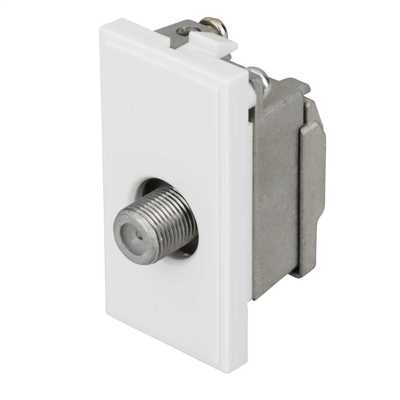
So these, for satalite or freeview, I take it?
-
How do you get just 1kW? What flow rate is this based on?
-
Don't disagree, but I think in your case the lack of a buffer is more of an issue with you fancoils than with UFH, right? If you just had in-slab UFH then there wouldn't really be that much value in a large buffer would there, either for storing heat from off-peak electricity or to minimize short-cycling?
-
Our whole system;, buffer, UFH any everything was initially going to be all glycol, but heating engineer changed his mind and is now using 100% water with some special valves to prevent damage to the ASHP in the case of freezing conditions with the ASHP off. It's a simpler approach and water is better at transporting heat than glycol too. https://www.seconrenewables.com/heat-pump-anti-freezing-valve-7537-p.asp
-
This depends on the ASHP control system I thnk. Our ASHP doesn't requie a buffer temperature sensor. It may use the the return temperature from the buffer to decide when to call for heat from the ASHP, I'm not 100 sure, but otherwise the buffer is just adding volume to the system rather than performing any other function.
-
Just built a Middle Atlantic (slim 5) rack and need to start adding some bits into it. So far, I've just got a couple of shelves and a patch panel. I know a fair number of people on buildhub use Ubiquiti for their home network, that it typically works very well (aside from some unstable firmware updates) and that their ecosystem is rather apple-esque and nice to use. But, are their people that have gone with Ruckus, Mikrotik, Draytek or another brand instead for a good reason? Few things that make me a bit uneasy about Ubiquiti: - Availability of some items seems a challenge. (cameras currently). - Apparent requirement on a cloud account (e.g. for setup) - Protect is closed system and only works Ubiquiti cameras. - The router (security gateway) functionality is known to be fairly poor compared to something like pfsense. On the other hand a Ruckus setup I'm pretty sure would cost as least twice as much. I know you can use Ubiquiti WiFi without the Protect offering, just it's tempting to stay within the ecosystem and the ease of use and nice phone/appletv apps would make it easier for other family members to use too. Do those that use Ubiquiti for network also use Protect, or combine it with something else for CCTV?

