
Radian
-
Posts
2586 -
Joined
-
Last visited
-
Days Won
15
Everything posted by Radian
-

Which set point are they talking about?
Radian replied to Radian's topic in Boilers & Hot Water Tanks
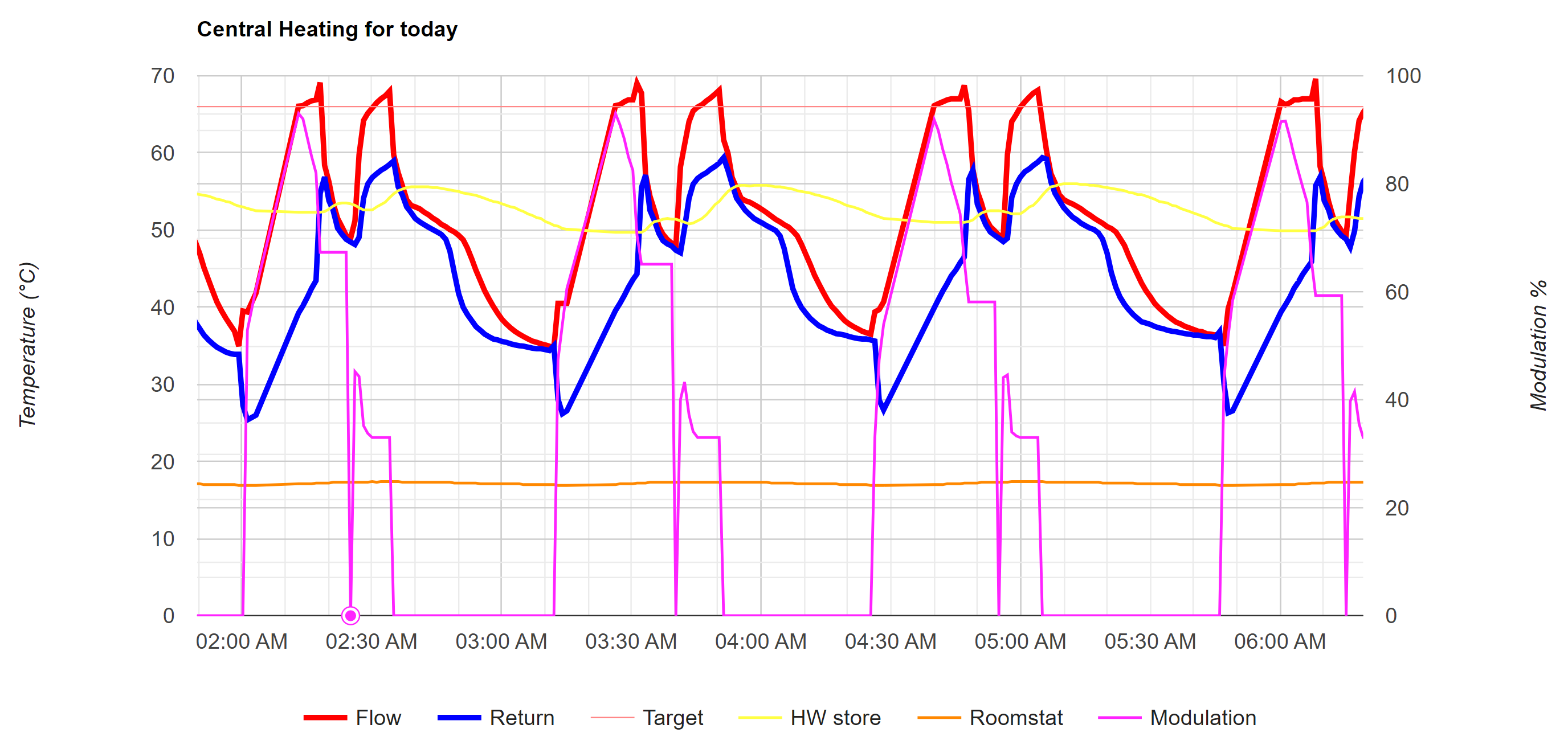
No need for the last ditch measure of using an A/D. ebusd and a RaspberryPi to the rescue... So now I've got a better handle on the boiler algorithm and I'm close to dynamically setting the flow temperature. But the first thing I see today is how there's still a short cycle while heating my UFH buffer (HW cylinder): The UFH has constantly been cycling the HW store all night (-5oC outside) so when the roomstat for the radiators in the house calls for heat at 2AM, the boiler fires-up and the radiators begin restoring the temperature to the overnight setback value. When the roomstat goes off, and the zone valve for the radiators closes, there's a big spike in the return temperature as all the circulation is now only flowing around the UFH/buffer combo. Modulation rapidly drops at this point but it's too late in responding and as the differential between flow and return drops to nothing, the only thing the boiler can do is shut off entirely. What I don't understand is why the boiler starts up again within a couple of minutes presumably at the expiry of the Anti cycling period (although I can't see this parameter in the big list I have, and 2 minutes seems very short) but when it does, modulation is a lot lower <40% and the UFH buffer is brought nicely up to temperature - at which point demand goes off ant the UFH freewheels around the HW cylinder for over an hour as intended. I didn't expect to see this brief boiler shut-off glitch as I was only plotting demand before. I need to figure out a way of getting a softer landing when the roomstat goes off and circulation is restricted to the UFH. Of course all this was predicated on having a single, relatively high, set-point for boiler flow but now I may be able to reduce that for the radiators - given that I can have independent flow temperatures for radiators and hot water.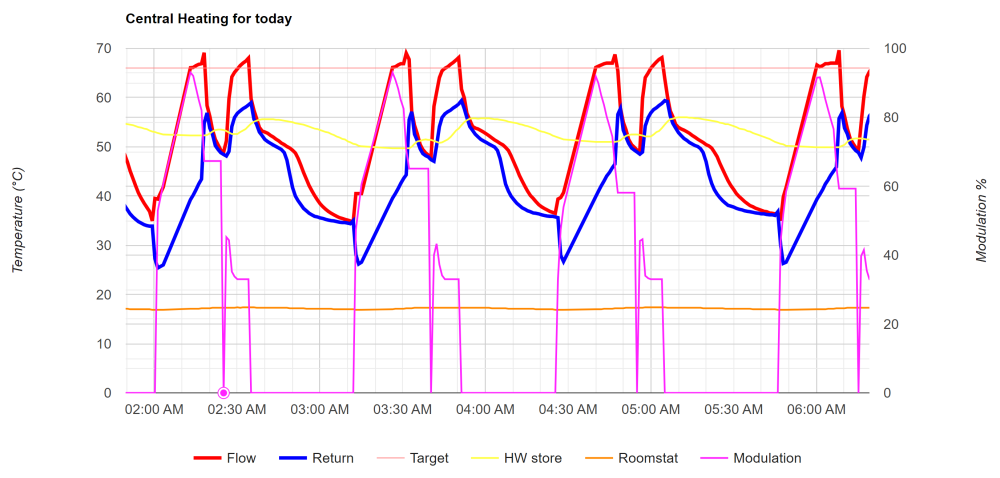
-
Is External Wall Insulation not an option? If you have access to seal the brickwork, you have access to clad with insulation. Then your internal arrangement will be OK as-is.
-
None of the gaps I can see there are for a purpose that I know of. Probably a residence for a few over-wintering wasps but nothing useful.
-
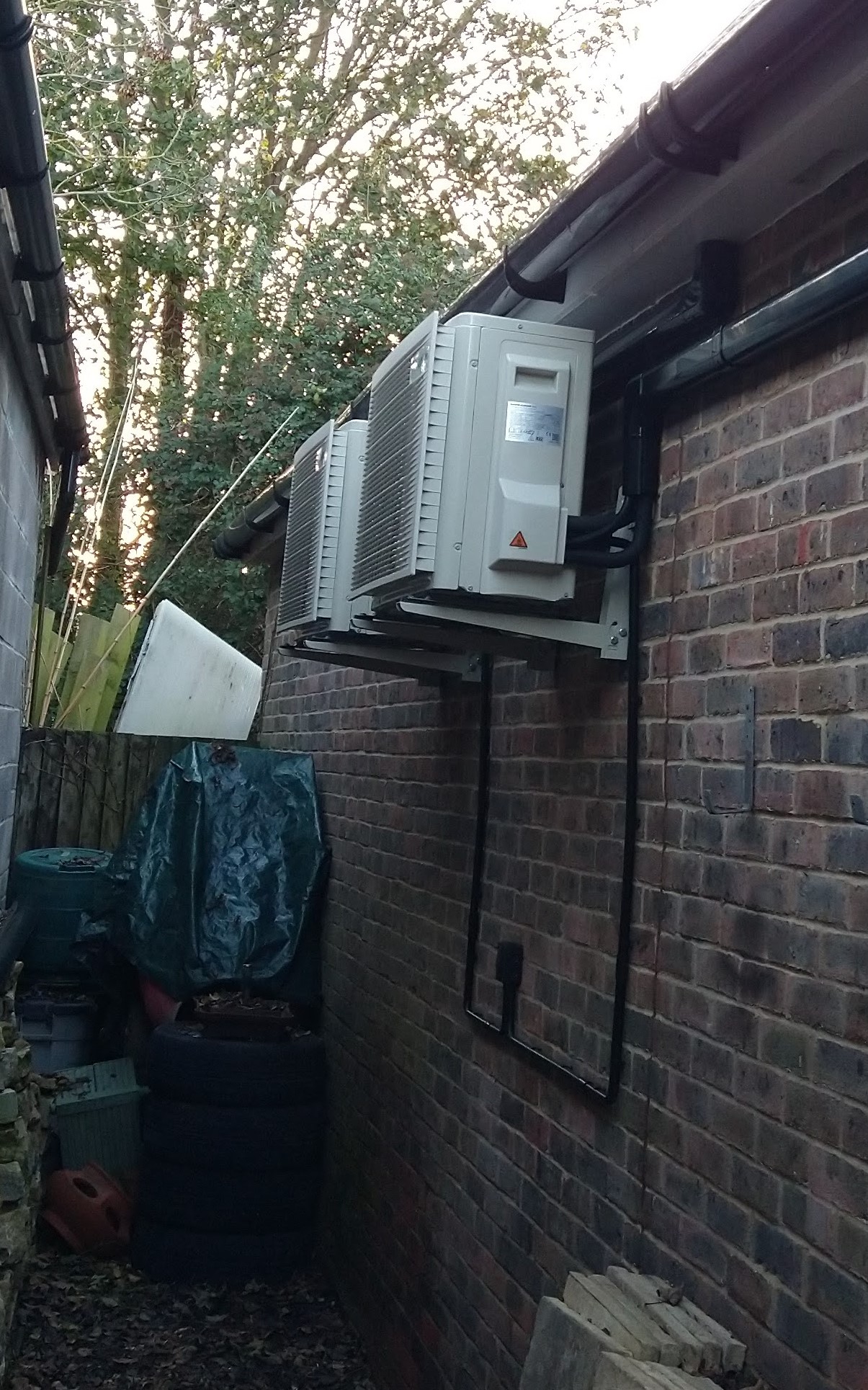
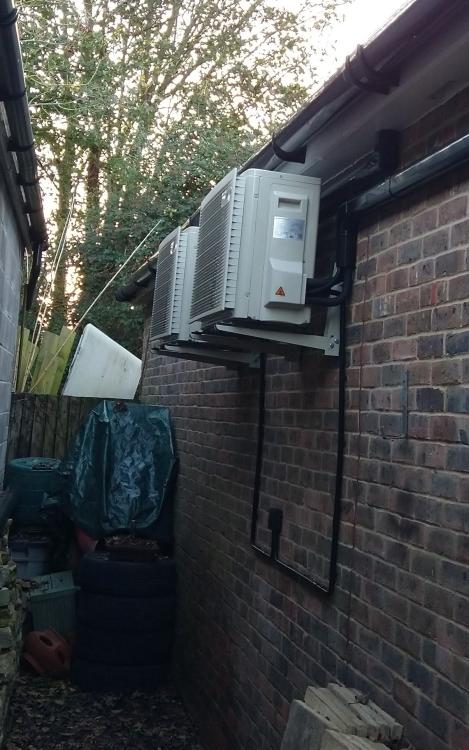
Comparable, I'd say, to the real cost of installing a fossil fuel boiler and multiple radiators - especially if not on mains gas. There are two main issues that I can think of. Obviously if there's only one outdoor compressor unit, then the indoor units can only cool or heat together. Less obvious perhaps is that the simultaneous heating/cooling capacity will be lower and all indoor units will go idle during defrosting mode. Neither of these is a show stopper but having one-to-one indoor outdoor units doesn't add a huge premium when most of the cost is in the indoor units. Here's the two outdoor units that provide us with a total of 7kW of heating for around 1.5kW of electricity. Quite a bit smaller than an ASHP and more practical to hang on a wall.
-
https://youtu.be/PDGFUYTOBcI?t=23 It got restored in 2014. I can't imagine it'll be left to rot again. Musk should have put it up on the maiden Falcon Heavy launch instead of his roadster.
-
@PeterW's right - it can be removed. The technique I heard about involves a flexible flail that's inserted in the injection holes and rotated at speed. Then its all hoovered out.
-
Mostly it's just down to stubbornness. I hate there being anything like this that I can't get to grips with - when it's just other people's thought babies. Wasn't it Feynman who said "What one fool can understand, another can."?
-
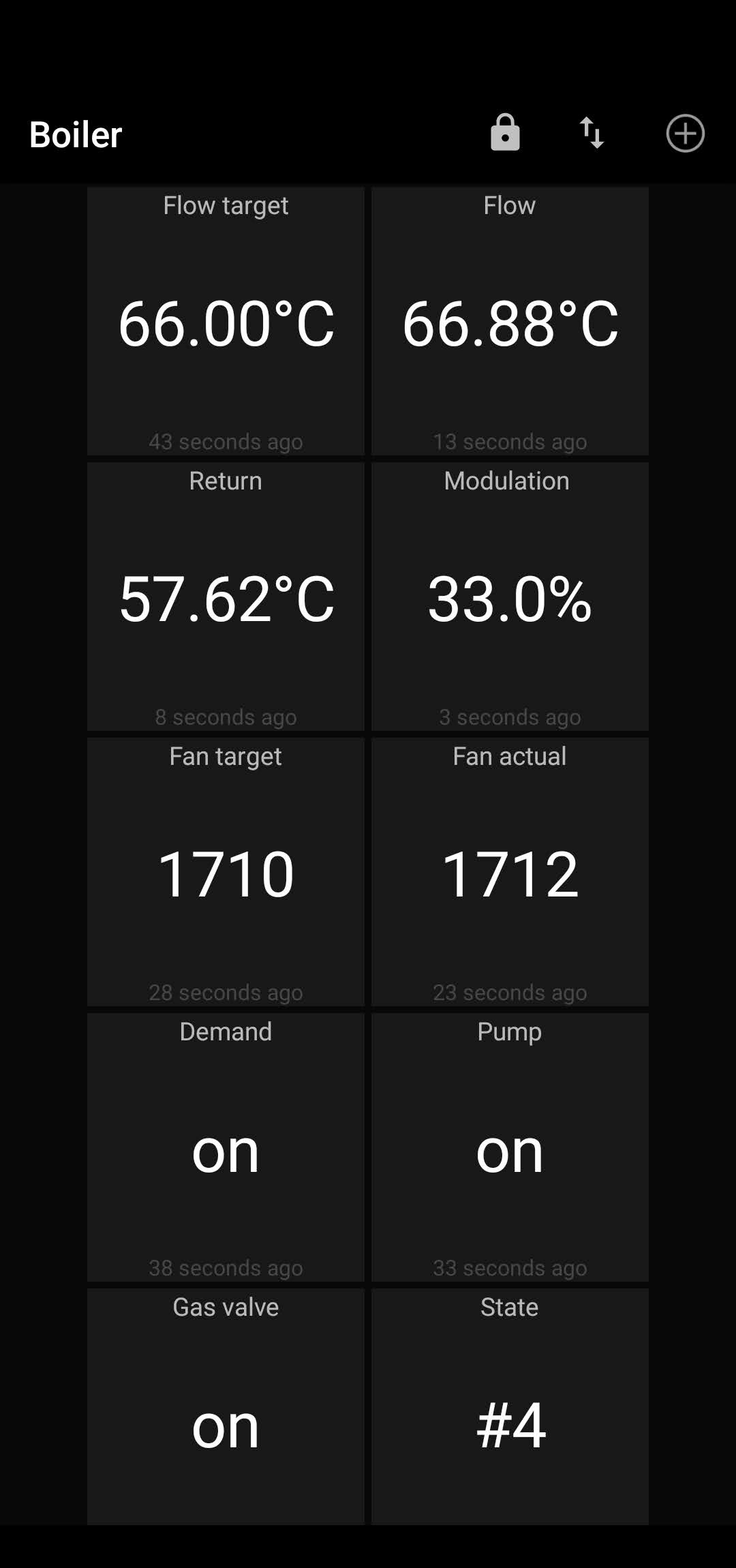
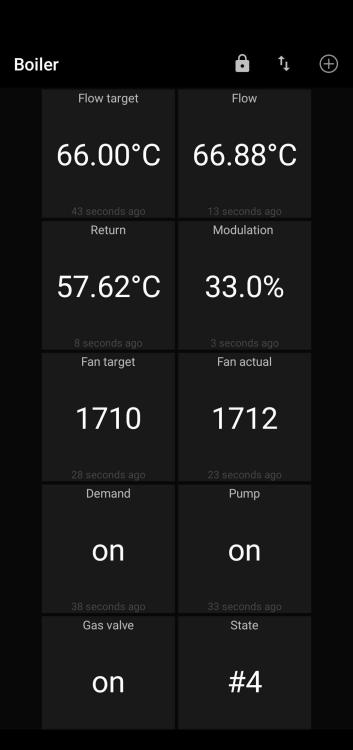
Progress: 😎 Now I've just got to squirt the above MQTT data into a database so I can graph it up. But it's already obvious to me that despite my novel HW cylinder buffering scheme for a small UFH zone , the boiler is still suffering with too high a return temperature (33% is the lowest it will modulate down too - nice of them to actually present this figure though). This screenshot was taken just as the boiler was about to shut off and go into anti-cycling mode as the demand was still present with a HW cylinder setpoint of 55oC in buffer mode.
-
Thermal bridge of vertical metalwork
Radian replied to MattMiller's topic in House Extensions & Conservatories
Superb! I agree with everything @Iceverge says above. Only I'm not sure you've got enough ridge height to create a pitched roof. Really does need some careful consideration because it would be transformative if it could be accomplished. -
I guess a tunnel with a door at each end reminds the cat of a trip to the vet in a cat carrier. Bad things happen there.
-
Please help - underfloor heating won’t work!
Radian replied to Omer104's topic in Underfloor Heating
Looks like the external sensor on pins 5 & 6 has failed, shorted or become disconnected. From the manual: -
Thermal bridge of vertical metalwork
Radian replied to MattMiller's topic in House Extensions & Conservatories
That comes as a bit of a surprise. May I ask if the house is detached or semi-detached? Trying to understand the overall footprint. Looks to be in a lovely location! -
I'm a recent convert. Nothing else quite delivers on-demand heat with a potential for COP 4 or higher. The closest would be ASHP with radiators but low flow temperatures limit the response time. Forget UFH unless you are prepared to have it running pretty much all of the time. Our A/C units are Daikin and they have a "Powerful" mode which, once activated, heats at full power for 20 minutes - but usually it gets too hot by then so we cancel it. This is one way to use it (when you only want heat intermittently) and works well with the scheduler which lets you set a minimum level for other times. Or you run the schedule as you would with any other space heating regime - i.e. timed for comfort at certain times of day and a setback for others. It really is incredibly flexible. And voice activated. The downside of course is that it blows (warm or cool) air around the place and makes some noise to do that. Modern domestic oriented units are much better at this compared to the office style A/C of yesteryear. Occupancy sensors and directional vanes on some models will attempt to vector any breeze away from people. And noise levels can be controlled down to remarkably low levels. What you would be advised to do is look at how you might site the indoor unit(s). The best arrangement is if they can be wall hung somewhere distant from where people sit. I have an 8.5m long room with a unit at one end and the most comfortable spot is at the opposite end. Not by a huge margin but noticeable. I think they suit open-plan layouts much better than individual rooms but with multi-split systems available, you can certainly use one per room.
-
What's the distance between the How about channelling in a bit deeper so you can get the timber frame all the way back to the wall? What's the wall made of? A curved channel to accomodate half the pipe seems do-able to me. The stack then becomes the issue. Someone else might have a suggestion on how to get over from the stack to the pan connector
-
If only you could have powered the trip with the temperature gradient between the two ends. 🙃
-
Plug a desk lamp in the socket the pump's plugged in to to make sure power is there? Also give the housing a sharp hit with the handle of your screwdriver to see if you can unstick the flow switch.
-
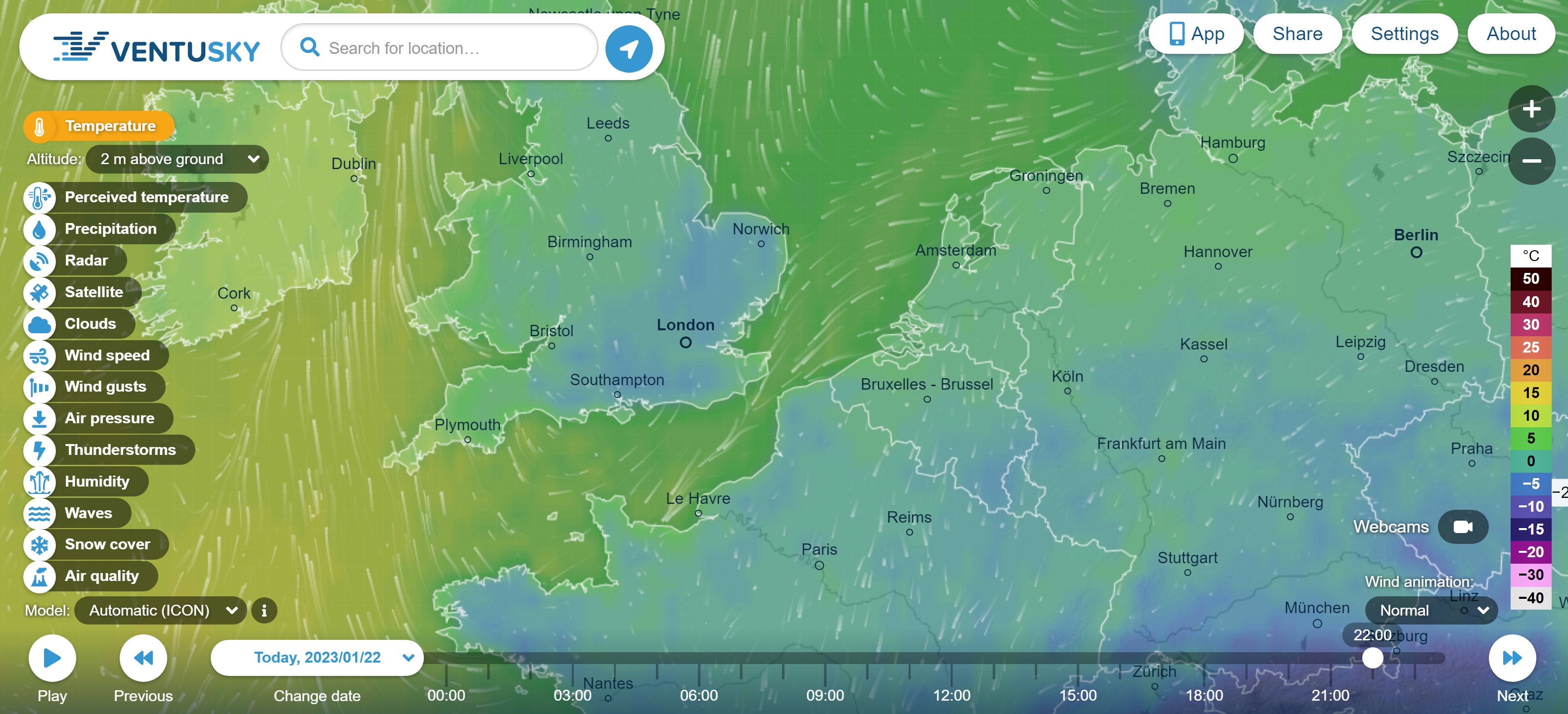
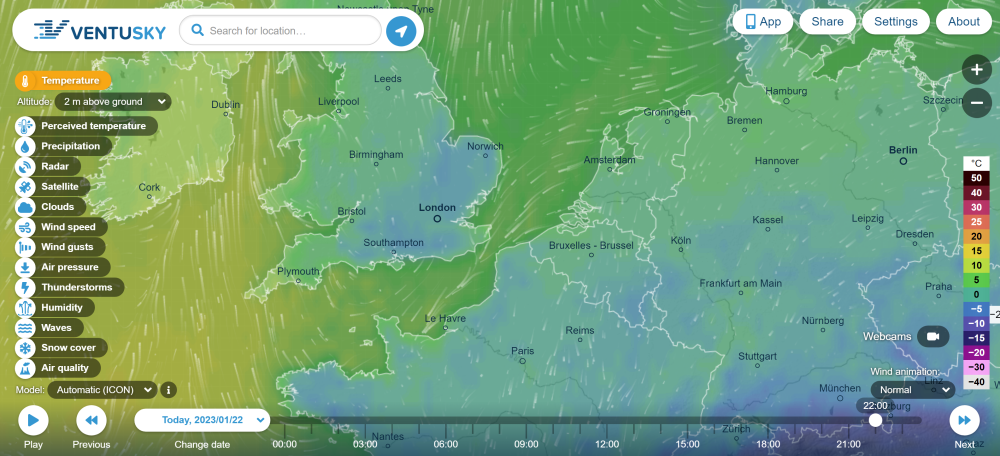
-1.5 here ⛸️ Unusual pattern just now with air coming off the English Channel from the North East and flicking up to the Southern counties. Down your way it's coming up from the Atlantic almost due South. 10oC difference.
-
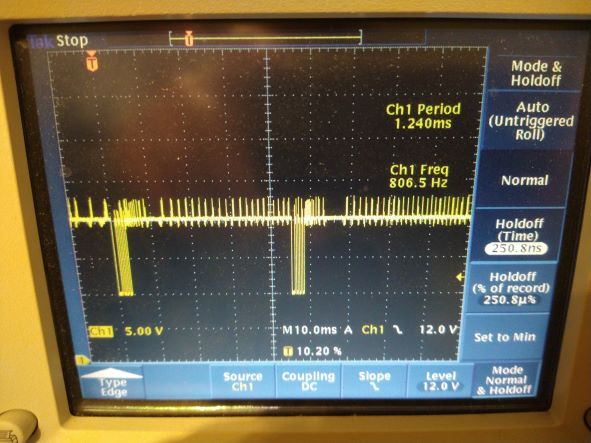
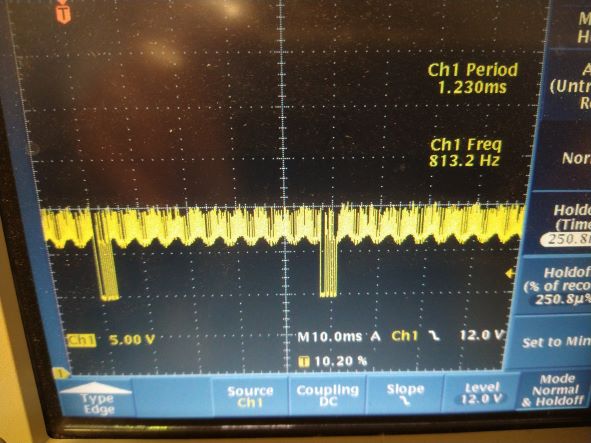
Interesting. I Installed interceptty and eavesdropped on the serial. As soon as the boiler fired the stream turned to absolute junk. Odd that ebusd wouldn't even respond (in theory you can see the raw data with it, but it was just freezing). A scope sheds more light on the issue. The ebus signal should be switching between 24V and 12V for logic 1's and 0's. There's quite a margin, and in practice it's usually between 20V and 10V, so disregarding the spiky noise, when idling and everything is working, this is where we're at: But once the boiler is lit the top of the waveform sinks well below 20V: As well as sourcing the 5V logic level supply, the 24V SMPS on the boiler PCB is used to run the gas valve and the fan which explains the drop when these are active. I guess the PCB needs re-capping. Maybe this is why it throws the occasional cryptic F.13 fault code. In the meantime I can adjust the comparator threshold down a bit. I thought I had set it at 15V to be half way between expected levels but it must be a tad higher than that.
-
Well this is annoying. Today I finished interrogating the zombie boiler on the bench and proving that everything that could be adjusted (without actually having it fired up) was working as expected, so I couldn't put it off any longer and connected the Raspberry Pi interface up to my real boiler. Everything went as expected until it came to the boiler firing up. 🙄 This is all just in read-mode, I haven't got as far as sending the flow temperature setting command. Initially, with no demand from the house thermostat, all the registers I was reading with the zombie were being read nicely (actual flow temp, return temp etc.) but after a while I noticed the data had stopped flowing. This coincided with the heating demand coming on from the house. So with the boiler burning away, the whole thing just locks up. I'm having to haul another machine in to monitor the serial bus but it's awkward due to the non-standard RS232 levels. If I could tap into the serial data already feeding the ebusd daemon - that would be preferable but I'm struggling with the linux-fu required to do that.
-
Or a masochist? 😜 Actually -2 can be quite pleasant with a bit of sunshine, and no wind. Just no good for doing any wet work.
-
Dealing with condensation…
Radian replied to HughF's topic in Mechanical Ventilation with Heat Recovery (MVHR)
Good point. Maybe worth rigging up a DIY test... That thread could do with some more input 😄 -
Yes, any inductive load will just want to keep the current flowing and generate a huge back EMF in an attempt to do so. Perhaps you could use a SSR with built-in snubber for higher reliability?
-
We did something a little unusual with our carpet over a UFH floor and it's worked out very well. It might not be to everyone's tastes but, as a last minute change from the planned ceramic tiles we were going to lay, we just stuck down a low tog carpet directly to the floor. i.e. no underlay. The reason for this was the awful acoustics in the room after it was glazed and screeded... it instantly sounded just like a cheap 70's reverb and we knew it would be even worse once tiled. As a half-way house between fully cushioned carpet and hard floor finish, I think it's a valid (albeit unusual) choice for some applications.
-
Funny that, I feel exactly the opposite about those two players. I don't trust Google to maintain their services - while Echo is too-big-to-vanish and all it does for us is provide a convenient ambient UI that's totally customisable by utilising their free developer tools. I don't give a fig if it picks up the occasional snippet of conversation not intended for it. The fact that Amazon are struggling to recover their investment in developing the hardware and software stack is another reassuring indication that it's providing good value for punters.
-
New Velux triple glazed, frame condensation
Radian replied to Sparrowhawk's topic in Skylights & Roof Windows
How wide is the window reveal? I'm thinking about the spacing of rafters and if it's between a pair (~550mm) or if it cuts through one (>600mm)