


Hastings
-
Posts
290 -
Joined
-
Last visited
Everything posted by Hastings
-
One wall is a partition which is open on the corridor side for plumbing/wiring to go in so I can fit the ply in from that side with battening around edges, no problem. One side of the WC and 2 sides of the shower are on outside walls and have been p/boarded - it's just those that I'd like to confirm really need re-doing.
-
Yes but I need to know the answer because the plasterboarding has been done in error without any in place and I am trying to minimise the disruption and cost of undoing the plasterboarding to correct. Really I want to save opening one of the shower side walls and maybe the shower back wall, where there is little point in having it as a grab rail would never be useful there, I think.
-
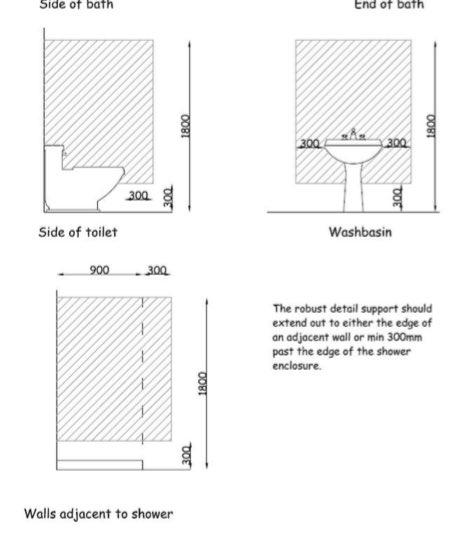
Does anyone know if the requirement in Scottish regulation for reinforcing timber stud walls with plywood (eg. behind plasterboard) means it should be on both sides of the shower and WC or just on one side is sufficient? The regulation - 3.12.3 Accessible sanitary accommodation doesn't specifically state both sides.
-
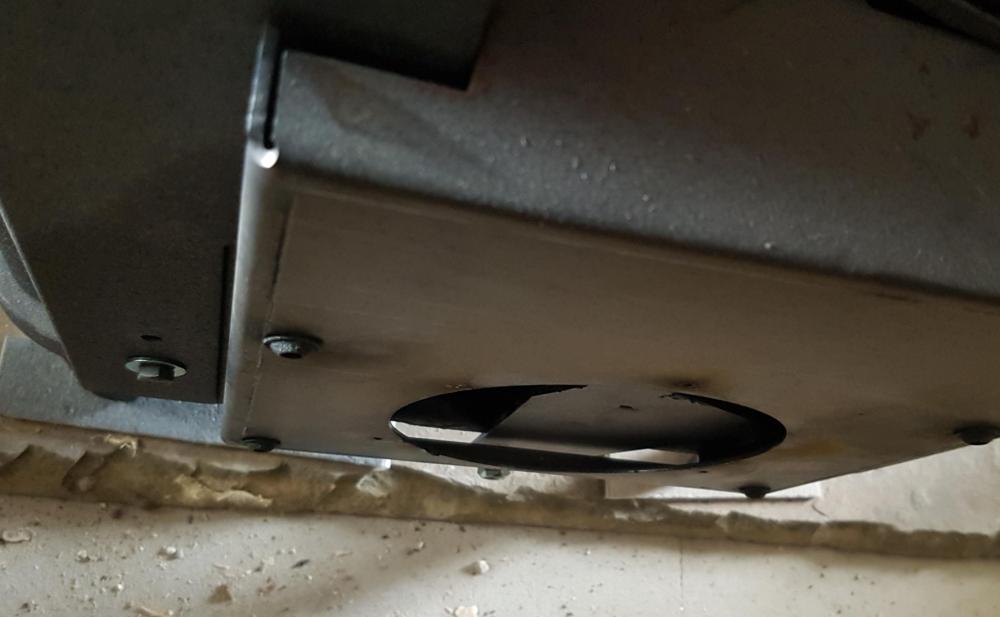
Just a warning to those looking to fit wood stoves into airtight homes... it is not enough to just look for one that has the option offered of 'Direct-Air' feed. You need to look for 'Room-sealed'. The Morso 3116 direct-air kit is a very poor design and will let air into the room as well as into the stove.
-
Thanks but I think you have misunderstood the issue. My stove air supply does not fit the back of the stove properly and allows air into and out of the room. The kitchen and bathroom vents do not extract directly to the outside.
-
@jamieled Thanks for the extra info. That makes sense. We have a lot of cold bridging throughout and only 150 of wall insulation as it is a conversion of a derelict old stone house so not worried about that. Very windy location is why I liked the airtight approach and I can imagine a partly open flue fighting the MVHR and making quite a noise at the same time!
-
Our build is not to be certified or tested for airtightness, just built along airtight principles, so I am thinking of not worrying about it. Just would be an annoying and avoidable 'hole' in the fabric after so much care and extra expense with the airtight detailing.
-
Did you not go with a room-sealed stove because the house is not particularly airtight? Only ask because I have almost completed an MVHR/airtight build only to discover too late that the direct-air stove I bought (Morso 3116) is not suitable for an airtight building because the air supply kit does not fully seal around the stove, effectively introducing a permanently open vent to the outside.
-
Nettles and most thistles don't survive regular mowing and you can hand remove any that try. But it can take a while so you need patience.
-
I would ignore all the advice given above. No membrane, no added top soil, no poisons, just mow (not too short). You end up with a mix of plant species, many of which will flower and feed bees and insects, instead of a lifeless, toxic, boring monoculture that looks like plastic and will drain your pocket and your time keeping it that way. Peace, not war (with nature).
-
I've got 115mm from hinge to wall so the door goes a tad beyond 90. Constrained by both a 150 yr old building and full building regs, whole project is a car crash in design terms. Just glad if I can get sign off any which way! Why the hate?
-
Does the protrusion of a door knob/handle on a bedroom door affect the regulation clear opening width when the door opens against a wall only 90 degrees?
-
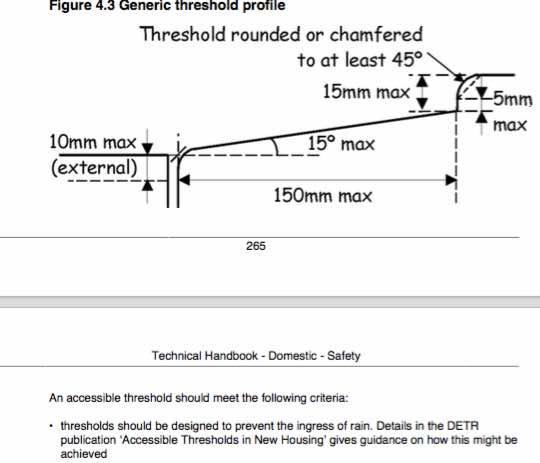
I cannot find online the document pdf recommended in the building regulations on how to do this: "Accessible thresholds in new housing – Guidance for house builders and designers". All the door manufacturers' cross section detail drawings of accessible thresholds show some form of drain just in front of the door but in the diagram in the building regulations guidance (Scotland) no such drain is shown. Is the drain simply good practice or is it mandatory (in a new build)? I was planning on having the door entrance platt area (concrete) slope away to a drain (already in place serving a rainwater downpipe) that is 2.8m away from the door. Thanks.
-
Do the internal doors need to be hung, latches and handles fitted, for the inspector to sign off a new build?
-
Airtight walls & fixing stuff to them
Hastings replied to WWilts's topic in New House & Self Build Design
Yes, that's right but the tapes and membranes are are designed and made to last at least the expected life of the building, claiming testing to 50-100 years. I was very sceptical to begin with but after working with the materials myself, particularly the tape, I believe it. It is not like any tape I have ever experienced before. If you make a mistake it does not come off without breaking itself or the material it has stuck to, even to dirty gloves. Rodents are a worry though. My build has 600mm thick stone cladding to keep them at bay but if I only had timber cladding I might have chosen a very different airtight solution. -
Airtight walls & fixing stuff to them
Hastings replied to WWilts's topic in New House & Self Build Design
Very puzzled by this discussion. I can't imagine a lasting airtightness achieved with anything other than flexible membranes and tapes. Hard materials like plaster and cement based parge coats will all develop cracks. Isn't making something airtight similar to making it watertight? -
I think the penny is beginning to drop over here. I've heard of one or two houses in Argyll & Bute being okay'ed by the council for entirely rain water private supplies. I just wish I could get the tech details of them (so I don't have to re-invent that wheel).
-
What is the backwash filter you are using? Only ever heard of those for use in borehole and other supplies. I have a borehole but the cost of treating (if it can be achieved at all) looks almost as much as an entire new rainwater only system but will not require nearly so much power or consumables (mainly salt) or leave sodium in the water (bad for babies and some diabetics).
-
@saveasteading Would appreciate any progress info on this subject as I am working on a rainwater-only supply. My system needs a risk assessment and approval by the council - a condition on my planning approval. Rainwater doesn't seem to need much serious filtering compared to most boreholes and surface/burn waters in these parts. They often fail on levels Iron/Manganese and colour. To pass regulations, as well as the usual UV and sediment and perhaps carbon filters needed for all types of source, the key things for rain water seem to be pH probably needs raising a little (there's a filter that) care to remove particularly organic matter before storage to prevent stagnation (anaerobic decomposition). prevention of bird excrement (dissolved chemicals can't easily be removed later by filters) - can be solved by fitting bird spikes on the roof ridge. a first flush device discards the first few litres collected (think mini pre-tank) I don't think for me that it will be worth having separate plumbing for toilet flushing as the house is only 1.5 bedrooms and there would be little or no saving in the filtering costs (we have no mains available).
-
I'm feeling now that my answer must be NO. Otherwise they would surely have specified that requirement clearly.
-
Thank you. Yes I am not sure it is even possible to do a level access tray other than by using a curtain and allowing for some spillage. With a house accessible door entrance there is a few mm to play with so I guess the same could be true for a shower. All I can find is this which I think does not apply (as there is no other bathing room in the house):
-
Check with the particular local area council Environmental Health officer (because they don't seem to all have the same requirements) but in Mid Argyll, Kintyre and the Islands area Planning Permission for a new development requiring a private water supply (PWS) will be conditional on hiring a hydrologist to do a risk assessment and hydrological assessment for approval. They require storage (whatever the source) for at least 3 days, calculated at a rate of use of 200L/day/person X max occupancy (x2 for each double bedroom, x1 for each single bedroom). 1000s of litres storage. As far as the water quality goes, the allowable limit for colour is almost zero because it reduces the effectiveness of the mandatory UV filter. Colour removal is usually dealt with by organic scavenger which requires salt, but there are other ways you might be allowed. With burn water usually being a bit acidic you will almost certainly be required to correct the pH with a filter and it is also likely to have too much iron which is another filter (either disposable or cheaper in the long-run timed back-washing type). Borehole, if you are lucky, might only require UV filter. But in these parts it is also likely to need an iron/manganese filter and a softener. As previous poster said, rock is the best, requires no steel pipe liner.
-
Does anyone know if a shower tray in an accessible shower room needs to be level access? It is the only shower room in the house (and there is no bath room). New build in Scotland. The regulation says: Presumably the first part is referring to a wet room?
-
Thanks. My thinking exactly but it's nice to hear it from another. I think I will go ahead without.
-
Do I need to fit a waterless trap and drain on the flexible exhaust duct (insulated) going to the roof? If there is any condensation won't it drain back into and through the machine (V Axia Kinetic Advance in cold loft) and out through the bottom condensate drain?


