


scottishjohn
-
Posts
4393 -
Joined
-
Last visited
-
Days Won
23
Everything posted by scottishjohn
-
and of course in my area where planning are toal power freaks --its 6m for planning
-
Advice on Solar and whether to go 3 phase
scottishjohn replied to d438a1's topic in Electrics - Other
-
What next for heat pumps after BUS and MCS?
scottishjohn replied to joth's topic in Environmental Building Politics
what makes you think I,m a tory itar them all with the same brush -
What next for heat pumps after BUS and MCS?
scottishjohn replied to joth's topic in Environmental Building Politics
Idon,t know what you are all worring about we have all the politicians telling us electricity is going to be cheaper with building more wind and solar farms and if you believe that you will also belive labour are going to "smash the gangs" and stop the boats -
that will be correct and if you want to sort it out you will have to spend some money if it goes to court they will only look at written documents # sowhat he says to you is not worth the paper its wrtieen on its the same with every legal thing -- inwriting is what counts thats whay isaid before just build your own fence on the boundary so he cannot over hang it after that its proper survey aand drawings bsck of fag packet will not work in court and any drawing you do with no letters after your name is worthless
-
Timber Cladding in the Scottish Highlands
scottishjohn replied to North80's topic in General Construction Issues
yes not just fit and forget like stone or brick -
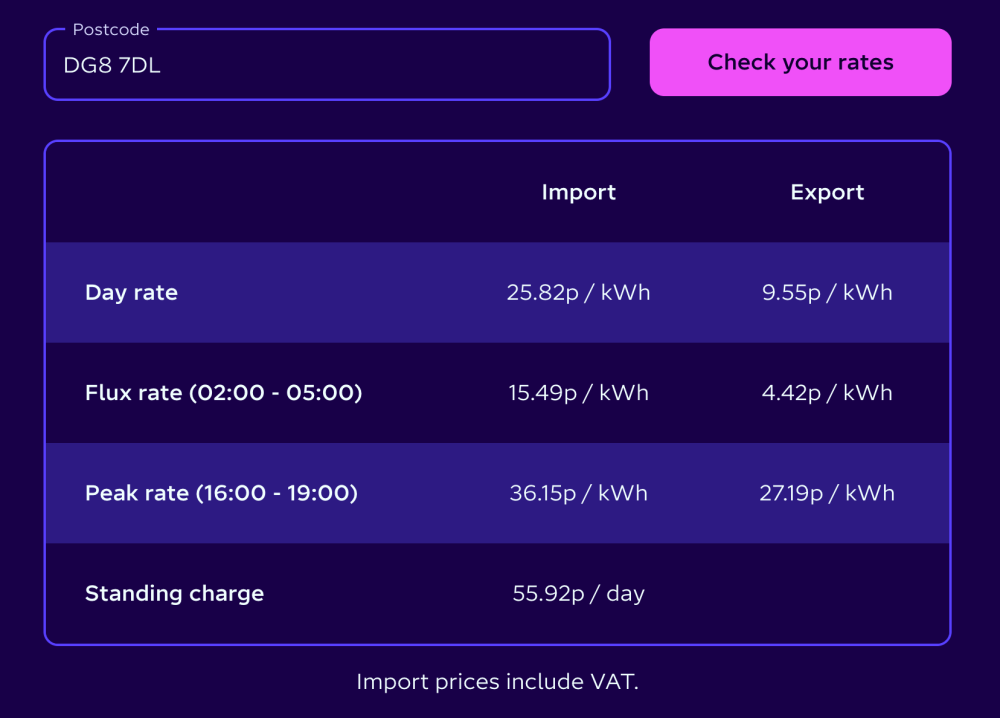
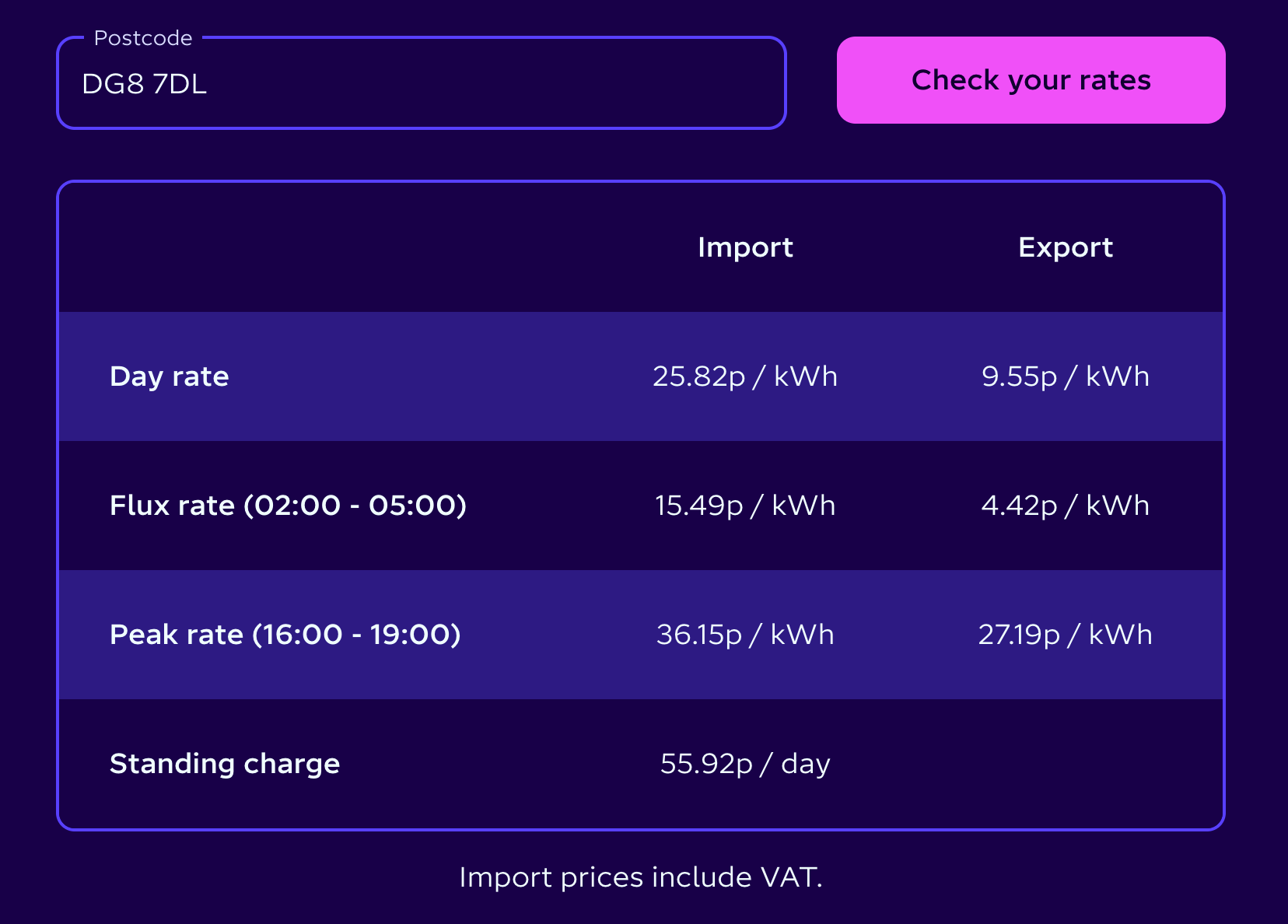
found a screen shot octopus sent me a month ago for both flux and flux intelligent first one is flux lower one is flux intelligent
.thumb.png.5da5f4b1422730c67092d1be428103c9.png)
-
just go on octopus site and look for flux intelligent you have to enter youtr postcode so it might be different where you are just looked and i,m telling you lies import+export normal hours is same at 21.88 import+export atpeak times 4-7at night 29.18 for my postcode
-
yes but balancing them -so water does not just take easiest route eg going round the rads --will be the main problem and it sounds like you do not want to have zone controls and individual stats . both my UFH systems have each room on its own control and is the right way to do it no good UFH system will just have thermostatic valves they will have individual room stat and programmers
-
my thoughts based on having UFH runing from lpg and then ASHP in same house the main difference was that the ASHP -cost alot less to run than the LPG your first and critical job is the insulation --what ever system you go for I can also confrim that from experince with my new house --nearly moved in --next week is permanent move in it is a1730 granite house with a TF built inside it 150mm pir insulation concrete sub floor then insulation and UFH pipes -then screed stuck down LVT flooring although i have been running both houses at same base internal temp the new refurbed/ old house feels much warmer cos there are NO DRAFTS so what i am advising with which ever way you go is concentrate and spend most attention on insulation and draft prevention my new/rebuilt old house is 400sqms of floor space and is same or cheaper to heat then the old one which is less than half that size I have had ashp running on this house since november last year while the builders were doing things and the temp was raised somewhat to dry out the floor for the stuck down flooring as for running ASHP and rads it should not be more expensive to run than gas and all you need is to make rads larger basically twice the size as water temp will be nearly half of boiler temp -- and run them at alow tempwith moore surface area if size of house precludes that then stay with boiler My feelings are that you cannot over stress tthe importance of the air loss and insulation
-
Timber Cladding in the Scottish Highlands
scottishjohn replied to North80's topic in General Construction Issues
you said it precisely why anyone wold use anything other first quality western red cedar or well seasoned larch is asking for trouble you want to do it cheaper then use made man cladding that looks like wood I do not think this is just the highlands either any wooden structure in my area --s/w scotland will go green on any side not facing south or west those not near the sea anyway its just not a sensible choice for cladding in scotland especially with the crap timber that is supplied --even the so called pressure treated stuff is a joke only properly pressure treated wood you will see is telegraph poles --cut one of them and its all the way through -hence they last 50years + cut one end of treated wood from builders merhcants and you will see the treatment is not right through just first 3-5mm we used to have a chalet park and it was sweedish built chalets -- but they needed to be recoated with preservative every 3years - and if that was done they lasted for ever - they were 20years old when we took over and were still fine 15 years later -next owner did not do that with few years they were all rotten and then the idiot replanked them in pine -another 5years and no treatment and they look pretty shabby we used xyladec almost clear and very thin and in the 70,s it was £30 per 5 litres--- when they needed doing the panels ,whiich had expansion joints every 3m or so would be about 1" wide recoat them and it would close up to next to nothing --which just showed what was happening over time the wood was drying pout and needed the prservative oily fluid to keep them good If we had cold dry winters like canada and scandinavia --fine --but not constantly damp and warm ones like we get here -
not all fired up yet -waitng on export mpan to be sorted out -asoctopus have never registed my supply on nationa ldata base --so it shows as de-energised --eg tsupply turned off --but they are sending me bills - but the octopus inteligent rate here is 28.16per unit between 4- at night7 and 25.68 rest of the day and night
-
Advice on Solar and whether to go 3 phase
scottishjohn replied to d438a1's topic in Electrics - Other
that is why having more panels will hlep for the winter -as will more battery panels are cheap the thing you have to watch with some panels and invertors is the minimum voltage they need to make to turn on the invertor another question to ask them which is why they usually spec the invertor at around 80%of panel capacity and accept that on thesuper summer days you might not get all of your panel capacity -dependoing on make of invertor -
Advice on Solar and whether to go 3 phase
scottishjohn replied to d438a1's topic in Electrics - Other
If you want to keep to the simple dno rules --and going to make lup to 4kw per phase above that you need diffrent approval -not usually with held --but more paperwork and time it is possible to go up to 16kw per phase --but thats the limit -fullstop that could depend on size of your incoming cable? and as isaid before it will judged not on number of panels but size of invertor --as its size is the limit is can pass back to the grid -
Advice on Solar and whether to go 3 phase
scottishjohn replied to d438a1's topic in Electrics - Other
no need with modern meters --Ihad that very conversation with the dno men when they camto fit it makes nodifference as its AC current so it just takes the toal kw used -
in the long run it may well pay you to get an MCS inspection and cert andthen you can export properly and if at same time you use a batteyr approved by octopus you could then have the proper rates Iknow a man who is MCS registered and maybe could help i could always ask to se if he is up for it?
-
cos its cheaper than grp and would be protected by the soil and vegitation until a crow decides to dig a worm from your green roof and punctures the membrane?
-
If you have 3bar of pressure why do you have header tanksfor water system ? only reason for a header tank is if you have a vented hot water cyclinder filled fromit with a ballcock ? and a back boiler or something otherwise everything would direct off the main
-
grp all the way
-
yes you can forget a decent grp roof for 30years +
-
yes you need a step down from house asit would appear that the garage is connected to house it will need fireproofing onthe ceiling of the garage as well especially if you are building over it and yes it is for the possibility of a petrol leakfrom the burning car which could set on fire and then run into house
-
yor going to need acompletion cert and elctrican cert anyway -- so I do not think you need to do so you will need to do a "buyers pack "if you come to sell so that would cover it
-
Advice on Solar and whether to go 3 phase
scottishjohn replied to d438a1's topic in Electrics - Other
its what I have done 1phase for house 2nd phase for garage 3rd phase for expansion if iever build the holidays lets -
Advice on Solar and whether to go 3 phase
scottishjohn replied to d438a1's topic in Electrics - Other
unless i have been lied to --again you always have 2 "strings" of panels each string ir wired in series then the 2 strings are in parrallel you cannot have more than 2 strings on one invertor so I am told its when it comes out the other end of the 3phase inverytor it splits up the load -not on the input -
Advice on Solar and whether to go 3 phase
scottishjohn replied to d438a1's topic in Electrics - Other
having just been through a solar installation i can answer this fairly well I am too old to be going of roofs now so nooption but a professional job I already have 3 phase cos the difference inprice for my supply was only £1000 to do it as for how professional the salemen are that whole other story Iwas very happy with the actual engineers who did the job and they stood up well to mt grilling into all the technicalbits of the system and the dno /export systems as for what you put back to the grid you can send back 3.8kw per phase without any problem --they have to let you do that amount --no argument above that it needs agreement and adifferent permit from the DNO that will take time so you need that all sorted out and warrantied that it will happen before you push the button on a bigger set-up and give them some money - If they will not do that --change your supplier --they are cowboys the DNO judges what you send back by the size of the invertor as its maximum is the max that can be sent back continuosly the other thing is if you go for a 13kw=invertor it is classed as commercial -so your installation will have vat added pleas check this before making decision I was going for that when the 2nd supplier worked out he could get30 panels on the roof as ithought that it would pay back well inthe "shoulder months" they all seem to use "open solar" software which takes a view of house from goggle earth --but it is not scaled exactly --so thats what happened to me --when they came to do it they had the rails onbefore they saw that they could not get the 30 panels on !! an opening for a discount !! or get all your junk offf my roof and put everything back as it was to start with the resulting deal was another battery for free which took me up to the 17kw an old saying in scotland --"when you see a stick --cut it" I went for 26panels which gave me 11.7kw and the invertor is a 3 pahse smart 11kw and 17kw of giv batteries panels are the cheap bits and if doing it yourself you will not be allowed to send back more than 4kw total - unless you get it certified by an approved mcs installer you need an mcs cert -which you then take to your supplier to get an export M-Pan number you need to check carefully that the batteries you are getting will comply to get a bigger KW export cert . ocotpus only like giv batteries --but there are some they willalow onthier tariff --check which if you going octopus Iwould suggest you talk to ther suppliers before signing up I found they ALL lie to certain extent on things and do not be afraid to tell the others you look at what sig have siad then you will find like me all the holes in the quotes for example when asked they said bird gaurds are std fitment --not so they wanted to charge extra -- a dull chance that happening with me had to get them to alter the contract to include them remeber when you sign you are comitted just make sure your quote has all these things clearly marked I had one supplier who told me exactly what panels and invertor were going to be and when the quote came --the make was"to be advised" and another salesman told m the reason why they always specify a smaller invertor than the ouput of the panels is that the invertor takes 1.5kw to run it I rung up GIV energy and spoke to the tech man who pointed me too the spec sheet-- it takes 15w to run not 1500w so do not believe half of what they tell you do your homework also warrnaties for panels,invertor and batteries check with the maker -- for example --giv invertor has 12 years -but if you do not get and mcs cert and one of thier apporved fitters its 5 years lots of bobby traps -solar panels sales are like car sales used to be in the sixities .LOL- some do not include scaffolding in the quote and add it on

.png.400a17318091527c4121104b60f48b46.png)
