Spinny
-
Posts
923 -
Joined
-
Last visited
-
Days Won
1
Everything posted by Spinny
-
Please can I get some advice on fitting grid/isolation switches into a kitchen. We did discuss this with our kitchen company and the plan is to fit the switches inside a suitable kitchen cupboard. So now I am wondering how exactly this is best done. The kitchen company have said the electrician should fit a surface box onto the backboard inside of the cupboard, which is a 3mm back board. Is this the common approach and does anyone have any photos of this achieved in practice ? Fitting an electrical box onto a 3mm board doesn't seem that robust, neither does it seem great aesthetically, a 47mm box would be 2 inches of box obstructing the back of the cupboard for example. It may be too late to do that much about it given the wires are in place. But what is normal, does anyone mount the box onto the wall behind the cabinet and then cut an opening around it ? Or reinforce the board from behind with timber ? We have one wall run of cabinets with Oven, Microwave/oven, Warming Drawer, Induction Hob, Extractor Fan, fridge freezer, and a smart switch for opening the rooflight. And a kitchen island with D/washer, wine cooler, quooker. Would be really good to see photos of what others have done. I will discuss again with the sparky, but sometimes trades have no criteria other than quickest for them, whereas we will be living with it, and looking at it for 10-15 years.
-
Here tis video mentioned... https://www.youtube.com/watch?v=0Zs2DwWqH5I
-
Well you could have a device detect the absence of the SPOC. I think there was someone on YouTube that had put a routine on a Shelly switch that triggered if the SPOC was down and reverted the relay to manual. Made sure the lights would work if the SPOC went down. Beyond that you could possibly switch to a mirror. i am not really sure how you could expect otherwise. Network routing failover is one thing but logic failover is another as logic would not be distributable - just capable of duplication and mirroring with failover ?
-
Ah ok, I meant slim circular downlight puck lights that get recessed into the cabinet base. About 12-15mm deep. Want circular to match the extractor etc Kitchen company have some but they are not smart.
-
These days you can have a smart home that doesn't depend on the cloud. Home Assistant can be local, Samsung Smartthings can be local. I havn't looked into the transfer of a smart system to another owner, but I would suspect there maybe relatively straightforward routes. And after all we face the same barriers if we want to transfer a mobile phone, a laptop, or even a TV to a new owner. Even my car has an App that would need sorting out if I sold the car. Personally I plan to stay in the house until I die - which may be sooner from all the stress of trying to get this building malarkey sorted. And I hope that a smart home will ease some elements of old age - no falling down in the dark - no being unable to reach the socket to turn the device off - people being alerted if you havn't got out of bed etc. And what we are doing doesn't go the whole hog, we do actually have physical light switches and you could remove all the smart relays and have a functioning home. Yes there is an element of it not being essential. It isn't essential when the car puts the handbrake on, turns the headlights on, heats the car, and applies the brakes before I hit something - but it is convenient, as you discover when trying to drive the spouses car with the handbrake on ;0) At least we don't have to do the washing up anymore, or refill the kerosene lamps. There has always been something irresistable about having automated and remote control. They just never fitted that module to the Mr Trump model unfortunately.
-
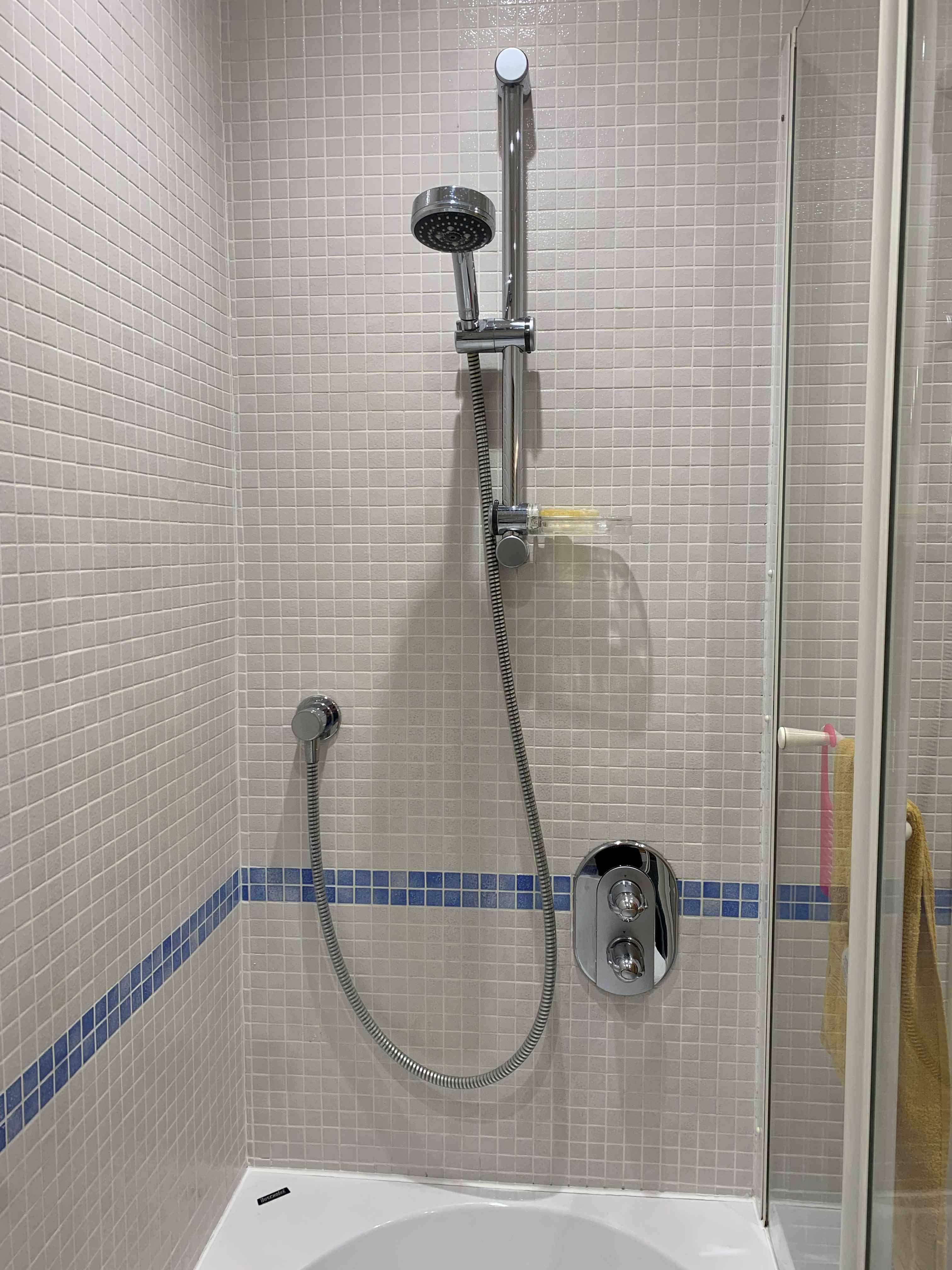
In my case the controls are attached directly to the mixer valve. The wall behind the shower is hollow and accessible from the other side for service access if needed (and pipes are easily accessed by removing the bath panel). But yes a little awkward if you don't get in before turning the shower on.
-
Anyone seen any thin lights for recessing into the bottom of kitchen wall cabinets that are actually smart and can be controlled remotely to change colour temperature as well as to dim ?
-
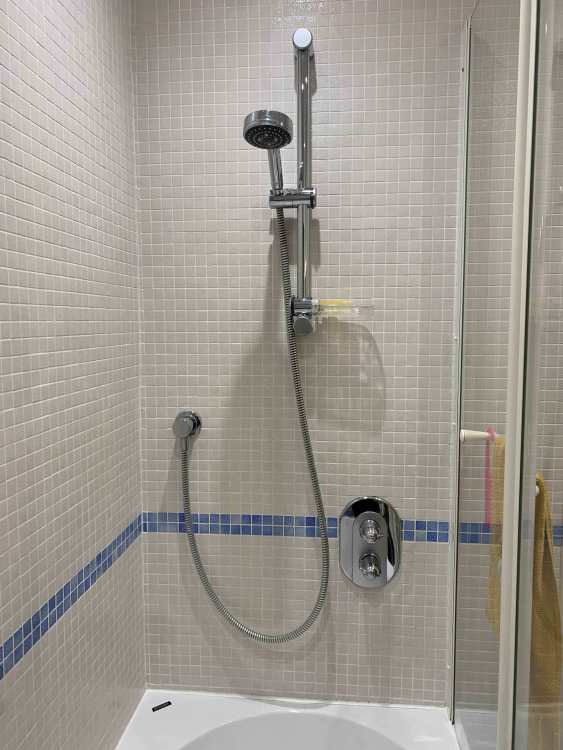
Here is ours. Went with neither 20 years ago, although the screen folds in half inwards, so it helps the screen clear the shower head. The centre line is on the left of the riser, i.e. midway between the riser and the centre of the shower head - you can count the mosaic tiles.
-
It certainly is, it is difficult to believe how slow and change resistant the market is. You would think, for example, that by now there would be a multitude of lighting suppliers offering smart down lights. I could only find one supplier, now taken over by another company that then instantly cancelled their smart lights from the range. If you are going to produce downlights where you can switch the power and colour temperature - why on earth in 2026 would you not be making them smart. And still, even now, idiot companies think people will buy their own branded hub to go along with 12 others. You sometimes wonder whether they actually do any research at all on where the market will be going.
-
Ah, I am going to skip wired wall switches for the blinds all together. What motors are you using for the blinds ? 240V ? Somfy ? I am waiting on what may be a hideous quote from a blind company. A lot of blind companies only seem to do the rechargeable ones - but I can't face having to recharge blinds.
-
Wondering why you would need that, if you mean a retractive that you can press both up and down. I find the one way retractive good enough for dimming = just hold down or press again to change direction. I anticipate using smart scenes anyway 95% of the time controlled through a seperate smart switch/cube/remote/knock sensor/smart rule/dashboard/voice. Starting to look at Click Definity. I notice they do some zigbee sockets which is interesting - anybody tried those ? Currently using Samsung Smartthings but anticipate moving to Home Assistant in the end.
-
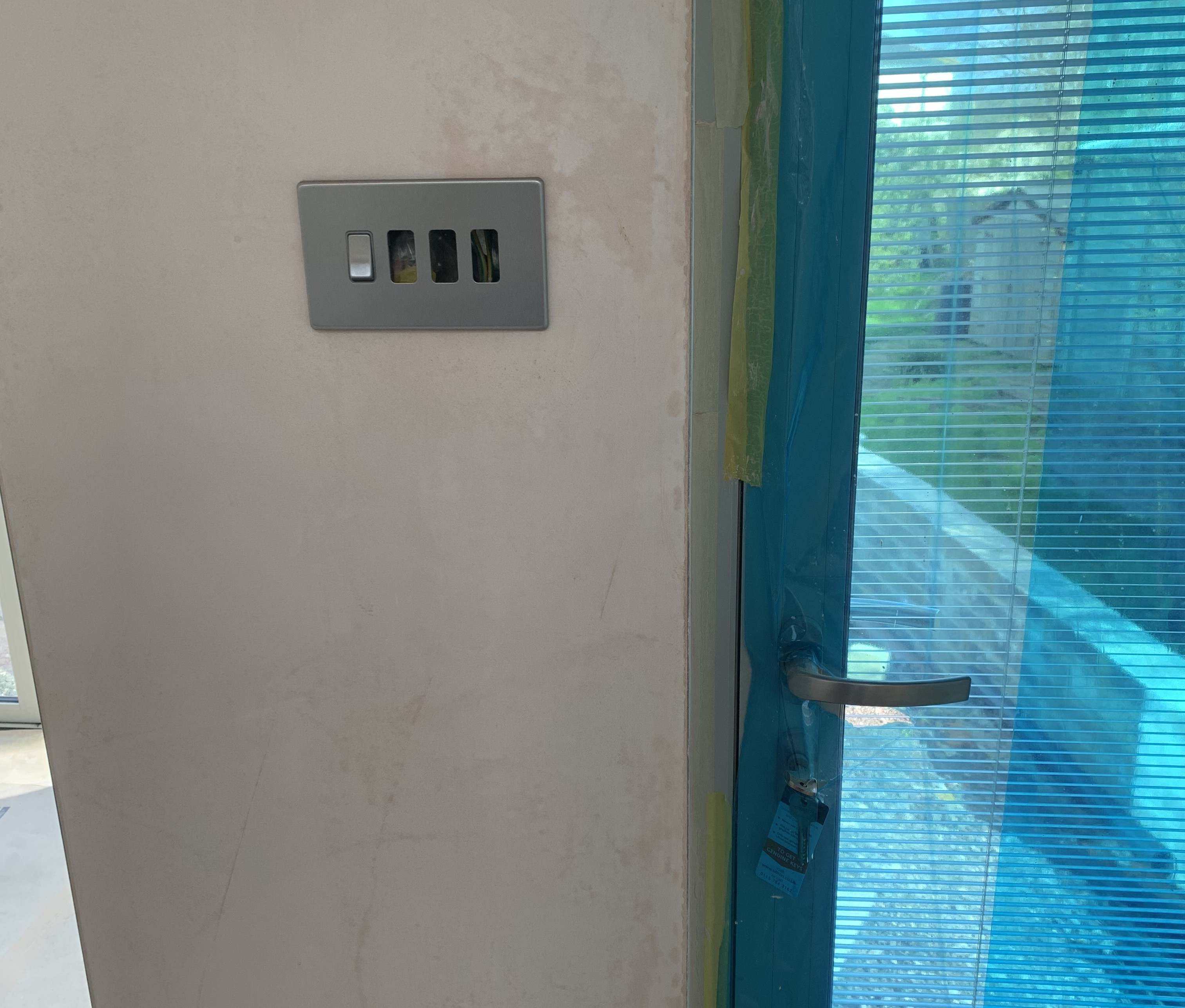
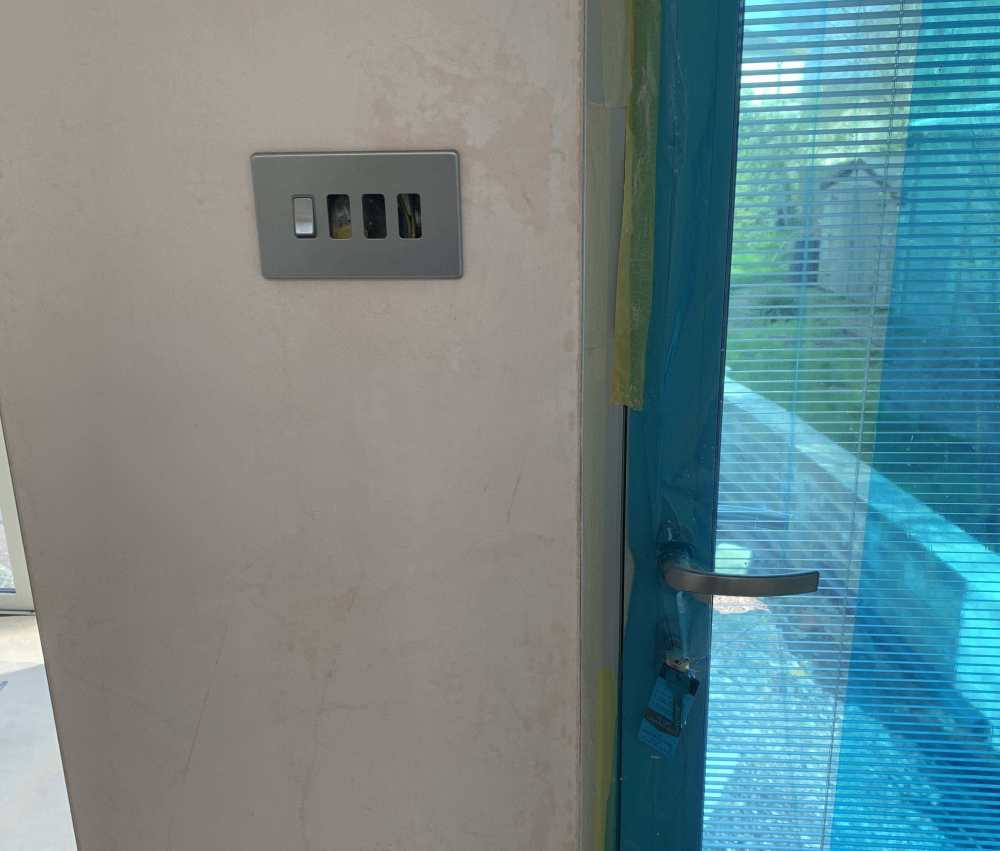
Have been looking for screwless retractive light switches and grid switches - in a brushed steel finish. Any recommendations ? At the moment I have found some by Saxby - although only seem to have a limited range of engraved grid switches for appliances. I notice some by Varilight but seem to have rather mixed reviews. Anyone know whether all grid switch modules will fit into all brands of grid cover plates - are they interchangeable ? That is buy say a varilight switch and mount it in a Saxby screwless cover plate ? (Looked at SOHO but the cover plate has no edges and not keen on seeing the bracket when viewed edge on, plus very expensive) (Looked at BG Nexus but don't like the white plastic edges)
-
Materials for fascia’s & soffits
Spinny replied to newbridgewolf's topic in Roofing, Tiling & Slating
You could consider High Pressure Laminate type products, a la cladding type products like Trespa, Rockpanel, etc. We have been looking for a soffit material that would look like timber but not fade etc. The only one we could find in the right colour is a Fundermax one, made on the continent and widely used there and in the US. However our only route to getting it is a special shipment via a French distributor/fabricator it seems. https://www.fundermax.com/en/Portfolio/Collections https://www.trespa.com/en_GB/ https://pura-uk.com/ and https://pura-uk.com/products/fasciasandsoffits https://bbsfacades.co.uk/ Maybe well be too much cost and faffing for you though. -
I think it depends on exactly what you do or don't want. Some just want some basic drawings for the planning application creating based on their own sketch. Some want someone that severely games the planning system to get plans through that should never get through. You can't build a planning application drawing, and any build quote you get will be fairly meaningless. To build you need construction drawings, or you start making it up as you go along. To get a proper quote you need construction drawings, electrical plan, structural engineer's design/report and a tender document which becomes part of the building contract. Some want actual creative design to address their life needs (i.e. the brief) and achieve aesthetic goals. Some want to build at £1.5k/sqm, others at £8k/sqm. Some want to accept whatever single design the architect draws unchanged, some want preliminary concepts to choose between, some want to look carefully at the plans and make improvements and changes to give them what they really want. I would always say plan, plan, and plan because the more you plan, the more problems you will avoid. Change on projects is always a killer. You certainly see so many extensions that are diabolical - saw one once where someone had built a kind of bridge with steps up and down to cross a staircase opening. Builders and Architects love to hate each other but each bring something essential. The best thing a good architect can give you is probably a route to a good reliable builder.
-
Yeeessss we bloody done it.
Spinny replied to Russell griffiths's topic in General Self Build & DIY Discussion
Looks amazing and in a great setting too. So good to hear of people achieving remarkable things despite everything life throws at us all. And an encouragement to all of us struggling with seemingly never ending projects to keep on keeping on. Based on my own experience I look at builds like yours, and those that were featured on say, Grand Designs House of the Year and I cannot really fathom how these things ever get built at all. I am still trying to get a simple extension finished after 3 and a half years of being ground down by endless challenges. I have absolutely no idea where you can find trades people that are capable of building such things, or indeed that reliably turn up. Clearly they are out there and there are people and teams out there that can manage the seemingly unmanageable world of building. Well done Sir. -
PPS Just remembered there is also this type if you can drill into the frame to fit it (a bit like a door latch barrel), such as wooden frames... https://www.vesternet.com/collections/door/products/z-wave-plus-aeotec-recessed-door-sensor-7
-
PS There are also numerous other more chunky window/door sensors including zigbee or matter ones around (always battery but life shorter than the sensative in built battery)... https://www.amazon.co.uk/s?k=door+and+window+sensor&crid=1BCTQXM1HXSS4&sprefix=door+and+window+sensor%2Caps%2C310&ref=nb_sb_noss_1
-
You could consider using one of these... https://www.vesternet.com/collections/brands-sensative/products/z-wave-plus-sensative-strips-guard-800 https://sensative.com/sensors/strips-zwave/strips-guard-800/ It is battery powered but supposed to last years and designed to sit unobtrusively in the edge of the door/frame. Uses zwave to communicate with a smart home capable of linking to zwave devices - such as Samsung SmartThings, Home Assistant or others. If using Smart Home control for the blinds they could be using the same hub and then could be nicely integrated that way. When you say external blinds, do you mean shutters ?
-
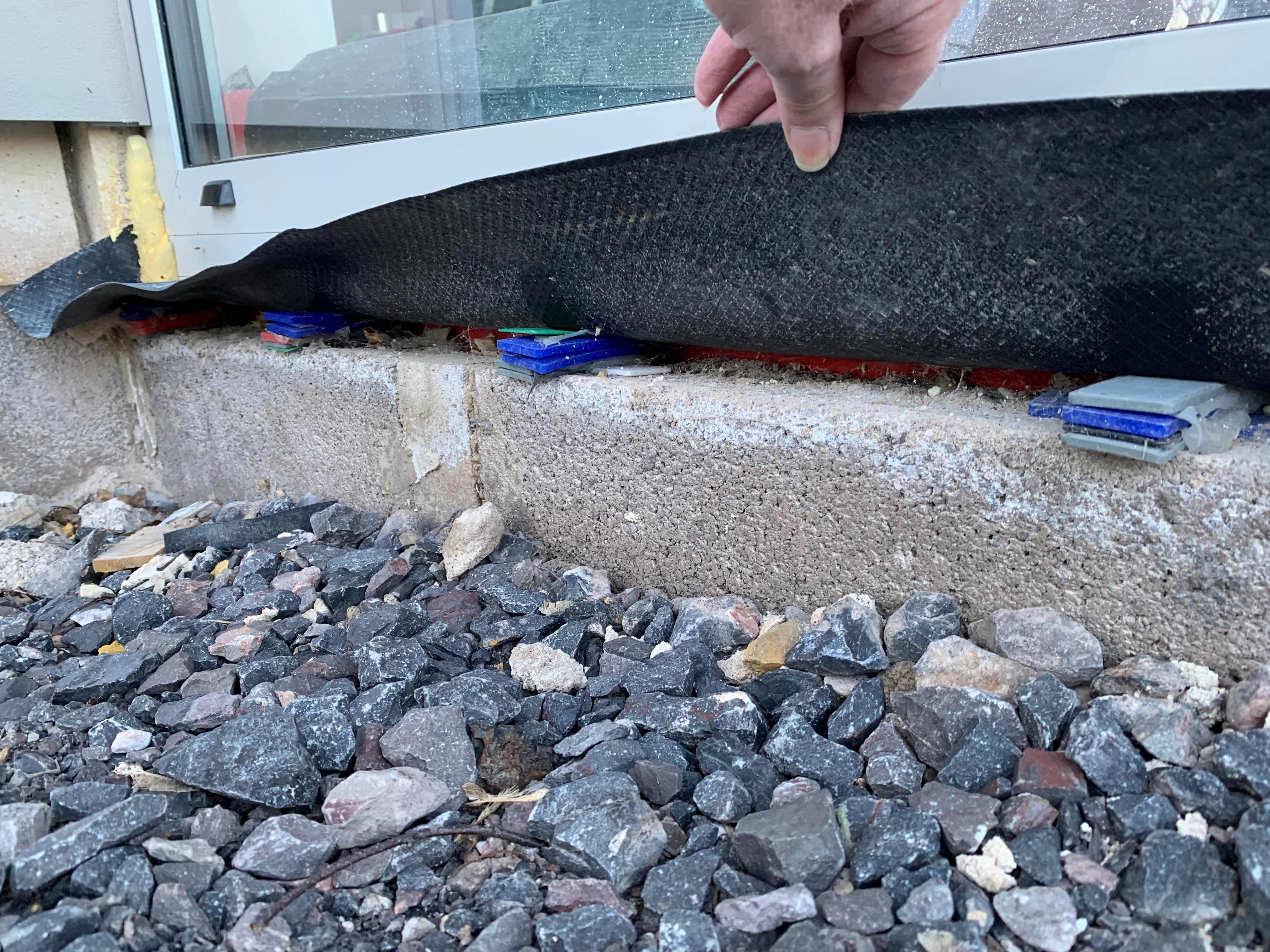
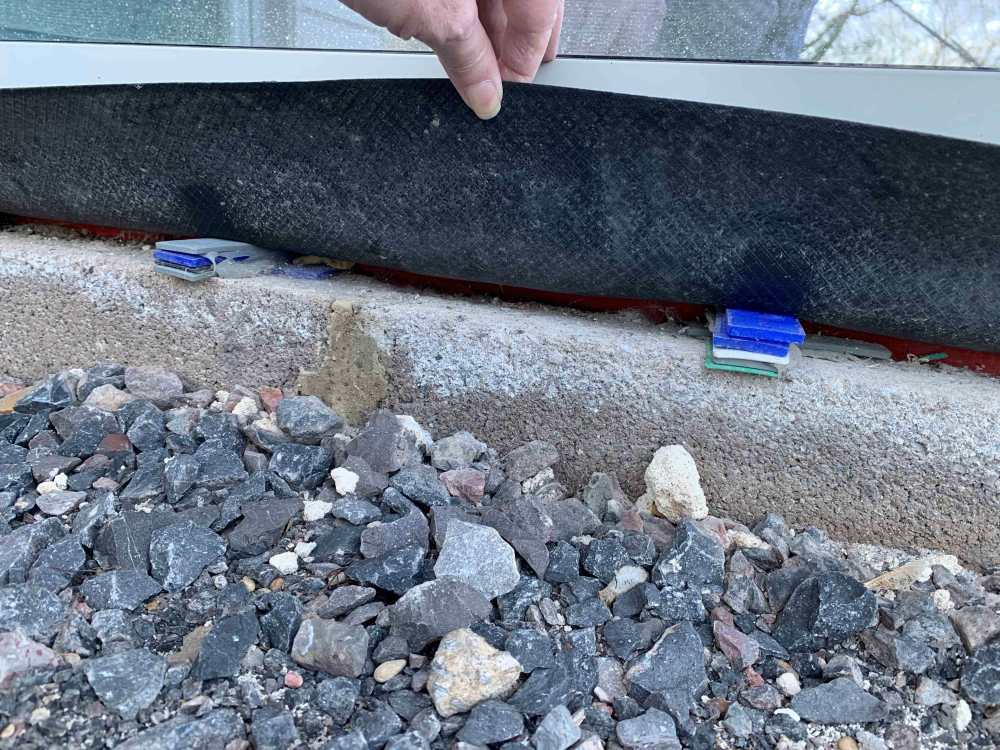
It isn't a door, it is a single fixed pane window about 1.5m wide and 2.4m high. Yes I used foam at the sides, you can see some yellowed and waiting to be cut back flush at the edge in the photos. I agree it seems best to have something capable of supporting the window from underneath. Would the EBT set hard as it seems to say it is flexible ? And wondering if it has any insulative value ? The aluminium frame has a thermal break in it, so if I could avoid creating a thermal bridge underneath across the outside frame and the inside frame it might help keep the bottom frame a bit warmer internally. Maybe push in some XPS at the back and then EBT or something at the front ? Or maybe I could try cutting some slivers of celcon block ?
-
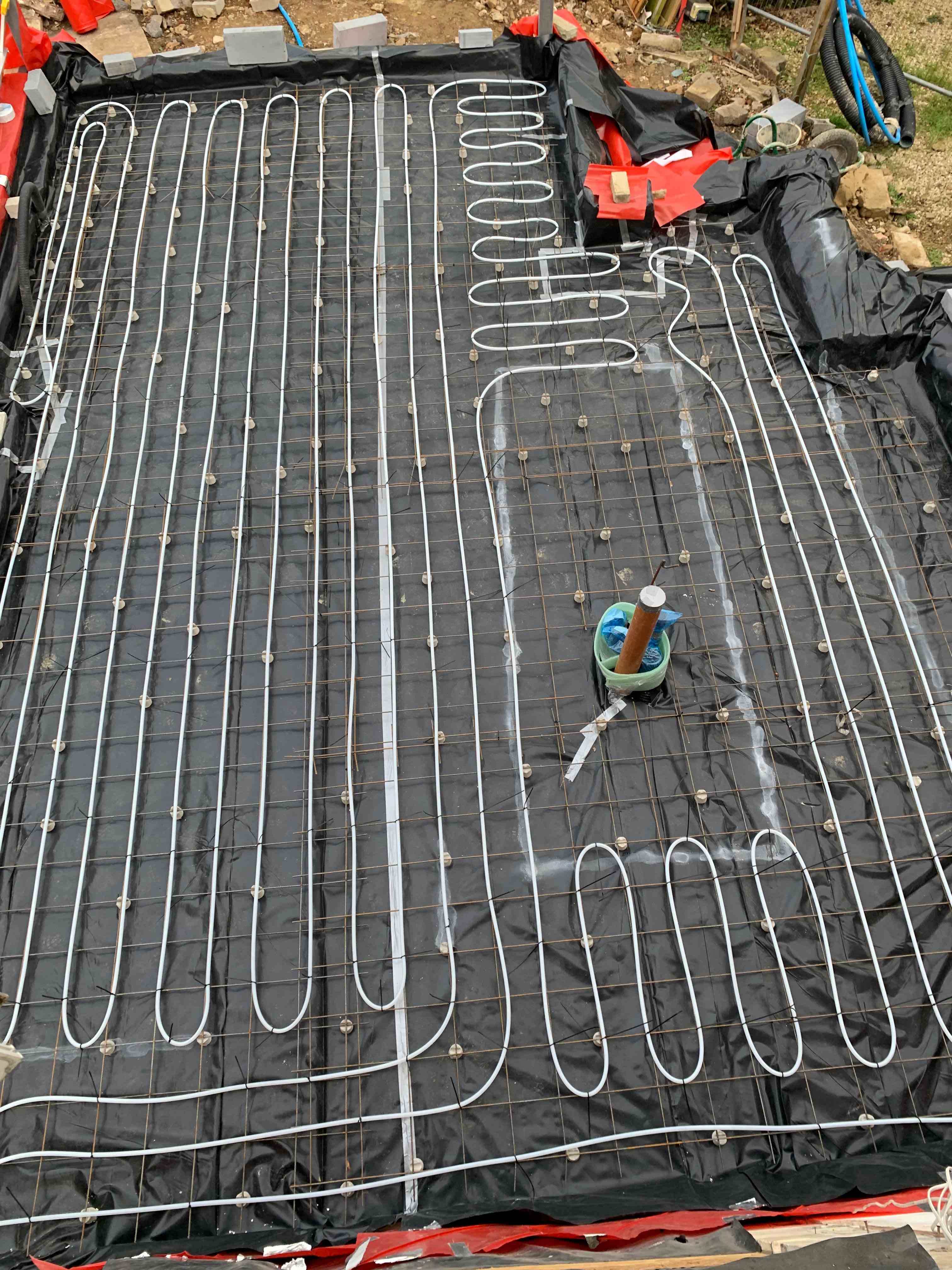
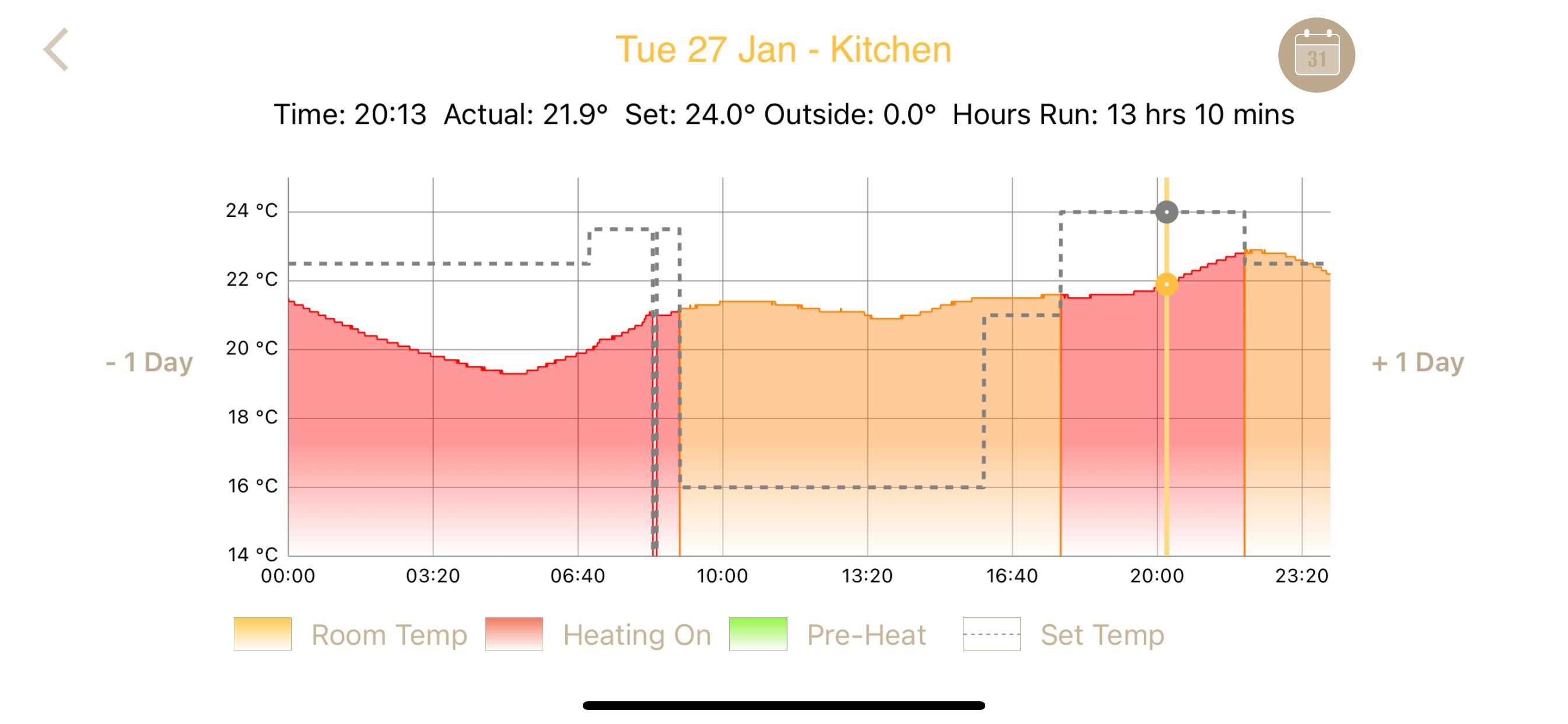
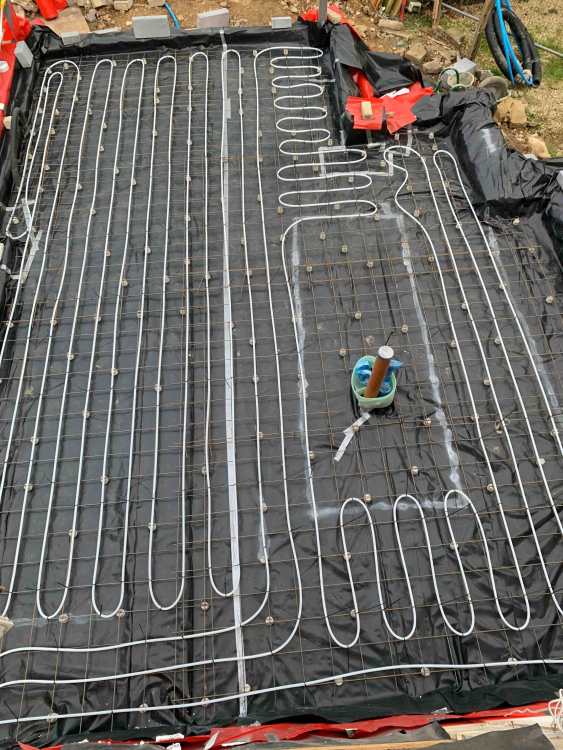
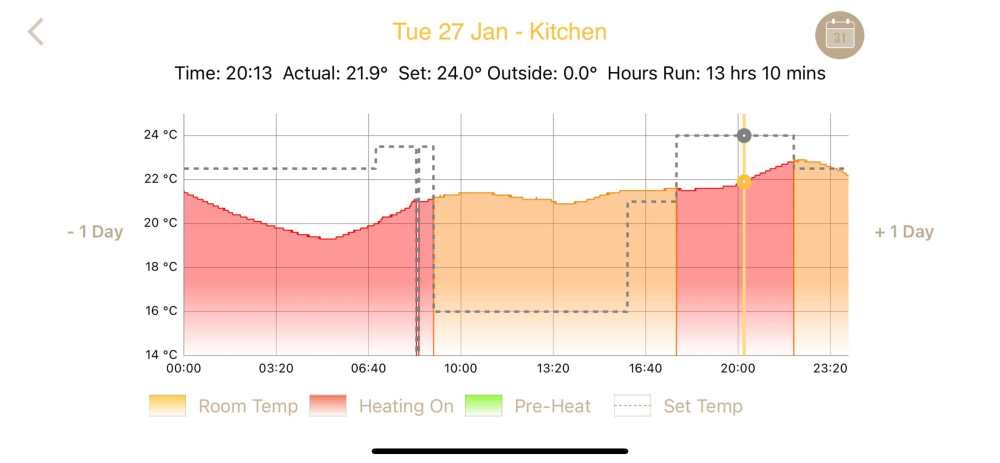
It is a new rear extension. Two pipe loops into a manifold and the heat source is a gas boiler with a mixing valve of course. Floor Area about 37 sqm, ceiling height 2.6m, 90mm PIR walls, 150 PIR in warm roof and under slab. As you can see pipes were not put under the kitchen island or kitchen unit wall area - so maybe 5 or 6sqm unpiped floor area. The heating has been operational for a couple of years since we had to ditch the original builders. I have had the concrete getting up to 26C with the current settings, but it has often had some protection mats or other coverings over chunks of it. Never really tried to optimise (or calibrate the heatmiser wireless thermostat) as it has been in various unfinished state but now plastered. I have omnie TorFlor2 heating in the suspended floor in the adjoining house. Just thinking if I had a probe then the heating could be arranged to turn off if the floor temperature went above 26C say.
-
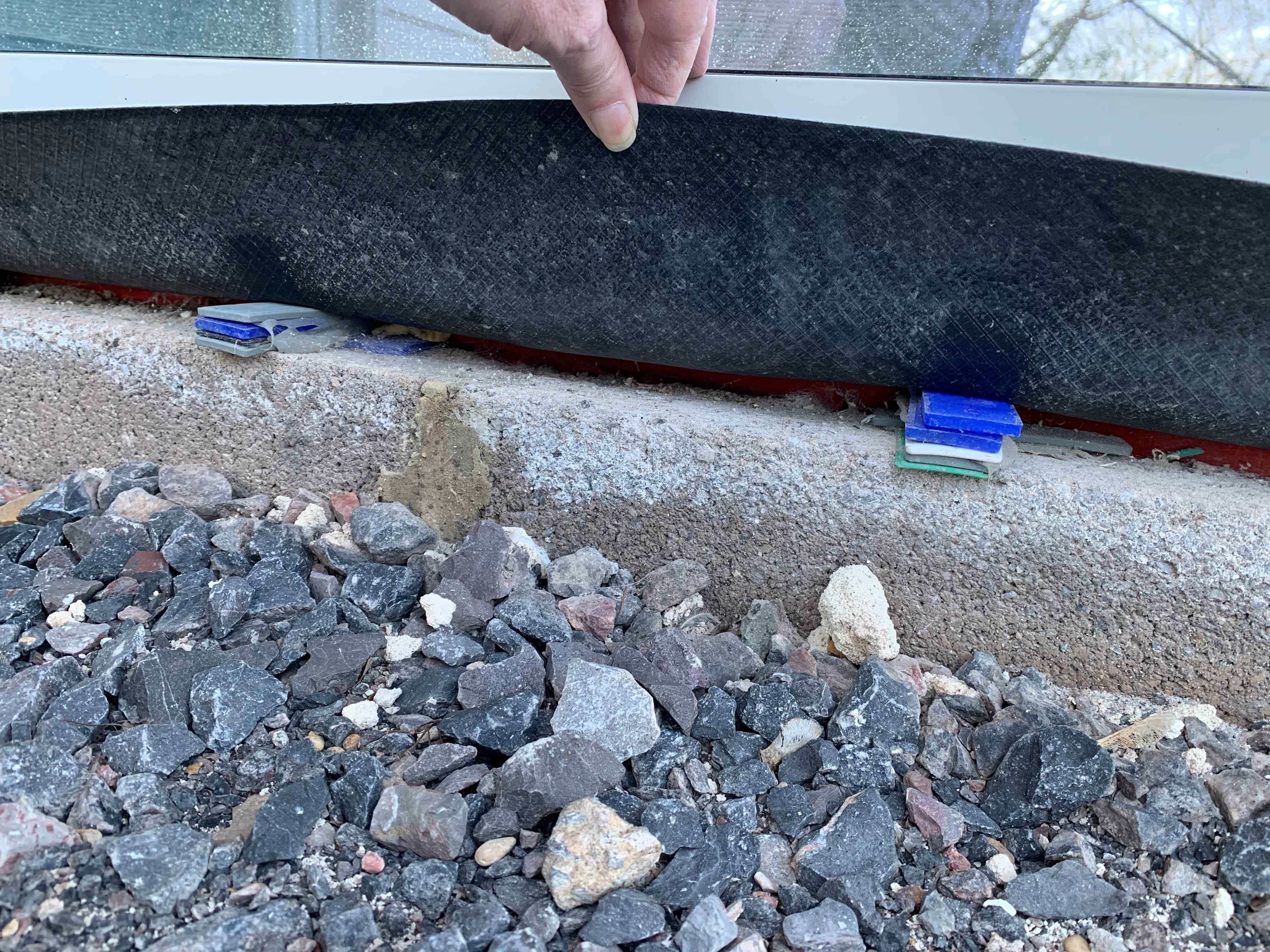
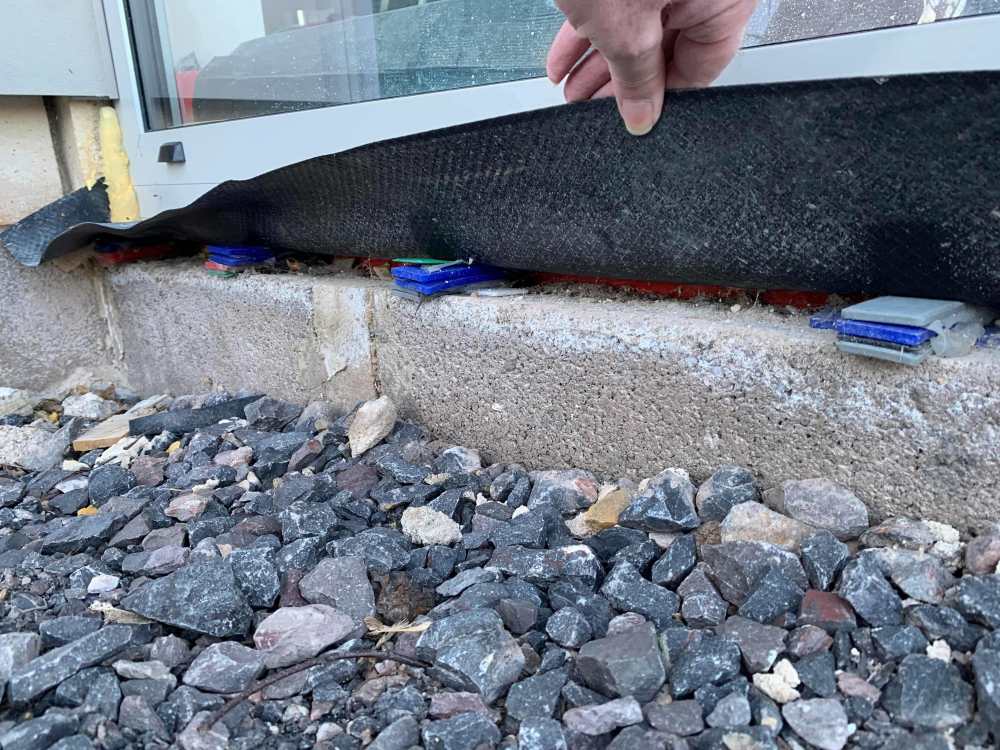
How do people suggest I fill the gap under my floor level window as shown in the photo ? (Around 16mm) As you can see the Window was installed onto plastic spacers before being screwed in, so I need to fill between and around the spacers. A porcelain patio is planned to be laid up to the window frame, or possibly with a strip of gravel soakaway at the bottom of the window. I am thinking ideally an element of insulation might be good at the back of the gap to limit thermal bridging at the frame ? And perhaps mortar mix, or concrete mix, or Toupret exterior rock solid repair filler in the front half of the gap ?

-
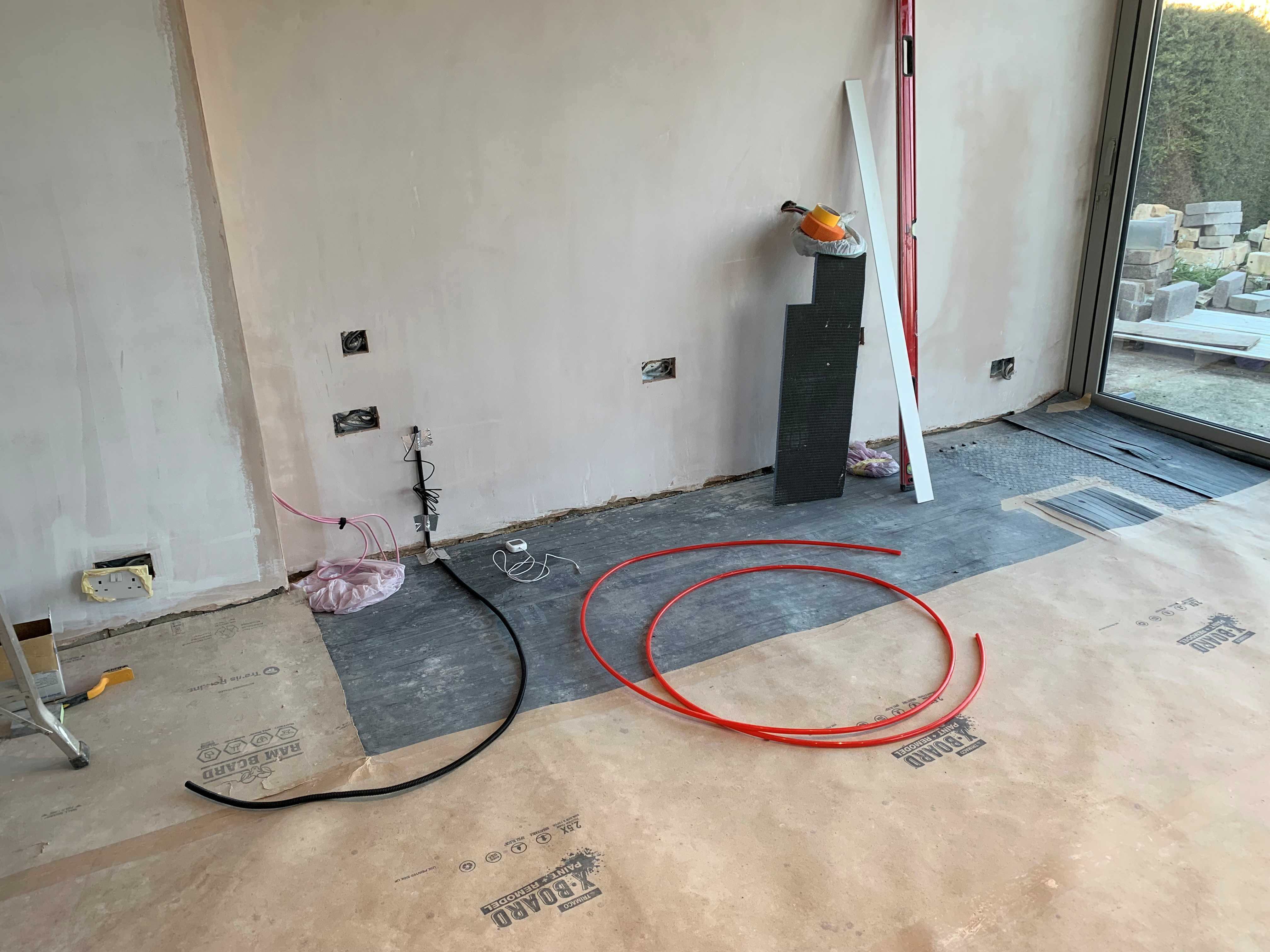
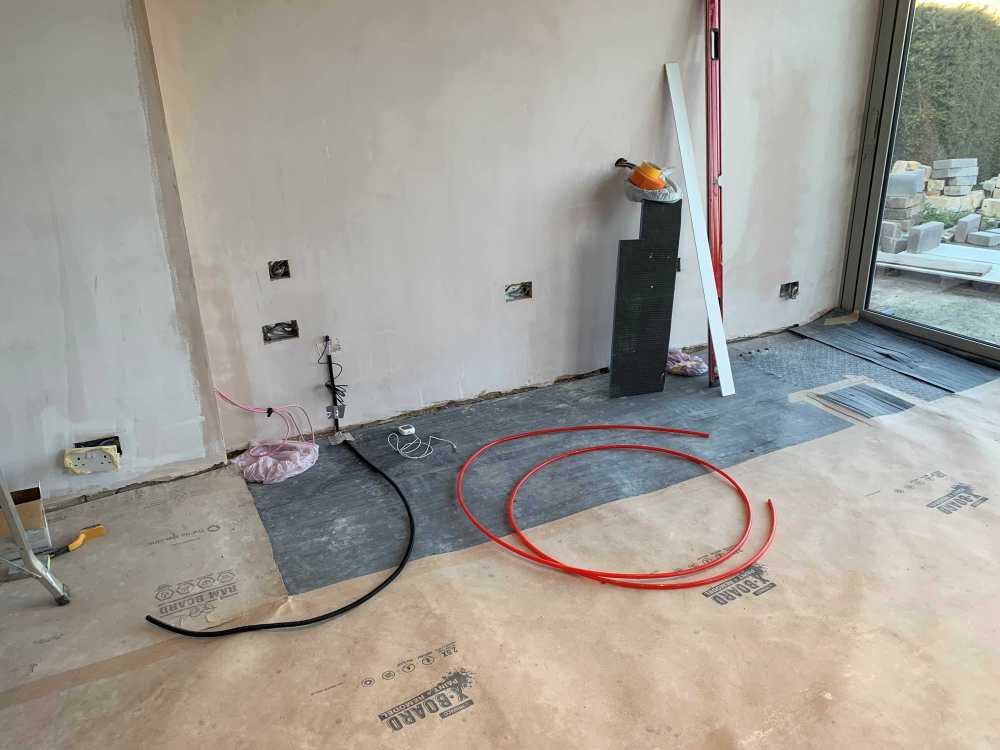
I have a concrete slab approx 120mm thick with heating pipes embedded in the middle. Controlled using Heatmiser and a wireless thermostat. I will be having levelling compound and LVT laid in a few weeks and am therefore contemplating getting a temperature probe into the top of the concrete slab to provide a continuous monitor of the floor temperature. As I understand it the floor temperature shouldn't rise above 27C for an LVT floor. (Up until now I have just used a temperature gun occaisonally to check the concrete surface temperature). I currently have a floor probe from Fast Warm which terminates in two wires, and a Sonoff zigbee temperature probe which terminates in the zigbee device and small screen. I also have some small diameter flexible conduit, and some spare u/floor heating pipe from my suspended floor. (See pic) I plan to cut or hand chisel (will this work?) a recess into the top of the concrete slab, lay the conduit or pipe in the recess, and chisel it into the plaster to run it up the wall into a cupboard (See pic). Cover the recess/pipe with Ardex 45 and the levelling compound when laid. Any advice please ? Should I use the flexible conduit (more easily bent through 90 to run up the wall but much less robust than the pipe) or the pipe. If the pipe, how can I straighten it and bend it through 90 at the wall ? How important is it to have the temperature probe ? Might the floor crack or move if any heavy furniture is placed on top of the pipe location ?
-
So we have chosen a white colour for our walls in an open plan room, and intend to paint the ceiling white too. Can we use a standard brilliant white for the ceiling, and then our chosen softer white for the walls ? Or is it going to be better to paint the ceiling with the same white we use on the walls ? Not sure if using two whites is going to look odd at the junction of ceiling and walls ? Or is going to show up any wobbly bits at the junction of walls and ceilings (we are not using coving) ? Lots of people seem to paint open plan rooms white - so hopefully some can offer their advice/experience.
-
Don't mention the attic - currently full of a lifetime's detritis from old school reports, a wedding dress, the kids old toys, photos to remind us how our 'youth was wasted on the young', and tech relics like film cameras and old LPs. I guess we have turned the attic into a charity shop ;0) https://youtube.com/shorts/2NrNgfoXldk?si=_4T6k6Dz40pxc-B0
-
We are looking to get a new balustrade fitted on the staircase. I am not sure of the ramifications regarding the Newel posts at bottom and top of the stairs. As we are looking at oak handrail and black spindles it would be best to have new oak Newel Posts, otherwise we would presumably have to paint the whole post white or something. Are the Newel posts normally fixed to anything else other than the stringer and stairs themselves ? e.g. into Floor joists. (1930's Semi) I get the impression they gain their rigidity just by virtue of being fixed to the stringer and stair - is that right ? The top Newel Post upstairs runs all the way down to the ground floor. Therefore it seems necessary to cut it off regardless to fit a new top piece onto it from just above the stringer. Not quite sure how you achieve new oak newel posts in practice and whether it is likely to destablilise anything ?