marshian
-
Posts
1605 -
Joined
-
Last visited
-
Days Won
6
Everything posted by marshian
-
I'd have centered it on a grout line so effectively a small cut out of 4 tiles but as I said it's probably just me Please ignore me
-

We should have installed air conditioning… now what?
marshian replied to Adsibob's topic in Other Heating Systems
do you not have an external temp sensor (for WC) on your boiler? -
It's probably do-able for me - I'll clearly have to bring my own beer (not much cos driving)
-
Is it just me that has teeth itching looking at that picture? ok yep just me 🙂
-
if you have a rainfall type shower head that isn’t 100% level then that’s pretty normal for the head to drain itself after a shower (the body of water in the head and riser above it just needs a small air return to set off a self drain. Both our showers can do this sometimes up to an hour later after a shower!!!
-
I think you’ve probably missed the nice collection @JohnMo has 😉 I wouldn’t want to swap any of them for an EV
- 70 replies
-
- 1
-

-
- utilities
- electric bill
- (and 3 more)
-
It is also noticeable from my data gathering 1. how much hotter on average my loft is since I have improved the insulation level from 75mm to 375mm in 80% of the loft (still got 20% to do in Autumn) I've recently added to vents in two of the four gable ends and this has helped a lot 2. how much cooler the rooms below the improved insulation are compared to previous years
-
One of the best things I have done to manage temps and humidity in the house is to install a PIV unit in the loft - it runs at 20 l/s in winter (1 ACH) and 40 l/s in spring summer and autumn (2 ACH) It has several program modes but I set it to go into standby at 27 Deg C below that temp it constantly runs In summer it runs for approx 10 to 12 hrs as a result of the standby mode It's quite noticeable in the data that it has a cooling effect overnight/early morning and overall it helps to limit the solar gain in the south side of the house.
-
ASHP without Boiler Upgrade Scheme?
marshian replied to timhowes's topic in Air Source Heat Pumps (ASHP)
Looks lovely however the point remains - why did you think you needed it? -
A pause for breath… (& to take stock of cost of foundations…)
marshian commented on G and J's blog entry in Da Bungalow
Any updates? I'm assuming next blog will be house up and moving in 😉 -
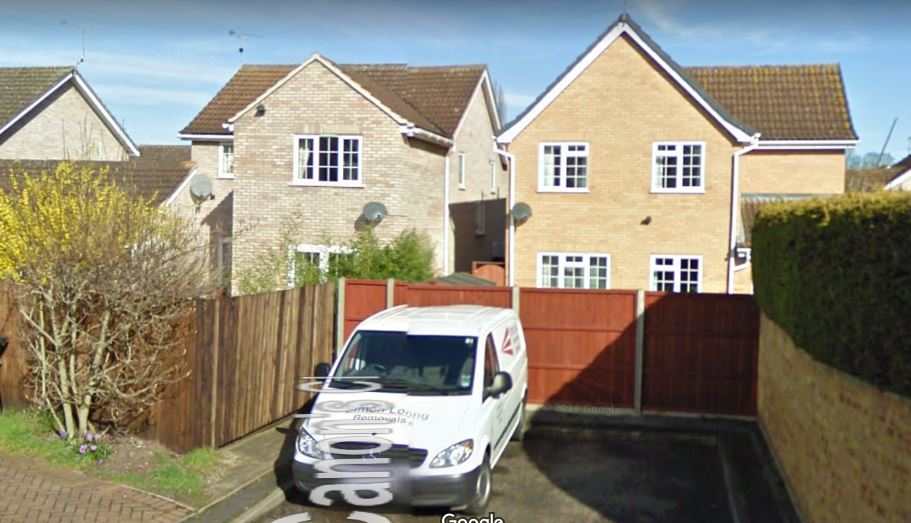
I bloody hate council idiots had enough experience of them in the past I applied to extend house 2 storey extension on the back to replace a horrible single glazed glass conservatory that could be used for maybe 2 days a year most of spring summer and autumn too bloody hot and rest of the year too damn cold and got planning permission granted. I had a back fence (usual 6 ft cant rail with featherboard) backing on to a turn round/visitor packing space in the cul-d-sac behind - Fence was 25 years old and rotten - I took a 10 ft section down to allow building materials to be delivered to the back of the property and used some heras fencing as a temp security measure. I got a council complaint that the heras fencing was taller than 6 ft (alongside a highway) and could potentially restrict visibility (I sh*t you not - it's bloody open mesh!!!) I dug a hole for the rubber feet and dropped the height to 6 ft - wrote them a letter and said all sorted fence is 6 ft now job done All went quiet - I finished the building works and started re-instating the fence to be served with a notice that the fence cannot be more than 3 ft high due to proximity of the highway (Turn round space/visitor parking in a cul d sac remember) I wrote back saying original fence installed by the builders was 6 ft - I'm just re-instating that and they were applying a rule regarding highway to my fence but not the two other gardens that also back on to this "highway" I got another letter saying in the nicest council language that they did NGAS - because I had removed the 6ft fence now 3ft was the highest fence I could install (Making my garden very easy to access for any local toerag.) So I did this which isn't a 6 ft fence Honestly it's not The council demanded a face to face meeting to discuss urgent resolution and I agreed to their request Came round and we walked round the cul-d-sac together and measured it with me pointing out again it was not compliant So I opened it I'd already unlatched the other side Because it wasn't a fence at all it was a feather board clad double gate and I said should anyone using the turn around / parking space find that their visibility is impaired I've had a sign made to say call at house XX and I'll open the gates................ Council lass clearly very very pissed about it but I never heard another more.
.jpg.42ca6d72e3fa384661b4bc0abd1c56ce.jpg)
.thumb.jpg.9737a5b20ab98337bca36826eb9f97c8.jpg)
.jpg.87571fca6d2d83a5712ef3f55b324614.jpg)
-
No offence intended here but you’ve started several threads in specific sections related to your garden room project not everyone would have followed all of them. I think the first post which you clearly didn’t was typical forum humour which sometimes doesn’t translate to new members. a sketch or picture helps a lot to understand what you are trying to do - i have an EPDM roof on my shed that I completely rebuilt last year - it doesn’t pool but I made the fall a little too much as in a good shower it can shoot past the gutters. Previous felt covered OSB roof was much shallower pitch and it pooled and rotted out.
-
Covered Decking Area (pergola)
marshian replied to marshian's topic in Landscaping, Decking & Patios
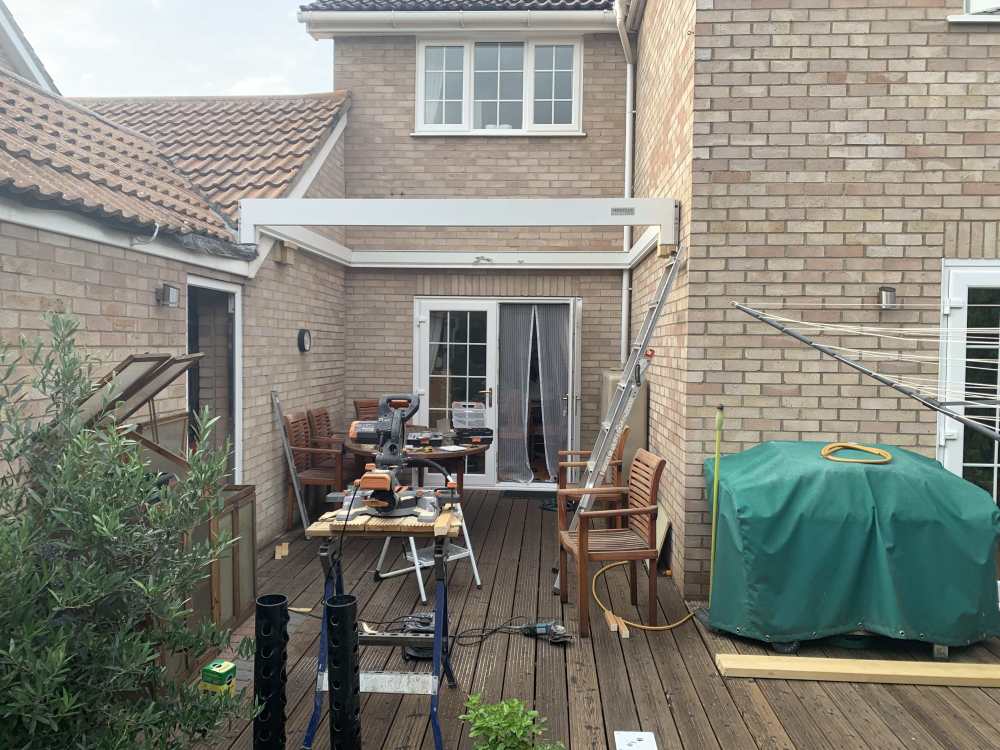
I wasn’t wrong either @JohnMo has finished his finally found a picture of the normal sail arrangement at the weekend supported the side rails (once I had both sides level) and then removed the front and legs shortened the legs and modified the foot plates. next task make the support brackets
-
OK re-running the calcs for 18mm ID 20 metre length it's down to 7 litres a min or 420 Litre per hour Just for info or context my largest rad is 700 x 1400 and it's a triple panel triple convector at a 35 deg flow temp it needs 94 litres per hour to meet the heat loss of the room 640 W (22mm copper two pipe circuit with 15mm tails to the rad) For me I still don't think you will have a problem with flow rate thro that circuit
-
ASHP installation - great new invention
marshian replied to JohnMo's topic in Air Source Heat Pumps (ASHP)
Blimey - I reckon you were cold - I think 2 showers a day (bath once a week) is enough for anyone....... 2 people 1815 kWh per year for HW usage -
Members location - it helps others answer your questions
marshian replied to JohnMo's topic in Introduce Yourself
Yes Ar*e of the pig
-
JG 22mm speedfit is 30mm OD and 22mm ID according to a quick google? Max Flow rate thro a 22mm ID pipe at 0.3 bar (ie 3m Head) is around 14 litres a min or 840 litre per hour OK you are going to have some restriction at the 15mm drop down but it doesn't seem to me like you need to convert to copper on the face of it I would but all my house is copper and I've never used plastic
-
Hmm that's a chunky thing........... any boiler or ASHP is going to love your system volume Their on line guide says at 15 deg difference between room temp and flow temp is 0.206 x T50 output so that's 412 W The Danfoss calculator I use says for a 500 x 100 x 250 column rad it's 273 W with a flow rate of 34 litres per hour but clearly they have a base line for column rads that has a lower water capacity/surface area
-
ASHP installation - great new invention
marshian replied to JohnMo's topic in Air Source Heat Pumps (ASHP)
And that's been the case since condescending gas boilers were made mandatory for all replacements and new houses - the UK should have been embracing low temp heating and customers seeing savings from condensing - except the new boilers were set up at the same flow temps as the previous boilers Don't get me started on the combi epidemic where oversized boilers were thrown on walls and were sized for HW demand not CH Only 19% of my annual gas consumption is HW the rest is CH (OK just under 1% is cooking but that's really insignificant) -
Members location - it helps others answer your questions
marshian replied to JohnMo's topic in Introduce Yourself
I hope mine isn't too criptic?? If it is I'll change it to the a*se of the pig which is how I explain it to anyone on the other side of the pond -
966 width, 600 high? whats the depth? To get closest to 1974 W from a T22 at T50 it would need to be either 400 high by 1800 wide (1969 W) 500 high by 1600 wide (2092 W) 700 high by 1200 wide (2029 W) So that seems like a really high output for the size of the rad but I'm not familiar with column rads?? Differential Pressure is linked to pump head - for my rads I have a 1.8m pump head so I use 18kPa as my differential pressure for all my rad flow calcs and it seems accurate enough
-
Can you tell me the size and type of rad for a room or rooms because it's easy to work out what flow you need and as a result of the flow rates needed check the pipe sizes will cope. example a T22 600 high by 1400 wide running a flow temp of 35 deg C, a return of 28 deg C at a differential pressure of 30kPa would output 375 W when supplied with a flow rate of 46 litres/hour
-
cracking on at a pace - excellent - looks good
-
ASHP installation - great new invention
marshian replied to JohnMo's topic in Air Source Heat Pumps (ASHP)
I thought it was more to do with highlighting that Electricity prices are linked to gas and as a result it's not a level playing field for ASHP or any form of electric heating at 5p per kWh there wouldn't be any need to achieve high efficiency SCOP/COP -
2nd layer of osb underfloor
marshian replied to Eldad's topic in General Self Build & DIY Discussion
yep for a floor with lots of foot traffic glue the joints... For a loft with virtually no traffic just screw (never know when you might need to lift a board for access)

.jpg.e431332322762371525d336382db9ce8.jpg)