


Bitpipe
-
Posts
4118 -
Joined
-
Last visited
-
Days Won
53
Everything posted by Bitpipe
-
+1 again - our architect wanted £15k for the BCO drawings and planning conditions discharge stage - however we got detailed drawings and calcs from our TF manufacturer and commissioned a SE to do similar for the basement design. We parted on friendly terms at this stage. I passed those two packages to the independent BCO plus a DIY SAP calc (they were not interested in the PHPP) and I got a list of other items he needed, water calc etc.. Was all very straight forward with a few back and forwards to answer specific questions. I did the planning discharge myself, a few hours of work on life time homes and similar requirements - main bit was commissioning the GI & contamination survey (did that via basement SE) and the archaeological survey brief. Very useful exercise to get under the skin of the build and gave me the confidence to PM it all the way through.
-

Warranty and Passive Slab Foundations
Bitpipe replied to davidc's topic in New House & Structural Warranties
Ours was Ark (who went bust I think) but they didn't blink at a passive basement holding up the house. -
Wow !..........so much to learn and so little time !
Bitpipe replied to Canoehq's topic in Introduce Yourself
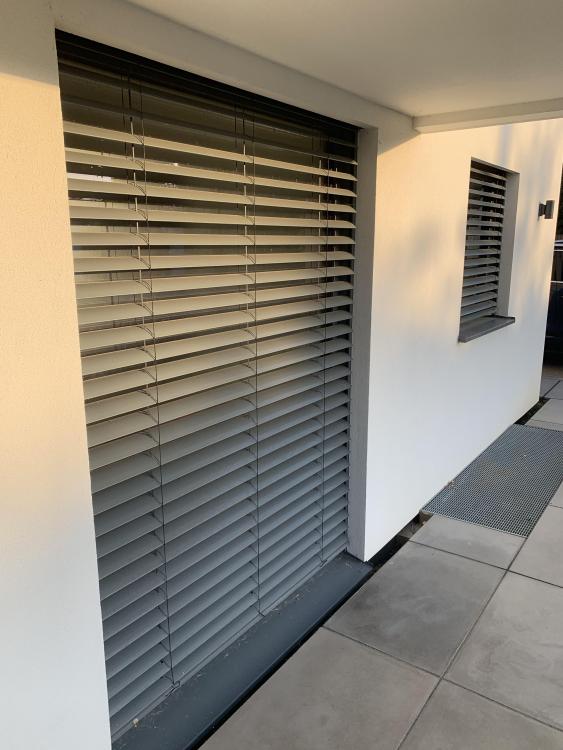
Blinds will not give you sound proofing, that’s the windows job. These do a a good job of stopping light but for 100% blackout I’d suggest the screen version, although it’s either up or down. This is the blind from either side just now ...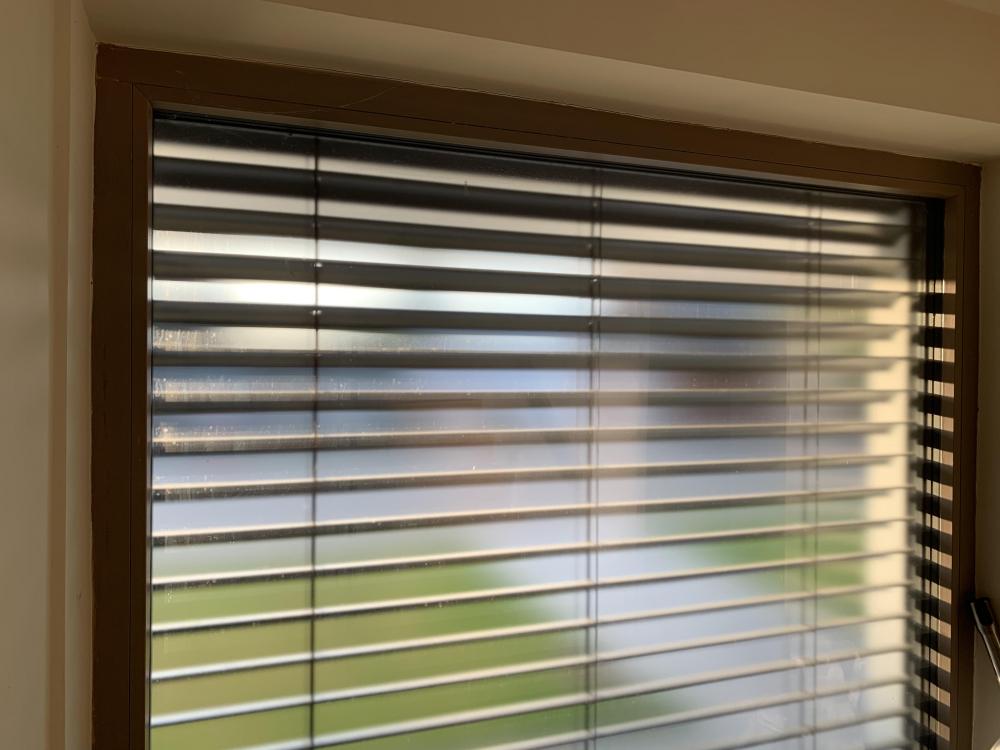
-
Wow !..........so much to learn and so little time !
Bitpipe replied to Canoehq's topic in Introduce Yourself
Here's their website - https://www.roma.eu/products Mine came preinstalled to the windows which made them trivial to install - just needed to ensure the timber frame had the necessary recess - mine are manually activated by a rocker switch next to the light switches - they are 240v. I know @jack had a nightmare with his blinds as they were post installed and the crew were not great, i think his may be integrated into his Loxone control system. Any way best to consider them together with your window selection process. I think Jeremy is right about looking at alternatives to the curtain glass look - we have some great horizontal and vertical slot windows about 2m x 60cm and they are a real feature, -
Wow !..........so much to learn and so little time !
Bitpipe replied to Canoehq's topic in Introduce Yourself
We have external motorised blinds (Roma, venetian style) to windows at the front of our house which faces east so gets lots of morning sun. While the blinds fully recess above the windows we only really do that for occasional cleaning (and as the windows open inwards, even that is not necessary). Instead they are about 50% inclined when sun is up, flat for the rest of the day and closed at night for privacy - there really is not a noticeable impact on light when they're flat. Even when its very windy there is little rattle as there is a U channel on the side of each window and every other blind locks into this - wind robustness is definitely something to consider as some designs need to be retracted in heavy wind or they risk damage. I also believe there is a maximum width with that type of blind 4m or something, so you may want to take that into consideration when designing the windows. Internorm do an internal blind, it sits behind the first pane and in front of a double glazed unit but I really did not like it, looked flimsy. -
We had our two pairs of gates (drive is in and out) professionally made & installed and it was not cheap but they did a great job and there was a lot of work in it, so hat off to @nod doing it solo. The motors, controllers & remotes are CAME. Agree that the electrical side of things looks straight forward - we also have an induction loop for exit and an intercom for visitors. Most of the work was trenching in cable runs and setting out and fixing the steels that the gates hang off plus seating the control units in the ground. We had block pillars built and rendered by others and the gates were measured, made and hung after that.
-
And there was me thinking four ovens was the last word in appliance overload (to be fair we only really needed three but couldn't decide what to put in the empty spot. We run our DW more or less every day, I set the timer to have it come on first thing when sun is up and electricity is free (our PV faces south east) and it's ready to empty when we get up. Ours is a NEFF and also has a slim cutlery tray at the top, great design and you can get a surprising amount in.
-
SAP calculation STROMA alternatives on MAC OS
Bitpipe replied to Patrick's topic in Building Regulations
My understanding is that when you need to formally submit the SAP calc and get a registered EPC cert that you can share with your FIT provider etc. then you need to be a formal assessor. -
SAP calculation STROMA alternatives on MAC OS
Bitpipe replied to Patrick's topic in Building Regulations
When the PV FIT axe was about to fall (Jan 2016) I was in a mad rush to try and get our install certified and needed a lodged EPC, but as we just a watertight shell at that point with no services, struggled to get any local surveyors interested. @HerbJ recommended an EPC assessor he'd found and he did the job for around £200+VAT - wasn't particularly interested in the Stroma work I'd done and built it from scratch from the detailed design drawings and window, heating specs etc. We then revised the SAP calc when the build was complete, that only cost an additional £25 -
SAP calculation STROMA alternatives on MAC OS
Bitpipe replied to Patrick's topic in Building Regulations
Early on in our build process I was paying for a lot of necessary professional services (architect, ground investigations, SE, BCO etc..) and paid a potential PM £1800 to produce a QS driven cost model for ICF vs Timber frame plus a PHPP analysis. This was a tipping point for me as while his models were useful, I'm not sure they were as great value and I began to realise that there were some things I could do myself and save a few ££ plus get more involved in the build process vs just be a client all the time. Final straw was architect quoting £15k for planning conditions discharge and detailed drawings for BCO - I'd already got a set of drawings from MBC and the SE who did my basement and when the BCO said they were good enough, I decided to do the rest of my submission myself.. I remember slogging through Jeremy's SAP model (changing to match my build) + Stroma on a PC to produce a working SAP model that both Ecology and by BCO accepted as a design model. Also helped me model the impact of window brands, wall designs etc. Really helped my fundamental understanding of what decisions made a difference and was a first step to taking ownership of the build vs being a client handing out money to all and sundry. However when it came to getting a proper registered SAP initially for PV and then BCO sign off, I used a consultant but they did not charge much tbh. In a similar vein, we chose not to use a PM or main contractor and did the MVHR install ourselves but that's where I drew the line practically. Agree with @Patrick always a personal decision on how much to rely on professionals and its a cost / time / competence decision. -
or balance. Welcome!
-
We have hard floors throughout house (Karndean in basement, resin on GF, engineered wood upstairs, tiles in bathrooms). Amazing how quickly dustballs and pet hair accumulate - saw a load of tree pollen over the living room floor earlier in week when the sliders were open. Means hoover is out quite a few times a week and I use a steam mop once a week. We also have a shoes off at the door policy (originally to prevent floor damage while exterior was still unmade, now just for hygiene). I remember when we used to get our short pile wool carpets professionally cleaned in the old house once a year - water was jet black with dirt - ugh..
-
Our basement was mostly in river gravel on chalk so equally well draining, water table 2m below us. In addition to the Sika concrete, we put a land drain at the foot of the slab, draining to a soakaway, and backfilled the 1m working gap with clean, fist sized, stone - essentially building a giant french drain. We have a section of concrete that forms the box for the external basement stairs and it is in standard concrete as it's exposed to the elements and is decoupled from the basement structure itself so i can compare the pricing. Looking at the pricing we got in 2015, the Sika concrete had a supply & place cost of £200/m3 compared to the standard which was £120/m3 - this includes all the labour costs for the pour etc so in our case it was about 60% more but that includes all the tapes, mastic, plugs, prep & Sika inspections etc. There's also contractor margin in those prices too.
-
Soon you will only be thinking about cleaning them...
-
4 coats is impressive - I think we only had 3. Bet you can't wait for the kids to get their fingerprints all over it now Well done!
-
Proof to Claim VAT
Bitpipe replied to colin7777's topic in Self Build VAT, Community Infrastructure Levy (CIL), S106 & Tax
BC sign off is the usual (but some have had an issue where they have moved in well before the cert issued). If you download the form (below) there are comprehensive notes. https://assets.publishing.service.gov.uk/government/uploads/system/uploads/attachment_data/file/828064/VAT431NB_form_and_notes.pdf Has a Building Regulation Completion Certificate been granted by the local authority or by an approved inspector registered with the local authority building control? You should send the certificate to us with your claim form. Page 6 VAT431NB Notes for new houses If you do not have a Completion Certificate yet, we will accept one of the following documents: • a habitation letter from the local authority (in Scotland, a temporary habitation certificate) • in England and Wales, a VOA: Notice of making a New Entry into the Valuation List • in Northern Ireland, a District Valuer’s Certificate of Valuation • in Scotland, a Joint Valuation Board Notice of Tax Banding, or • a letter from your bank or building society saying ‘This is to certify that the.……Bank/Building Society released on…….(date) the last instalment of its loan secured on the building at.……because it then regarded that building as complete.’ A building is normally considered to be completed when it has been finished according to its original plans. Remember that you can make only one claim no later than 3 months after the construction work is completed. The 3 months will usually run from the date of the document you are using as your completion evidence. If your claim is late you must send us a letter explaining the delay. Tip: Please send the specific evidence that we have asked for. We will not accept: • annual Council Tax bills • professional certificates • stage certificates • insurance cover notes, and so on. Claims received without completion evidence will be closed and returned. -
The right tool for the job or just a right tool.
Bitpipe replied to MikeSharp01's topic in Timber Frame
But does it have the flux capacitor? And when will Dundonald get a DeLorean museum to rival the Titanic one in Belfast? -
The right tool for the job or just a right tool.
Bitpipe replied to MikeSharp01's topic in Timber Frame
I just KNOW you have one of these in the garage...
-
Who is supplying pokers? You need at least two incase one fails. We have a Sika warrantied system on out basement - used traditional shuttering, not ICF as I wanted to see the quality of the pour and I applied the insulation to the exterior after (just 200mm blocks of EPS70 stuck on with LE foam). The Sika system also includes waterbar between pours and sealing of penetrations (including through bolts to hold the shuttering, don't think ICF needs those). Has an inspection regime to get the warranty so not a cheap option but for me it was the only waterproofing method so wanted it done properly. Why do you need waterproofing - is part of the pour underground? Where is the water table?
-
If the delay is due to understaffing, then the LA are expecting the end customer to take the hit - which is not on for a paid service. Until they see some pain (refunded fees) where is the motivation to improve the situation. When I worked as a grad SW developer, we were dependent on a US team completing their base work before we could build on top. Every release, the US team would release their code 2-3 weeks after the agreed date which screwed our schedule so we would work evenings, weekends and cancel holiday and training to keep to our dates. We were not allowed to add a 'late handover' buffer as the senior management reviewed all plans for such padding, however as the ball to customer never got dropped, there was no motivation to fix the issue (under resourced US team). After a few releases, our manager got fed up and when the next handover was two weeks late, he threw our plan out by two weeks which caused all sorts of chaos, warnings of penalties etc. but he stood his ground. Next release and everyone after that arrived to us bang on time - if it doesn't get broken it doesn't get fixed.
-
Yup - we did this with our planning conditions discharge. Took 12 weeks to get confirmation, way past the 8 week limit, so when it was signed off we asked for a refund and got it - was only £95 (as we did all the conditions in one shot) but was principal that counted - the lost 4 weeks did knock our schedule a bit. I think the dept were just understaffed at that point and overwhelmed with applications.
-
One design detail to be aware of with a MBC style construction vs other TF or SIPs is the ability of the outer skin to take a fixing - i.e. from battens for renderboard or cladding. I understand that standard TF or SIPs outer panels are made from OSB or equivalent which will take a fixing, although ideally the fixings should target structural ribs behind the outer panel itself. MBC use a lighter weight Panelvent board, similar to MDF which does it's job perfectly but cannot be relied to take an external fixing - these MUST go into the structural ribs which are marked out on the building paper with tape or staples. Our render system has issues as the render board battens did not always line up with ribs and where they went into only the skin, they came away leading to bulging. All needs to come off and be replaced to remedy. Note that the airtight layer is mostly on the inside (it does come to the external panel between floors) so such fixings should not compromise it.
-
Certainly is - ours sprouted into teenagers shortly after we moved in and we didn't see each other for months
-
We went electric (not solar) Integra - was zero additional effort for the roofer as he just dropped the power cable into the house, it's fitted to the room side of the window. It was quite long and had a plug top so was easy to test before access got tricky. We also have motorised blinds on top of a few units, these run off a 12v plug into the main window unit (I did this bit myself once roofers installed it and poked the blinds cable through. My experience with roofers is that they don't spend a lot of time installing Velux and they can skimp on the by the book installation instructions, removing from frame to square, using all the supplied insulation & fixings etc so I'd be wary of ensuring they did that part correctly! I also wanted to avoid any maintenance issues around panel & battery life etc.
-
Top tip for winter in a caravan (I did 18 months with wife & 2 kids) is to run a dehumidifier and avoid the gas fire. Reason is the gas fires create a lot of water vapour as a by product of combustion and at night, this condenses out onto the floor making it cold and damp in the morning. We switched to a Meaco de-humidifier and ran it in the evenings instead, it pumps out a decent amount of heat and leaves the air much dryer (I appreciate that as caravans are not sealed, you're dehumidifying the local area to some degree). Difference was immediately noticeable - no cold feet in the morning. I found summer much more unpleasant as the caravan got uncomfortably hot very quickly in direct sun - however as the orientation of the van was the same as the house, it inspired us to get external motorised shutters for the east and south aspects of the build so at least we learned something!




