Bitpipe
-
Posts
4118 -
Joined
-
Last visited
-
Days Won
53
Everything posted by Bitpipe
-

Passive raft vs traditional (strip/trench) costs assesment
Bitpipe replied to SuperJohnG's topic in Foundations
If you use a package, such as MBC, for both elements then there will be SE fees for frame and slab included as part of a single price. You will have access to all the calcs etc to satisfy building control. Their SE will still require a ground investigation but will never come on site, the report should be sufficient - always good to see exactly what they require from the report and use this to get quotes from the GI firms so you don't over/under spec the investigation. As we built a basement, we commissioned our own SE (and contractor) for that. We had the frame designed first and then passed that (inc calcs) to the basement SE so they could appropriately design their part. Our SE commissioned the GI study etc. They did come on site but just for a general look round, not to witness any investigations. Note - once you have achieved planning, your architect (and your architect's SE) should not need to be involved in the detailed design of the frame (or slab) if you're using the supplier to do this. Don't pay twice for the same thing. Our architect had no involvement post planning as they admitted they had little value to add as we were using a frame design package vendor and as a practice they had very little knowledge of low energy builds or basements. But they designed us a nice house and got it through planning so we were happy. The architect did offer to take our detailed drawings, re-draw and submit to BC for £15k but we politely declined We handled our own BC submission, using the very detailed drawings and calcs from both MBC and the basement SE - there was not much more detail required beyond that and it was easy to organise. We also discharged our own planning conditions (13+) as most of it was pretty obvious statements or providing results of tests done on site via the GI or statements of work from archeology etc. -
Also, from memory, the gas pipe pressure is relatively low. The crew I had cut the yellow plastic pipe off at the meter and just stuck a blob of black gunk at the end while they located the pipe in the road. Similar process there but they secured it with some kind of metal compression joint / screw cap.
-
Passive raft vs traditional (strip/trench) costs assesment
Bitpipe replied to SuperJohnG's topic in Foundations
Nice plot. We created our own 'passive basement' mimicking the design of the MBC passive slab and then had MBC erect a passive standard frame on top - was easy enough to ensure the two insulation envelopes met correctly. However we do not have any heating in the basement slab, relying on UFH in the suspended timber ground floor so don't get all the advantages - mainly the ability to cool the slab in summer. We're also on mains gas vs ASHP which is required to cool the slab. For me, active cooling would be one of the key benefits, especially as low energy houses are much more likely to overheat rather than be cold (even in spring & autumn when the sun is low and comes into rooms directly. Build wise for us it was a pretty continuous process however as MBC did not build the basement, we engineered a break for 4-6 weeks in proceedings to ensure that the final frame measurements could be confirmed before the frame went into production (i.e. basement designed around frame, frame build finalised around built basement). I believe that when MBC do slab and frame this is not required. -
Passive raft vs traditional (strip/trench) costs assesment
Bitpipe replied to SuperJohnG's topic in Foundations
Two key questions I'd ask at the outset 1) Have you got a ground investigation report or can you approximate what is under your feet based on immediate neighbours? i.e. are you on clay (how deep) or clay / gravel/ chalk (like we were), mudstone, rock etc.. That will be they key factor in determining the spec (and therefore cost) of your traditional vs insulated raft foundation. 2) Are you aiming to achieve a BR standard, better than BR or near passive? That will go towards the benefit column as the insulated design of the raft (vs the pure structural element of a raft vs strip) may be design overkill or something you need to replicate in a traditional format. Low energy / passive houses obviously need relatively low amounts of heat injected into them in winter and often benefit from heat removed from them in summer. The design of the passive slab facilitiates this, a traditional system may struggle, or need a lot of work and detail to become equivalent. -
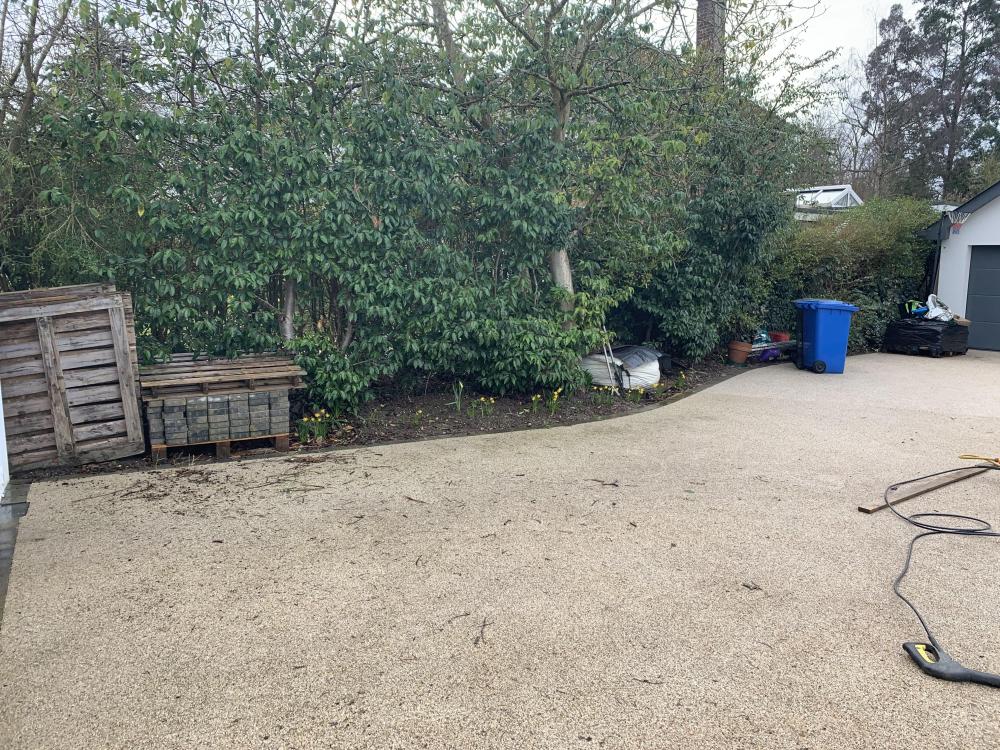
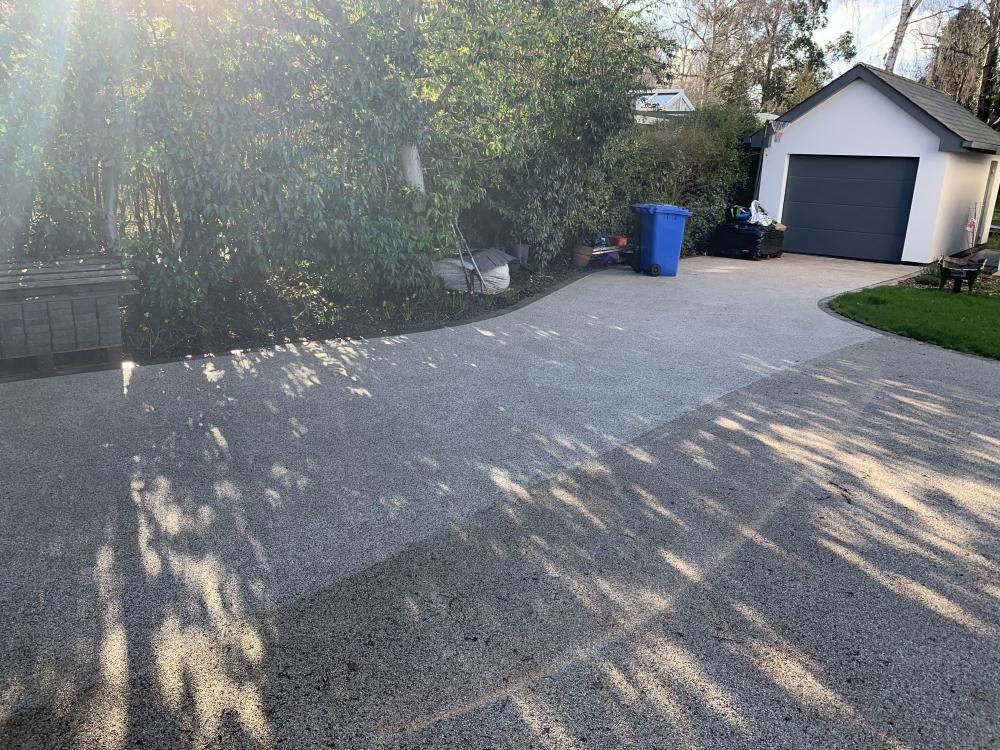
One leg of the H done, like you it’s too wet here and the water is starting to puddle on the drive as ground is saturated. Thats probably the worst bit - in shade and next to trees so a bit mossy. I have a flat circular head for the Karacher - it’s good for a general clean but not as effective when there’s ingrained dirt and moss. The only downside of bonded gravel is it’s inherent open texture which will always give the opportunity for things to grow on it. This is like carpet cleaning though - until you've done the first bit its hard to tell how filthy it is
-
Ha - have just started to give mine its first proper clean. I noticed some blades of grass starting to grow in it - I suspect this is grass seed that washed off the front lawn bit that I finally finished before xmas. The lawn has already started to sprout and I'll probably overseed in spring when I see how it's taken. Need to hold the pressure waster quite close to the surface to dislodge any growth but it does look good. I think I'm about 10% there
-
Unless you're demolishing or doing works that could compromise the network gas pipe to the meter, you're probably ok having the meter removed and leaving the supply intact but capped. From memory, my plumber (who did the regular gas service) disconnected everything from the consumer side but I can't recall if it was him or the network that disconnected the meter itself - think it was the network guys. As we were doing a full demo and basement excavation, we needed to pay a fixed, non contestable £1500 to have the supply terminated at the boundary - not great VFM as they were only here for about an hour to used a pneumatic hammer to dig up the pipe in the street, cap off and reinstate the road surface. The supply co (think it was SSE) came to collect the meter later to enable the account to be closed off. Then we did it all in reverse to reconnect the gas post build but it was much cheaper as new connections are subsidised and we laid our own duct for the gas pipe. Now, the groundworker who did the basement build did say that there were people who would do the boundary disconnection for a few hundred quid cash in hand but it is illegal and there are big fines if caught, never mind the safety and liability issues if not done properly.
-
In my limited experience, as many as you pay them for. Ideally you want to get some representation of conditions across your building footprint- this is where dynamic probes are better than inspection pits as you can easily move the rig around and as the probes are quite thin, you're not making swiss cheese of the site. Maybe an approach is to do a best / worst case analysis of the piling costs and then see what a day's worth of site investigation will cost as as % of that. You're really paying to remove uncertainty and to select the most cost efficient contractor - the ground conditions will be what they are - so you need to quantify what that is worth to you.
-
Now there's a mental picture. He is bus and bridge obsessed. Is that because they both begin with B?
-
Elon Musk did confess to being a 3000 year old vampire so there's that to consider. https://www.independent.co.uk/life-style/gadgets-and-tech/news/elon-musk-twitter-conspiracy-time-travel-a9361361.html
-
I think Zip car is another trend - you hire a car for a few hours, days via app and pick it up from where the last person dropped it off. We had millennial relations who lived in Wapping up until recently and they used it for the occasional trip where public transport wouldn't cut it.
-
For our basement we had an initial survey which comprised 5-610m probes (steel rods hammered into ground by a rig, penetration for each 'whack' measured) and a few cores (soil composition, gas & water monitoring). Results were inconclusive and suggested piling may be necessary due to historical near 'made ground' i.e. filled in gravel pit. We paid for a more intensive follow up survey (10-12 probes, 5-6 cores) and got better data that suggested that piling not required. While it pained me to pay the extra £2k (discounted as they made a few errors in the first survey) I was happy we had solid data to move forward with. Up to you ultimately, you could crack on and see what happens but at that stage you're committed (if you can find a firm to do it without strong data).
-
Minus the autopilot, currently known as Uber. Or even an old fashioned taxi.
-
Sounds like my never used rear bedroom balconies...
-
Dipping a toe into MVHR
Bitpipe replied to Moonshine's topic in Mechanical Ventilation with Heat Recovery (MVHR)
Remember to allow space for wrapping them in insulation - 20mm or so all round. I got a bit caught out by this and had to tweak my install. In winter, these steel ducts will get cold (cold fresh air coming in, cold stale air going out) and you''ll get a lot of condensation on them where they pass through your nice warm house. You also need to allow for 75mm pipe bends where they meet the manifold. My BPC required them to meet the manifold dead on and then sweep away - the radius is limited and you probably don't want it too tight anyway as it may restrict airflow. -
Dipping a toe into MVHR
Bitpipe replied to Moonshine's topic in Mechanical Ventilation with Heat Recovery (MVHR)
Even when MVHR is on full boost, the combined external airflow is quite modest so risk of mixing is low if that minimal separation is maintained. -
Dipping a toe into MVHR
Bitpipe replied to Moonshine's topic in Mechanical Ventilation with Heat Recovery (MVHR)
You want to ensure your external vents are on the same wall face to minimise unbalancing when the wind is blowing. You also need to keep them about 1m apart to prevent the intake consuming the exhaust. -
Drink driving also not as much of an issue due to the super expensive booze and state licensed shop scheme. They've also introduced a high sugar tax which is a boom for Swedish sweetshops on the border
-
Wife works for a Norwegian firm, as well as being exceptionally wealthy there are only 5M of them in quite a large country. Tesla ownership is off the scale. Although one thing that has always puzzled me is how they allow for the reduced range due to cold weather. I suppose given there are relatively concentrated pockets of population (Oslo, Trondheim, Bergen) most of the usage is short hops. Bottom line with Brexit is that if (as seems likely) there will be some degree of customs / market friction between mainland UK and the rest of Europe plus higher barriers to free movement for employment (UK has relatively little spare native employment capacity) combined with traditional low productivity and an averagely educated workforce then than will be a factor for external companies looking to inwardly invest. Flip-side is that a cheaper pound and loosening of employment legislation (bad for workers, good for business) and a lower corporation tax policy (good for companies, bad for funding govt services) may act as a draw.
-
How big is all this 'utilities' equipment?
Bitpipe replied to puntloos's topic in New House & Self Build Design
Our Derry 1970's council house WAS deeply cold - was supposed to be gas heated but they did not have sufficient pressure to get the town gas up the hill so we had no central heating until the mid 80's when they retrofitted anthracite boilers. Ice on the inside of the window etc. However being Derry in the 1970s, there was always something on fire in the neighbourhood -
Gabions - steps down through + timber treads...
Bitpipe replied to Adam2's topic in Landscaping, Decking & Patios
We have quite a bit of composite decking, was supplied by the balcony firm so not the super cheap DIY shed stuff, reasonably thick and heavy duty with a hollow core construction. Easy to work with (cutting, fixing) and has a grooved side profile that uses biscuit style fixings to maintain separation. While not as slippy as wood, it's not immune to getting a bit slimey in winter so perhaps think on how to provide extra traction whatever option you go for. H -
How big is all this 'utilities' equipment?
Bitpipe replied to puntloos's topic in New House & Self Build Design
One thing I've noticed living in our well insulated airtight house for over 3 years now is you don't need an obvious 'source of warmth' to feel warm. The house is at a comfortable 22o year round and there are never any draughts (even when a single door or window is open) so you never feel cold. I do love an open fire and used and abused the one that was in the cold, draughty old house that we demolished to make way for this one but really don't miss it. -
How big is all this 'utilities' equipment?
Bitpipe replied to puntloos's topic in New House & Self Build Design
Must get one of those. Lighting a proper fire used to play havoc in the old car. -
My mate's indoor herb garden is a big success.

-
How big is all this 'utilities' equipment?
Bitpipe replied to puntloos's topic in New House & Self Build Design
I have a fire app on my Amazon fire stick (appropriately enough) for the big TV - is actually quite calming, even crackles. In an airtight house, opening one window never works, you need two to create a cross draught.