


Bitpipe
-
Posts
4118 -
Joined
-
Last visited
-
Days Won
53
Everything posted by Bitpipe
-
You don't even need to do that, our BC recommended that we do some commencement work ahead of the regs changing in April 2015 - we laid some new fouls and ICs (about 20m) and he said that was fine. Key thing is that your BC needs to confirm that work has started, then you're fine.
-
We used clean stone to backfill - fist sized lumps of various recycled stone (brick etc) but no fines. Acts as a giant French drain (perforated land drain under that which you don't want to get clogged). On one very wide section we had a 1m width of stone and some spoil vertically separated by geotextile. The most important thing about stone is it is free draining and does not compact, which is very important if you're filling a 3.5m deep x 1m wide trench around your whole house. Top layer can be spoil as you may be laying rainwater pipes etc in this but it must be well compacted. Our contractors filled in most of the basement excavation area to spec but while I was away they obviously cut a few corners at the end and used site spoil to the rear. While it all looked flat and lovely when complete, a few months later, when the scaff was up, it started to settle and dropped almost a foot. It continued to settle for the next year and then the landscaper put a lot of compacted crush on top to make up the levels and act as a solid base for the patio. Unfortunately there has been a bit more settlement and quite a few of the flags are sagging - it had a lovely even fall when laid but now getting puddling when it rains. I've lifted and relaid a few, using CT1 to bond them back down but if it gets worse I'll need to lift the whole lot and re-lay on a clean bed. Where it was backfilled to spec it is rock solid. The SE did suggest that site spoil could be used but it had to be mechanically compacted in 150mm layers - this is very time consuming but necessary otherwise it will eventually settle. So either go for stone or pay for the extra labour to compact well in 150mm layers.
-

New build with basement Essex/London boarder
Bitpipe replied to Hyside's topic in Introduce Yourself
The vendors of those systems do tend to emphasise what can go wrong with other systems but providing they are properly designed and built you should have no issues. Nope, planning is not concerned with how you build it - just what it looks like, how big it is, where it is and what it is being used for. Building Regs will dictate the regulations it needs to meet but does not specify the construction method. Plenty on here have self built with ICF - @ToughButterCup has done a lot and learned a lot. The question remains, have you commissioned a full ground investigation, ideally against a spec issued by the SE who is designing your basement? If not, you'll struggle to move forward with the costing as you won't know what's required and what waterproofing measures are required. -
New build with basement Essex/London boarder
Bitpipe replied to Hyside's topic in Introduce Yourself
You're going for the most expensive method to be honest. I don't know anyone with a leaky basement and I've met quite a few fellow basement builders since doing ours. Cast in situ concrete or IFC should be much cheaper, the latter has the advantage that you can DIY some of the construction (block placement) if you're able. Any basement can be waterproof if properly constructed. Lots of discussions this week on BH about that. External membrane is probably the most risky as it can be mis applied or get damaged on backfill. Warrantied waterproof concrete is good (we used that, Sika, 20 year insurance backed warranty) and an internal membrane with sump and pump is also well established. All depends on your ground conditions and location of water table. I visited Tony's basement and it's great, however he is an experienced builder and I was not as brave as him Not anymore - our house is twin walled timber frame, passive construction on a basement and we got warranty, mortgage and annual buildings insurance with no issues. Note that any build method can get you to the necessary insulation and airtightness standard but some will require more attention to detail than others. This is the time to explore options and be creative - the savings can be considerable. if you have a structural design for your basement (i.e. rebar and wall spec) and a ground survey, take it to local groundworkers and get a quote. They will likely sub out the concrete works to specialists but take care of all the excavation, cart away and re-instatement (this will be the same for any basement construction method). Get a few quotes from SIPs and timber frame vendors - they can usually do a good job from your planning drawings. Big advantage of this method is that it goes up very quickly and you can pre-order windows etc as all dimensions are fixed. Talk to ICF contractors too. We started on 1st Aug 2015, demo and site cleared in 2 weeks and basement works completed mid October. Frame erection started Nov 13th and scaff came down first week of Jan. We had a completed exterior - slated roof, rendered walls, windows installed, all fascia, soffit & rainwater goods done. Looked complete from the street. Internals took another 6+ months and we moved in end of August 2016. -
I paid 5k for demo and cartaway for a 3 bed detached house in Berkshire in 2016. If there is asbestos, will be a lot more expensive - you'll need a destructive survey before any firm will touch it. You could probably pull it down yourself if you're brave enough * (Unless there is asbestos, in which case you need that professionally removed). Biggest advantage of doing a demo is zero rated VAT and services in situ.
-
In a few years the driving test will be solely going through a McD drive through in a self driving electric car. Main test will be getting the order correct. Although Uber Eats / Deliveroo / Just Eat will render that useless also.
-
https://www.bbc.co.uk/bitesize/topics/z2wqtfr
-
The inverse is also true, if I've built a relatively decent spec house (not necessarily low energy or passive) then a 'builders' heating system with oversized boiler and rads may be completely unnecessary and make the house uncomfortably hot to live in. If you are low energy or passive then it's critical to correctly size the system.
-
Helping the lad prep for physics GCSE (if he ever gets to take it next year) and been covering this today
-
New build with basement Essex/London boarder
Bitpipe replied to Hyside's topic in Introduce Yourself
Welcome - very nice build you've proposed. We built a passive house in 2016 (timber frame) over a full footprint basement after demolishing the existing so can share some steps we went through. I'm assuming you've done the necessary ground investigation to get the SE design of your basement complete? That will also help inform your waterproofing requirements etc. Precast panels for basement can be an expensive way to go - what will the rest of the house be constructed from? Is there a specific reason you are going for that system or is it just a working quote for budgeting? We cast in situ which was cheaper but does take more time on site and needs a bit more access for concrete pumps etc. Others here have used ICF, which can then be used for the whole house build) and others use hollow blocks with concrete infill. Next steps (in no particular order) are to get a building control company involved, private can be more responsive than LA, they work to the same rules at the end of the day. Our BC recommended that we do some notifiable work pre-demolition (was related to relocating some fouls to support caravan and future dwelling) and that started the clock and locked in the PP. LA will likely need a slew of planning conditions satisfied before construction can commence, one of which is usually a demolition plan & access/traffic plan. You then need to deal with the demolition, requires notification to LA and you'll need to address asbestos etc. Pre-demo -services will need to be terminated (gas) and re-routed (water, electric, telco) before you can demolish. You'll need to use the DNO and Open Reach to do the latter two steps, you'll need power, water and welfare (porta loo, tea hut) on site for workers during the build plus some secure storage for materials. You'll also need adequate site safety (fencing etc), signs etc. You may need to improve site access and get hard standing down before serious work starts (demo, excavation etc..) Site insurance needs to precede all of this and you also need a H&S plan. Build warranty is more debatable - they are expensive and historically hard to claim against but are required if you plan to raise a mortgage or sell within 10 years. Bit of a random list but hopefully it all helps! -
New build with basement Essex/London boarder
Bitpipe replied to Hyside's topic in Introduce Yourself
Completely agree - do all you can to avoid it. Here's the more complete view. Lots of resources on line to help you understand if you're likely to need it. What are your neighbours like?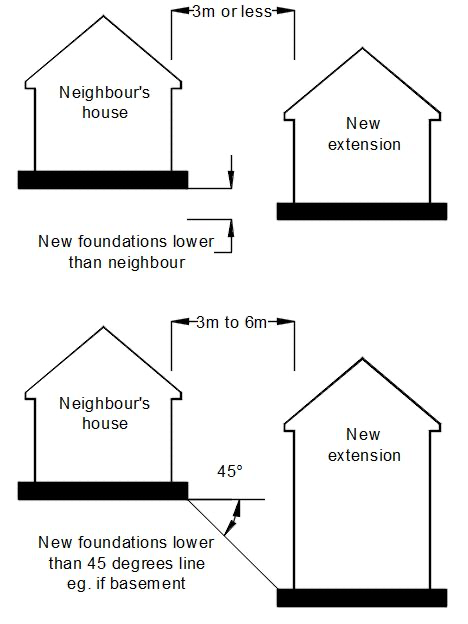
-
New build with basement Essex/London boarder
Bitpipe replied to Hyside's topic in Introduce Yourself
We went through this with our basement, provided you are more than 6m from your neighbours foundation and don't fall foul of the 45o rule then you won't need a party wall agreement.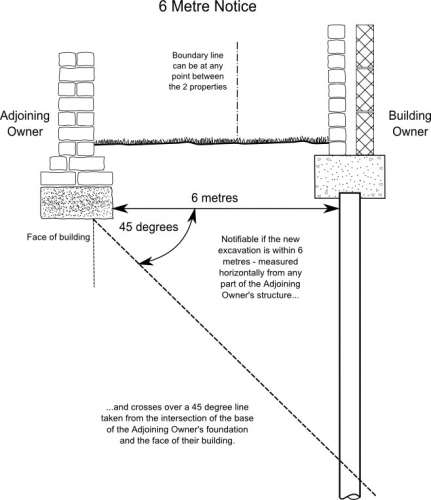
-
Brings back memories We had 16+ tonnes of rebar in our 120m2 basement. If you have sumps then assuming you've chosen internal membrane as your waterproofing method, did you consider other methods (e.g. waterproof concrete)? Pertinent to other threads at moment. I will say I'm a bit surprised that the insulated ground floor was not addressed at design stage but sounds like you have a plan. What made you decide on ground source for heating? Doesn't seem that popular a choice anymore now that ASHP is more widespread.
-
Does the basement have a concrete lid or suspended timber? And will the ground floor have heating in it? If it's concrete then the above suggestion is probably the best way to go - create a contiguous ground floor and work off that. You'll find basements, however they are insulated themselves (internally or externally) do not have a very high heating requirement as they will maintain a year round ambient temperature due to being in the ground. If they're full of plant or equipment (TVs etc) then that all helps. Our basement is a passive design and has no heating at all but it's a full footprint so does not give us the issue you have.
-
Please help! Would you say this drainage stone is clean / washed?
Bitpipe replied to Oxbow16's topic in Building Materials
Don't see any fines so looks pretty clean to me. The building world has a slightly different interpretation of 'clean', 'washed' etc. I had a load of 'type 1' delivered to bind the basement excavation and it was laid & compacted to 150mm. Was obviously just crush from a demolition (maybe even mine). Taps, pipes, wood, plastic, wires - you name it I plucked it out of the top layer and filled a wheelbarrow. God knows what was further down. -
Same principal as ICF I suppose - with traditional shuttering you're restricted to 6 linear metres per pour (or so I was told). I guess then that the only join is interface between the vertical walls and the slab, did you do anything there or just rely on the internal membrane to catch any water that comes in.
-
A perfectly good house destroyed by greed
Bitpipe replied to Thedreamer's topic in General Self Build & DIY Discussion
Let's hope the builder and clients are well insured. I recall a case from a few years back where the owners were left carrying the can as the builder went bust. https://www.dailymail.co.uk/news/article-3015425/A-suburban-nightmare-just-wanted-builder-create-little-extra-space-followed-rules-happened-child-blood.html Not to mention did they tell the mortgage company. -
Did you use ICF or shuttering? We did the latter and it would have been mega expensive to build shuttering for the whole structure, they created a form and rotated it round the structure so it took about 4-5 pours over two weeks.
-
Yes, concrete is inherently pretty waterproof and whatever add-mix is introduced just makes it more so. However shuttered concrete structures are not poured in one go and it's at the interfaces of cast sections that leaks occur and this is where the WPC systems really add value Our contractor's formwork made provision for an inch wide & deep channel on the top of the slab kicker and on sides of each vertical section. These channels were then scrubbed clean of laitance with wire brushes and dried with blowtorches (we were doing this in September, so was occasionally damp). Into the clean dry channel went Sika waterbar, applied with Sika mastic in advance of the next pour. For penetrations, plastic sleeves of a larger diameter of the service were cast into the concrete, each with two rings of water bar applied. When we ran the services later, the gap between pipe and sleeve was filled with a non setting waterproof compound from Newton. Finally mechanical expanding rubber bungs were used to seal all of the bracing holes and then sealed with waterproof cement. Everything was photographed and sent daily to Sika and the rep came to site a few times to check progress. THAT is what makes it properly waterproof and costs the time and money. If you're investing in internal membrane then go for it and get a good warrantied job done and you should be fine.
-
Have you interacted with the SE who designed the structural aspects of your basement or have you reached this stage yet? Make sure the SE used has experience of habitable basements etc and not just foundations. I'd then get their personal interpretation of the GI wrt waterproofing requirements as opposed to a potential supplier. I always feel that when a vendor is involved, they have an agenda to sell, even if they're very decent etc.. Where possible suppliers should quote against a spec generated by a 3rd party - then makes it easy to get a few quotes and do a proper comparison. But you've hit the nail on the head - if your GW will warranty (and needs to be insurance backed, in-case they cease trading) then you're good.
-
Nothing wrong with internal membrane, and if you're already investing in sumps & pumps then it makes sense. Type C will work every time as it assumes the worst - leaky walls. I'd just be wary of overspending on the waterproof concrete if you decide to meet the BS standard as you do pay a premium for the high quality warrantied systems (Sika etc) and they require more labour to properly apply the water bar, mastic, plugs etc but I was happy to do so as it was my only line of defence. This is probably where you can have a value driven conversation with the groundworkers. The BS standard is fair but I wonder if it pre-dates the advances in concrete technology. Have to say that our building warranty did not mind that we did not meet it, but then again it was standing on the shoulders of the Sika warranty. Did your neighbour have a warrantied waterproof concrete system?
-
The big questions are - where is your ground water level? - how free draining is your ground? Your ground investigation survey will tell you this. If it's way below the slab level (ours is >6m, slab is at 3.5m below ground) and free draining ( we are on gravel/chalk) then you're probably good with warrantied waterproof concrete - key is in the warrantied, you need an insurance backed warrantied product from someone like Sika or Krtyen - they will have reps supervise the prep, pour and finish - all of their product is used (waterbar etc) and they give you a warranty against water ingress for 20 odd years. You should not need anything else. We got an all building warranty (whatever that is ever worth) based on the concrete alone. But if you're investing in membrane, sump & pump then don't spend on waterproof concrete. But make sure it's warrantied or it's worthless if you have a problem later. Same for external membrane, if the contractor won't stand by (in an insurance backed method, incase they go bust) any subsequent problems you have are yours. We had friends who essentially built in a small river near the Thames and they got a full warrantied waterproof basement system from Glatthar, but it was very expensive and they had to pay for de-watering during the build - but Glatthar did the whole install and stand by the warranty - it was pre-made WPC slabs with a spray applied external membrane. Completely agree, we have 1m perimeter of large stone for the backfill (fist sized) and a land drain to soakaway at the bottom. As ever, the most commonly used systems are the go-to default for architects and contractors and given the majority of basements are retrofit in London clay, the internal membrane, sump & pump is the most used system. However if you're casting your basement in a new build it seems defeatist to me to plan a structure that will leak and then catch it inside. Plus you need redundancy on pumps, alarms for powercuts etc. External membranes are only as good as the application and need to avoid damage during backfill. I'd push back against that - find out what insurance backed warranty is being issued on the back of the two systems in parallel? That's the key here. Everyone is always happy to spend your money on what they say you 'need' but make sure its what is actually needed and that you have some comeback if there is a problem later. Are the architects backing an insurance policy incase there is a leak? if not then their opinion is nice but not that relevant. Again, have you done a full ground investigation and do you know what you're digging into?
-
The internal filter needs replacing, ours is overdue now. However the limescale that collects in the bottom is becoming a twice annual job - easy enough to get out , you don't need to re-order the free kit they sent you, one will do it.
-
I had a similar issue with getting some Ikea bookcases flush against the wall - they have a skirting profile cut into them but it was shorter that our skirting. I used a round file to enlarge the profile on the Ikea - it did crumble a lot internally but looked fine externally. Suggest you remove the whole run of skirting and if you want, make a single straight cut so it sits flush with the bed leg. If the bed comes out later you can glue / nail the cut piece back and smear some caulk or filler between the two cut edges.
-
Yes, a 40x12ft two bed caravan for us, two kids (then junior school age) and the cat. Bought and sold it on when done. Does the cabin exist yet or is it being built for the build and retained? If it is a separate habitable dwelling, it will attract council tax when your main is demolished and will continue to do so after the main dwelling is completed. We only got off that hook by proving that the van had left site once sold. PP and building regs are a separate issue, depends if the dwelling is considered temporary or permanent. The main challenge you may have with a cabin is getting it onto the main sewage, power, water & telecoms are easy. Sewage needs the necessary fall (1:80 is adequate, 1:40 better to prevent problems) so you need to see if you can get the necessary run between where the cabin will be and where you attach to main sewer. I would not consider living onsite and relying on a portaloo or showering at the gym, friends etc, especially with variable COVID restrictions etc.

