Beelbeebub
-
Posts
1224 -
Joined
-
Last visited
-
Days Won
6
Everything posted by Beelbeebub
-
Is it to protect against any crud in the heating system? Are their units particularly susceptible to dirty water? Most manufacturers seem happy with a good flush and then filters.
-
Is the heat exchanger also being used to isolate a glycol circuit for the HP?
-
My 2bobs worth.... Is your HP set to weather compensated? You don't mention it. That will help. Not keeping you warm in the cold periods: you may need to up the flow temp for the cold periods. Weather compensation will ensure that the flow temp is lower during the milder periods. The plate heat exchanger won't help. It means your HP will need to run a few degrees hotter than it migbt otherwise. You mention it was installed to allow a boiler to also be used (it may also be to allow glycol to be used in the HP side) Is it possible to get the system replumbed so you run the HP direct and the boiler is connected via the heat exchanger? Given you have an (oil?) boiler backup - you could use that for the few very cold periods when you estimate it's cheaper to run or the HP struggles. Running the boiler a few times a year will help keep it working well and you mihbt as well use it of you've paid for it.!😁
-
As pointed out before, if there is a fault with the diverter valve setup so that there is flow through the tank coil during heating mode, the hotter water in the tank will be cooled by the water passing through that coil at the cooler heating flow temp. Symptoms would be Your tank swiftly loses temp only when the heating flow is on. The return flow out of the tank coil (usually the lower pipe) is warmer than the feed flow in (usually the upper pipe) If your controller is set to hot water priority it will start heating the house, then notice the tank has cooled, switch to heating the tank, then go back to heating the house, then notice the tank had cooled.... And so on. Try setting your hot water to timed. At this point the above won't happen outside of the hot water times but you would quickly see the tank temp drop to the heating flow temp and then stay there. If there is not a diverter fault then another possibility is the tank is losing temp naturally. Because the prove is at the bottom it can only "see" the temp there. As the tank loses temp naturally the cooler water sinks to the bottom. Your probe will "see" cool water but be unable to know the water above is still hot. My tank can be half full of 65C water and the bottom be at 20C (I have multiple sensors). Again, if your hot water us set 24/7 it wouldn't take much demand or cooling to trigger another heating cycle even though there is ample hot water left
-
Improving an "ok at best" ASHP installation
Beelbeebub replied to pstunt's topic in Air Source Heat Pumps (ASHP)
Just a thought. A return water temp of 28C implies either your slab is at 28C - that is pretty warm for a floor slab, what are your floor finishes? My bare concrete slab hits maybe 24C for a 20C air temp though we are very well insulated. If you have wood or carpet then your slab temp. May be higher but 28C is the recommended max floor temp for UFH so I would be surprised. The other option is that the flow is too fast for the water to give up enough heat. Have you checked the flow rates? I believe the Grant installation kit has a flow adjuster with a sight glass in it so you should have an idea. The Aerona Heatpumps come from the factory with the pump configured for maximum. Grant say this is almost always too high and usually needs to be set back to med or low. If your builders aren't very knowledgeable about the HPs, they may have missed that step. Combined with the fact the bedroom zones are mostly off, the flow in the other zones will be higher than may have been set anyway. -
That's a fairly unique set of circumstances. Basically an extended power cut and temperatures in the "mushy glycol" zone. I'd imagine, if you arrived back to an ongoing power cut you would want to conserve your battery power for things like Internet, phone charging, lights etc. and off using your precious power to run the heating pump and using your aga as the heat source. The only downside of glycol is the expense, which can be countered by not using giant buffers and the mess issue*. The efficency and viscosity in normal operating conditions seem to be very close to water. *as someone who regularly has to deal with small leaks from heating systems and small spills of water when fixing them, this is the biggest drawback for me.
-
I notice the first pic says Inlet backup heater water temp 43C ... Refrigerant temp. 37C I may be wrong but this would imply some of your heat is being generated by the backup heater?
-
Glycol/Antifreeze valves are very much for the chance combination of rate events (though power cuts are often correlated with very cold weather). I understand the reluctance for glycol especially if you have a huge system volume, but I do think the case against it has been overstated - especially regarding efficency. For me the biggest "downer" is the potential mess from leaks, either during use or spillages during maintance, but then again spilling water from a cruddy open vented system is pretty nasty anyway.
-
But we're only interested in freeze protection if there is no power. If there is power then the fluid temp won't ever be below zero so the increced viscosity at very low temps isn't an issue.
-
Not in a flat you can't! 😁 The big issue is the space needed to store the heated water, especially as it will be stored at near use temperature rather than high temps and blended down to a lorger volume of use temp water. An unvented cylinder could be made cubic to help give extra 25% volume and if a pressure booster pump was included that might do.
-
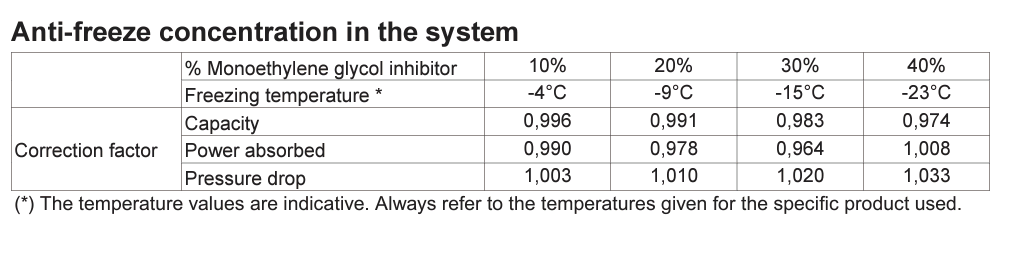
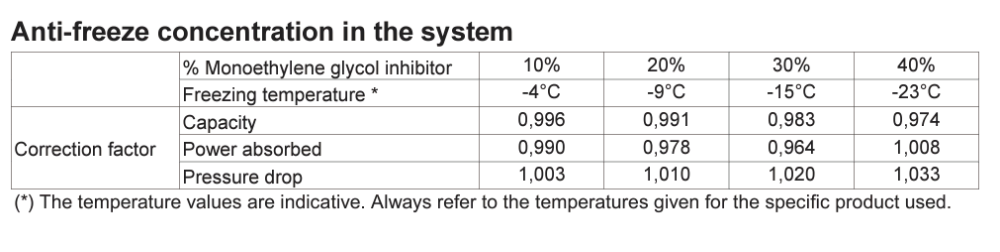
Is glycol so bad? Here's a table (chofu) of the correction factors for glycol Even at 40%, which gives protection below -20C the loss of capacity is only 2.6% and the pressure drop only 3.3% more. I'd argue that a system designed so that those margins are critical is maybe top close to the edge. I do see the reluctance to using glycol in a system with a huge (say 100l) buffer or volumiser but we should be aiming to remove those anyway
-
DHW is typically less than 25% of a home's energy consumption, sometimes alot less in older houses. It would seem that, if the proportion of extra cost to provide DHW via the HP is greater than that % there should be the option to ditch it - especially if the DHW is already being provided electrically eg direct vented cylinder.
-
Have they launched it already?
-
The grant volumiser is pretty small, something like 15l. It also does double duty as a backup heater that can either take over from the HP if there is some sort of problem or supplement it in extreme weather.
-
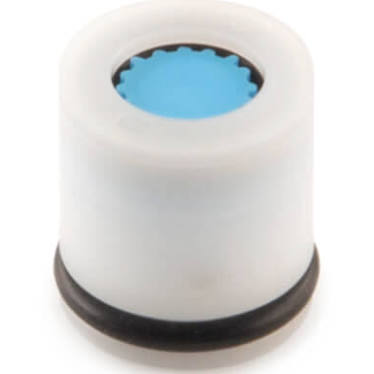
The flow restriction was a plastic cartridge with an o-ring, similar to this Full disclosure: the pipe end probably hadn't been deburred either. The pressure drop was relatively small, 2bar absolute max, usually 1 bar or less. The restriction is downstream of some filters before some storage tanks. It's there to ensure a relatively steady flow over time as the filters block. Flow speed was around 1m/s The pipe downstream did have a thick coating of green oxide.
-
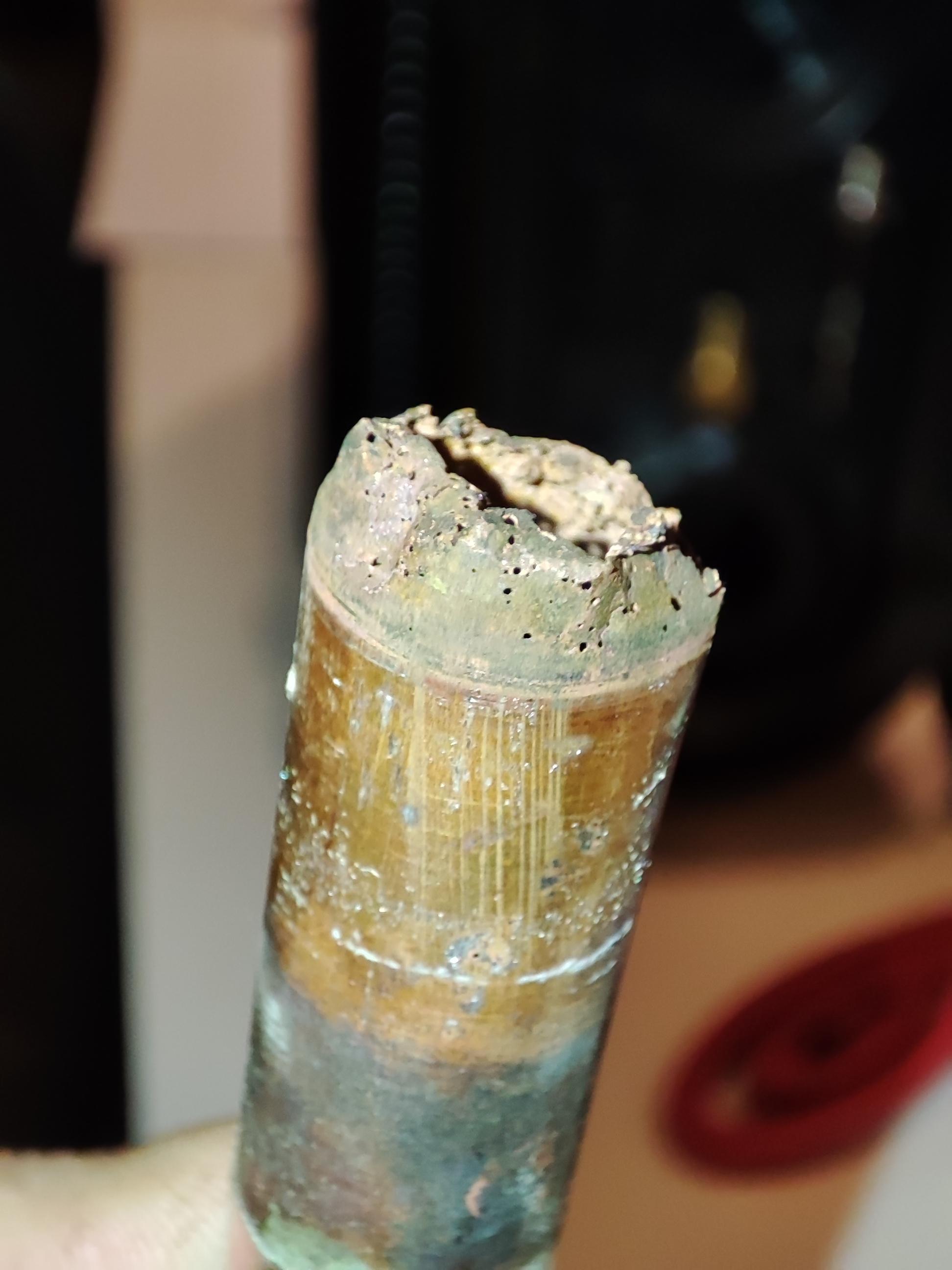
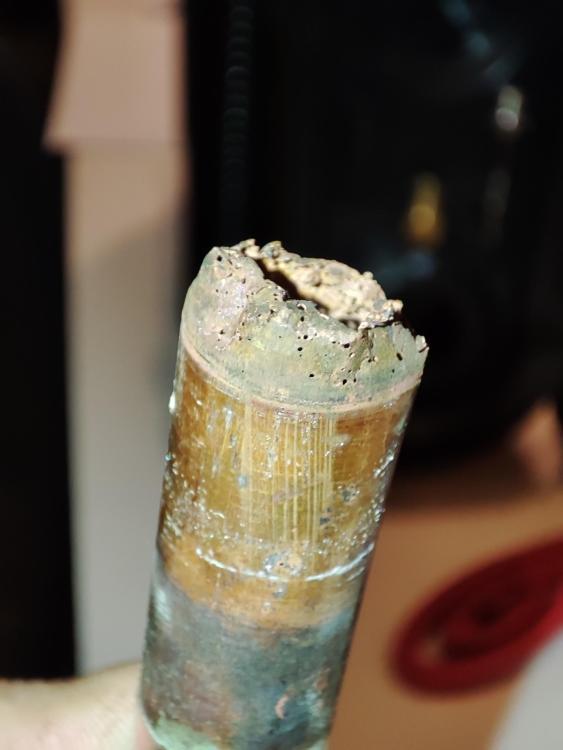
I've heard about it, but never seen it.... Until today. Some context. This 15mm pipe (0.7mm wall) was just downstream of a flow restrictor valve (so pretty turbulent) which has run continuously at 8-10lpm for about 10 years. The water is very soft but more or less pH neutral. I noticed it was weeping at the push fitting onto the restrictor body and removed it to refit. The pipe was paper thin, I actually crushed it with my fingers. There were numerous pin holes out to about 25mm from the pole end and the inside was very pitted, almost rusty in appearance.

-
MCS consultation on amendments to PD rules
Beelbeebub replied to JamesPa's topic in Air Source Heat Pumps (ASHP)
Were there noise issues when we went from open and balanced flue boilers (almost silent) to the fan assisted room sealed ones? A condensing boiler is considerably noiser than a passive flue boiler that relies on boyancy to exhaust the flue gasses. Yes HPs are currently a bit nosier, but that can change. Noise tends to be related to power and coil area. Power is driven by the house demand and is relatively inflexible once you're insulated. But unit size is more affected by planning. If we relaxed the need (both planning and just out general sense of aesthetics) for a smaller unit we could get quieter HPs. -
Daikin Alitherm hybrid without the boiler?
Beelbeebub replied to SuperPav's topic in Air Source Heat Pumps (ASHP)
The dream units are interesting, mainly for their low price. They claim a toshiba scroll compressor (so good brand and good tech). I note they are r410a, which is an obsolete tech, I wonder if they are getting them cheap in some sort of "fire sale". The fixed output temp indicates they have cut costs by having the most basic control electronics for the HP. It's possible they don't even have a reversing valve for defrost. But all we really need is a standard input for setting the temp, and possibly commanding a defrost, say over rs485 or whatever 2 wire bus Opentherm operates as. Then the control system can be a 3rd party unit. But a 10kw unit for £1.5k us pretty much where we need to be. If they could churn out an r290 unit with remote temp SP control that could be a winner. -
Daikin Alitherm hybrid without the boiler?
Beelbeebub replied to SuperPav's topic in Air Source Heat Pumps (ASHP)
The u it you linked to appears to be a monoblock. It specifically mentions a sealed redridgerant circuit and water as the only connection. It doesn't appear to have a pump and thry mention the boiler does so I assume the boiler pump also pumps the hearpump. So at a minimum you would need an external pump. -
Will be very interested in outcome as I am trying a similar thing with the reverso unit to replace a failed UFH system though the system currently gas powered.
-
Maybe lean into the aesthetic...... 😁

-
Mitsubishi vs Samsung Heat pump
Beelbeebub replied to Slippin Jimmy's topic in Air Source Heat Pumps (ASHP)
Also check the minimum power at your "maximum" outside temp. Being able to turn down to 2kw at - 7 is no use when you need to turn down to 2kw at 10C. -
Glass front in held on by screws. The original manuf has images of alternative covers. I suppose there is nothing to stop a handy person making their own. Might try it, I'm not 100% sold on the grey look. Might work well in a swanky city flat or Mia I glass cube but not so well in my parent spare room. 😁
-
I think there are two zone set points in the chofu manual and a configuration where you can switch between them via relay.
-
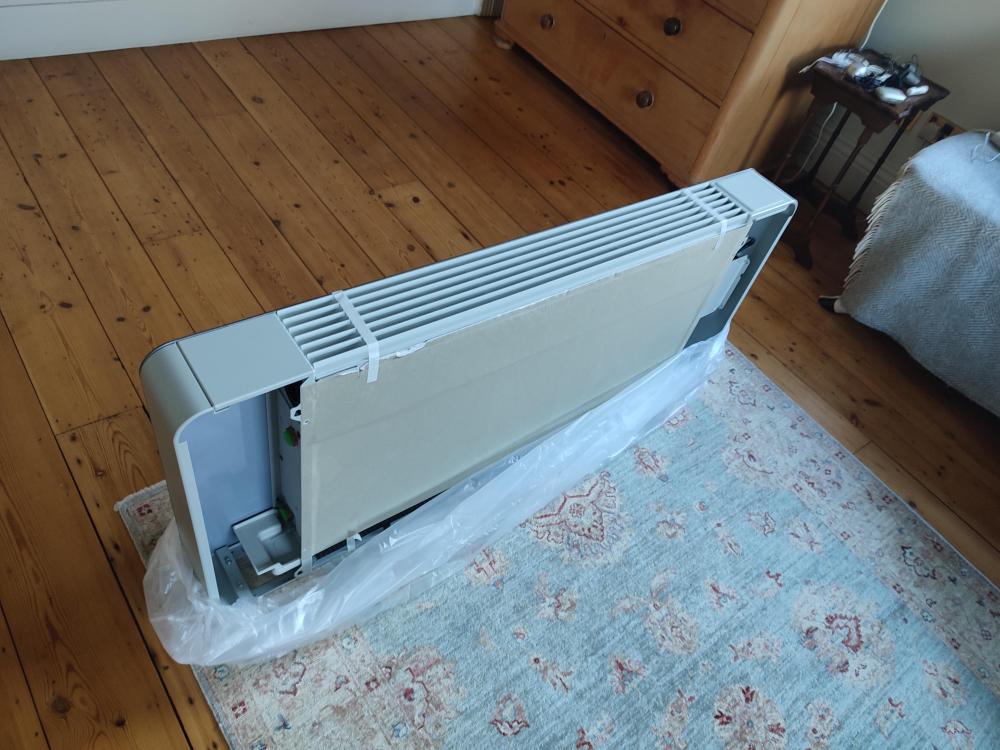
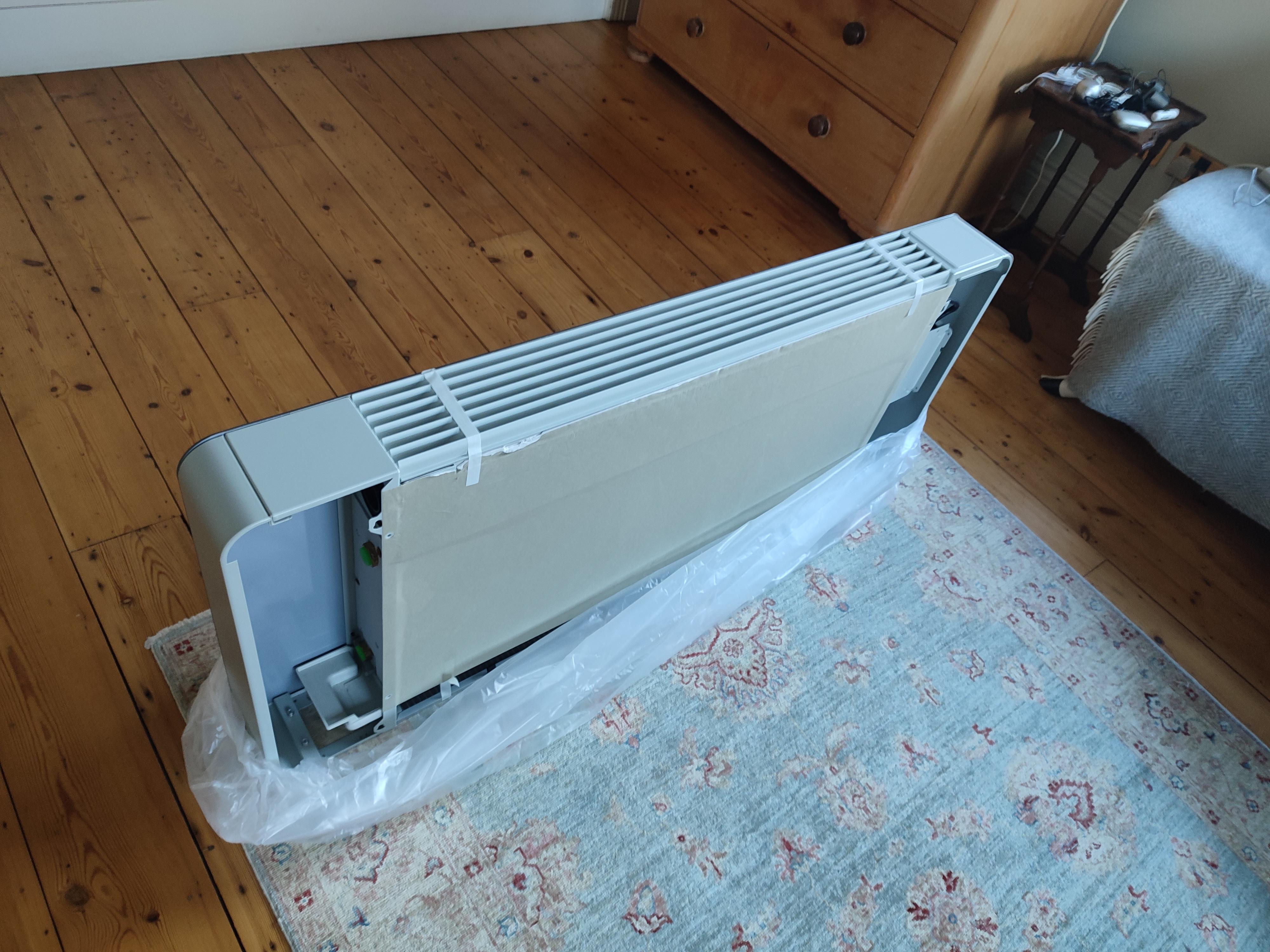
OK, unit arrived. Well packed. It's a bit of a beast (fs800) slightly over 1200mm wide (a bit wider than spec) and abut under 600mm high. Pretty thin - 120mm as advertised - about the same a k22 rad. Build quality seems good. One interesting thing is the ends are about 150mm wide each and are mostly fresh air. They are for making the hydraulic and electrical connections. But it strikes me most rads have the valves exposed on the side anyway. It's sort of expected so doesn't look odd to most people. So they coukd make a unit with the same performance, but a nominal. 900mm wide (the width of the actual core) and have the inlet and outlet at each side on the bottom, like normal rads. If the ditxhd the fancy glass front for a pressed steel flat front it would d be a pretty standard looking rafiator, just able to provide the same output at a much lower flow. The smiths powerad looks sort of ideal but it's price is a but high and performance wasn't as good on paper. Let's see how it performs.