


Beelbeebub
-
Posts
1522 -
Joined
-
Last visited
-
Days Won
11
Everything posted by Beelbeebub
-
Just a thought. UFH tends to have a fairly high thermal inertia compared to rads (especially if it's in slab). Could you have 2 zones UFH and Rad. Each zone is set for the ideal flow and temp and you just "multiplex" between them say 30min on UFH, 30min on rads. Alternatively, you could flow to the rads all the time and, as needed, drop the flow temp and open up the UFH loops, so your rads will cool a bit (but still put out some heat) for a while whilst your UFH slab heats up.
-
ASHP: monobloc, split or combi?
Beelbeebub replied to AndySat's topic in Air Source Heat Pumps (ASHP)
I think the benefit is from the manufacturer pov. The outdoor unit is a standard aircon unit (manufactured in vast numbers) . It doesn't care if it's connected to a common indoor fan unit or a hydro box that dumps the heat to water. There are some secondary benefits about not freezing outside and typically smaller and easier runs to the outside unit. The downside is the need for refridgerant handling during install. -
ASHP: monobloc, split or combi?
Beelbeebub replied to AndySat's topic in Air Source Heat Pumps (ASHP)
But in both cases the compressor is often outside. The internal bits of both refrigerant and hydro split only contain standard central heating circulators, diverter valves etc which should be fairly quiet. -
ASHP: monobloc, split or combi?
Beelbeebub replied to AndySat's topic in Air Source Heat Pumps (ASHP)
Was it a new system? I know some of the older designs had the compressor inside. Which would be noisier, but I was under the impression that all the newer split systems had the compressor outside. -
BUS Grant requirements (conflicting info)
Beelbeebub replied to Rudski's topic in Air Source Heat Pumps (ASHP)
That sounds like an extraordinary deal given those units retail north of £5k! -
ASHP: monobloc, split or combi?
Beelbeebub replied to AndySat's topic in Air Source Heat Pumps (ASHP)
Also should add that if you are getting a particular room too hot using the single zone UFH, you can just turn the flow down to that room to reduce the output. Effectively your flow temp is driven by the worst loop in your house. -
ASHP: monobloc, split or combi?
Beelbeebub replied to AndySat's topic in Air Source Heat Pumps (ASHP)
Yes, 100%. Though it does make sense to zone for the older non-WC gas boiler systems. But now, with WC and especially with HPs, don't zone - or onky have the absolute minimum. The physical hardware (manifold etc) is identical just with fewer components. -
ASHP: monobloc, split or combi?
Beelbeebub replied to AndySat's topic in Air Source Heat Pumps (ASHP)
It is fairly standard to design ufh as zoned per room.. It sort of comes for free with the physical components - all the pipes come back to a manifold. The good news is that it's trivial to "dezone" the system. You just remove the zone actuators (or never install them). You can then adjust the relative flows through each loop to account for the different demands per room. My old ufh was originally zoned per room but I ditched that abiut 5 years ago for the entire house being one zone controlled by a single thermostat. It was actually better and more stable than the individual zones. -
New Highland Home, ASHP size + calcs advice :)
Beelbeebub replied to HighlandHopeful's topic in Air Source Heat Pumps (ASHP)
How far from the road is your plot? A mini concrete pump can sit on the road and push you concrete quite some distance. One visit for the foundations, then another for the floor slab.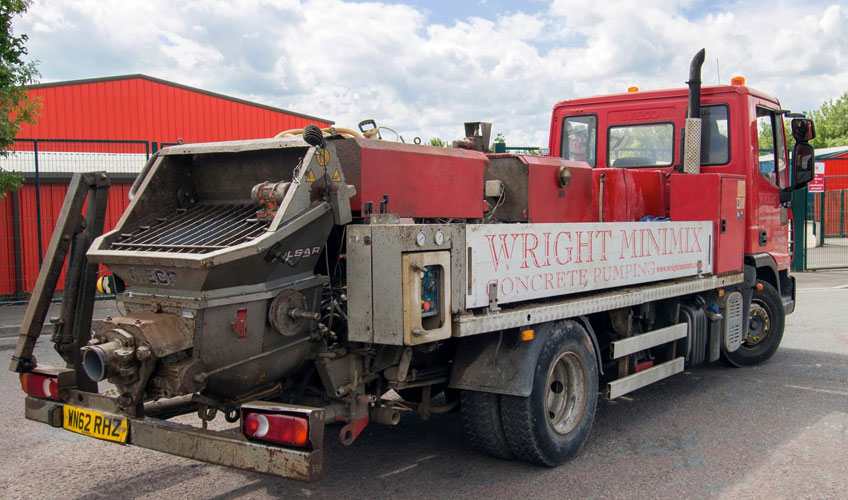
-
ASHP: monobloc, split or combi?
Beelbeebub replied to AndySat's topic in Air Source Heat Pumps (ASHP)
Where does the internal noise come from in split systems? I know there were some systems that had the compressor inside and all that was outside was the heat exchanger and fan. But do modern ones do that? I thought they kept all the gubbins outside and all that was inside was a plate heat exchanger, a pump, maybe an expansion vessel and a diverter valve? -
Are we targeting ASHP's at the wrong market?
Beelbeebub replied to ProDave's topic in Air Source Heat Pumps (ASHP)
A reasonable point. But the skillset to install. A2A (basically fgas certification) would also be encouraged by subsidising a2a. The skillset to install any HP (vs gas boilers) is basically in the specification. There isn't anything in installing a HP that a gas safe engineer can't already do. The only tricky bits are getting the system design and sizing right in the first place. With a2a the issue is fgas - and there are good reasons for not letting any old sod loose given the higher gwp of the gasses. R290 gets around that issue but does introduce the flammability issue - but that isn't significantly different from gas safe issues. -
Are we targeting ASHP's at the wrong market?
Beelbeebub replied to ProDave's topic in Air Source Heat Pumps (ASHP)
On a side note, the regs exclude any HP over. 45kw total including shared ground loop systems. This would seem to be an issue for. The Kensa "shoebox" systems or any other shared ground loop systems that might be very useful for blocks of flats etc. -
Are we targeting ASHP's at the wrong market?
Beelbeebub replied to ProDave's topic in Air Source Heat Pumps (ASHP)
It would get very technical, how do you define delivery? You could argue the heat is *transported* from point of production to the end point by a vapour but *delivered* as a condensing liquid. The bulk of the energy is delivered as the heat of condensation with a minority delivered by sensible heat of the vapour or liquid phases. But the biggest stumbling block is the general lack of DHW provision. Milliband is talking about removing this restriction. Which might pave the way. -
Are we targeting ASHP's at the wrong market?
Beelbeebub replied to ProDave's topic in Air Source Heat Pumps (ASHP)
I've poked around to try and see where the prohibition on A2A might be. I haven't found it yet, except that the new system must provide all the heating and hot water and no hybrid systems are allowed. There are very few A2A systems that can also provide hot water. I believe daikin do one, but I haven't actually seen it in this country and I don't think it has any mcs certification. So maybe it would be as simple as allowing hybrid systems. Again, I think allowing A2A would see a significant up tick in installs as it would be cheaper and hence might be entirely covered by the grant. It is also potentially less disruptive for some properties. There would be an issue with skills as we don't traditionally have many A2A fitters in the UK. That said, if we coukd get our arses into gear around r290 and the manufacturers could produce r290 multi splits, I don't expect there would be much conversion from a gas safe engineer to an r290 safe engineer. There aren't any actual skill sets that are different the main criterion is being responsible and diligent when it comes to ensuring the gas lines are secure. -
Are we targeting ASHP's at the wrong market?
Beelbeebub replied to ProDave's topic in Air Source Heat Pumps (ASHP)
Generally liquids are nearly incompressible whilst gasses can be compressed. -
Are we targeting ASHP's at the wrong market?
Beelbeebub replied to ProDave's topic in Air Source Heat Pumps (ASHP)
Technically speaking the heat in an A2A heatpump is delivered as a hot gas (vapour) that is condensed into a liquid at the point of heat delivery (the room unit heat exchanger coil). So it is a tricky question if the delivery is via gas or liquid. I'm not sure the legal system is capable of dealing with the finer points of thermodynamics -
Are we targeting ASHP's at the wrong market?
Beelbeebub replied to ProDave's topic in Air Source Heat Pumps (ASHP)
Yes, I am. Suggesting that a. Change in the rules to allow A2A heating without any DHW provision (ie leave DHW as is) to get some sort of grant would increace uptake of Heatpumps and subsequently reduce co2 emissions. -
Are we targeting ASHP's at the wrong market?
Beelbeebub replied to ProDave's topic in Air Source Heat Pumps (ASHP)
I do think that revisiting the position on A2A and (related) the requirement the HP is the sole heating and DHW source is worthwhile. Fitting an A2A system is typically cheaper and can be fitted leaving the existing system intact. This gives the user the safety net that they will never be worse off in cost or performance than their existing system (because they can just use the existing system). -
Are we targeting ASHP's at the wrong market?
Beelbeebub replied to ProDave's topic in Air Source Heat Pumps (ASHP)
My understanding is you cannot get a bus grant for *any* A2A system. And that tge rationale for excluding A2A in the first place was that they could be used for cooling (which is what most of the A2A systems sold world wide are used for and designed for. Some systems don't even include a reversing valve and can only cool) -
Are we targeting ASHP's at the wrong market?
Beelbeebub replied to ProDave's topic in Air Source Heat Pumps (ASHP)
A reasonable point. On the one hand wasting energy is not ideal but if it's energy that is a bit surplus is it a problem? Especially if it'd locally generated ie you have solar panels. In which case the "also cools" aspect would have very little national level downside but we would reduce co2 and cost in the winter. -
Are we targeting ASHP's at the wrong market?
Beelbeebub replied to ProDave's topic in Air Source Heat Pumps (ASHP)
Very true, and historically cooling has been both unecessary and a luxury in the UK. That may change in the future and the ability to do bit of cooling for the few days a year we may have dangerous heat (think 35C+) might be useful at a societal level (fewer heat stress admissions etc) The other problem is that AC machines are also very good heaters. So by refusing to subsidise air to air units because they may be used for cooling, you prevent yourself from using a useful technology. A friend replaced the fan heaters on his workshop with an A2A unit and he does use it for summer cooling. Without that his workshop (essentially a portacabin) is unusable in the hotter summer spells. But it has been really good for hearing over the winter. Much better temperature distribution vs the "too hot at one end, cold at the other" of the fan heater. Drastically lower fire risk (he's a wood workers so lots of sawdust around) and much cheaper to run. He's now thinking of fitting one to his house to supplement (and possibly eventually replace) his oil boiler heating. If there was a grant he'd probably do it without hesitation. -
Are we targeting ASHP's at the wrong market?
Beelbeebub replied to ProDave's topic in Air Source Heat Pumps (ASHP)
Good point, though we'd have to be careful we didn't increace energy usage over the year. No point in reducing the co2.emissions over the winter is they are.mtoe than made up for byleoole running the aircon all summer. That said, limiting the lower end of the cooling to (say) 28C would blunt the worst of the heat waves without resulting in it being overused. The other option, which is related to my alternative to subsidy proposal would be to measure the heat or cooling produced and offset the electricity costs so the electicity used for heating would never cost more than the equivilent gas. If you took that approach but didn't subsidise cooling electricity that might work. -
Thats impressive. Do you have any links?
-
Very interesting. Is there any data logging facility? You mentioned you don't have any actuators, does it have the facility for zones? Can it handle hot water production?
-
Are we targeting ASHP's at the wrong market?
Beelbeebub replied to ProDave's topic in Air Source Heat Pumps (ASHP)
AFAIK whilst here is no specific focus on direct electric dwellings, they aren't being being ignored either. I would say that we should look at allowing air to air Heatpumps to be subsidised for all properties. I tandem with that, allowing subsidies in situations where only the heating is via HP would massively ease the transition of direct electric properties to HPs - direct electric properties have no heating plumbing. It is generally cheaper and easier to fit a2a pipes as they are often surface mounted at high level and are deployed from a roll rather than jointed from shorter lengths. In that respect rather like electrical cables (or microbore) - direct electric properties already have a decent electrical supply and often a dedicated heating circuit. - a2a is not commonly used for DHW, though solutions are coming. By leaving the existing DHW system (cylinder or instantaneous heaters) the cost can be kept lower. - a2a can assist with heatwave cooling. The ability to cool (and thus increace demand) has historically been a reason that a2a has been excluded from subsidies - otherwise it would tend to be used to subsidise rich people getting air con. This could be countered by only subsidising a2a units that are firmware locked out from cooling below (say) 28C.
