


MikeSharp01
-
Posts
5693 -
Joined
-
Last visited
-
Days Won
16
Everything posted by MikeSharp01
-
Why would you spend money on so much bling and not have integrated appliances in the kitchen - gives the impression of fur coat and no ..............
-
Looks good and, given nobody is getting any younger, with a bedroom and en-suite downstairs for when knees won't cope with the stairs - we have done the same thing, our other concession is a straight & wide stair to make fitting a stair lift simpler. Here at millstone manor we extended to n bedrooms but have found that we rattle around in it now the kids are gone so the reading room is a sound idea. For the purposes of planning and ratable value might be worth adjusting the plans to show the reading room is NOT a bedroom!
-

Very odd issues in Manchester flat's electrics
MikeSharp01 replied to MikeSharp01's topic in Power Circuits
Thanks all, have been on other things today but have passed the above on and apparently the wires to the immersions were both fried. He has asked for the EICR and the flat we think was built about 15 years ago. -
Welcome to THE forum for people like us!
-
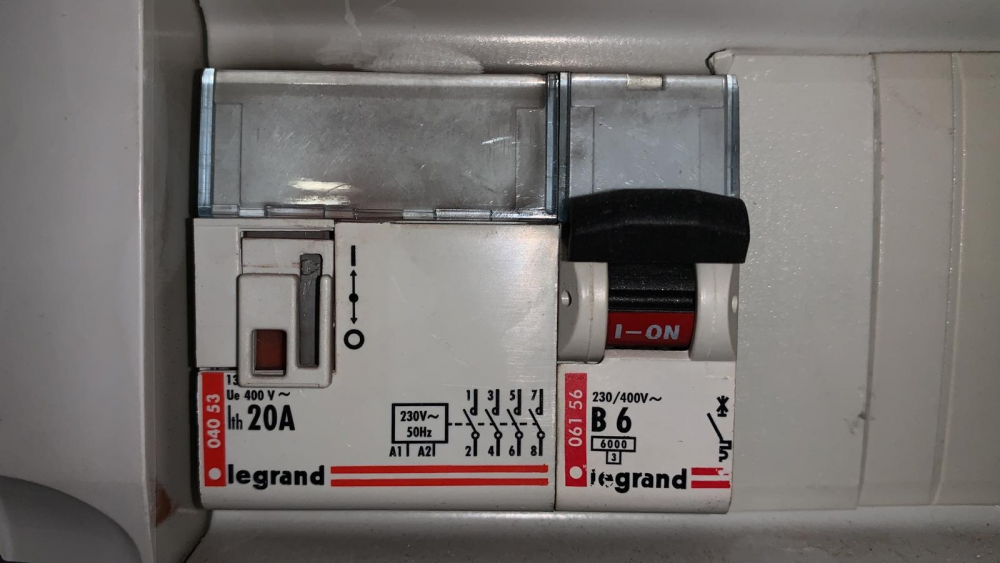
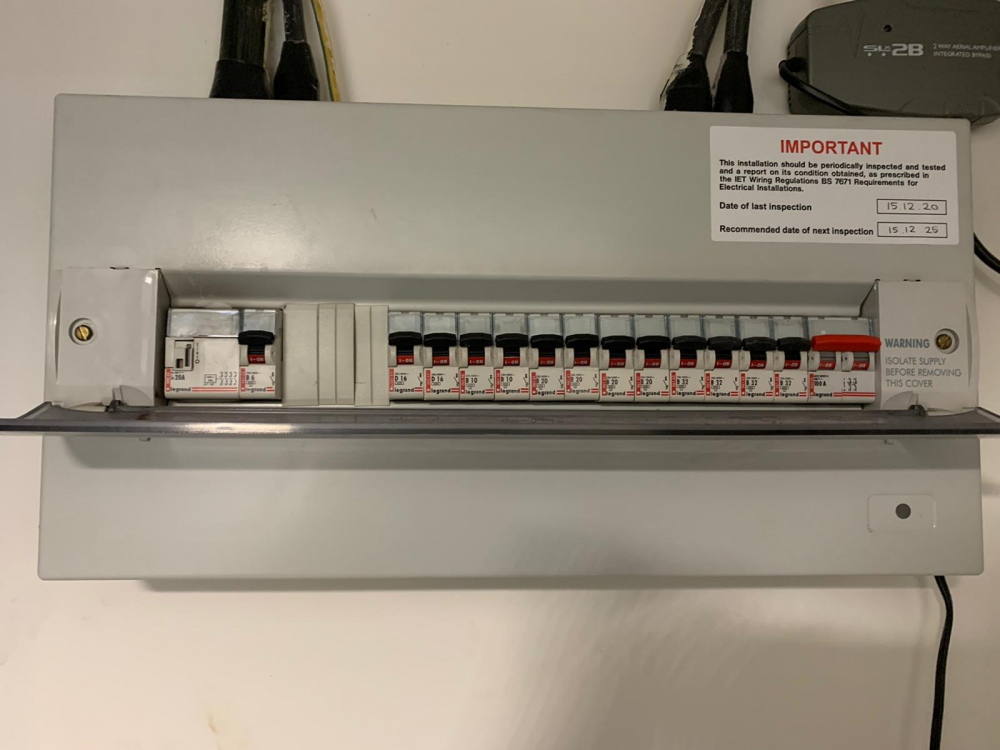
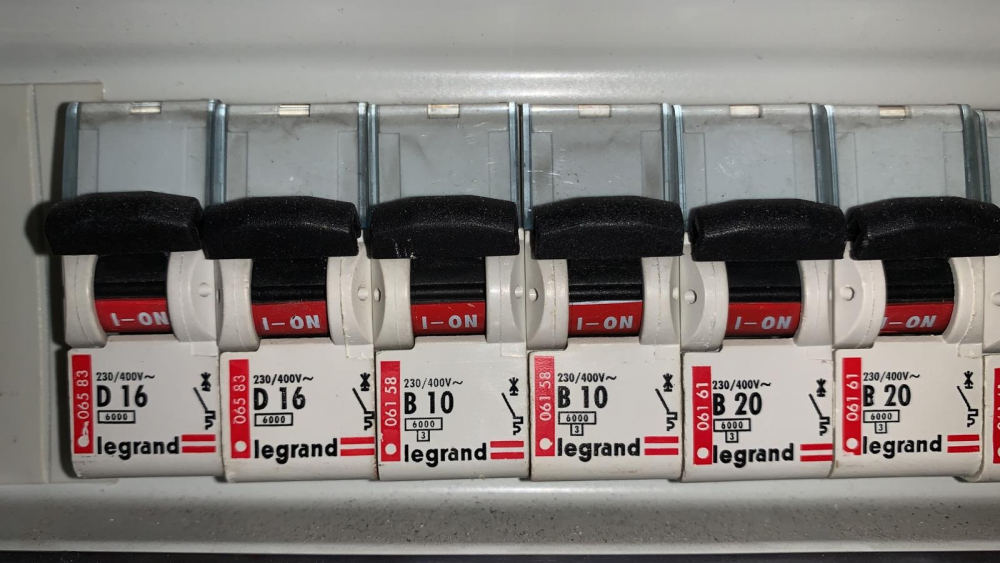
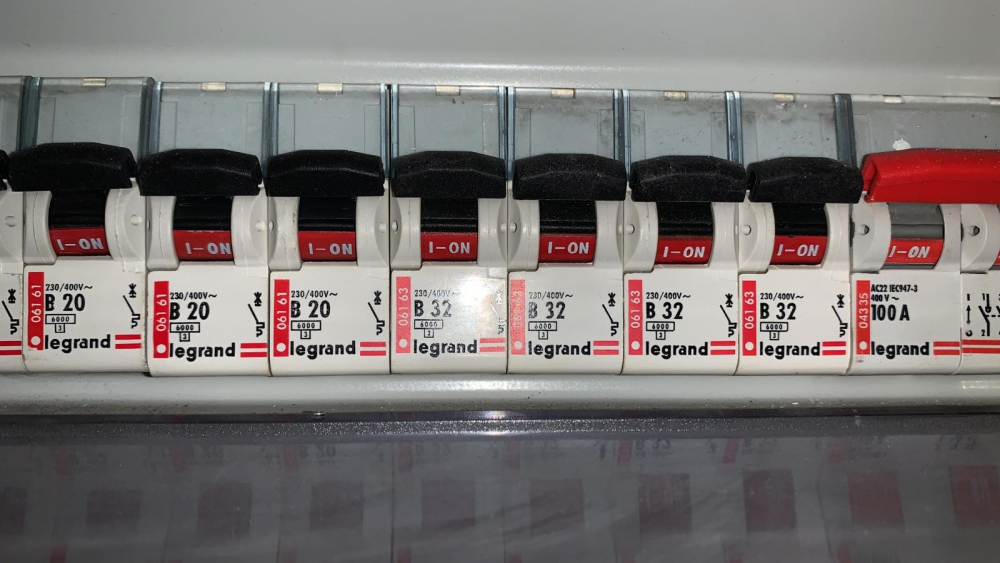
Our son and his girl friend have just moved into a rented flat in Manchester and they have a heap of problems with it even though its only a few years old. Firstly - the hot water is supplied by a tank with two immersion heaters down low at the bottom of the tank but neither appears to be heating up even though the lights are on on the wall switches from which they seem to be controlled. There appears to be no timer in the circuit anywhere - which I found odd, the pulse rate of the main meter does not change as you turn these immersions on and off and there is no hot water! Secondly, and perhaps more worrying is the CU which is not labelled and appears not to have any leakage trip devices and as it is not labelled it is hard to work out what the contactor does: See pics below: Any thoughts - what am I missing here?
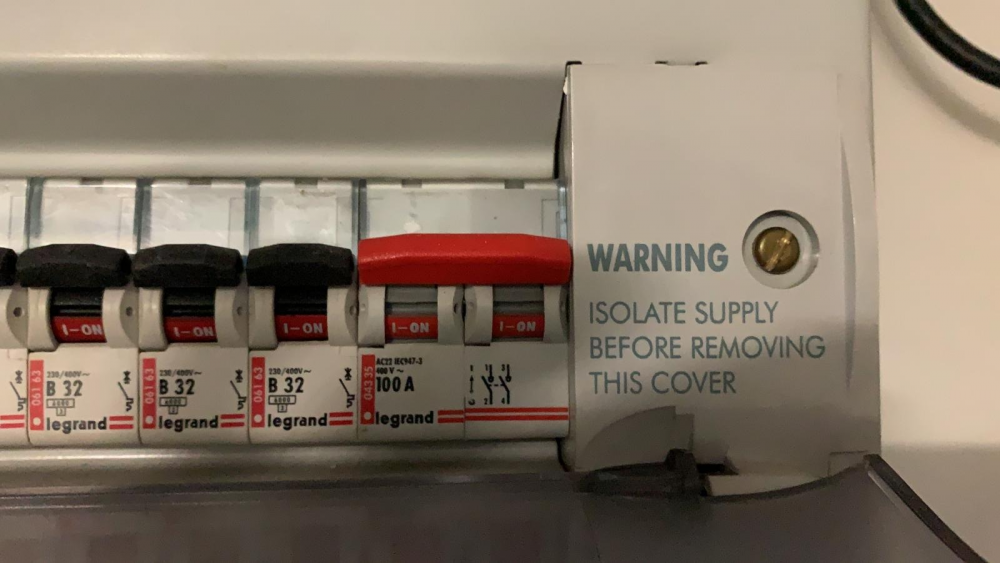
-
First bit of advice needed...
MikeSharp01 replied to CotswoldDoItUpper's topic in Underfloor Heating
No (Even at 41 m2) Do each loop as one continuous run but if you must have connectors then definitely make them accessible. As there will be a height and therefore pressure difference it might be worth having an extra pump for the upper circuit but it may be possible to balance it using the manifold flow adjusters. Depends on height difference, pump pressure / flow and adjustment range. A big pump should do it but might be noisy! You can get some pumps with two separate impellers which might be a way forward. This is not a big problem as it will transfer the heat up and out into the room anyway. Sounds like head height will be your controlling factor on the options but don't forget that getting the pipes down low may well mean channeling the joists to get the pipes between compartments. However for the old part this feels like the best option to me but I am 6'4"!. What is below the bottom of the joists - a gap, the soil immediately or what? Others will be better able to help on the tiling to boards. -
Welcome to THE forum for people like us!
-
Welcome to THE forum for people like us!
-
Try not to start a war, cos if you decide you need to get out, sell, you are often asked how are relationships with the neighbours and you are not allowed to tell fibs.
-
cripes!
-
If you have the spare cash, why not put in a planning permission for a shed on your side of the fence a. You would dominate their shed as you have higher ground and b. you could expect a visit from the planning officer who would then spot the challenge. Also why not write to your local Councillor about the tardy response of the planners. @Bitpipe said it - fight fire with fire.
-
French drain/gravel under cladding
MikeSharp01 replied to gc100's topic in Landscaping, Decking & Patios
Concrete edge beams? -
Blowing my own trumpet
MikeSharp01 replied to Russell griffiths's topic in General Self Build & DIY Discussion
Brilliant: Is that 0.28 m3/hm2 ? -
Keep damp moisture at bay inside cavity space?
MikeSharp01 replied to ashthekid's topic in Damp & DPCs
Listed walls, being quite old, may not to have ventilation blocks / slots but if there are any at the bottom then you may want to allow air out at the top somehow - how was the top finished before you built on it this may give you a hint as to what needs to be done? If no low vents then you may be able to rely on the breathability of the bricks - what is the inner side build up of this wall as this may have some impact again if changing from previous construction? -
Did you chat this through with an architect as it looks like the space could be better used. Do you actually need 4 bedrooms or would three with one master ensuite and a family bathroom be a better option?
-
You could talk to the planners about the green wall before going to appeal so you give them the option to "look again" before committing to appeal which will cost them a heap of time and money. You have 320mm backset to play with and the green wall can sit quite comfortably just adjusting out the slope.
-
Its for a soil pipe by the looks of it not the foundations.
-
600 is too wide for one soil pipe and a small bucket can do wider trenches quite easily. You will find you first bite is wider at the surface than it is at the bottom and by the time you have cleaned it up to the required width it will be fine. You don't need 420mm for a 110mm soil pipe you just need to remember to go a bit deeper so you can put a pea shingle base in to get it flat then back fill with pea shingle around and above the pipe a little way before restoring the soil. a 450 trench will use more pea shingle than a 350 mm one.
-
If you can make it work structurally you could set the wall above about 2.4m back 300mm or so to accommodate the living wall this would reduce the overhang of foliage over the footpath and create quite an impressive feature with environmental and sight line benefits I would not slope the bottom as you have but that might work also but with the back set. This would increase costs but, as you would not need to use brick above this line on this face, you won't see them so they need not be there, might not cause onerous structural issues. PS I would also take it to full height.
-
Enforcement: a new twist on an old story.
MikeSharp01 replied to ToughButterCup's topic in Planning Permission
Great idea - you can remake the whole thing out of walk on glazing, this would cause a shortage in the market for such material and you could clean up selling it to yourself - economics is a wonderful thing AND because the whole place would be see-through no one would notice it was there - thus not offending the neighbours AND you could disport (enjoy oneself unrestrainedly - frolic) yourself about the place quite safe in the knowledge that you will be on full view ( I suppose this may offend the neighbours - but nothing one or two bands of obscuring film around the building at appropriate heights would not solve). Had the caravan man built similar structure outside the caravan he may have got away with it. Hiding in plain sight. Possibly not given the result in the Amersham byelection. -
That does not look like it has been flashed well at all. Is the black stuff at the bottom the gutter and the shiny metal bit some sort of facia?
-
White roof - reducing solar gain
MikeSharp01 replied to Adam2's topic in Energy Efficient & Sustainable Design Concepts
You could engineer a solution using a series of rotating mirrors arranged on poles with black rear panels so you can either have mirror up or black surface up and get the best of both worlds. If you actually need the sun to hit the under roof you can set the mirrors to normal to the roof. (That may need some care in aligning the rows so the sun can get in.) -
Move Meter to consumer unit feed
MikeSharp01 replied to Leahill's topic in Consumer Units, RCDs, MCBOs
Horses for courses - I am with @ProDave on this one. -
Move Meter to consumer unit feed
MikeSharp01 replied to Leahill's topic in Consumer Units, RCDs, MCBOs
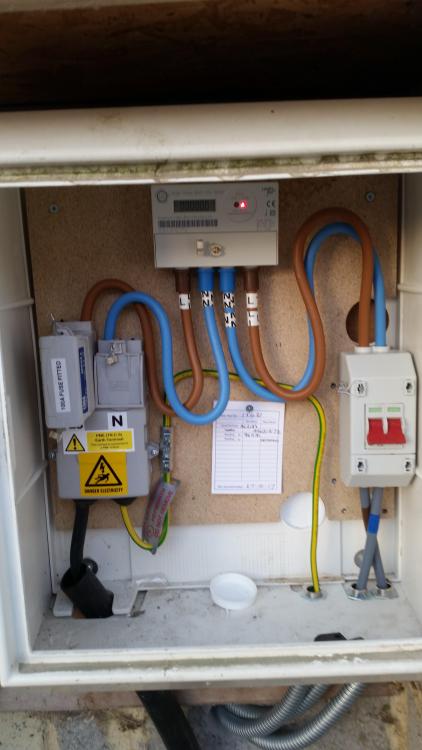
You can, subject to appropriate skills / certifications and safety approaches, do what you like after the meter but generally NOT in the meter box. Many of us here have put second meter boxes adjacent to the main one, taken a feed into that and then split it out using and isolating switches to the various consumer units around the building. Here are our two, when the meter was installed I got the power company (In out case UKPN) to install to the isolator, bottom right and then we could do the work in the second cabinet with the power isolated anytime we like. The second cabinet has the two building isolators and a local service (garden power sockets & lighting, car charging and drainage services) consumer unit.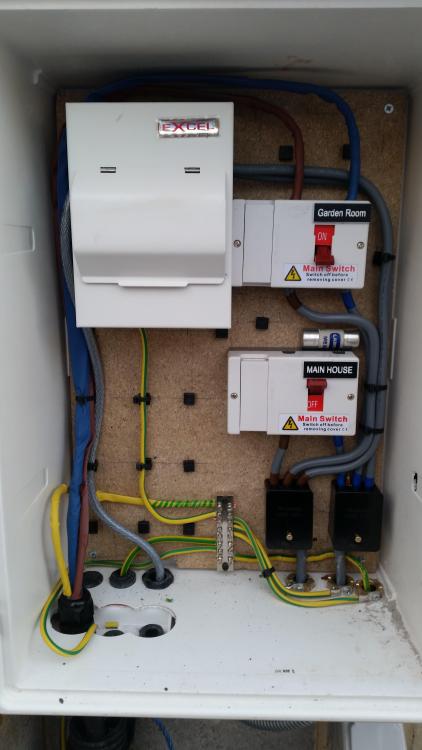
-
Why / how is three better than two?






