Sparrowhawk
-
Posts
607 -
Joined
-
Last visited
Everything posted by Sparrowhawk
-
https://www.tutorialspoint.com/how-to-create-a-put-request-in-postman You're replicating the cURL command inside Postman. It's a different syntax but does allow you to save these commands in a playbook to rerun in future.
-
Since you're on Windows, can you install Windows Subsystem for Linux (WSL)? It makes tasks like this much easier (I have run out of patience with curl on Windows). Alternatively use Postman (it's free) and run the command there instead of at the command line.
-
 Thanks, if you can find that PDF I'd appreciate it
 -
What software are you using @Iceverge? Ubakus gives me nice theoretical numbers but this goes a whole way beyond by taking thermal bridging into account.
-
MVHR is Largely Bogus
Sparrowhawk replied to DavidHughes's topic in Mechanical Ventilation with Heat Recovery (MVHR)
(emphasis added) All replies so far have overlooked this key line. Under current building regs, if you want to avoid trickle vents what alternatives do you have to MVHR with vents in each room? I don't think PIV covers it, being a central input to the house? -
Company accounts overdue
Sparrowhawk replied to Kelvin's topic in General Self Build & DIY Discussion
Coming from a family of accountants there are innocent(ish) reasons accounts can be late. The company can be totally disorganised and not submit their books by the deadline, so the accounts are late. They are ill or don't get round to signing them. Or their accountants are **** and don't get things done on time. All are minor red flags around competence but not "OMG they're going to rip me off" level. But. That second company could well be. It depends how large and profitable they are. Are they trying something probably-illegal to avoid the corporation tax rise by splitting profits between two companies? Back to the original issue. Is your build secure and weathertight enough to store the kitchen on-site? -
Garden shredder advise Spring 2023
Sparrowhawk replied to JohnBishop's topic in Landscaping, Decking & Patios
Reduce or add nutrients? I always thought the latter hence the Q -
I do. Then your PIR cutting is better than mine, and any I've seen pre-installed in our house. It's keeping the blade perpendicular to the surface when cutting the PIR that's challenging - as a result there are voids. Gapotape negates much of this problem but is an extra expense. True, the lack of air movement is going to make a difference. Have you read https://aecb.net/thermal-bypass-risks-a-passivhaus-report-by-mark-siddall/ ?
-
Yes, an airtightness membrane will mitigate some of the disadavantages of PIR. There's two components to well-functioning suspended floor insulation: airtightness and insulation. PIR is good at insulation, but the normal problem is getting it airtight when installing it because of the fit at the sides of the insulation. So if your membrane stops cold external air from being forced up the sides of the PIR and cooling the floor or insulation, it'll alleviate much of that problem. Edit: But you will still get thermal bypass and your insulation will be less effective than you expect, because the air on both sides of the membrane will be at the same temperature. What you're avoiding is windwashing and larg-scale air circulation.
-
Good hoover for cleaning a building site
Sparrowhawk replied to JohnBishop's topic in General Self Build & DIY Discussion
I didn't know the situation had changed re bags. I have a Festool L class for sanding so use that for building dust as well. As L & M class has come up above: unless you are working on commercial sites M class is not worthwhile. L & M class cleaners have the same bags, the same filters, but M class are required to be fitted with an audible alarm to alert you when suction drops off. When there's just you and a hoover - you'll know what's going on. @markocosic Much as I'd like a £680 positive pressure respirator (especially any time I touch a can of spray foam) for dust I use a well-fitted FFP3 mask which seems to provide enough filtration. -
Good hoover for cleaning a building site
Sparrowhawk replied to JohnBishop's topic in General Self Build & DIY Discussion
Screwfix Titan TTB774VAC. Cheap so you won't mind bashing it around, and can be used wet or dry. -
Any joiners who can explain how this door is made?
Sparrowhawk replied to saveasteading's topic in Doors & Door Frames
Who are these doors from? That level of quality is very nice to have and it sounds like the price point is right. Lovely work @Furnace she is a very lucky daughter! Am hiding this picture from my wife because she will want it -
Insulhub Isotex Voluntary Liquidation
Sparrowhawk replied to Surfiejim's topic in Insulated Concrete Formwork (ICF)
Card processing is an area I know, and for the situation of taking a deposit on a larger order, these fees are negligible. Taking a pay-as-you-go card processor as an example (i.e. the most expensive fees on offer) a £100 payment by card has £1.60 in fees. If you're doing volume you can quickly negotiate these down. If a company wouldn't accept a small fee + accounting overhead to secure an order worth thousands, I'd be concerned they weren't credit-worthy enough to be accepted by any card processor. Or their order books are so full they can be choosy. Which when I come to order windows is the argument I expect they will make... I'm sorry for everyone caught up in this liquidation. I've been caught in a couple (losing 4-digit amounts each time) and it's an absolute emotional rollercoster. After the shock and anger came an "I feel so f*****g stupid" phase which was the worst. Stay strong. -
New member - stuck for what to do next to warm the house
Sparrowhawk replied to Sparrowhawk's topic in Introduce Yourself
Yes, and working out which are worth it and which aren't is a guessing game unless I can find a better way to quantify them and the gains. It's tempting. Floors have to be lifted to deal with the major drafts, but beyond that is a hobby/labour of love. Let's say I take down this sloping ceiling and remove the current PIR. How would I make the replacement airtight at the wall plate and at the top where it enters the cold loft? I have found a lack of technical drawings for those two areas. -
New member - stuck for what to do next to warm the house
Sparrowhawk replied to Sparrowhawk's topic in Introduce Yourself
Yes, hopefully the extra photos help with understanding the room. Awesome and thanks for the correction. Out of interest if I used Joules per second instead of Watts, would 'Energy' then be the correct term? Indeed! I was surprised at the loss through the wall from keeping the neighbouring, mostly unused room, 4C cooler. Yes, though that is for a deltaT of 10C and with no ventilation heat loss, which at 3ach doubles the loss. I started this model as I found my wife freezing in her office with a 0.5kW oil filled radiator on max and the heating running. The room wasn't getting above 15-16C (unfortunately I don't have the external temperature for that day). On a still day when it's 10C outside she says the room will reach 18-20C with just the oil filled radiator and she has to turn it down. I need to measure the energy input but first need a new energy meter plug, as the kWh recorder on mine has got stuck. -
New member - stuck for what to do next to warm the house
Sparrowhawk replied to Sparrowhawk's topic in Introduce Yourself
It is draughty but a lot better than when it started! The problem now is that apart from the rafter joist ends (photo below) it's become difficult to track down the rest. Even at the top where the cupboard meets the plasterboard ceiling and there's a cold draught, but none stands out as bad bad. I suspect it's the good old 0.1mm (max) wide gap, but in multiple places and each 2.5m+ long. Here's a rafter/wall plate photo I left out of the previous post. There's 18 rafters at 30-36cm centres, and some are worse than this one. Yes I've had those too! Plus we have that where the central heating pipes come up through the floor, even against internal walls. I have to lift some of this floor before the structural engineer visits in 2 weeks so will be interesting to see what's below.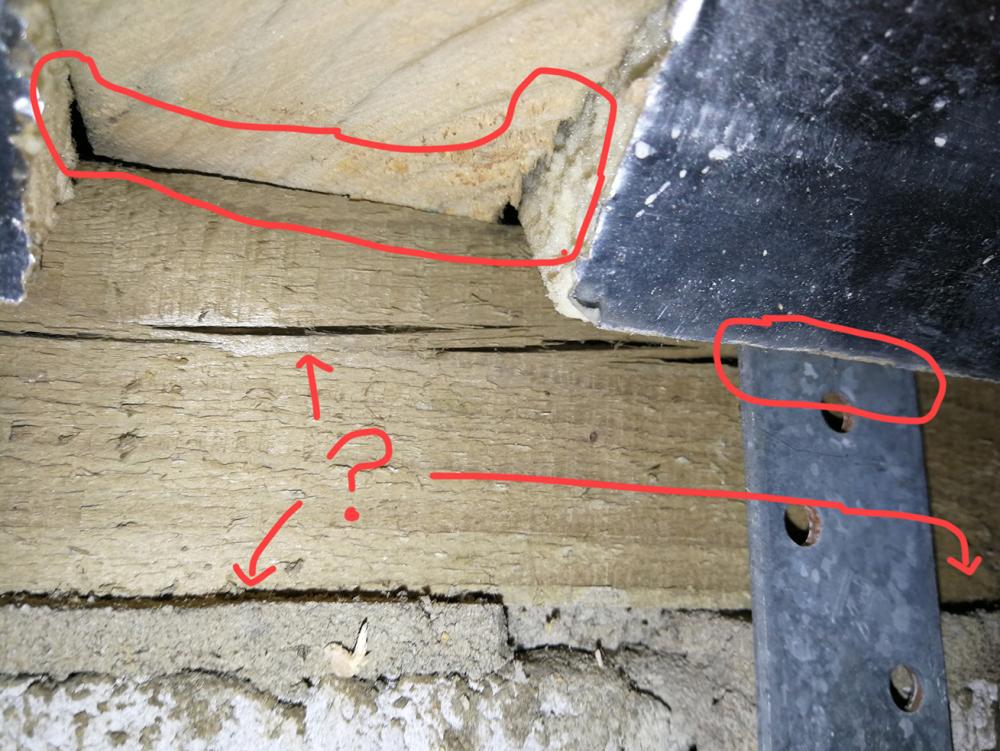
-
New member - stuck for what to do next to warm the house
Sparrowhawk replied to Sparrowhawk's topic in Introduce Yourself
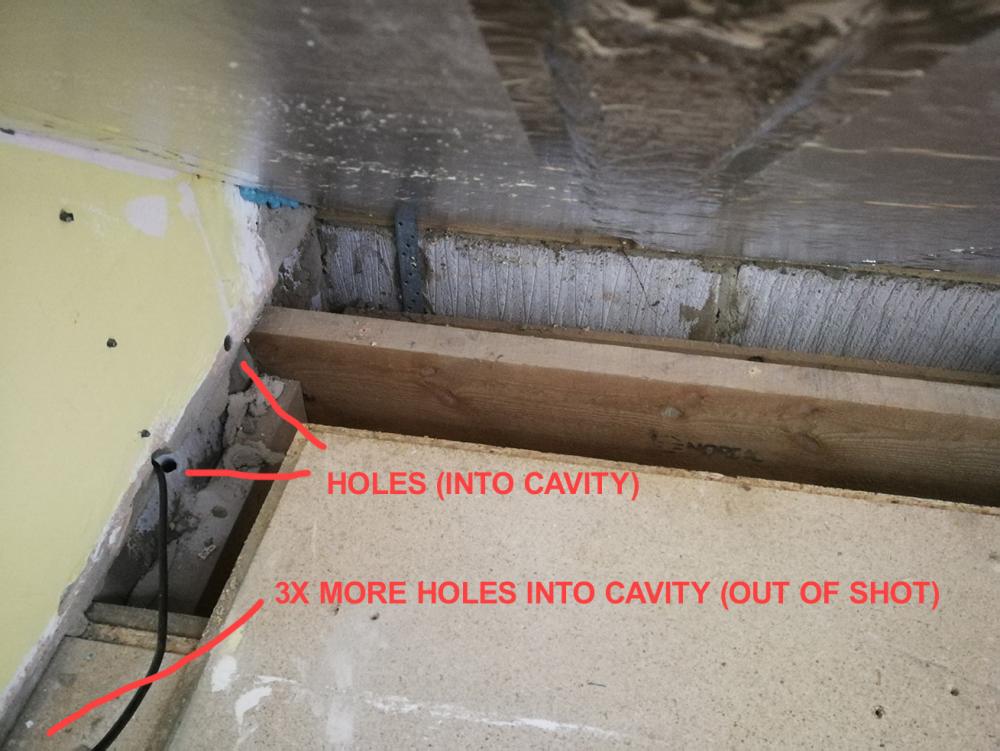
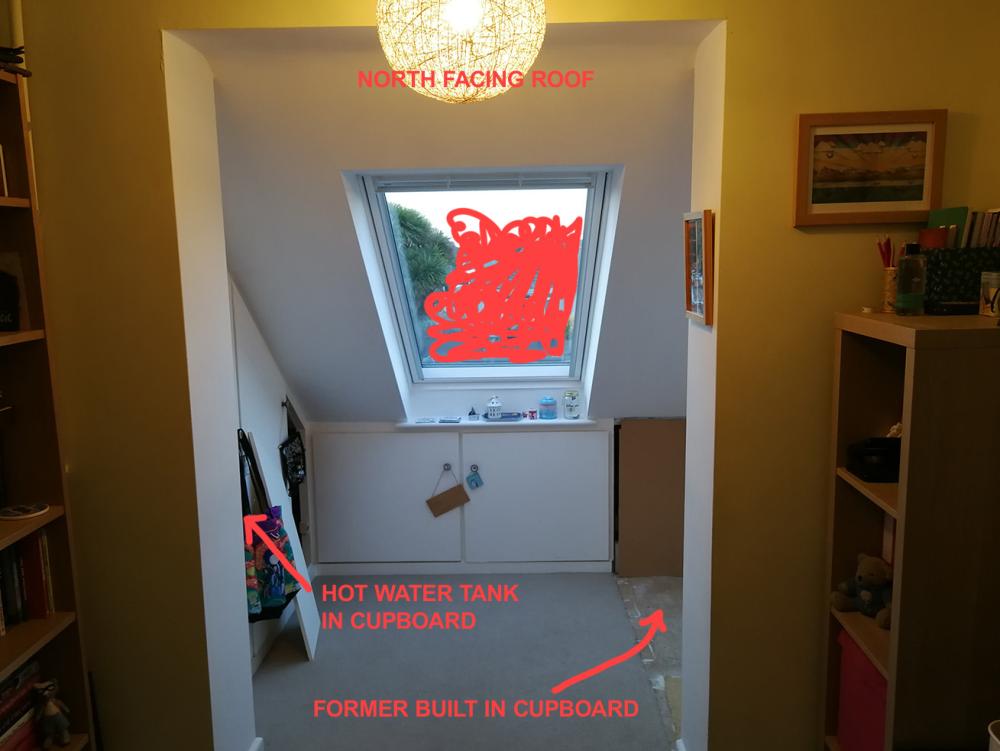
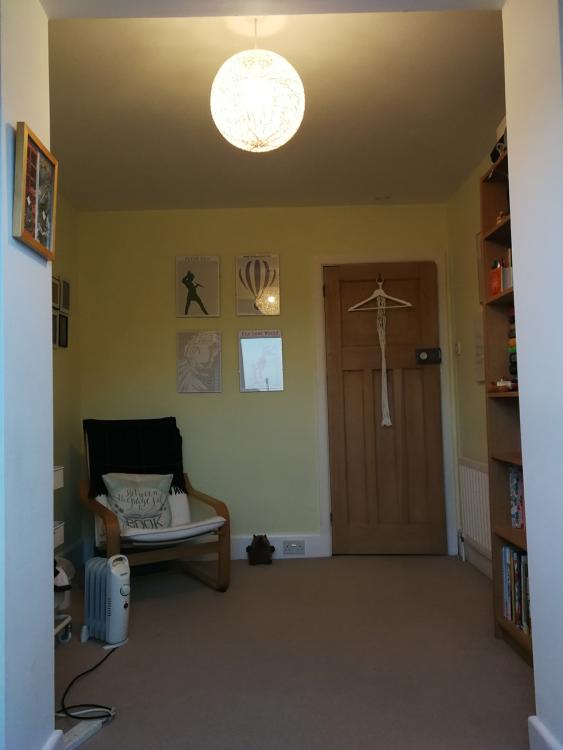
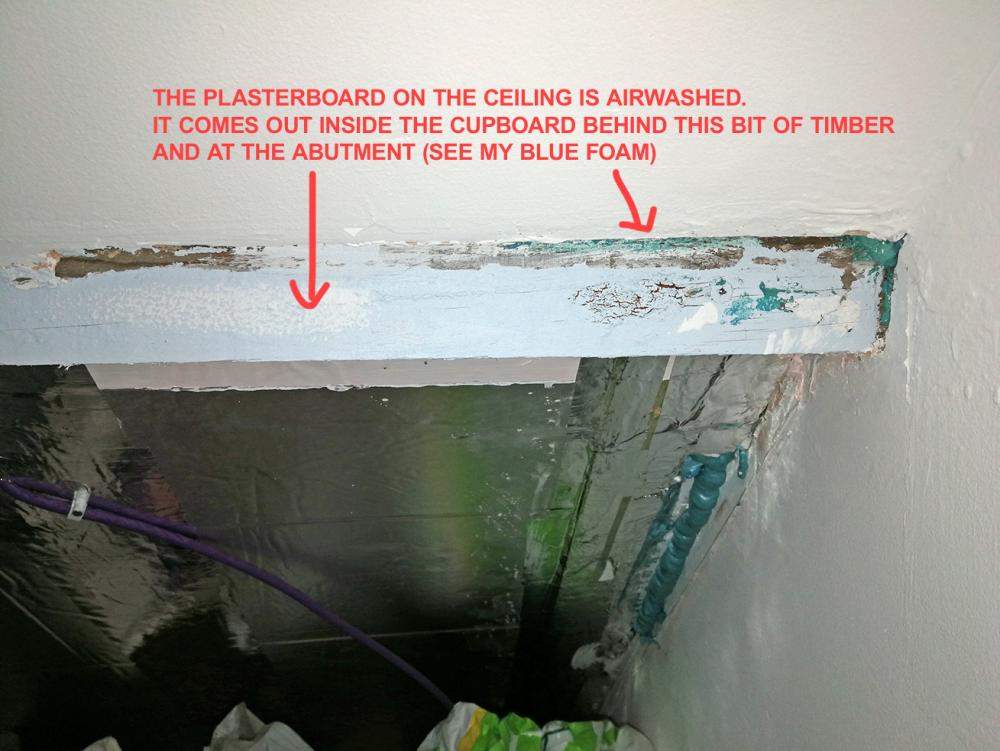
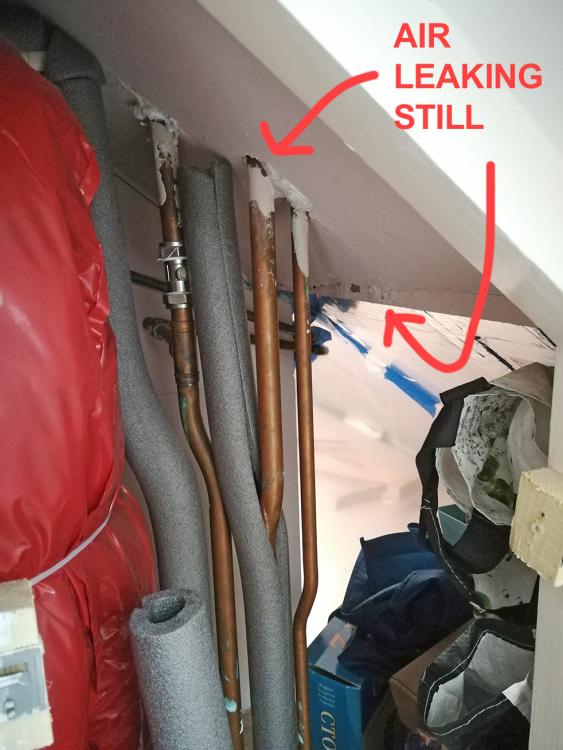
Photos first then replies! General ones to give a feel for the room. The green painted part is in the 1920s house, the white the 1997 extension. The piece of loose MDF is where I knocked out a built-in cupboard to make space for the desk and open up the room. I have done a lot of taping in the eaves storage to reduce draughts as it was like a colandar when we moved in. I presume the PIR behind the plasterboard ceiling is just as bad. Sealing the draughts at the top of the cupboard - to the windowsill, all along the ceiling edge - has gone poorly. I tried foam with an extension tube, caulk, and most recently Tescon Vana tape. Getting anything tight into the point of a triangle is tricky. On the opposite side to the bit I knocked out is the hot water tank. Note the pipes that disappear into the ceiling and run up - above the insulation - into the loft. WTF are there 4 of them (3 here, 1 from top of hot water tank) and not just 2? The neighbouring room has the same construction and eaves storage. I've emptied it to experiment and take up the flooring, and here are photos: I forgot to annotate that air leaks at the wall straps, because they create a gap around the insulation and it's impossible to seal properly. I'm not clear if I could do better taking out the PIR and replacing it - the wall plate interface is always going to be a weak point with poor contact.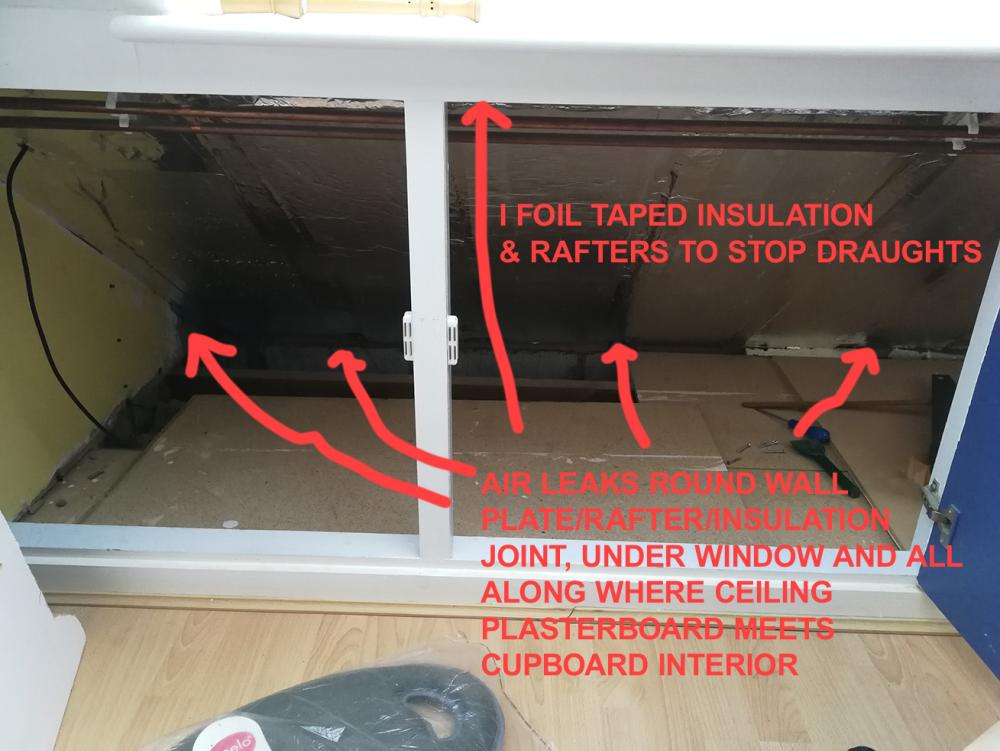
-
New member - stuck for what to do next to warm the house
Sparrowhawk replied to Sparrowhawk's topic in Introduce Yourself
I had little time last month but chased down a few air leaks, and I modelled the 1st floor room my wife uses as an office - model here with comments to explain each sheet. Anything look off in it? I did this thinking I could work out if the room is cold due to fabric or airtightness heat loss (I failed), but it's been helpful to see which bits of fabric are particularly bad and I'm now using it to plan what improvements to make. Some wins are clear - loft insulation (as much as the water tanks in the loft above this room will allow) and CWI (planned but later). Others such as replacing the 50mm of likely-badly-installed PIR in the sloping ceiling seem less clear cut. Due to restricted headroom I can't put more than 10mm insulation below the rafters so 100mm PIR between rafters is most I'd be able to fit. It should help with making sure there's no thermal bridging round the window and radiative comfort as my wife has her desk below it but is also disruptive. What do you think the actual u-value of that sloping roof is vs the theoretical value? And in your view worth doing or the effort better spent elsewhere e.g. IWI on the external walls?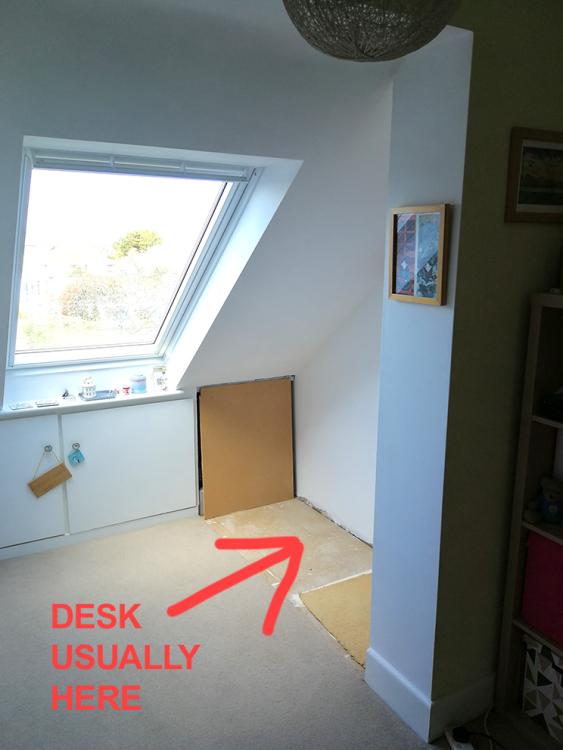
-
Thanks @gaz_moose and @Spreadsheetman. My situation turns out to be identical to yours @Spreadsheetman. Some kind of contamination on/in the wall and yes I tried bullseye123+ first and it still bubbled. Zinsser cover-stain has sorted it - save I missed two areas and have to redo them! I ended up thinning it by 30-50% with white spirit as it was impossible to spread smoothly otherwise; at a guess because the wall is porous and absorbing liquid.
-
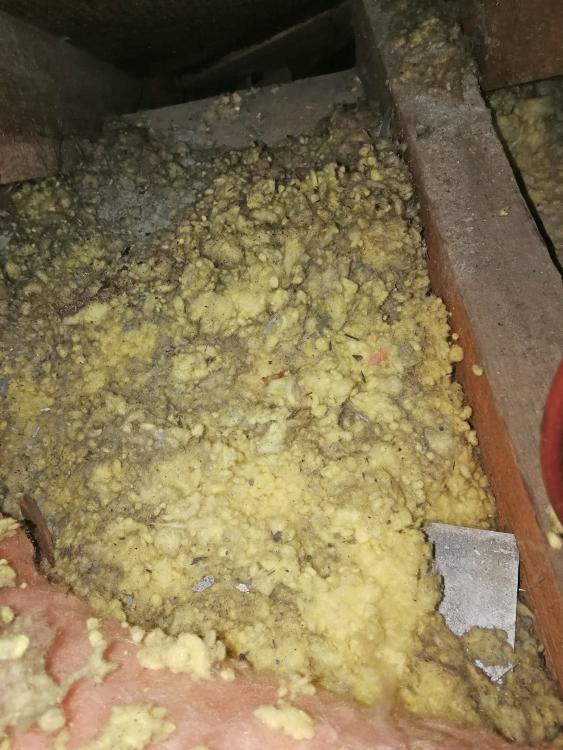
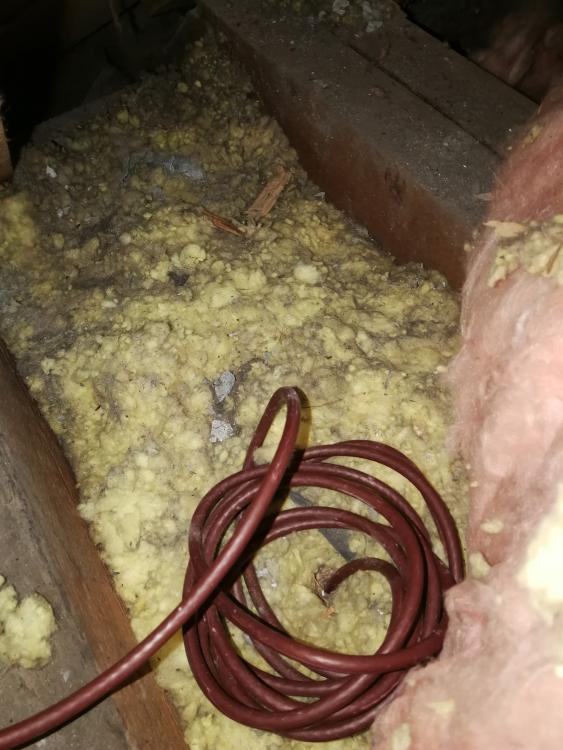
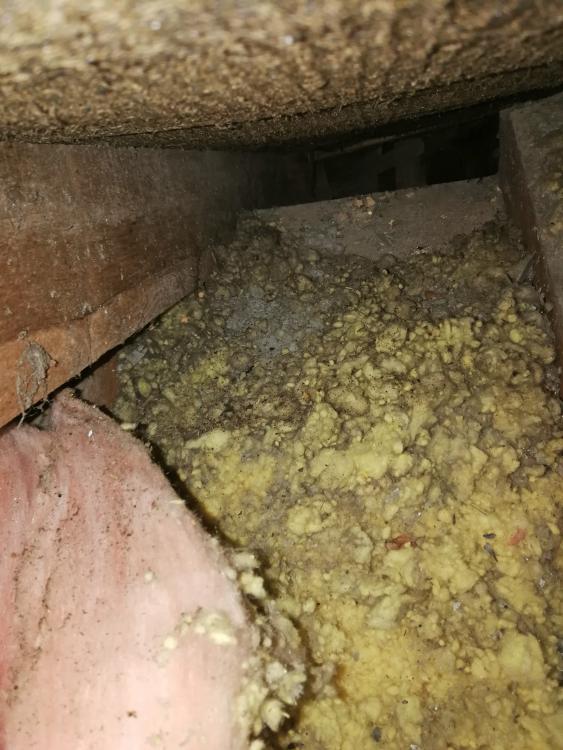
Thanks, I had another look today and yes it's got the shiny glass fibres in it. Will it have the same insulating properties as the glassfibre rolls in the loft or do I need to remove it and replace with other insulation? It's only in patches of the loft so looks like it's been taken out from the rest.
-
Buy up all the unsellable houses at a distressed price as a goodwill gesture, fix the drainage and sell them for a tidy profit?
-
What stage of build to put passive purple/blower
Sparrowhawk replied to health mechanic's topic in Brick & Block
Are joist ends a good place to use passive purple (other brands available)? It seems it'd be much easier than taping round them. -
What are your thoughts on this project estimate?
Sparrowhawk replied to James Frome's topic in Costing & Estimating
Hi @James Frome how did your meeting with the architects go? -
House Planning Help has good episodes and a large back catalogue to delve into.
-
I pulled back a layer of pink glass fibre to get to a cable and found this stuff. It's pre-1989 I think, when the house was reroofed from slate to tile as there's broken slate in it.