Iceverge
-
Posts
4487 -
Joined
-
Last visited
-
Days Won
32
Everything posted by Iceverge
-

Insulated Concrete Slab Garden Office - Questions
Iceverge replied to Ticky's topic in Garages & Workshops
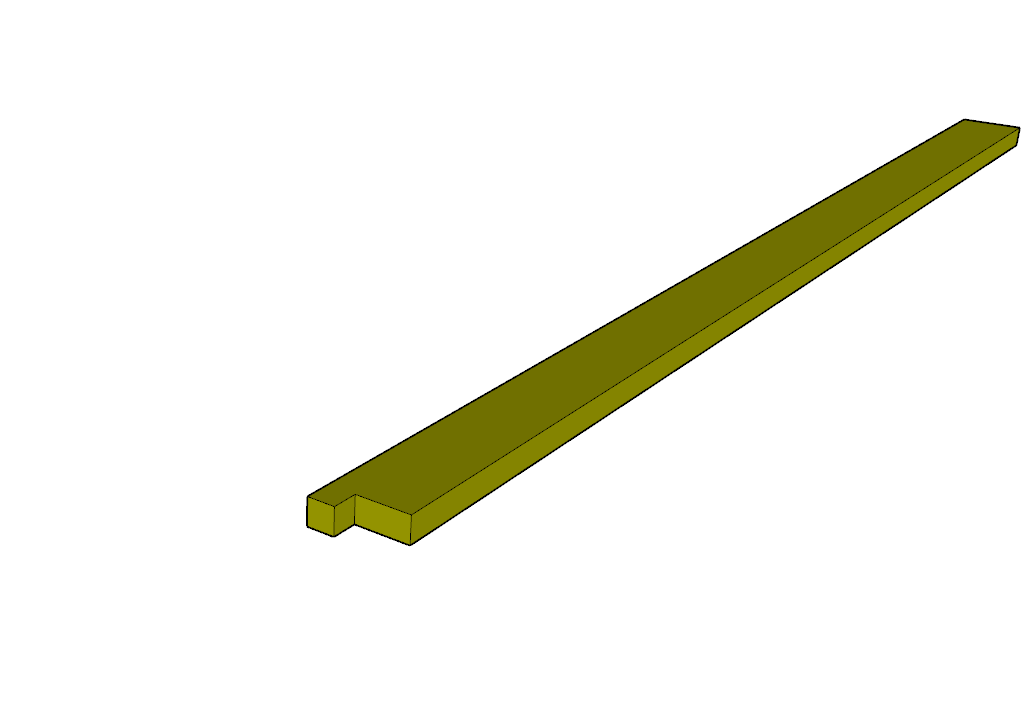
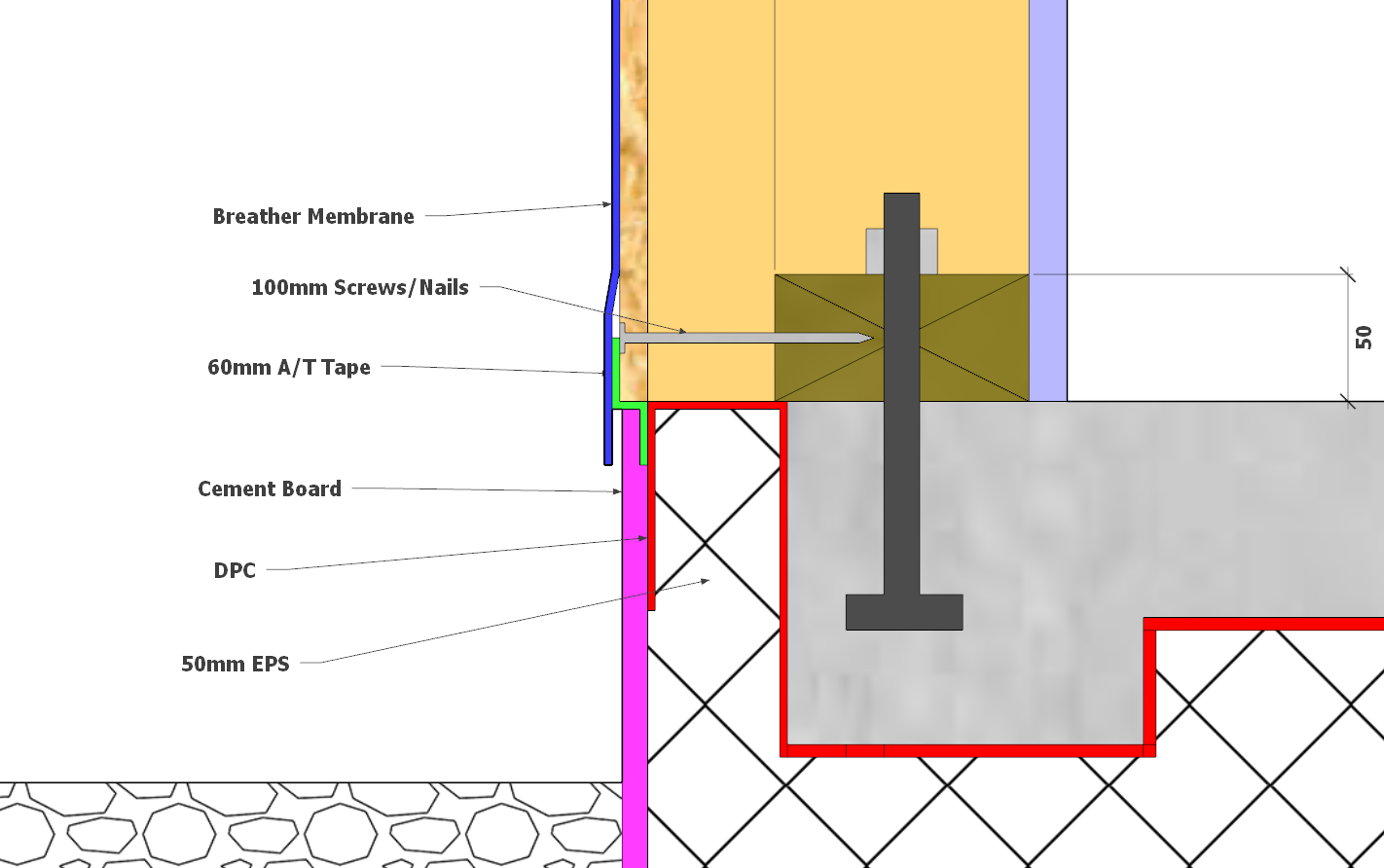
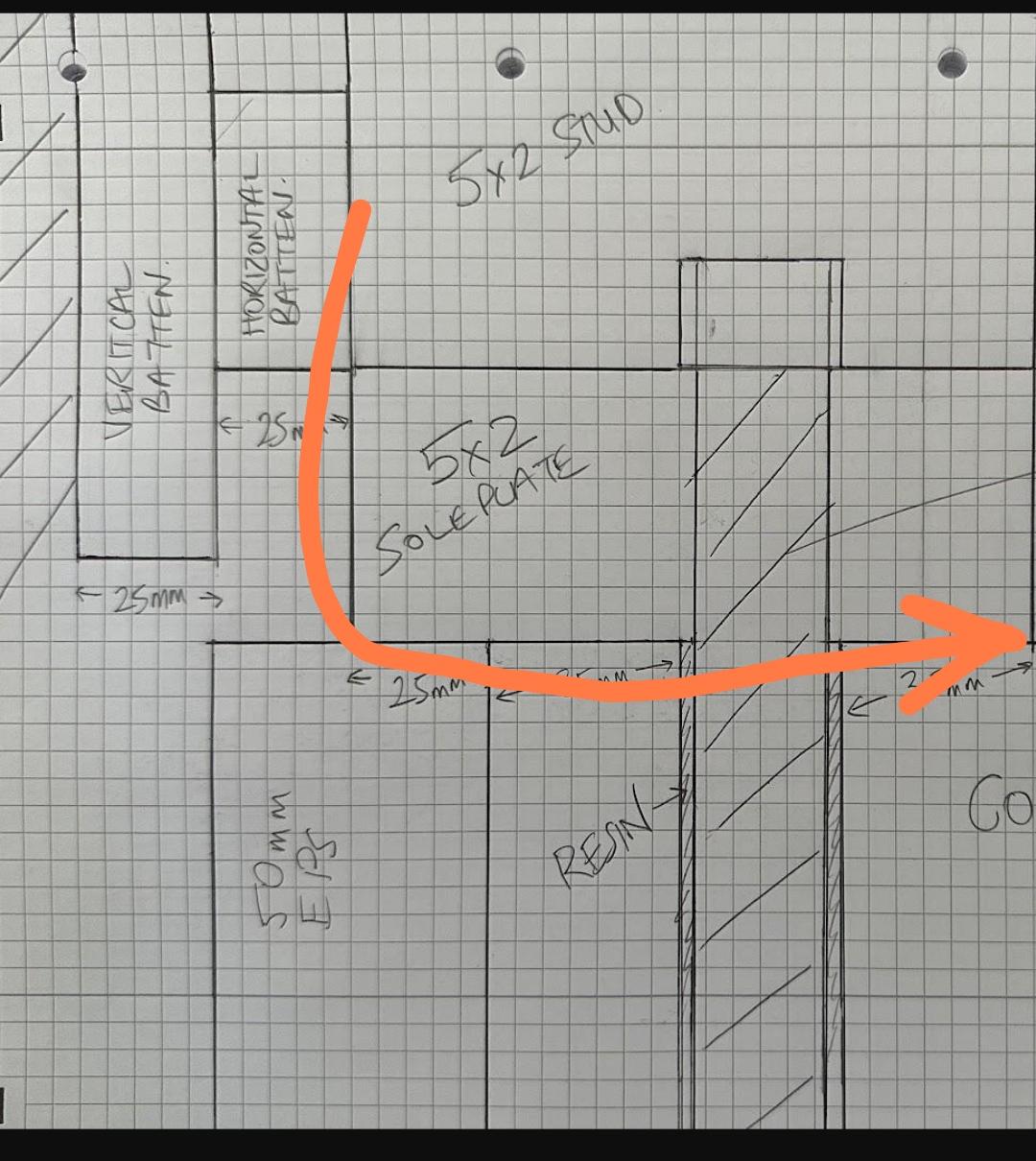
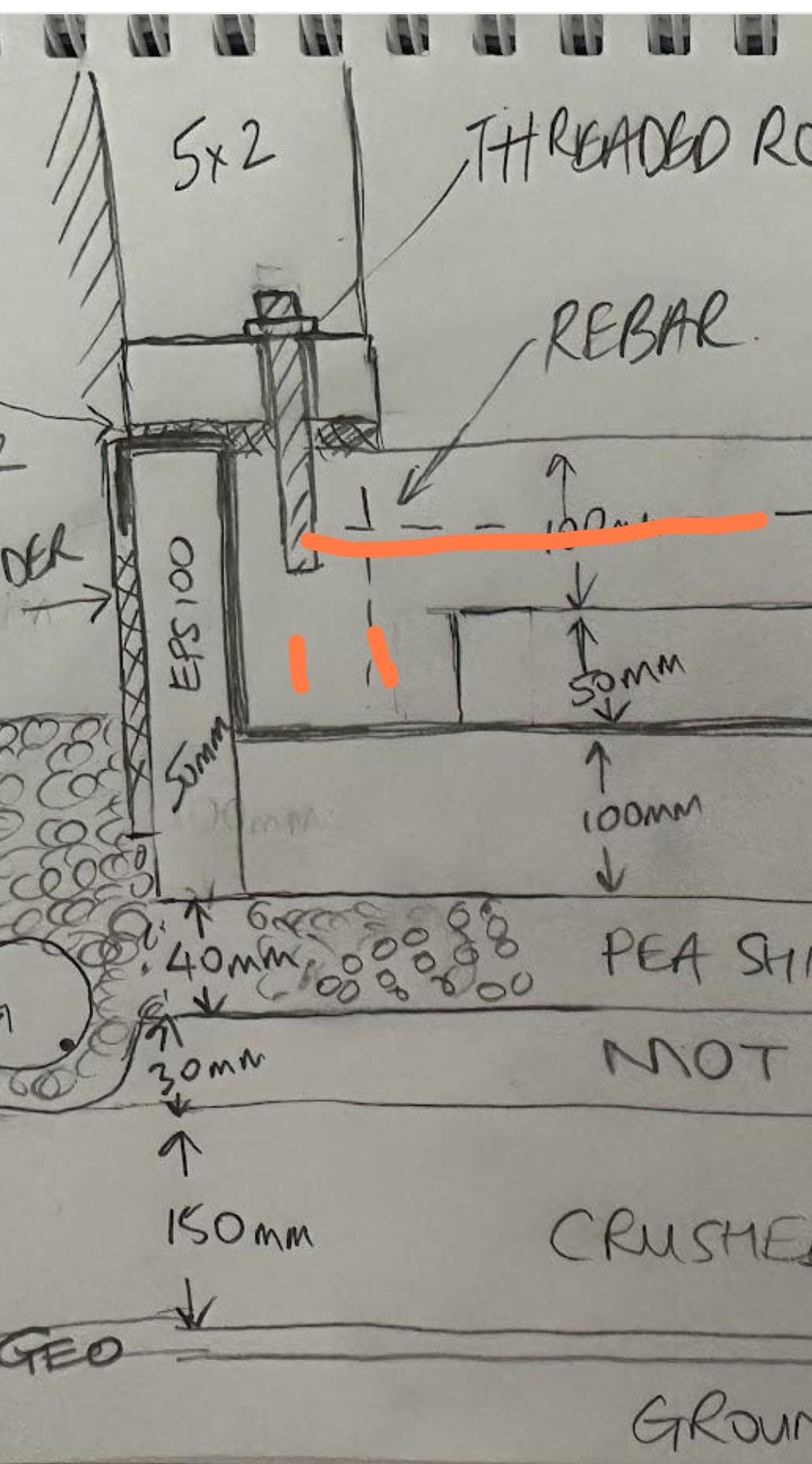
This is what I mean. The notch will sit outside a 100 x 50 soleplate. Without the notch you'll not be able to "squeeze" the OSB sheathing into the sole plate. It'll just bend the OSB. The notch will create a 50mm gap outside the sole plate to stuff some mineral wool to break that thermal bridge. Despite what @saveasteadingsays I think It's important to keep the soleplate warm. Without it there's a risk of it getting cold, especially in contact with the slab and then you get condensation and rot. Not an issue with a permanently heated house but an intermittently heated garden room it'll save you in the long run. Line up all your studs on a bench and clamp. Snap a line and set your saw to 50mm and cut them "end on" along Line A . Set your circular saw to max depth/100mm and cut along line B. You'll probably need to do some tidy up with a hand saw but it'll be quick. Have a look at the detail above. I would use all 50mm sheets of EPS. Use 150mm under the main part of the floor and then thin that down to 100mm under the thickened edge of the slab. Also use 50mm for the insulation upstand. Lay the DPC as with plenty of spare over the edges. Lay your at the centreline (50mm) of the concrete on chairs. Tie the foundation bolts to the mesh in the correct place with some wire or cable ties. Pour your concrete. Level with a stick and float by hand. When it is set take your soleplates and use the hammer method to find the right hole location. Drill out holes and ensure it's correct/square. Notch your studs and build the wall as normal including OSB sheathing. Fold DPM over Upstand. Apply A/T tape for air sealing. Similarly tape all joints in OSB externally. Very effective and simple. Tape outside of doors and windows similarly. Apply breather membrane, batten and clad.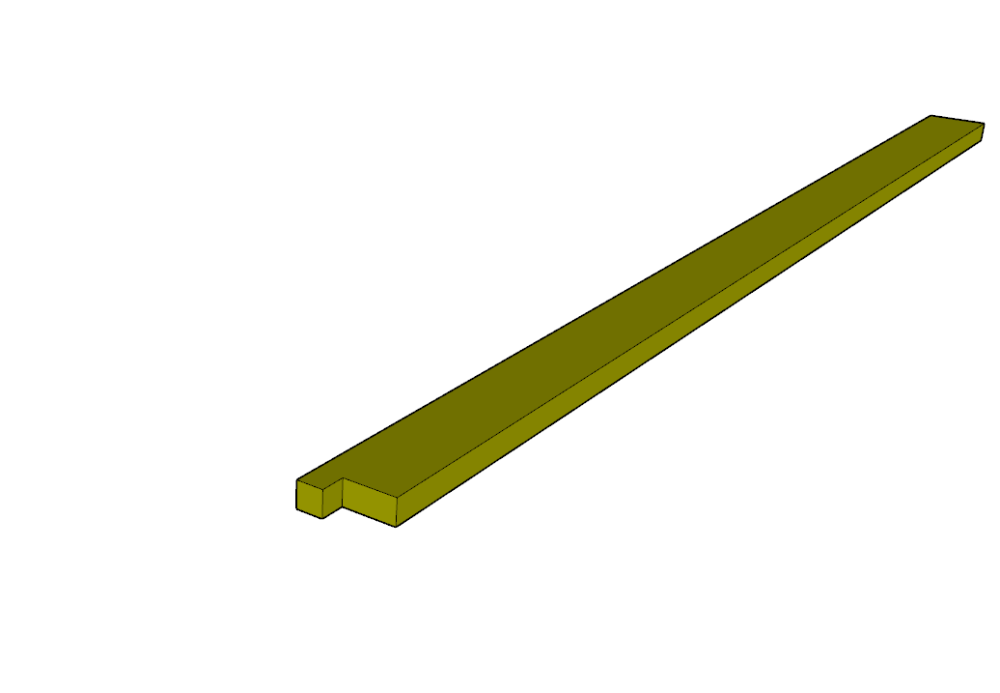


-
Insulated Concrete Slab Garden Office - Questions
Iceverge replied to Ticky's topic in Garages & Workshops
Have a look at this one I did earlier. You may need to notch the studs to fit over the wall plate but you'll have a continuous line of insulation from the upstand to the wall. Use at least 150mm screws for the bottom layer of sheathing so that they go all the way through the studs into the wall plate. You'll have a 100mm bearing on the concrete which will be fine.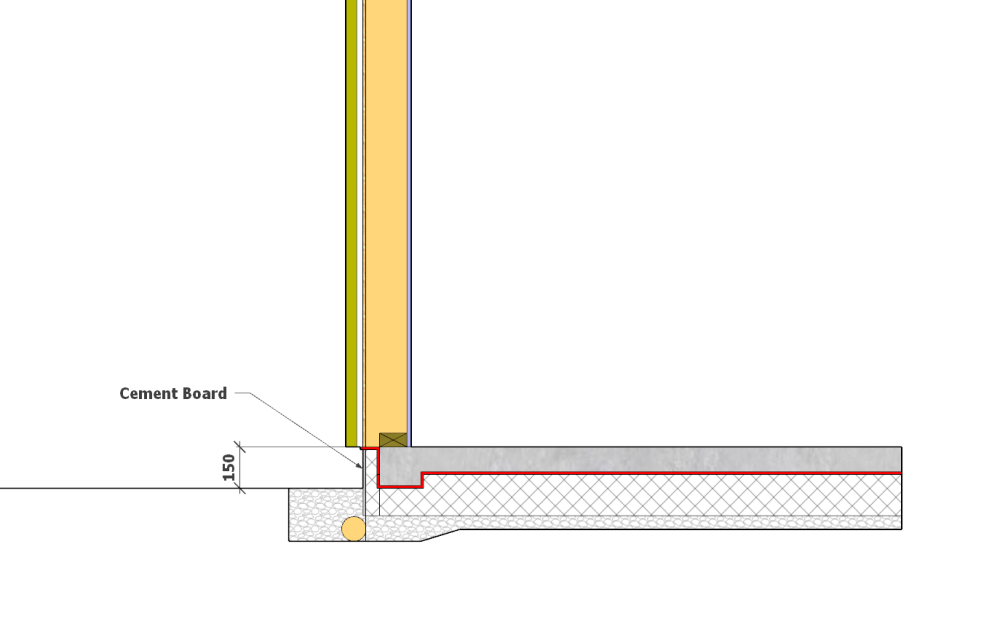
-
Why not just wet plaster it. Solves a multitude of issues.
-
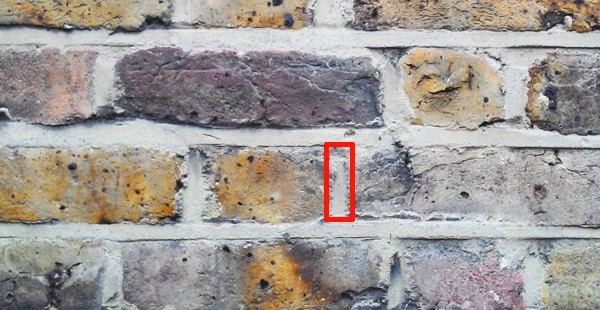
The vertical joint in brickwork/blockwork.
-
Insulated Concrete Slab Garden Office - Questions
Iceverge replied to Ticky's topic in Garages & Workshops
Beware water ingress via this route. At the very least the OSB sheathing should be flush with the insulation so that the breather membrane can lap over the insulation. Preferably outside it in my opinion. Hence my suggestion earlier of a 100*50 sole plate with 150*50 studs on top. The 50mm overhang will allow you to put insulation outside the sole plate too breaking the thermal bridge of the wall plate. For the doors, fit them that that they rest partially on the concrete and partially on the insulation upstand. This will sort your thermal bridge here. Are you committed to bi-folds? They are draughty. Would a french door with a fixed panel suffice? Cheaper and better IMO.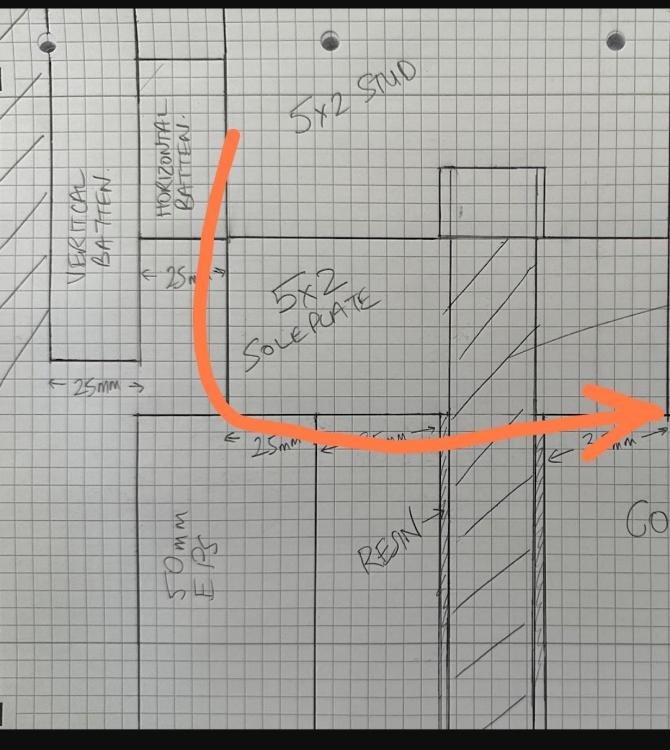
-
Block house here. 0.31ACH. Airtight paint to wall floor junction. Airtight paint to all chases. OSB window boxes taped to windows and airtight painted to walls. Wet plaster to all walls. Airtight membrane below cold attic continuously ran over all internal walls. Returned to wall and sealed with airtight sealant. Service cavity for ceiling. Airtight attic hatch. Our Tony Tray ripped under the hollowcore plank so I cut it away and sealed later with foam and airtight paint. DIY blower door was the secret though. It really showed up any faults. Things I would change. Pour the ground floor slab over the internal foundation walls continuously and continue the walls from slab again rather than introducing lots of separate areas for leakage. Use the green building store detail for plywood window boxes rather than fitting OSB ones post window install. Ust the green building store detail for a timber ledgerplate for the first floor. Pretape the windows before install. Tape wasn't that dear. About €15 per 25m. Much tidier than foam or sealant.
-
We have a Flymo that cost £522.in 2018. I think it's a rebadged version of the cheapest Husquvarna. I left it out all year and set it to run for an hour or two per night so no first cut dramas or issues with wet grass as it was always short. It will occasionally get stuck in a small hole if it can find it. Every time it did I used to take a spade of earth and fill it in. You'll still need to do the edges with a strimmer or something if that bothers you. I haven't installed it in the new house yet/ever.
-
Ace. Keep us posted.
-
Good to hear. Yes seal it to the blockwork. Tape won't work unless you prime it.
-
That'll be fine. Tidy work. How was fitting the PIR between the rafters?
-
Ours was cut and welded onsite. Seemed a bit of an overkill TBH.
-
ICF How much more expensive ?
Iceverge replied to Dave Jones's topic in Insulated Concrete Formwork (ICF)
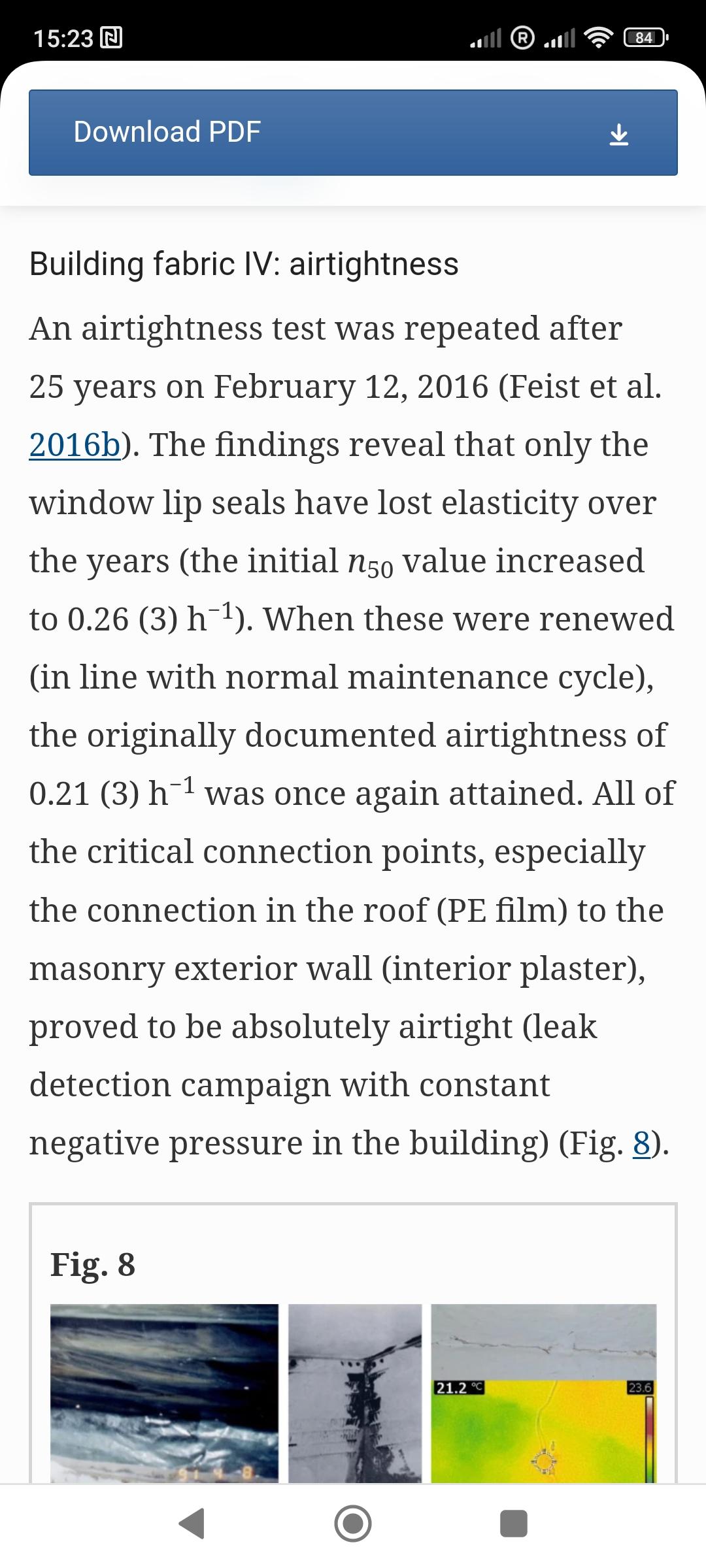
We have some settlement cracks but I've filled them with sealant and painted over. At least I can see them. Time will tell about the overall airtighess. I would be curious to do another test in 10 years. There have been some suggestions of houses getting more airtight over time. This masonary house only got a worse score after 25 years due to the window seals. https://link.springer.com/article/10.1007/s12053-019-09781-3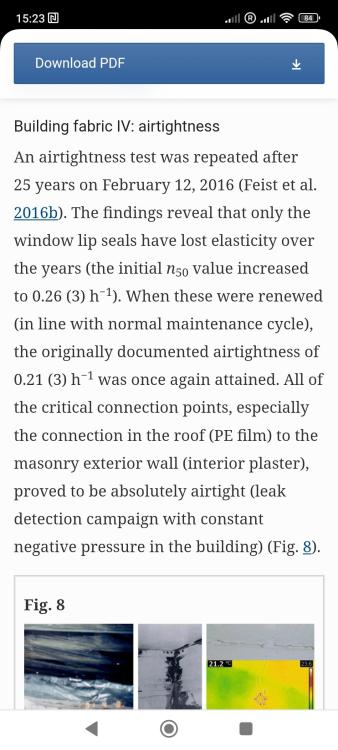
-
Never mind the energy savings or comfort. Airtightness is a big issue with building fabric decay as moist internal air gets carried out on air paths and causes damage to the structure.
-
ICF How much more expensive ?
Iceverge replied to Dave Jones's topic in Insulated Concrete Formwork (ICF)
Standard blocks are about 70c here inc vat and aerated about €2-3. What's the price difference there? -
ICF How much more expensive ?
Iceverge replied to Dave Jones's topic in Insulated Concrete Formwork (ICF)
Airtightness is all down to the junctions. This is common to all build types. If you do a good job of the penetrations and use wet plaster with masonry it's not rocket science. No reason you couldn't do a membrane and service cavity inside a masonry wall like a TF. It'd be a lot cheaper. I was worried about continuity of insulation with ours but the bonded beads filled every single nook and cranny. I test drilled some awkward places to check and had a good scan with the thermal camera too. -
ICF How much more expensive ?
Iceverge replied to Dave Jones's topic in Insulated Concrete Formwork (ICF)
Did you consider masonry with EWI? -
ICF How much more expensive ?
Iceverge replied to Dave Jones's topic in Insulated Concrete Formwork (ICF)
Why celcons and not normal 7N concrete blocks? The cost of blocks here pre labour is still only about €7/m2 per leaf. Lightweight aerated blocks are about three times the price and only make the difference of a few mm of insulation. -
Rough finish after painting gable wall
Iceverge replied to kildarekonga's topic in Plastering & Rendering
Put some filler in the cracks as best you can and paint it up I'd say. A re-plaster is probably the best option long term. -
ICF How much more expensive ?
Iceverge replied to Dave Jones's topic in Insulated Concrete Formwork (ICF)
I wonder if there a novelty factor with ICF that folks like. I remember being enthralled by it when I first saw it. I can build my own house I thought, just like Lego. Then I saw the cost of the blocks and nearly fell over. The trouble is that it's soft on the outside and crunchy on the inside. The wrong way around in my opinion. Much of the lovely "Legoness" goes out the window when you see all the bracing needed and the rebar. The cost of the silicone render made me fall over again. The U Values out of the box aren't often anything special and need a bit extra added. What really puts me off is the risk of needing another 2 blocks and having to wait for them to come from the moon or that awful situation like Insulhub where people lost all the money by needing to pay lots of cash upfront. For now, sticks of timber or blocks/bricks still have lots going for them unless you're building below ground, really need the speed, or have some onerous requirements that necessitate poured concrete. -
Insulated Concrete Slab Garden Office - Questions
Iceverge replied to Ticky's topic in Garages & Workshops
Tell me more! Any VCL going in? TBH if you are controlling the build yourself a taped external layer of OSB would suffice in my opinion. I'm coming strongly to the opinion that almost all interstitial condensation problems are due to bad airtightness. Nothing wrong with loving! I am a fan myself. -
New build design - thoughts welcome!
Iceverge replied to AppleDown's topic in New House & Self Build Design
The elevation I drew was one for the bin. I might try again if I get a moment. @AppleDownHow about the adjusted layout? Any thoughts? Maybe tell us more about the style of this conservation area. Some pics might help. -
New build design - thoughts welcome!
Iceverge replied to AppleDown's topic in New House & Self Build Design
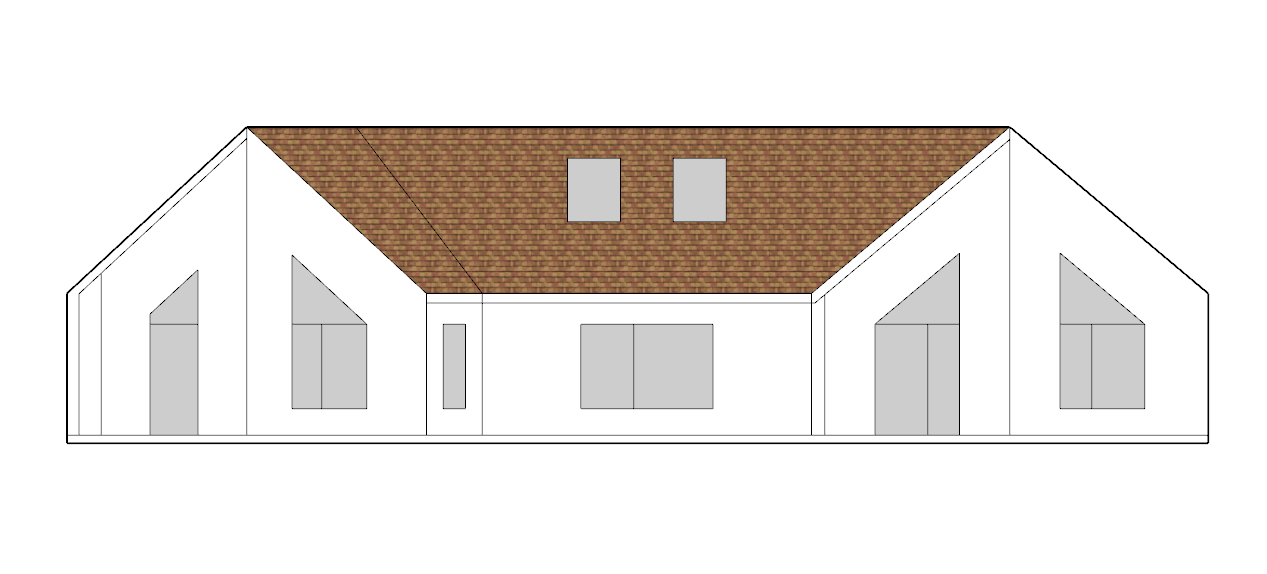
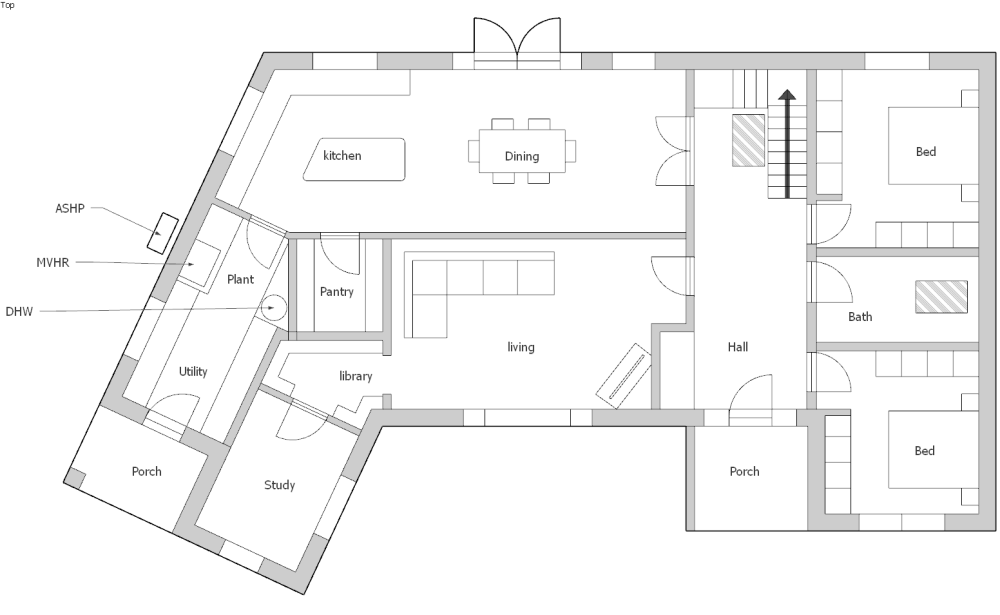
I spent some time yesterday playing with the design and the architect has done an aesthetically nice job really. Although not the cheapest or easiest to build, the stepped sizes of the 3 blocks are quite harmonious. Anything I drew became quite plain in comparison. See this sketch. The original is nicer. Eliminating the chimney might make it tricky to look well although maybe a box dormer or similar to the ensuite/dressing room would make it work. I've been playing with the ground floor. See what you think. Swapping the "cut" in the gable wall will give a nice covered and hidden area outside the utility for any welly boots etc. Getting rid of the small corridor by the backdoor would keep it the same size . Make the utility a long "walk through room". It'll naturally keep itself tidier then and you'll have plenty of wall space for storage/work areas. I would dispense with the separate plant room and put the MVHR, water/ASHP/Boiler in there too. A hoist up drying rack could be included in the vaulted ceiling in the North End too maybe. I've done rationalising of the windows too. Hopefully eliminating a need for too many depleated carbon uranium diamond coated nanotube spacegel skyhooks which architects like to use to hold stuff up. The corner windows are gone too. Mainly because I'm a dryballs, but also they're hard to get right thermally and structurally. Perhaps before you commit to them explore how to build them without serious cost or thermal bridging.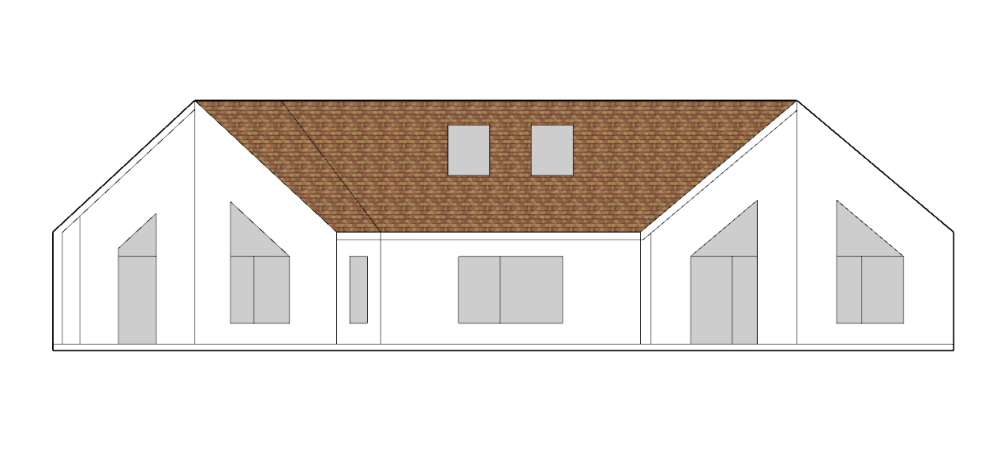
-
Insulated Concrete Slab Garden Office - Questions
Iceverge replied to Ticky's topic in Garages & Workshops
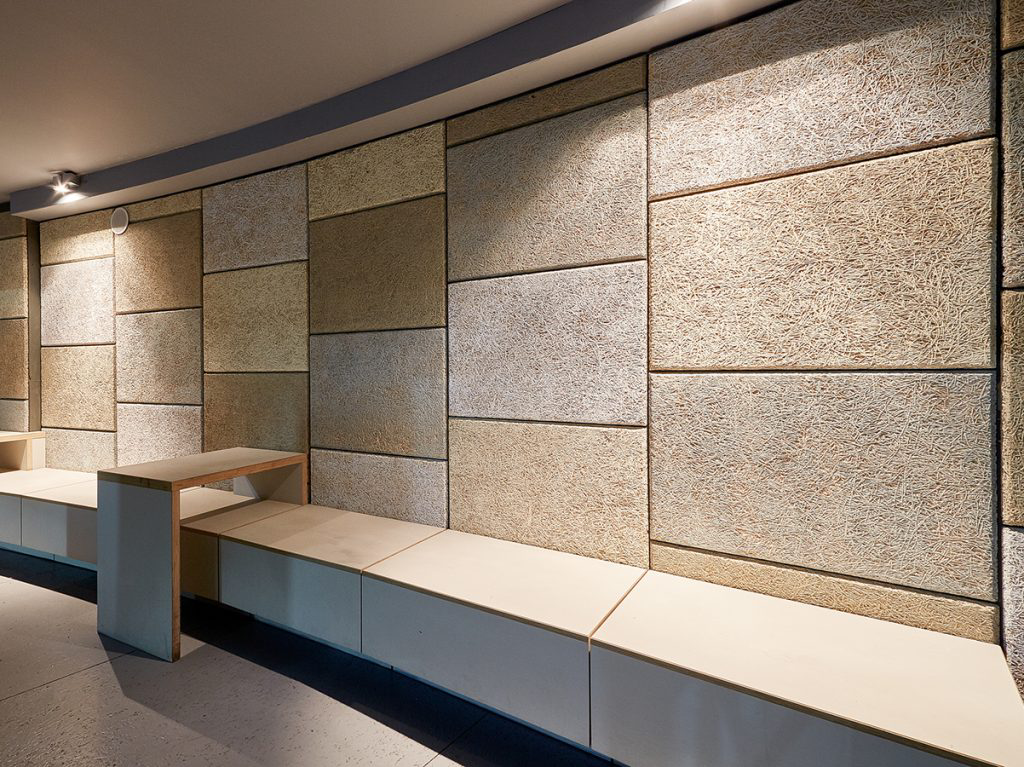
I think someone just wants a twinwall frame.......😂. Are you planning to hang the outer stud over the insulated upstand AKA MBC? TBH for a single story the extra stud outside the framing is a bit wasted in my opinion as you don't have to solve the first floor ceiling band area. If you are committed to the twinwall I would frame the outside wall with 95*44 or maybe 88 or 63mm CLS. 3X2's can be bandy pieces of sh*t. Stand it on a concrete ring beam or strip foundation. Pour your floor with say 100mm upstands. Then put a rockwool style batt between the framing. Joining up to the floor insulation. Then some rockwool batts "freestanding" inside. Then an internal wall with a VCL on the back stood up against the wall to make an insulated service void. This video shows it better. For better sound qualities line the inside with woodwool like Herkalith.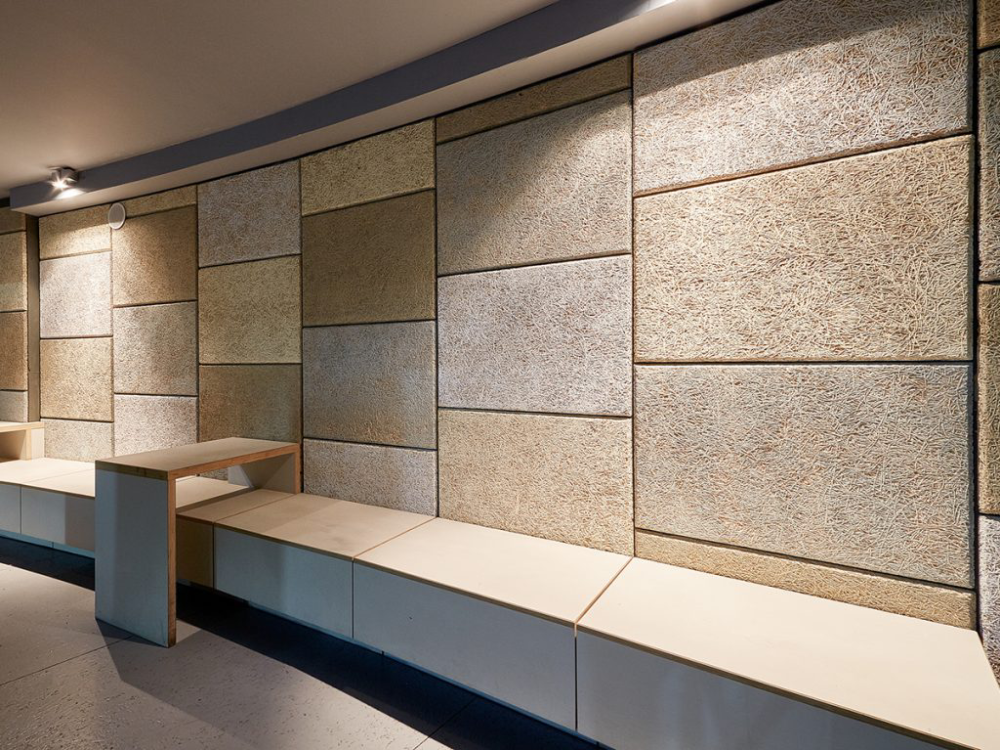
-
Insulated Concrete Slab Garden Office - Questions
Iceverge replied to Ticky's topic in Garages & Workshops
A142 might be a small bit weedy. Maybe a sheet of A252 would be better I would happily place it in the slab as shown. One or two pieces of rebar around the perimeter would make a good job out of it. As shown by the dots below. Frankly it's a lightweight garden room. It ain't goin anywhere MR.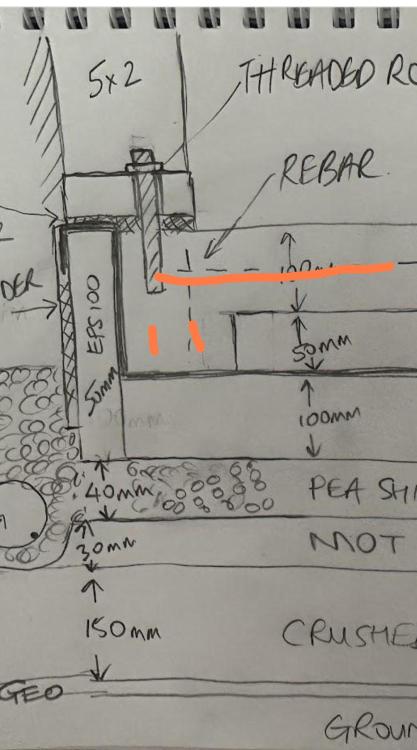
-
ICF How much more expensive ?
Iceverge replied to Dave Jones's topic in Insulated Concrete Formwork (ICF)
Nothing came close to the cost of a wide cavity block wall for us in 2019/20 except the crappiest PIR filled TF.