Iceverge
-
Posts
4487 -
Joined
-
Last visited
-
Days Won
32
Everything posted by Iceverge
-
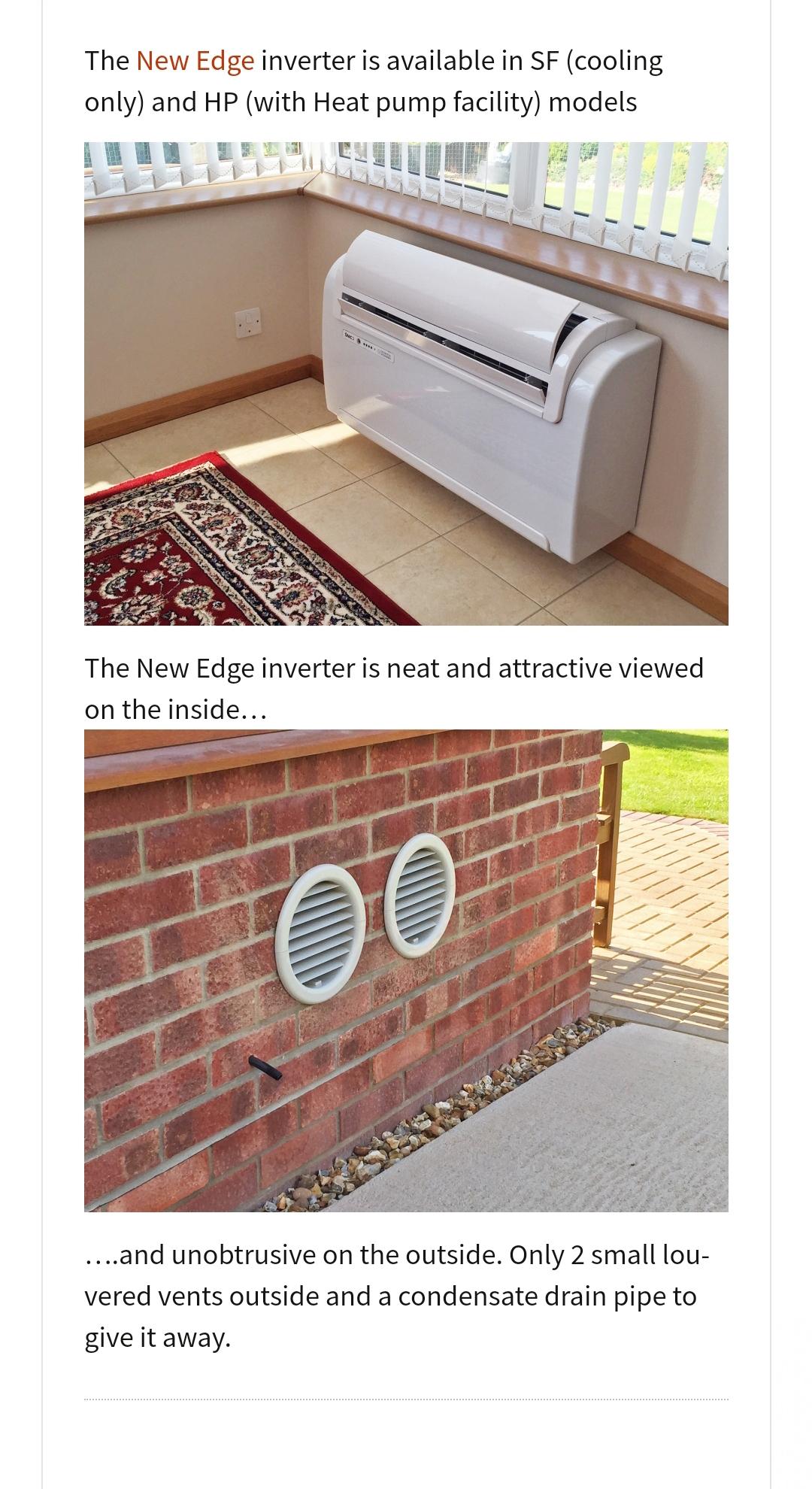
 Having given this some thought. Air to water ASHPs are a poor swap for high temp gas system as the COP suffers with a large delta T. The whole plumbing system typically needs replacing. Hence nobody does it. As others have mentioned elsewhere previously a single A2A placed in a hallway or large room could substitute a huge chunk of the gas heating at a COP of >4. However the nature of a split unit, vacuuming, gas pipework, flaring tools etc and the F-Gas requirements mean than most jobbing DIYers are put off. You can get these but the COP is poor. How about an external monoblock with a single duct into the house. The huge volume of air required for the evaporator could be more easily satisfied by the external unit (higher COP) and there'd be one less hole to drill in the wall. Pick your location beside an existing socket and limit the current draw to whatever that supplies happily and any toolman could put one in.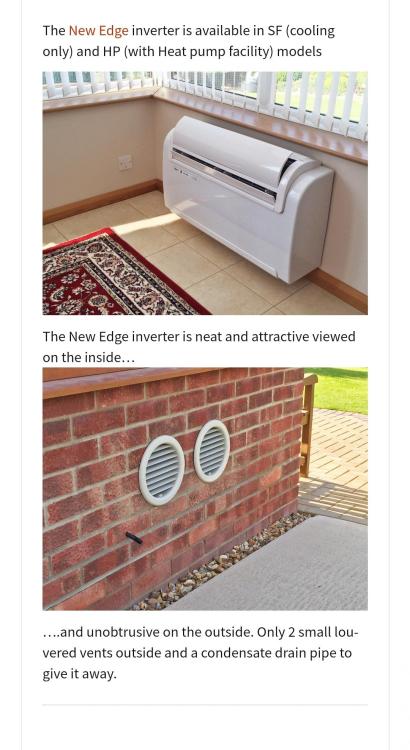
-
Mitigating Risk With Upfront Payments To Timber Frame Companies?
Iceverge replied to thefoxesmaltings's topic in Timber Frame
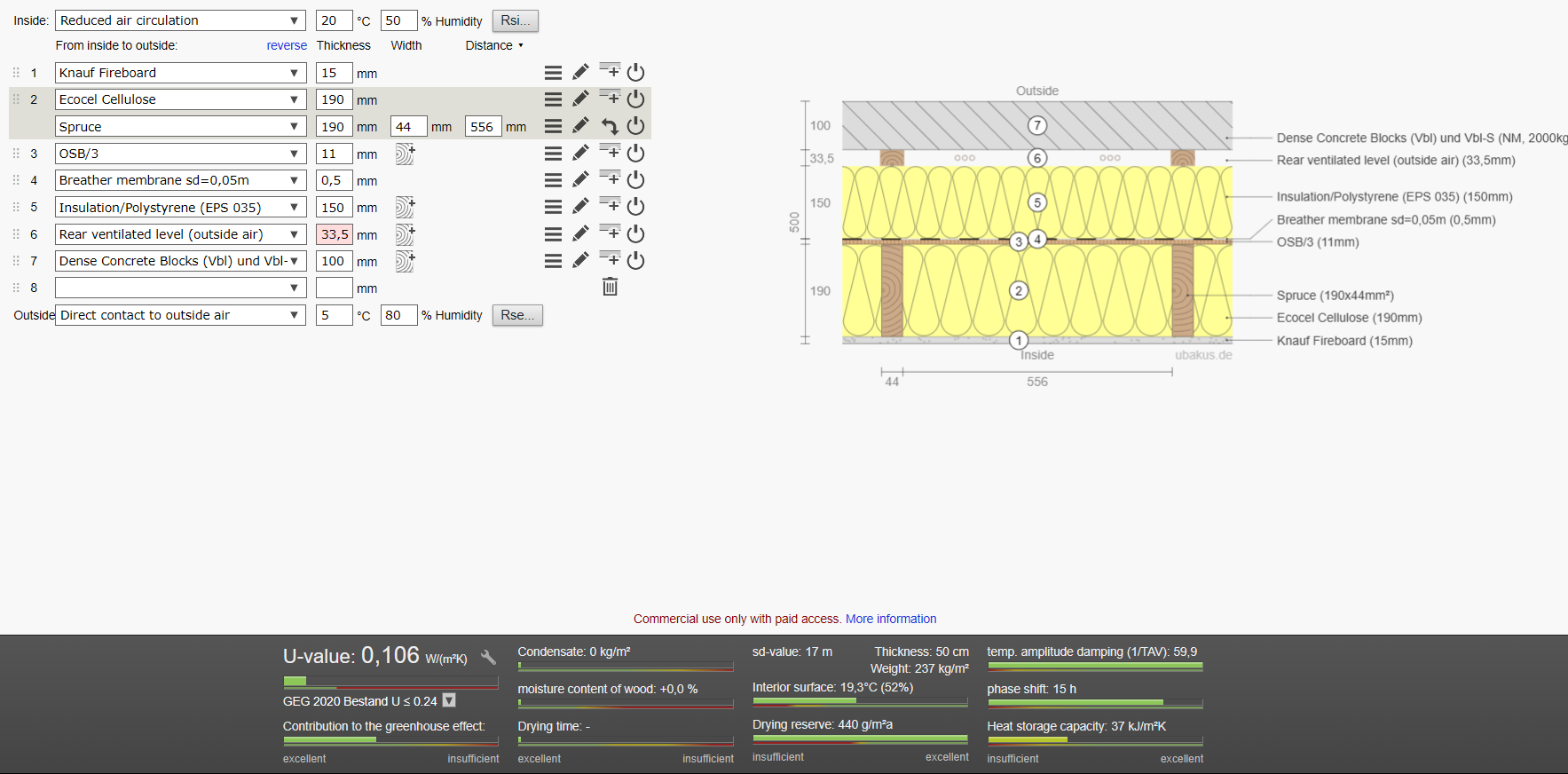
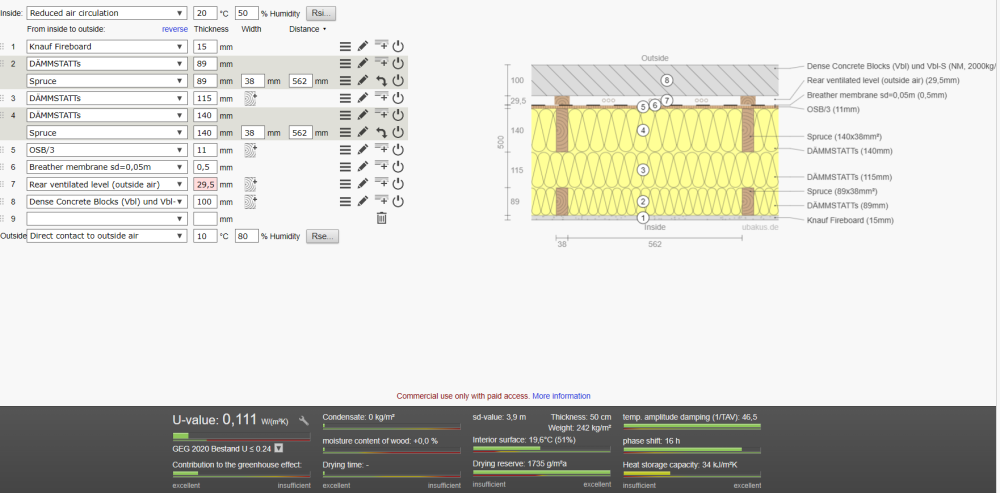
Here's 2 options for my preferred stick build option if I was doing it myself. Tape the OSB externally as an airtight layer in both cases. Some will complain that this is the wrong side but if I could oversee it then I would be more than happy.\ re the condensation risk. All off the shelf materials. The one with external foam could be easily scaled down for thinner walls and lower U values.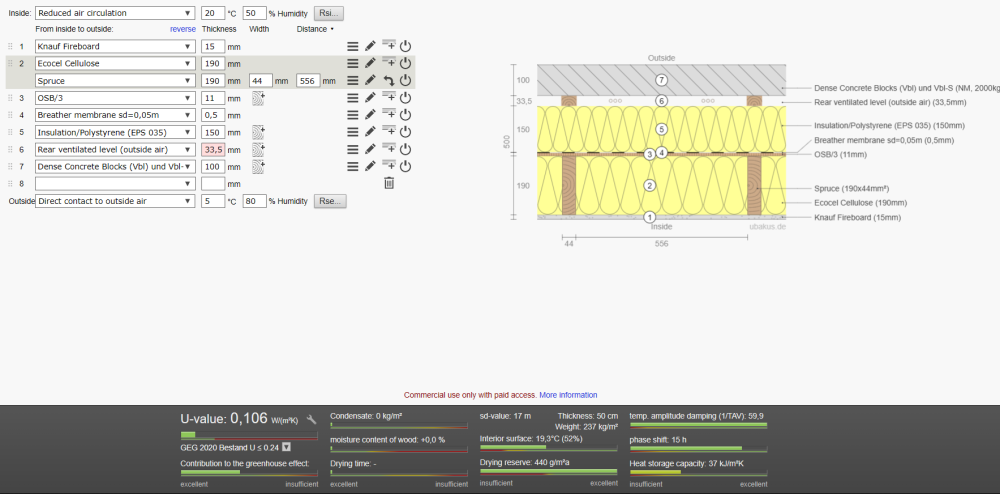
-
Mitigating Risk With Upfront Payments To Timber Frame Companies?
Iceverge replied to thefoxesmaltings's topic in Timber Frame
Would this not be much more labour intensive in a stick build situation? Also how do you easily over-insulate window + door frames. If you run the service cavity battens horizontally surely it's child's play to run all services? Batt insulation afterwards will fit over pipes and conduit easily I would have thought. MEGA U-Value there. <0.9 I would have thought. When you get to those extremes thermal bridging becomes a really significant factor in overall heat loss. What's the tactic re this? Could you not just pop a few holes for services in the web of a wider I-joist and skip the batten? -
Mitigating Risk With Upfront Payments To Timber Frame Companies?
Iceverge replied to thefoxesmaltings's topic in Timber Frame
The big risks for passive house IMO are. 1. Airtightness We (me mostly , Mrs and my bro) did this on our masonry build. Zero experience. 0.31 ACH. DIY blowerdoor really helped too. 2. Continuity of insulation. Blown in beads for us. No gaps. 3. Thermal Bridging Tricky in a cavity wall but I did the best we could. For a TF house I would always suggest pressure blown in dense pack cellulose. This will sort the continuity of insulation. If you blow it in behind a transparent A/T membrane you can actually check this prior to boarding out. It also really helps with airtighess. I don't know if any sub 0.2ACH ratings without it. Then couple this to a layer of EWI on the TF. Woodfiber boards, rockwool frontrock or EPS(moisture calcs dependant) would work really well. By lapping the insulation over window and door frames you will get superb thermal bridging figures. So in short my suggestion, 15mm fireboard. 47*44 mm service cavity with Rockwool batts. A/T membrane. 220*44mm stick build timber frame with cellulose blown in. OSB racking. EWI Cavity Rainscreen. -
Mitigating Risk With Upfront Payments To Timber Frame Companies?
Iceverge replied to thefoxesmaltings's topic in Timber Frame
What about the stick frame are you worried about? -
Mitigating Risk With Upfront Payments To Timber Frame Companies?
Iceverge replied to thefoxesmaltings's topic in Timber Frame
MBC seem to have as good a reputation a any TF company on here and in my view probably the best product. However we were in a position where we couldn't afford to do it again if there was a catastrophic loss of cash somewhere. I actually parted with a very good builder because of this after getting in touch with a few of his past clients. "Suprise" bills and changes had occured that he should have priced from the start. I think given your fears I'd be leaning towards stick build, something like @ProDave but clad in masonry or a proper rain screen. I guess MBC being a top end supplier regularly dealing with clients who can self insure against £££££ and don't need to deal with the cheaper end of the market we were in. Stick building can be rapid too. https://youtu.be/4nRz0D0bNmg -
Start here. Knock 1/3 off and work to giving the builder that amount. We had 300k. Paid the builder about €200k to finish their job. We spent the rest on kitchens, tiles, flooring professional fees, painting, curtains, some second hand furniture etc. It quickly adds up. Any particular reason for ICF? Similarly any particular reason for passive house?
-
Mitigating Risk With Upfront Payments To Timber Frame Companies?
Iceverge replied to thefoxesmaltings's topic in Timber Frame
232m2. The cost of what? -
Mitigating Risk With Upfront Payments To Timber Frame Companies?
Iceverge replied to thefoxesmaltings's topic in Timber Frame
2018/9/20 prices. Via a main builder a 250mm cavity wall with passive detailing and airtightness was €216k and the same finish for an MBC offering was about €248k from memory. Had we just built to bregs basic standards we could prob have saved another €20k. Properly detailing a masonry build isn't free. Almost nobody pays any attention to windtightness for example. The MBC package really seems to have most bases covered. Two omissions I see are really robust window install details and threshold details and clients seem to need to make them up on a case by case basis. -
Plenty of mishaps here. I haven't seen any that weren't caused by incorrectly placed supports or in braked vehicles.
-
Mitigating Risk With Upfront Payments To Timber Frame Companies?
Iceverge replied to thefoxesmaltings's topic in Timber Frame
About 15% more expensive in 2019 for us to do MBC Vs wide cavity masonry. I think we could have self managed more of the build and halved the build schedule. Masonry was slow to get to a passive level of airtighess and had that been taken care of I could have diverted my work elsewhere like plumbing etc so it may have not been much dearer overall. It depends on how much your time is worth I guess and how much you plan to DIY. -
I wouldn't bother with a pit given the prices you can pick up a serviceable lift for. No chance of gas death either.

-
Cool, however it might be better if you were to remove any personal info first, just in case.
-
Polystyrene balls, what to do with fall out?
Iceverge replied to ash_scotland88's topic in Heat Insulation
EPS beads are a very normal fill for cavity walls. Normally with plenty of PVA glue however to stop this happening We have 250mm of em. If you have time on your hands you can get rid of all the dirt and contamination by floating them on a paddling pool and scooping out clean. -
The quotes from the builders are more than lightly high to get you to clear off. Nobody wants the hassle of an awkward extension Vs a new build. Do you have any plans to share? Without seeing them I'm going to guess that you'll be better off starting with a clean sheet design for a knock and rebuild.
-
The HH detail looks pants for both durability and heat loss. I would get very liberal with some high quality fluid applied sealant externally to those blocks, take it right down below the level of the floor insulation. Remember water must do down and out. Then get some XPS or high density EPS and secure it outside the foundation blocks and sill plate. Finally get a proper insulated aluminium sill like those used for EWI and hook it under the bottom of the window bedded in some suitable sealant. Ooze it out and scrape away the excess to completely fill any gaps. Render the outside of the insulation or glue on some slates as impact and rodent protection. A gravel topped French drain to finish should keep the water and splashes at bay.
-
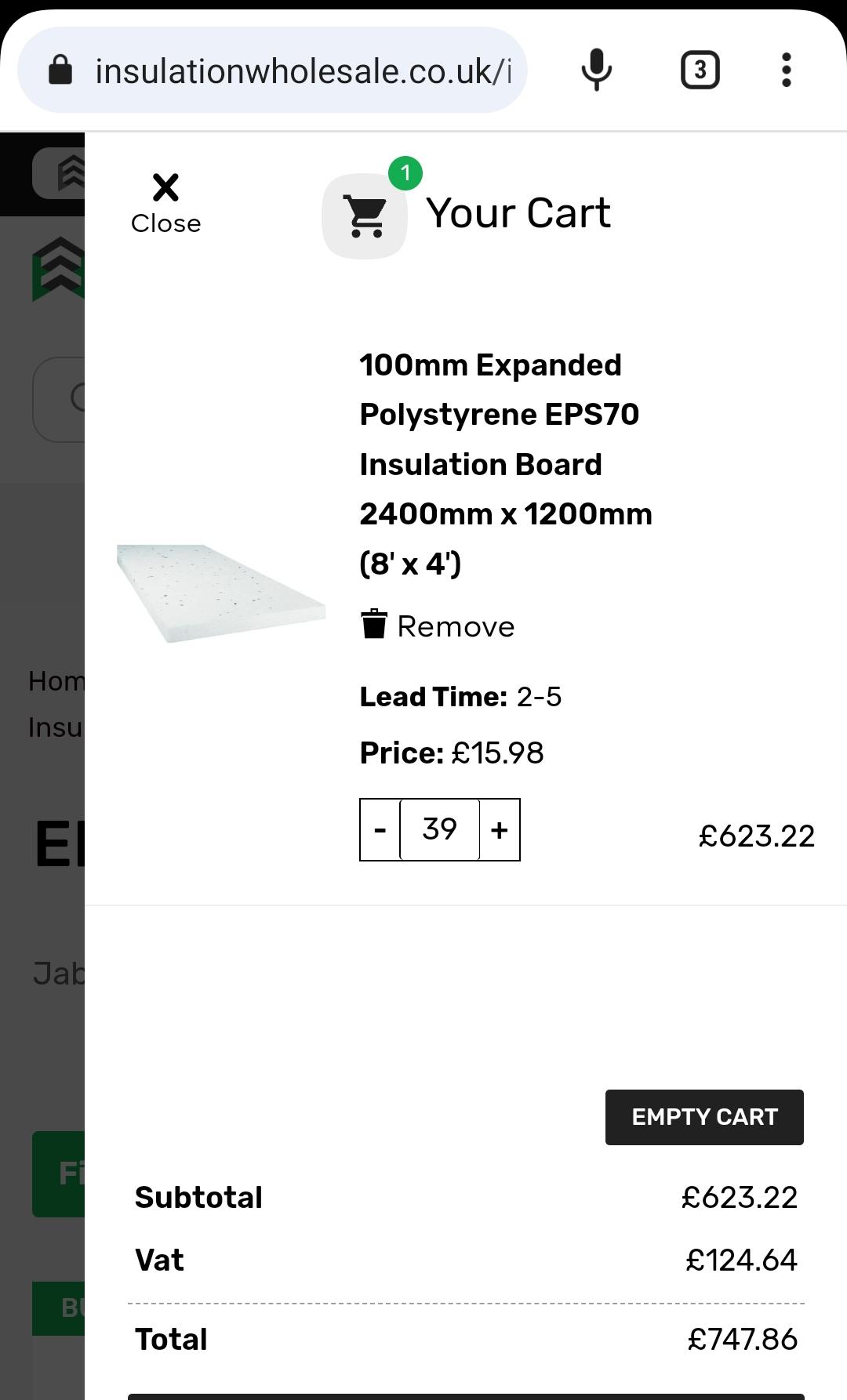
Free delivery on that one too.
-
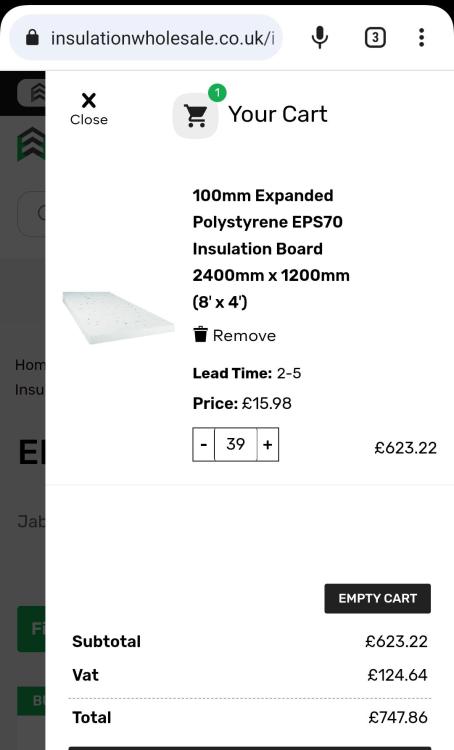
I'm guessing 120mm at that price. First Google result gave me £45 inc Vat and Delivery for 200mm EPS at a U value of 0.18 if you have the space to sub it in for the PIR. It might save a bit of fill too.
-
30kW PV, All electric heating, is this mad?
Iceverge replied to DevonBarn's topic in Photovoltaics (PV)
Welcome @DevonBarn. Plenty of barn conversations here to take inspiration from. @IanR has a really good example of what's possible in terms of airtighess, comfort insulation etc if you search his posts. Have you put some numbers on this? I would suggest 0.15W/m2K as a beginning for U values and 1ACH for airtightness. @Marvin has it summed up with his AIM APE priority list. -
Cracking in render of 250mm bead full fill bungalow cavity
Iceverge replied to fclauson's topic in Plastering & Rendering
A friend who's a plasterer recommended I should paint our house without too much delay due the sand and cement sponge finish we had. He seemed to think that the driving rain we get could get into the render and weaken it and a good coat of paint would waterproof it somewhat. I did after the first summer we had moved in and haven't had any issues. Is there paint on that wall or is it coloured plaster? -
Help - scary security situation
Iceverge replied to Adsibob's topic in Networks, AV, Security & Automation
No sorry -
You can cut a start with a snibs or similar. Just a few cm. Then if you're feeling burly literally rip the metal in half. Didn't believe it could be done until I tried it. It won't leave a nice edge however. A nibbler is the way forward. Angle grinders work but the sparks leave lots of rust spots on the metal and the edge is jagged. For the shear pleasure of work I would opt for timber as flashing nicely around corners etc with metal is very time consuming. Another option might be Onduline but it will be weaker than metal.
-
Help - scary security situation
Iceverge replied to Adsibob's topic in Networks, AV, Security & Automation
I'm sorry to hear about this. It's a traumatic experience and not one I'd wish on anyone. However I'm of the view that if he was going to do anything it'd have happened there and then. As they say on TV, he had the means, motive (however misplaced) and opportunity but didn't escalate beyond roaring and shouting. A relation who has been in dozens of pub bust ups says that the safest guy is the one who tells you he's going to hit you, he's had enough black eyes to back up the story. Psychologically the very natural response may be to want to bolster your defences, but this may be counterproductive to your own mental wellbeing whilst not achieving any further real protection. I would suggest taking some time for the excitement of the episode to level a little before making any decisions. I do like @ToughButterCup idea of geese however. Far braver than any dog I've ever met! -
Well done, concrete is always panicked suffering in my experience! The ICF should give a very good PSI value at the wall floor junctions. Looking forward to a few more pics of the finished floor.
-
Suggestions for garage roof material. DIY.
Iceverge replied to saveasteading's topic in Roofing, Tiling & Slating
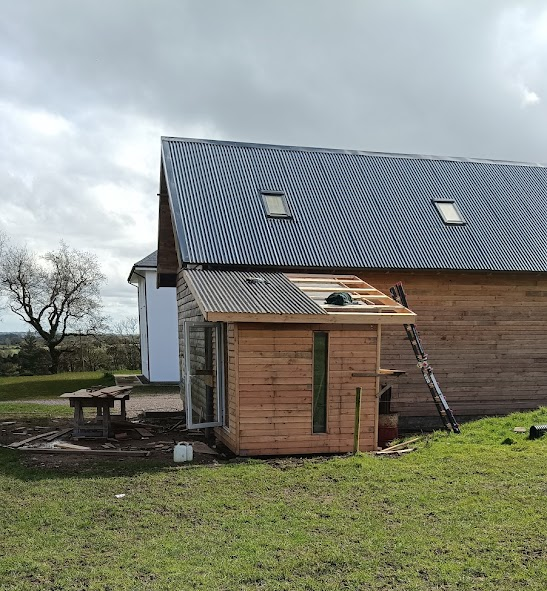
Sheath with OSB. Then religiously tape all the joints. Wind and airtightness on even a garage won't be lost effort. It's really quick and easy to do externally. Breather membrane over the lot. 75*75mm purlins at 800mm centres with a good overhang ( > 500mm ) on all sides. noggins between at the gable to keep the critter out. You may need some metal strapping too to prevent wind uplift. Crinkley tin on top. Cladding on the sides. Lovely. Here's my effort earlier this year. Tin was recycled hence the wonky finish.