Iceverge
-
Posts
4487 -
Joined
-
Last visited
-
Days Won
32
Everything posted by Iceverge
-
No I don't think it's required to have more than one WC for 4 Beds. This is more of a thought experiment rather than an actual house you'd want to live in!
-
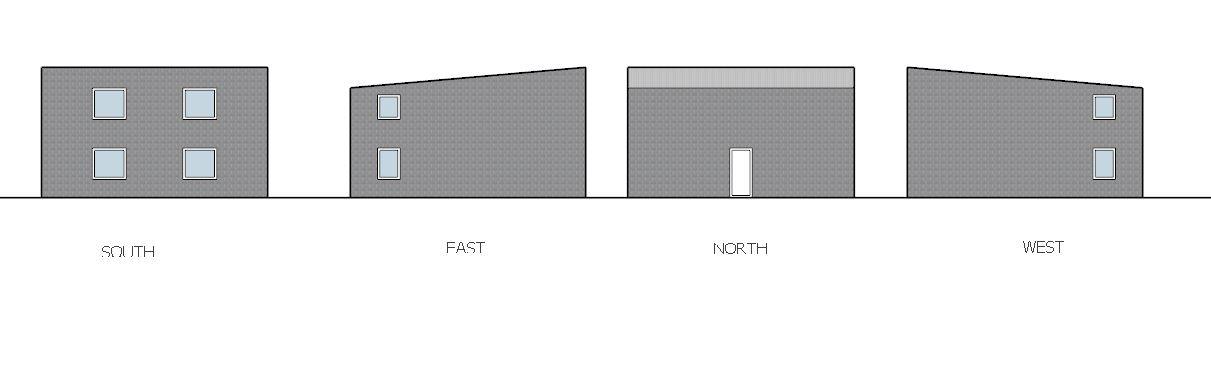
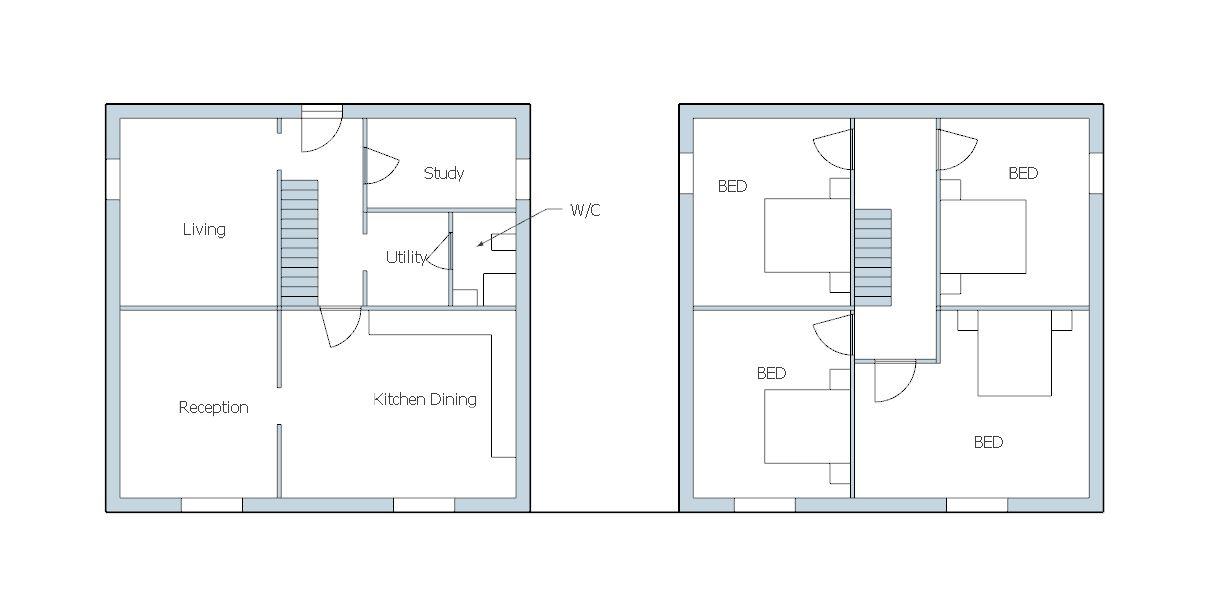
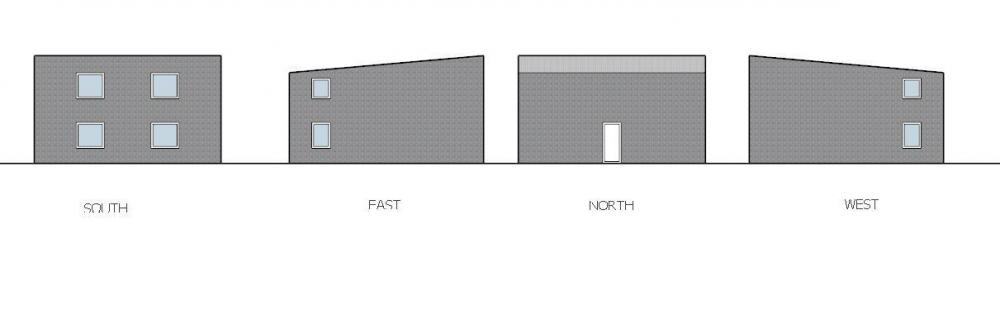
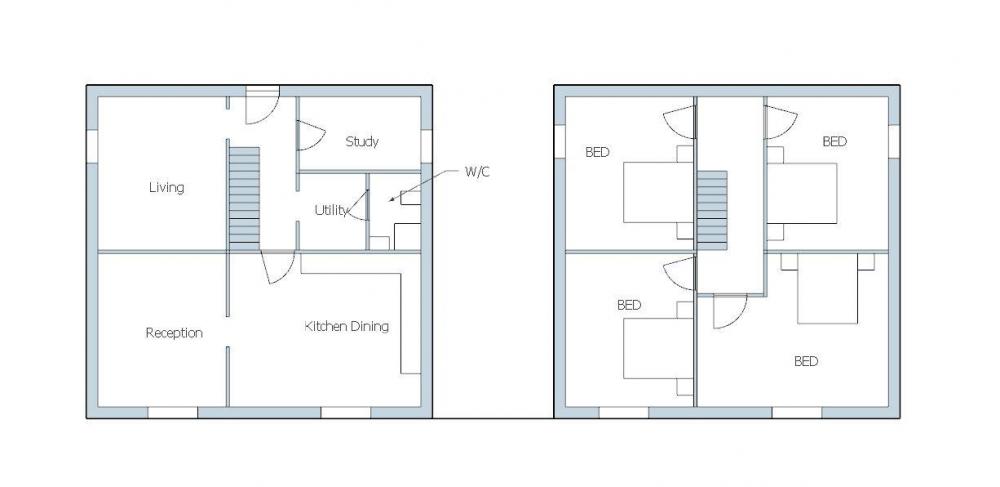
@Amateur bob This is quick impression of what it could look like. Not pretty but it's a house. Footprint 10.4x10m 4 very large bedrooms, 1 toilet/shower. 2 receptions and a study. Large kitchen. Utility. Apart from reducing the size from your 180m2 I can't see anywhere else obvious to reduce costs.
-
Impossible to say without further details of site, access to services, ground conditions, planning constraints. For instance it's possible that if you were given a totally free hand and perfect conditions and were willing to accept a very basic standard build you'd come in well below £1000/m2. Things that spring to mind for ultimate cheapness. Square floorplan. Only windows where absolutely necessary for fire safety. Bathrooms Utilitys etc don't require windows. Keep the windows narrow to avoid anymore expense on lintels. Strip foundations. EPS under a concrete slab to building regs minimum. Some floor paint to keep the dust down. No carpet or tiles etc. Get rid of internal doors unless required for fire regs. Block cavity walls with mineral wool to building regs minimum allowable standard. Pointed internally and externally for cheapness. No render. White pvc double glazing. Again only opening sashes where required for fire. Standard lumber floor joists with exposed chipboard above and plasterboard with tape and skim below. One socket and pendant ,light per room. No CAT 6 data cables etc. Run cables through surface trunking. Basic kitchen and bath ware, One electric shower and ground floor toilet. A single pitched sheet metal roof insulated with building regs minimum amount of glasswool No extra airtightness measures. Trickle vents and extractor fans. DHW using an undersink water heater split between the WC basin and kitchen sink. Space heating using a Air to Air split unit in a central area. I reckon you could build the above for about £400/m2. It'd be a horror show though!
-
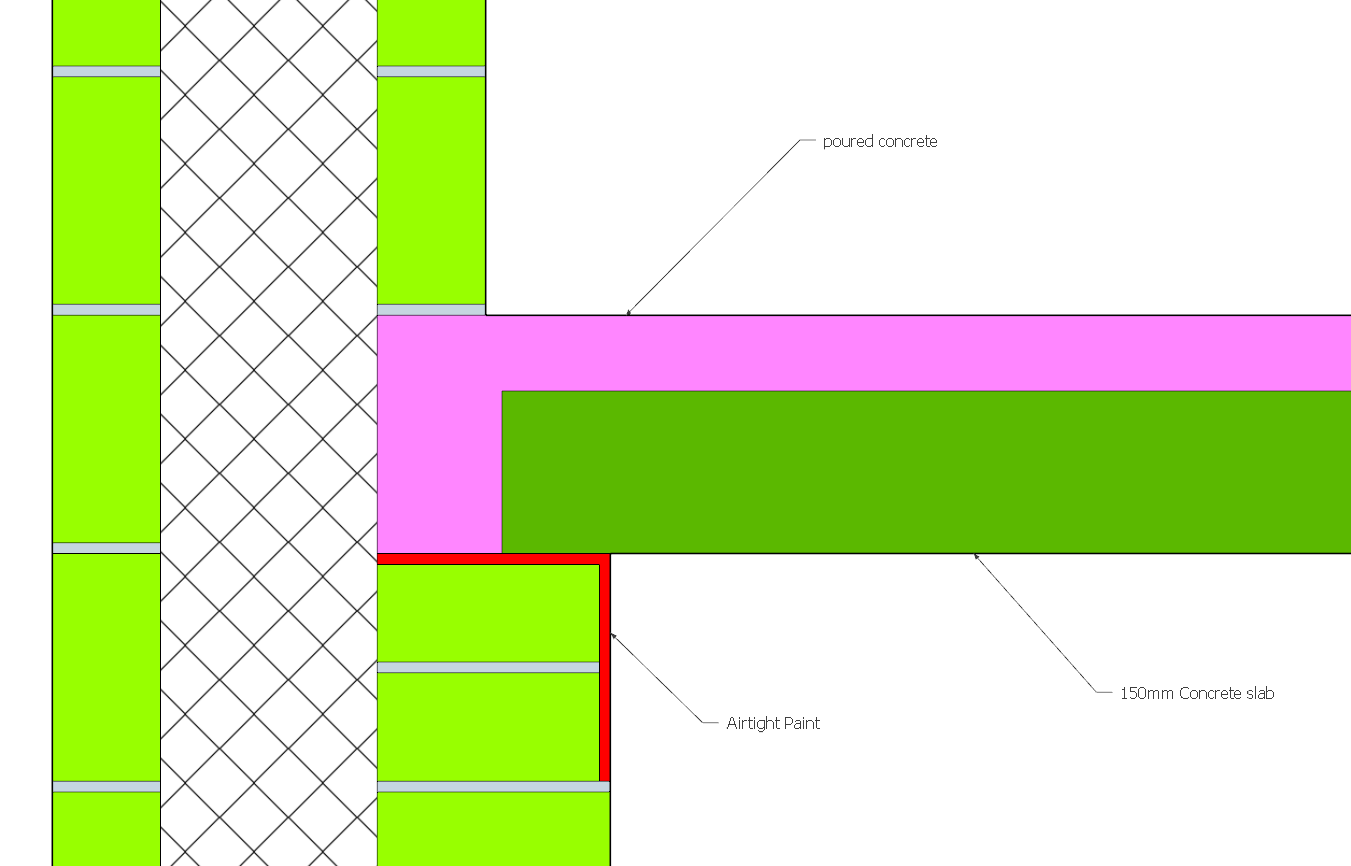
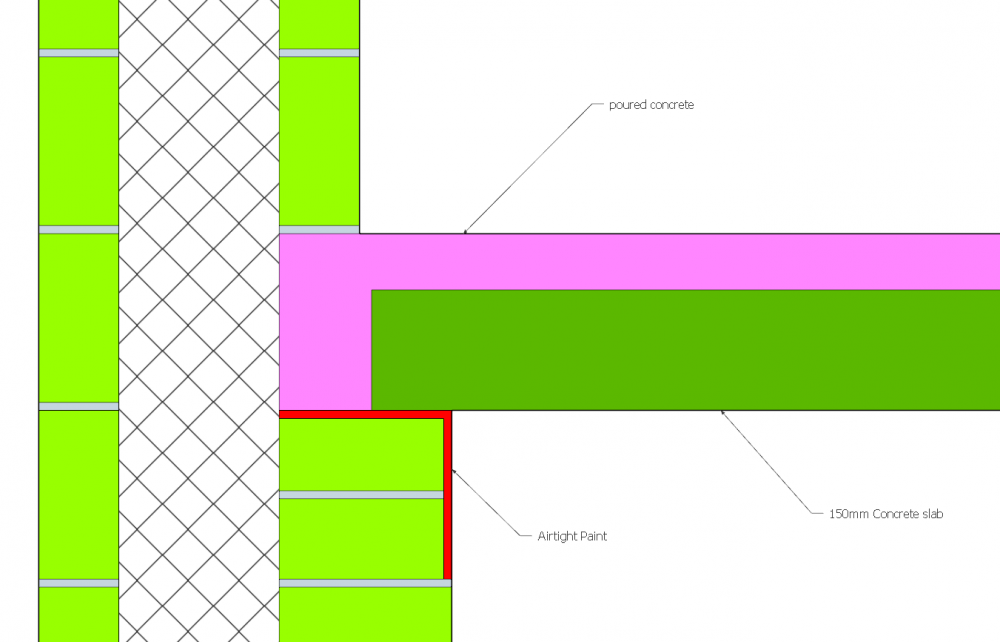
Preventing air leaks through the blocks below the slab. These won't be wet plastered as they are above the plasterboard in line with the suspended metal ceiling. Also painting the top of the blocks guarantees a continuous unbroken airtightness line to the poured concrete.
-

Bad Airtightness Test Result
Iceverge replied to AliG's topic in Mechanical Ventilation with Heat Recovery (MVHR)
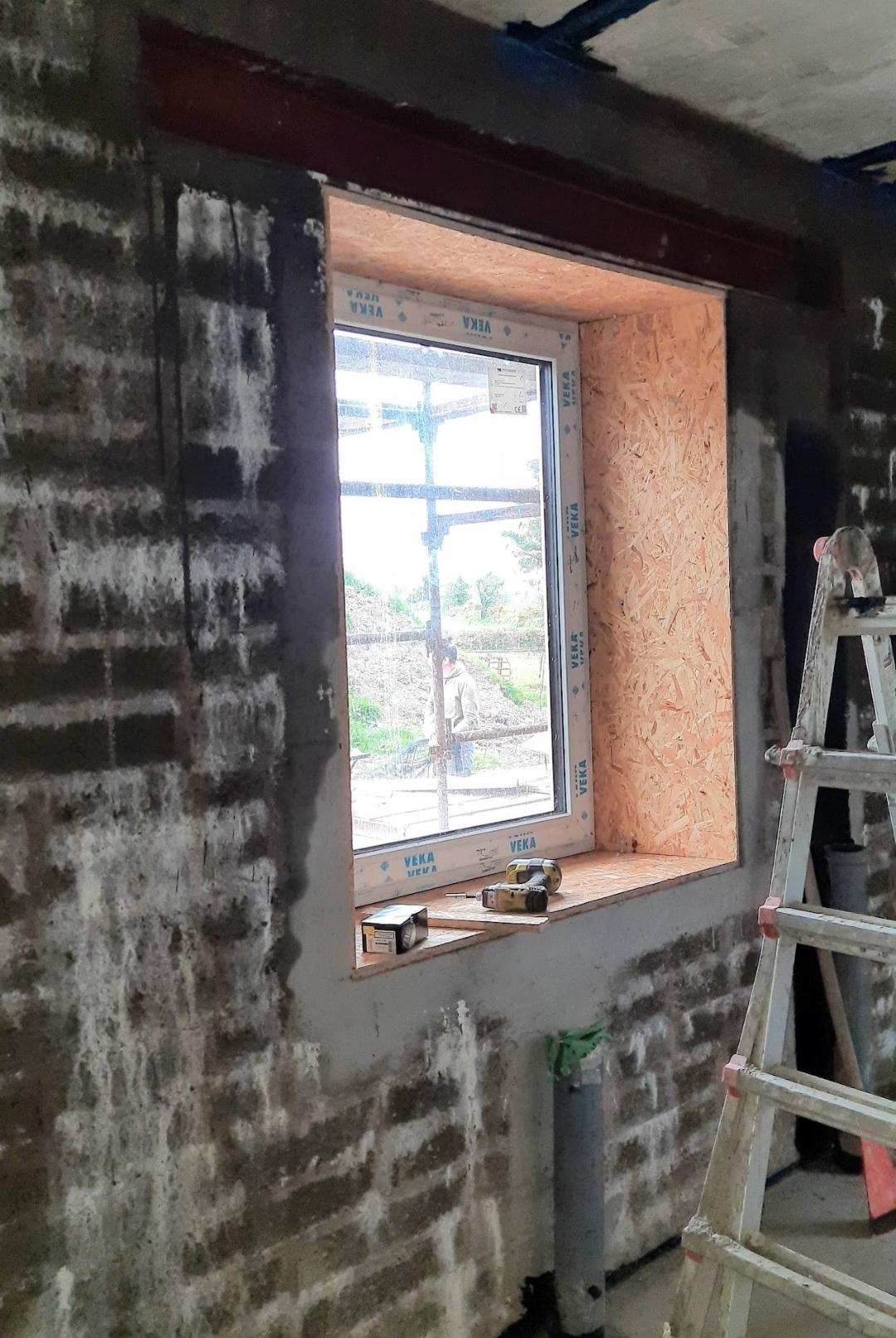
It's a car radiator fan in a sheet of OSB in a window opening. Tape it in ( don't use airtightness tape, you'll never remove it!!) And connect it's wires via crocodile clips to your car battery. Depressurising the house is best as you can feel drafts as air rushes in through cracks simply with your hand or a candle flame will flicker for tiny ones. Subjectively I reckon we were easily generating twice the pressure difference with our test fan compared with the official blowerdoor. -
What kind of jobs are you hoping to do? I have a Massey 860 and find it excellent. New Holland and CAT also make good machines. If you want to go digging/grading/craning an excavator is far superior. If you want to lift and move materials a telehandler is mile's ahead. If I have my way I'll sell my digger and buy a dedicated loader if some sort. I'll then stockpile my digging jobs and rent an excavator every couple of months for a weekend.
-
What is your overall wall construction?
-
Bad Airtightness Test Result
Iceverge replied to AliG's topic in Mechanical Ventilation with Heat Recovery (MVHR)
Have you DIY rigged a blower door fan? For less than £50 it's like a 6th sence when you're draft hunting. Tremendously satisfying too. -
Floor bounce - PosiJoist Floor Vibration checks
Iceverge replied to readiescards's topic in Floor Structures
I should have done this in hindsight. Coupled with floor drains in all rooms with water connections in case of a leak. It'd be a very reasonably priced and future proof system. Our plumbers have used a crimp system which is €€€ and isn't easy to alter DIY. Also the Hep2o system being almost entirely plastic should mean no corrosion ever. @Adsibob Have a play here to determine the deflections you could find acceptable. https://www.mitek.co.uk/span-calculator/ https://www.jamesjones.co.uk/products-and-services/engineered-timber/interactive-span-table On our garage it was cheaper to use 400mm centeres and 18mm decking over 600mm and 22mm. More solid too. Conventional 225mm joists though. -
We needed 215 blocks on our inner leaf because we have quite long runs with no buttressing walls internally. I did ask our engineer about reducing block width but he wasn't keen. Also it left us free to have 2700mm ceilings internally. We would have been limited to 12 courses of 100mm block on edge otherwise. With the dropped ceilings we would have ended up at about 2500mm ceiling height which I thought was too low. The first floor is 100mm blocks on both inner and outer leaf. The Precast slab only bears on 100mm of the blockwork anyway. In hindsight we should have airtight painted the top of the bearing blocks, shuttered around the edge of the slabs and poured the slab and screed as one for airtightness. Forget about any membrane or tray like @tonyshouse did. For a tony tray to work I think you have to personally install everything. The installers only want to drop their slabs, sledge and crowbar them into place, and leave. In their mind they're not getting paid to do anymore. The hollowcore factories are now offering to seal the ends AFAIK.
-
Attach the breather membrane to the back of your panels with the appropriate overlap in place. Take care when installing that you get your overlaps right.
-
Floor bounce - PosiJoist Floor Vibration checks
Iceverge replied to readiescards's topic in Floor Structures
With Pozis is there anything to stop you using top hung joists on a ledger plate?. Could you vary the joists depth?Thickening to accommodate the required services on a room by room basis. Assuming a ground floor plant room below a bathroom use 421mm joists and sacrifice ceiling height for service space? -
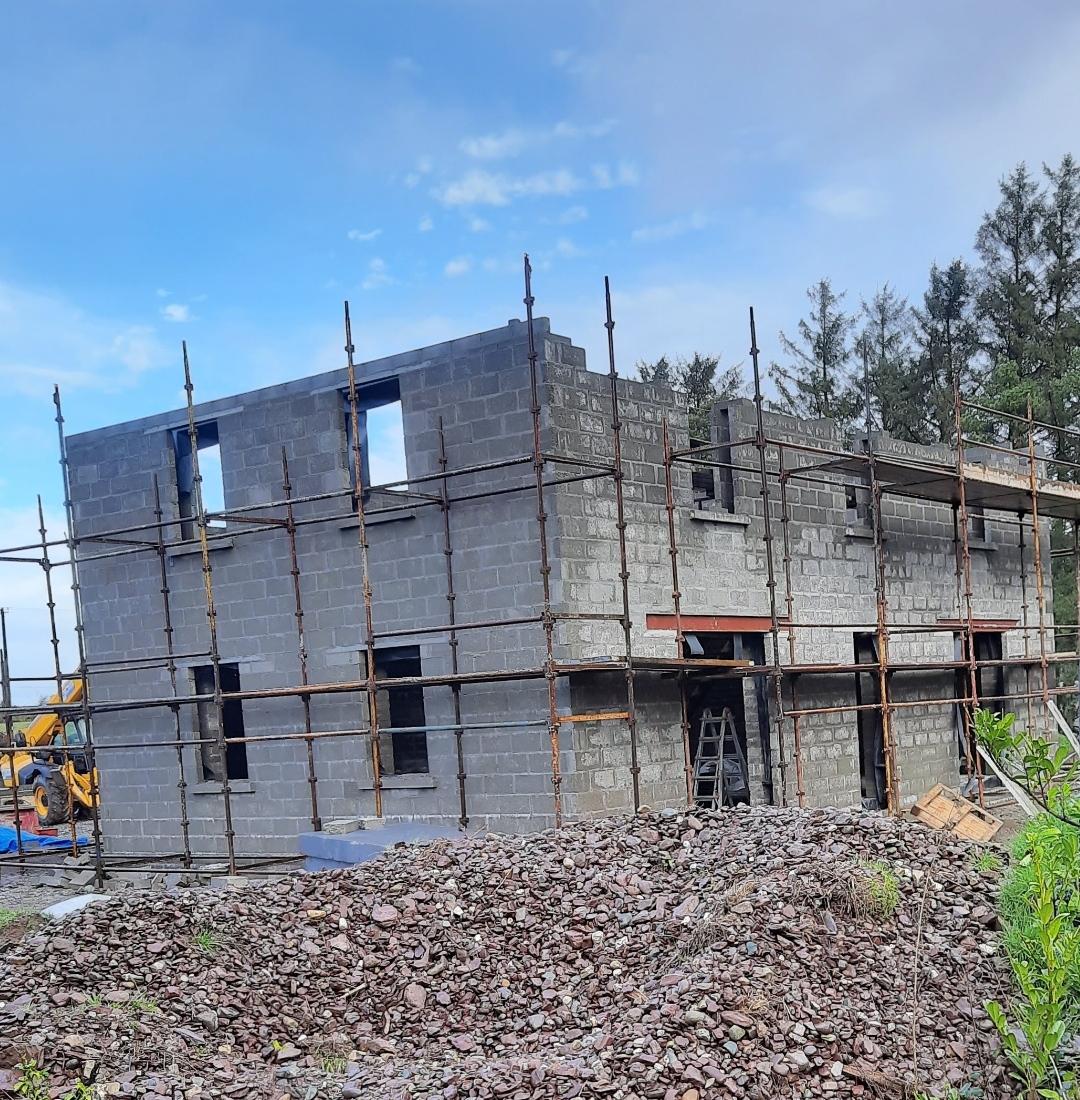
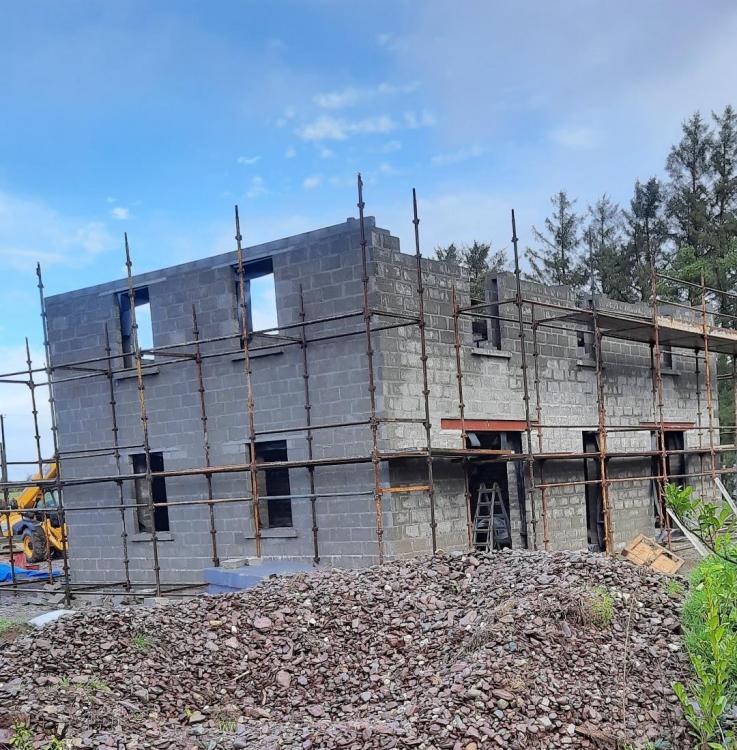
As you can see we used steel lintels for the wide openings (2m) on the external leaf. All The narrower ones (1m) were standard 100x50 precast lintels. This really is a question for your structural engineer though. If I had my time again I'd avoid precast floors. You end up with a very thick floor ~450mm, the added expense of including a suspended metal ceiling. They're a PITA to core through for services. Installing them without guys making ribbons of any airtightness tray is nearly impossible. Despite requests and being on site they still crowbar the slabs back and forward over the plastic membrane.
-
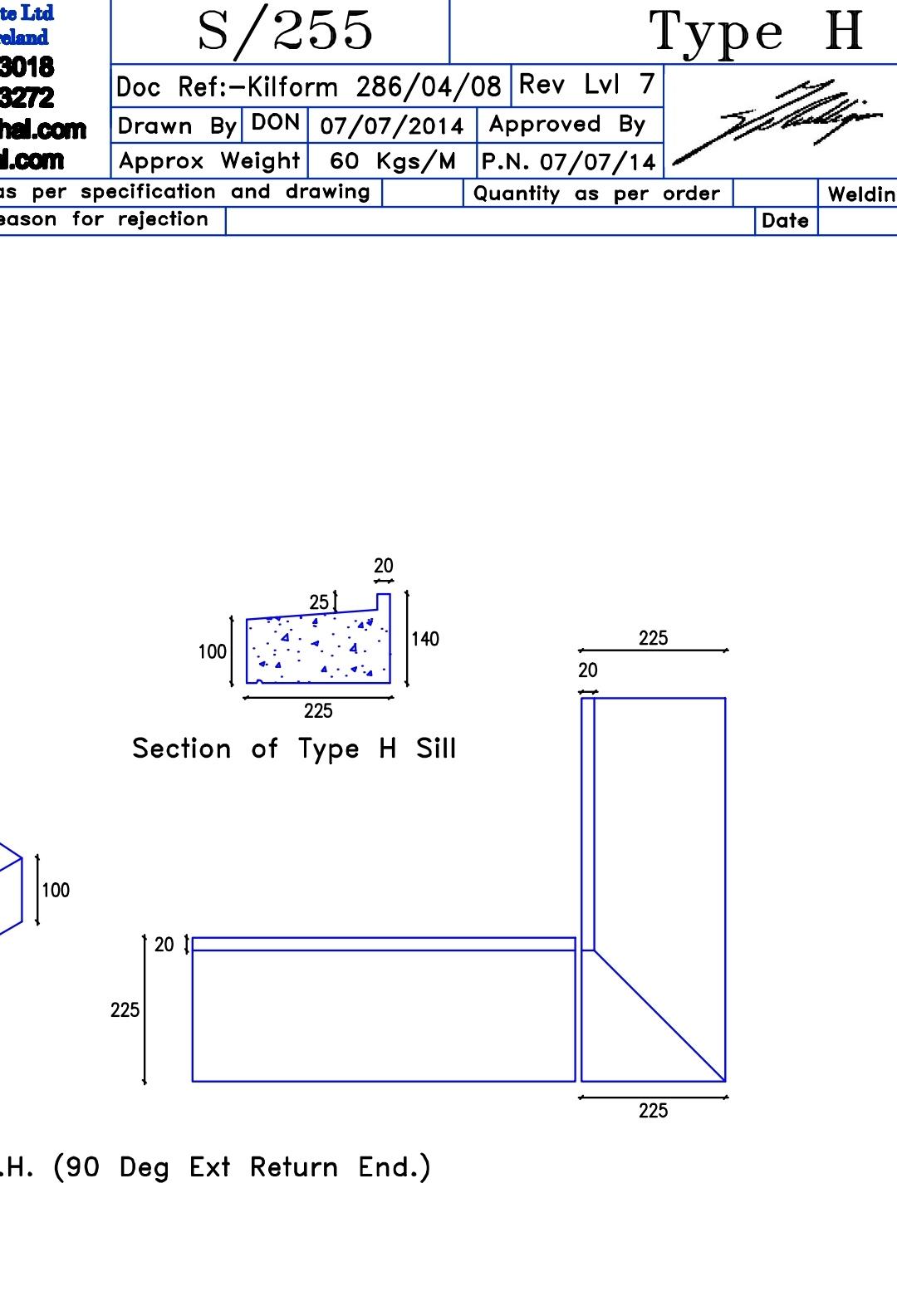
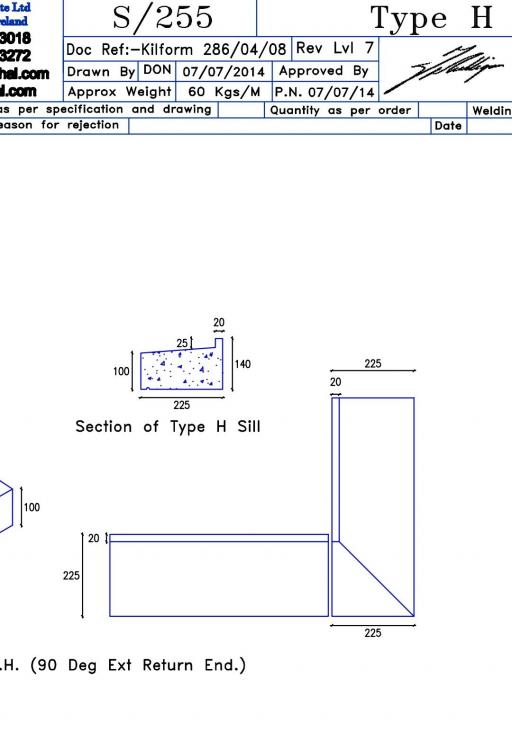
@Moggaman get in contact with Killeshal precast in Offaly. I suspect your engineer will specify steel lintels like they did for us for any walls bearing the slabs. With your engineers agreement you can substitute these for precast concrete lintels but they'll need to be specially ordered. We got our window sills from them too so I suspect it won't be an issue if you do it in time . We got the "Type H " as it has a very narrow top lip and allowed a layer of insulation between the inner and outer sills. Out of interest have you chosen your precast slab supplier?
-
Temporary electric battery fencer and wire would be easy. You may need to offer them some cash mind you as there's not much nutritional value in the plants there ATM.
-
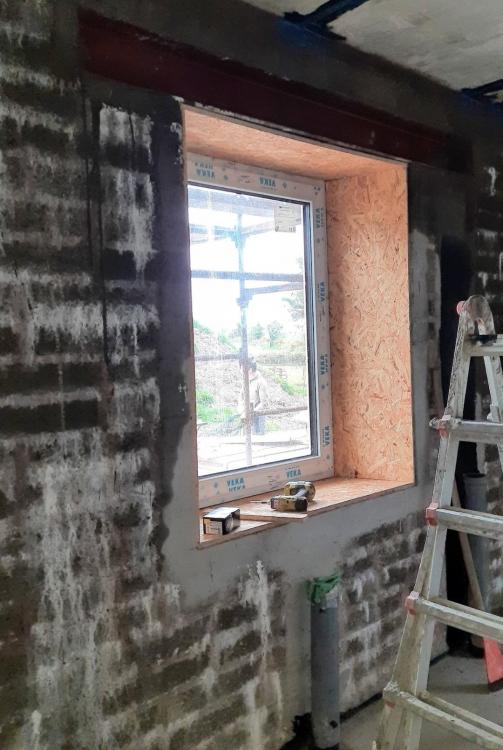
Worked fine with PVC windows for us. I made angled 18mm OSB boxes after the windows were fitted and concrete screwed them to the inner leaf. No need to cut blocks just set back the inner leaf by 100-150mm depending on the angle you desire. In hindsight it would have been easier to build the boxes in as the walls went up.
-
Ask the structural engineer or phone the engineer at the precast slab manafacturer. Beware the cost of blocklaying. You'll double the cost of your inner leaf. Resting on precast window sills and concrete screwed via brackets into the outer leaf. Avoid lintels that span the cavity. Thermal bridging is an issue. Use concrete in preference to steel. It's cheaper and easier to finish. Again your structural engineer has the last word here.
-
Nice plans. Plenty of info if you search!
-
Get a farmer to chuck a few sheep or cattle in there for a day. You won't know yourself.
-
From my reading the only way to have a permanent good quality of internal air is some kind of continuously operating mechanical ventilation so it's worth pursuing. If it was me I'd look at the price of a whole house continuous extract system as you may get most of the benefits of MVHR as you may have poor airtightness. That vent axia unit looks fine but perhaps a little small. Rated only to 40m2. A larger unit running less hard will be quieter.
-
Have a good nosey at mass housing developments near you. The build method they are using is likely to be the cheapest and well known to local trades. Copy everything from the foundation to the windows to the roof covering and you won't go far wrong. Avoid buying strange and exotic materials that can't be picked up from your builders merchants. The ability to pick up a few more joists from if you break one or drop back a few unused roof tiles for a refund will save money and heaps of time.
-
Yup, all be it 100 times larger! @TerryE has cracked it I think, although the approach of Jeremy Harris with a simple thermostat is probably good enough.
-
Start on the drawing board. Keep the design square and as small as practicable. Most semi detached houses are less than 100m2 and people survive just fine. We ended up at about 180m2 but 150m2 wouldn't have made much difference. I spent a lot of time designing to make it super simple to install services etc. The trouble was that the benefit of this all seemed to be soaked up by trades finishing the job by Thursday and taking Friday off. There was no reduction in price as people seem to quote by looking at the footprint area and multiplying it by a figure. Mind you it's our builder who probably missed out here as we were a fixed price contract.
-
Ah, I didn't consider the hotspots. I suspect electricity will never get cheaper or more expensive than the majority can afford to pay.
-
I know it rules out the possibility of using an ASHP but has anyone embedded resistive wire heating in the slab (not on top of)? You could have the same delayed energy release of a water heated slab with no moving parts and no water.