Iceverge
-
Posts
4383 -
Joined
-
Last visited
-
Days Won
31
Everything posted by Iceverge
-

First year Heating Energy Use in Passive(I hope) House
Iceverge replied to Iceverge's topic in Boffin's Corner
@rh2205That's very impressive. Can you elaborate on your house more please? -
First year Heating Energy Use in Passive(I hope) House
Iceverge replied to Iceverge's topic in Boffin's Corner
Too late now, no UFH pipes or rads! I could have done. Maybe if I had my time again. Who knows. There's no restrictions, just opportunism. -
First year Heating Energy Use in Passive(I hope) House
Iceverge replied to Iceverge's topic in Boffin's Corner
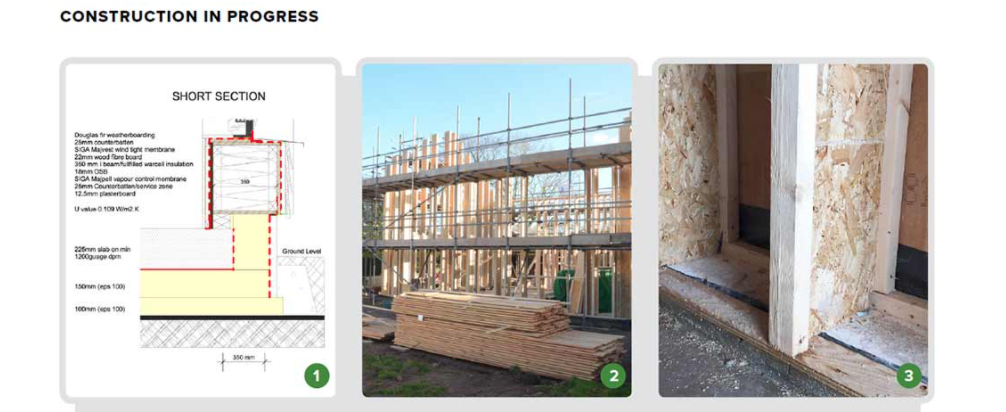
ASHPs selling for about €5000 trade and plumbers charging €10k + install. They're practically required here due to our part L regs requiring a certain % of renewable energy. Like all government mandated purchases from the private sector the price is premium. I don't think PHPP is prefect either. It seems to overestimate the amount of energy the smaller the house is. For instance when I played around with scaling our house down, same insulation values, same glazing, just less floor area and less external surface area we no longer met passivhaus requirements. Practically this was illogical as we would have had identical solar gains and internal heat gains but less heat loss through the envelope, so the house would have been practically even a truer passivhaus, (able to be heated via MVHR). https://passivehouseplus.ie/magazine/insight/the-small-passive-house-problem-a-solution Given your construction @ProDave ,suspended timber floor (better than passive slab in my research) and continuous external woodfiber insulation layer I think you'll probably have some of the best thermal bridging figures on the forum. This really starts to make a difference when U values get lower. My suspicion is that houses built from natural materials out perform synthetic ones in reality. Anybody with further reading on this I'd appreciate? Do you have any rough idea how many m3 of wood you used? Is that metering independent of solar contribution? -
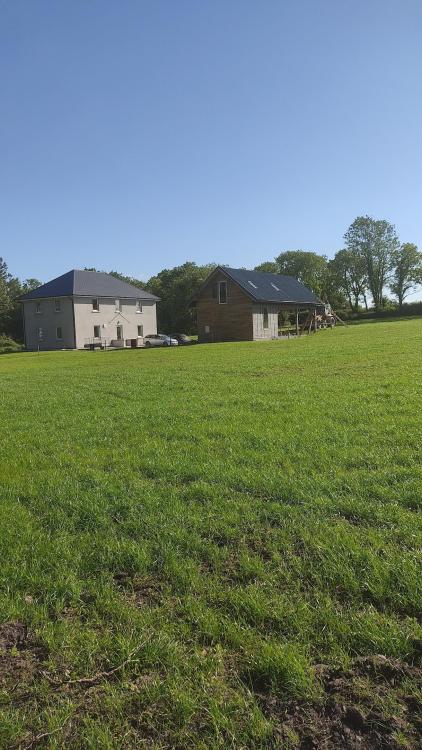
@ETC Here's our house. I'm quite fond of plain farmhouses, although ours is a bit fatter i suppose.
-
You're probably fine then.
-
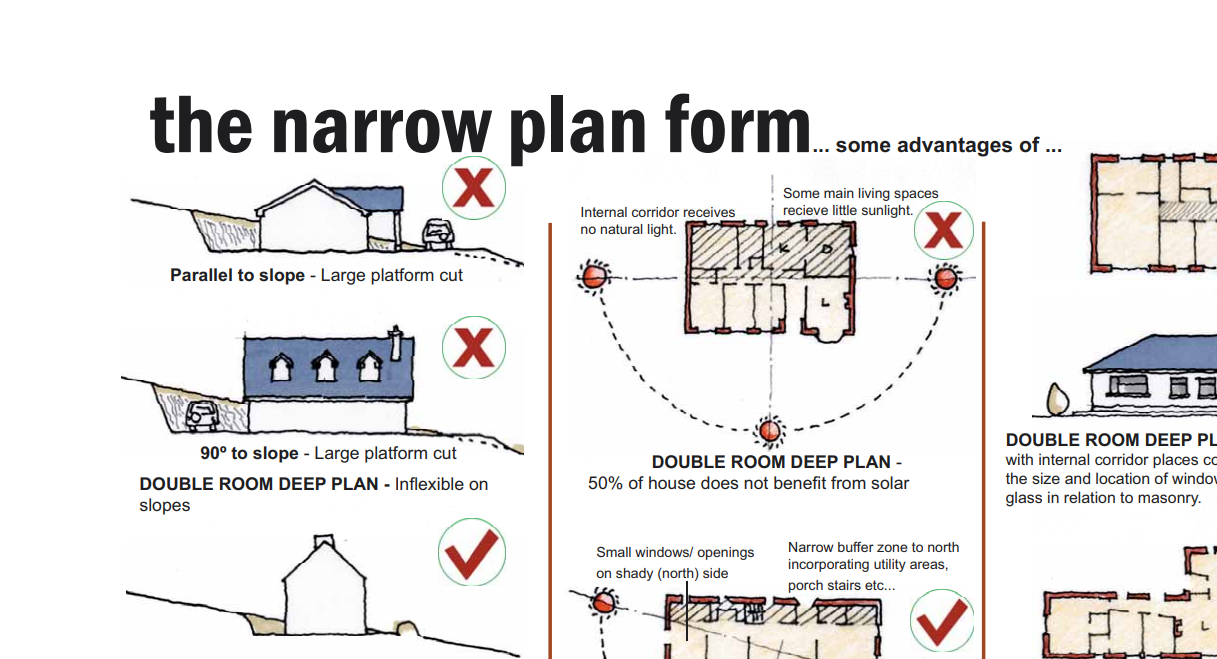
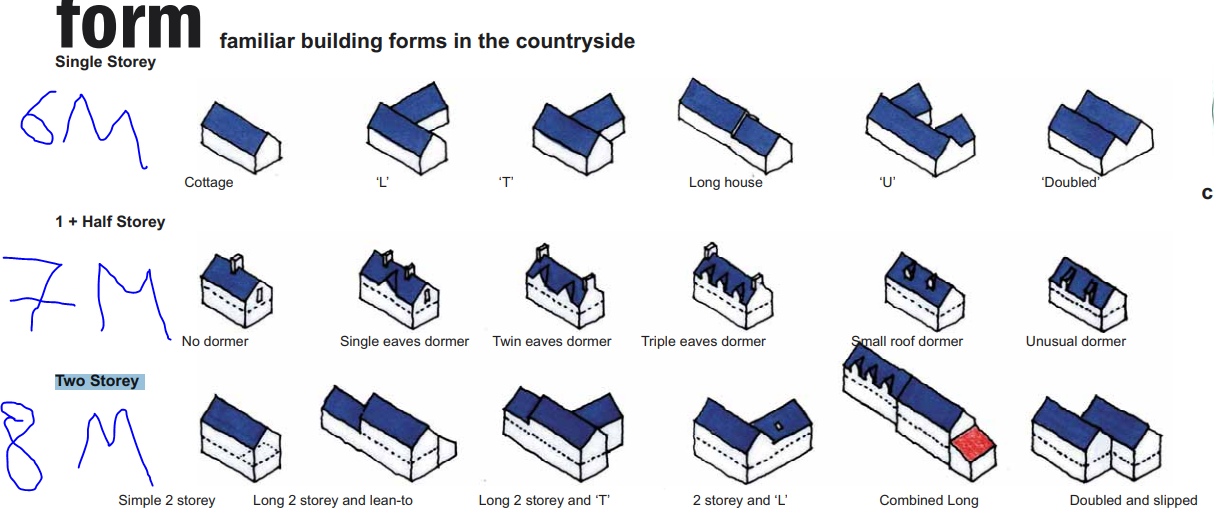
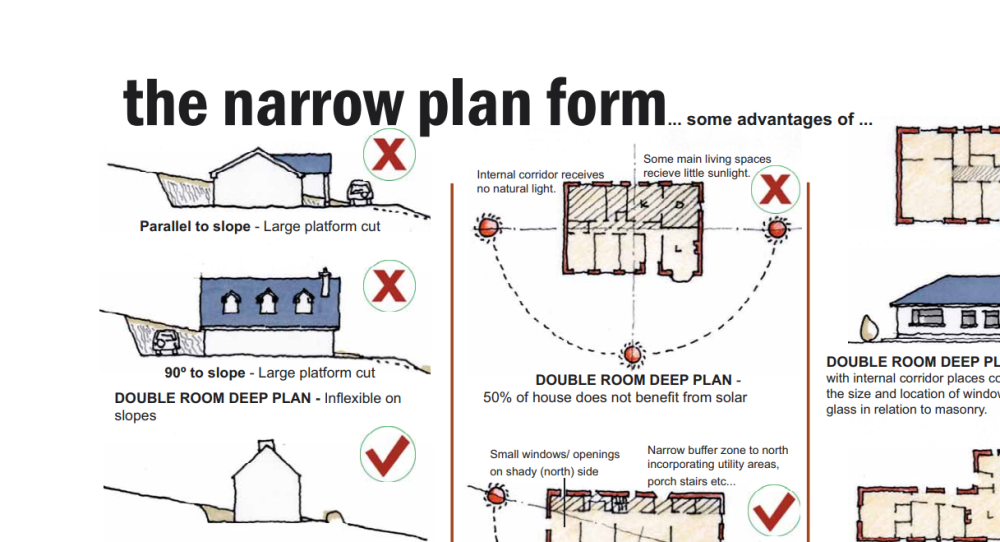
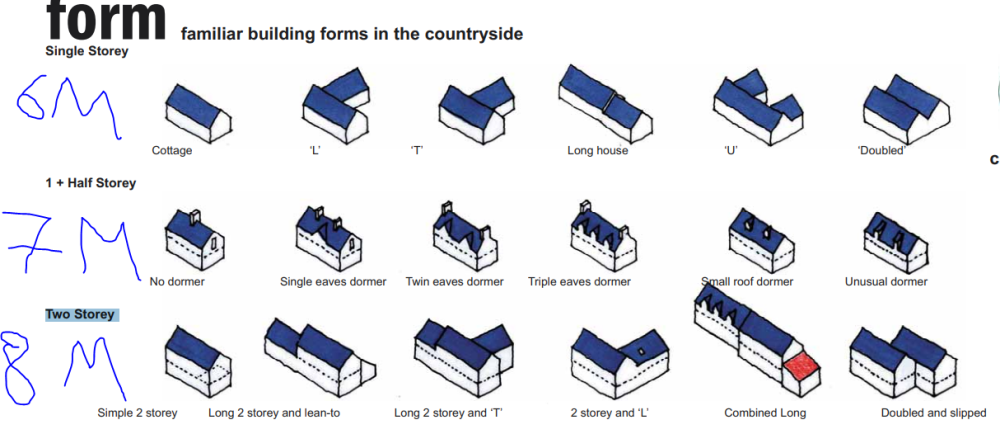
Is it Cork CC you're applying to? My wise draftswoman informed me that they have a long and complex way of looking for simple stuff. The silly way these things work means this is 8m plan depth. Similarly the ridge heights I've posted below. Both pics from the excellent cork rural design guide. If they look at your house and don't immediately love it it's the first thing you'll be asked to revise. A quick glance at your elevations suggests you'll more than likely fall foul of this, unless of course your house is invisible from the road and then they won't care. Don't forget the sun! Run your SketchUp model at 7pm on a September evening with the shadows turned on. That large room will be insufferable! Also at the moment "cornflakes corner*" is in the toilet! *Cornflakes corner is the best spot in the house for eating breakfast, always bright and sunny to start the day!
-
First year Heating Energy Use in Passive(I hope) House
Iceverge replied to Iceverge's topic in Boffin's Corner
We're not technically finished. A2A and PV was always the plan when the budget allows. ASHP wouldn't make any difference to the energy demand, just a more efficient way of using it. The mark up of 100% was too much for me to stomach too. It's certainly not as much as a leaky house but it's not nothing. Just one. It was at scratch coat stage and before the cellulose in the attic so I suspect the reading would be better now. Yes, however if you play with PHPP the returns get really small beyond a certain stage. To the point of basically not being able to change the heating heating demand by adding more. There's a good article about small houses here. Even near passive small houses often need no heating, as the difference in absolute energy required can often be made up by an extra person or dog! https://passivehouseplus.ie/magazine/insight/the-small-passive-house-problem-a-solution I've very suspicious of insulation manafacturers. Some have been proven liars recently. I would avoid any high tech insulations if possible. EPS and cellulose but use a K value of 0.04. Simple is best. Natural insulation provides more heat buffering and protection too which is oft ignored. No, but I've spent ages playing with it. TBH most of the sheets don't make a huge difference and I just read the manual and/or assumed worst case where I wasn't sure. Monitoring the temp+humidity is almost pointless as it almost never changes. It's been 21deg and 55%RH with ages. -
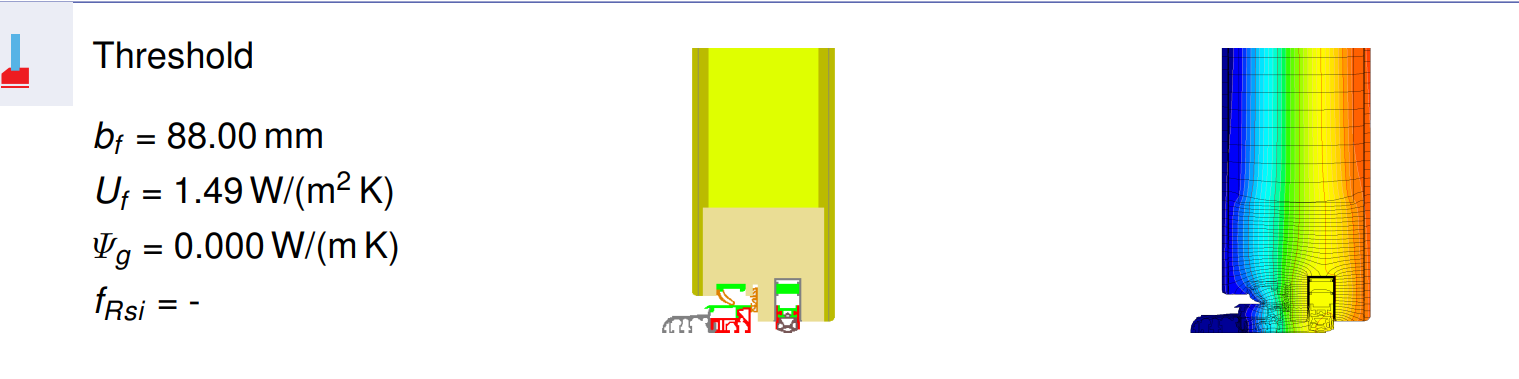
I've been tracking our electricity use in our new build since last March. A little background. 2 story 186m2 (175m2 Treated floor area). External footprint 114m2. (150mm concrete slab over 200mm graphite EPS) Strip foundation. External wall area 249.4m2. (Masonry build 250mm cavity with SS ties and EPS bonded bead insulation. Wet plastered both sides. External Glazed area 36.6m2. 3g Veka Softline 82 UPVC. I modelled all junctions myself in THERM and did the best I could to eliminate any significant cold bridges, the details were similar to Denby Dale except the threshold's which were I suspect a one off with fiberglass grating. Roof was a trussed hip design, copy again of Denby Dale's but with 400mm of blown cellulose. Sealed roof design as per the Tyvek Supro booklet. Windtightness continued with all junctions externally being sealed with airtight paint. There is one 150mmx4m area of block which hasn't been done. Airtightness tested at 0.31 ACH 50. MVHR is a Proair pli 600 unit with a passivhaus efficiency of 86%, care taken to insulate the very short run of ducting into and out of the house. The 1 soil pipe was fitted with an AAV. We installed no central heating. Instead we use a 2kw plug in rad on a timer. For DHW we use a 300l UVC direct cylinder on night rate electricity. PHPP predicted 14kWh/m2/year *175m2 = Total of 2450kWh total annual energy for heating. Our daily electricity usage was 18.1 kWh/day in the summer months. Of this 10kWh for DHW. ( 2 adults + 2 preschool kids) Our total annual usage was 9876 kWh. Isolating DHW at 3650kWh and everything else at 2956 kWh left 3270kWh for space heating. It is almost 33% more than PHPP predicted. Although it is still not much energy at 18kWh/m2 I'm a bit disappointed. I have a couple of theories about why this might be the case. Please jump in with more knowledge/info if you can. 1. The house was still drying out. Some say a heavyweight house can take over a year for this to happen. 2. The insulation manufacturers overstate the K values of their products, EPS ( although it is my preferred plastic insulation!) seems to have dropped from near 0.04W/mK to closer 0.03W/mK in the past few years by changing colour. 3. The house was often closer to 21 deg rather than the 20 deg in PHPP. 4. Maybe I made a b*lls of creating my own weather dataset from the closest met station ( Cork Airport) 5. I was using an old version of PHPP which I gather has higher internal gains than the newer ones. 6. We had locally less sunshine (I haven't checked this)? 7. Mrs and Kids wander in and out with the doors wide open more often than I calculated for. ( Obviously I never do this!) 8. I haven't properly balanced the MVHR (a cheapo DIY attempt as usual) 9. The main south facing open plan living area has a floating ( never again) LVT floor which doesn't allow the concrete slab to soak and store the sunlight as much as a ceramic or glued down floor. 10. The floor was laid when I wasn't here so I'm suspicious quality of floor insulation fitment. 11. Maybe I made a mess of PHPP. Overall I feel somewhat vindicated by the choice not to bother with central heating. The house is comfortable without, a heated slab might have been even more comfortable however and would allowed more energy buffering on cheap night rate electricity. An A2A is probably on the cards at some stage but the likely saving might only be €200 per year when a 10 year lifespan is considered. Better ideas include properly balancing the MVHR, getting a thermal camera to check insulation. Maybe putting towel rads in the bathrooms to have them warmer and the run rest of the house cooler. Inputs welcome.
-
Top marks on the floor plan. Very efficient. A small change I would consider would be to move the external door here create an airlock for the porch within the insulated envelope. It would be easier to construct and you'd have less surface area to loose heat through. However the house is nice and simple anyway so it's hardly a deal breaker. I'm well aware that your nice views are to the South West but I'd be very careful of putting too much glazing on this elevation. We have a modest 1.5m2 window downstairs facing WSW in our sitting room but it is uncomfortably bright and hot during any spell of direct sunlight. In fact I think if you were to rotate the plan by 90deg anti clockwise it'd be perfect. I would definitely consider insulated external roller shutters/blinds if we were to build again. Not only for shading but also to help loose less energy through the windows at night. Even top notch glazing is 10 times worse than a good wall. As you have the space I would encourage a covered car port. Even though our garage is only 15m from the door we still get soaked when coming in, even more so carting kids. We're surrounded by trees, and I'm very fond of them, but I made sure to cut down any which could fall on/near the house. I went on a planting spree last winter to compensate. I felt vindicated when a 60 year old Macrocarpa annihilated our farm stables last month. Heating wise you really don't need to complicate it. UFH in slab and UVC. The stoves really won't be needed. ASHP probably makes sense if you can get some plumber not to charge you €10000 for the install, we couldn't so ended up direct electric and immersion. DM me if you want to come and visit!
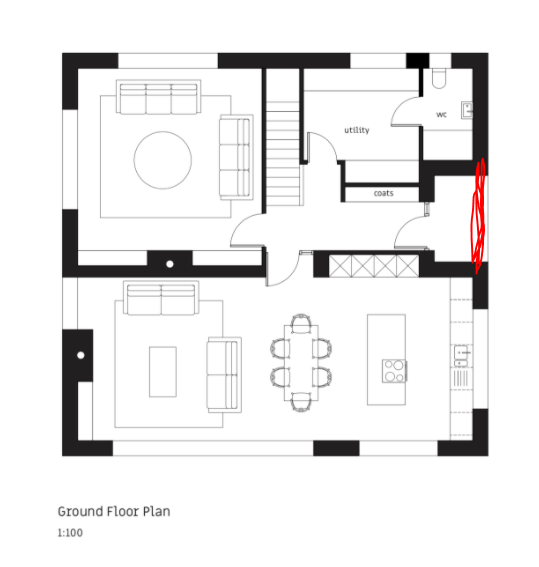
-
Hi @Delbot and congratulations on getting planned permission. Can you expand on your motivations for avoiding concrete please. Is it the carbon or just that you don't like it? Both are completely valid, it's your house and your money. I would have loved to build a house raised on timber piles but very quickly I realised I didn't have the time, or the money, or the will to fight "the man" to the extent needed. I quite like your drawings, it's a charming and unusual design. Passive house is really very mundane in concept. Its just a school level physics calculation based on a sealed and insulated house. It really specifies nothing about embodied energy in the material use so best to keep the two seperate. You could build one from the highest GWP spray foams and steel and concrete and still get a very comfortable and healthy house to live in. Conversely an "eco house" with terrible air sealing, inadequate ventilation, badly installed insulation and a zero concrete approach might be easy on the world to build but very environmentally and financially taxing to run and uncomfortable to live in. That includes using lots of wood to heat it by the way. The best of both worlds is available of course.
-
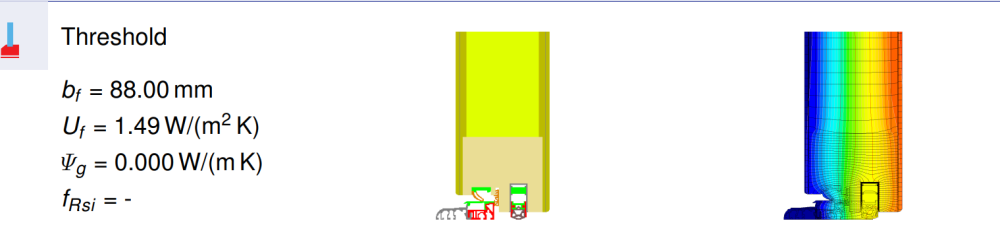
Sorry for the delayed reply. I'll have a closer look at your drawings tomorrow. Here is a cross section of a passivhaus door, note the sweep and the compression seals, The red part is a thermally broken threshold I think. The door is almost entirely insulation. For a quality install this should be sat on some suitable insulant, like compacfoam which in turn is continuous with the floor insulation, The external should drip clear, like in your example into a door drain. For airtightness I would use something like compriband or FS500. https://www.illbruck.com/en_GB/solutions/window-installation/brick-block/ As to DPC's. The reality of site work is that they are rarely uncompromised. The need to be installed out of the way of foot traffic which is almost never done. A robust solution is to use DPC paint on the threshold but it is messy and time consuming.
-
Welcome @Bemak We're probably not too far away from you and did the same in 2019-2021. Do you have more drawings to share? Have you run any sort of energy modelling?
-
It depends how far South you are and how much stuff you're willing to burn to make up the difference. Unless you have an electric car. Then you're buggered.
-
It almost feels like we're reaching the end of a salesmans quarter. Had a concrete man ring me the other day about a farm job I asked for a quote for in April 2021. Politely informed him the work was finished. I asked him for a current price just in case I needed more. €4 per m3 increase for 35N since then. Hardly an extortionate price hike despite similar warnings of doomsday 12 months ago.
-
Like @tonyshousesays. Just do the bottom ~150mm in concrete. Fill in to just below the surface with whatever. Tamp firm. Then do the 150mm just below the surface with more concrete. BTW if you have the patience adding soil in 50mm layers and really compacting well will result in a rock solid fence. No concrete needed, but it is time consuming.
-
Focus on airtightness if you can. It's the cheapest win. Thereafter more insulation. My neighbour did PIR boards with the residual cavity pumped with closed cell foam. I think it was fairly successful.
-
Hi @maxdavie and welcome. A Couple of issues I can see. If you're expecting good airtightness results you really need compression seals on the door. This looks like an old fashioned brush seal. The concrete threshold will constitute a substantial thermal bridge here. I would ensure any thresholds overhung the door drain to drip clear. There's a chance water will run back under the threshold as is. Given it's a high traffic area I would question the integrity of the insulation under the ply. Over time it might compress. What is your planned airtight seal between the door and the floor? If it's the mortar I would revise your thinking a little. Any seals between different materials really need to be permanently flexible for durability. Special tapes, mastics, compression tapes, paints and membranes are most often used. The ply would most likely suffer decay over time in the current location under the threshold. Timber doesn't like being trapped between vapour closed materials , especially outside the heated envelope. I hope this helps. I'd love to see your system. It sounds very interesting. I think there was something similar on Grand Designs a couple of years ago.
-
Which heating system to use on our new build?
Iceverge replied to Johnny Jekyll's topic in Underfloor Heating
Edited, sorry I read back and didn't realise your walls were done. -
What about this bloody monstrosity!
Iceverge replied to SuperJohnG's topic in Rainwater, Guttering & SuDS
Is there anything to be said for a gargoyle?
-
Owner-Builder looking to build our family home!
Iceverge replied to AccidentalSkydiver's topic in Introduce Yourself
Looks like it. True. -
Only two choices where the damp is coming from, Condensation from when moist internal air meets a cold surface or Water infiltration. If there's heat in there already I'd wager it's the latter. Have you thought about making a model ? Fill a large dish full of your local soil, compact it, dig a "cellar" in the middle and pour some water around the edges to see if it replicates the behaviour of your real house, with the slow influx of damp.
-
Owner-Builder looking to build our family home!
Iceverge replied to AccidentalSkydiver's topic in Introduce Yourself
Our house is built, from hundreds of tonnes of concrete, oh if I had my time again. Hopefully I'll gather the cash for some other smaller projects in the future though. https://passivehouseplus.ie/magazine/new-build/the-west-midlands-eco-house-with-no-energy-bills Thanks for your reply. I'll keep pondering.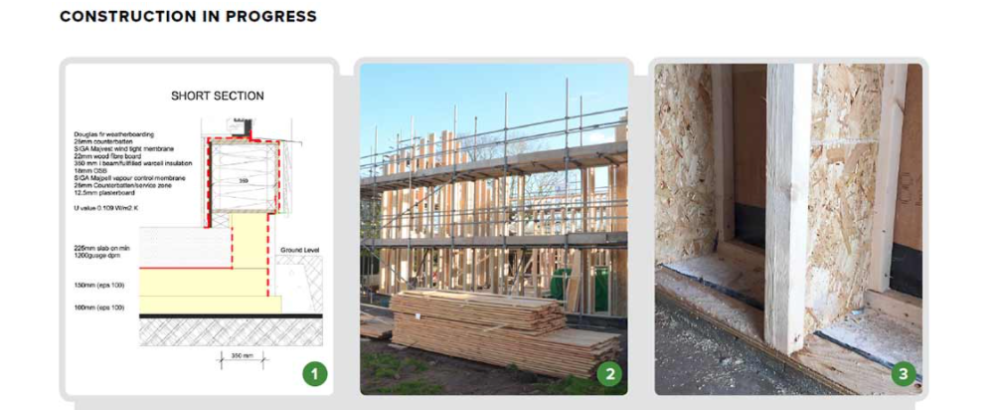
-
Too many junctions and corners. Count the number of surfaces in a house. Each one will add ££. A simple rectangular footprint with a monopitch will have 6 sides, change to an apex roof and you have 7. Our hipped roof farmhouse has 9. I can't see the whole house you've proposed, How many does it have? Remember the timber frame cost doesn't reflect the extra cost of these. They just charge you for the sticks they nail together. Every valley and hip in the roof needs sealing, cutting tiles etc. All roof surfaces need their own guttering and downpipes. If you want inspiration for the cheapest easiest houses to build look at the farm buildings about you. Alternatively get some cardboard and sticky tape and try to make some of the designs you've posted. Time yourself and measure the amount of waste material for this these two. Unless you provide more detail I'm afraid we're just throwing darts in the dark, no need to post anything that would identify you, but having no idea what you submitted or why it was refused I'm at a loss. If you would prefer not to do so a good professional is your other option.
-
R values, thermafleece 90mm vs quinn therm 70mm?
Iceverge replied to Strawman's topic in Heat Insulation
Pumped cellulose. About it was about €70+vat/m3 when we did our house 2 years ago. -
R values, thermafleece 90mm vs quinn therm 70mm?
Iceverge replied to Strawman's topic in Heat Insulation
For the love of cats I wish people would stop the love affair with PIR, especially in roofs. Cost Fire Ease of fitting, Thermal bypass, Heat protection. Vapour permeability. Overstated K values, Gas migration, Shrinkage poor performance in cold weather. Supporting quantifiably immoral manufacturers. On the other hand the sheep's wool will do fine. 👍