Jeremy Harris
-
Posts
26430 -
Joined
-
Last visited
-
Days Won
360
Everything posted by Jeremy Harris
-
Just checked, we used about 8 kWh over the 24 hours period. so a bit over 330 W average. Our inverter started up just before 08:30 (which is late, it's usually come on an hour or so earlier recently). The 5.5 kWh was generated from then until about 16:30, when the inverter turned off, so we generated around 690 W on average when the system was on, so it will have put around 2.9 kWh into the hot water, maybe half our usage or thereabouts. I've just checked, and right now (at 08:45) we are generating about 590 W, so not a lot. Looks like a repeat of yesterday.
-

Right of Way, Area of common parts
Jeremy Harris replied to success1980's topic in Party Wall & Property Legal Issues
I use the Wiltshire GIS site a fair bit, and it is a bit clunky, but you can zoom in to a reasonable level. This is the link to it if it helps: http://wiltscouncil.maps.arcgis.com/apps/webappviewer/index.html?id=43d5a86a545046b2b59fd7dd49d89d22 -
Ebuild has completely shut down now, so I don't think there is any way of finding out who was around at that time. It was a very busy forum in 2008, even had mentions in the national press (how I found out about it), but had a software update that took it offline for ages and then it took years to recover from that. This forum came into existence when Ebuild closed down in 2016, with 16 of us from Ebuild who decided we needed a self-build forum.
-
Just a very dull day, first one for ages where we've exported nothing at all. We generated around 5.5 kWh in total, so some went to heat hot water, but not a lot, as the house tends to use around 300W or so.
-
We closed it down in 1999, so it's been disused since then. It wasn't a very robust building, anyway. Originally it was temporary, when it was first built in 1969,so was just a glorified timber shed, then it was clad with blocks on the outside to extend it's life (the blocks covered up several of the windows, so from inside you looked out at the back of the cavity!). The roof was originally just felt, but also got replaced with something a bit more durable. The weather's rough up there, and the building needed constant maintenance when it was in use. I'd imagine that it must have deteriorated badly in the couple of decades it's been sat empty.
-
Same here. Our ground works chap had a 10ft container he used on site for storage, but it was heavily modified, with loads of welded on steel reinforcement everywhere. It still bore the scars where people had tried to break into it.
-
value for money house design
Jeremy Harris replied to Amateur bob's topic in New House & Self Build Design
Close to our layout. We have the entrance hall in the centre, with stairs, kitchen diner to the right, with utility room (with back door) behind that, and WC off the utility. To the left we have the living room, with a smaller study off that, with French windows leading out to the garden. Bedrooms and bathrooms are to either side upstairs, leading off a landing that runs across part of the entrance hall. -
Talking of using excess PV to charge a Sunamp, by coincidence I've just noticed that our Sunamp hasn't fully charged today. That's the first day since about the end of March that we will end up getting some of tomorrow's hot water from an E7 boost charge tonight. Still, we've had completely free hot water for nearly six months, so I can't really complain.
-
I can think of four of us from that era, you, me, @Temp and @caliwag
-
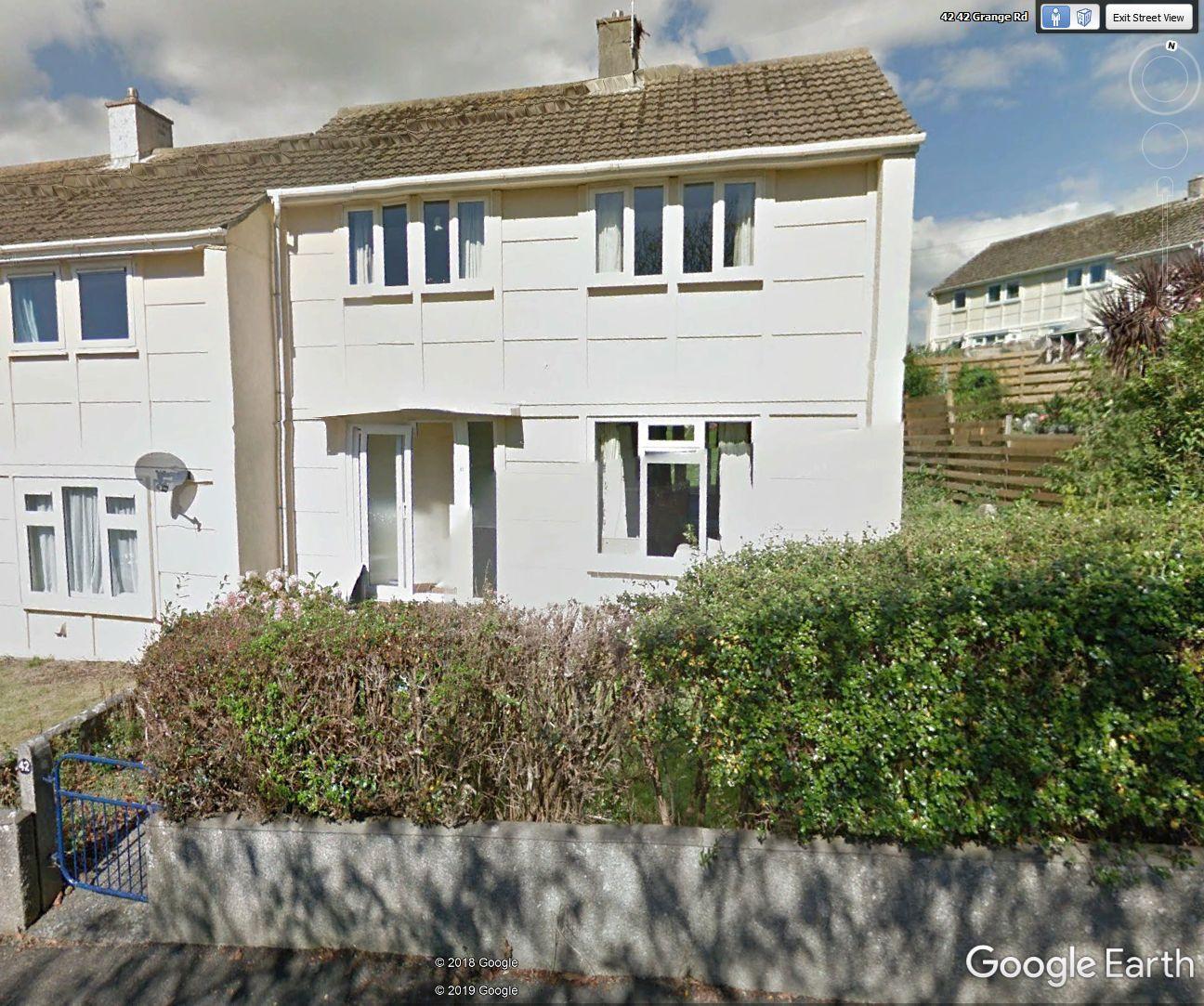
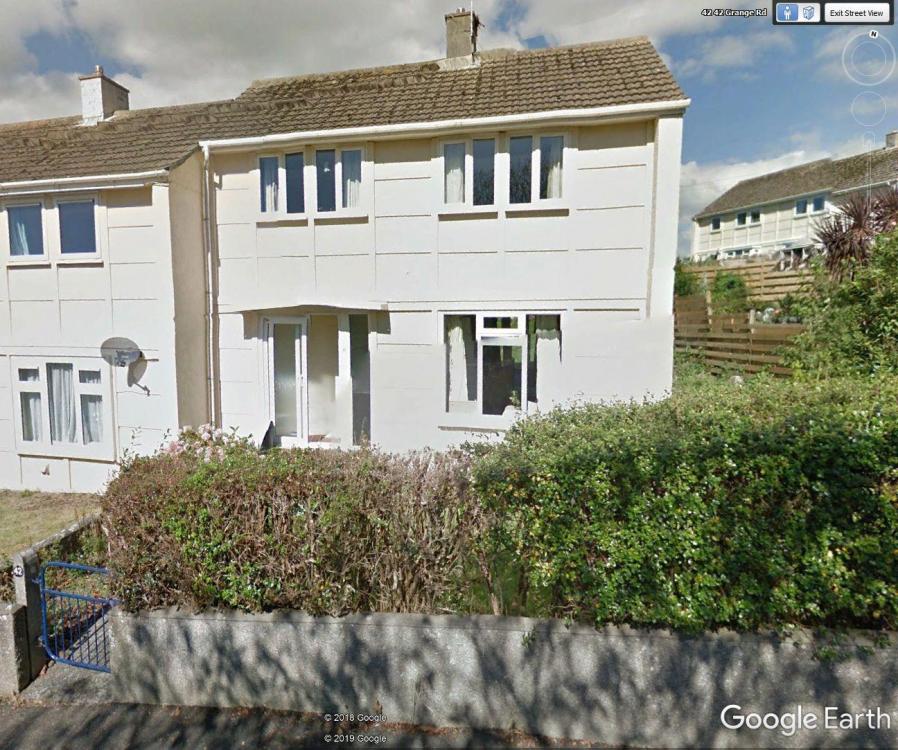
My first house was very similar to a Cornish Unit, same sort of prefab concrete panel construction. Many of them had proper walls built to replace the pretty dreadful precast concrete slabs (which used to rattle in a strong wind). Out of curiosity I've just had a look on Google Earth and that house is still pretty much as it was in 1976, when I moved in. The only obvious difference is that the old crittal windows have been replaced. The steel front gate is the same as it was then, though. I liked the fact that it was the answer to the meaning of life, the universe etc.
-
That's true. I started seriously researching self build around 2008, about the time I joined this forum's predecessor, although we'd talked about it for a few years before that. My first post there was more than a bit naive, and answered patiently by @Temp, who pointed out the importance of finding a plot before thinking about house design. Interesting that we're both still around on here. Off the top of my head I think there can't more than a small handful from that long ago still here. All told I spent two years or so doing part time research, before I retired, then another two years of full time research and plot hunting, then another year sorting out the design of the house after that, before submitting the planning application.
-
value for money house design
Jeremy Harris replied to Amateur bob's topic in New House & Self Build Design
Around here, the general consensus is that paying £140 to the planners for a pre app just isn't really worth the money, it's better to either spend it with a planning consultant, who probably knows the system better than many of the planners, or just take the time to study planning policy and guidance in depth, as it's applied to applications in the area. There have been several cases where pre app advice has been wrong, and applications refused even though the applicant took it onboard. -
I think you're right, I can't find anything that relates to cleaning access, either. Is this a valley between two roof sections? If so, then it might be an idea to look at how the roof sections are sealed where they meet the gutter, to make it easier to clean them out with a hose or water jet. It may be that 30mm is enough of a gap for cleaning with a hose. I gave our old house a tidy up before we put it on the market, that included taking out the gutter hedgehogs and giving the gutters a good clean. As I had the hose out, and as I'm basically lazy (and I don't like going up ladders much) I found that a spray head on the end of the hose did a pretty good job. I could stick it in at one end and just push the hose along the whole length of a gutter, with the spray head set to a fairly fine cone. Only thing I had to watch was not to turn the tap up to much, as there was a risk of forcing water up under the eaves.
-
value for money house design
Jeremy Harris replied to Amateur bob's topic in New House & Self Build Design
Just realised, @ProDave, that your house is fairly similar to ours from the front, central entrance hall and rooms off to either side: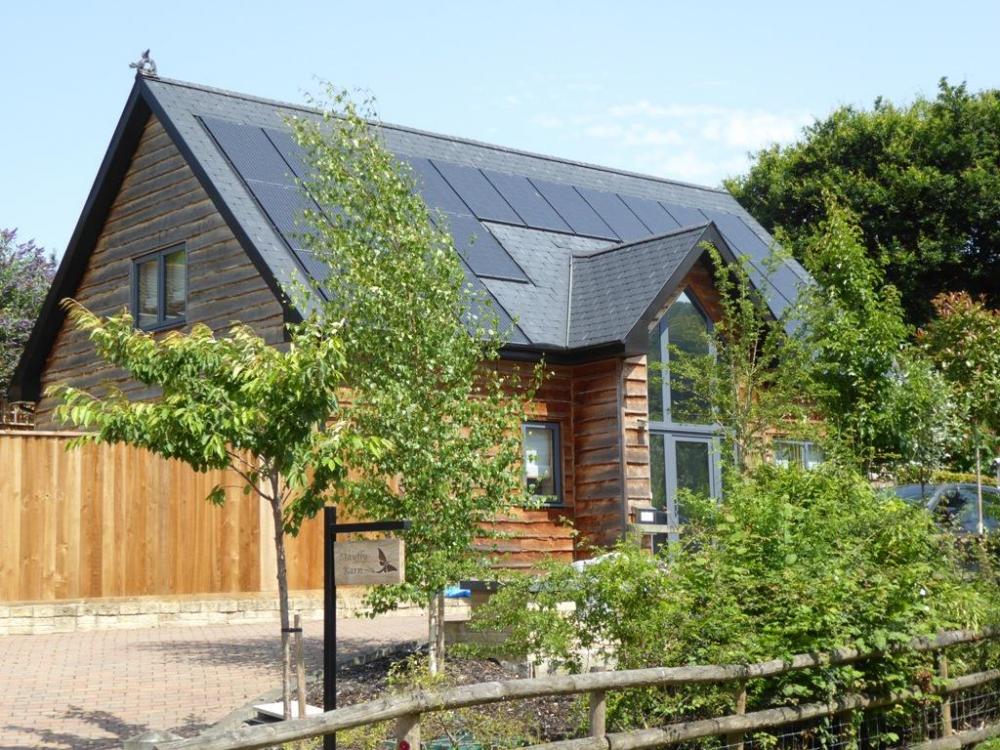
-
Very good point, although we do have one or two that have pretty much gone down the turnkey route, really commissioning a new house rather than self build, perhaps.
-
They definitely were. The blinds are made by Luxaflex, and I'd recommend them, as they are well made.
-
Right of Way, Area of common parts
Jeremy Harris replied to success1980's topic in Party Wall & Property Legal Issues
Just been involved in a rights of way review and survey (meant a lot of walking). Even ROW that haven't been used for decades are near-impossible to extinguish, and very often as soon as any attempt is made to do so, one of the walkers associations, like the Ramblers, will fight it and ensure that the ROW remains, even if it is never used by anyone. I'd do as @ProDave suggests, and fence it, but make sure that the line of the ROW is as close as possible to that on the definitive map. This may be challenging, as some of the definitive maps are not well drawn. A consequence of moving the ROW is that you can end up with two, parallel, ROW, each with equal validity. The law is a bit odd, in that if a new route is adopted as a ROW, it can gain the same rights as the one adjacent to it on the map (we ran into this problem when trying to buy the first plot we looked at). Also, if fencing and restricting access it's important that the class of ROW be respected. You can't put a stile on a byway or bridle path, only on a footpath, for example. I'm not sure what happens to land you buy and fence off after some time, though. It may be that the land other than the ROW could be fenced off and if no one complains about it being fenced off you gain full rights to it, a bit like adverse possession, but applying solely to the rights of use. I'd seek legal advice on this, and keep quiet about it, but I would imagine that the common parts right may be able to be extinguished. -
value for money house design
Jeremy Harris replied to Amateur bob's topic in New House & Self Build Design
Square is also more thermally efficient, as the ratio of surface area to volume is better than for a rectangular or L shaped house. -
When we had some (expensive) angled blinds supplied and fitted to our gable glazing, the chap that turned up to do the measurement survey, take the order, etc was driving a pretty high end Merc, and used a custom app on his big iPad to note everything down, handle the order, payment etc. The impression I had was that they were probably adding a heck of a lot to the price of the blinds, just to support the way they chose to portray themselves. We had little choice, as there are very few companies around that can supply and fit angled blinds, and all seem to be in the same, fairly expensive, sector of the market. My wife wanted the same pattern of blinds fitted to the French windows in her room, but as these were just rectangular, I looked around and found a supplier in Germany that made absolutely identical blinds to the ones we have on the gable, but with much more substantial aluminium (rather than plastic) operating handles (for the manual ones). They made blinds to measure for about 30% of the cost of the same type of blind we have on the gable (the gable has two sets of triangular blinds and three sets of rectangular ones). This confirmed my view that the people that supplied and fitted the gable blinds were on a massive mark up, some of which went to pay for the high-end appearance of their staff, systems etc.
-
A Sunamp is only a replacement for a buffer tank, really, as it's just a thermal store. I guess one could be used for an UFH buffer, but as they no longer make the low temperature one, the 58°C one that's currently available wouldn't seem to be a good fit for UFH. It's also a pretty expensive way to provide a buffer, I think. As a Sunamp can't be easily charged from an ASHP, due to the need to charge at around 65°C, what were you thinking of using to charge the Sunamp? Using an electrically heated Sunamp for heating would seem to be expensive, as even at cheap rate overnight charging the cost would still be around double the operating cost of an ASHP. There won't be any useful solar charging opportunities in the heating season, we've found that there isn't enough spare generation to provide more than a small amount of our winter hot water (works fine for hot water the rest of the year though).
-
Connecting a check valve to 25mm alkathene
Jeremy Harris replied to ToughButterCup's topic in General Plumbing
I've not seen a tapered MDPE threaded connector, TBH, and I doubt the female thread in the NRV is BSPT, it's almost certainly just a standard parallel BSPF thread. The taper on a BSPT thread is pretty obvious to look at. We have a few of them around and all had parallel threads. Most needed more wraps of PTFE then I'd have thought necessary, as they are often a bit tight to screw in initially, then ease up a bit as the PTFE beds down. I don't think I've had any problems with any of them ever leaking, though. -
SIPS for roof only
Jeremy Harris replied to connick159's topic in Structural Insulated Panels (SIPs)
My intention was really just to highlight that there are a lot on invisible thermal bridges in a SIPs roof panel. AFAIK, SIPs wall panels don't usually have these. -
I suspect there may also be a perception that hourly rates, if known, may seem high. Years ago I used to do a bit of consultancy work (an accidental job on the side). When first asked to do this, I had no idea how much to charge, so spoke to a friend that worked for the CAA. They charge out their technical staff on an hourly rate. He told me that they charged £140, plus VAT, per hour (this was around 15 years ago). I decided to charge a little bit less, as that seemed a heck of a lot, and found myself deluged with work. I learned two things, one that was I was charging far less than others offering similar services and that £140/hour is nothing like how much you actually earn per hour, as there is always lots of non-chargeable time in any job.
-
SIPS for roof only
Jeremy Harris replied to connick159's topic in Structural Insulated Panels (SIPs)
Depends how the insulation is placed, really. Take our roof as an example. We have 300mm deep I beam rafters hung from the ridge, with an air gap then a stud (the stud is nail plated to the I beam lower member, with an air gap). The whole space is filled with blown cellulose, so there's minimal thermal bridging (there is a very tiny amount through the OSB webs of the I beams). Putting insulation outside of a trussed roof does much the same thing. It is possible to add an additional layer of insulation to SIPs, but some of the manufacturers are a bit against this (the ones we spoke to at the time were adamant that this should not be done). If adding additional insulation to a SIPs panel, then it probably isn't any cheaper or easier than any other roof build up, I suspect. -
Connecting a check valve to 25mm alkathene
Jeremy Harris replied to ToughButterCup's topic in General Plumbing
PTFE tape, wrapped tightly around the male thread, in more layers than you think it will need.