


Jeremy Harris
-
Posts
26430 -
Joined
-
Last visited
-
Days Won
360
Everything posted by Jeremy Harris
-

Copyright and public plan submissions.
Jeremy Harris replied to epsilonGreedy's topic in General Self Build & DIY Discussion
Our plot had full, rather than outline, planning permission, but the house design was horrid, so I started again with a totally different design. It meant submitting a new application, and doing some drawings (but only outline ones) but it really wasn't that arduous. The principle of development had already been set by the existing application, so I just needed to do a lot of work to persuade the planners (well, to be fair, the planning officer was onside it was the environment agency, conservation officer and the committee of the AONB that were the hardest to convince) -
Copyright and public plan submissions.
Jeremy Harris replied to epsilonGreedy's topic in General Self Build & DIY Discussion
I doubt you'll get an architect to assign over their copyright as a part of a conveyancing deal, TBH. They have/had a contract with the seller (presumably) which won't be transferable, in all probability, so you would need to negotiate directly with the architect, I think. There's nothing to stop you putting in a planning application for something similar, but not using the original architects drawings, though. The old planning permission remain valid, so there's no real risk involved in submitting a new application, just the cost and time. If the new design is broadly similar in terms of design scale and placement then the chances are there would little or no problems in getting it approved. -
Copyright and public plan submissions.
Jeremy Harris replied to epsilonGreedy's topic in General Self Build & DIY Discussion
Yes. Copyright stays with the author unless specifically assigned to another. It doesn't matter if something is published, posted on the internet or whatever, unless the author has specifically waived his rights then he retains the copyright, as a general rule. Architects are pretty hot on this, as they know their work will end up on council planning sites, so they tend to be pretty robust in not allowing anyone to use it for free! Best bet would be to seek permission from the architect and see what he/she says. -
Log burner
Jeremy Harris replied to jpinthehouse's topic in Mechanical Ventilation with Heat Recovery (MVHR)
If you have the time, feel you have experience that may be useful, then you can be a Cochrane volunteer. The work is slow, but the resulting analysis of data is often surprising, and sometimes contradicts common medical practice. It's well worth looking at some of the reports from Cochrane, but because it's such hard and slow work, there are still massive gaps where there are either ongoing reviews or just no reliable data from any known source. -
Log burner
Jeremy Harris replied to jpinthehouse's topic in Mechanical Ventilation with Heat Recovery (MVHR)
You have to argue the point with the Conservation Officer. I did, and won. In terms of sustainability, the frame of our house is made from FSC certified timber (or the equivalent), the wall and roof insulation is made from recycled newspapers, the cladding is from larch that grew and was felled from a managed woodland 6 miles away and milled 3 miles away, the roof slates are made from recycled plastics and car tyres and we are adjacent to a listed building so had more stringent conditions to meet in terms of external appearance and design than we would have had in a Conservation Area. We're also in an Area of Outstanding Natural Beauty so had them to contend with as well! If there is a will you can overcome a lot of these challenges! -
Log burner
Jeremy Harris replied to jpinthehouse's topic in Mechanical Ventilation with Heat Recovery (MVHR)
If you want reliable, peer reviewed, unbiased (as it's all reviewed by volunteers, like me) then look at the stuff reviewed by Cochrane. They remove the biased pharmaceutical company stuff, the biased stuff from other sources and only seriously consider studies where the methodology was robust and the evidence is clear. As a consequence a lot of the studies that get airtime in the media and on the internet are often found wanting. Cochrane is globally regarded as the gold standard for medical data, principally as it has no axe to grind, either commercially or politically: http://www.cochrane.org/ -
Log burner
Jeremy Harris replied to jpinthehouse's topic in Mechanical Ventilation with Heat Recovery (MVHR)
As another random fact to throw into the debate, I was asked to give a talk in our local village hall about our house, as it caused a bit of a stir in the village. I struggled to try and find ways to make some of the stuff easier to grasp. One thing I did was work back from our Environmental Impact Rating, of -0.9 tonnes of CO2 per year, to something that made more sense. Interestingly it seems that our house effectively "absorbs" (from zero carbon generation and energy export) the equivalent CO2 of over over 40 mature trees. There is not room on our plot to fit more than about ten mature trees, so our house is, theoretically, better for the environment that an equivalent sized plot of mature trees. When talking about subsidies it's worth including all those available for planting trees and managing the countryside too. They almost certainly exceed the very small subsidies that domestic renewable energy systems get. -
Log burner
Jeremy Harris replied to jpinthehouse's topic in Mechanical Ventilation with Heat Recovery (MVHR)
I remember doing some rough calculations ages ago as to how much sustainable woodland was required to fuel a single wood burning stove. It's about 7 acres, IIRC. That means that every single wood burning stove in regular use needs 7 acres of sustainable woodland to keep it going. It's not hard to see that, apart from the health concerns, these things are just not sustainable, except for a very few people who have access to such large areas of sustainable, managed, woodland. -
Log burner
Jeremy Harris replied to jpinthehouse's topic in Mechanical Ventilation with Heat Recovery (MVHR)
There is no one single factor controlling air quality and the impact it has on health. There are many factors, and some are very regional. For example, where we live, at the bottom of a deep valley, with very little vehicle traffic, the predominant air pollution sources are domestic combustion devices (fireplaces, wood stoves and oil boilers) and bonfires. The nature of the local topography means we often have an inversion layer over the valley in winter, which traps pollutants within the valley. This is clearly visible on a cold still day. If we lived near a busy road, it's likely that the major air pollution sources may be from passing vehicles, rather than domestic combustion heating devices. The bottom line is that we now know that these pollutants harm health, and we have known about it for a long time. The big eye-opener in the UK dates back to the great smog of 1952 (coincidentally the year I was born) that ultimately killed 8,000 people and caused 100,000 to become ill, over a period of just 5 days. -
Roof before first floor?
Jeremy Harris replied to ToughButterCup's topic in Roofing, Tiling & Slating
No, No, it's not a PROBLEM, it's a CHALLENGE, with a reward when you beat it! -
As Built SAP
Jeremy Harris replied to Gone West's topic in Energy Efficient & Sustainable Design Concepts
That's a good result, Peter, I bet you're chuffed after all that attention to detail! -
Log burner
Jeremy Harris replied to jpinthehouse's topic in Mechanical Ventilation with Heat Recovery (MVHR)
I agree that vehicle pollution is very significant, but there is no doubt that wood smoke is also a significant cause of particulate emissions. One study suggested that a single wood burning stove emitted around the same particulate emissions as around 100 small diesel cars, with the main difference being that the wood stove emitted the pollution higher up and over a wider, more dispersed, area. The big thing to remember when looking back through time to make any comparison, is the average age at death, and how this masked many hundreds of illnesses and diseases that we now view as major life threatening conditions. Early man gathered around his fire probably had a life expectancy of around 40 years. We now have around double that. One effect of this is that we are now seeing many people with diseases that they would never have had even a couple of hundred years ago, simply because something else would have killed them first. I looked into this effect in some depth years ago, as I've been a part of a longitudinal study into genetic factors that influence multiple sclerosis since 1977. My father had an acute, non-remitting, form of MS and died when he was 43. One of his cousins also had the same form and died at around the same age, as did one of his aunts. Two of my cousins have it, one is very seriously ill and is ten years younger than me. Because of the unusually high incidence in our family, a researcher in Oxford has been using us as a study group for years, to try and identify a genetic predisposition. We had no record in the family of anyone having this condition before my grandparents generation. The researcher went back more carefully through every record she could find and concluded that there were probably 7 early deaths in the family, going back to the mid-1800s, that may well have been MS related. The problem is that the disease wasn't recognised until around 1870, and wasn't regularly diagnosed with any degree of reliability until around 70 or 80 years ago. I carry the faulty part of chromosome 6 in my genetic make-up, something I only had the courage to find out about 4 years ago. The researchers have known about my genetic status for years, but gave me the choice as to whether to go through counselling and be told or not, and I chose not to, until I was over 60, largely because it's rare for the disease to start in anyone over about 50. It seems that whatever triggers the disease didn't work for me, for which I'm exceptionally grateful. There's also increasing evidence that people are becoming more sensitive to things in their environment. My own view is that this may be partly to do with changes in our environment itself, in that we are now exposed to a whole range of potential substances that previous generations were not. I also feel that there may be some link with the way we are obsessed with disinfecting everything, something that may have a possible effect on the way the immune system of youngsters develops. As a retired nurse I know reasonable well keeps reminding everyone she bumps into, there may be a lot of good in children eating a bit of dirt................... -
Mortgage Options - Already Own PLot?
Jeremy Harris replied to soapstar's topic in Self Build Mortgages
I found that they were very expensive (at the time they added their own fee of around £500 on top of any fees from the lender) and they were very, very slow to respond. at a guess they added about 6 to 8 weeks to the process. I think others have had a similar experience with them. Based on that I'd try to avoid using them if you have any choice. We went direct to the Ecology, and found them very easy to work with, but they do have restrictions on the type of build they will lend on - it has to meet their environmental and energy use standards. By far the easiest is to mortgage your existing house. I found that it was relatively easy to get a 5 year, interest-only, mortgage, back when getting any mortgage was tough. -
Tie it to through the gable window? When I put one up the side of our old house, with no space for outriggers, I drilled a couple of bolt holes in the wall and fitted a pair of rawl eye bolts in the mortar corner joints between bricks. When the job was done I took the tower down and went up a ladder to fill the bolt holes with a bit of mortar. You can't see from ground level that they were ever there.
-
Snug passivhaus dwellers?
Jeremy Harris replied to epsilonGreedy's topic in General Self Build & DIY Discussion
Unless you're self-employed! There was a time around three years ago when we had a lengthy power cut (around 2 days IIRC) and the gas boiler wouldn't work without power. I had a laptop that I could work on, and spent most of a day typing up a report for a witness statement in a freezing cold room........... -
Snug passivhaus dwellers?
Jeremy Harris replied to epsilonGreedy's topic in General Self Build & DIY Discussion
I've recently discovered the benefit of fingerless gloves. Brilliant for typing when it's cold (we're still half-in our old house and that does get cold overnight) -
Nice one! Sadly I don't think it would be enough to make me switch, based on the quick and dirty sums I did. Because of our pretty big PV array our daytime electricity use is pretty small, but early evening use is probably our peak much of the time (in terms of imported power). This plot from them shows that we'd be importing mainly during their highest tariff period, and barely using anything at all from the grid during the low tariff period. It's hard to time shift eating...............
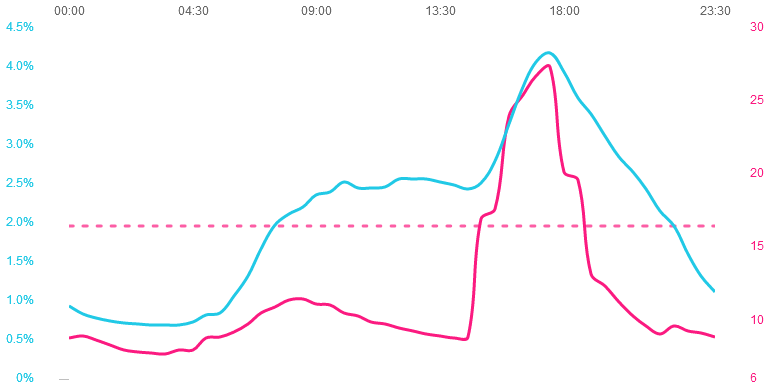
-
Mortgage Options - Already Own PLot?
Jeremy Harris replied to soapstar's topic in Self Build Mortgages
I found that this is very lender-specific. The Ecology Building Society were more than happy to use the bare plot that we owned outright (worth at that time around £130k - £140k) as the initial collateral, and although we didn't need it, they valued it on the basis of a completed house value of £340k, so would have lent us more, in stages, had we needed it. Another alternative, if you are already living somewhere, is to consider taking out a mortgage, or second mortgage, on that house, perhaps in addition to a modest mortgage on the plot itself if needed. A mortgage on an existing house may well be a fair bit less costly than a self-build mortgage, plus you don't have the hassle of the staged release of funds in arrears that some lenders insist on. Sadly the specialist self build brokers seem to charge very high fees and aren't at all quick when it comes to processing applications, so, in my personal view they are best avoided if at all possible. -
Planning permission (close to a listed building).
Jeremy Harris replied to Russdl's topic in Planning Permission
As an observation on Conservation Officers, who have a fair bit of clout in circumstances like this (although can be over-ridden by the planning officer I found), they are generally a pretty variable bunch, and not always the easiest people to deal with. I've had to deal with three, two were a complete and absolute PITA, one was pragmatic and fairly helpful. It seems to be pot luck what sort you get. One of the ones I dealt with took the initial view that nothing should ever be built or altered within a conservation area (and the rules for doing anything close to a listed building can amount to much the same thing I found) and so started off by objecting to everything and anything. His intention was clearly to put so many obstacles in our way that we'd give up and just go away. The first one I dealt with on our new build was pretty obstructive, and frankly not very knowledgeable about the local vernacular. I famously had a public debate (some might call it an argument) in the street with her, when she was standing outside our very overgrown plot, saying that it was mandatory that we clad the exterior in Chilmark stone (the stuff that Salisbury cathedral is built from), with a clay tile or natural slate roof. I first asked her to point to a house nearby that had either a clay tile or slate roof and she pointed to a bungalow with a concrete tile roof, then the listed building which bizarrely has an asbestos slate roof. Unimpressed with her knowledge of building materials and having corrected her on what she'd pointed out, I then asked if she could point to an example of a house nearby made from Chilmark stone (which is a creamy coloured stone). She pointed to the listed building again and I pointed out that it was built from locally quarried Greensand, a dark, greenish coloured stone. She then pointed to the rubblestone walls of the cottage over the lane. Again I pointed out that it was mainly Greensand. She then asked me where I thought there were houses made from Chilmark stone, and I told her there were two, both new builds, and she could easily spot them as she drove through the village as they stuck out like sore thumbs, being a totally different colour to all the older houses. At this point she told me she had personally approved the stone for those new builds, got in her car and drove off................... As luck would have it there was a change of Conservation Officer and the new one was a lot easier to deal with. All he strongly objected to was our plan to fit solar panels in the roof elevation facing the listed building. Our planning officer ignored him on that, as he felt it wasn't an issue. The post script to this tale is that just before the house was completed our BCO asked if I could give a short Continuing Professional Development session at the house for some planners, building inspectors and the Conservation Officer. The first to arrive, on a rather wet day, was the Conservation Officer. The first thing he said as he came in was "I'm so glad that I insisted that you not fit solar panels to the roof". I asked him if he'd like to step outside and have another look, when he was decent enough to smile and say that if he'd known they could be as discreet as that he would never have objected............. -
Planning permission (close to a listed building).
Jeremy Harris replied to Russdl's topic in Planning Permission
We found that our planners applied a restriction on any development within 100m of a listed building, that may adversely affect it's setting. In our case we are dead opposite a grade II listed building, so despite being (at that time) slightly outside the Conservation Area, we had pretty tight restrictions imposed on the design and materials. I even had a condition that meant a sample of every external material used had to be pre-approved by the planning officer. We were limited to two choices of wall finish, either timber clad in a non-contemporary style, using native timber, or stone clad with stone from a specific (and long closed) quarry................ TBH, once we'd got our heads around the restrictions and thought through what we could do, it wasn't really an issue, apart from being a bit of the PITA in terms of getting samples approved. -
Normally a flat roof like that will be more than strong enough to take a distributed load that is enough to put a portable tower on, or put a ladder on to work on one storey above. If you're really concerned then increase the thickness of the top board cover to spread the loads a bit. By way of example, we have a very similar sized flat roof on our old house, over the front door lobby. I've used that as a platform for maintenance several times without noticing any flex in the roof at all. I was a bit shocked to find that, when we had that roof replaced a couple of years ago, the board used was only 9mm thick plywood! What sort of loads do you think it might need to carry when doing maintenance work? If it's just stuff like painting the wall or window above, then I'd say a normal flat roof build up would be fine. When doing any maintenance it helps to just put some boards on the roof to spread the load, as this prevents there being a point load that could damage the surface.
-
That's really a key point, as I reached the same conclusion a year or so ago. Our use is less that this, and when you're down at that sort of consumption level the differences between all the various tariffs, especially when weighed against some of the hidden costs (like just a single billing error as mentioned) sensible use and choice of a standard tariff can make sense.
-
The problem seems to be that it's a very skewed market, with a lot of government interference. My personal view is that the energy market is "neither fish nor fowl", in that it is not a true free market and neither is it a government owned nationalised industry. In some ways it's the worst of both! The government effectively has a strong influence over the generation cost, because they put massive subsidies into some forms of generation, some for good reasons, some for less good reasons. This skews the wholesale cost a fair bit, and even though some subsidies have now been removed, their impact will remain for the next couple of decades. The government also seems to have a modest impact on the retail price, with new caps and controls on tariffs and OFGEN interference in the way suppliers operate. The "free" bit of the market is really just the bit between the wholesale half-hourly traded energy price and the supplier tariff setting methodology. The wholesale half hourly price is massively impacted by government subsidised generation. Look right now: http://gridwatch.co.uk/ , nuclear, solar, wind and biomass are all getting government subsidies (or have been), and they are supplying a fair bit of our total energy right now. Given that the strongest government intervention in the market currently seems to be associated with generation, and hence the half hourly wholesale price, it's no wonder the suppliers wish to pass that volatility (and risk) on to consumers. I wonder what would happen if we did have a device that switches tariffs in real time, every 30 minutes? I rather suspect it would remove any real added value from any supplier - consumers may as well just buy directly from the generators. Oh, hang on a minute, would that be what we had when energy supply was nationalised?............................
-
I agree, but the return on investment, taking into account the battery life, still doesn't quite make purely financial sense. One issue is really the whole life cost of battery systems, and this seems to mainly be driven by the relatively short (in house lifetime terms) battery life. Flow batteries seem to offer a probable solution to the whole life cost problem, but they are a long way from being a viable market-ready product, it seems. Getting batteries that have a calendar life out to 20 to 30 years would be a good goal, as then that fits with the sort of life that people might expect for major household fitted systems (tanks, boilers etc). We're some way from that at the moment, with even the best lithium cells still having an age-related degradation of a couple of percent or more per year. They are getting better, and are probably now just edging ahead of lead-acid in terms of age-related degradation, so there's clearly still room for improvement. Cycle life isn't so much of an issue, as this is highly non-linear with regard to depth of charge/discharge, so can be managed by just limiting the state-of-charge (SOC) range over which the cells operate. It's pretty easy to get well over 10,000 to 15,000 useful cycles out of present day batteries with proper SOC monitoring, so it seem clear that it's age related degradation that is the present limiting factor.
-
Snug passivhaus dwellers?
Jeremy Harris replied to epsilonGreedy's topic in General Self Build & DIY Discussion
You've said it all with a single word, nothing I could add could improve on that!

