Jeremy Harris
-
Posts
26430 -
Joined
-
Last visited
-
Days Won
360
Everything posted by Jeremy Harris
-
 Sounds good, but I'd be inclined to use outdoor Cat 5e, as it has a much tougher sheath. I found this source of a 25m length for £10, including delivery: https://www.ebay.co.uk/itm/25m-External-Underground-Outdoor-Network-Ethernet-Cat-5-Cable-Solid-Copper/351540910858?epid=906119465&hash=item51d9789b0a:g:AVwAAOSwyQtVqWwV:rk:1:pf:0 The trench drawing I have shows a 300mm minimum separation between data cables and power cables, so that seems a good guideline.
 -
Thanks @PeterW, I had a feeling it would degrade performance a bit, but wasn't sure by how much. Looks like it's not enough degradation to worry about, if 30 Mb/s is the requirement. However, I did a bit of digging around and found that 25m of outdoor/underground in a duct Cat 5e can be had for around £10, which makes me wonder whether it might not be better to just run Cat 5e to give a bit of future proofing.
-
You should have access to create a new blog now, let us know if you have any problems.
-
There's a minimum separation distance required in a trench between LV power cables and data cables; off the top of my head I think it's 300mm (need to check, I have a trench drawing somewhere). I'm not sure that 600 ohm phone cable would support 100 ohm Ethernet, but it might do with a bit of a performance hit, but that may not matter.
-
I suspect there may be problems because the twist and characteristic impedance of phone cable is different to Ethernet cable Phone cable twisted pairs have a looser twist than Ethernet twisted pairs, and IIRC, are around 6 times the impedance (Ethernet cable is around 100 ohms, phone cable is probably still around 600 ohms). Ethernet cable is pretty cheap, even Cat 5e underground cable (to go in a duct) is only around £20 for a 50m reel.
-
How many amps does a static caravan need?
Jeremy Harris replied to epsilonGreedy's topic in Electrics - Other
There isn't a reconnection cycle, for safety reasons, and it's not connected with lightning surge arrestors, what they do, in effect, is short an over-voltage spike to ground. For safety reasons, a local LV distribution point is fused, or sometimes protected by a resettable overload breaker. The idea is to protect the MV/HV side of the local distribution transformer, by trying to ensure that the LV side is disconnected in the case of an overload. Trying to reconnect when there is an overload condition jeopardises more of the network. MV and HV fuses are harder to change, and are usually either ejecting bayonets or explosive fuses, and both require a higher degree of skill to change, plus they need the MV/HV side power to be disconnected, which causes disruption over a wider area, hence the reason that the LV side is designed to disconnect first and stay disconnected until reset. -
Yes, it normally only applies to structures, so if there are no structures within the proscribed distance ( a 45 degree line drawn outwards from the lowest point of the foundation system) then I think you're in the clear. As @PeterW says, though, you're either going to have to get the neighbours permission to erect scaffolding on his land or just trespass and hope that he doesn't materialise and force you to remove it.
-
Doesn't that depend on how far away any structure is on the neighbours side, though? I had a feeling that consent or notice was still required even with relatively benign piling systems like screw piles.
-
The Party Wall Agreement is a good point, that close and it may well be required as the 45 deg rule means that the horizontal distance in from the bottom of any foundation system is going to project a fair distance over the boundary. It's a non-native species, so would a TPO have been granted on it anyway? I believe that Robinia is classed as an invasive species in some areas, isn't it?
-
A trunk just 10 inches from a wall is pretty much guaranteed to cause future problems, I think, no matter what sort of foundation system you use. The tree could grow to around 20 to 30m high, and probably has a life in our climate of around 50 to 80 years or so. Someone is going to have to take it down at the end of it's life, without damaging your property, which sounds like a challenge. At just 10" from the wall it's going to be practically touching the gutter on that side at the size it is now, let alone when it's got a bit bigger or when it sways with the wind. Given that the canopy is going to extend a couple of metres over your roof you also run the risk of damage from falling branches and clogged gutters from all the leaves it will shed.
-
Although it may be possible to find a solution to the tree problem now, what about the future? That tree is going to carry on growing, will need maintenance, and will have to be felled at some future date when it reaches the end of its life. What will be the impact of future tree and root growth, or possible damage to your new build if the tree sheds limbs or falls over? What might be the consequences for your house from people working on the tree, or felling it at the end of its life? Finally, what might be the effect on your house of the unseen roots underneath your foundations rotting away and creating voids when the tree does die?
-
Still seems high to me. I spent a bit of time calculating the possible thermal bridging in our wall and roof structure, accounting for the effect of surrounding any timber thermal bridges with insulation in close contact, which made them effectively only 2D thermal transmission paths, and concluded that the default 15% value was way out for our frame. I have the spreadsheet on another PC and will try and dig out the exact figure later, but off the top of my head I think it increased the wall U value by less than 2%. Having relatively thick walls, with only a small cross sectional area of timber bridging from inside to outside helped. The system @ProDave has seems to be very similar to the Warmshell Passivhaus build up, but with just 200mm deep frame insulation, rather than 300mm, but a thicker outer layer of rendered wood fibre: http://www.warmshellinsulation.co.uk/document/Products/warmshell_passivhaus_details.pdf
-
How many amps does a static caravan need?
Jeremy Harris replied to epsilonGreedy's topic in Electrics - Other
Interesting anecdote re: the agricultural worker, but flawed because there will normally be a fuse in the distribution line from the sub-station, not any form of automatic reconnection system. The explosion from a short at a few hundred amps on an LV cable is mighty impressive though, and more than enough to kill. The local LV fuses are typically around 500 A, with a maximum value of 800 A. If there's a major cable fault, then that fuse is supposed to blow to protect the local network cables. It's debatable whether it actually does, though, as there are a few tales around of concentric incomers burning back when shorted, without the distribution fuse blowing. We had a pole fire outside our old house a few years ago, when an old pitch-filled pot joint failed and set the pole alight like a burning Christmas tree, dripping burning pitch. The power didn't shut off, as the thing kept making periodic flashes as a new short developed and then burned out, so it seems to be true that the local LV distribution network fuses can fail to rupture under some fault conditions. When the fire brigade arrived they had to just sit and wait until the power was turned off. All told the pole was burning and banging for around an hour, then the power stayed off for another three or four hours whilst the cables were replaced and new joints made. -
However, in this case there is 100mm of insulation outside the timber frame structure, which mitigates a fair bit of the thermal bridging there would be otherwise. The sums are easy to do, given the details of the actual structure, but I bet the thermal bridging allowance will be a fair bit lower than 15% in this case.
-
If you're fitting a Sunamp UniQ eHW then all the electrician needs to run is a low current (6 A) supply via a fused connection unit (FCU) plus a 16 A supply. Run a 20 A radial from the consumer unit to the PV diverter location, fitted with a 20 A double pole isolating switch. Run a cable from this isolator directly to the PV diverter, then run an additional cable from the isolator to the FCU, fused at 6 A. Run two cables from the PV diverter location to the Sunamp location, a length of 2.5mm² T&E for the switched heater power from the PV diverter and a length of 1mm² T&E from the FCU. The thinner cable provides power to the Sunamp control box, the thicker cable provides the switched power that runs the heater, via the Sunamp control box.
-
How many amps does a static caravan need?
Jeremy Harris replied to epsilonGreedy's topic in Electrics - Other
If this is a caravan supply then the TT earth is supposed to be at the caravan end, not the meter box end, to comply with the regs, I believe. This also means fitting the RCD at the caravan end, too. You aren't supposed to connect a caravan to a PME/TN-C-S supply and use that earthing scheme, neither is a temporary building supply allowed to be earth protected this way, it also has to be TT. -
There's a lot of staining below that overflow pipe that's sticking out to the left of the upper window, right next to the SVP. Makes me wonder if there is, or has been, a slight drip from that which has been running back under the pipe and down the wall for years. The give away is that the wall and the SVP look clean above the height of that overflow.
-
PP condition - Turning areas within curtilage
Jeremy Harris replied to Moonshine's topic in Planning Permission
I just arranged the position of the garage on the site so that the entrance to it could be used as a turning space. It's a bit tight, and on a slope, but Highways were OK with it in the end. What I didn't want to do was take up more of the already small garden with a parking/turning area, and I wanted to try and best use limited space at the front of the house for both parking and as access, not helped by the EA insisting that the house had to be so high above the lane, which made the gradients a bit steep. -
Sorry, it's still only half done. I will try and get the diagram finished and something up over the next day or two.
-
PP condition - Turning areas within curtilage
Jeremy Harris replied to Moonshine's topic in Planning Permission
There are several ways to skin this particular cat, and you don't have to follow the hammerhead that's often suggested by planners. There are some innovative solutions for really tight spaces, like turntables: http://www.carturntables.co.uk/products/domestic-car-turntables.html -
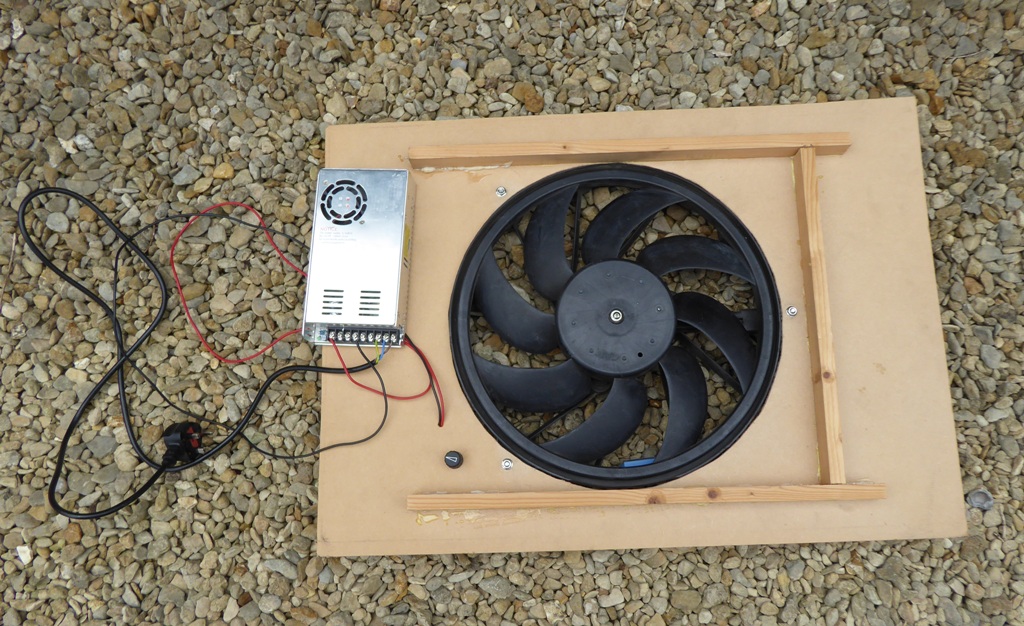
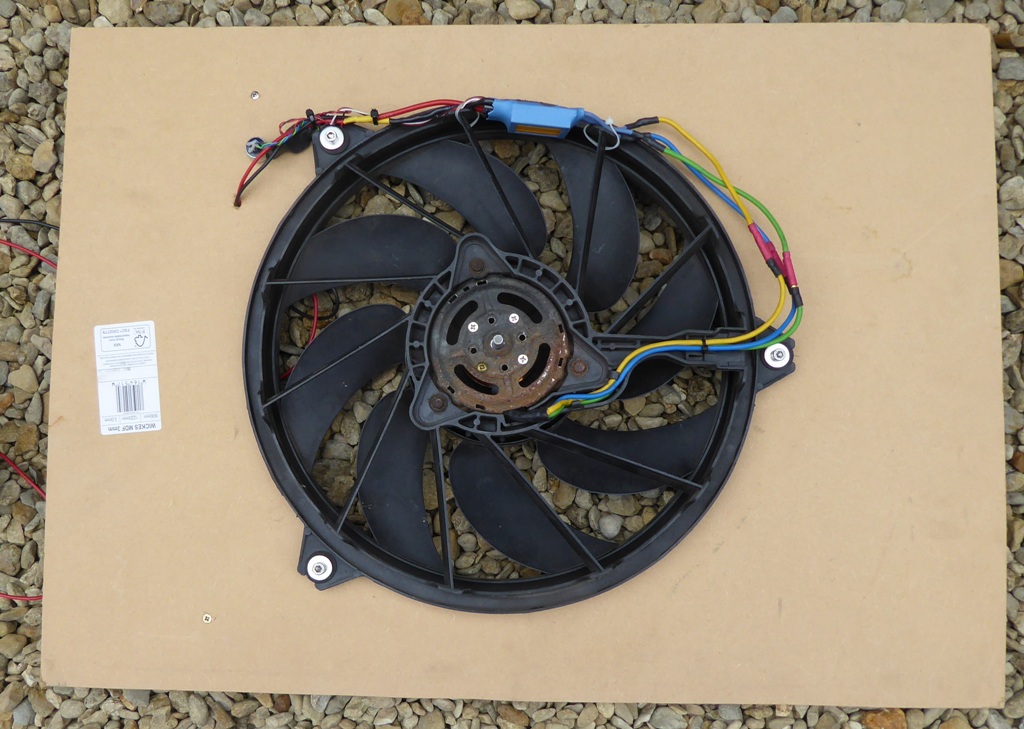
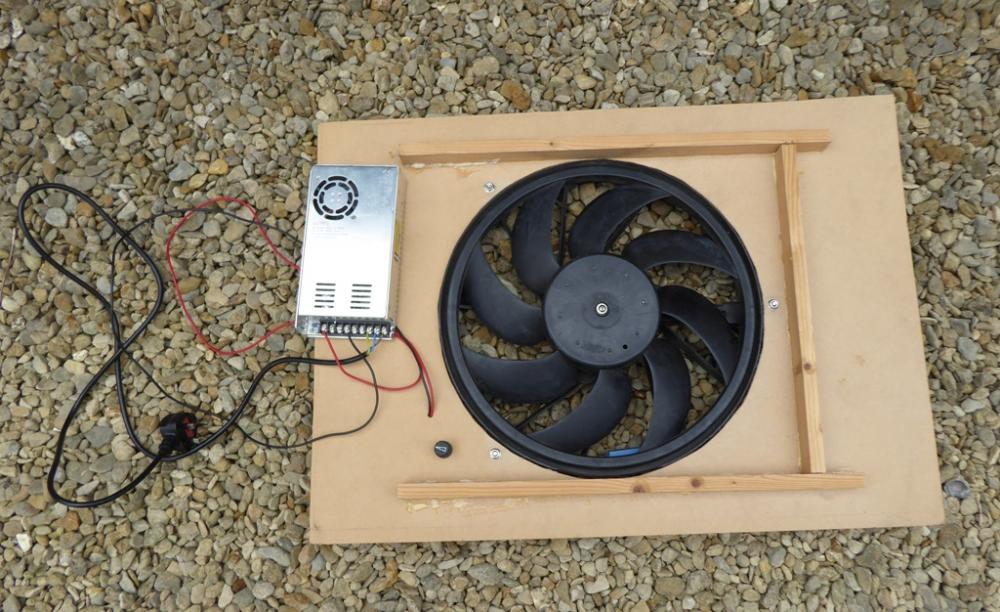
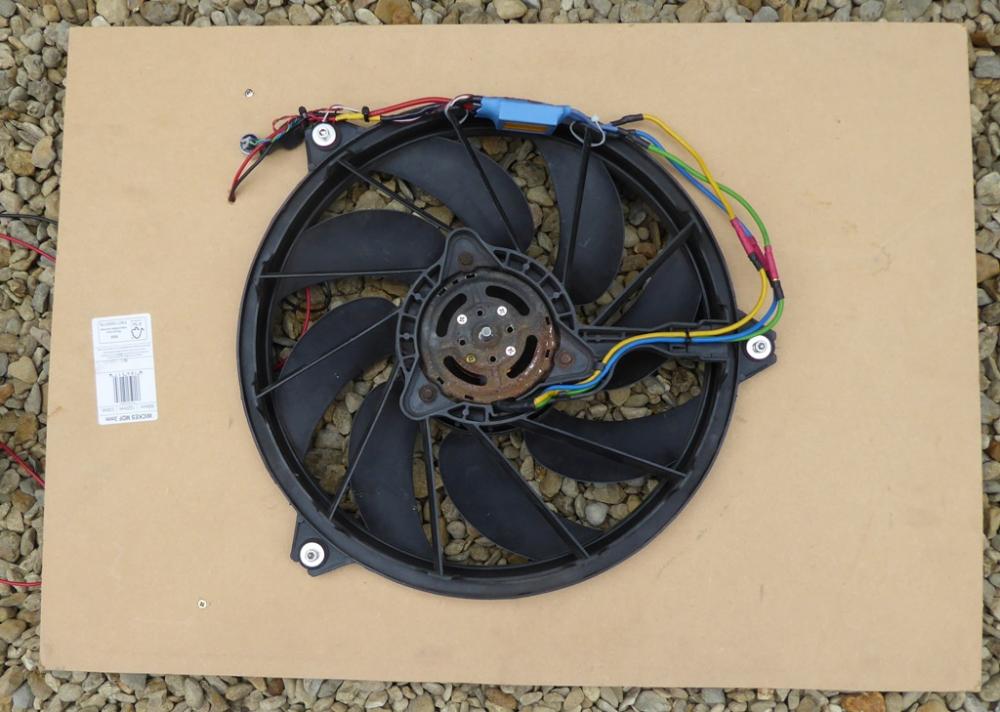
I think I've already posted the photo's of it here: I swapped the original motor in mine for a brushless one, only because the motor fitted to the fan I had was rusted solid. If you get a fan with a working motor then a cheap speed controller from eBay will do the job just fine. I only used this to look for air leaks in our old house, not to measure the airtightness as such. It was fine for doing this, as the leaks were pretty easy to find, especially with the fan set to suck air out of the house, so the leaks were all blowing inwards. Some of them made enough noise to be able to hear them without a problem, others needed tracking down with a combination of smoke (I used some old joss sticks) and a sensitive airflow meter (a Testo, that's now part of the forum loan kit). One near-invisible source of air leaks in our old house were all the wall to ceiling joints. The plasterboard ceilings were just taped and filled, and there were tiny gaps all long the wall to ceiling joints in every room that had to be sealed. Another source of leaks were all the switches and socket outlets. The fact that most were filled with dead woodlice was a good indication as to how big the gaps were around all the cables. I sealed up most of these up in the loft, where the cable conduit poked up. I found that easier than trying to seal the cable entries in the back boxes themselves.
-
Heating oil prices for the next 20 years
Jeremy Harris replied to Nickfromwales's topic in Boilers & Hot Water Tanks
Might be worth looking at underlying facts: Alcohol related deaths have increased over the past 20 years, but still only account for 0.0117% of total UK annual mortality (source: the ONS). Obesity related mortality data for the UK isn't easy to interpret from the available reliable data sources, but that for Europe as a whole may be indicative, and that suggests that around 14% of the European population are at risk from increased mortality as a consequence of obesity. That needs to be put into context, so it's worth noting that 18% of the population of the USA will die as a consequence of obesity. Vulgarity is in the view of the beholder and very dependent on location. I'd say there are countries within Europe where vulgarity is far more prevalent than the UK. Off the top of my head, how about the French habit of urinating in public and defecating by the side of roads? The national debt needs to be put into perspective with other countries in Europe. Greece, Italy, Portugal, Belgium, Spain, Cyprus, and the Euro area all have a greater national debt level than the UK (Source: https://www.statista.com/statistics/269684/national-debt-in-eu-countries-in-relation-to-gross-domestic-product-gdp/ ) -
Smart Heating Controls eg Honeywell Evohome
Jeremy Harris replied to s2sap's topic in Central Heating (Radiators)
One way around drilling holes and threading cables might be to just run the actuator lead to a plug-in remote controlled switch. -
Smart Heating Controls eg Honeywell Evohome
Jeremy Harris replied to s2sap's topic in Central Heating (Radiators)
That sounds like a good idea, as it lends itself to a wide range of simple control methods. -
Heating oil prices for the next 20 years
Jeremy Harris replied to Nickfromwales's topic in Boilers & Hot Water Tanks
As a non-alcoholic, median weight, UK (and Irish) citizen, with no debts and only a modicum of vulgarity (and normally only when provoked) I'd question the accuracy of this overly harsh generalisation of the general population and the members of this forum...