Jeremy Harris
-
Posts
26430 -
Joined
-
Last visited
-
Days Won
360
Everything posted by Jeremy Harris
-
 We've found that the pulley maid thing we have in the utility room, with an MVHR extract above, dries everything, even towels, very quickly. The towels still have to go in the tumble dryer for ten minutes to get them fluffy, but that's far better than having them in there for half an hour or more as we used to at the old house.
 -
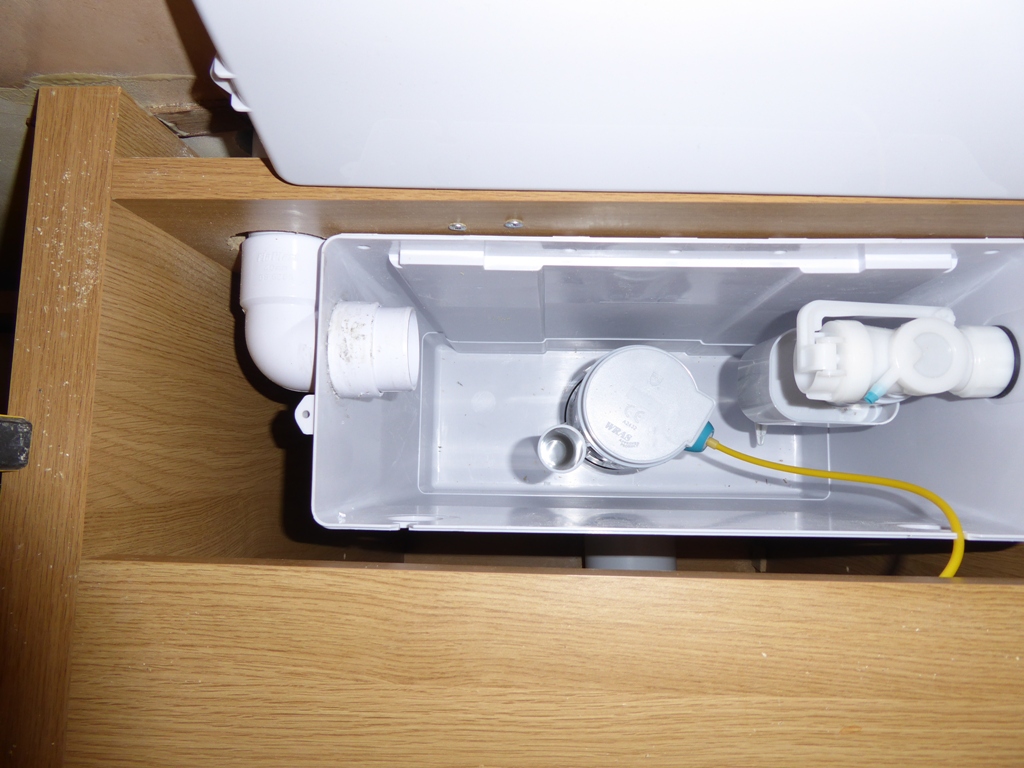
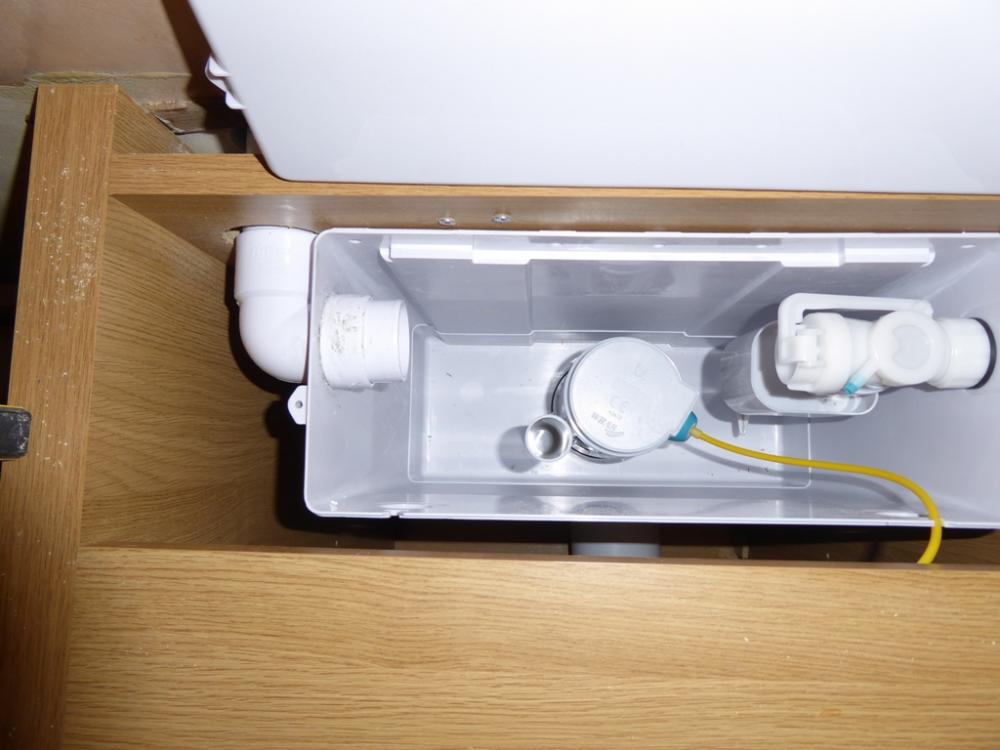
Two easy to implement and useful ideas that really work well, both involving MVHR. Firstly, connecting MVHR extract ducts to the toilet cisterns really does remove all odours at source (i.e. in the pan) and is so discreet that it's invisible if you have a built-in cistern, can be done with standard waste pipe fittings and a bit of ingenuity when it comes to adapting these to the MVHR extract ducting. This shows one of our cisterns with the lid off, with the extract pipe on the left: The second idea was to fit an MVHR fresh air supply vent immediately above the kitchen door, on the outside of the kitchen. This acts as a very effective "air curtain" we've found, and is remarkably effective at keeping cooking smells inside the kitchen where they get extracted from the kitchen extract terminal. We're still surprised at how well this works, as you literally take one step through the open doorway and go from cooking smells to no smell at all, and vice versa.
-
Nothing like a bit of really powerful, commercial grade, stump killer, applied discreetly to the roots in the dead of night. Far easier than raising your blood pressure by having pointless rows with a recalcitrant neighbour, and it has a high degree of plausible deniability as well...
-
Yes, it is fundamentally different, if you use excess PV generation as a source of charge. The Sunamp PV would accept charge no matter what the state of charge of the heat cells. All it cared about was keeping the unit hot, as far as I could tell, and it controlled the cell temperature by controlling the water circulation temperature, using a variable speed pump, heating element, flow sensor and water temperature sensors. If excess PV was available the unit would try and charge, unless the water circuit was above a threshold temperature. The Sunamp UniQ eHW will not accept any charge, from any source, until it is either 50% depleted or 90% depleted (programmable in the controller). This means that you can have up to 50% of thermal storage capacity available in the heat cell which you are completely unable to utilise from excess PV generation, which is ludicrous, especially in winter, when excess PV generation is sporadic and you want to maximise the utilisation of it whenever it happens. This is far worse than a thermal store or hot water cylinder, and is a very serious disadvantage for those who wish to use these units as heat stores driven largely by excess PV generation. Unless this is changed I can see that we may well still need to use grid power to heat hot water in summer, as if we were to take bath in the evening the Sunamp may well be out of energy for morning showers, as it may only be just over 50% charged at the end of a sunny day, due to it not having reached the charge acceptance threshold. Right now I'd recommend that no one fit a Sunamp if they intend to charge it primarily from excess PV generation.
-
I'm not at all fussed about having a SoC indicator, all I MUST have (and this is not at all negotiable) is the ability to charge the unit with excess PV generation whenever there is any spare heat storage capacity available. The present system is ludicrous, and significantly poorer in this regard than the old Sunamp PV we had. That would always accept excess PV charge if there was any spare capacity in the unit, not refuse to charge when there was still ~50% of the capacity sitting there uncharged. I may just as well have a 4.5 kWh heat store, as that's all I've got, in effect, if the damned thing refuses to charge from excess PV until it's 50% depleted. If I sound annoyed, it's because I am. Compared to the Sunamp PV the Sunamp UniQ eHW 9 is only using a fraction of our available excess PV generation, and instead it's costing us money to charge from the grid most of the time.
-
We've just ordered some honeycomb blinds for our big gable windows, not for thermal reasons, but to add privacy at night. Not cheap, especially as we need electrically operated blinds that will tilt up to the point of the gable. In fact, not far off the added cost of fitting Sage glass, I suspect, especially when combined with the added cost of the heat reflective film we have already fitted. Hindsight is a wonderful thing...
-
If they don't do it, then I will. The temperatures that the sensor string uses to trigger events is in the manual (sort of) and I've measured the timing for the cold start system, so it would not be at all hard to make a new controller that both keeps the PCM temperature (both locally and for the whole unit) within limits and yet allows the acceptance of charge whenever there is any spare capacity at all. My inclination would be to increase the number of sensor points, so that mapping the PCM temperature vertically via the sensor tube could be done to a finer degree than the present sensor system allows. Half a dozen DS18B20s strung together would give a reasonable temperature profile and allow a finer degree of control. My aim would be to allow excess PV generation charge whenever the upper sensor is indicating a temperature that is below the maximum allowable PCM temperature, say around 65 deg C (that was, I believe, the target temperature that the Sunamp PV used when charging). I might be inclined to build the PV diverter and boost timer into the same controller, too. Not at all hard to do for my system, as all the "heavy lifting" in terms of energy measurement is done by the unit that sits outside by the meter cabinet, and which broadcasts energy use data via an 868 MHz data link that any device in the house can link to. The actual PV diverter I have next to the Sunamp is just a semi-dumb switch, that turns the power on and off based on the data it receives via the radio link.
-
It's a major cause for concern, and one I only discovered by accident, although I would have discovered it from the two energy meters I installed last Monday within a week or two. Having the unit sitting nearly half discharged and yet unwilling to accept any excess PV charge is a major flaw, in fact so major that it needs immediate rectification, in my view. We deliberately opted to "upgrade" to a Sunamp unit with more than double the capacity so that we could better make use of the occasions in winter when excess PV generation is sporadic. I had thought that we'd be able to keep the Sunamp topped up, so that during days with no excess PV generation we'd be able to use some of the stored heat in our larger than needed Sunamp. It turns out that this doesn't work at all, and we've already run out of hot water once, before I altered the boost charge timings. Seeing the unit yesterday morning just sitting there, having just delivered around 4 kWh of hot water, yet not accepting any charge at all from the loads of excess PV we were generating, was bloody annoying to put it mildly. It's meant we're using significantly more grid power, and wasting a significant amount of PV generation that we should be able to store in the Sunamp.
-
I would very much like to see the Sunamp charging algorithm radically overhauled, so that the unit will accept charge whenever there is ANY spare capacity. Having to wait until the damned thing has discharged 50% before it being able to accept at charge at all is a massive loss of opportunity charging in winter, and significantly reduces our ability to use surplus generation. I'm not at all happy about this at all, and can only hope that it's looked at with a view to making the charging algorithm for the electrically charged units far more effective for those of us who wish to charge them from excess PV generation to the maximum extent possible.
-
@SteamyTea had a friend who made thermal blinds, and IIRC he did some testing with them and found they worked pretty well. I'm not sure where he posted the test results; may have been on the old Ebuild forum or perhaps the GBF. A bit of hunting around might find them.
-
It's hard to get really good data, which is a pity for those of us who would like to understand/model an installation. I only discovered yesterday that our Sunamp UniQ eHW 9 was set so that it didn't accept any charge at all until it had discharged down to 90% depleted (10% remaining). That was only because it was bright and sunny yesterday morning and I happened to go into the services room shortly after we'd run two showers, to find that we were generating loads of excess PV yet the Sunamp wasn't accepting any charge. A quick email to Sunamp discovered the reason for this; our controller was set to not accept charge until the unit was 90% depleted, which is not a great setting in winter, when trying to store every last bit of surplus PV generation. I've changed the setting so that it now starts accepting charge from 50% depletion, but would far rather have an option to increase that so that the Sunamp will always accept charge if there is any spare storage capacity at all, as that would make a significant difference in winter, when excess PV generation is sporadic. In effect, we're wasting half of the charge capacity of the unit, which seems a bit bonkers to me.
-
I'd look carefully at the full spec, as they quote a "headline" COP of 4.23, but then go on to say that the COP is 3.55 when tested at 1 deg C to 2 degC, which is about average. They also don't mention the humidity for the test undertaken just above freezing, or the flow temperature. The unit will be imported from China for sure, as ESP are importers of Chinese domestic products in the main, not that this is an issue as long as support is available. They don't specifically state that it's a two-stage heat pump, just that it has two compressors, and if I was to guess I'd say that it's not two-stage. I'd also take a punt and say that it's not inverter controlled, either, and that the dual compressor design is a way to stage the capacity but still use cheaper direct drive compressors. There are two stage series units around, where the uplift is staged to maintain a high COP for each heat pump, with the first stage being an air to refrigerant (in a refrigerant to refrigerant heat exchanger) heat pump and the second stage being a refrigerant to water heat pump. Although these can give a higher flow temperature, the increased losses mean that there isn't a significant advantage in terms of overall COP. I believe this may be one reason why they don't seem to be that readily available. One thing worth looking at is whether the COP is really that significant for DHW. When trading off initial capital cost versus running cost, and taking account of the number of really cold days we have in a year, accepting that a heat pump COP may drop to around 2 to 2.5 when delivering hot water on a few dozen days a year may not be a big deal. The hard part is getting hold of representative performance data for any heat pump, in order to work this out. The standard tests are pretty useless (a bit like standard car fuel consumption tests) and what's needed is the performance over a wide range of operating conditions, which isn't readily available for a lot of the budget units, or even some of the well-known brands.
-
Trimming the top insulation and fitting the new style lid that has flanges on all sides will fix that easily. You already have the bracing bars fitted to the case. It's maybe ten to fifteen minutes work to remove the flat lid, trim the top insulation and fit the new lid. Sunamp will send a new lid for free I'm sure - they sent mine within a couple of days of my Sunamp being delivered.
-
Remote switching
Jeremy Harris replied to Jeremy Harris's topic in Networks, AV, Security & Automation
Thanks, but the CPC one arrived yesterday and is about to have its guarantee voided by me hacking open the remote and turning it into a mains switched one. -
We have an accidental clump of bamboo. It just appeared in the bank at the front of the house as a single shoot growing from the bare earth. It's now established itself as a nice looking clump about 1.5m high and maybe a metre in diameter at the top, but only around 300mm diameter at the base, where all the new shoots come from. I've no idea what variety it is, but we like it, so it will stay (as long as it continues to behave itself!).
-
The 19mm bore hose that fits the Secoh JDK 60 we have will easily run for 20m with virtually no flow reduction at all, as it's way oversized for the pump flow rate. I strongly suspect that this is to do with Secoh having standardised their smaller pump housings, as the pump with double the output of ours still uses a 19mm outlet. If anyone is concerned about flow reduction/head loss over a long run of pipe I can quickly and easily do the calculations, but 90% of the time all they will show is a very, very tiny loss that's not worth worrying about. I did use reinforced spiral wound 19mm bore hose, inside a duct, down to the treatment plant, just to make sure that it didn't get squeezed anywhere. This then gets reduced down in diameter inside the unit anyway, using the pipe fittings that were originally supplied to adapt the 19mm outlet from the pump when it was living inside the top of the unit. That stone housing has, as mentioned earlier, a gauze filtered air inlet, arranged to minimise noise transmission and keep bugs out. The lid is also sealed with a neoprene tape gasket. Another thing I added was a timer to cycle the pump on and off (and disable the under-pressure alarm when off) to reduce the running cost. Our unit (like a lot of units, I suspect) massively over-aerates the effluent. A quick calculation showed that even with a maximum BOD effluent input, at maximum daily flow rate, it was still providing around three times more dissolved oxygen than needed. It's a pity that cheap, rugged and reliable dissolved oxygen sensors aren't available, as it would be nice to be able to run closed-loop control to ensure that the BOD of the discharge was always within limits, yet without having to waste a lot of energy pumping air through the unit that simply isn't needed, accepting that regular high volume air pulsing is required to ensure good circulation of semi-solids in the main treatment section of the unit.
-
It was crazy, but then all my dealings with the water company were much the same. Before we bought the plot, when we had the chap out to see where we could connect to both the sewer and the water main, we were told that there was no water main running down our lane (despite the house over the road on the same lane having mains water). They were adamant that the only point that we could connect to was at the top of the lane. When we dug across the lane to lay the drain to the stream from our treatment plant, I had to ask every utility company in the UK (there are dozens of them) if they had any services under the area. The water company confirmed that they had no pipes in the lane. Our ground works chap didn't believe them, so took things slowly, and uncovered the cast iron water pipe in the middle of the lane. We photographed it (it was pretty corroded, having been laid in 1934, according to our neighbour) and sent it to the water company who denied it was theirs. I then followed the line of the pipe and found a stopcock in the verge around 10m away, directly in line with the pipe and clearly marked with the water company name on the top. I photographed that and sent it to them and they still denied the pipe was theirs. They did send the local chap around, though, and when I showed him the stopcock, the location of our trench across the lane, the photos of the pipe etc, he walked further up the lane and found another stopcock running off the same pipe feeding a house about 90m further up the lane. The bloke then had to admit that they did have a pipe in the lane, but were adamant I still couldn't connect to it, as they didn't have it listed as one of their water mains. The borehole was a bit of a saga, told on this forum's predecessor and in my blog (linked in my sig below). Our main issue (apart from a load of problems with the drilling company, that were eventually resolved) was a combination of a high iron content in the water, plus a tiny bit of dissolved H2S. Designing a treatment system to oxidise the ferrous iron to insoluble ferric iron and filtering it out with a backwashing filter was interesting, as there are few UK companies that really understand domestic scale water treatment. I had a great deal of help from a forum in the USA, where many people have borehole supplies. One chap in particular was a godsend, as he talked me through everything I needed to do and made designing my own treatment system pretty straightforward. I ended up using an injected ozone oxidation system, primarily because it is massively more effective at oxidising ferrous iron and H2S, plus it kills pretty much every bug known, and it doesn't adversely impact the taste of the water. It was very much a design and build your own kit sort of job, as importing from the US was too expensive and fraught with problems. I added a tertiary UV disinfection unit but will probably remove it, as it's not needed and costs a fair bit to run (new UV lamp every year, plus a constant 28 W power demand to run the lamp). Our raw water tested clear of coliforms before treatment, and with the ozone injection system we already have a pretty good disinfection system, so the UV isn't really doing much (I'd have taken it out before now, but I bought a stock of spare tubes that I might as well use up first). The water tastes great and makes excellent tea, much better than the local mains water around here. We don't pay any water or sewerage charges, either, and the cost of running the borehole pump, water treatment system and sewerage treatment unit is a lot less than we would pay for mains water and drainage.
-
Passive Slab on a slope or go Concrete free.
Jeremy Harris replied to Patrick's topic in Foundations
We are 1.6m above a watercourse, on a slope that is pretty steep, on gault clay, and we have a passive slab, with no need for piles etc. There's stuff about our passive slab in a few entries of our blog (earlier entries than this show the ground works needed to get the site level): http://www.mayfly.eu/2013/08/part-ten-out-of-the-ground/ http://www.mayfly.eu/2013/10/part-sixteen-fun-and-games-in-the-mud/- 8 replies
-
- 1
-

-
- passivhaus
- passive slab
- (and 3 more)
-
Nothing to do with capacity, either. The sewer the water company wanted us to connect to, up the hill behind our house, runs down and connects to the main sewer in front of the house upstream of where we would have connected, so the load on the nearest sewer would have been the same whichever way we connected to it. The issue was solely that the water company refused to allow us to mole under the stream in order to connect to the main sewer that is just the other side of it. They quoted some regulation that supposedly prevents sewer connections running underneath water courses, which as far as I could see at the time didn't exist. Apart from anything else, as well as our neighbours foul drain running under the stream, the foul drains from at least 30 other properties in the village run under it too, as does the main sewer up the hill behind us, where it connects to the really big sewer in the lane on the other side of the stream from us. Frankly the water company were a PITA, as they also wanted to charge us over £23k for a water connection, also from the water main at the top of the hill behind us, but around 140m away. There's a water supply that runs down the lane in front of our house, that feeds our neighbour, and they wouldn't allow connection to that. They wanted us to pay to run a new pipe in parallel with it, all the way up the lane. We decided to drill a borehole for water, as that was a lot cheaper, but were plagued with requests from the water company to get us to accept their quote to supply mains water for a couple of years afterwards. In the end they sent someone out, long after we'd drilled the borehole, to ask why we weren't accepting their offer for a connection. I explained that it was far too expensive, and that in my view they had been trying to get us to pay to upgrade their 80 year old cast iron pipe in the lane. The chap that visited did have the grace to accept that this was what they had been trying to do. I left things with them saying that when they got around to replacing the pipe in the lane (it's well over-due for replacement and regularly springs leaks up at the top of the hill) we might consider accepting a connection to it, as long as it was no higher than their normal connection charge (I've already put in a capped bit of MDPE at our boundary, less than 2m from where their pipe runs).
-
That isn't correct. We have a main sewer that is less than 30 metres away, and with an invert level that was plenty deep enough to allow a connection (~ 12m below the invert level of our foul drain first inspection chamber), but the water company were adamant that we could not connect to this sewer. The house over the lane from us, which has a ground floor that is around 1.5m or so lower than ours, connects to this sewer and our initial assumption (and that of the planners who had already granted PP for a house on our plot) was that we could also connect to that. In the old planning file there was even a letter from the water company, dating from the consultation period for the previous planning application, stating that mains sewerage was available. As a part of our pre-purchase checks I called the water company to clarify the mains drainage, and water, connection and get an estimate of costs. A chap came out to the site and straight away said we could not connect to the nearest main sewer, as they would no longer allow a moled pipe run under the small stream in front of the house. The neighbours house has their foul drain running under the same stream OK, but that was laid before privatisation and any subsequent changes to regulations. The water company would only allow a pumped connection to another sewer near the top of the hill behind our plot. That required that 80m of single track lane be dug up, completely blocking the only access to four houses whilst it was being done, plus the installation of a pumping station. The best price I was quoted for digging up the lane, laying the pipe and resurfacing, plus the charges from the water company to make the connection, was a bit over £14k. On top of that we'd have had to fork out a couple of thousand for the pump station and installation. The EA were very helpful, and immediately granted us a permit to discharge to the stream, within hours of me discussing it with them on the phone and making the request. This reduced our costs by around £13k, as the treatment plant wasn't much more expensive than the pumping station, and cost the same to install. All this cost assessment was done prior to plot purchase, as a part of my due diligence checks. When I submitted a new planning application, I did include details of the treatment plant on the site plan, but the planners weren't interested in it at all, and said it was just a building regs issue. I did include our permit to discharge from the EA with the application, really just in case the EA raised it during consultation. They didn't, but they did cause us a lot of pain and grief over flood risk assessment (our house is on a steep hill well above the stream and the 1/1000 year flood level, let alone the 1/100 year level) and measures to ensure that no mud from the construction was tracked on to the lane where it might contaminate the stream.
-
Depends how cheaply you can get the panels, I would guess. The fixings for our in-roof panels are T shaped clamps screwed down between the panels, so each clamp secures two panels. I haven't measured the gap, but would guess that it's around 20mm, so similar to that used on some forms of vertical timber cladding. The newer design of GSE T clamps are shown on this page: http://www.windandsun.co.uk/products/PV-Mounting-Structures/GSE-Integration-Roof-Integrated#9033 , but the older design we have looks neater, IMHO, as it used aluminium extrusions for the T clamps. The Easy Roof Evolution T clamps are similar to the older GSE ones, but are designed to only fit their saddle brackets that are secured through the trays on either side. Might be able to be adapted to fit without the trays, though.
-
The POSIs Picnic: a solution is in sight.
Jeremy Harris replied to ToughButterCup's topic in General Construction Issues
As someone with a fair bit of a structural engineering background (as in having designed a two seat aeroplane and put it through approval) I can say with certainty that the stresses in a doubled up wall plate would be far from "minimal". Do the calcs and see how the stresses change with increased distance from the points of applied load and restraint and it's pretty obvious just how much the wall plate stresses would increase with such an option. This is the reason that the joist structural engineer hasn't suggested doubling the wall plates, but instead has taken the very sensible option of adding an additional thick end shear web, screwed into the existing end compression post. -
The POSIs Picnic: a solution is in sight.
Jeremy Harris replied to ToughButterCup's topic in General Construction Issues
What about the increased shear stress in the doubled wall plate then? Not a good engineering solution at all to double up the wall plate, far, far better to adopt the properly designed end extensions, that includes both a thick shear web, plus an end block that will restrain the lower member that is in compression when loaded. -
ASHP it is then . . .
Jeremy Harris replied to canalsiderenovation's topic in Air Source Heat Pumps (ASHP)
Seems the rules have changed this year, I wasn't aware of that. Metering for performance seems a bit woolly, though, as it seems that they are only monitoring electricity input, so won't have a good measure of performance. Shouldn't add more than £30 to the installation cost, though, as that's about the cost of an approved electricity meter. -
There are two different units of measurement here, power and energy, and to compare anything they need to be separated out. Taking a Sunamp UniQ 9, or a 210 litre hot water cylinder (they have pretty much the same heat energy storage capacity) as examples, then if both had a 3 kW nominal heating element both would take about 3 hours to be fully charged with around 9 kWh of heat energy (heat energy, in kWh, is heat power in kW x time in hours). In practice both will take a bit over 3 hours to be fully charged, due to losses and slight variations between the two, but we can assume for this example that they both hold around 9 kWh of heat energy when charged. In terms of heat losses, then a typical well-insulated hot water cylinder will lose between 2 kWh and 2.5 kWh over 24 hours, whereas a Sunamp UniQ 9 would lose around 0.7 kWh, so the losses are a lot lower for the Sunamp. If heating either a hot water Sunamp or a hot water tank from a heat pump, then the heat pump performance will not be good, because of the high temperature required. I'm not even sure that many heat pumps would deliver a high enough flow temperature to charge a hot water Sunamp, as they need around 60 deg C or more. You can get away with having a hot water system that runs at around 50 deg C, but when using a hot water cylinder you'd be advised to fit a larger capacity one, because it will be running at a lower temperature, so won't get mixed down with cold water at the point of use by as big a ratio, so more water from the tank will be drawn off than might be the case if the tank was running at a higher temperature. How big a hot water tank you need really depends on your hot water needs. For example, we run two showers per day, plus washing up, hand washing etc, and use around 150 litres of water at around 58 deg C (from an electrically heated Sunamp UniQ) per day, sometimes a bit less, sometimes a bit more. I'm in the process of measuring the energy (in kWh) that we use to generate hot water, and should have a reasonable figure as a daily average by early next week. Right now it looks as if we are using around 4 kWh or so of electricity per day to heat our hot water (roughly 20% from solar panels, 80% from the grid, as it's winter), but that ignores the ASHP pre-heat system we have, which feeds warm (around 35 deg C to 40 deg C) water to the Sunamp, so reducing our electricity usage a fair bit. So, to work out the relative costs, both in terms of the initial investment plus the running cost, we need to know how much hot water you are likely to use. Heating is a different issue, and in a well-insulated and airtight house will often be lower than the hot water requirement, and is probably best dealt with separately.