Jeremy Harris
-
Posts
26430 -
Joined
-
Last visited
-
Days Won
360
Everything posted by Jeremy Harris
-
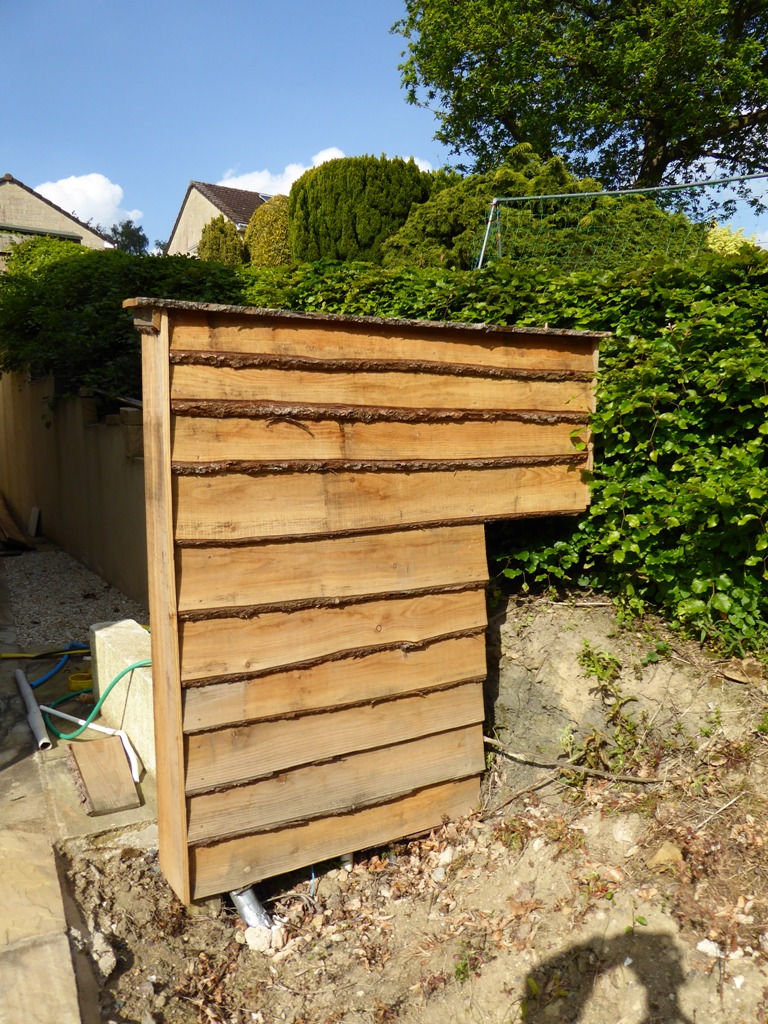
 No, not at all. The only thing they were very insistent about was that I had to TT the installation, as it was a temporary building supply (the caravan box under the meter cabinet that has a Commando socket). As soon as we'd finished the build and wired the house I just moved the CPC from the earth electrode and connected it to the terminal on their head, so it's now TN-C-S. The house supply is a long run of 25mm² 3 core SWA, protected by the big switch fuse at the top. The fence has since been turned into a screen for our wheelie bins, with the meter cabinet still there on the other side (it looks a lot tidier now, with the ground level built up and landscaped):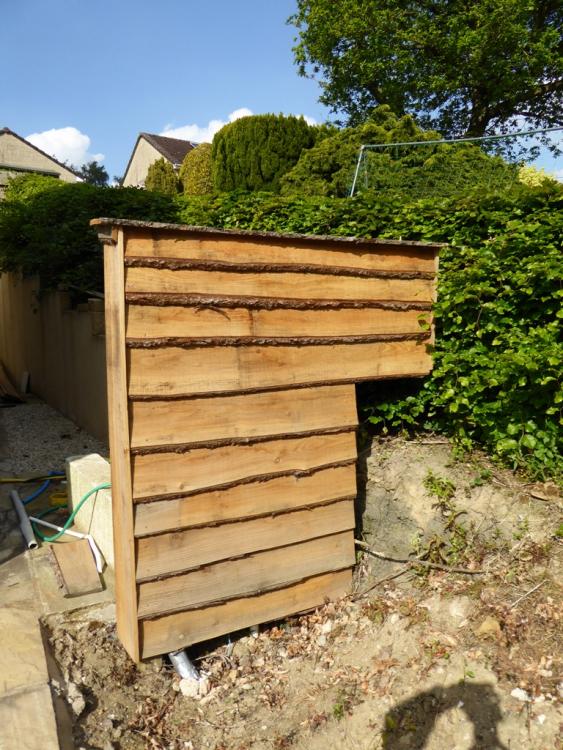
- 33 replies
-
- 1
-

-
- electrical connection
- trenching quote
- (and 2 more)
-
Might be BS, but the noises are quite distinct. There's a definite "clunk" from a valve of some kind, which isn't related to the compressor being on, as far as I can tell. After this there are then liquid gurgling noises, which I think must be flow noise from the liquid phase part of the refrigerant. The squeaks sound a bit like a restriction in the flow somewhere, and I suspect they may come from the throttling valve. From what I've been able to glean, one of the ways that they've improved the efficiency rating is to alter the expansion valve aperture on the fly, so that it's at the optimum setting for any particular condition.
-
We bought an AEG FF three or four years ago, chosen on the basis of size and efficiency. It's the most noisy FF we've ever had. The compressor doesn't seem any louder than any other, just a gentle hum when it's running, but the clonks, creaks, groans and other weird noises the thing makes are really noticeable. It's often the noisiest thing in the house, and even though we're used to it making weird sounds, it's still irritating. I've been told (when I complained about the noise the thing made) that the noises are a side effect of the changes made to improve efficiency and get a better rating (IIRC it's a A++ model) although I've no idea if that is actually the case.
-
Best way to finance self build with advanced payments
Jeremy Harris replied to Emma Hunt's topic in Introduce Yourself
Just looking at the numbers with the sort of margins that developers might work on, I'd say that either the build cost estimate is low, or the completed value estimate is high. A developer might be able to build with a 20% margin, although for a one-off that's more likely to be around 15%, as there won't be any economy of scale. Working back from a completed value of £1.2M, and using an optimistic 20% margin, gives a cost for the build and land at around £960k. Using a more realistic 15% margin gives a cost for the build and land of around £1.02M. Self-builders rarely manage to build much below the costs that a developer might manage, unless they do a lot of work themselves (and that's a double edged sword, as it will take longer and therefore interest on any borrowed funds may be greater). I would suggest that, if the build is reasonably typical, then with the land having cost £400k, plus the demolition cost for the existing house, then the build cost is likely to be around £600k to £650k. Even then that may be a bit tight, TBH. Our plot was fairly cheap, because of high site prep costs, and I did all the plumbing, ventilation installation, some of the wiring, all the internal joinery, kitchen fitting etc myself (to save money) and we still only came in at about 10% under the market value of the completed house. -
Might find it works just fine with the two panels parallel connected. If it does, then it would be a better solution (in terms of maximising output). Can't do any harm to just try it and see how it works.
-
I just pour a bit of antifreeze in mine the last time I use it for the year. Seems to stop it from coming to harm, and it isn't hard to do.
-
Just connect them in in parallel with diodes? Only one panel is likely to be generating at any time, so with a series diode in the feed from each there's no chance of the non-generating panel loading the output down. Downside is that the non-generating panel won't contribute anything when it's terminal voltage drops below that of the generating panel, but it might still contribute something, as as it unloads its terminal voltage will rise, allowing some current to flow.
-
I wonder if he's referring to the distance from the treatment plant to the outlet/connection box into which the pump connects? I fitted an outdoor (IP66) double gang outlet in the pump housing for our treatment plant, so that the air pump etc could just plug in. I can't recall how long the cable on the air pump was as supplied, but doubt it was as long as 5m, but anyway the termination for the cable that supplies the treatment plant needs to be close by, ideally inside the box that houses the pump, as I doubt that the pump flex is rated for outdoor exposure.
-
Solar Dynamic Panels for Water Heating
Jeremy Harris replied to Ferdinand's topic in Solar Thermal (ST)
They are an air source heat pump without a fan. I looked at fitting them, and even went so far as to visit a UK importer to see them working, but despite best endeavours, neither I nor the importer could obtain any independent test data as to their performance. There are people in Ireland with them fitted who have reported that they work well, and they seem to be relatively popular in Spain and Portugal (which is where they come from), but the absence of any hard performance data put me off, as did the fact that one dubious UK importer was marketing them as a "Magic Box" and when I spoke to them at a show it was clear that the people selling them were snake oil sales people, who knew nothing about the things at all. In principle they are a reasonably good idea, although they have no real icing control, and the panels will ice up badly in damp weather, and this must reduce their performance (but there's no data on this at all). One thing that was clear, was that they aren't "solar" panels at all, and that the vast majority of the heat they extract comes from the air, not any solar radiation. They were banned from being on the MCS register due to them being marketed as "solar" panels, some years ago. They also seem to work well (some say better) when mounted vertically, which makes sense as that may then allow better convection and that in turn may help to reduce icing in damp weather. Finally, they have to be installed by someone with an F gas ticket, as they are much the same as any other split ASHP, in that they need pumping out and gassing after installation. -
In terms of the length of cable, then I'm not aware of any changes. There's nothing in the 18th Ed that mentions treatment plants, let alone the length of any cable. At a guess I reckon the run to ours is probably around 20m of buried SWA, as it takes a route around the boundary, along with a couple of other power cables. Where have you heard of this new 5m limit?
-
Hairline crack starting from the top corner of the room
Jeremy Harris replied to Tyler's topic in Introduce Yourself
Looks like normal shrinkage cracking, if this is a relatively new build. Pretty much any new build will tend to suffer from slight shrinkage/settlement cracks like this for the first year or two, as the house dries out and stabilises. It will generally be a bit worse if the house sits with a relatively low internal humidity level, as this will be a lot lower than when the house was built, and if the house was wet plastered then there will be a very big humidity difference between the period when it was being plastered, where it may literally have been dripping wet inside, and when completed when it will tend to be a lot less humid. -
This indicates to me that it's a conventional indirect cylinder, topped up from the small header tank, with the other, larger, tank being the gravity cold water tank.
-
Sadly I can't, as it seems to be a very variable and fluctuating market, so there's no easy way to tell if something that was sold a month ago and that was OK would be the same as ostensibly the same item, sold by the same supplier later. I bought several apparently different makes of LED driver and found that around 70% of them were probably fakes, in terms of not actually complying with the marked approval.
-
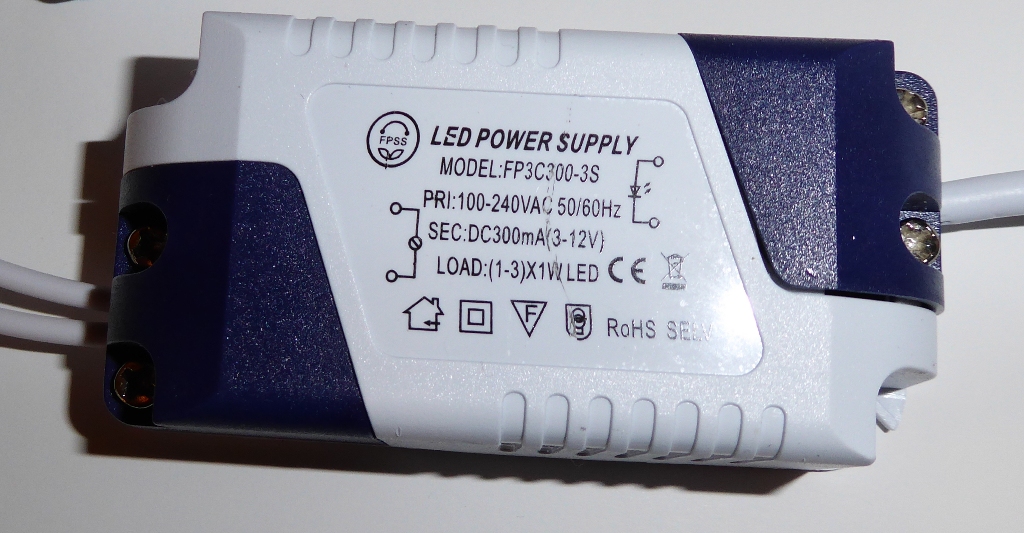
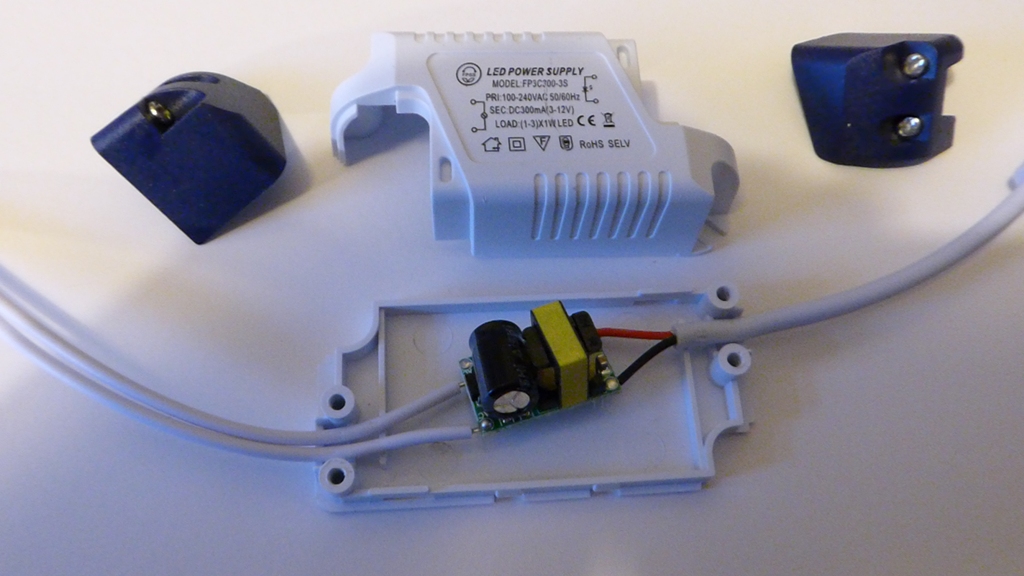
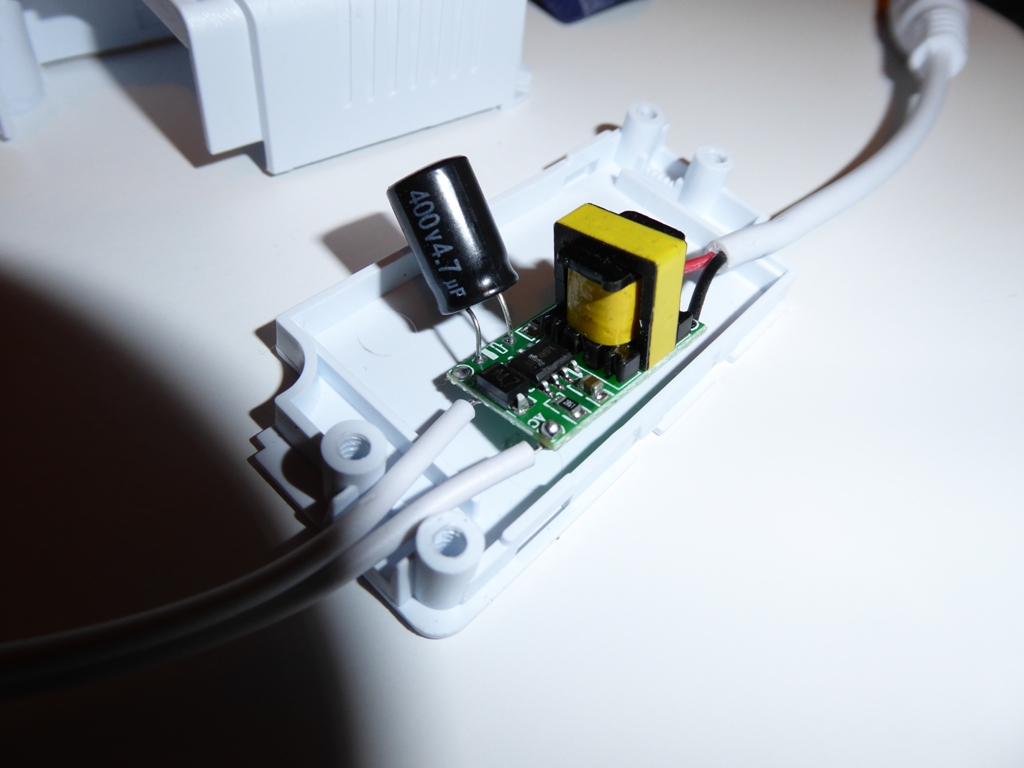
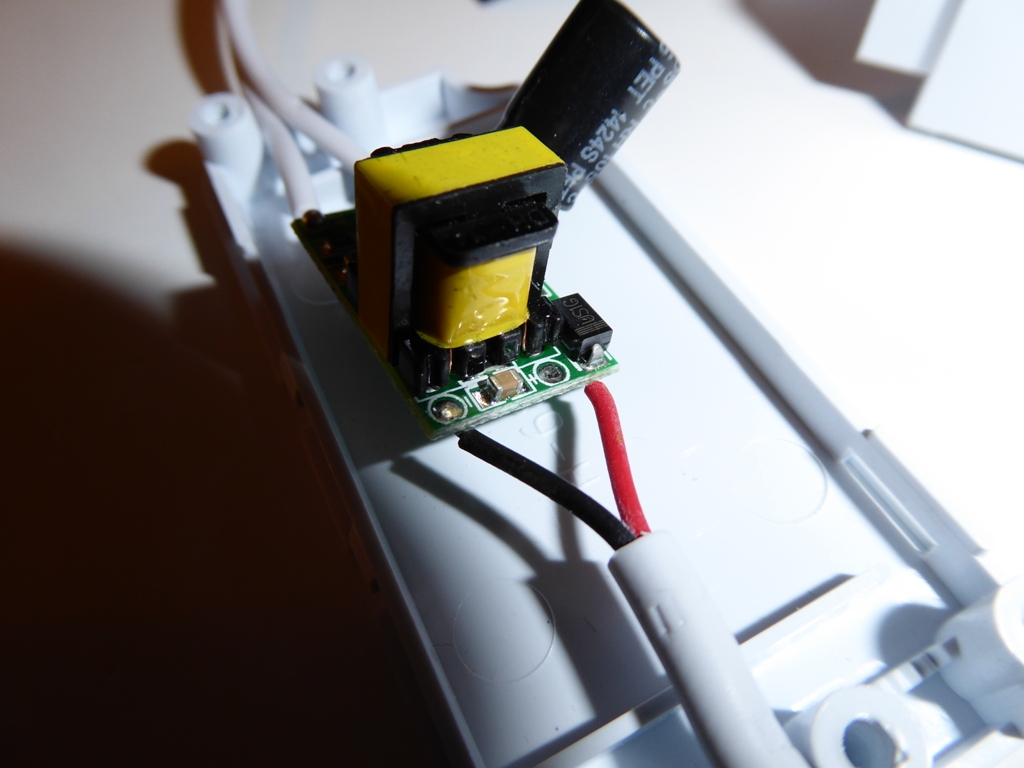
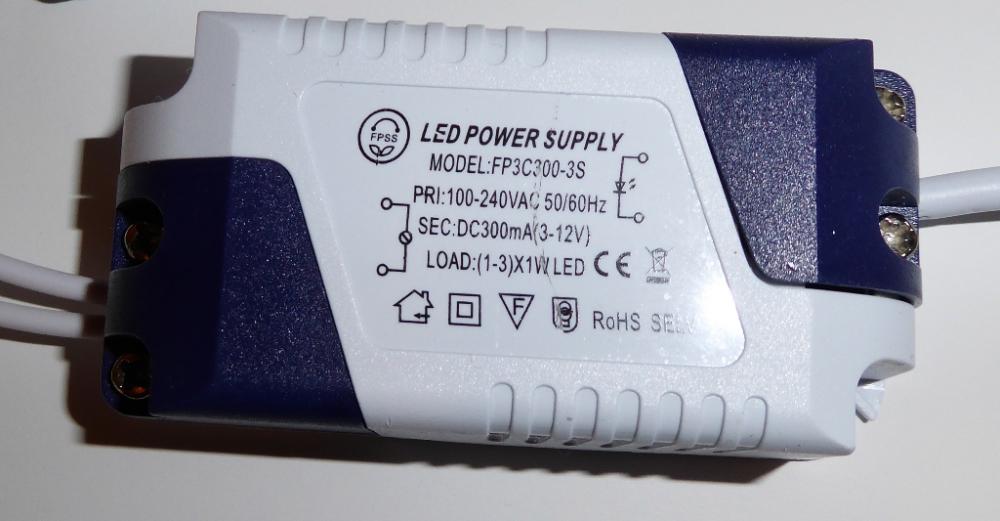
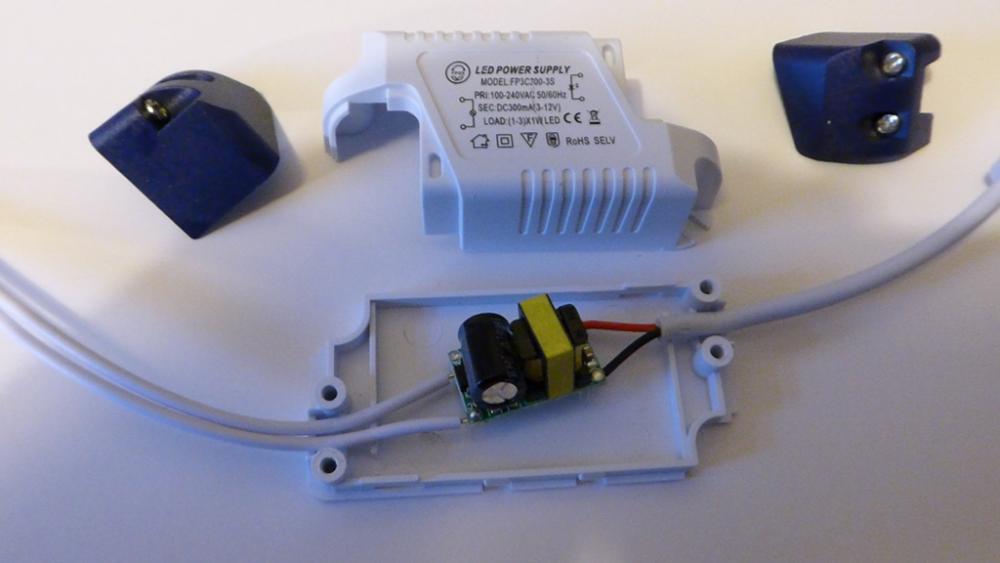
I took one of these constant current drivers apart to see how good the RF screening was and to check as to whether there was any conducted RF suppression. Draw your own conclusions from these photos: First point to note is that the case carries the double box symbol that indicates that it's double insulated. However, it has two single insulated mains conductors coming out of the case, so it clearly isn't compliant with the Class II regs. That tends to cast suspicion on the other approval marks, in my view, so I suspect that, like many such devices, the CE mark is fake (to carry that mark the unit should comply with the LV Directive and the EMC Directive, and it doesn't seem to comply with either). There's a tiny suppression capacitor on the "DC" output (which looks nothing like DC, it's a high frequency pulse train at a hundred kHz or so, with barely rounded edges). There are no suppression components on the incoming AC side, so RF can easily be conducted via the incoming wires, too, which may then act as an antenna. There's no form of screening to prevent or reduce radiated RF emitted by the circuit from passing through the case.
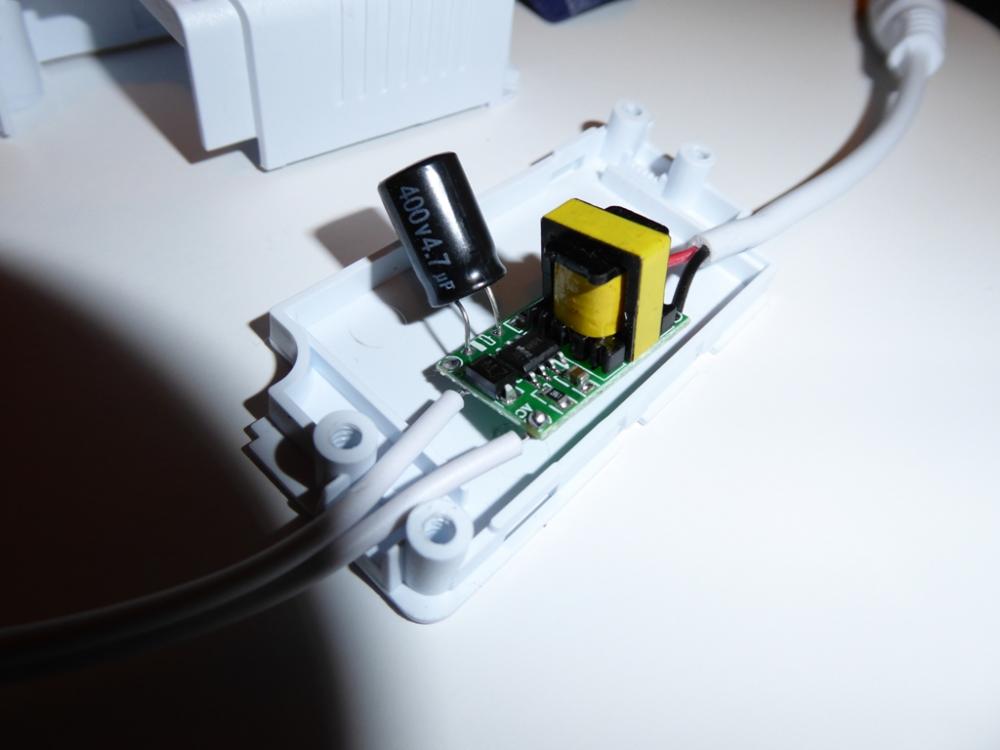
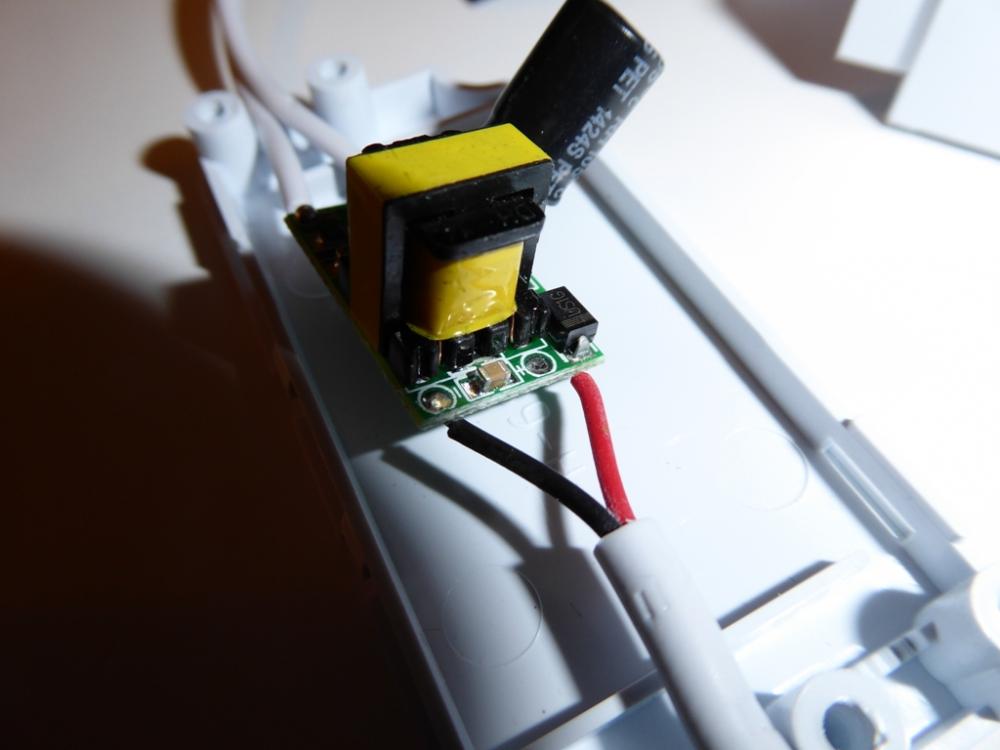
-
Be interested to hear how well you get on with them. My limited experience so far has been that the couple of high voltage COB type LEDs I've bought have run cooler, but they are still relatively new, and have only been around for a year or two, AFAIK.
-
Were primatic tanks ever made with sprayed foam insulation? IIRC they stopped making them in the late 1970's, but I can't remember when tanks first started being supplied with green sprayed foam. I thought the green foam was a much later thing, introduced to show that the insulation was CFC free. With a separate header it sounds to me like it's a normal indirect cylinder.
-
I agree wholeheartedly with @billt, having done a fair few "autopsies" on failed LEDs a while ago. Without exception, every single failure I found was of the integrated LED driver, rather than the LED itself; and all those I looked at showed clear signs of overheating. The smaller form factor lamp types were never intended to be used for LEDs, as most were designed to use halogen lamps, and halogens like to run hot. LEDs will fail prematurely if allowed to run hot, so they need to be used in a lamp and fitting that enables any heat generated to dissipate easily. This is being addressed by LED manufacturers, though, and recently high voltage COB (chip on board) LEDs, and "filament" LEDs (just linear COB arrays really) have come on to the market that don't need low voltage drive (they use lots of tiny LED chips in series to get the total voltage up). As a consequence, they only have a pretty simple mains rectifier and current limiting circuit in the base (often just a single capacitor or resistor) and they should run a bit cooler and be more reliable than older types. There are some COB G9 LEDs around, they look like these, rather than the ones where you can see the individual LED chips: https://www.ledhut.co.uk/spot-lights/g9-bulbs/energizer-2w-g9-led-capsule-shape-3000k-twin-pack.html
-
But, if you're using an MVHR with a built-in exhaust air heat pump then you still need the house to be airtight, so fitting a fan or vent in the WC will pretty much negate the benefit of the MVHR part, as well as create an imbalance. Why not just include and extract in the WC, as would be normal practice when fitting MVHR?
-
Are you fitting MVHR? If so, then that should meet the requirement.
-
You can buy ready made concrete in/cast in post bases, like these: https://www.toolstation.com/post-base/p82691 https://www.toolstation.com/cast-in-post-shoe/p64644
-
In my case I have a good friend who's paraplegic and uses a wheelchair much of the time, although he can get about with leg braces and crutches (means he can stand at the bar in the pub, and can't fall over...). I had him around in his chariot to advise on how suitable our access was (not just the ramp, but wheelchair turning and manoeuvring spaces, and WC access). He suggested a couple of small changes, including one that was counter to Part M, which was to position the WC slightly closer to the wall (less chance of falling sideways, something he says can be a PITA when a WC is placed well away from a wall to one side). All our doors are 33" wide, with level thresholds, largely because I knew he'd be around here a fair bit. Our building inspector questioned why the WC was a bit closer to the wall than stipulated in Part M, and I explained that I'd had a friend around who'd suggested that having a wall to lean against made things easier for him, and the inspector just accepted that without question. The bottom line is that Part M isn't the regulations, it's just a suggested method by which the recommendations may be complied with, so is really just guidance, much like BS7671:2018 isn't regulation or law either, it's just guidance as to good practice.
-
In England and Wales it can be any entrance on the "entry level" of the house, according to Part M. It doesn't specify that the principal entrance, or a side entrance, has to be the one with disabled access, all that it stipulates is that there must be easy access from the set-down area outside, into the entrance level of the house and thence to a WC that meets the Part M requirements. None of the rest of the entrance level of the house has to have disabled access, only the route from out side to the WC. The problem seems to be that building inspectors apply their own judgement as to what does and does not comply, and so we end up with some people being told one thing and others being told something completely different, or even contradictory (and I accept that Scottish building regs are different to those that apply in England and Wales (not sure about NI, do they have their own different set of regs, too?).
-
There are major reliability problems with some LED lamps and fittings, mainly because they are often not designed to allow the LED lamps to run cool. Worst offenders seem to be those lamps that run directly from the mains supply, as they often have a tiny AC-DC converter internally that is squeezed into a tiny space and consequently runs hot. All our lights in the house are LEDs and none have ever failed, but they are all low voltage LEDs, even the 8 or 9 outside lights, and so none have the problem caused by having a small AC-DC converter squeezed into the lamp itself. The downside is that all the lights have separately mounted power supplies, but at least this arrangement seems to ensure reasonable reliability.
-
We were told that the ramp had to be a "permanent structure", and that anything that looked as if it could be easily removed wouldn't be acceptable. A friend in East Yorkshire encountered exactly the same approach from his BCO; his fabricated metal ramp, with a chequer plate top, was rejected. He ended up laying plastic sheeting down and then pouring a proper concrete ramp over his York stone steps to get his completion certificate, Needless to say he carefully broke away the concrete and cleaned up the underlying steps once he'd got his completion certificate...