Jeremy Harris
-
Posts
26430 -
Joined
-
Last visited
-
Days Won
360
Everything posted by Jeremy Harris
-

Alcohol ie Surface Cleaners
Jeremy Harris replied to Ferdinand's topic in General Self Build & DIY Discussion
IPA (isopropyl alcohol, isopropanol) is good for cleaning glass, the only marks left tend to be from stuff that's been washed out of the cleaning cloth/kitchen roll. -
Anyone used online 3D printing services
Jeremy Harris replied to Gone West's topic in Tools & Equipment
No, I want to have a go with something like Fusion 360, or maybe Solidworks. I have a Solidworks licence that still seems to be valid, but last time I tried to get to grips with it I gave up and went back to AutoCad. My problem is that I think in conventional 2D drafting, so I struggle when trying to visualise things in 3D. Ideally I'd like a programme that accepts a conventional 2D projection drawing and converts it to 3D parts, but that seems to be asking too much! -
Shouldn't be too hard for the Sunamp PV. Just needs a control loop to adjust the pump speed, using the flow sensor and temperature sensors. The control's pretty simple, it just aims to keep water flowing around the charge hydraulic circuit at ~70°C if it can, shutting down if there isn't enough exported PV to maintain the required charge temperature. There's a few added bells and whistles, like an over-run timer that keeps the pump on after the power to the heater drops, to prevent/reduce heat soak, plus a sensor that detects when excess PV is available on the main power input and uses that to turn the control system on and off, but that's pretty much it. Unlike the Sunamp Uniq range, there's no sensors down in the PCM, so the control system is, in essence, a lot simpler (although electromechanically it's more complex).
-
With luck they may still have our old Sunamp PV PCB, as when I sent it back I'm pretty sure they only wanted to examine the internals of the heat cells. Our Sunamp PV was still working perfectly when I sent it back, although I had replaced the thermal cut-out.
-
Anyone used online 3D printing services
Jeremy Harris replied to Gone West's topic in Tools & Equipment
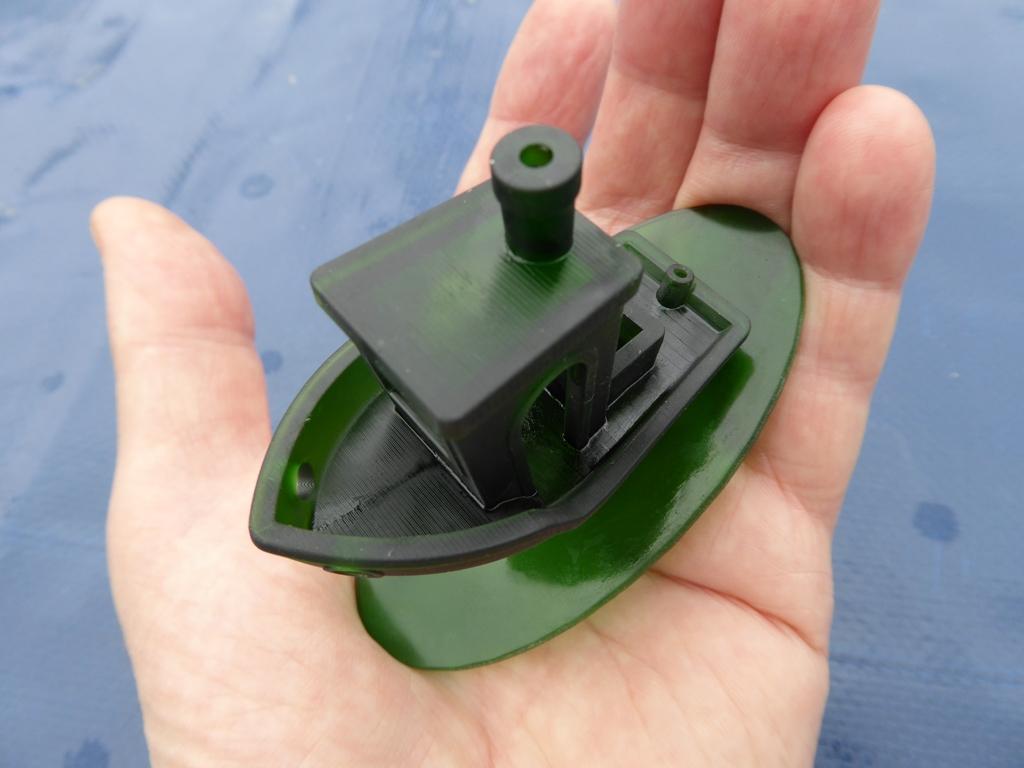
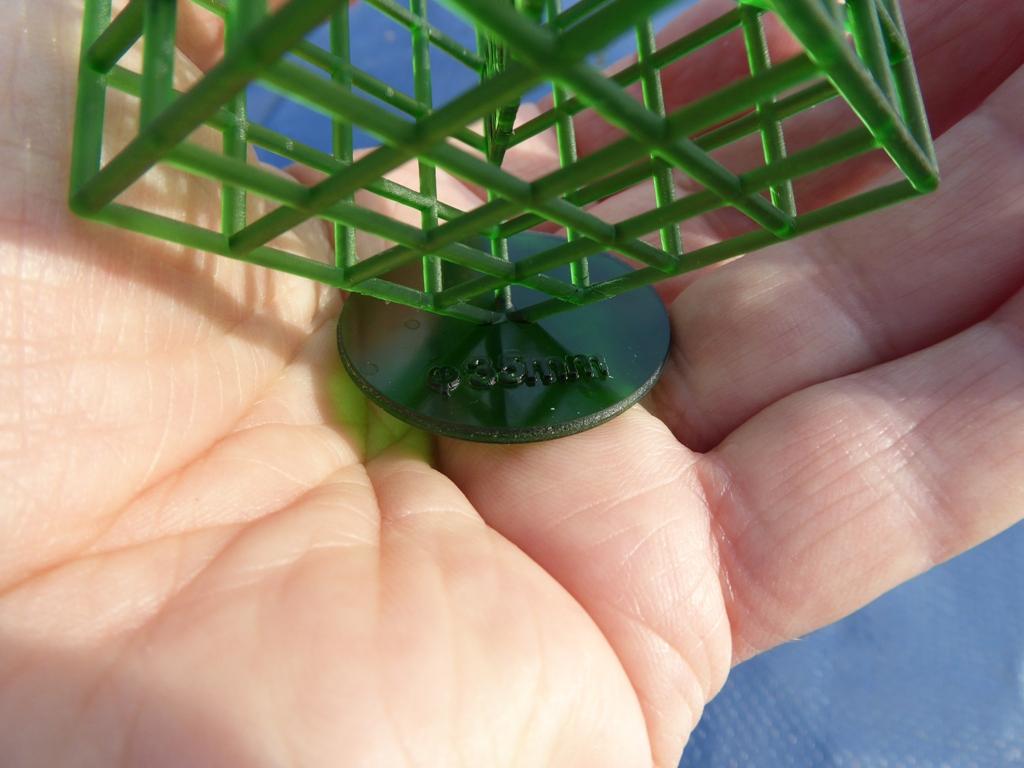
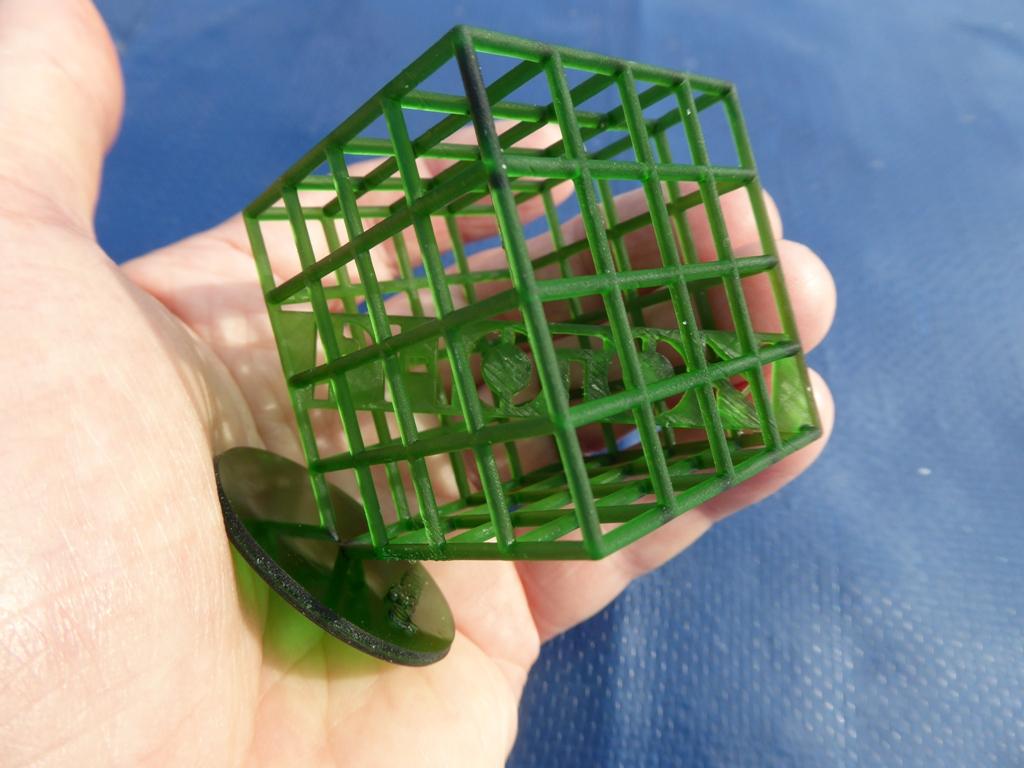
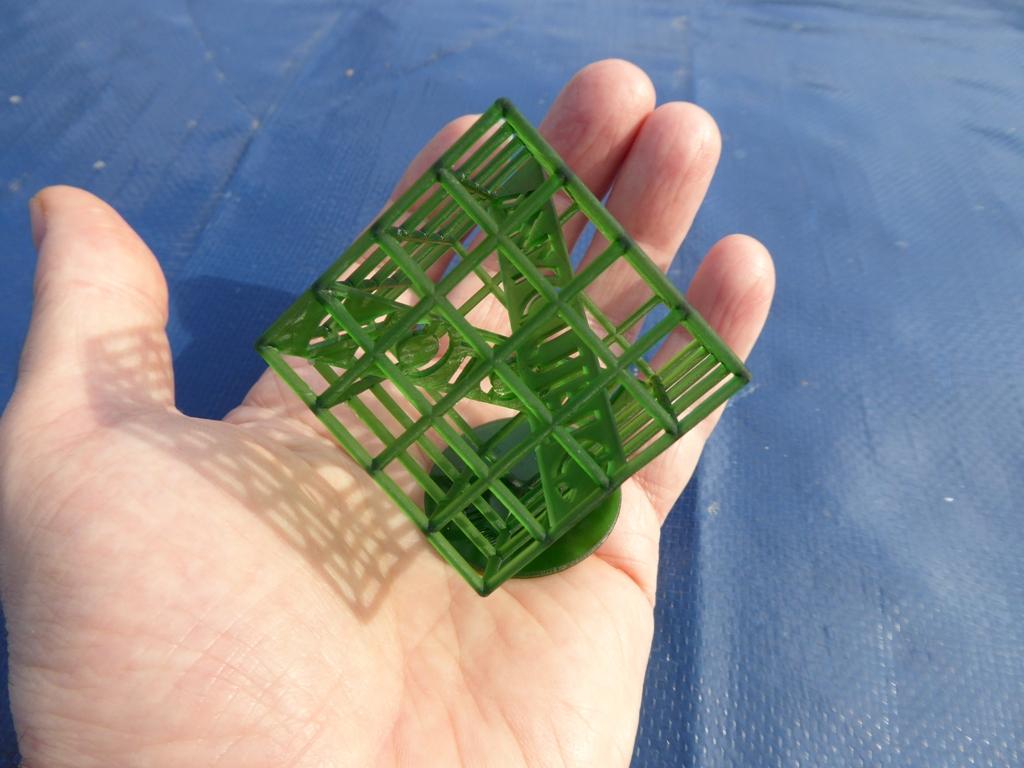
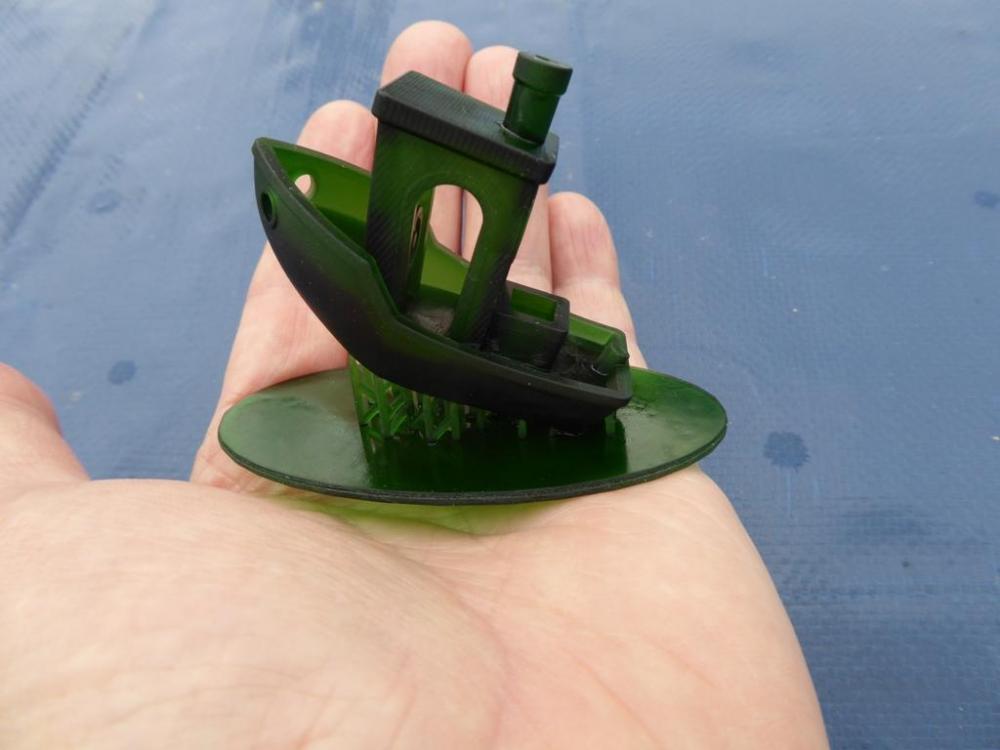
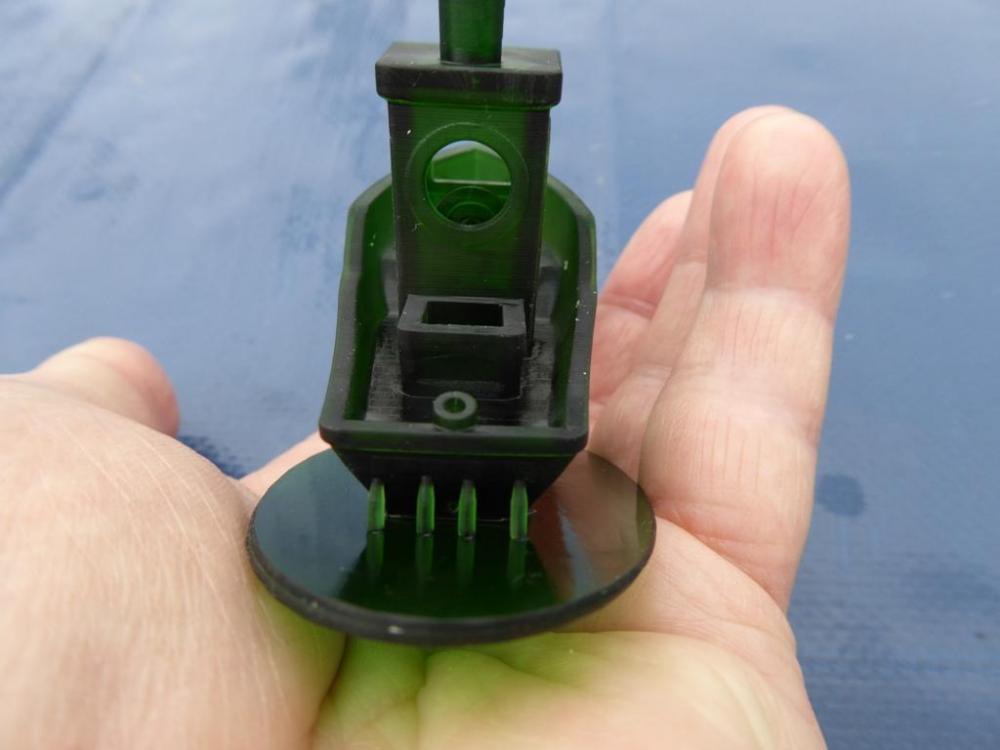
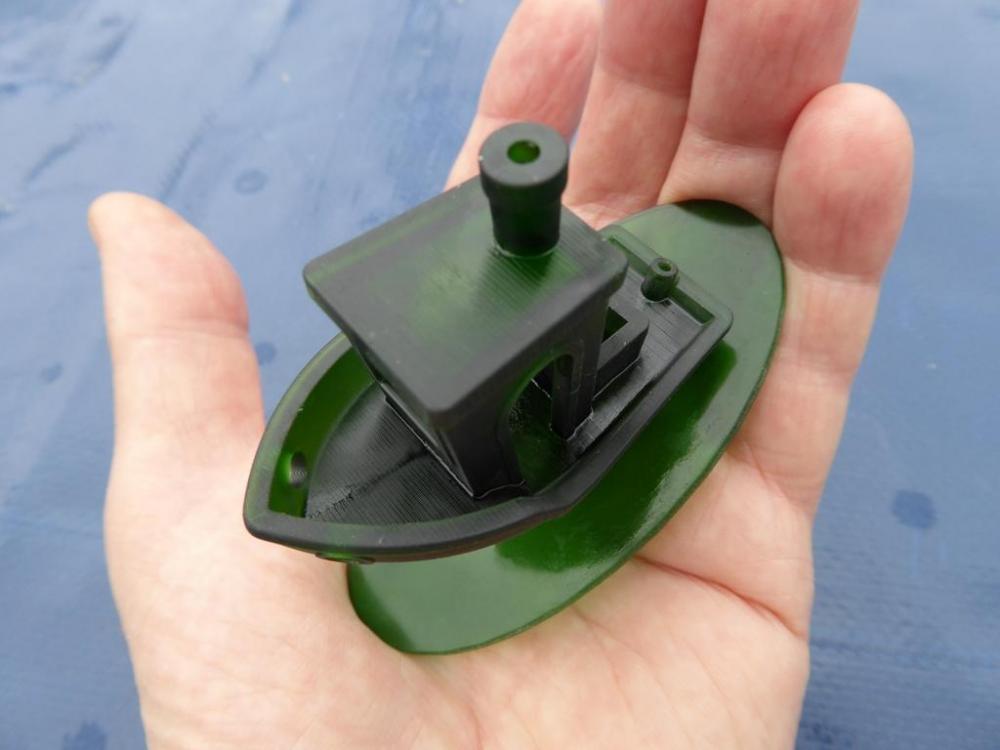
Third time lucky... Took three goes to get the standard Benchy test model to print, there's an issue with resin printers needing a larger base area so that the model stays fixed to the build plate. From what I've learned (largely by experiment) the problem relates to the balance of forces when a layer is separated after it's been printed. The newly cured 50µ layer adheres to the thin layer of FEP film between the exposure screen and the resin. The build platform moves up a few mm after printing each layer, and this breaks the layer away from the FEP film (or is supposed to) so allowing resin to flow in ready to expose the next layer. If the layer adheres more strongly to the FEP than it does to the build plate, then it will just pull off the build plate. The work around is to add a support plate plus supports to the model, and angle the model slightly so that the area being printed at any time is smaller than the area that's adhered to the build plate. This seems to have completely fixed things. This is the Benchy, upside down, "hot off the press" (really straight out of the resin tank) showing the plate and supports I added: And these photos show the same Benchy after being cleaned up and post-cured: Overall I'm pretty happy with this printer so far. Not too steep a learning curve to get it to work well, I just need to get to grips with 3D CAD now. I also want to try out some other resins, as so far I've just been using the sample bottle that came with the printer, which is (unsurprisingly) the cheapest resin available. I suspect that the results might be better with some of the more expensive, opaque, resins. Off to trim all the support structure off the Benchy and clean it up a bit to see how it looks when finished.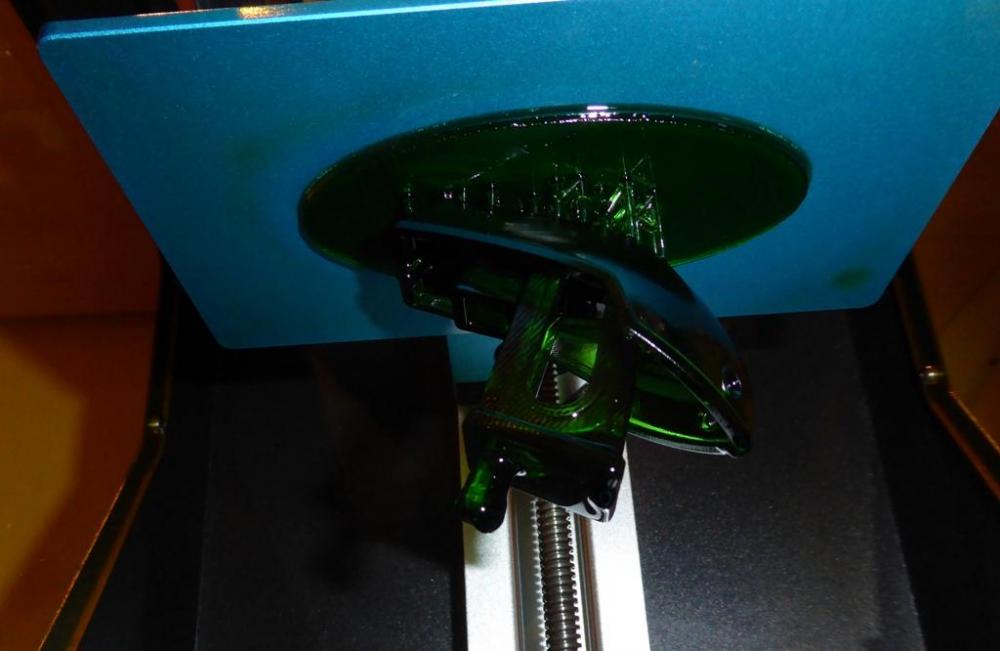
-
I'd be inclined to just buy and fit a couple of new relays and see if that fixes it. Perhaps worth buying several spares, given that the postage is probably going to be a fairly significant part of the total price. FWIW, I tend to stick to well-known brand names when it comes to relays. Omron are generally pretty good.
-
Bugger, thought that might have been a quick win. The relay on the circuit board always seemed to arc a bit as it switched, so, as you suggest, that could be the failure. There's a diagnostic mode available on the circuit board, that sequences the four LEDs and does a self-test on the logic side, plus tests things like the ultrasonic flow sensor output. I'll try and see if I still have a copy of the instructions for entering the self-test mode. IIRC, the power relay is a standard part, so replacing it should be fairly straightforward. I have a feeling that the relays are all soldered to the control PCB though, rather than in sockets.
-
@TerryEHave you checked the thermal switch on the heater block? This was a common failure point on early Sunamp PVs, mine failed and I had to replace it. The usual symptom is that the thing trips (can be reset by depressing the button in the centre of it, with the power off). If it keeps tripping then it probably needs replacing.
-
16 kW sounds pretty big for that sort of heating requirement to me. The spreadsheet really gives a worst case result, as it doesn't account for incidental heating gains, from people, appliances, etc. I would have said that a 10 kW unit should be more than enough, and should work with a fairly high efficiency even in pretty cold weather.
-
Anyone used online 3D printing services
Jeremy Harris replied to Gone West's topic in Tools & Equipment
The flip side is that, although the resin printer does the lattice cube easily, it has now failed twice printing a benchy. It seems that there isn't enough area on the bottom of the hull to keep the model stuck to the build plate, so it comes off and ends up at the base of the resin tank. I'm just about to try and print it again at an angle, with a pad and supports underneath, in the hope that it will stay stuck OK. One slight snag with some models around seems to be that they are available as a mesh file (.stl or similar) and it's a bit of a PITA to then derive a full drawing from that. The mesh files are only the surfaces, so primitives aren't separated out; it's just a contiguous set of surfaces that's described. It's possible to work with these and add additional objects, that can be translated into surface mesh files, but so far I'm finding manipulating these a bit challenging. Might be because I'm used to working with drawing files that describe all the parts separately; I've no experience of working with mesh files, so I keep wanting to be able to select parts when a mesh file doesn't really have the concept of individual parts. I'd suggest trying to convert any files you find into something you're familiar with, like AutoCad, if you can, as, like all CAD software, a new programme has a fairly steep learning curve. I'm having a problem because I keep looking to do things in the way AutoCad would work, but am finding that even simple tasks, like selecting a part and moving it by a fixed 3D offset to fit to another part isn't intuitive. Might be because AutoCad has a very oddball and quirky interface, but because I've been using it for decades I've come to accept that as being normal... -
"....heat it with a candle, mate" - thoughts?
Jeremy Harris replied to Piers's topic in Underfloor Heating
All UFH is primarily long wavelength infra red, as very little heat gets conducted into the air in the room directly from the floor. There seems to be a bit of a trend to advertise heating as being IR, as if it's something novel, when the reality is that any fairly low temperature heat source that doesn't use forced air is going to heat largely by long wavelength radiated heat. There's a relationship between surface temperature and peak emitted wavelength, but frankly there's not much of a difference for temperatures within the normal range for domestic heating systems. For example, UFH with a floor surface temperature of 24°C will radiate at a peak wavelength of about 9.75µm, UFH with a floor surface temperature of 30°C will radiate at a peak wavelength of about 9.56µm. A radiator running at 60°C radiates at a peak wavelength of about 8.7µm, so not a lot different from UFH in terms of IR wavelength (the long wavelength IR band ranges from about 8µm to 15µm). It doesn't matter, in terms of infra red radiated heat how the floor is heated, the only real consideration is how efficient and cost-effective any means of heating will be. For your design, raised on piers, the heat loss rate from any UFH systems will be a bit higher in cold weather than that from a heating system that doesn't rely on heating an internal surface to a higher than room temperature, just because the temperature differential across that part of the building will be higher. Direct electric heating will be close to the most expensive way to heat the building, and direct electric floor heating will be more expensive to run than electric heating that doesn't heat an internal surface, but whether that matters really depends on the balance of installation cost versus typical running cost through life. -
Exterior CCTV camera advice needed
Jeremy Harris replied to H F's topic in Networks, AV, Security & Automation
I have a mix of wired and wireless cameras. The wireless camera is less reliable than the wired ones - it occasionally glitches or drops out. All use a fair bit of power, so if the intention is to run them from solar power then they will need a pretty large battery and panel. The highest current demand is overnight, when the IR illuminator in the camera is on. Typically a camera may draw around 500 mA or so at 12 VDC over night, versus around 200 mA during the day. At a guess I'd say each camera draws around 100 to 120 Wh/day, and to allow for dull days with minimal PV generation, a battery probably needs to be around 5 times the daily demand, so around 500 Wh. The panel needed to keep that battery topped up would need to be sized to run the camera and charge the battery in maybe 5 or 6 hours of sunlight, to allow for winter days where little may be available, so that looks like having a panel of around 100 Wp, which is a fair size. I'd just run a cable and power the cameras using PoE. I'd also look at fitting some extra IR illuminators, as the ones built in to the cameras tend to be fairly directional and don't seem to illuminate the whole field of view that well. -
Seems like a really good idea to me. Last year a house just down the road from us was sold, and I knew that the owners had fitted a fantastic new kitchen around the same time as I was fitting ours (they used the same work surface supplier). The difference was that whilst I only spent around £18k on our kitchen, they spent more like £60k on theirs. The first thing the new owners have done is gut the whole house, including the kitchen. I saw it all piled up on their drive after having been ripped out. Enough to make you weep, really.
-
Anyone used online 3D printing services
Jeremy Harris replied to Gone West's topic in Tools & Equipment
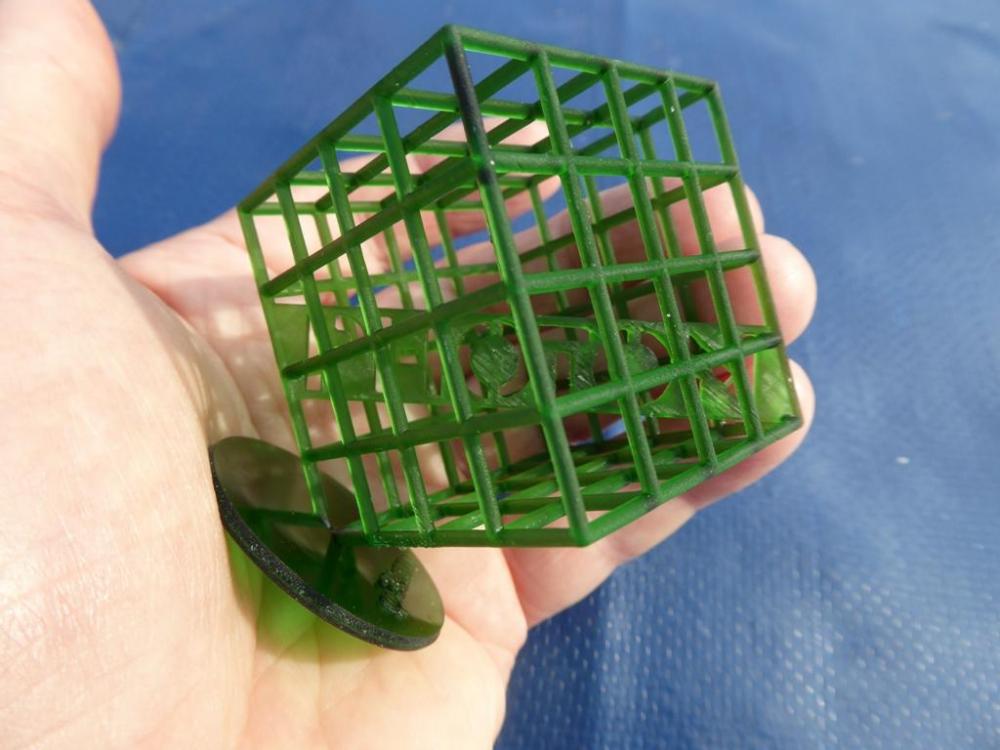
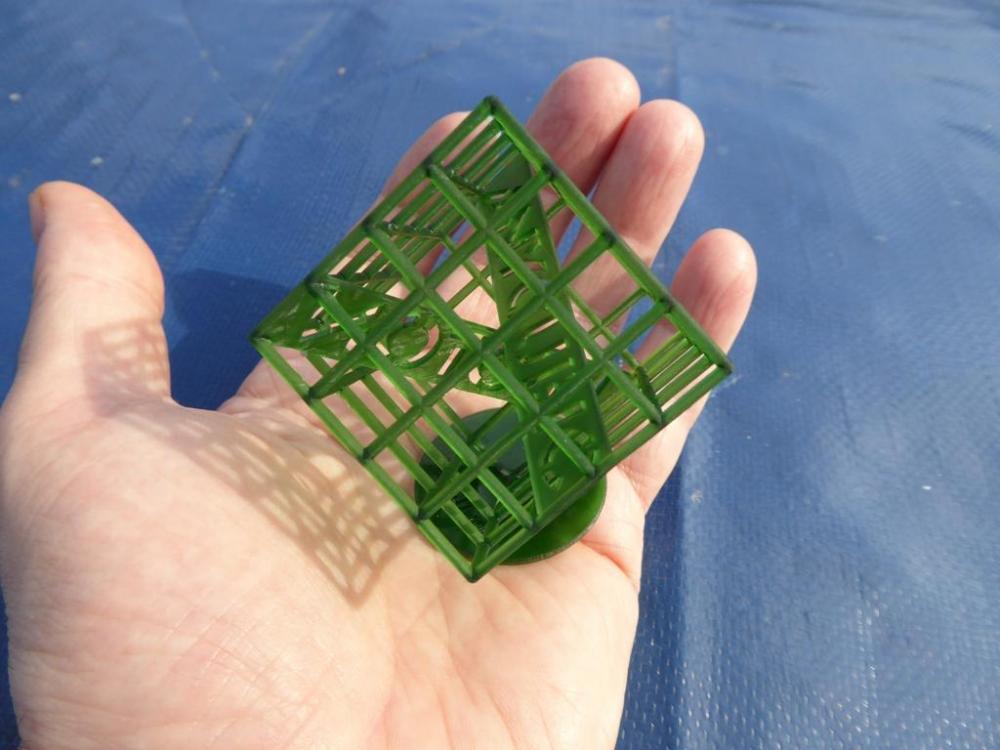
Just finished cleaning and post-curing my first test print: Pretty impressed with the result, especially as this printer is very much a budget machine. I did the test at 50µ resolution, rather than the 20µ maximum, as increasing the resolution massively increases the print time. This took a bit over 4 hours at 50µ, at 20µ it was predicting a print time of over 15 hours.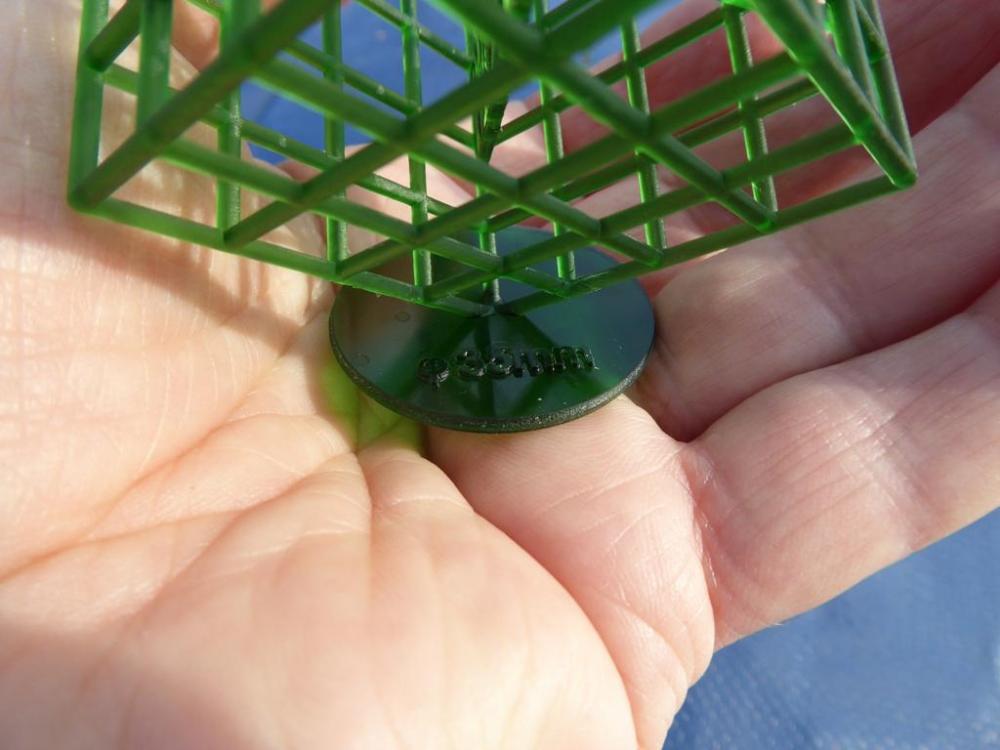
-
About the square root of sod all... I dealt directly with the Ecology, and they were very good to deal with. Whether or not they will now deal directly with you, after you've gone to Buildstore to make initial contact with them, I'm not sure. Fingers crossed for you that they will be OK about it.
-
Alcohol ie Surface Cleaners
Jeremy Harris replied to Ferdinand's topic in General Self Build & DIY Discussion
Nail varnish remover is a non-polar solvent, usually either acetone or MEK, whereas IPA is polar. It's a matter of knowing what it is you're trying to dissolve, really. IPA is pretty good at general degreasing and cleaning, but won't dissolve some heavier oils and greases that well. This can be an advantage, as, whilst something like acetone or MEK will very effectively remove oils and greases, it also tends to remove these from your skin very well, so isn't that nice to handle. IPA isn't as aggressive a solvent, so will usually clean and degrease most things fairly well, without being too harmful to skin (still best to wear gloves, though). IPA also has the advantage that it tends not to attack most plastics. I've been 3D printing today, and IPA seems to be ideal for cleaning up uncured UV curing resin. Not sure what the resin is based on, but it cleans up with IPA in much the same way as uncured epoxy resin does. Uncured polyester resin isn't touched by IPA, but dissolves pretty easily in a wide range of non-polar solvents, like acetone, MEK or toluene. It's a pity that you can't easily buy toluene now (you need a licence), as that was far and away my favourite degreasing solvent. I still have a couple of litres of it, saved from the time when it was easier to buy, for use as a "solvent of last resort". -
Glad they've updated Part G to include this, it didn't exist when I was having to try and convince Mr Awkward about consumption... Does make the point that it's always worth looking to see what's been revised in the BRs, though, As the 2016 version of Part G is quite a bit different from the 2010 version that I had to work to.
-
You could do what I'd guess many do, and just make up the numbers on the water usage sheet. Not saying that's what I did, but our shower uses ~100 litres per shower, before taking account of anything else... We did have a bit of a jobsworth inspector for a short time, who wanted to see proof that flow restrictors were fitted to all outlets, but I'm pretty sure that's an exception, rather than the normal procedure. The inspector who did our completion inspection wasn't interested in the water use calculations, and didn't even bother to take the completed paperwork I'd prepared away with him.
-
Alcohol ie Surface Cleaners
Jeremy Harris replied to Ferdinand's topic in General Self Build & DIY Discussion
The only alcohol I use for cleaning is isopropanol, a.k.a isopropyl alcohol. Relatively cheap if bought in 5 litre bottles and relatively safe if used carefully. Ebay often gets the best prices. Expect to pay around £15 to £18 for 5 litres. I believe that "rubbing alcohol" is essentially isopropyl alcohol.- 13 replies
-
- 1
-

-
- pickle my bones in alcohol
- degreaser
- (and 2 more)
-
Our retaining wall is rendered with a mix of white cement, hydraulic lime and the local (rather orange coloured) sand. Came out a nice cream colour, that seems to be weathering well (been there 6 years now). The colour seems to depend primarily on the sand that's used.
-
Which features of your house bug you?
Jeremy Harris replied to puntloos's topic in New House & Self Build Design
Same here. We bought the matching microwave/grill unit to go with the main oven and it doesn't have a turntable. PITA, as it doesn't heat evenly, nowhere near as good as the old (and much cheaper) stand-alone combination microwave we left behind at the old house. -
Anyone used online 3D printing services
Jeremy Harris replied to Gone West's topic in Tools & Equipment
Old post, I know, but I've just used FreeCAD to read in a .dxf created in AutoCad. FreeCad will accept a wide range of file formats, and can export .stl files. There are a few potential gotchas, for example, I've found that it makes life easier if the drawing coordinate origin is set to be in the centre of the view port before saving the .dxf (FreeCad seems to be a pain when it comes to handling offsets properly). Not sure I'll stick with FreeCad, as it's a bit quirky, but the learning curve to drive it hasn't been too steep. I'm just setting up my new toy, an Anycubic Photon 3D printer. Limited size of objects (115 x 65 x 155) but pretty high resolution, as it's an SLA machine, that uses UV cured resin (layer thickness is typically 50µ). It's just been superseded by a newer model (same resolution and print volume) so this older model is on sale for £229. Should have it set up to print a Benchy later today. I'll post a photo of the outcome. -
This makes me sick at heart
Jeremy Harris replied to ToughButterCup's topic in General Self Build & DIY Discussion
Two industries in the UK that have been markedly more prone to workplace accidents than any other seem to be building and farming. The problem with building work is that it seems commonplace for the smaller companies to cut corners when it comes to H&S, whereas my (limited) experience of a big company (Sir Robert McAlpine) was that their site safety was really excellent (to the extent that a breach of their site safety rules was one warning then instant dismissal for a repeat offence - off site within minutes). Scaffolding seems to be an area where the rules are frequently breached. We used a scaffold company that erected and tagged the scaffold and gave me a sheet full of warnings that nothing was to be changed except by them. Everyone on site changed bits of the scaffold. Trying to stop people from just changing bits of it around was like trying to get a fish to ride a bike. None of the people who came on site were any better or worse than any others, it seemed everyone universally just changed scaffolding around. Given that modifying certified scaffolding seems to be endemic, I'm surprised their aren't more accidents, TBH. Having said that, it looks as if the Reading accident may have been induced by the building itself collapsing and taking the scaffold with it. -
Which features of your house bug you?
Jeremy Harris replied to puntloos's topic in New House & Self Build Design
Our AEG ovens do the same. I can't find any way to stop the damned things bleeping. In fact, I'd rather things didn't ever bleep at all, especially my car; that makes a variety of odd bleeps and musical tones when turned on, and I've yet to find a way to turn them off (my old Toyota used to do the same, but I found a way to hack into it via the OBD port to turn them all off). The hob is as bad. Wipe it with a cloth a bit too vigorously (when it's off) and it beeps to tell you to stop... -
I also used plastic plumbing for our build, and never having used it before I found it pretty quick and easy to use. However, like @JanetE, I opted to use copper where the pipes came out through walls to connect to stuff with compression fittings (like shower mixers), and also where any pipes were going to be visible, like those running into units to connect to taps etc. Copper pipe just looks so much neater, when it has to be on show, than plastic. Getting the plastic pipe to run in dead straight lines is challenging, plus the fittings for plastic pipe are a lot bulkier. Having to look at untidy plastic pipes every time I open the cupboard under the sink would, I'm sure, drive me bananas!