
Nickfromwales
-
Posts
30313 -
Joined
-
Last visited
-
Days Won
295
Everything posted by Nickfromwales
-

So to today's questions on our ASHP install.
Nickfromwales replied to MikeSharp01's topic in General Plumbing
You just insulate the pipe, then the heat (loss) is contained but the slug of cold water is deleted. Straight off the cylinder is the larger bore, 22mm or 28mm sometimes, hot water pipework, so when running a basin hot tapo this becomes way more of an issue; dumping out the cold water before getting hot out of the tap to wash hands after using the loo. For the shower, or a bath, or filling the kitchen sink, utterly irrelevant, just way more of an issue with frequent use, low flow outlets such as basins. If you're happy to stay fully clothed and wash your hands in tepid water, please ignore me and loop away. FYI, I've never done that loop on a pressurised unvented cylinder setup, and never will. I only do a more significant anti-gravity loop if it's a vented cylinder and the CWS is constantly heated / 'hot'. -
So to today's questions on our ASHP install.
Nickfromwales replied to MikeSharp01's topic in General Plumbing
Do the same with the basin hot tap and report back please. You can keep your clothes on for that one The expense of continuous heat loss? C'mon..... we're talking pennies and the benefit outweighs the long term losses of the discharged cold water through the meter. Happy to stay up and fight for this one, as I'll win. -
So to today's questions on our ASHP install.
Nickfromwales replied to MikeSharp01's topic in General Plumbing
Nope. That's as clear as mud lol. Try again please, as even I am confused by that one! -
So to today's questions on our ASHP install.
Nickfromwales replied to MikeSharp01's topic in General Plumbing
You snooze, you lose fella. -
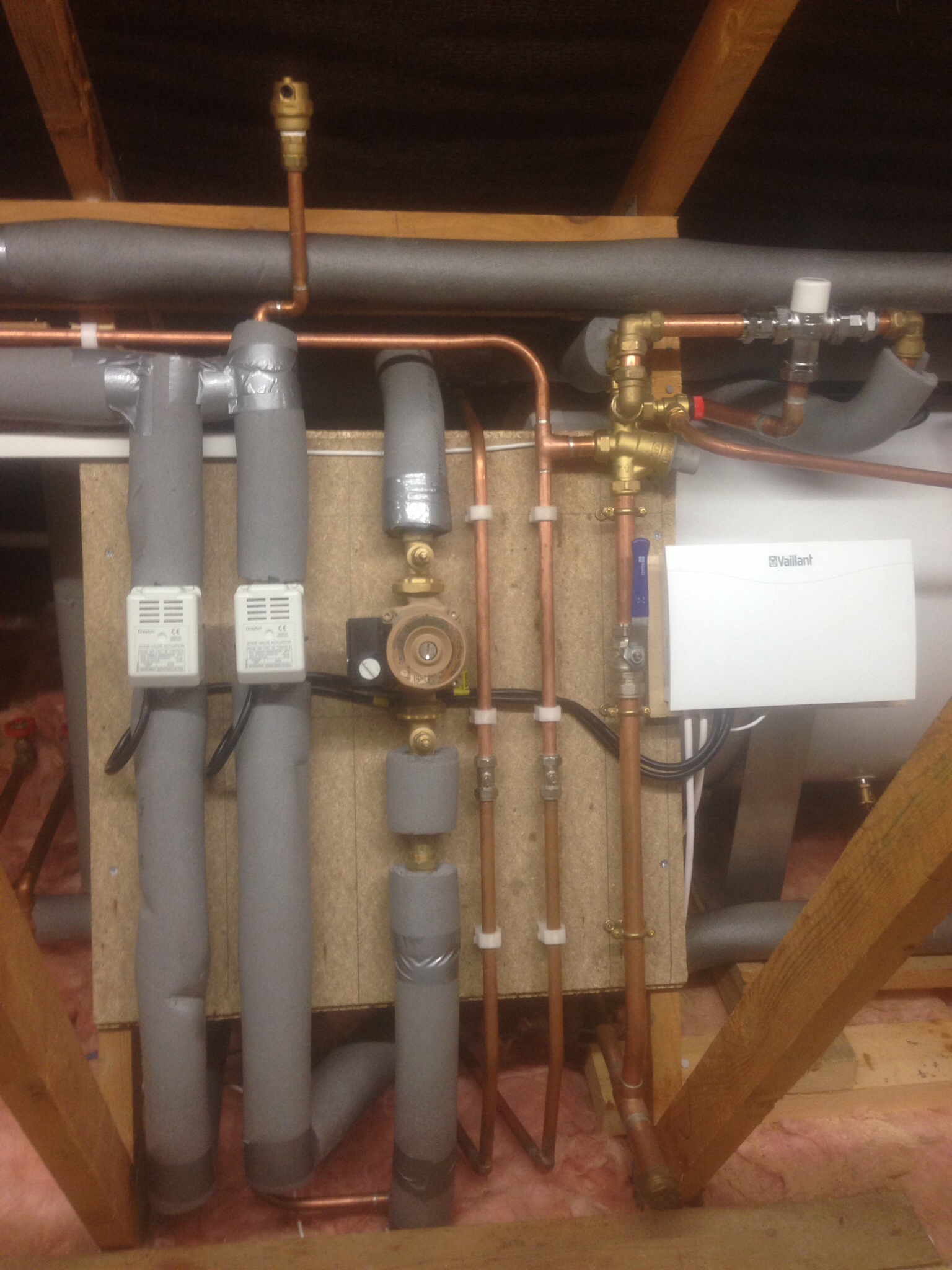
This is a major worry! You need to know exactly what the pressure leaving the PRedV is. Sometimes you can buy a 1/4” gauge and fit it into the blanked off port on the control group, but yours doesn’t appear to have a plastic blanking plug to use to fit this? Can’t see both sides of the valve.
-
So to today's questions on our ASHP install.
Nickfromwales replied to MikeSharp01's topic in General Plumbing
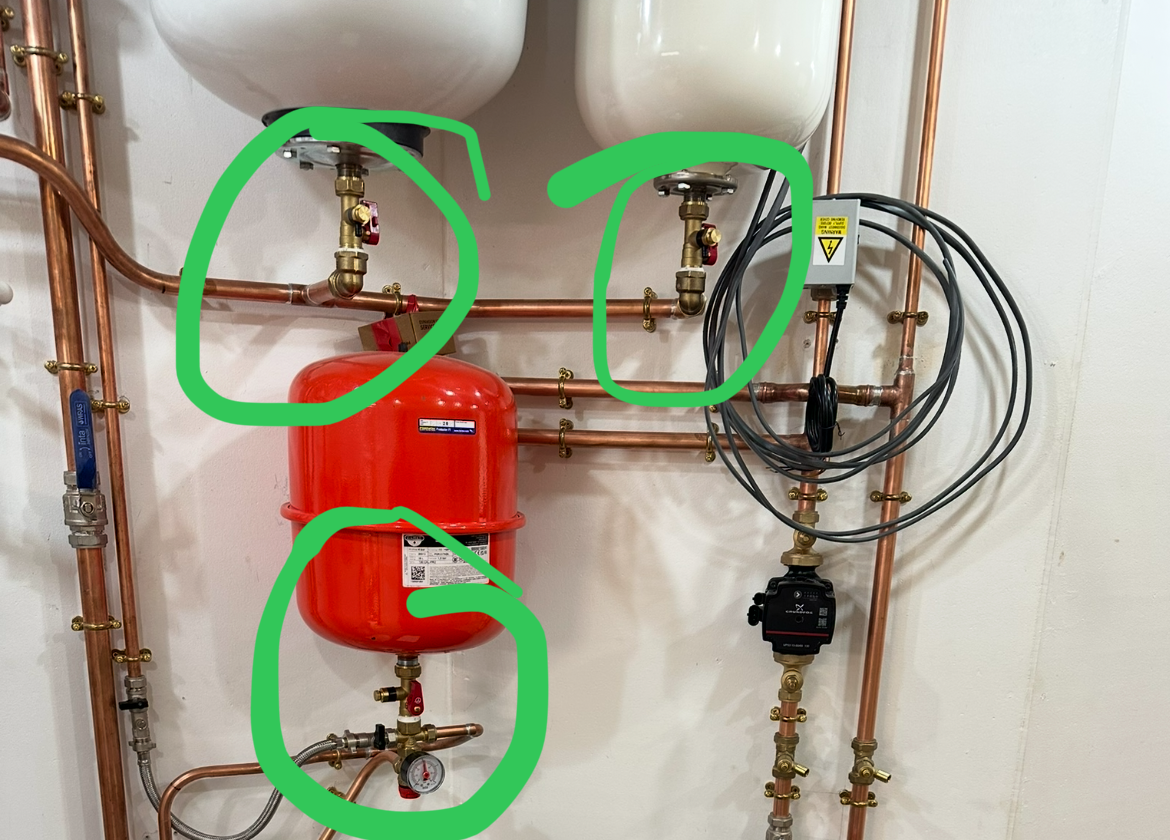
If there’s no hot return circuit & pump, I promote this heat creep (it’s not thermo syphon as it can’t loop back) to limit the amount of cold stagnant water that needs to be drawn off before getting premium hot water out of the taps. @MikeSharp01 you need a gap between the expansion vessel test valves. -
So to today's questions on our ASHP install.
Nickfromwales replied to MikeSharp01's topic in General Plumbing
+1 Last one I installed has these. Much easier than a full drain down tbh. These come with a wire that you push through for security, a bit like the DNO fits to the fuse and meter, to prevent misadventure.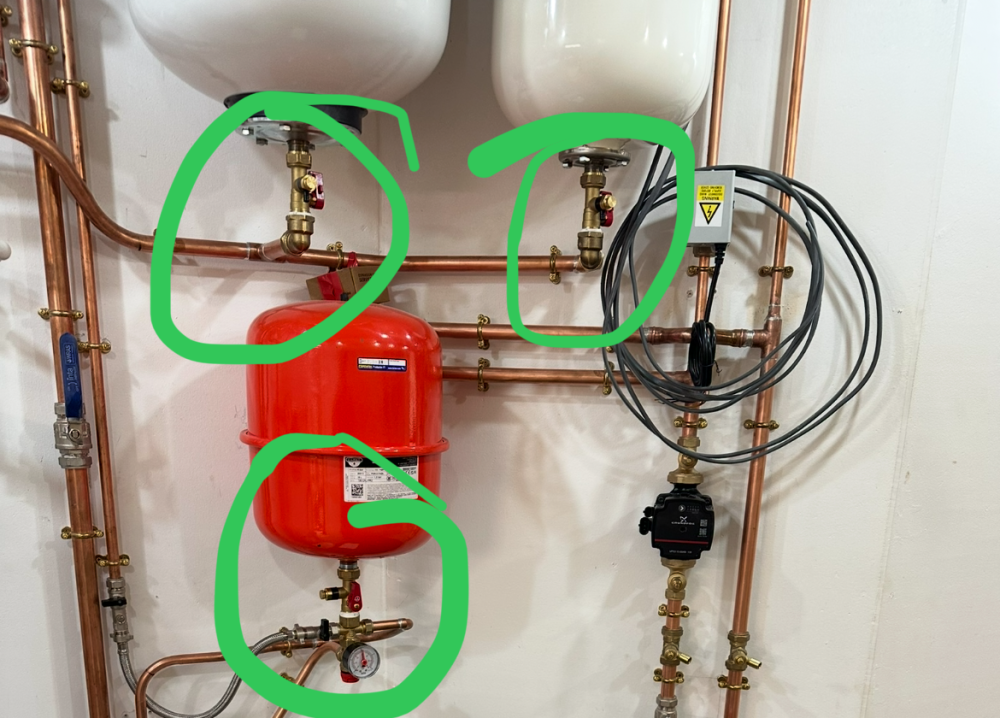
-
Just drill new bolts a couple of inches away, and grind off the ones in the way. No need to remove the ledger if it’s level and other fixings are kosher? Plus one on the washers being too small. They have just been wound into the treated wood which is soft and won’t give much purchase. Should be big square washers afaik.
-
Good point by @Marvin about the softener defo needing putting in to prevent limescale. Is this notable on any of the shower heads or taps atm? Can't rule out the possibility that this is causing a failure of the pressure reducing valve (cylinder control group that the expansion vessel is plumbed Into) by crud building up on the valve seating. May be best to strip this down and descale it with something suitable so it can be eliminated from your enquiries. As said, the test valve is right at the top of the expansion vessel. It is sometimes hidden under a black plastic dome cap which screws off to reveal the valve; a Shraeder valve like a car tire. There is no isolation valve for the expansion vessel as your generic G3 installer will have known thats not allowed (by him simply following the installation guide that came with it). You cannot have a means of inadvertently isolating the expansion as its then dangerous to operate it without such protection. You can buy a cheap pressure tester off Amazon and test the precharge pressure, and to do this you just turn off the cold mains and open a hot tap (making sure the boiler and immersion are both switched off purposefully). Leave the hot tap open whilst you do the test and note your findings. Test it before, during, and after. Make notes for discussion here. Close the hot taps, switch the water back on, and then go and run the hot taps briefly to get the spluts of air / water out, to recommission.
-
Surge protection, fuses and MCBs in loft from PV array.
Nickfromwales replied to jimseng's topic in Photovoltaics (PV)
All this nonsense about issues / danger from using an isolator is just a mountain out of a possible molehill. We fit isolators early on, as roofs go on way ahead of the plant / M&E going in, and we just lock them shut with cable ties. Just put a sticker on to say “isolate only outside of sunshine hours” if you have any risk of a random 3rd party getting their idle thumbs on this equipment, eg it’s rented out, but anyone else working on this kit should be competent or yourself supervising, so the risk from misadventure is easily manageable. Anyone who disconnects a DC array under load will be very unlikely to do that a second time….. -
After 16 years of constantly moving / doing its thing, don’t discount the possibility that the components (which don’t last forever) are nearing / at “end of life”. Stripping and cleaning / servicing will likely just start these stems and flow gauges leaking, as they all rely on tiny rubber O-rings which eventually just go D-shaped and give up. If you want trouble free motoring, judging by the multiples of issues arising, I think it’s time for an upgrade and a new manifold / pump set. You may be able to retain the actuators as these are all pretty standard fitment. Depends on budget, and whether you’re happy to just keep putting band-aids on this to get through winter. Cheap option: LINK Best option: LINK Up to you if you want to spend time / money (good after bad) treating a terminally ill bit of equipment. Ask Santa maybe 👀🤞 Also, just to cheer you up a bit more in early December, if your room stats ‘click’ are they rotary dial type (Honeywell?) basic stats? These are quite crude for use with UFH (huge hysteresis), so you may want to consider upgrading those too if over/under-shoot is an issue; rooms get too hot then too cool instead of one steady temp for eg?
-
A 12/14kw could suffice, depending on your heat load. 24kw is a lot, 30kw to space heating is huge. What gadget do you have coming?
-
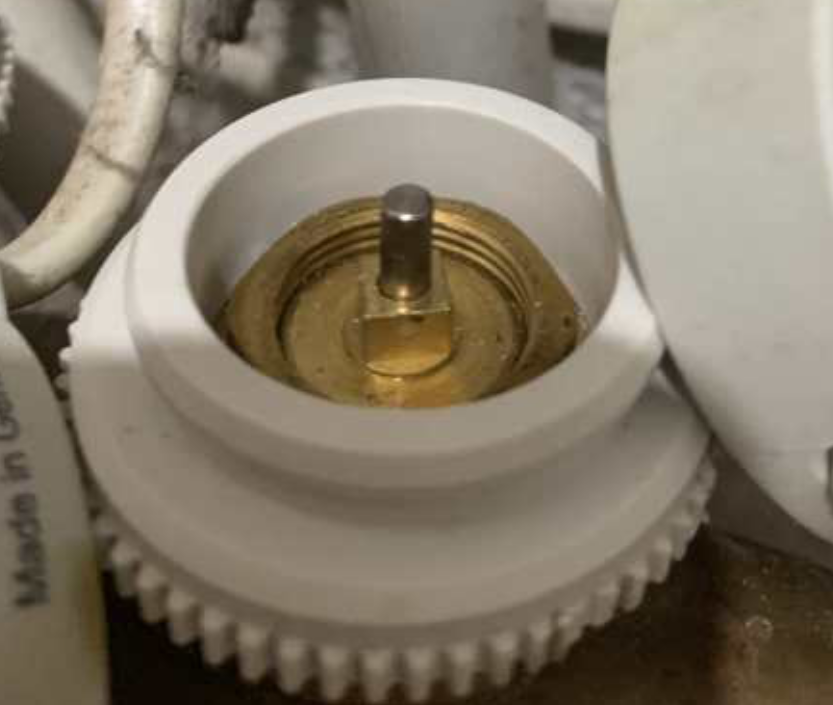
These are the ‘stems’ around the pins, and the square head of the stem allows you to rotate the body of the valve; further down = less flow > no flow if fully seated. How old is this setup?
-
Heatmiser, Hive and Willis....Help!
Nickfromwales replied to Antonb182's topic in Underfloor Heating
Second (primary) pump. Willis heaters do hot water by convection, when in a hot water cylinder, but for a heating arrangement where there are variables I employ the primary pump. This is to ensure flow across the heater is sufficient to avoid early kettling or any kettling at all. -
Heatmiser, Hive and Willis....Help!
Nickfromwales replied to Antonb182's topic in Underfloor Heating
@TerryE has this and iirc is using SSR’s to power the Willis. Ive installed Willis heaters on a number of jobs, and I chose to create a recirculating loop which I then glean flow and return from (via some close - coupled T pieces) so this acts like a figure of 8. That way the main pump can circulate freely, regardless of demand, which makes the system less erratic and the UFH manifold pump is hydraulically decoupled and can just do its own thing. -
Cold (but new) extension - what should I do
Nickfromwales replied to jc212's topic in Heat Insulation
UK “general builders” are mostly older single tradespeople who have learned to pull a few bodies in to piecemeal a complete project together and stumble over the finish line; as quickly and cheaply as possible to max profit from price. Yes…..plenty of good ones, but the minority for sure. Check their previous clients / workmanship and get references people!!! Prob there is someone with no knowledge or experience doesn’t know when they’re just looking at a shiny 💩 so may still speak highly of these individuals. A lot is misadventure, or just a lack of simple understanding of how ventilation heat loss can suck a building of all the heated air by allowing free flowing cold air infiltration to enter freely in this exact way. 🤷♂️🤞. -
Sudden pressure loss in ASHP system
Nickfromwales replied to kandgmitchell's topic in Air Source Heat Pumps (ASHP)
Any particular time of year for each ‘event’? -
Is this a common Vaillant problem?
Nickfromwales replied to Post and beam's topic in Air Source Heat Pumps (ASHP)
Yes. The ‘proper’ way is to use a cold mains feed onto the flow rail and a hose to a drain on the return, and then to blow the loops through (one at a time, not altogether) until no air remains. UFH flow rates are tiny, so it can therefore take days / weeks / longer for them to purge themselves completely; the air goes into the manifold and simply gets sent back around as not all of it can be created by the one bottle vent. These vent very slowly, so don’t catch everything before it gets pumped back into the loops, and around it goes……and repeat. -
Is this a common Vaillant problem?
Nickfromwales replied to Post and beam's topic in Air Source Heat Pumps (ASHP)
Did the installers purge all the UFH loops, or did they do the usual ‘lazy bollocks’ method of telling you to run it and the system will (eventually) “purge itself”? -
Because of the word ‘commercial’. You are a domestic client, so are wires apart here afaic. Keep them on a tight leash is my 2 cents. 😌😉
-
The basic architect questions thread
Nickfromwales replied to SilverShadow's topic in Surveyors & Architects
Fwiw, and FYI I have zero knowledge of any of the above, it’s a melting pot. Some are good at A,B,C…..others H,I,J…..and then there’s X,Y,Z. Very few seem to have a complete, overarching knowledge / skill set, and still way too many putting their own personal preference ahead of their clients. Look at their portfolios and decide for yourself if you think you’ll have some synergy, as there’s the pot of gold imho. -
Expansion vessel having no pre-charge is the usual suspect here. It seems the heating of the cylinder is creating expansion, and there’s nowhere for it to be absorbed. Time to isolate the expansion vessel and check the charge pressure so we can help you through the process of elimination. Regarding the ‘bomb’ issue, relax. There’s been a failure of some sort, and the safety features have done their job; the red T&PRV had opened to relieve the buildup of pressure in the cylinder, functioning entirely as intended to keep you safe
-
The architect built his own house this way!! I went for a 3-way meeting and just couldn’t believe the tripe falling out of his mouth. Turns out he’s mostly versed in commercial projects, ffs, so afaic it’s time for him to go bye bye.
-
Yup. Just throw them some generic stuff and see what they quibble over, basically. One architect had the client spend £1k on an MVHR design, which I got them to refund as it was a bag-o-💩. Totally unnecessary at this early stage to give any more detail than the very basics.
-
On a current client project we’ve moved steels about and altered doorways, all so simple (and virtually free) to do, when it’s just a click of a mouse and the house only exists on a screen. So many poor architects out there even today, still not paying homage to plant space / transits / integration of the M&E into the fabric of the build, and worse; it’s gone past crazy and now it’s just embarrassing. And they charge handsomely for delivering this crap level of detail. One client had been told by his architect to make the house airtight, but he “doesn’t like” MVHR so had recommended trickle vents and mechanical fans ffs. What a tool !