
Nickfromwales
-
Posts
31390 -
Joined
-
Last visited
-
Days Won
346
Everything posted by Nickfromwales
-
 Loads of speed, next to zero pressure whilst drilling, and a good diamond bit shouldn’t break out. If they’re very hard or very soft bricks you’ll need a tower scaff and do as per @joe90 did. Fail to prepare, prepare to fail. Simples.
 -
I’m confused about ubiquiti
Nickfromwales replied to Adsibob's topic in Networks, AV, Security & Automation
Yup. I use my method for general survey and locations choices on POE only, ( as most of my clients haven’t got BB at 1st fix stages ), but I am now set to purchase a 4/5G data only router with LAN point so I can then also do speed checks off my laptop to be 100% sure. Those things are cheap enough, and it’ll be good to have WiFi on site during the M&E works as a lot of my PH clients builds get next to zilch in terms of GSM signal when inside, especially ( as you say ) when Insulaton has been fitted. Same as everything else, measure twice cut once. -
I’m confused about ubiquiti
Nickfromwales replied to Adsibob's topic in Networks, AV, Security & Automation
Yup. Most building materials are relatively transparent, but reinforced concrete and metal structures do affect things. If you buy an AP and a flying lead you can do a ‘survey’ of where it could / would / should go just by powering it with the POE injector. No need for data, just look at the signal strength Cheap 15/20m cat5 lead off Amazon is plenty good enough. I’ve just bought an ubiquity pro6 to replace the AP lite on the landing, which will give WiFi to pretty much all of the habitable rooms in my 3-storey house. 👌. Better to have a couple of powerful units than loads of medium power ones afaic, as it’s the devices which seem to take forever to ‘see’ the stronger signal off the AP that you then roam to / from. I’ve put a TP link external unit under my gazebo and that floods all the outdoor areas with ample signal, including reaching into my metal roofed office / shed / man-cave. -
My apologies 🙄. Yes, olive eating into pipe, and the fact that the whole functionality of the olive is to compress onto something rigid, which reinforces by design how it is lunacy to turn / tighten it into soft plastic. The plastic cannot offer any opposing force so just gets displaced. The nut gets tightened until ‘someone’ decides it’s “tight enough” and the resultant joint is a compromise even before you’ve put water in the pipe. The issue of the insert being used ( or not ) is of zero relevance, as nobody here can compensate or advise against idiots not following instructions. However, when the instruction is to do something poorly, and it comes from the manufacturer, go figure. I’ll not defend that any further, just a plumber on the tools for 3 decades stating what’s shite, and why. That’s impartial and free advise, given on a take it or leave it basis.
-
You can’t really say that until you’ve seen what is included in their quote??
-
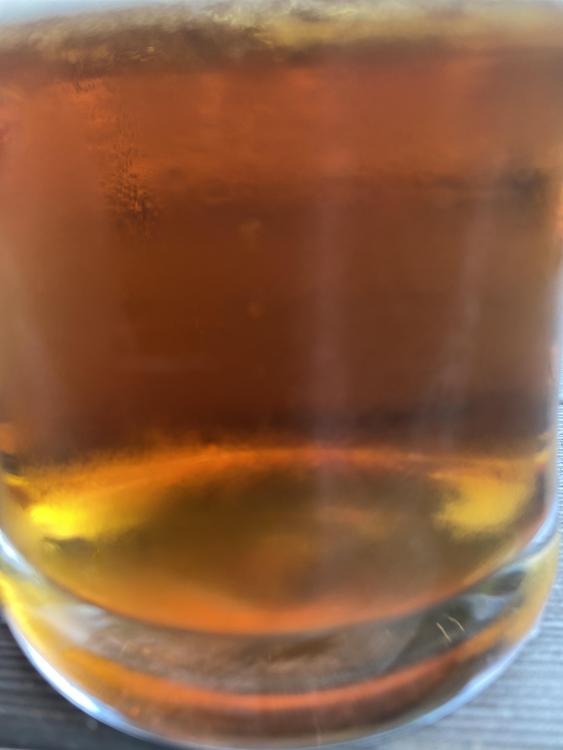
That colour soon.
-
Using the grout colouring ‘pens’ will give you the biggest nightmare of all. Do not use these crappy short cuts, it’ll wreck the job completely. Another cause of this lightening is too much water when mixing the grout, or excessively wet sponge when wiping the excess back and polishing up. The grout rakes are ugly beasts and will VERY easily chip the edges / corners of rectified porcelain, so please be sure of whom you employ for that task, as a goon doing it will result in a complete re-tile. If you go for the grout removal, I’d strongly suggest paying a cosmetic repair company, such as Mr Magic / other and get them to do it methodically and meticulously. Anything else will end in ( even more and larger ) tears.
-
It’s mostly behind the laundry basket where he can’t pee straight when he’s drunk.
-
Grant do an oil hybrid ASHP, which may allow you to retain the existing rads. Would need some numbers crunched first of course, and would require the oil tank to remain. You would gain a cylinder, and a device for producing 2-3x the heat energy from 1 unit of electrical energy. The oil burner side of the hybrid kicks in when the heating load exceeds the max efficient operation of the ASHP side. Have a google
-
Spot on. 👍
-
Life of plumbing and seeing these fail. Splitting hairs, it’s not every one that will leak, but how many potential points of failure do you install on the basis of “it SHOULD be ok”?
-
I meant after survey and the resultant ‘correct’ installation.
-
It is the worst, sack of shit advice, any manufacturer could have given anyone. Categorically avoid doing this, please. If Hepworth has a bad point, it’s in giving that bit of naff information. They’d do a LOT better just posting a link to the fitting I showed you. 🙄
-
Armature looking for advice hot water options
Nickfromwales replied to Calw's topic in Introduce Yourself
Pulling cold in from outside via draughts / trickle vents in winter = bad idea. -
https://www.screwfix.com/p/hep2o-plastic-push-fit-adapting-male-coupler-15mm-x-/5970F?kpid=5970F&ds_kid=92700055281954514&ds_rl=1249404&gclid=EAIaIQobChMIvdOO8-DB-AIVkmDmCh2yTQeaEAQYASABEgL_uPD_BwE&gclsrc=aw.ds
-
Because you cannot put plastic pipe into compression fittings. You could however use Hep2O 1/2” or 3/4” BSP male / female fittings which accept Hep2O pipe directly.
-
Normally a couple of bends and then copper tails projecting out at 150mm c’s is fine. For a bar mixer you’ll need a fast / easy fit kit to mount the shower with, as with this approach h you’ll be binning the supplied cranked 1/2”x3/4” fittings. LINK
-
We should have installed air conditioning… now what?
Nickfromwales replied to Adsibob's topic in Other Heating Systems
At 28oC I’d be looking to kill someone. At 25oC I’d be looking for A/C. You don’t know an old lady I once fitted a new boiler for, do you? -
Would need to be holy water for you ya heathen 🤣.
-
Water?
-
Installed prices are quite significant either way tbh, so if paying for the whole shabang you may as well have the best item installed if the install costs are roughly the same anyhoo. I’ve fitted Panasonic and am very happy with them, also.
-
Spiral or serpentine UFH layout - which is better?
Nickfromwales replied to low_and_there's topic in Underfloor Heating
https://www.elementshop.co.uk/prowarm-aluminium-spreader-plate-390mm-x-1000mm-with-150mm-centres-bulk-buy-1-to-9?gclid=EAIaIQobChMI987eh4W8-AIVFIBQBh0pnw6NEAQYASABEgL-MfD_BwE -
Spiral or serpentine UFH layout - which is better?
Nickfromwales replied to low_and_there's topic in Underfloor Heating
A layer of PIR directly under spreader plates ( set out meticulously so as to make the plates very slightly distended eg for excellent surface to surface contact with the P5 ) will add to the mineral wool and pay huge dividends. The wood fibre could be used instead, but if it were my house I’d use PIR for the uplift in the performance credentials. Yes, already noted, Sherlock 🤪. Just saying the underside of the heated pug tray would be only protected by the wool and also subject to ventilation heat loss from the free air movement in those underfloor voids. Thus, the PIR, sealed and made draught-proof, would ( should ) be a minimum spec under the pug tray. Prob struggle to get 25mm under unless the tray bottom was 11mm ply and in-filled with PIR before loading with the pug mix. Wool > PIR > spreader plates c/w 3x16mm pipes per tray / void > 22mm P5 > 6mm ply > floor covering = 👌 -
I'm not a fan tbh, as the vulnerable external mitres take a bash from hoovers etc and start to fray. Pine is much more robust imho, just a total PITA for prep / prime / paint. Get set up ( either way ) to spray all of these BEFORE installation, as this removes a ton of downstream backache and cutting in.
-
The're about to install one via me for my current full M&E package clients. Defo Rolls Royce, Bugatti even, but very good credentials for when it needs to count and boasts a CoP of 6 if installed to their ( very fussy ) criterium. CVCsystems also design and specify for my MVHR stuff, and Nick Vaisey is their in-house passive guru who is extremely helpful. Vitor is the ASHP guy, and he has also been very helpful in coordinating the above SE ASHP installation. Thoroughly recommend you talking to these guys.