
Nickfromwales
-
Posts
30334 -
Joined
-
Last visited
-
Days Won
297
Everything posted by Nickfromwales
-
Very differently from the sides, as the head needs to manage and direct any falling water to the internal face of the façade and outwards through, for eg, weep joints.
-
You may need to close the cavity off I expect, somehow, but as I don't have sectional drawings to comment from these are generalised bits of info from a man you've never met before on the internet. With blown full fill bonded beads, I'd have thought these would round things off nicely. Otherwise where do the beads stop during installation? As in, they'd just spew out?
-
You may need to close the cavity off I expect, somehow, but as I don't have sectional drawings to comment from these are generalised bits of info from a man you've never met before on the internet. With blown full fill bonded beads, I'd have thought these would round things off nicely. Otherwise where do the beads stop during installation?
-
https://condell-ltd.com/catnic-standard-duty-thermally-broken-cavity-wall-lintel-ts150-100-750mm?gad_source=1&gclid=Cj0KCQjw1um-BhDtARIsABjU5x6w0qbQNEyACFR81sLEzaErCAncCfhYPntTGQKbqppQ7jsLiWdxmjoaAmBoEALw_wcB Suggest these maybe?
-
Nobody. 👍
-
 So location and recovery rate are the big Achilles heel here then. Thanks for the explanation.
 -
Internal brickwork in swimming pool/spa hall
Nickfromwales replied to SBMS's topic in General Construction Issues
Crossed post with @Andehh, so please don't think I was quoting and commenting from your post. -
Internal brickwork in swimming pool/spa hall
Nickfromwales replied to SBMS's topic in General Construction Issues
This is what happens when it's your round but you get picked up early by the missus mate So, as it's a pool / spa, the chemical levels should only be a bit higher than you'd find in drinking water from the street (in the real, sane world) so no need to worry about the walls getting chewed out by high levels of chlorine. In an ideal world the pool hall should be at a slight deficit, pumping air out to atmosphere faster than it sucks it in, that is so the humidity isn't routinely looking for an escape route into all the nooks & crannies of the fabric of the build. Have you got an airtight(ish at least) door pencilled in for between the pool hall and the rest of the domestic residence? These should, very much, be two separated envelopes. -
"High 5" lol
-
What pressure does the pump cut off at? 50L vessel will be roughly 50% air so interesting to hear you manage well. Has it ever bottomed out with use at the home and say an outside tap > garden hose in use ever?
-
Oh, and I'd go for no less than 100L expansion buffer (cold mains accumulator) tank as around 50% of that will be air not water.
-
I'd prefer the tank in the garage so the water isn't always sitting at 'room temp' in the heated envelope of the house. Far better if you are using this for human consumption as you can then get a glass of cold-ish water at least vs cold / tepid. To be honest I'd have it in a shed with a bit of insulation to make sure it was cold, just not allowed to freeze, but how much you worry about this will be dependant on how you drink water in the house. If you have a cold water drink / ice dispenser in your fridge and use that for quenching thirst (or bottled water) then the issue very much goes away.
-
Just be aware that if you use barrier pipe (to err on the side of caution) you cannot use regular MDPE fittings, as these are slightly different sizes to prevent it. You’ve got to buy the correct barrier bends, tees and couplers etc . And don’t forget the inserts!
-
Undersized capacity for expansion is number one issue here, and what happens is the system expands, a bit of loss from PRV to atmosphere, then the system cools down and creates a vacuum. That results in air being sucked in through the automatic air vents, and then repeat. You need to add another 14-18L of expansion vessel capacity before further diagnosing, as that may resolve more than one symptom here. If there’s insufficient inhibitor install is 12 months old then you need to get the original fitter back to do this FOC as they should have calculated the system volume and installed this from day 1; this may have now provoked the PRV to dribble even when back to normal duty so you’ll have to monitor this for discharge after the second expansion vessel is installed. Common to see tbh, as most don’t ever read the book word for word as they’re just wanting to be in and out asap on price. I think it’s a mix of gas and air that’s accumulating in the radiator that you’re routinely bleeding, and if there’s insufficient inhibitor then the corrosion process releases nitrogen (iirc) which gets released by a) the auto vents and b), you manually bleeding the rads. The issue of the boiler achieving such high temps so quickly points at pump flow rates being too low. One other possibility is that the pump isolation valves may have been inadvertently left part open instead of fully open (took me and 2 of my mates half a day of head scratching, to find this faux pas, where we had the same issues on a brand new job !!). How we laughed……
-
Say nothing more. Make sure the pipe is compliant, and installed to the correct spec / depth etc, with photos taken holding a tape measure, and carry on. If there’s any risk of there being contaminated ground / soil the use a barrier MDPE pipe instead of a regular MDPE.
-
Retrospectively sealing cracks at 10+ year old plasterboard joins
Nickfromwales replied to GP41's topic in Ventilation
Have you filled / sanded / painted any of these cracks before, or is this the 1st time you’ll be tackling them? -
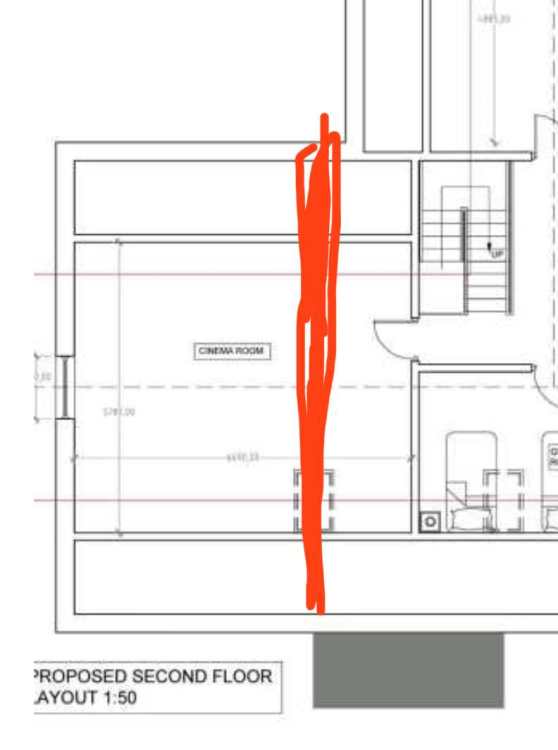
Apex would go up with roof timbers to ridge and back down again, profiled to be within the same footprint as the timber.
-
You’ll have to introduce a steel under one of those upper walls then so you can transfer the ridge down? Or do a steel apex?
-
Squirt some EBT or mastic onto the frame so the plasterboard is bonded tight to the metal. If you’ve installed it spot on then run a spirit level across and slowly move it down the wood work to identity if there are voids between the level and the frame. That’s where you’d want to put a continuous line of goop. When you crank the pan fixings up there’s a LOT of force back onto the tiles and plasterboard where the lower edge of the pan meets it, so think logically of what could move under the weight of you dropping off U571 and make sure there’s no gaps
-
You can use them in quite adverse conditions, but where there’s excess heave you sometimes have to pile and tie the ring and intermediate beams into those. Very difficult to say much on here tbh, as it’s the SE’s call and also hangs on what the findings of the soil survey were.
-
Advice for replacing decommissioned boiler
Nickfromwales replied to LeserattePD's topic in Boilers & Hot Water Tanks
Yes, ask lots of questions as there’s a bunch of very knowledgeable people on here in fairness. WB and Vaillant I’m assuming won’t have the ultra low modulation rates that I require for my clients projects, so please don’t compare my investigations with your thread, no relevance there. -
Hi. Block and beam can be done well, but you’ll need to get the architect to set levels out to allow 150mm PIR insulation and (ideally) a 100mm slab atop; in the slab sits your anti crack 142 mesh and your UFH pipes zip tie to that. That would get you to ‘top of concrete’ (TOC) level, so then your chosen floor covering goes straight onto that, and then that’s your finish floor level (FFL). Insulated raft foundations are typically seen to be the best choice, as B&B will be cold ventilated so Baltic under there during winter, whereas a raft (or strip and infill slabs) will not have the cold under them eg way better imho.
-
@Vesa Have a good read here. Ignore the title and scan through until you see that chat go towards airtightness etc. 👍
-
Hi and welcome. Try to get that airtightness score down and DO NOT assume that plaster-boarding will help out a huge amount.
-
Advice for replacing decommissioned boiler
Nickfromwales replied to LeserattePD's topic in Boilers & Hot Water Tanks
PDHW = priority domestic hot water DHW = domestic hot water If you’re going to have a new cylinder then you just need to install a “system boiler” which replaces your current boiler and will just drop right in with minimal disruption. Assuming a typo on PvP and should read PV, so yes, that’s compatible when the time comes but you’ll need to ask the PV installers to fit a hot water diversion controller (such as an Eddi from MyEnergy) for that to feed to the immersion in the new cylinder. Make sure the boiler installer flushes the system and fits a magnetic filter so none of the cr4p in the existing pipework and rads gets into the new boiler. Ask for new thermostatic radiator valves to be fitted throughout, but not on any rads you intend to replace / upgrade eventually. Currently looking at the market offerings for gas boilers so I’ll check out Atag, Intergas, Veissmann first, then WBosch and Vaillant I guess. First one will be a combi, so time to go back to the school of gas and see what’s what! 🙃