AliG
-
Posts
3211 -
Joined
-
Last visited
-
Days Won
11
Everything posted by AliG
-
I just had a soil survey done in Edinburgh. I had a guy recommended on here at just over £1000, but he wasn't available. I basically went on Google and sent the same email to five companies. Two came in at over £4000, two at around £2500 and one said they didn't do it, but recommended me a company who did it for just over £1000. I am still waiting to see the report before I recommend them to anyone. The high quotes often had absurd padding in them, such as £350 for a utilities report, even though it is on garden ground and I have a map of what is under it, or hundreds for H&S assessments etc. I would just send out asking for quotes, they all came back in a couple of days. I only needed 3 holes, so you might be nearer to £2000 or more if they need to know what is under the site before they drill. I paid over £4k for one arranged via an SE four years ago, when I looked back at it, around £1000 was because they weren't local and charged me for travel and subsistence, so I only checked local people this time. Edit - Just had another look at your original post. Why would you need 8 holes for an extension, that is crazy. I doubt most people have anything for an extension, they probably just dig down and match the existing foundations.
-
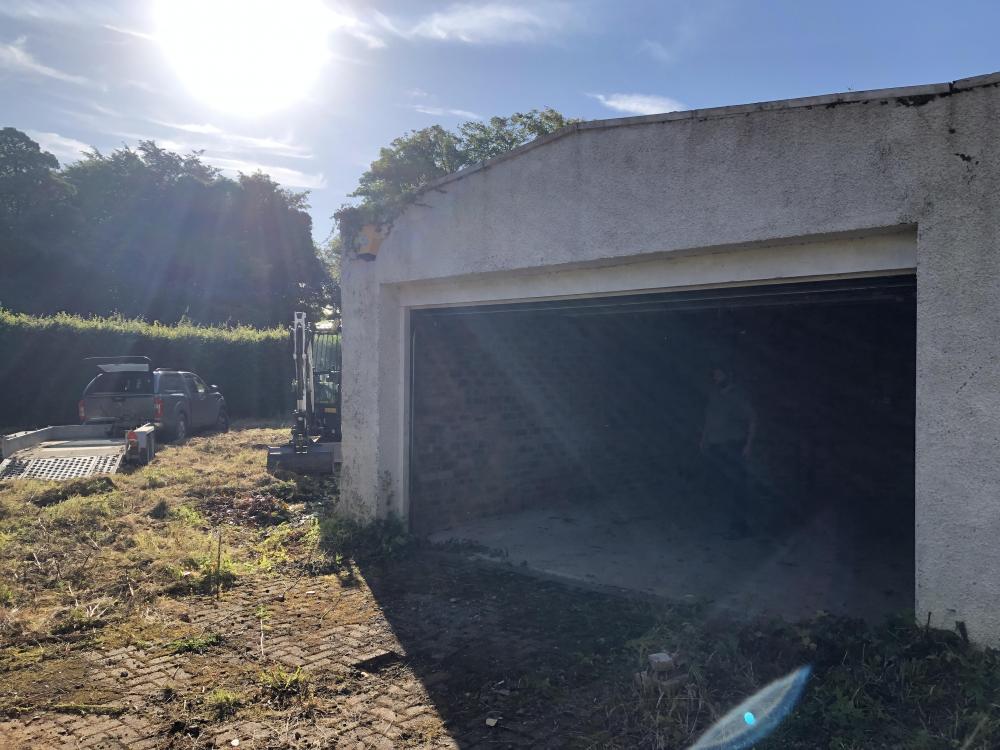
Demolition work on the garage on site started today. Presumably I should really do a blog rather than a series of posts this time.
-
I think we are at crossed purposes here. The polyurethane I am talking about is in the interior partition walls. They don't need to be insulated. They used OSB SIPS inside the building for speed.
-
On the outside walls yes. I don't know if you watched the video, but they built the hotel rooms as prefabricated SIPS pods. So all the inside walls were made of OSB and polyurethane, it looks like it was then covered in plasterboard. The just fills the interior of the building with combustible material. Hotel rooms are pretty small and full of soft furnishings. Once a fire took hold, there is so much stuff that burns well that it would soon get out of control. Sprinklers would be the obvious way to stop this happening and it is very surprising that a modern hotel didn't appear to have them. it is such an odd construction that the regs do not really cover it, but really anyone looking at it would surely think it was a fire risk. Clearly timber frame houses have plenty of combustible wood in them, but if there is any insulation inside the house it is usually mineral wool that doesn't burn and wood burns relatively slowly. I cannot think of a single sensible reason to put PIR inside internal walls, it provides almost no sound insulation and it is expensive.
-
The 40db minimum reduction is a very low target. Achieving this will not stop noise transfer. This is one of the few areas where there is a big difference between the Scottish and English regs. The 43db minimum target in Scotland requires 22mm osb glued and screwed and accoustic roll. It would be hard to build a ceiling with much less than 40db of noise reduction.
-
I just watched the Youtube. I would be worried if my house had that much combustible material inside it. We have sprinklers in the second floor and the sprinkler guy was here today. He said he would have put them all through the house. I said that I tend not to worry about it as there is hardly anything combustible in the house. The most combustible part is the roof with wooden rafters and PIR insulation. I think the regs are quite general and don't take different construction methods into account very well. Putting polyurethane inside all the interior walls of a building would mean that if a fire took hold the whole place was very likely to go. It is a very strange thing to do.
-
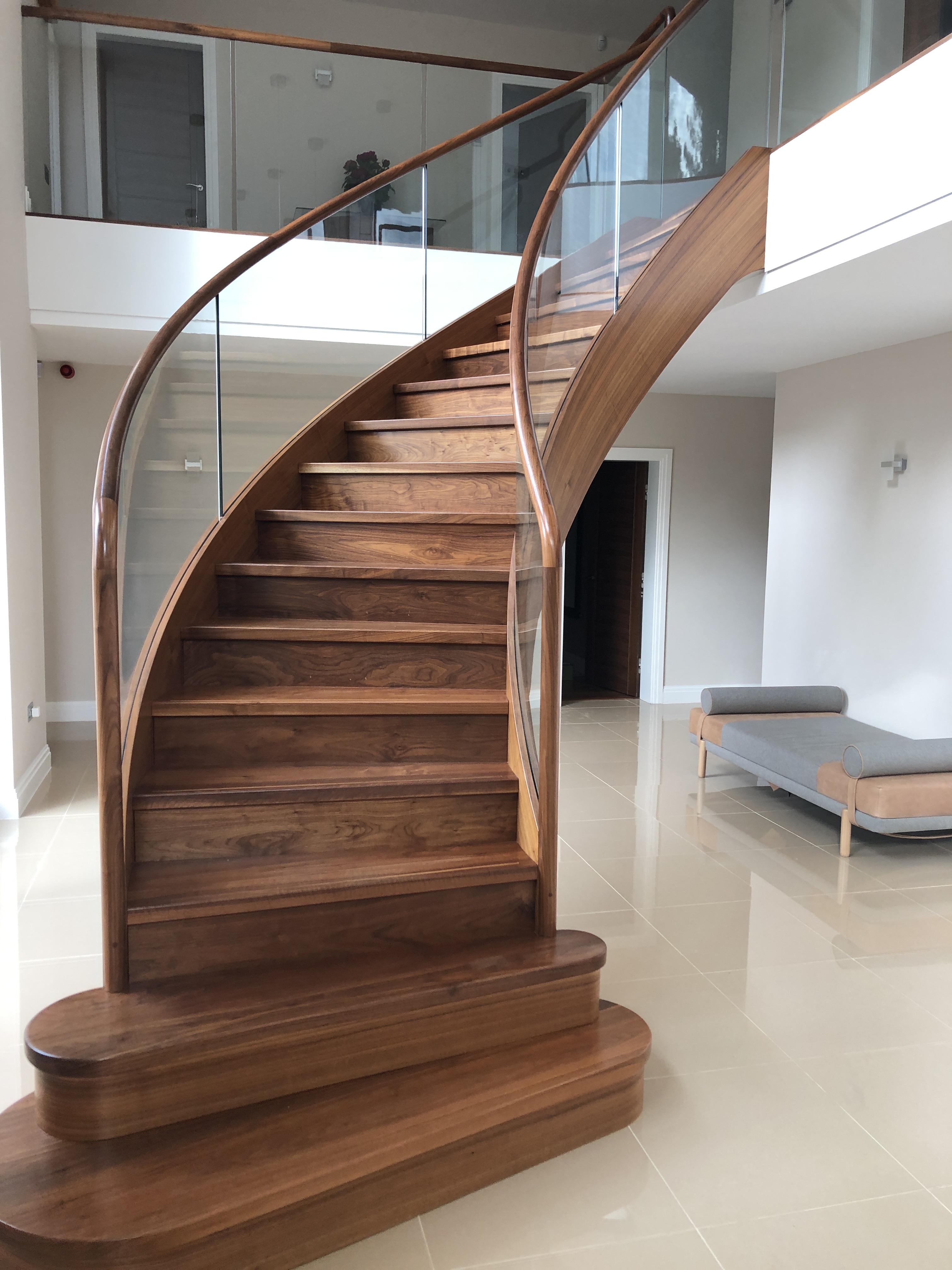
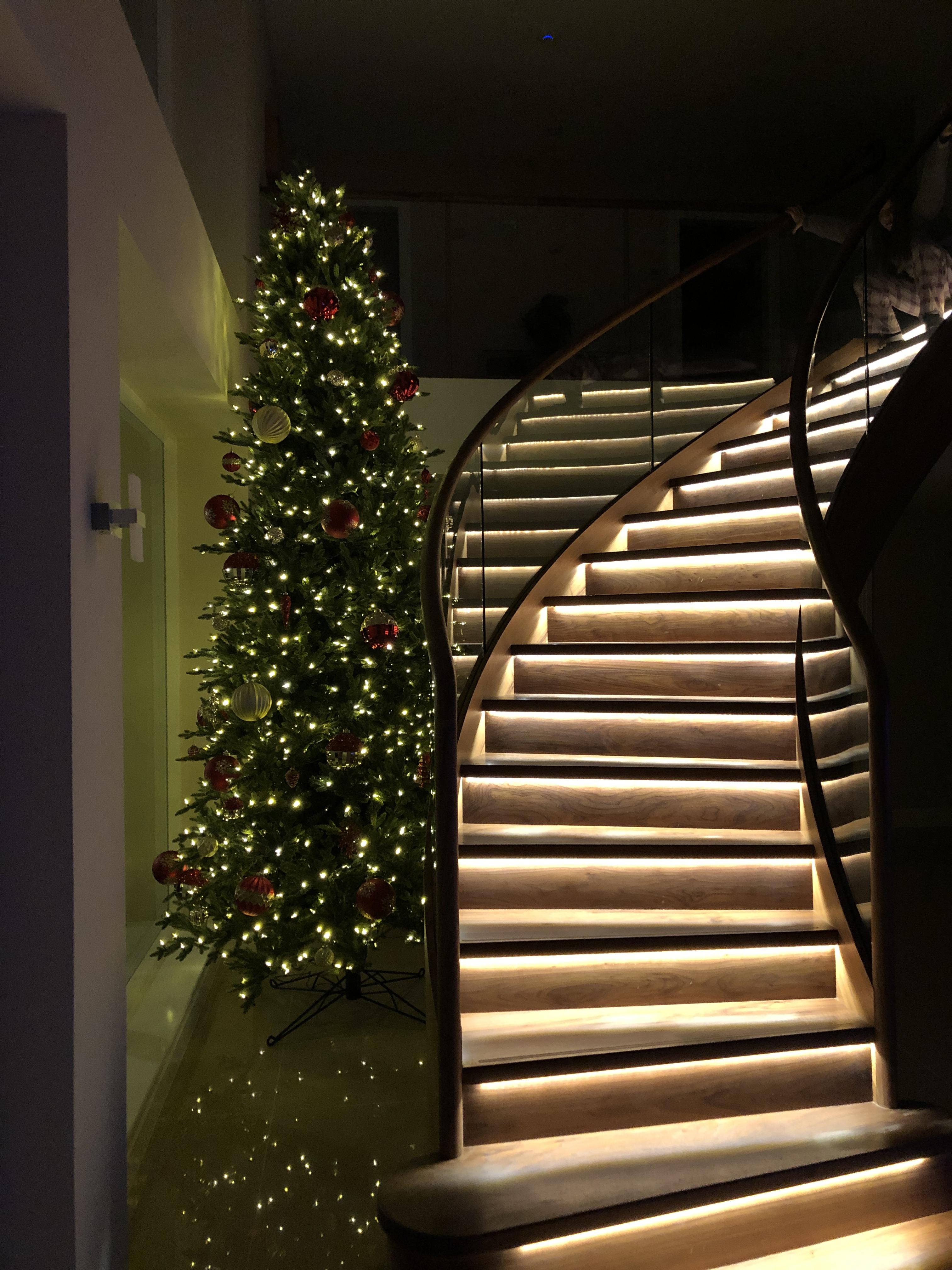
Thanks, I was prepared for it to be over £30k having looked at prices. I got 10% off for buying 2 stairs and a bookcase. With the 10% off it was 29K including 14m of balustrade on the upper hall. So the stair itself would've been somewhat cheaper. However, we have a matching walnut and glass stair up to the second floor that isn't curved and it was less than half the price, showing the premium for curves. As the first thing you see when you come into the house, we wanted something special. I remember an episode of Grand Designs where someone put in a curved stair that I don't think was a nice and I think they said it cost £35k. Picture from today and from Christmas.
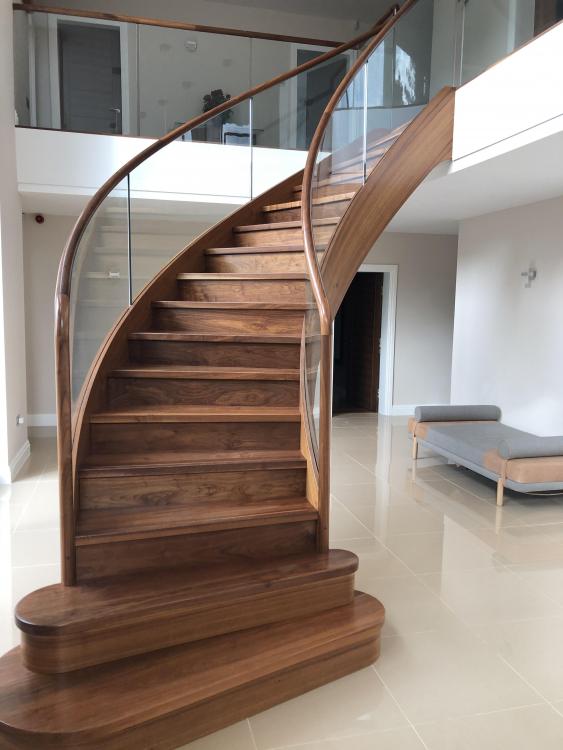
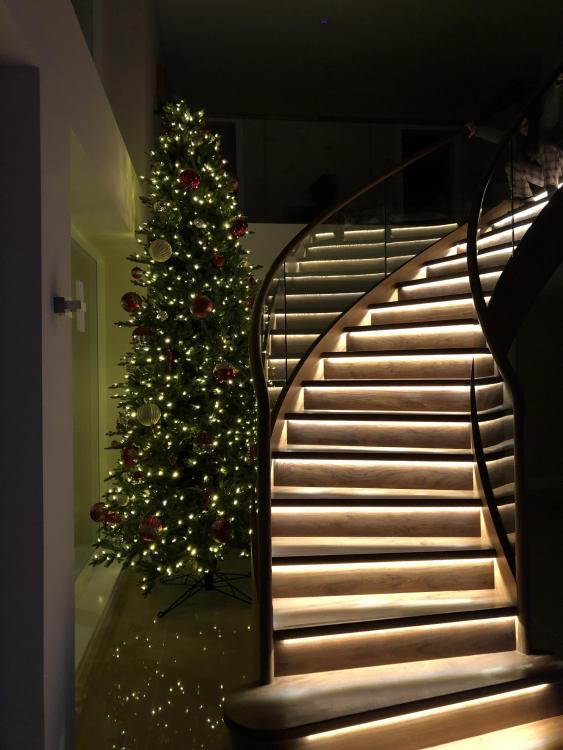
-
One of the things that puts me off is that I think a small residential lift could look quite naff as it would probably be made down to a price. I suspect a nice one is £40k. I would assume that a lift needs yearly servicing and unlike a block of flats where it is split between many people you could easily be £1000 a year for maintenance/insurance. My nice curved glass staircase was high 20s and the only maintenance is dusting and occasional oil.
-
I was going to say the same thing. The ceiling space will be full of pipes, cables and, knowing builders, rubbish. So you won't be able to slide stuff in. Do you know someone who has had the noggins installed and has it worked? It might be that they should be that they need to attach the floor better, indeed they will weaken the floor by cutting a strip out of it. I would try and get them to agree to take up the floor to put in the noggins. They you can get in the insulation and they can fix it down with glue and screws. I would maybe offer to pay part of the cost as it is non standard as far as they are concerned.
-
I considered it and we have a space where we could probably put one. As we don't need one at the moment I decided it wasn't worth the hassle in term of maintenance and so on. My feeling is that barring any unfortunate accidents, if I get to the point the I need a lift to get upstairs then I will have other things to worry about.
-
These are the same people who don't read the manual! If you have Sky Q it really needs to be connected by ethernet. We have various Sky Q's, smart TVs, Unifi WiFi access point and Sonos speakers connected by cable. Around 20 devices. If something has an ethernet socket it is always best to use it as then you free up capacity on you WiFi for phones, laptops etc which need to be connected over WiFi. If you plan to use a wired phone (personally I wouldn't bother) then you can use the cable for that also. @Taff will there be a lot of walls between the main BT router and where you want to use devices connected to WiFi? If so then you might want to use ethernet cable to install WiFi access points or connect some devices. Smart TVs often have awful WiFi reception and won't work far away from the router for example. Think about where your connected devices are likely to be and run cables to there. Often the simple solution is to run them to wherever there might be a TV.
-
Assuming the roof is well insulated this would just be extra work and probably a waste of money. Although if you used say 37.5mm insulated plasterboard, it would probably only cost you around an extra £10 a square metre. Of course this also slightly reduces your ceiling height. If you insulate below the ducting the ducting may have to be insulated as we found out when we changed some area of loft from eaves level to ceiling level insulation. The savings mostly disappeared when we had to insulate the ducting. You might be OK as there s still insulation above it, but this would be my main concern.
-
That might be a good idea. One manufacturer did suggest that external doors have more moisture and would dry out if used inside. I think 3mm veneer is more standard on an external door. This seems one of these cases where to be price competitive everyone has made the veneers thinner ut it has reduced the quality of the doors. Of course you don't know this until your doors start chipping every time you knock something hard into the corners.
-
I had a look for solid oak doors and didn't realise how much more expensive they are than veneer doors. They also come with the a higher risk of the door warping. The veneers on my JB Kind doors seem very easily damaged, so I checked the thickness. They are 0.6mm thick.I then checked other makes such as XL, Deanta and LPD and 0.6mm seems to be the standard veneer thickness. I wonder if a 3mm veneer would be more difficult to damage and if so does anyone know a manufacturer who uses a thicker veneer? Maybe the reality is that you have to just be very careful with veneer doors.
-
Thanks @Russell griffiths We don't need flat walls. Do you reckon single skin blockwork is cheaper/better quality than timber frame? Looks like we are talking around £100 per square metre of rendered wall. So £7500 for the walls including lintel, £3500 for the roof, £2000 for the door fitted, £5000 for foundations and slab. Then guttering etc probably takes it up to £20k.
-
TBF I had no such issues when I was on Virginmedia. I had the 100MB package which has 10MB upload speed. I had very low latency, I think my ping was 11ms. It could be that Virgin is more congested in some areas or it could be that they have WiFi issues. I too am using a Unifi system. I get very frustrated on calls with people at work or other people who seem to have little idea what internet package they have, how fast it should run, why it is poor etc. In this new WFH world upload speed will be more important. If you are working on a VPN, uploading files to a server at work, on video calls etc, then traffic is much more two way than we are used to and a faster upload speed helps. I don't think many people even know that their upload speed might only be a fraction of their download speed. One guy in the office who is a bit stuttery on Teams said he only has a 1MB upload speed sometimes. He lives in the middle of nowhere in a big stone built house with slow internet and no wireless alternative. It couldn't be much worse. I am sick of explaining to people how much their router placement/quality affects their speeds. They often think they need a new computer or a more expensive service. Maybe I should start a business where I come round to your house and see if I can optimise your internet speed.
-
Thanks, I did discuss this with the architect who thought it would be OK to do a separate application. At worst it would delay the garage by a few months, we will put electrics , drainage and water supply to the expected position when we build the house as these can just be capped if not used.
-
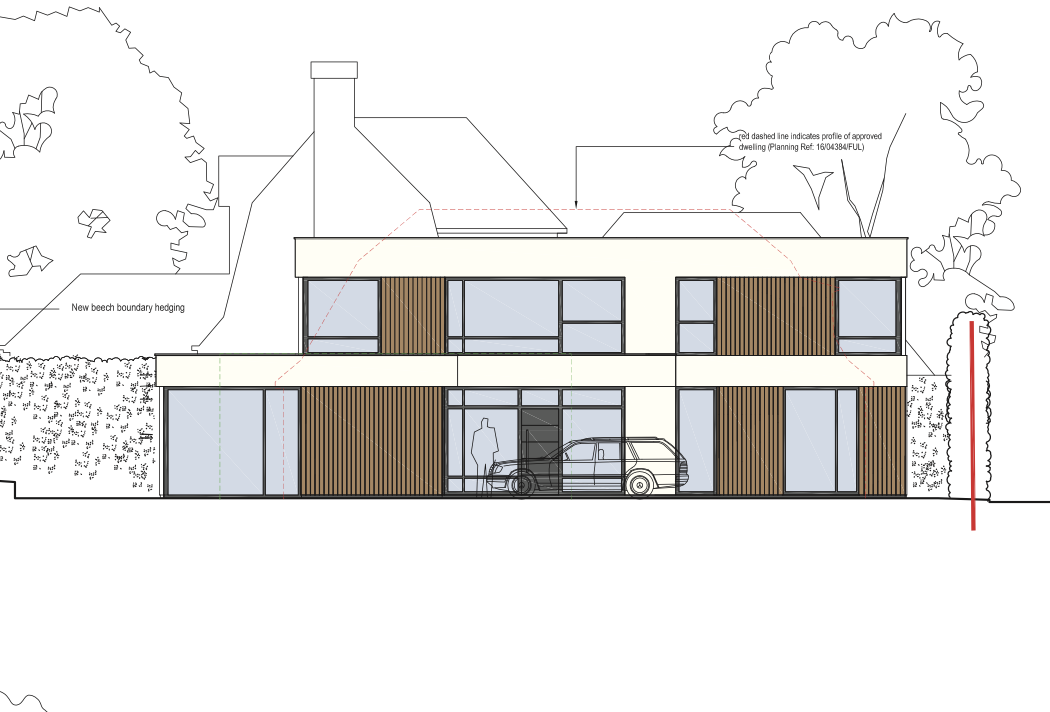
Hi, Now that we have planning permission for a house we are looking to put in a separate application for a garage. It is a conservation area so no PD rights. As the house is flat roofed with off white render, wood panels and 7016 windows we would expect the garage to look similar, so a 6x6m double garage with 7016 door, off white render, wood panels and a flat EPDM roof. Something roughly like the attached picture. What is the best way to build this? It doesn't have to be insulated, used as a workshop or anything, just storage for a car and gardening equipment. Can we just build a stick built timber frame and attach render board directly to the outside and OSB to the inside, maybe filling with rock wool? Would it need a cavity if it is rendered on the outside? Or maybe it would be just as cheap to build it in single skin blockwork and render. We had a quote for a very snazzy aluminium carport and storage, it was 20K! I reckon, a concrete base, and this kind of structure, plus a single motorised door could be brought in for around 15k?
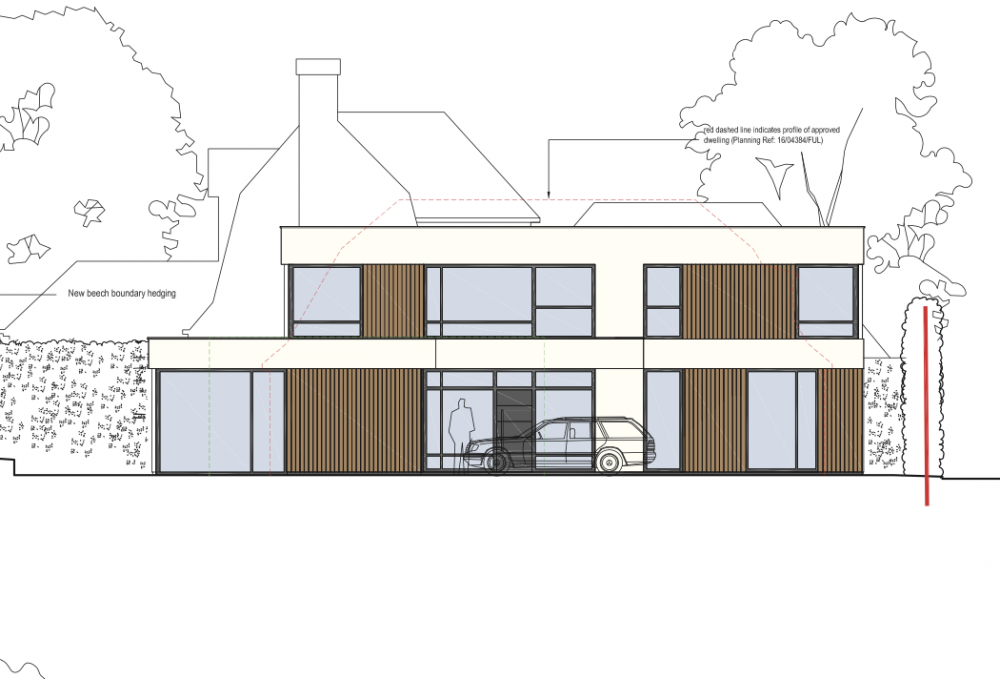
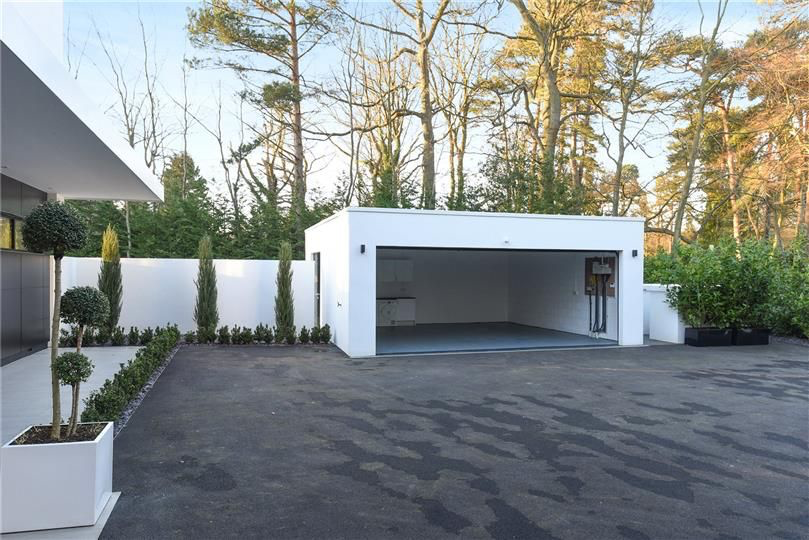
-
Sorry I maybe wasn't clear. It seems like there are basically three kinds of doors from a finish perspective. White doors which will need painted every so often - other colours are available. Veneered doors which should not need painted, but are easily chipped and scratched and difficult to touch up if this happens. Solid wood doors which which may need varnished or oiled every so often but are less prone to damage than veneer. I would say that solid wood is the best combination of durability and lack of maintenance but are restricted in terms of finishes available for a reasonable price.
-
We have JB Kind Mistral walnut veneer doors. An enormous percentage of them were delivered damaged also. We have some of the white Mistral doors for garage cupboards and they are very nice. We have just left them with the primer tbh. I remember white painted doors gradually going yellow in a previous house and being a pain to paint. We used water based gloss in this house which is not supposed to have that issue. The veneered doors shouldn't need painted but as mentioned the veneer is very easily damaged, especially if people bang into the corners. A solid oak door would be better in this respect.
-
To answer your question - No. We have no switches on any bathrooms, utility rooms etc. They all have ceiling sensors which switch on the lights automatically. I often forget now when I go into other rooms expecting the lights to come on. We have smart lights in other rooms and switches. I would keep a switch as smart light systems do go down and can be prone to issues. Also guests won't know what to do and you don't always have your phone to hand. Where we do have smart lights they work on Alexa. It is amazing how quickly you cease to even try to use the switch when you have this option.
-
Much better. I am a massive fan of the garage being connected to the house. I would probably try and squeeze a window in at the other side of the kitchen next to the back door. Any reason for the small garage door. It would be very difficult to get two cars through there. Unless you plan to use the back of the garage as a workshop I would do away with the door and window and save yourself a couple of grand. Depends on your site layout but why not just go through the front door. The electrician will know where is best to put the board to route cables. If the back of the garage works then access should be a lot easier. If you need a water tank you would probably have space at the back of the garage which would be easier and cheaper than a hole. Again much easier access if anything needs fixed. As the garage is 8m long you could create a plant room in the back corner where the door is for this stuff. It does take up a lot of space.
-
do i have to implement an amendment
AliG replied to bill 54's topic in House Extensions & Conservatories
It seems like they might be concerned re conditions in the original application not being followed, rather than whether you built it to the original or amended application. I think you can build either one as they have both been approved. You cannot be forced to build something that has been approved, but once you start you need to build that and not a different version of it, although you can stop without finishing it. I agree with @Mr Punter assuming it is not massively different to the plans, say that you believe you have and leave it up to them to show otherwise. What they might be fishing for though is if you say it has been built, they will then say well did you comply with this condition. -
Hi Alan, I would think so as any kind of raised platform like this can create overlooking issues. Thus even decking raised over 30cm off the ground needs permission. I guess if the platform is in the same position as the top of the stairs you could argue there is no change and certainly it should make getting permission pretty simple. It could just be an ammendment to the existing permission. But it sounds like it is a larger platform which will probably need permission.
-
I read this story in the Daily Mail today- https://www.dailymail.co.uk/news/article-8505105/Couple-spent-22-000-garden-forced-return-WASTELAND.html On the face of it, it sounds a very harsh decision. But there was enough info in the planning application to take a look. I think this is fair since it seems a matter of public record. https://planning.westlothian.gov.uk/publicaccess/applicationDetails.do?activeTab=documents&keyVal=PS02LNRJIUH00 I reckon the council were right in their decision as they fenced off a strip that separates two housing developments apparently breaking up a piece of what was intended to be open space. The story is odd though as it says they didn't know they needed permission. Reading the report on the application it seems that someone else bought this strip of land and applied to cut down the trees and turn it into garden ground so they could parcel it off and sell it to people to expand their gardens. This application was refused in 2017. It seems very suspicious that their solicitor did not spot this and they thought they didn't need planning permission considering this. They seem to have been scammed into buying a piece of worthless land. Actually it has hard to believe they didn't know about this refused application as this was for a much larger piece of land incorporating the piece they bought and presumably would have been notified to the whole neighbourhood, it seemed to receive 4 objections at the time. https://planning.westlothian.gov.uk/publicaccess/applicationDetails.do?activeTab=documents&keyVal=OVI0IYRJ00T00 But that is not the fault of planning. So just for once I will give them the benefit of the doubt.