AliG
-
Posts
3211 -
Joined
-
Last visited
-
Days Won
11
Everything posted by AliG
-
It will sit nicely on the worktop
-
Am I being too sensitive or should I be concerned.
AliG replied to MikeSharp01's topic in Surveyors & Architects
I try and check everything my architect sends out and then comment back if I see errors or disagree. If for no other reasons two sets of eyes are better than one. The builder recently made some small errors that I spotted and had to be rectified. In my line of work these kinds of errors would just be unacceptable as we have regulators and customers who would come down on us like a ton of bricks. In the building trade making errors and then wasting money correcting them just seems to be par for the course. As to cold bridging, unless your architect is a specialist in passive design, it's just not something architects are that focused on. I have had numerous discussions about it and the view I get back is usually I am being too picky and they don't really matter. I suspect that this is true sometimes and not other times. As to any claims, if your architect changes something on your say, he is still the architect and has to accept responsibility. He shouldn't change anything he is not comfortable with. -
There is reference to two kinds of roof construction here under the fire regs. in the case of a pitched roof covered by slates nailed directly to sarking and underlay, the junction between the sarking and wall-head should be fire-stopped as described in BRE Housing Defects Prevention Unit “Defect Action Sheet (Design)” February 1985 (DAS 8), or in the case of a pitched roof covered by slates or tiles fixed to tiling battens and any counter-battens, the junction between the tiles or slates and the underlay should be fully bedded in cement mortar (or other fire-stopping material) at the wall-head.
-
True, it is 13 years old. But I think it is more tradition. I will see if I can find the reg
-
Our current roof in Edinburgh isn't sarked (is that a verb?). I think it's normal practice but you don't have to have sarking.
-
Is this the end of the lava lamp?
AliG replied to MikeSharp01's topic in General Self Build & DIY Discussion
I remember years ago my parents had an electric fire. There was an incandescent bulb in it and the hot air rising from it made a circular grate rotate like a propeller to create a strobing effect on the back panel. Apparently these are flicker vanes and then there was an orange bulb that shone through them to create a flame effect. -
On my build they wanted a bat survey for the house I was going to knock down. Because we didn't have it ready it caused major delays. I'd check to see if they will need one. Although your planning consultant will be doing this, best thing to do is probably read up on any similar proposals and local plans. They will give you an idea of what was asked for and what the stumbling blocks were. I would have said that a footprint calculation would be useful as it doesn't necessarily mater if the new property is larger than the old one, more that it is an appropriate size for the site. However at 17 acres that really shouldn't be an issue.
-
Proaktiv called me up, they had quoted for full build and site insurance. They said they are not aware of anyone who would insure just things I order up so the only way to insure them would be for me to insure the whole job again even though the main contractor has insurance. I might just wing it.
-
Adaptors don't sit well with my OCD
-
I have managed to find one very ugly USB-C built in socket so far. With the ability to provide 100W I doubt they will be replaced for some time and I wouldn't mind putting a few in. We are in an annoying switchover period though where many people will still be using USB-A for the next few years. I am surprised how slowly people are moving over to C, but I see more and more phones now come with C, it is funny though that they are still usually designed to charge up from a USB-A socket.
-
I tried to look for this last night, but couldn't find anyone offering it. I have a main contractor, so anything he buys is covered by his insurance. But about 15-20% of the build will be contractors I have nominated separately and so not covered by his insurance. Does anyone know of someone offering supplementary insurance for this situation? Thanks
-
Hi Paul, JS Harris on here posted a heat loss calculator on eBuild, I don't know if it is here, but from what you say your house could well be approaching passive house levels of insulation, it depends on your air tightness, the insulation levels sound pretty high You'll barely need any heating at all. The plumber is talking absolute nonsense on the two boilers. A lot of trades just aren't used to the amount of heating required in a modern well insulated house, you might only need 5kw of heat input if I had to guess. I am building a house twice the size of yours with a pool and will only have one 40kw boiler. As Mike say, once your heat loss gets really low, actually how fast you want to heat your water starts to drive the size of your boiler. Your UVC will probably be ale to take 30kw of heat input and I would think this is the size of boiler you need. Anything else is overkill. We have a 250l UVC at the moment and never run out of hot water, except when people stay. There are three of us. If you have people stay a lot and lots of people try to get up at 5am to catch a flight or something like that, running out of hot water is a pain. The real killer is if someone has lots of baths, a 150l bath fill plus two showers could drain a 200l tank. I would say a 300l UVC is the right size for the house you describe. Is the suggestion of 2x200l so you can turn off one sometimes? 300l will have slightly higher standing losses than 200l, but the cost of an extra cylinder and extra installation costs would dwarf this. Indeed a 300l cylinder only costs around £100 more than a 200l cylinder and fitting costs are almost as high as the cost of a cylinder. Also two cylinders will take up a lot more room. In fact, sorry to say this, but the more I think about it I wonder if your plumber is at it, he is suggesting a system with 2 boilers and 2 cylinders which is totally unnecessary and will cost around £4000 more than it should.
-
My builder told me this a couple of days ago. There seems to be a shortage of a chemical involved in the manufacture of PIR. Hope it doesn't affect us, we won't need it until after Christmas.
-
Recommended bathroom suite merchant??
AliG replied to Hillydevon's topic in Bathrooms, Ensuites & Wetrooms
http://www.xtwostore.com Similar to Megabad, but all in English. -
Building regs give a load that the balustrade must be able to withstand. I would think that reputable balustrade manufacturers should be able to provide details of the strength of the glass and its compliance with the regs. The funny thing is I don't think anyone checks that cheap wooden spindles meet the regs. I always imagine going through the balustrade like I am in a western! https://balustrade.glass/help/building-regulations-highlights/
-
'Designer' basins missing overflows
AliG replied to daiking's topic in Bathrooms, Ensuites & Wetrooms
Does that only work if the waste is open? I had similar thoughts previously, what if a kid closes the waste and then leaves the tap running, it has stopped me buying basins in the past. If I was getting a designer basin I would go for something with a free flow waste and a slot drain as no one can accidentally leave the waste closed. Also I have found that the chrome deteriorates around the wastes on a well used basin over time, whereas the actual basin might look fine. -
Spray foam under room in roof floorboards - expensive option?
AliG replied to readiescards's topic in Heat Insulation
I missed the bit about the attic versus insulating the floor. If funds allow I would insulate the roof as all that insulation will be wasted if you then convert the space above it and you'll have to spend the money all over again insulating the roof. I guess you will still get some benefit if you don't heat the roof space as often as the rest of the house. Particularly if you plan to convert the loft reasonably soon, then insulating the first floor to 0.1 is overkill. It will cost more to insulate the actual roof as the area is larger but that will save you a lot in the long run. Also there will be no VAT assuming it is a new build versus a loft conversion. Also are there light fittings and pipework in the ceiling? This will make it awkward to get a good fit with PIR. -
Spray foam under room in roof floorboards - expensive option?
AliG replied to readiescards's topic in Heat Insulation
You can use 220mm Knauf Omnifit Stud which has a conductivity of 0.034 W/mK. With 25mm underneath this would give a U-Value of around 0.14 and be much cheaper than Xtratherm. But the U-value would be 0.13/0.14. With 50mm Xtratherm underneath the U-value falls to 0.11. You need PIR to get to 0.1 whilst keeping the thickness down. Does Xtratherm come in 200mm thick boards, I am not sure and can't find them. Celotex does, originally my architect specced Kingspan and it was much more expensive as it was 2x100mm boards. There was a big labour saving using a single 200mm board. -
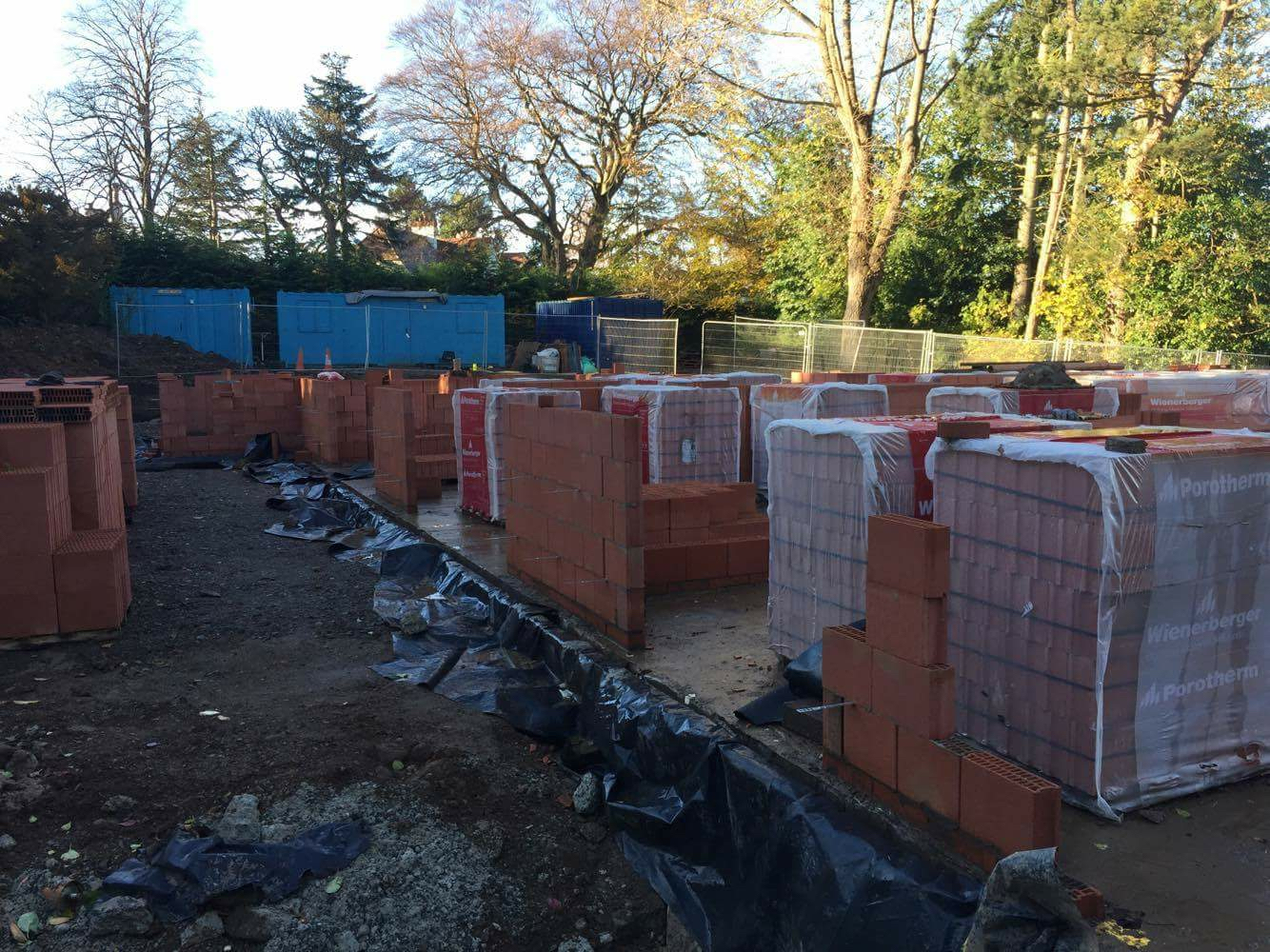
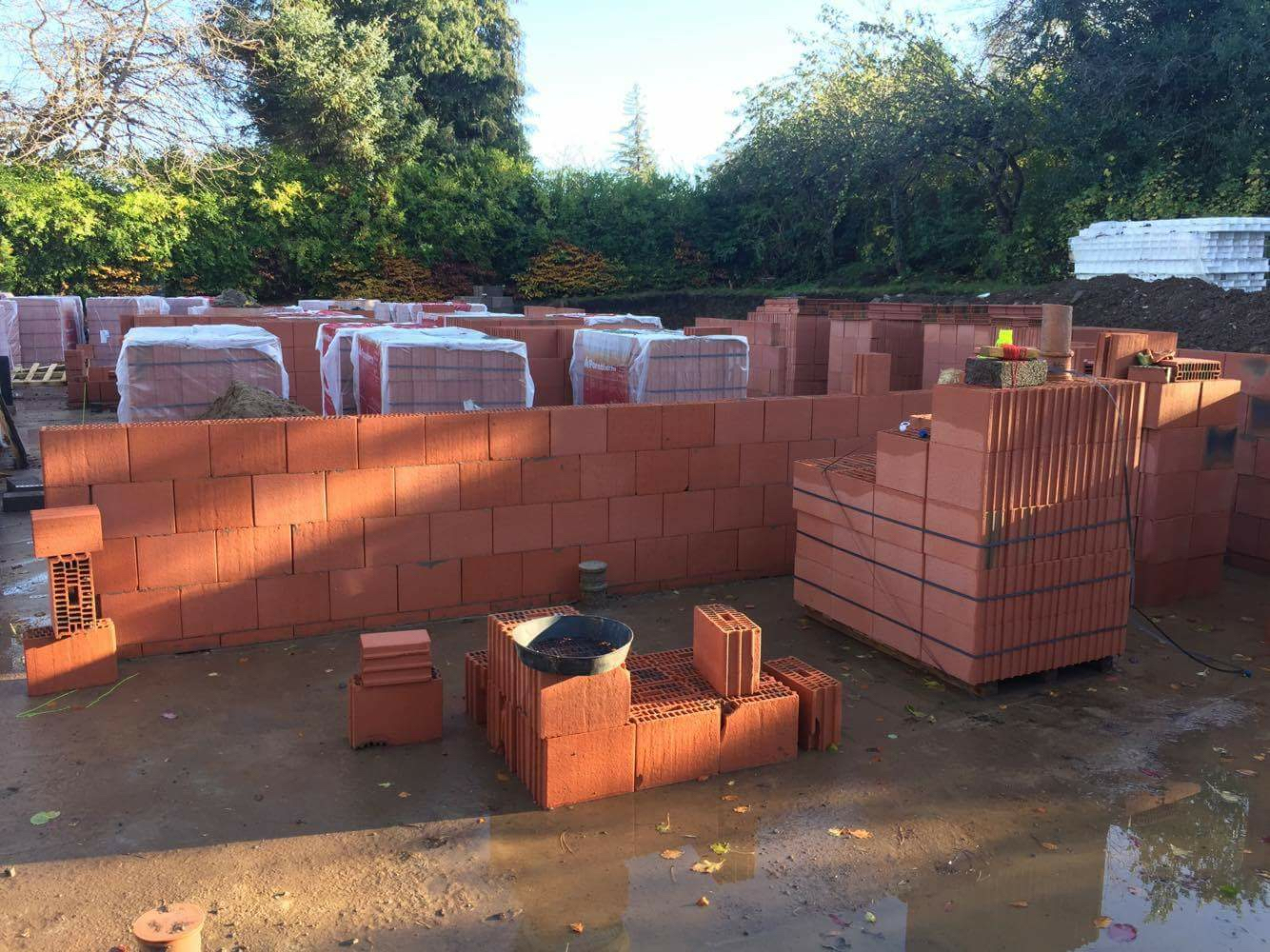
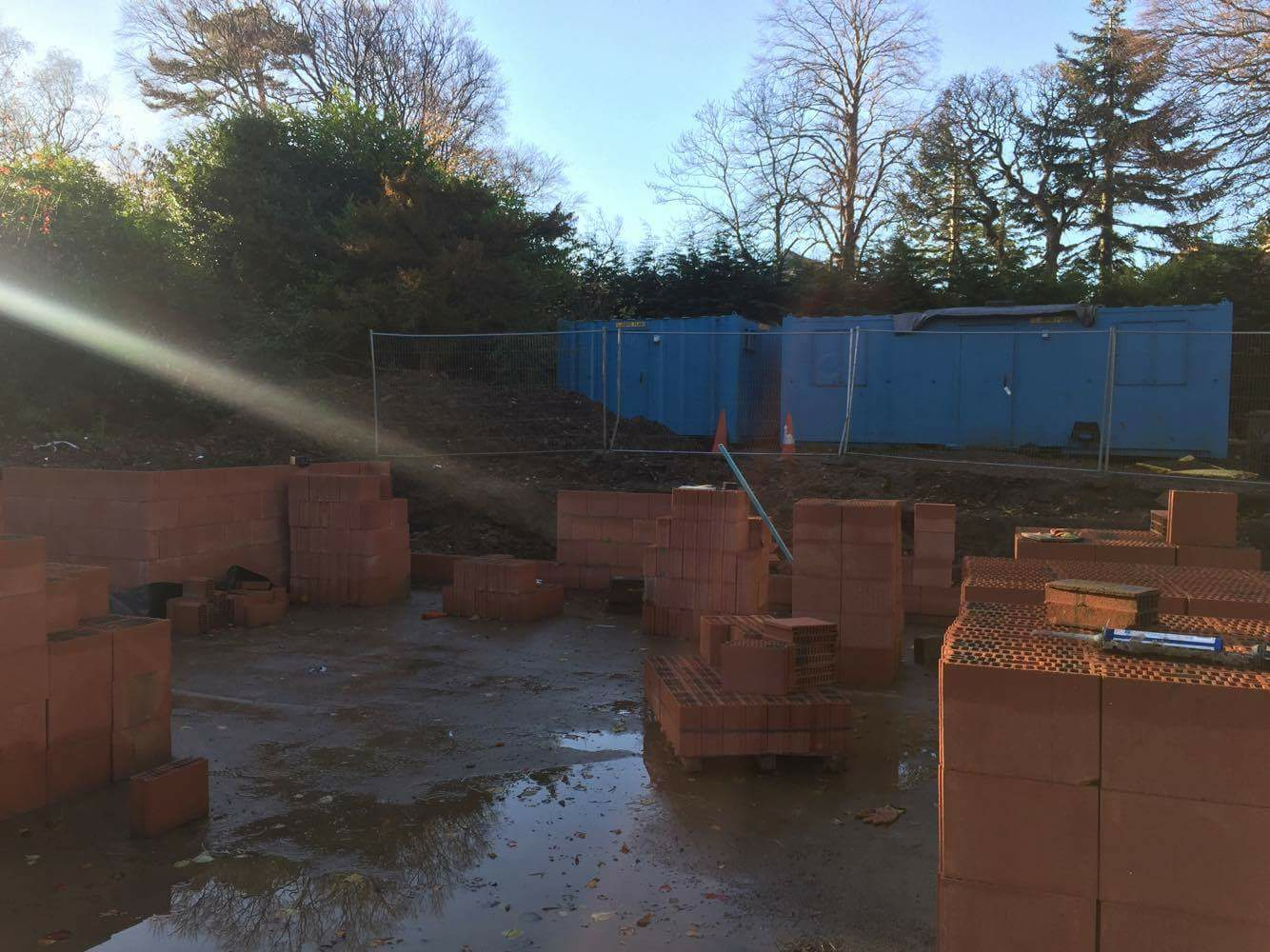
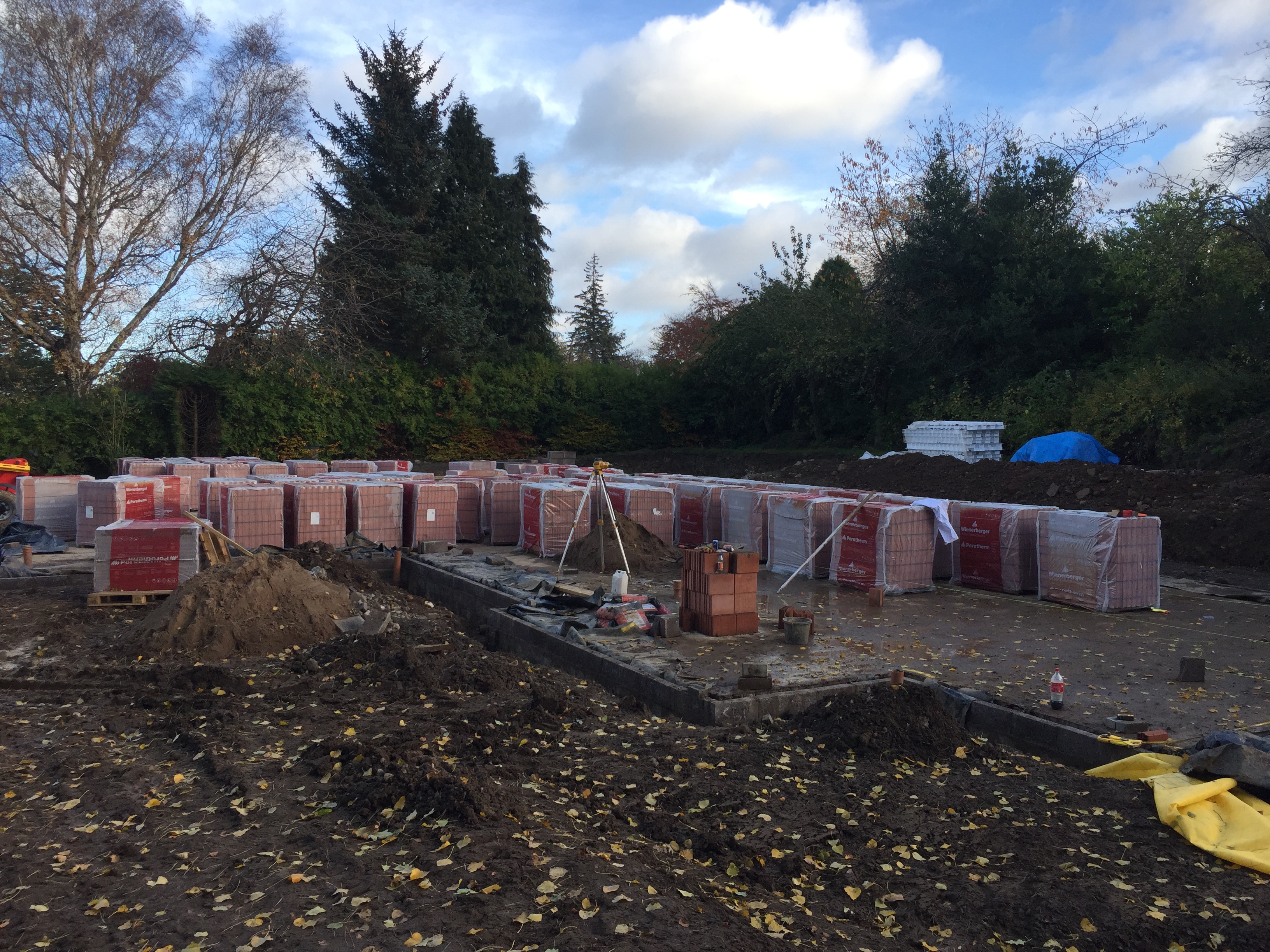
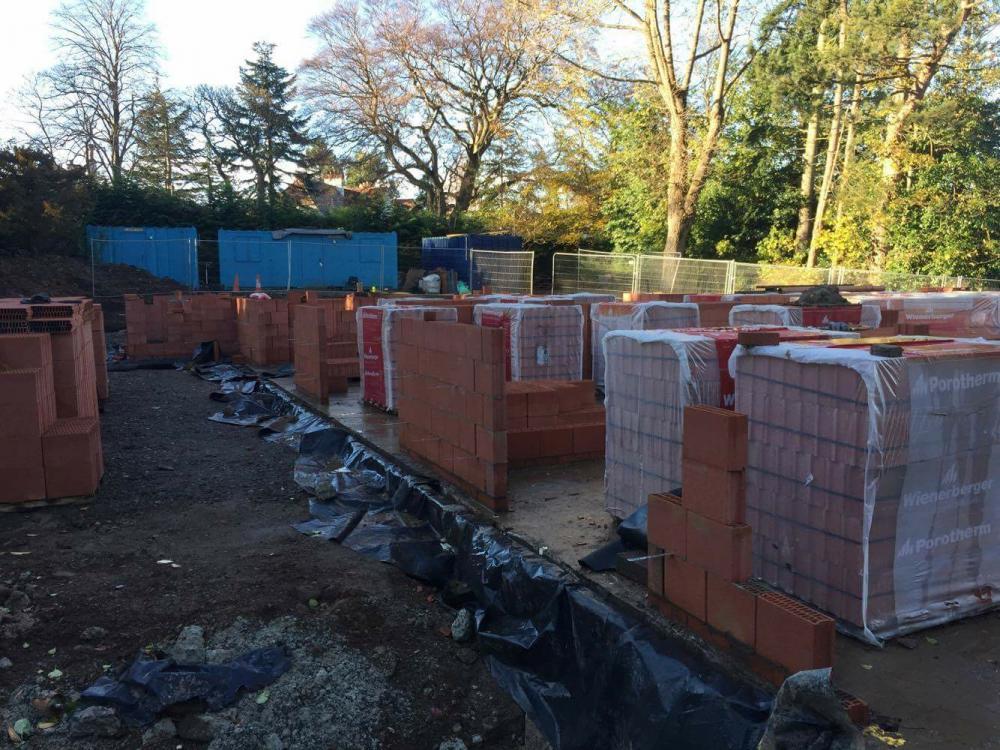
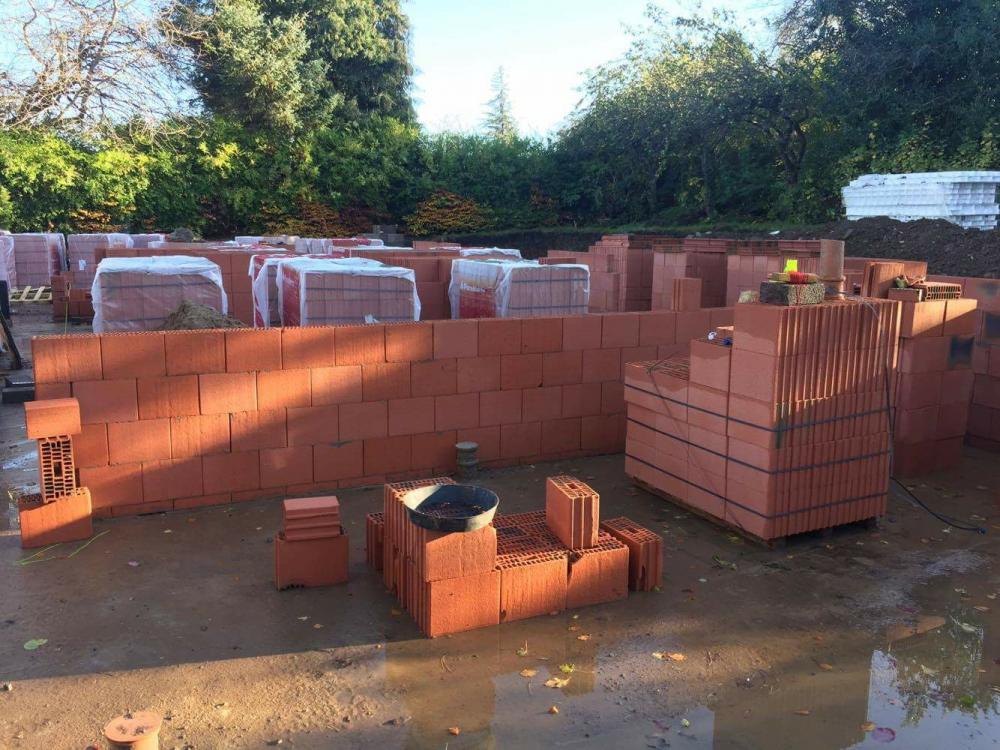
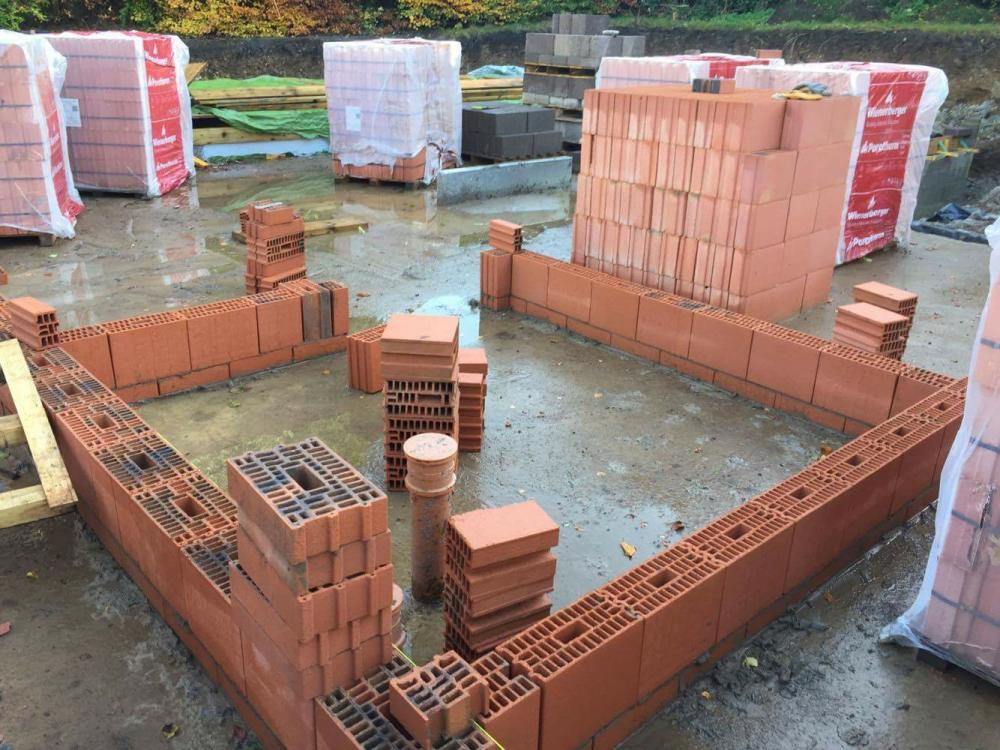
The walls are 2 layers of 100mm Porotherm with 100mm Celotex CW4000 and a 50mm cavity. The inside then has 37.5mm Celotex insulated plasterboard(25mm of insulation). The outside will be a combination of off white render and natural sandstone around the windows. The target U-value is 0.13 for the walls. The inside of the blocks has a 2-3mm parge coat for airtightness. One surprising thing is that they can build the inner course separately. Thus they are aiming to put the first floor on in 2 weeks without building the outer leaf. It is indeed as Ashbury described. The first course are cut to size for the floor heights and laid on a mortar bed, then after that there is 1mm of thin joint adhesive. There is no adhesive at the end of the blocks and they interlock. The builders said that watching a demo wall go up it was very easy to put up straight. Also the next morning when they tried to knock it down the blocks were already stuck hard. I did not get a quote for blockwork versus Porotherm. The SE wanted to use Porotherm and I was pleased to be using a thin joint system having been through iterations of ICF(too expensive) and SIPs(too much steel required according to the SE). As I understand it the Porotherm blocks are more expensive, but the labour component is lower so costs are siimilar. My suspicion is that the builders did not believe how fast it would actually go up so used some conservatism in their costs which has worked against me. The blockwork costs excluding insulation etc are around 5% of the total build so it wouldn't have made much difference. I don't have the per square metre cost but I guesstimate it was around £80/sq metre for the two layers of Porotherm, with insulation and render etc on top. In Scotland one of the benefits of Porotherm is there will be no perpend vents which I think can look quite untidy.
-
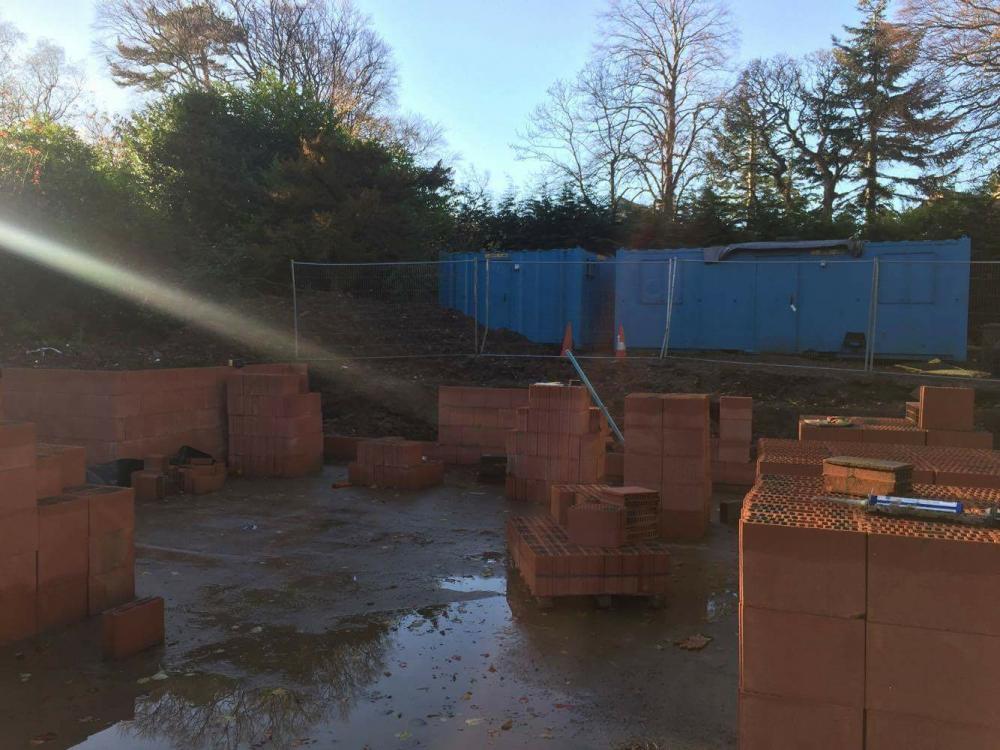
Finally I have some walls. They seem to be flying up, I think this is only 2 days work. Wall between kitchen and dining room - End of kitchen looking towards garden - Ground floor en suite - Back wall from outside -
-
Bathroom worksurfaces v Kitchen worksurfaces
AliG replied to Fallingditch's topic in Bathrooms, Ensuites & Wetrooms
Solid surface worktops. Some kind of Corian like material which can be cut to size and is waterproof. More expensive than laminate but cheaper than a vanity. http://www.roperrhodes.co.uk/?s=strata -
I had a set of bifold planned and changed them to french doors with side lights. I had read a lot here about airtightness issues. What pushed me over the edge is when I went to see them they had much thicker frames than normal windows, although this may not be the case with all makes. They also seemed quite cumbersome to fully open. Maybe people with them can comment, but how often do people actually open a whole run of these doors? You san have 2.2m french doors with a 400mm sidelight on each side and have almost as large an opening with less issues and cheaper. For me it was about half the price. You can also do the sliding doors that meet in the middle. These look nice, but again having played around with them they have handles which have to be turned to lock them into place and seemed a little bit fiddly. I was worried that someone would eventually break them by pushing against the friction fittings or sliding them back so the handles hit the frames. Tbf my opinion is clouded by the enormous number of times family members have come to stay and broken things. Many people still find pushing up the front door handle to engage the bolts before locking the door way too complicated!
-
Very crisp
-
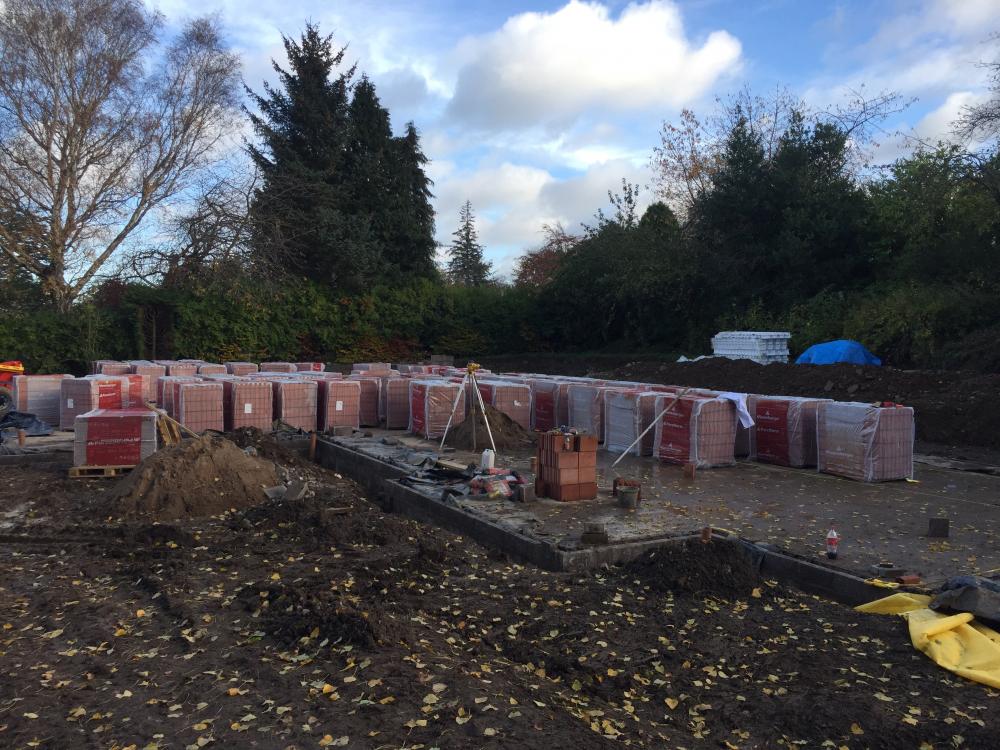
I was hoping to see some walls this week. Looks like I have to wait another week. Meanwhile I have a lot of blocks! Went to see the guy making my curved stair. Felt better about the price when I saw a Grand Designs where they said a helical stair was costing £40,000. Im not spending that and I have curved glass and 14m of balustrades on the landing.
-
My current house has some externally glazed windows. I was quite surprised when I saw it and this has made me worry about security since then. We had an attempted break in a couple of years ago by breaking the euro cylinder lock on french doors. I have replaced the locks or handles with more secure versions. Apparently this is the number one method of breaking into houses as developers use cheap easily broken locks. My parents had a break in by someone simply smashing the patio doors. I am going to have laminated glass. Just trying to cover all the obvious bases. You won't keep everyone out but these seem likely pretty simple things to do.