
Dreadnaught
-
Posts
1819 -
Joined
-
Last visited
-
Days Won
5
Everything posted by Dreadnaught
-

Octopus Cosy - new tariff for ASHP owners
Dreadnaught replied to George's topic in Air Source Heat Pumps (ASHP)
Thanks @JohnMo. I am reading that now. DIN EN 16147 seems to be a set of standard testing parameters but unfortunately it seems one has to pay £££ to read the details online. The target temperature does not seem to be specified in the manual you pasted but I suspect it's quite high, it could be 70º given how long it takes. Of course, charging to lower temperatures would take dramatically less time. (I am not worried about Legionella at all). Edited to add a correction: the temperature is indeed specified in the manual: 49.9º. My life is unimaginably simpler than yours sounds 😄. Out of interest, what temperature do you keep your tank at? -
Octopus Cosy - new tariff for ASHP owners
Dreadnaught replied to George's topic in Air Source Heat Pumps (ASHP)
My DHW cylinder is a matching Vaillant UniTower (190 litres). I calculate to heat that tank from stone cold (8º) to 55º would take 1h 39min at 5kW, which is well within the power output of both the "3.5 kW" and "5.0 kW" models (see above). Obviously you'd rarely need to heat the whole tank from cold. More realistically, two showers (say 80 litres in total) would take 42 minutes at 5kW to heat to 45º, which is the likely tank temperature I would choose (unless I had visitors staying). (This assume 100% heat transfer from the heat pump to the hot water tank. No losses. So the figures are under estimates). -
Octopus Cosy - new tariff for ASHP owners
Dreadnaught replied to George's topic in Air Source Heat Pumps (ASHP)
The heat-pump model I am buying is the Vaillant Arotherm Plus. At 2º air temperature and output water at 35º the 5kW heat pump can modulate from 3.00 to 7.40 kW. Note that higher top figure is a lot higher than the nominal "5kW". Conversely, the 3.5 kW model can modulate from 2.10 to 6.90 kW. The house I am building is close to passive levels of performance and I predict that the space heating demand at 0º ambient temperature is around 2kW or so. -
Octopus Cosy - new tariff for ASHP owners
Dreadnaught replied to George's topic in Air Source Heat Pumps (ASHP)
It struck me when I saw this tariff that the second afternoon cheap window could be a good time to heat the DHW cylinder when the heat pump needs to work at its hardest. Overnight on the other hand would be good for space heating. (I have no PV, nor a battery). I am presently negotiating with the wholesaler supplying my ASHP to swap the 5kW model that I originally ordered for the smaller 3.5 kW model exactly for this reason. This is a good point. -
Most efficient way to run ashp
Dreadnaught replied to Jvh2012's topic in Air Source Heat Pumps (ASHP)
Is Homely compatible with my heat pump? Currently, Homely is compatible with the following heat pump brands: Samsung (model number beginning with AE, manufactured post 2015) Midea We are always looking to expand the list of compatible heat pumps so please do check back if yours is not currently showing. https://help.homelyenergy.com/knowledge/is-homely-compatible-with-my-heat-pump -
Checking to see if smart meter is on the SMETS2 network
Dreadnaught replied to Radian's topic in Electrics - Other
I gave it a go with my SMETS2 Smart Meter. Got the same response as you. "There has been a problem trying to check your meter. Please try again." -
In my experience its about 50:50. And to my surprise it is not only the smaller contractors/suppliers who will not provide a breakdown. Some of the big ones do too. I tend to especially avoid them. For the small ones, I suspect its a fear on the part of the contractor is that a breakdown will lead to cheese paring. Quite understandable. For the big ones, I suspect its a wheeze to try and conceal high margins. Personally, I prefer a clear breakdown and tend to avoid contractors who will not. But I have made exceptions for small pieces of work and where I felt the level of trust was high.
-
Nice solution. Slightly off topic, I am wondering how such a bracket could be mounted to a metal-framed internal wall (MF).
-
Jerry-rig an MVHR unit - how?
Dreadnaught replied to Dreadnaught's topic in Mechanical Ventilation with Heat Recovery (MVHR)
Pretty close, yes. My walls are indeed I-beams with Smartyply nailed on. The joints and nail-heads were over-pained with airtightness paint. Windows were foamed and double-sealed with decent tapes by me. Rooflight were upstands painted with airtightness paint. The joint between wall and roof was foamed for insulation and painted with airtightness paint. The joint between wall and concrete raft foundation was painted with airtightness paint. All penetrations were sealed with decent grommets and tapes by me and mostly also overpainted with airtightness paint too. The OSB flat roof was left un-sealed, with some slightly-worrying gaps between boards were clearly visible but there is a Bauder three-membrane warm roof above. Before the air test, I was ready to spray paint the entire OSB roof deck with airtightness paint (form inside) but fortunately it was not needed and Bauder's claim that their roof build-up was airtight has proven true. Above all, the building has a simple L-shaped form. And airtightness was managed by me personally, so I kept an eye on all the details. -
Jerry-rig an MVHR unit - how?
Dreadnaught replied to Dreadnaught's topic in Mechanical Ventilation with Heat Recovery (MVHR)
Thanks @Nickfromwales. I have been looking online trying to work out what you mean by a box attenuator. Is is this sort of thing? Or do you mean the round ones, like this? -
I chose felt and bitumen after talking through the various options with Bauder. My impression was felt and bitumen was a good solution if you have lots of fiddly bits on the roof. And I had 9x rooflight up-stands to detail in my flat roof. In my case, I was reassured by the independent (and unannounced, even to me) inspections of the installer's work by the manufacturer. Whatever system you go for, make sure you get a 20+ year transferrable guarantee from the manufacturer, not just the here-today-gone-tomorrow installer.
-
Another point of view. Don't do it. Put them on the same face. The reason is wind pressure. You want it to be roughly equal on both ducts.
-
Hi, I am in Cambridge. For my windows, I bought from IdealCombi. They have their office in Milton Keynes. The windows are made in Denmark and imported. For my entrance door, I am buying from Spitfire Doors. They are up-North but I have a personal contact with one of the top guys and he lives less than a mile from me in Cambridge.
-
Hi @Olu, welcome to BuildHub. What type of piles are you using? In my experience, some firms specialise. For example, the company I used only installed screw piles.
-
Will the "Building Safety Act 2022" impact us self builders? Do I need to rush out and buy a warrant for my part-completed new build bungalow? https://www.legislation.gov.uk/ukpga/2022/30/contents/enacted Section 142 requires a structural warranty, with penalties for non-compliance. Section 138 defines a new build home as "a building the construction of which began after the coming into force of this section" so I assume it won't apply to my build as it has already started construction. … but … this new legal requirement for a structural warranty might affect us in that all mortgage providers and conveyancing solicitors may routinely demand a warranty in practice, even more so than they do already. It may become the norm. Here is an article from Grand Designs magazine …

-
Jerry-rig an MVHR unit - how?
Dreadnaught replied to Dreadnaught's topic in Mechanical Ventilation with Heat Recovery (MVHR)
You make a good point. Yes. Thanks @joe90. -
Jerry-rig an MVHR unit - how?
Dreadnaught replied to Dreadnaught's topic in Mechanical Ventilation with Heat Recovery (MVHR)
Yes, 1m-length flexible Ubbink-supplied attenuators on both the supply to and extract from the dwelling 👍 -
Jerry-rig an MVHR unit - how?
Dreadnaught replied to Dreadnaught's topic in Mechanical Ventilation with Heat Recovery (MVHR)
Thanks all. I am the sole builder on my project (with occasional hired help) so I can chaperone the MVHR though any dusty phases. And turn it off. My main wish in having the MVHR operational during the winter is for its benefits in retaining heat. I don't currently have any space heating. The dwelling is very well insulated. For example the roof has 200mm of PIR above the deck and 100mm of woodfibre insulation between the posi-joists beneath. I am hopeful that I can sail through the winter with a toasty house and just a tiny bit of supplemental heating from a Dimplex. It will be a good experiment on how the house will perform even before I add yet more insulation to the walls with a layer of insulated plasterboard. For mounting the MVHR, I am currently debating whether to mount it to the wall or to the concrete floor (220mm concrete raft foundation on screw piles). The Brink installation manual says (my emphasis): "The Flair 325 … appliance can be mounted onto the wall with the supplied mounting bracket. For a vibration- free installation, the appliance must be mounted to a solid wall with a minimum mass of 200 kg/m2. A gypsum block or metal stud wall does not suffice! Additional measures such as double panelling or extra studs are required in that case. On request, a mounting support for floor mounting (with the same minimal mass) is available." It now strikes me that bolting the MVHR to the concrete floor, and so without it touching the wall, is probably the way to a vibration-free and quiet life. This is despite the adamant advice from a friend, who has installed quite a few Brink units, saying that wall-installation would be fine in my circumstances. Brink can supply a handsome floor stand but its only 400mm tall. And I was planning to install it at the height of a kitchen counter so that my water softener would fit beneath. So I found myself on Google looking at ways to build a sturdy stand. And stumbled across steel slotted-angle … and then UniStrut. UniStrut looks like it could support the Forth Bridge but it looks rather nicer than slotted angle. Both seem quite inexpensive but only available from online stockists, not from the usual local hardware shops. I am continuing to think. Insights would be most welcome. -
I would like to jerry-rig the MVHR unit to have it running over the winter months before I finally install it properly next spring. But how to mount it? I have about 6-weeks of cladding to finish off before I can turn to first fix. And then it will take me quite a while to get around to installing the MVHR unit properly. So realistically that won't be until next spring. I am very slow. I often camp on site as I work, treating my build as a (very well insulated) tent. The timber frame is insulated, weathertight, with windows and a temporary front door. Its also airtight (blower-door test of 0.47 ACH (n50) recently). The MVHR unit (Brink Flair 325) is sitting in its box waiting for me. And most of the ducting is already installed (with their valves). Hence, I'd like to temporarily set-up the unit and have it running over the winter months. - How to mount it? - The MVHR unit itself weighs 37 kg. - The walls are 240mm I-beam cassettes, filled with Warmcel and I know where the I-beams are located. - The external wall are currently bare 12.5 mm Smartly but will eventually be covered in 50mm insulated plasterboard. - I could power it from a 240V extension lead. - I could run the condensate drain to local external drain. Any pointers on how to do this would be gratefully received?
-
Critique please! New Build Floorplans
Dreadnaught replied to hinge and bracket's topic in New House & Self Build Design
Minor comment. That door clash from the Kitchen in to the Utility Room and Plant Room would drive me nuts. Suggest to move the door from Kitchen along to the corner-turn of the units, near the hob, so closer to the outside back-door. This also deals with the issue that corner kitchen-units are tricky to design for usefulness. Move the window and units along in the Utility Room accordingly. -
ASHP 'Service' - what exactly are they doing?
Dreadnaught replied to gc100's topic in Air Source Heat Pumps (ASHP)
Here's the list for my ASHP (not installed yet):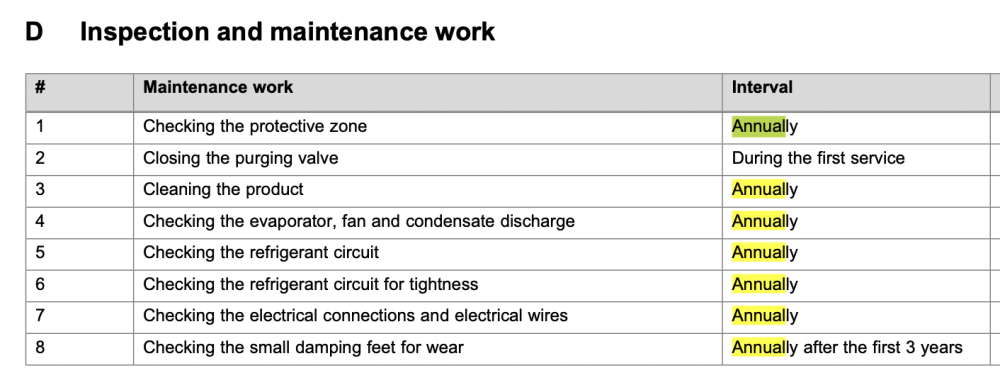
-
vent axia MVHR advice
Dreadnaught replied to David-1712's topic in Mechanical Ventilation with Heat Recovery (MVHR)
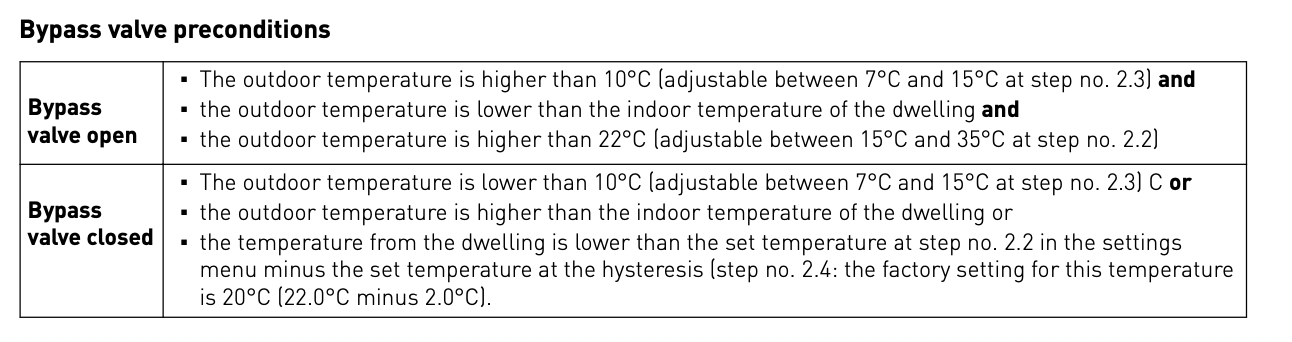
Good point. I think the third bullet is a typo. It should refer to "Bypass temperature from dwelling". This is how the setting is referred to in the setting menu. It makes sense then. It being a typo is supported by the conditions in the manual for the Brink Renovent Excellent 400, as follows: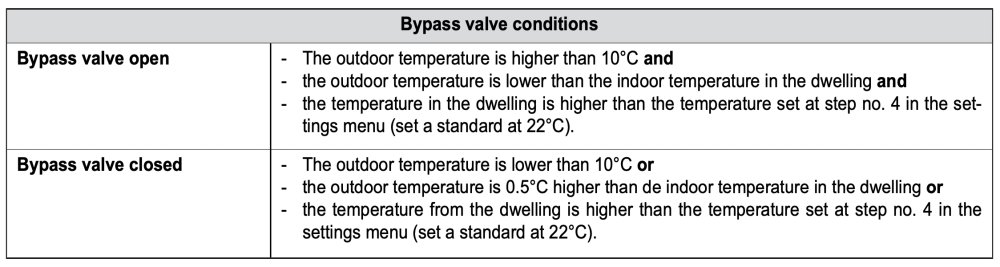
-
What counts as a medium or high end finish?
Dreadnaught replied to smart51's topic in New House & Self Build Design
The broad "per sq.m" figures are rather general I find. Dividing it between first and second fix might give further insight and would make more sense to me. "Finish" for me implies a relationship with spend on second-fix especially. From your description I would say yours as high-spec but for M&E only. Anything else is difficult to tell. I also wonder if there is an aesthetic component to "low" vs "high" spec finish too asp received by a potential buyer. Does a high-spec finish have a certain look I wonder? ("Single story pavilion style house". Nice phrase. Better than the term I had been using for mine … "modern bungalow". I will steal it.) -
vent axia MVHR advice
Dreadnaught replied to David-1712's topic in Mechanical Ventilation with Heat Recovery (MVHR)
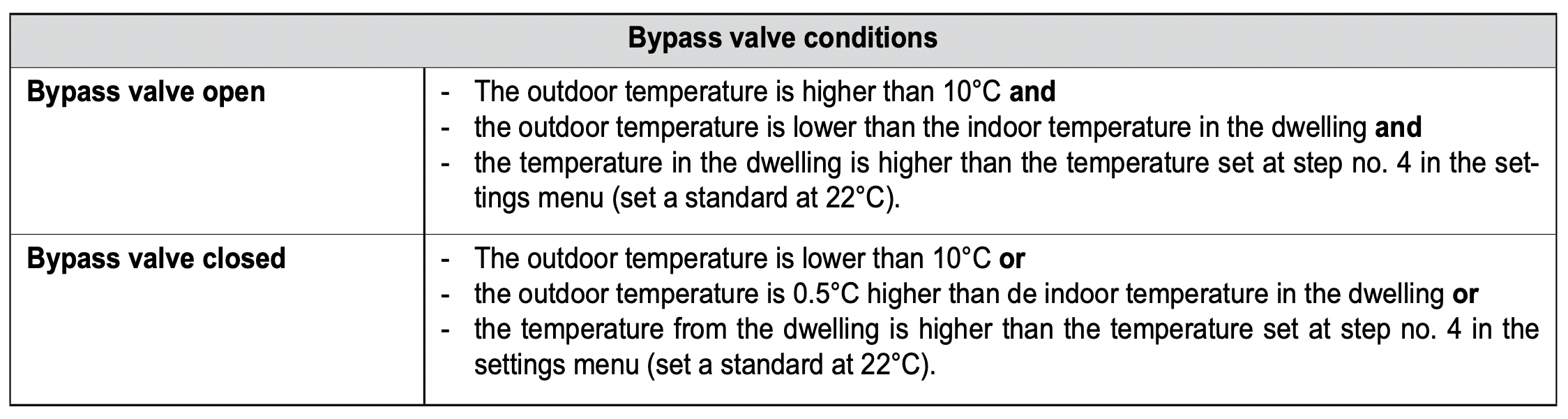
On the subject of summer bypass, here are the rules for my Brink unit. I think most units work similarly.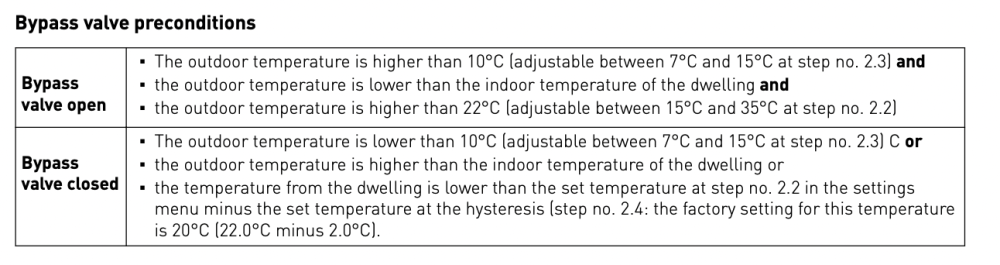
-
How to decide between ASHP or Gas boiler for New Build
Dreadnaught replied to Meabh's topic in Air Source Heat Pumps (ASHP)
@Nick Laslett, I just heard back from my SAP assessor. He said "Yes, the arotherm products are on the PCDB so we will use this data within the assessment". Edit to add: when I also asked whether MCS certification (or its absence) will affect the SAP result in any way, he said: "We do get an option to tick "MCS certified" but it does not affect the results in any way." So I think I am doubly content with that.