jayc89
-
Posts
1389 -
Joined
-
Last visited
-
Days Won
1
Everything posted by jayc89
-
Getting to the point of our extension where I can start looking at construction methods and getting estimates. I haven't really narrowed it down from brick/block, ICF and TF yet. The extension's approx. 120sqm in total. From the estimates I have had; - ICF (EPS) supply only is coming in at around £15,000 minus conc. (0.18 u-value) - TF approx. £40,000, turn-key (0.14 u-value). This also includes joists and roof (unfinished) - Brick/Block approx. £15,000 minus facing bricks (EPS beads, 0.18 u-value) I'd love to say I had the time to go ICF and build to myself (how hard can massive lego blocks be, after all) but in reality I don't have that time given I'll be doing the groundwork myself too. On the face of it, TF seems a good shout, especially given its construction time. My concern is that there's still a single skin of brickwork to erect on the exterior, so additional cost there. Probably £50,000 all in? I suspect Brick/Block, inc joists and roof wood work would still work out slightly cheaper, but would take longer to erect. Are there any other benefits for TF over B+B?
-
Mike Wye have been spot on for all my needs; https://www.mikewye.co.uk/product/lime-mortar/
-
B&B is likely cheaper if you're getting a contractor in to do the work. A slab is certainly cheaper if DIYing. As has been said, get your aggregates in by the truck load. We paid £15/t for recycled MOT 1 last year.
-
Our Architect is recommending we construct our extension in timber frame. The pros of doing so are not lost on me, especially the time it takes to build on site! However, as I understand it, sound insulation can be a concern, specifically it's not as good at reducing outdoor noise as a traditional brick/block or ICF solution would be. For those that have opted for timber frame, have you found this to be the case?
-
I've not fully costed it, but slate tiles will probably come in around £40/sqm. It's difficult to get concrete prices for PV tiles, but from what I can find online I guess they will be approx £300/sqm. 7.5x the cost of standard slates?
-
We'll have approx. 12m of south facing roof space on our extension. The Architect has suggested it's well positioned for PV but not gone so far as recommending it. Our plan would be to use it to heat the UVC and then power the rest of the house before feeding back to the grid. SWMBO and I both work from home now, so we do have laptops, monitors, kettle running throughout the day, kids when they're at home are on their tablets/TV etc but still not enough to absorb what the array should kick out on a good day. We don't have any intention of installing batteries. That was a long winded way of saying we're also leaning towards not fitting PV...
-
Sounds like the flow chart was missing a "Is it cold?" decision point
-
I commissioned our system first purely so we could deal with any cracks if they appeared, but given the OP appears to have already laid tiles etc, I'm not sure what the benefit would be here.
-
Renovation: suspended floor, slab and block or concrete slab
jayc89 replied to Keymon's topic in Floor Structures
How old is the house, does it have an existing DPC? We had similar problems with our 1850's house without a physical DPC. All advice we received was to excavate and lay a slab. Micro digger and dumper in to excavate then 150mm MOT 1, 25mm sand, 100mm Conc, 100mm PIR and 60mm screed. We were also rewiring at the time, so dropped all our services from above to avoid ducting within the floor itself. We did most the work ourselves and it was messy, uninhabitable during that time. It would have probably have been cheaper to replace the joists when DIYing, certainly not so when paying a contractor. Since we did ours, others have raised concern regarding a new slab with a DPM potentially pushing moisture to the perimeter and therefore up the walls (without a DPC). Those concerns haven't come to any realisation (yet...) (FWIW, if I was to do it again I'd probably go 150mm MOT 1, 250mm EPS (50mm as a sand blinding), finished with a 100mm conc reinforced slab instead. Slightly deeper but better thermal properties and arguably cheaper than PIR + conc + screed. -
Looks sensible to me. Rather than focusing on insulation depth, my advice would be to focus on estimated u-values as that can alter dramatically based on your PA (perimeter area) ratio.
-
Differential movement and you start seeing cracks
-
Best to check with your BCO, but I'd have thought you'd need to drill and rebar into the set section before pouring the rest.
-
I had to email the company to get this far. I'll PM you the email address of the guy I was speaking with.
-
Perhaps somewhat controversial; I never really got the need for so much PIR. We used 100mm and given our PA still met PH requirement of 0.15. Of course more insulation is better, but the cost of PIR is only going up and the cost to excavate/dispose of an additional 50-100mm soil won't necessarily be cheap either. Is a slab that achieves less than 0.15 really that noticeable?
-
Recession + building trade = ?
jayc89 replied to DazRave's topic in General Self Build & DIY Discussion
I can certainly see that (artificial inflation). The valuation on the house we lived in last, which we now rent out, has jumped 86% in the last 3 years. It's insane. Rental values in the area don't seem to have followed though... Certainly seems like a bubble getting ready to burst, to me. -
I have come across these Rationel windows. Apparently they're custom spec'd by Enlightened Windows
-
Looks lovely. We're only ~ 20 miles outside of York and in need of windows of a similar style so will be watching this thread with some interest
-
At least the notes are polite - it could be worse
-
Just to close the loop here - I spoke with Ty-Mawr about my damp cupboard. They recommend limecrete with a foam glass/Glapor sub-base as apparently that will prevent any moisture wicking up without introducing the side effects associated with a physical DPM.
-
This is an area I think we went wrong. We ended up with 3x zones (and 6x loops) downstairs. I plan on wiring them all back up to a single stat to see what efficiency benefits can be achieved.
-
I have a similar sized house. When we renovated (last year) we installed UFH downstairs, radiators upstairs. The UFH kit (pipes, manifolds, actuators, stats, control unit etc) came in at £1200 (supply only, we self-fitted). We did get a quote of £500 for someone else to fit it for us. Boiler, UVC and 5x radiators upstairs came in at just over £5,000 (fitted). I never broke it down but I guess £1200 wouldn't be too far off what a set of downstairs rads + pipework would have cost to have fitted too.
-
A mix. One room is already back to brick and waiting for "something" to happen. The others are wet plastered (lime), at some points it's nearly an inch thick, so I do have the option to knock this off to make back some of the space lost to IWI.
-
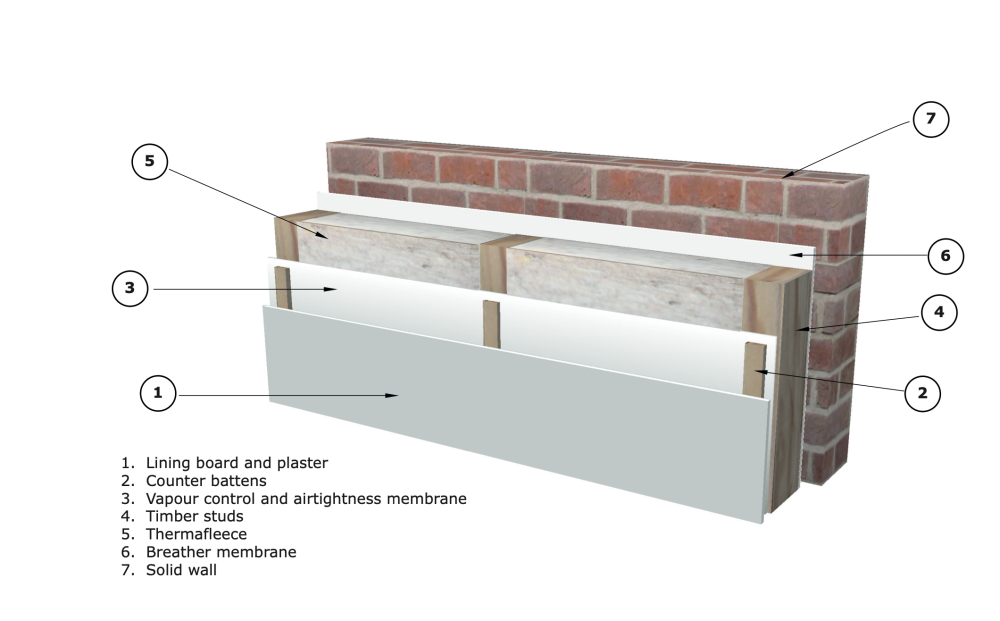
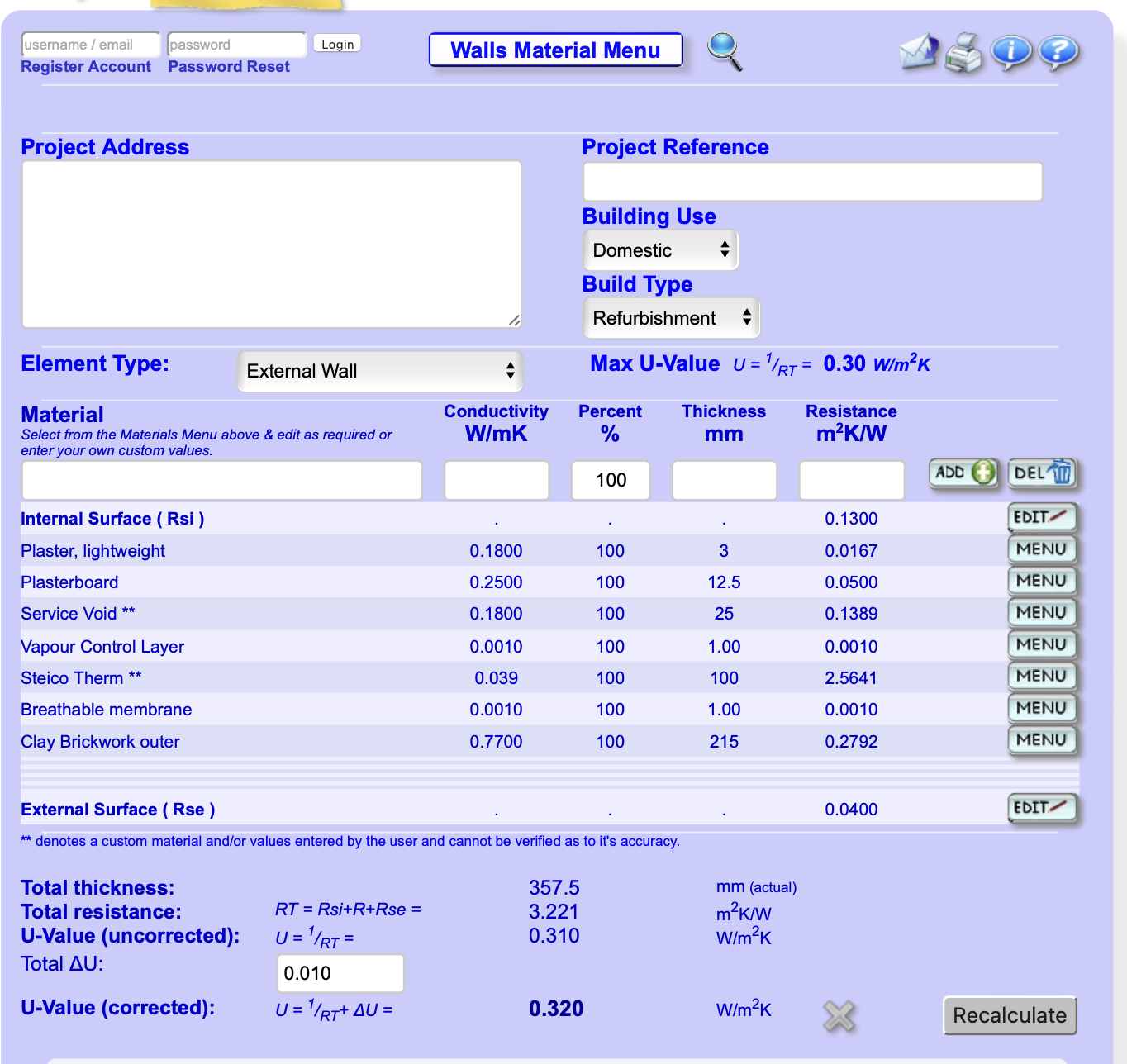
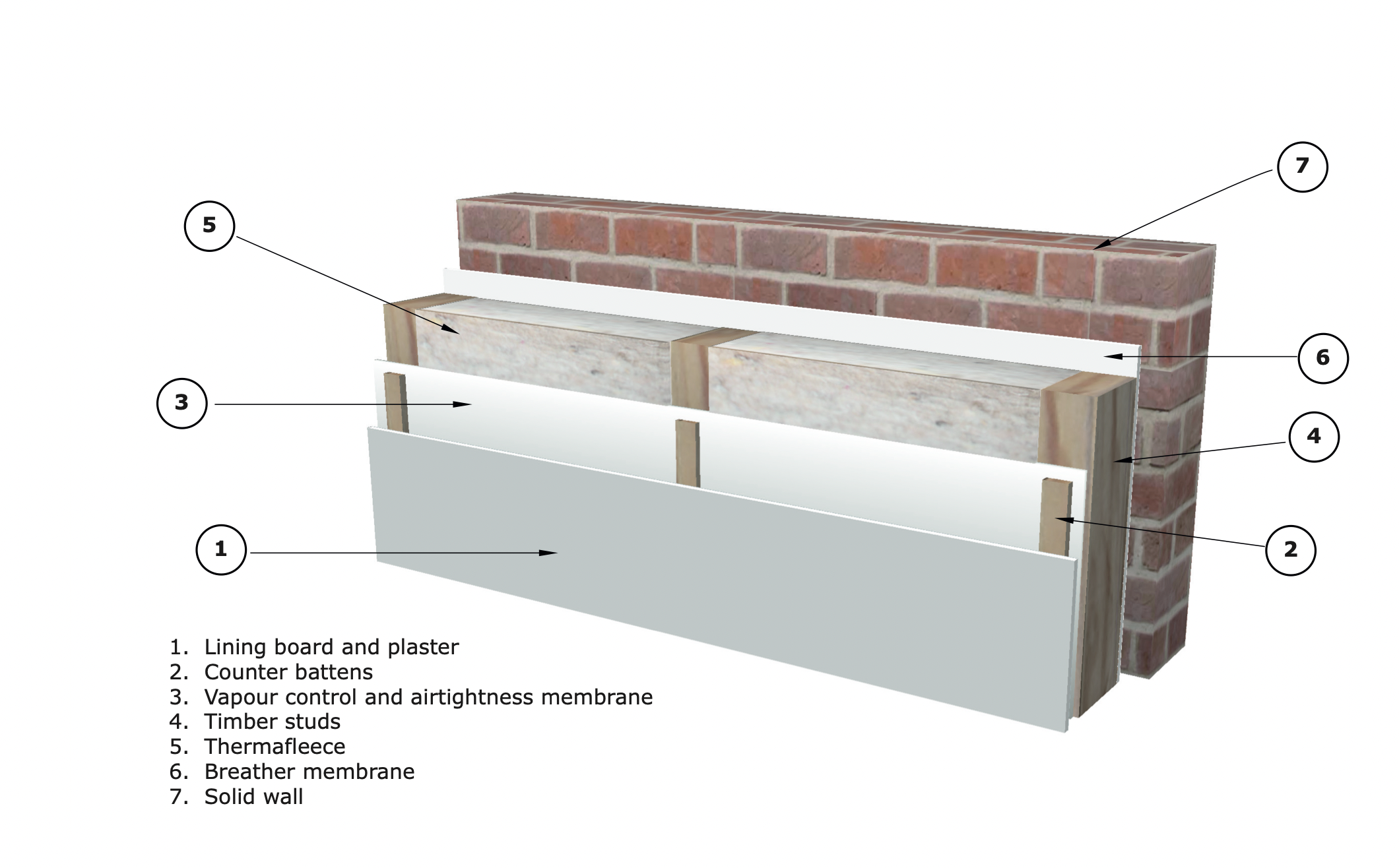
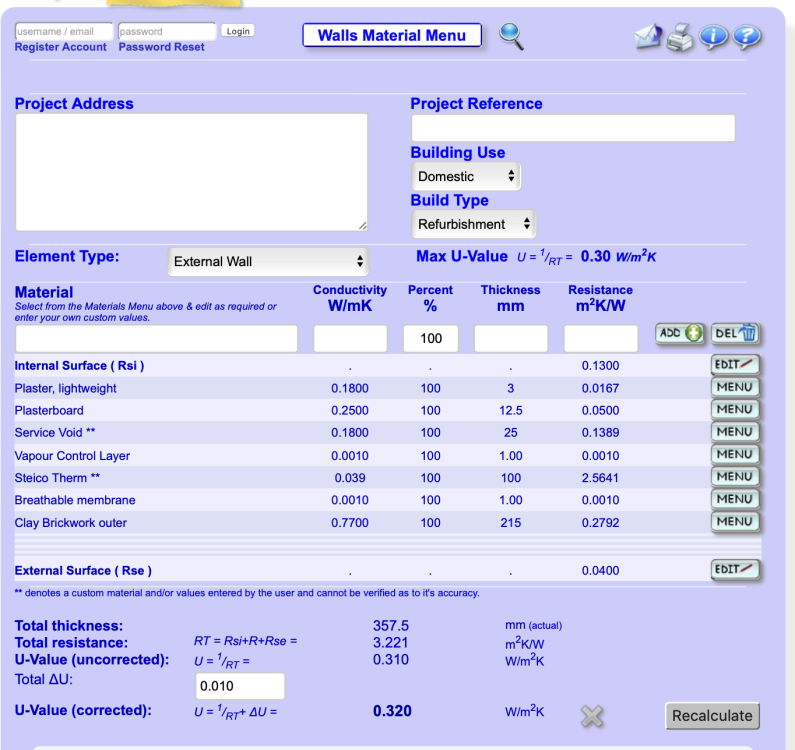
Steico suggest something similar here - https://www.steico.com/en/solutions/renovation/internal-wall-insulation - under "Renovation type: Multi layer internal insulation" although that seems to suggest attaching the plasterboard directly to the VCL, which I don't understand - surely by doing so that would make the entire buildup less breathable. I expected a cavity/service void there to mitigate that.
-
You're right, not sure how that happened. Updated figures; My question really is whether that service void is suitable to separate the breathable from non-breathable materials.
-
Similar to this, albeit the diagram is using sheep's wool not wood fibre...