


jayc89
-
Posts
1389 -
Joined
-
Last visited
-
Days Won
1
Everything posted by jayc89
-
You could probably do away with the sand blinding given you have EPS under the DPM too. Where did you get the cheap PIR from?
-
Limecrete or Concrete Floor
jayc89 replied to bontwoody's topic in Environmental Materials & Construction Methods
Limecrete would be the purist's view. When we had a similar dilemma with our solid-brick house, we spoke with a range of people, including quite a few local builders who have done a fair few barn conversations. They said we'd be safe with a concrete slab and DPM providing there were no existing damp conditions (i.e. broken drains, external floor level build up etc). Nearly 12 months on and no problems yet... Anecdotally, my grandparents house (also solid brick) had a concrete slab laid, with a liquid DPM, nearly 60 years ago now and it's still going strong. We came across the original quote a few weeks ago - check out that price!
-
Securing wall plate to existing solid wall
jayc89 replied to jayc89's topic in General Construction Issues
That was my original plan, although concerns were raised around; 1) thermal bridging and 2) the joist pockets now being in a colder and potentially damper wall. -
Our roof space is a web of timber. I want to make it airtight but can't decide whether I should do it across the rafters, or horizontally over the joists. It's double hipped and there's bugger-all space in the far corners, so they'll be fun to detail correctly.... Either way, the membrane will be lapped down the internal face of the external walls to be taped with the 1st floor wall membrane. What would you suggest?
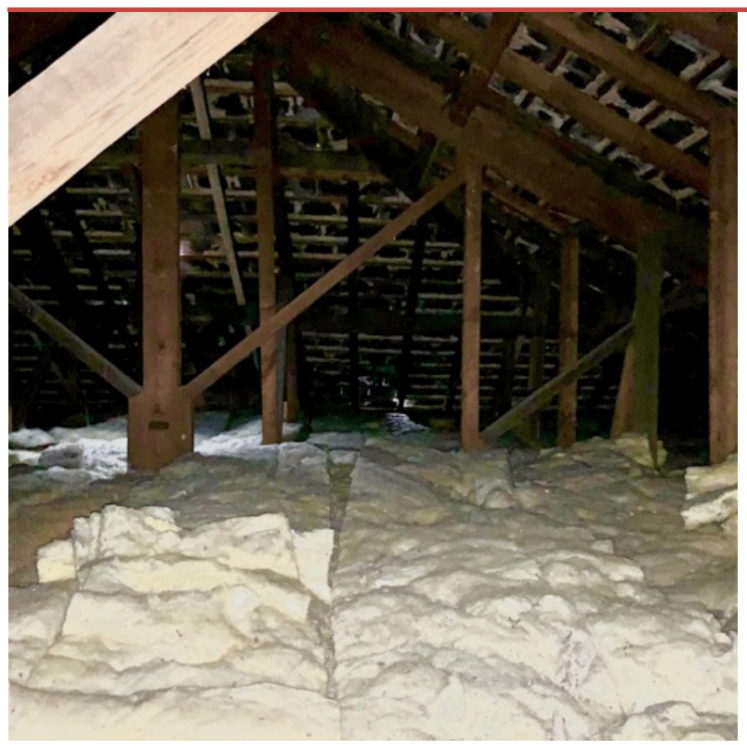
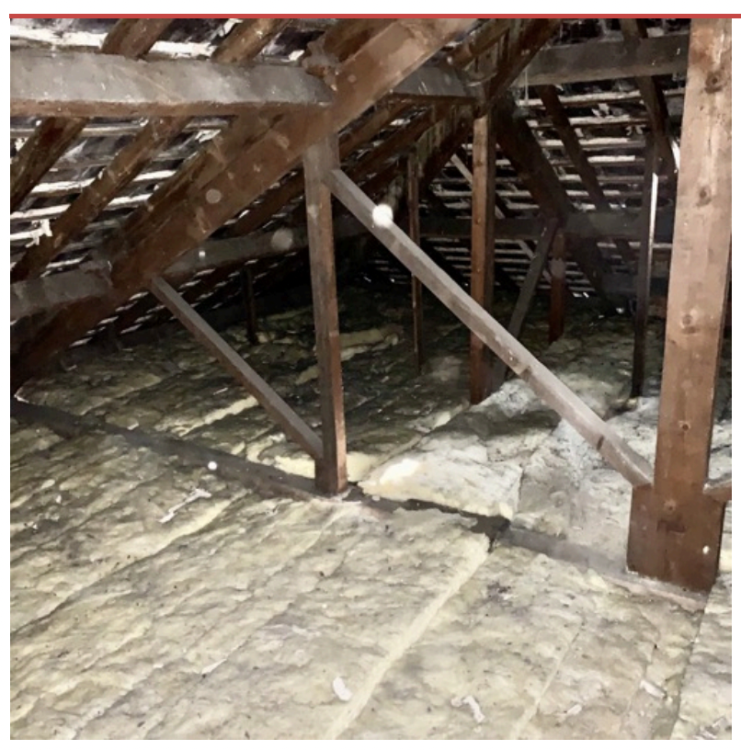
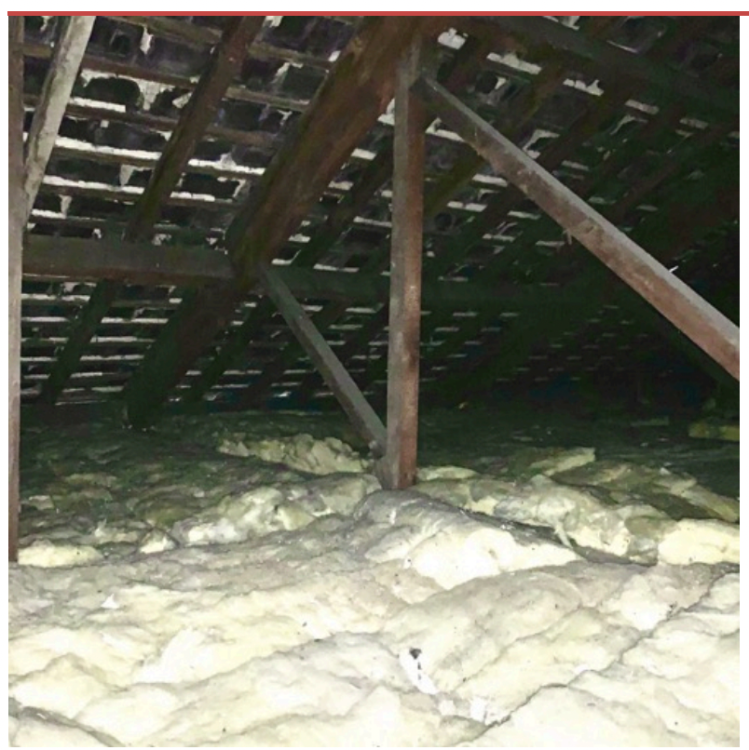
-
Securing wall plate to existing solid wall
jayc89 replied to jayc89's topic in General Construction Issues
And risk the thermal bridge/chance of moisture damaging the joist ends? -
Securing wall plate to existing solid wall
jayc89 replied to jayc89's topic in General Construction Issues
Interesting, thanks. Would those be staggered top/bottom every 600mm rather than always in the centre? We have a SE onboard for other reasons so I'll mention it to him when I next see him. I'm pretty sure I read the fixing methods on a Gov white paper. Either bolt through or install a steel joist to rest the existing joists on. I'll try dig it out again. -
As part of installing IWI to our house, we're thinking about what we can do with the first floor joists that are currently pocketed into the external walls. We're considering shortening them by fitting a wall plate and hangers to bring them within the thermal envelope. Something like this; From what I understand the new plate should be bolted through the wall to the outside, which I'd rather not do. Are there any other options?
-
IIRC, Yorkshire Water ask for anything above 750mm to be insulated. We lagged the pipe as it entered the building and came up beyond that 750mm threshold (basically the length coming through the rest bend), but that's it.
-
Given many of these methods have been used over the last 12+ years I'd love to get some feedback from people who have installed IWI using certain methods many years ago to see if it did in fact cause any problems. A lot of what I read on forums across the net seem to be theory, or "because that's how it's always been done". It seems somewhat of a dark art!
-
This is a pretty interesting read; https://passivehouseplus.ie/articles/insulation/breaking-the-mould-part-v. Basically saying, without very careful management, IWI is only good up to a u-value of 0.45, before running into problems.
-
I read it as suggesting a wind barrier when a ventilated cavity isn't an option. I don't have any preference towards PIR, other than the space saving, but where I'm based it's an absolute nightmare finding any plasterer that will work with lime and the ones that do are generally based more towards the Yorkshire Dales, 60+ miles away, as that's where most of the demand is. I've even had plasters look at me funny when I ask about lime - that probably says more about them to be fair... So if the walls end up being skimmed in gypsum, making the rest of the build up seems somewhat pointless.
-
Discount Offers of the Week
jayc89 replied to Ferdinand's topic in General Self Build & DIY Discussion
He lost 20 pounds! -
First question: Do AluClad windows need lintels? Would the timber frame be structural? Second question: As the title suggest we (probably) need to retrofit a number of window lintels. I assume we should be using box lintels. Should a course of bricks be removed from the inside and just mortar chased out from the inside to slide the lintel "lip" into? Surprisingly I could find very little detail on how to do this online. Maybe that's why there are so many old houses with missing lintels!
-
It massively depends on your set up, how well balanced it is (flow rate/temp etc). In general, I'd expect my UFH to get up to temp in around 3 hours from a cold start.
-
Near me, 5 years ago an individual self-build was put on the market, it was heated with an ASHP and had no gas mains, it must have taken 12 months to sell whilst other properties in the area were selling like hot cakes. More people are starting to hear about heat pumps but I still don't think they're mainstream yet and people are generally afraid of the unknown. I don't think that will change until more mass built housing is using heat pumps rather than gas.
-
I spent some time reading this. As I understand it, moisture-open insulation is the recommended approach, with moisture-closed being 2nd best; Where moisture-closed insulation is used, a ventilated cavity should also be included on the cold side, however when that is not the case, a wind barrier should be used instead; So in a warm-batten method would that be; - solid wall - wind barrier (is this like an airtight vapour control membrane?) - couple of layers of PIR sheets overlapping and tapped (effectively the VCL) - battens - optional PIR infill (taped) - plaster board When it comes to floor joists, ideally the should be refitted on hangers on the warm side of the insulation; That's just not possible, I can't rip out upstairs floorboards up (again), the Mrs would go nuts As such, certain mitigations like injecting the ends with boron paste and wrapping + taping them in vapour permeable insulation instead; Should the joist ends still be wrapped and taped using vapour permeable materials of the wall is covered in PIR? There seems little point if it's behind an airtight wind barrier. I'm not really sure what that detail should look like here. Doing all this, plus replacing our windows/doors, should result in a pretty airtight building too. I assume at this point we'd need to be considering MVHR?
-
That's pretty useful, thank you. Using something like Aerogel around the floor joists is also an interesting idea, although I don't fully get the detail of where the the vapour open and vapour closed insulations would meet. Surely that would at risk of moisture in itself? What's the deal with going below 0.30? Not that I can afford the space required to go below that figure!
-
As I understand it, there are two potential problems; Moisture moving out to in, such as driving rain, would should never really happen in our location with well maintained gutters, pointing etc, but is what introducing a cavity (such as Gyplyner) is meant to mitigate. Moisture moving in to out, such as interstitial condensation, as the internal warm, moist air, hits the cold external wall. Isn't the introduction of some sort of continuous VCL meant to mitigate this concern? Of course, the joist ends are still some concern here as you could tape any VCL around them, but there's still the potential for moisture to travel through them. Sufficient ventilation might be a secondary mitigation though? I assume a VCL will also go some way to making the property airtight too?
-
I intend to carry the insulation on through the floor space, cutting back the upstairs floorboards. Joists are the problem though as the insulation would only wrap around the joist ends. I can't think of a good solution to this, other than refitting them on joist hangers inside of the insulation, which I don't really fancy doing, as I'd have to replace the entire ceilings below too.
-
Warm Batten would be a build up of 87.5mm (exc. skim coat) and provide a u-value of 0.28. (50mm PIR direct to wall with 25mm in fill would provide a better overall efficiency.) Gyplyner, with 25mm cavity, would be a build up of 105mm (exc. skim coat) and provide a u-value of 0.27 A difference of 17.5mm wouldn't be that noticeable so I think it comes down to what the most optimum solution would be. For reference, I'd need 150mm PIR to reach a u-value of 0.15
-
I'm starting to think about how we can better insulate the existing parts of our house. They're solid brick walls and external insulation is not an option as we don't want to cover up the existing brickwork, so internal wall insulation it is. The external walls, whilst originally plastered using lime have been at some point skimmed with gypsum and show no signs of damp, so moisture is not currently a problem - externally it's still pointed in lime mortar. The internal plaster build up, in areas, is so thick it's reaching nearly an inch! Whilst are room sizes are decent, we don't want to lose too much internal floor space, so either way I want to knock off the existing plaster first. I'm thinking of two options; Warm Batten - 25mm PIR direct to wall (taped - acting as a VCL) - 50mm battens over - 50mm PIR infill - Plasterboard Gyplyner - Gyplyner direct to wall - Insulated plasterboard I do like how with the warm batten method I can make sure noggins are in place where I know I want to anchor things (like TVs). I'm less keen on insulated plasterboard, but appreciate the void Gylyner provides between the external wall and the insulation. What would you do? Are there other options I should consider?
-
Vertical extensions of victorian properties
jayc89 replied to Howie23lee's topic in House Extensions & Conservatories
Of course anything's technically possible, with deep enough pockets. Although I suspect most planning departments wouldn't be too keen on the idea. It would certainly be worth getting some local advice. -
It’s likely we’ll be parting ways with our architectural technician soon. A couple of other Architects we’ve spoke with have said if they can get access to our existing survey drawings, they would waive their own survey fees (I have clearly confirmed that any measurement mistakes would still be their responsibility) But my question is, given our existing technician is fully paid up, who actually owns the digital copy of our survey etc?
-
Work on Plot whilst planning is in - What is allowed?
jayc89 replied to BristolBuild2020's topic in Planning Permission
I certainly wouldn't break ground on any foundations until you get the green light, but general maintenance like you've mentioned should be fine to crack on with. -
Doesn't that depend on your P/A ratio? For me, with a PA Ratio of 0.4, 100mm PIR resulted in a u-value of 0.15




