jayc89
-
Posts
1389 -
Joined
-
Last visited
-
Days Won
1
Everything posted by jayc89
-
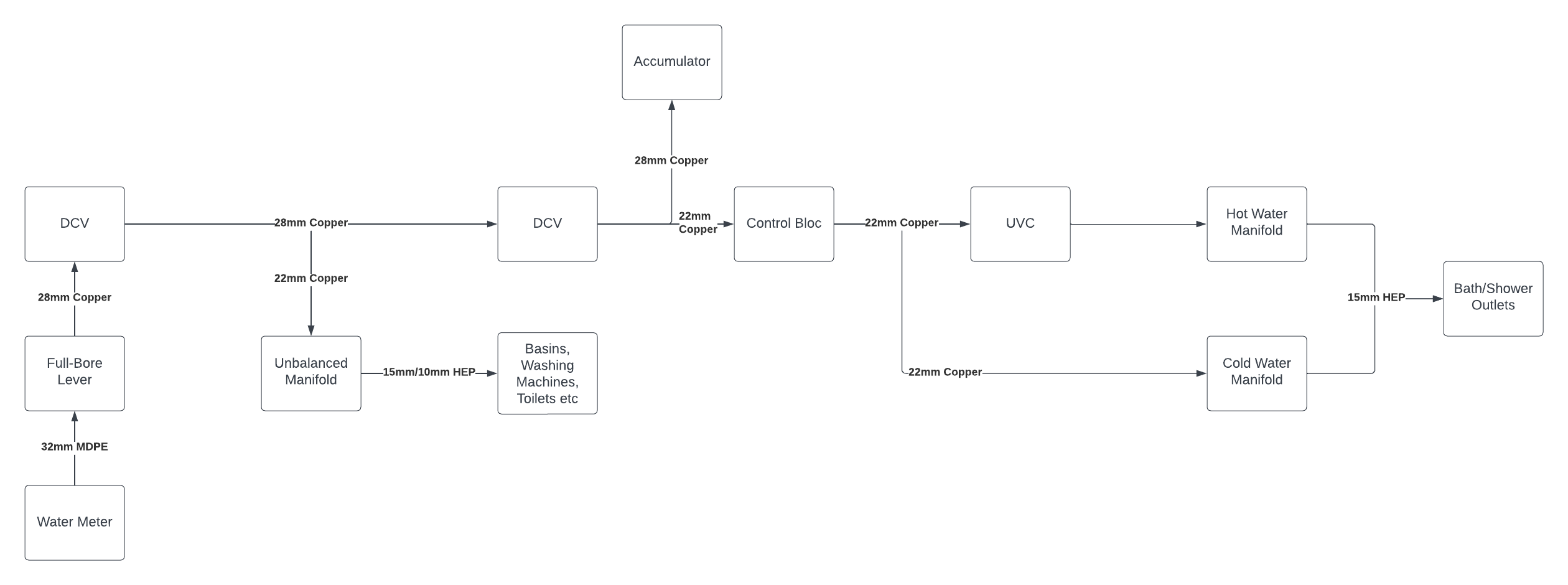
32mm MDPE now, converted to 28mm copper in the house, followed by a full bore lever, before the UVC control block. 3 bar pressure but flow still sucks, approx 12 LPM.
-
Thanks Nick. What about drinking water (i.e. kitchen tap)? Or is that down to personal preference?
-
Fair point. I think I saw @Nickfromwalesrecommended an oversized DCV and use a reducing ring to go back to the pipe size at either side of it. But given it's already on a 28mm pipe, I think the next size up would be 35mm and they're crazy expensive. Surely the cost outweighs the benefit of saving, what, approx 0.1 bar pressure? That's OK, we typically shower in the evenings so want to try keep the accumulator fully charged throughout the day if we can (assuming pressure increases overnight) and mains flow is 12 LPM so, if that's predominantly shared between toilets, washing machine, dish washer and drinking outlets, we can probably manage with that. It's the drop when someone wants a shower that I'm trying to fix.
-
Pretty sure our tiler used adhesive.
-
Ventilation problem, I'd suggest so, not necessarily a damp one (yet). Do you have trickle vents in all windows, or just the new extension?
-
I'm going for moisture resistant caber floor and tanking around wet areas (bathroom and shower area)
-
Bit like Russian Roulette isn't it. There's some fantastic guides on there but there's also some god awful advice.
-
I fitted some based on advice on here after I had some problematic air in my UFH loops. Is there a problem you're trying to solve?
-
Found some Aria ducting for £131+VAT which is the cheapest I can find now, and cheaper than what I previously bought at. Anyone heard of Aria ducting before and know if it's any good? I guess ducting's ducting, right?
-
Seems a bit of a waste doesn't it? My thinking was to only use the accumulator for "priority" supplies where I care about the flow; basically showers. Everything else works fines on mains pressure/flow. We'd also want "fresh" drinking water, rather than water stored in the accumulator for any length of time.
-
Replacing suspended timber with a new concrete slab is a mammoth task, I've done it. Unless it's rotten I wouldn't do that. This is the guide I typically use when working with suspended timber - https://www.ecologicalbuildingsystems.com/post/best-practice-approach-insulating-suspended-timber-floors FWIW, I used 100mm PIR on mine, it works fine, but wish I added more whilst I was going to all that hassle anyway, like @JohnMosays. If you're sticking with a wool insulation, you'll need to nearly double it again to reach a similar U value.
-
Need 150m of 90mm semi rigid ducting. It all seems to have shot up in price since I last ordered some, where have people been getting theirs from recently?
-
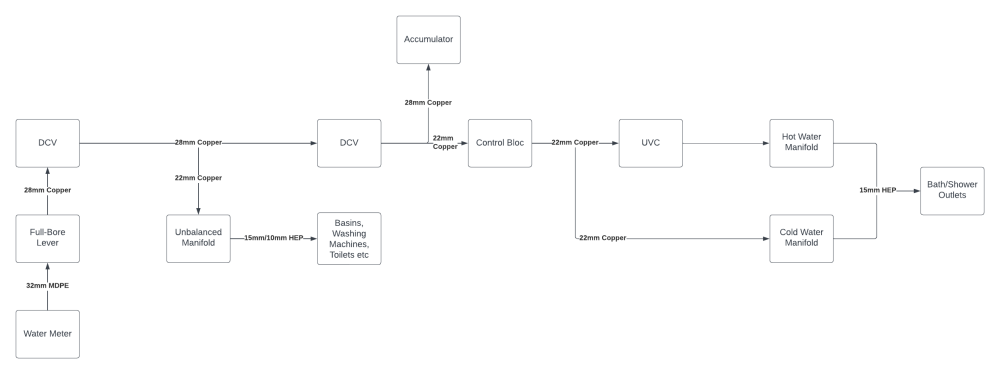
So if using an accumulator would something like this look right? I'm assuming the additional DCV before the accumulator would be needed to avoid it boosting the outlets connected to the unbalanced manifold too.
-
How long does an accumulator typically last? Is it worth looking at second hand ones?
-
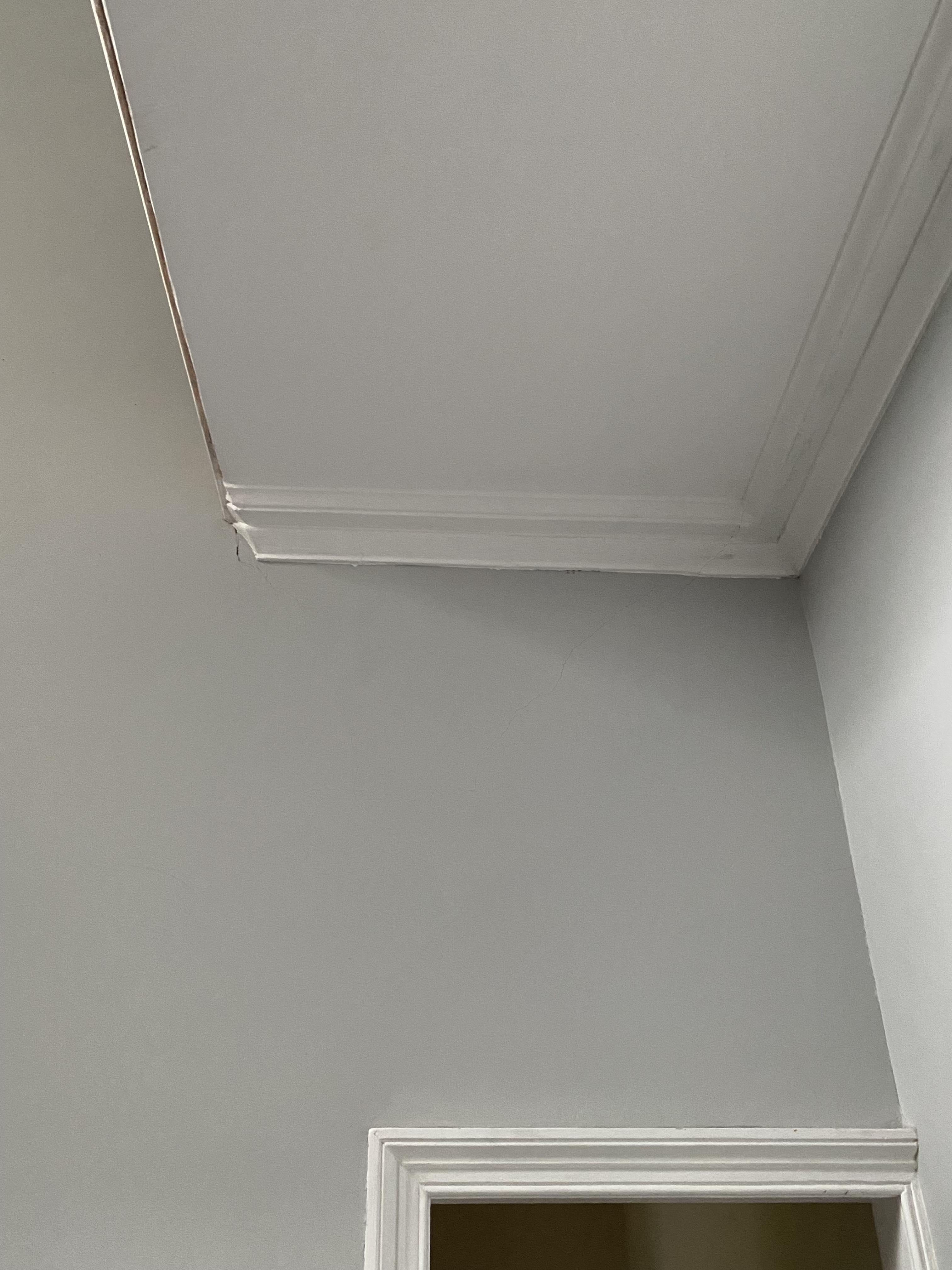
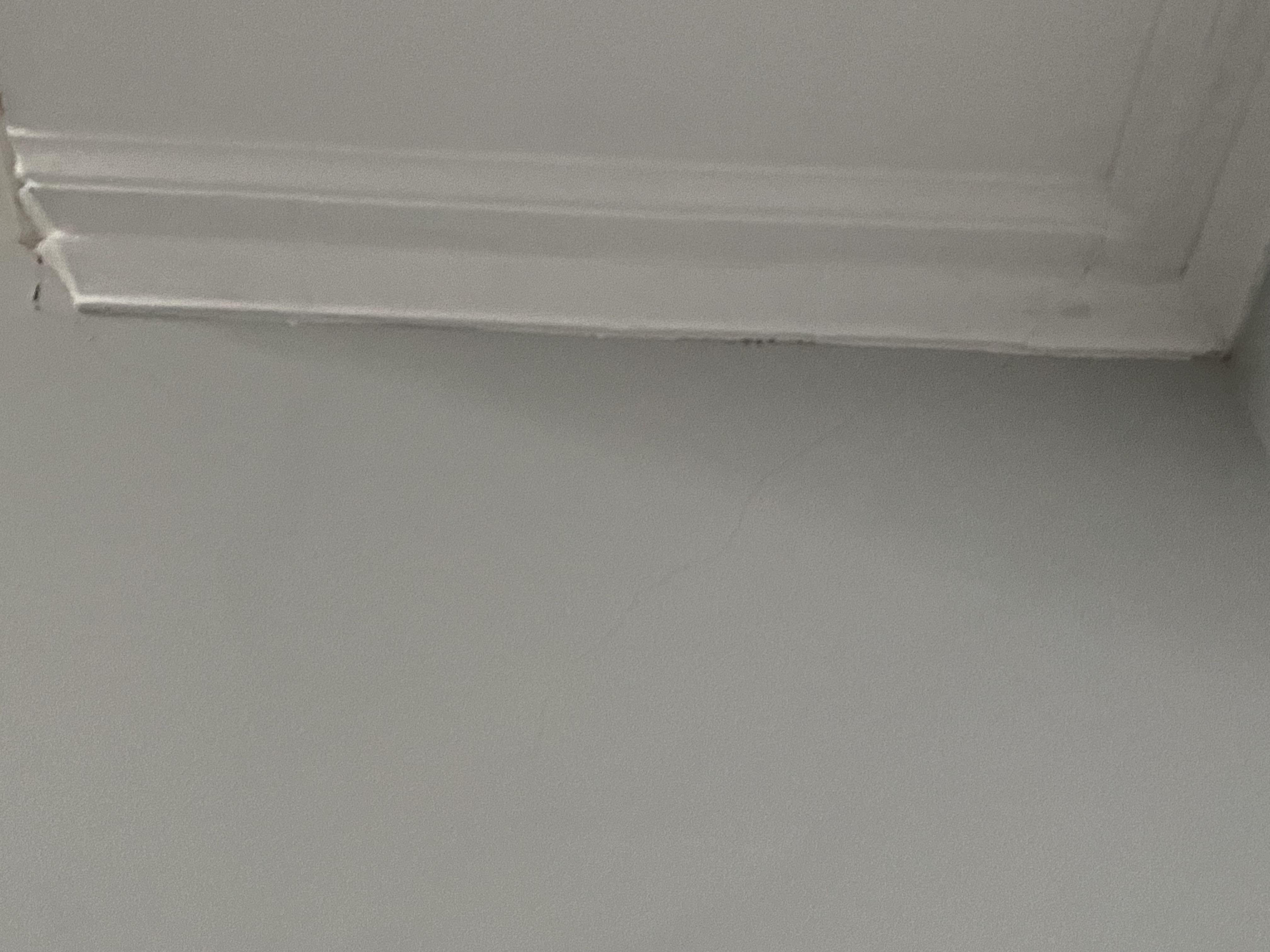
Cracks showing under first floor landing
jayc89 replied to jayc89's topic in General Structural Issues
Thanks @Gus Potter all really useful points. I had to laugh at the door comments, I'll take a picture of how out of whack some have become over the years, including the bathroom door - all historic movement now, but these cracks are certainly ongoing. Makes decorating the hallway a PITA. -
Cracks showing under first floor landing
jayc89 replied to jayc89's topic in General Structural Issues
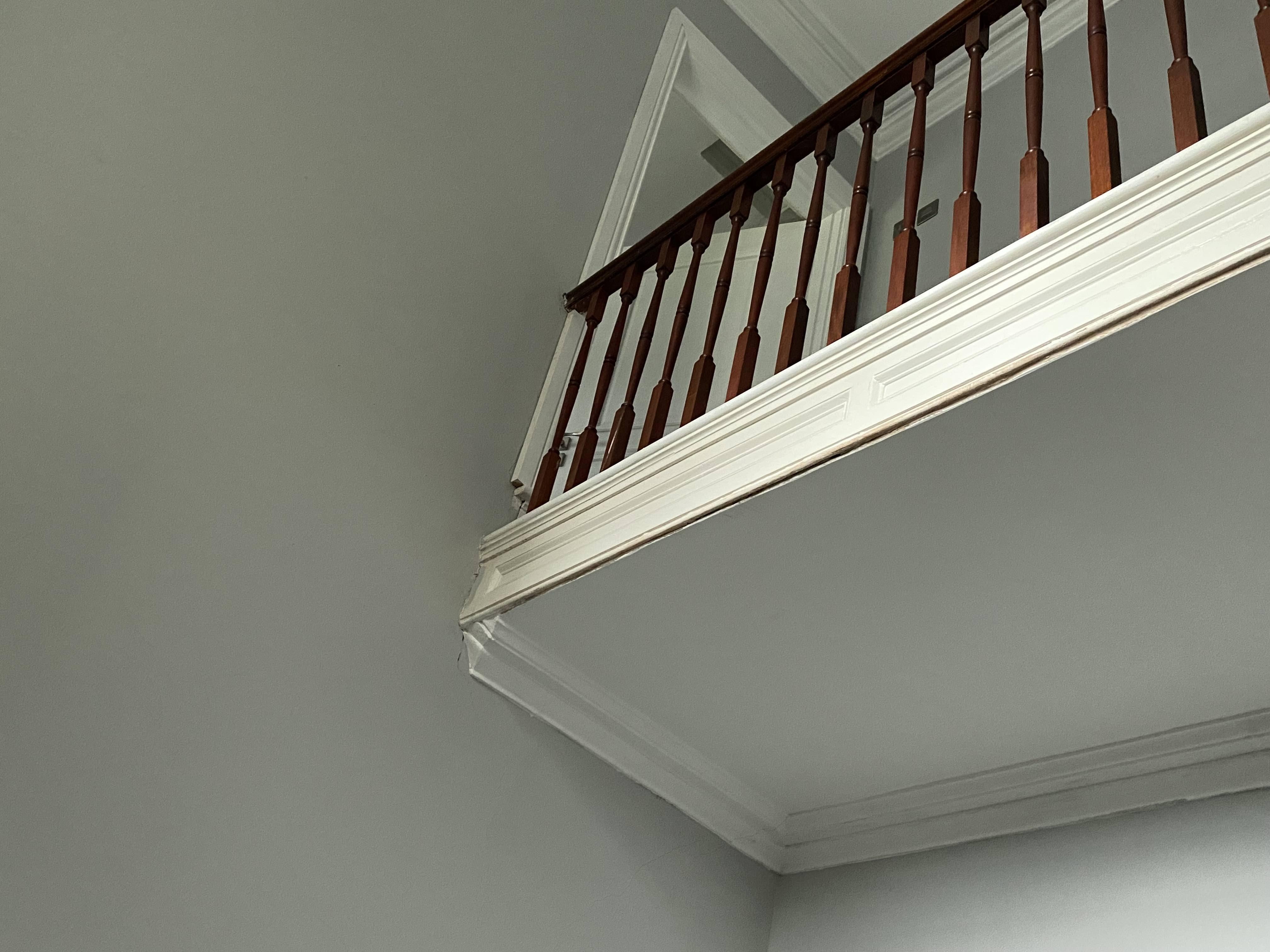
Certainly timber joists! I think they're 6x6s, although never measured them, poking right the way through the single skin wall. -
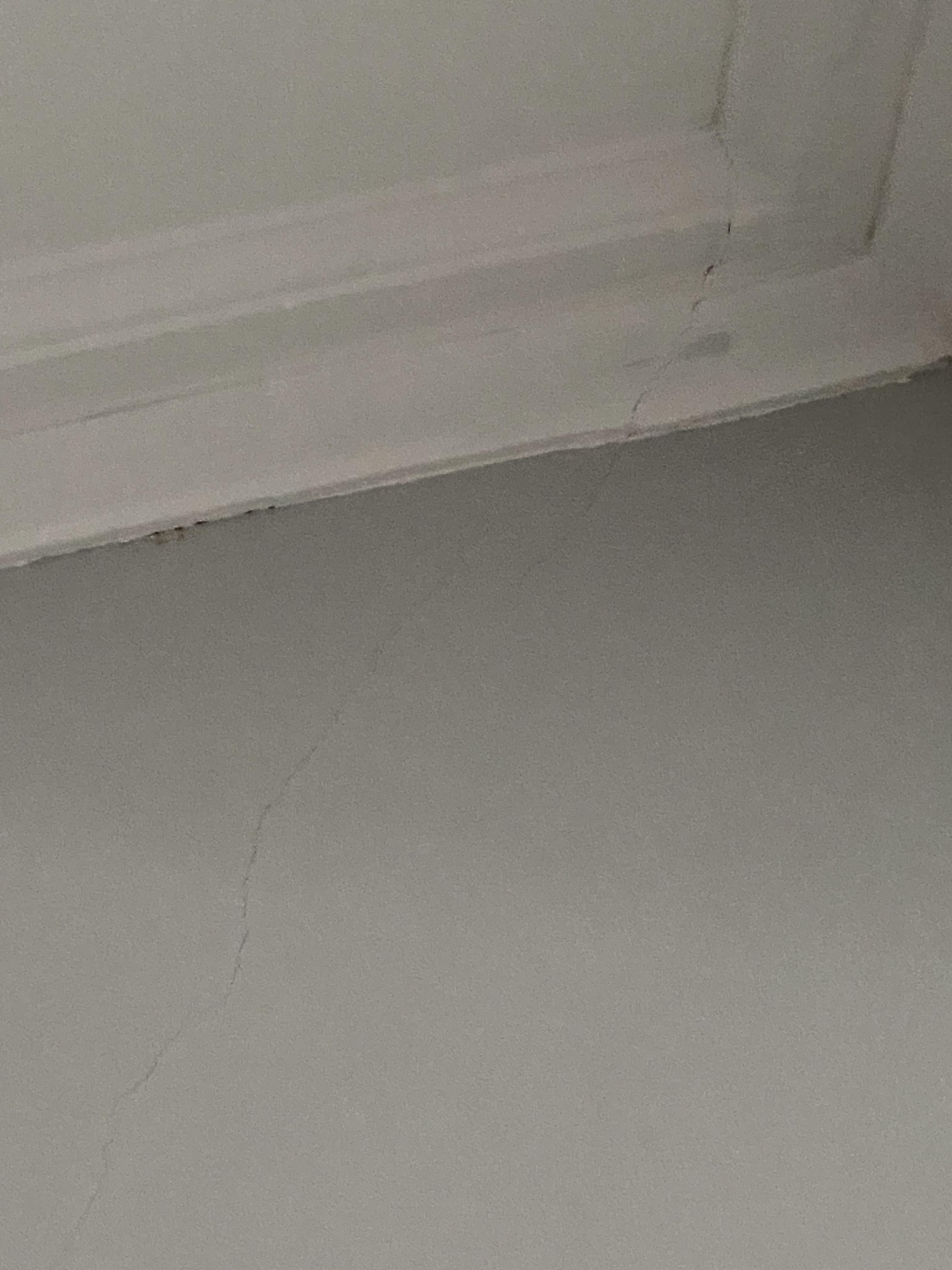
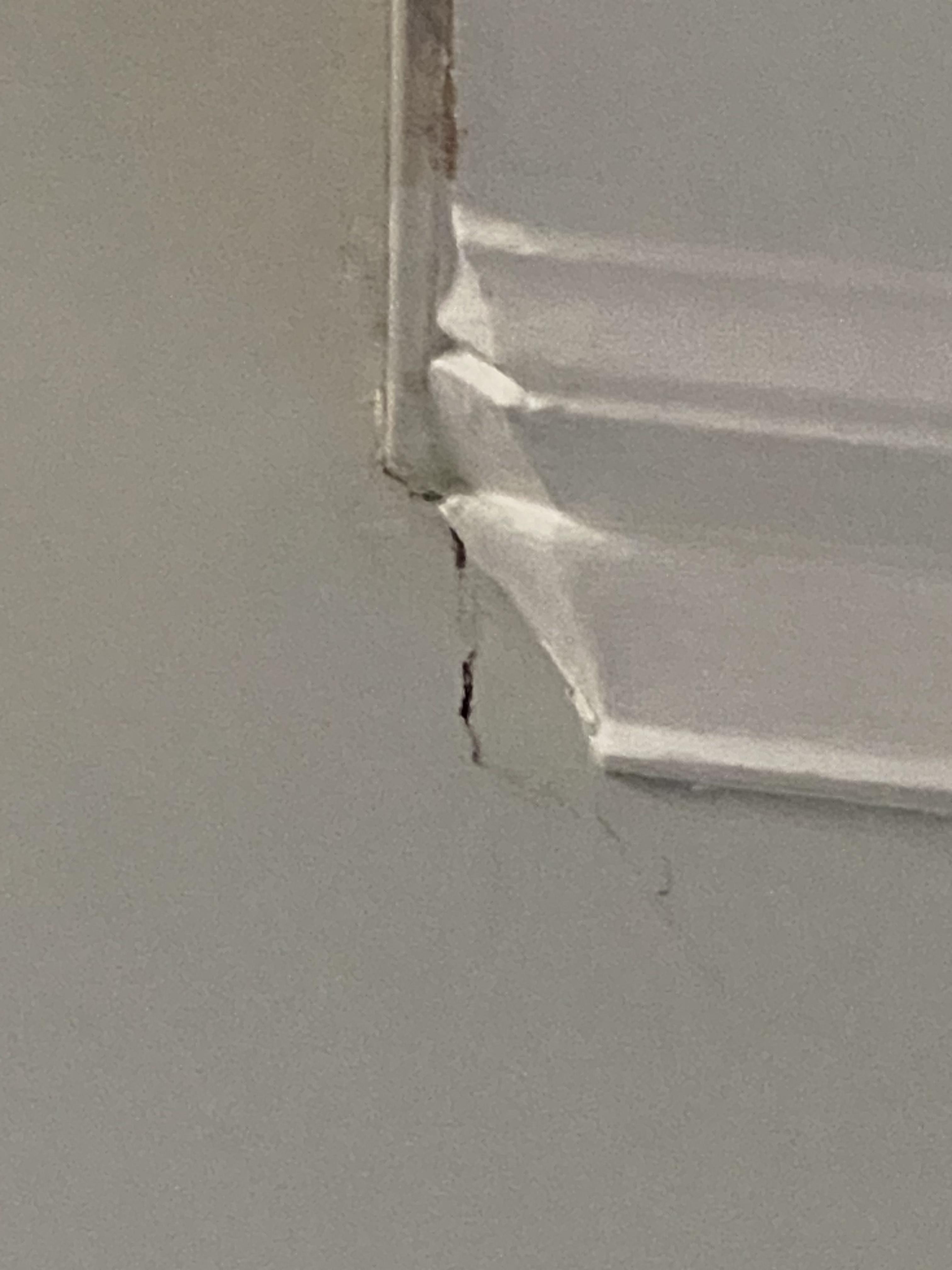
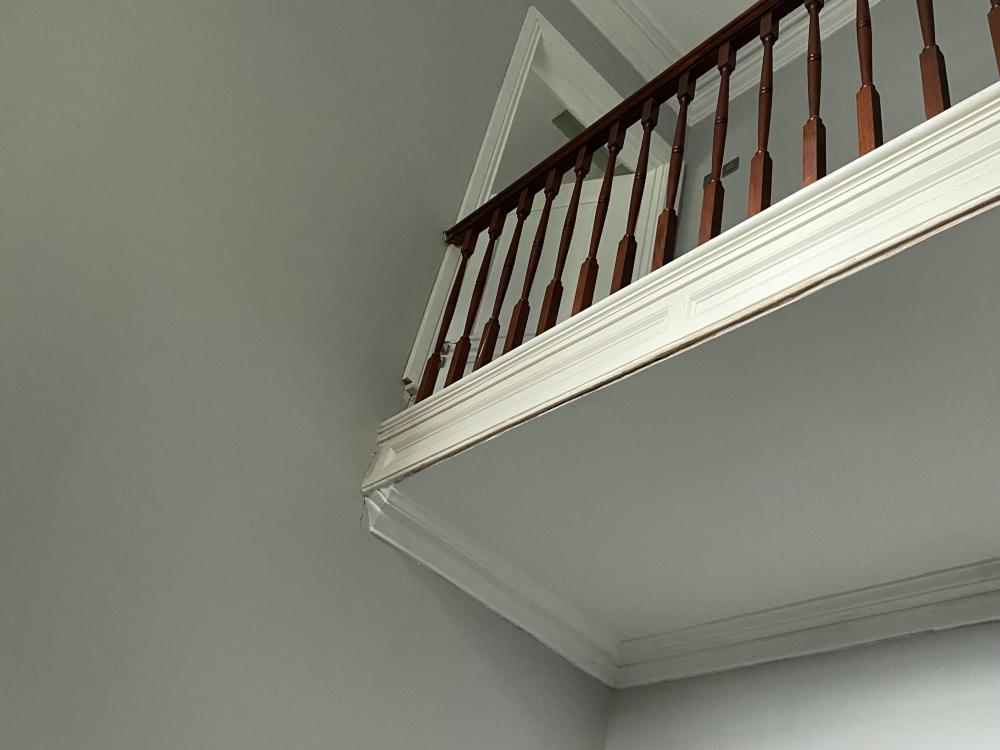
Our landing wraps around the stair case into the family bathroom. Over the last few months, the wall below this section has started to show some cracks, which are visible on both sizes of the wall. We stripped the wall paper and gave it a quick coat of paint when we moved in, so know they're quite new. The landing itself is un-level, but it was when we moved in (1850's house). The wall with the cracks starts off as 9", just above ground level, and then reduces to single skin all the way up. The adjoining wall is 9" all the way up. Any ideas what might be going on?
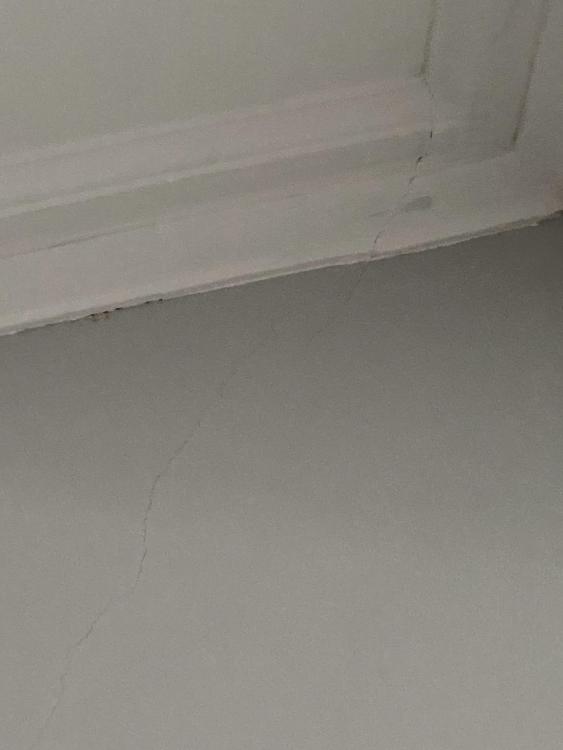
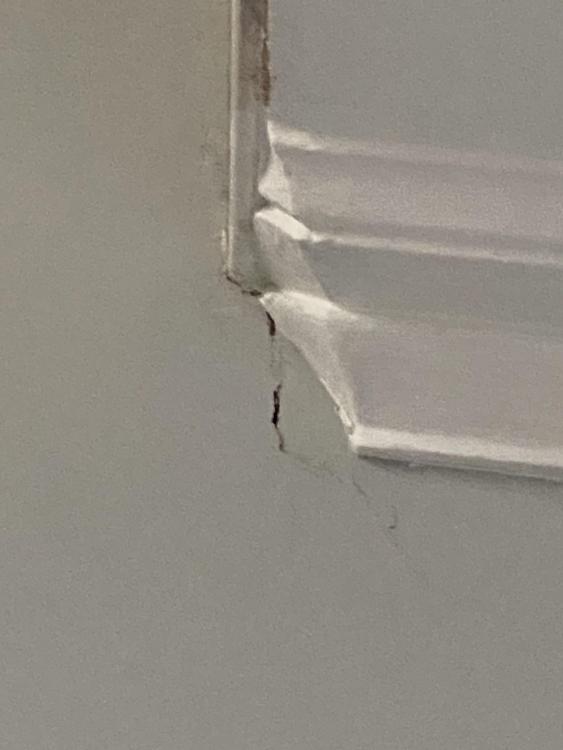
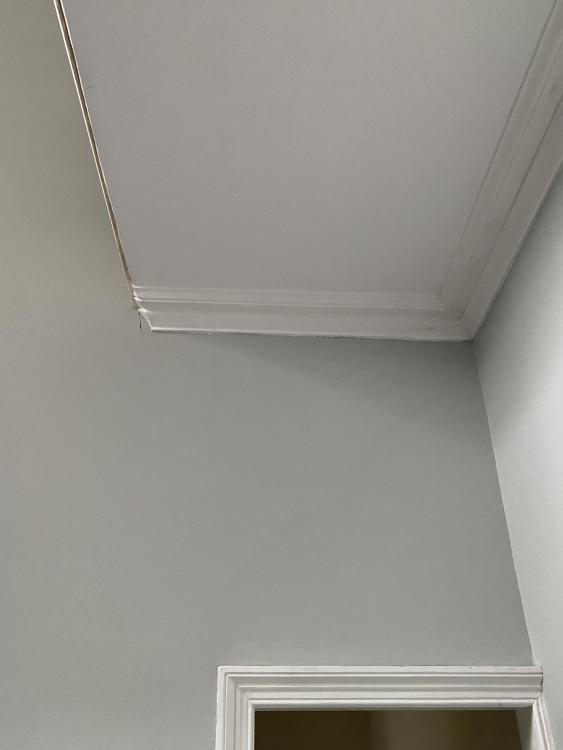

-
We typically shower at similar times, so with an overlap, approx 15 minutes. I had only see the ones with a tank, which look to act as a break too. Given our requirements I assumed I'd need a slave tank too, taking the total usable water up to 360l. That's right. The "room" up there will also be insulated enough to avoid freezing and condensation of the MVHR pipes, which will also be up there. 4x2 studs, filled with wool batts, same for the ceiling.
-
The Home Booster is similar too, I assumed anything pumped would be. It'd be within a "room" in our loft space so it'd be sitting on top of 400mm of loose cellulose (40kg/m3) then 22mm P5 Caberdek, and I could also get some sort of anti-vibration mat too so I'm hopeful the noise wouldn't be a massive problem. Alternatively, we have a lean-to on the opposite side of our utility wall so we could fit something in there too, which would have a 300mm thick wall between it and us, neighbours might not be best pleased though!
-
My understanding was that's what a Home Booster did; acted as a breaker tank and supplied a cold feed via a pump to both increase pressure and flow, which is where my original question came from. I also thought I'd need a separate break tank if I was to use a standalone accumulator (like the Salamander linked above), like you say. Although the Salamander docs do suggest that, if the tank's empty, it will only supply at a rate of 12l/min (opposed to whatever it boosts to when full), which, I think, would make it compliant with not needing a break tank in front of it?
-
Something like this? https://www.salamanderpumps.co.uk/products/mainsbooster/accuboost-tanks/accuboost-330l-pumped/? It would provide more water, and be cheaper. Presumably there would be no improvement to working pressure when using one though, and I was hopefully that a Home Booster would also help there too.
-
Our water supply struggles when more than one outlet's used (showers/baths). It was measured at 3 bar static, 1.1 bar working and 12 LPM at the kitchen sink. Gas boiler, unvented cylinder. I'm considering a Grundfos Home Booster system, which comes in either a 3 bar or 4.5 bar model and can supply up to 30 LPM, which should be more than enough for us. We already have a multi-bloc in front of the UVC which is limiting the incoming mains pressure to 3 bar. If I was to plumb a 4.5 bar version in ahead of the multi-bloc would it attempted to main 3 bar pressure whilst outlets were open up to a max of 4.5 bar? So as well as providing much better flow, should also provide much better working pressure too?
-
The former I'm looking for our wet room is 30mm deep, the plywood flooring is 22mm, so there's an 8mm difference between the two. The ply will be glued and screwed followed by an electrical UFH mat. Should self leveller then be used to them make up the difference between the ply + UFH mat and the former height before tiling across the lot?
-
I'm laying engineered wood in a small room, approx 5m2. The sub floor is 60mm sand/cement screed, with UFH. I plan to fix the engineered wood with a flexible adhesive, do I need an underlay before that, if so, are any better than the rest?
-
Looking for a ceiling cassette AC unit that I can fit on our landing to provide cooling to all the rooms off it. Heating requirements are 11kw (inc. 3kw for hot water) so a 8kw unit should be enough for cooling, I'd have thought? Preferably one that's also Alexa-enabled. Any recommendations?