SteamyTea
-
Posts
23866 -
Joined
-
Days Won
201
Everything posted by SteamyTea
-
 Try sleep apnea, after almost 3 minutes of not breathing, I am happy to wake up. The solution is to get an evening job and get home knackered. Now the full sentence for context For so many reasons. The impossibility of teaching teenagers who have raging hormones (lucky sods) is part of the reason I don't teach the school drop outs any more.
 -
We had a service technician that was trying to correct the PH on a spa bath. He was mixing up chemicals and pouring them into the balance tank and then giving it a few minutes to circulate before manually checking the PH. Silly sod forgot to turn the automatic chemical doser off. The building had to be evacuated. As Helen (Pippa Hayward) often said in the Brittas Empire "Remember what happened at Bedford".
-
It is a while since I have used the rolling pin on myself. Too many years at Catholic schools taught me one thing, you don't have to self flagellation to have fun: http://old.wordsmith.org/anagram/anagram.cgi?anagram=self+flagellation&t=1000&a=n Now try rolling pin or dirty boots
-
That would be true if we traded in houses i.e. they were the currency. There are other pressures on our cash though that come into play. Or is shows what a basket case our economy really is.
-
I live on my own.
-
Two unique things happen in that period though. The first was the removal of double tax relief on mortgage repayments (August 1989) and the UK falling out of the ERM (sept 1992). The first one can never be repeated and it led to a very rapid rise in property prices (doubling prices in some areas in 5 months), we also had much higher taxation levels and smaller personal allowances. We also had a Chancellor that did not know what to do (Lamont), so interest rates, which had been gentle falling for a decade (from a 1980 peak of 16%) to a 1989 low of 7.5%, suddenly shot up to 15%. They then had a rapid decline over about 18 month to about 6%, stabilising at around 5% between 1995 and 2008. That stability was brought about by Gordon Brown handing over interest rate control to the Bank of England (if we want to know one good thing he did, it was that). Two other things that happened is trading barriers were removed between us and the EU (who remembers 1992), and global trade increased massively (what the Boris and Trump tapped into). This suppressed inflation by causing deflation in labour costs on manufactured goods (but not domestic infrastructure projects). This freed up cash for the public to spend on other things. And they did spend, on better cars (BMWs and Mercs were rare in 1885) and also helped to drive house inflation (the public likes to spend money). Some of those things are probably not going to happen again (tax relief, government control of interest rates, reduced trading barriers). When people are uncertain they put their money into safe investments, property is one of them, as is gold and alcohol and tobacco shares). What I find amazing is that the British public still believe that there is security in high housing costs, I would have thought that a quick look at the last 30 years of the British housing market would have shown that it is anything but. We still do it though
-
LED replacements for halogen work lights
SteamyTea replied to joe90's topic in General Construction Issues
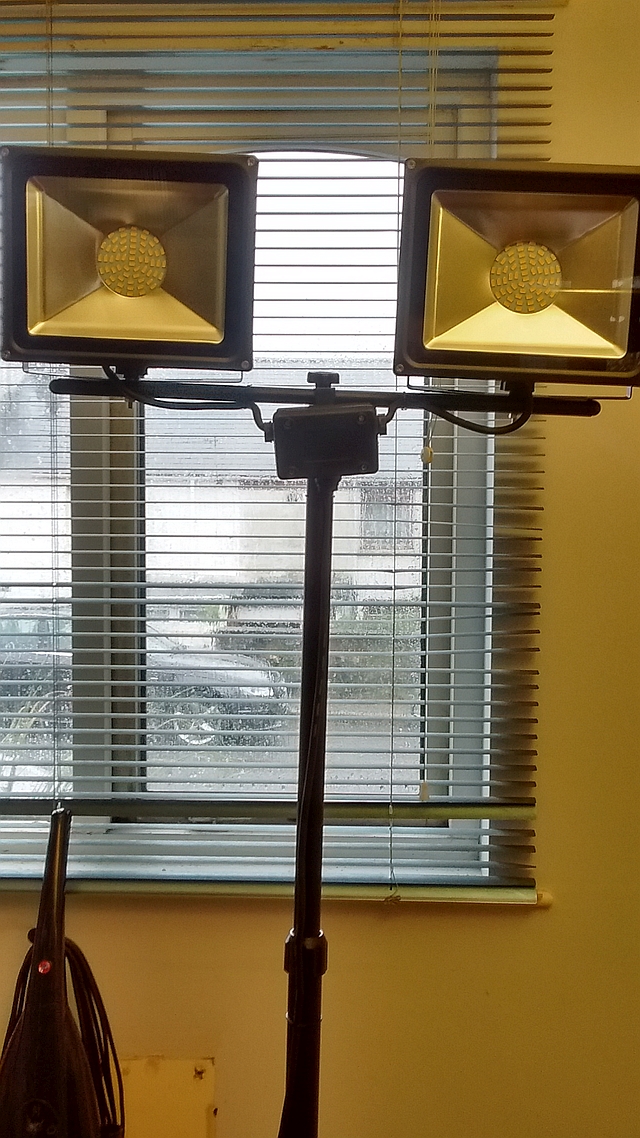
Just had a play with the lights, pointing them up to the ceiling and the reading is 600lux, turn them off and it is 10lux. That is reflected light. Putting up a bit of dark printed card a metre away and the reading is 125lux, 5lux with just ambient light (this is indoors and it is grey and horrible today).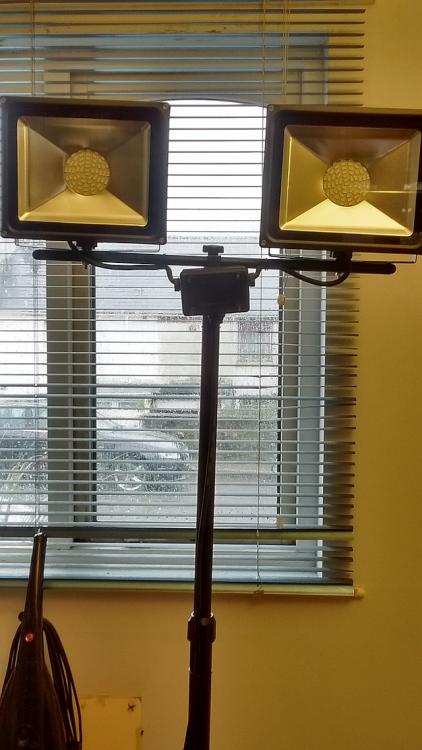
-
Wind speed and direction makes a lot of difference. If you plot mean temperatures by wind direction you will see what I mean. As an example I have plotted one years data from the Land's End weather station (as I know it is exposed and not affected much by the land mass). You can see that when the wind comes from the NE, it is colder than when the wind comes from the South. This only show part of the problem, as the frequency of wind direction is also important. NE winds happen 7% of the time, but Southern winds happen 5% of the time (Western is 14% and a mean temp of 11°C). Then you have to know what mean temperature you need to put the heating on (mine is about 9°C). And all that is before you take into account windspeed (low speed saps away less heat than high speed) and solar gain (Northerlies tend to cause clear skies) All good fun and well worth spending a couple of hours on to help work out if your house can be protected from the coldest, darkest and strongest winds that happen the most.

-
Is there a price premium for that? Be interesting to work out if it is cheaper to buy 'green electrons' in than make your own. I have always thought it was, but it is over a decade since I last looked in earnest.
-
Average or range, not both
-
There is also supply and demand on the lending of money, so it cuts both ways.
-
LED replacements for halogen work lights
SteamyTea replied to joe90's topic in General Construction Issues
I got some of these for the art club. They are so bright they hurt my eyes, but light up the art work a treat. http://www.ebay.co.uk/itm/272361296435?_trksid=p2057872.m2749.l2649&ssPageName=STRK%3AMEBIDX%3AIT Jo Those replacement are only 6W, not very bright. -
Are you going to use the ASHP for both space heating and DHW. If you are, remember that they do different things, at different times and at different temperatures.
-
Delicate, annoying opportunism. Advice needed
SteamyTea replied to ToughButterCup's topic in Planning Permission
I liked the language they use, there is something politically incorrect about phrases from 1987 -
Not sure what the BCO is really after, but there are Class 1 gelcoats, Crystic Fireguard 72PA is one.
-
Modelling the "Chunk" Heating of a Passive Slab
SteamyTea replied to TerryE's topic in Boffin's Corner
I am going to have to reread all that a bit more, and then a bit more again. I had forgotten what was trying to be modelled, which makes a difference to how I will read it. -
Modelling the "Chunk" Heating of a Passive Slab
SteamyTea replied to TerryE's topic in Boffin's Corner
Which is having the greater impact on slab temperature homogenisation (is that a real term, slab temperature evenness) and would a different sized buffer tank make a difference, or would it be better to have more control over the heat source (or what ever sort). -
Modelling the "Chunk" Heating of a Passive Slab
SteamyTea replied to TerryE's topic in Boffin's Corner
What is happening at between 22.5 and 23 (I assume °C), the heating side (the left) looks right, but the cooling side (the right) should not have such a pronounced change in it. How does ambient air temperature affect it? -
What was your family business, our paths may have crossed in the past. Not really as I have been out of the business for a while. You could look for local GRP companies and see if they know, or suppliers. Not the sort of business happens in town centres these days (hard to believe that we had 400 litres of acetone a few feet from the Chilterns Railway line you could smell the factory in Wycombe high street).
-
In the early 1980's we made some stone look alike pillars for the Heathrow Excelsior Hotel. I think they are still there. We also made a few GRP chimney surrounds for air condition units. They looked like brick. They can be made out of Class1 material no problem. As for longevity, if you remember the old building by the Elephant and Castle roundabout, the red cladding was GRP, was over 40 years old when they pulled it down. It had faded a bit, but then it was red in colour, which is a tricky pigment at the best of times. I am surprised that GRP is not used more in the UK. I is used a lot in the Middle East.
-
Transport fuel is my greatest single expense, but the fact that I did an discretionary journey to go walking and then anther one to have a coffee, shows it is really way too cheap.
-
Fuel poverty is really a social construct to highlight low wage and earning gaps. I am not saying it is not real, but we do have many other ways to combat it i.e. minimum wage, tax credits, family allowances, pensioner allowances, unemployment benefits[1], moving, cheap loans, FiT, RHI (not that I really like those subsidies). Part of the taxation to equalise fuel type prices could be used to pay for upgrades to property or wages. [1] I lived on a student loan for 4 years, which is a lower amount of money than a single persons unemployment benefits
-
Possibly is. You are in Scotland, a country that is try hard to install renewables, mainly windpower, with some new hydro and experimental tide/wave. The point about price is a valid one, if we put a price on emissions, and used it to equalise the kWh price for all fuels, while at the same time removing all subsidies, or in other words, pay the real price, then this sort of market and environmental skewing would not happen.
-
On your other points: I said (over at the other place) "I still fail to understand the argument that it is alright to burn timber in a low populations area. It is not acceptable to dump asbestos is a low population area, or kill a cat, or stop education of young people, so why should it be acceptable to allow a heating system to pollute the environment."
-
So that will be zero for both then