SteamyTea
-
Posts
23847 -
Joined
-
Days Won
200
Everything posted by SteamyTea
-

Telephone/broadband strategy for new build
SteamyTea replied to kandgmitchell's topic in Networks, AV, Security & Automation
Well I have ordered a new SIM from Smarty (3), should be here next week, shall see how it goes at £16/month. -
Do any blame themselves?
-
Hydrated and Hydraulic Lime Renders, without cement
SteamyTea replied to larry's topic in Plastering & Rendering
Purely from a science perspective it is not conclusive at all. Find 1001 walls that have the same starting conditions and see what the results are. Then calculate the confidence interval. Yes, I am not sure how it affects everything. I get the impression it is used to keep the dust and grit in place until the first coat is on. @nod, do you know? -
Some parts of our economy will be though. As we are more interested in building, we may forget about financial or legal services. The definition of 'two consecutive quarters' can be an issue, as can converting output to cash values. Say I make a widget by hand and it takes me an hour, I charge £40/hour. Now I get a machine and I make 50 of the same widgets an hour, still charge £40/hour. My widget is now £0.80 instead of £40, but I now sell them for £30. If I can only sell 30 widgets a week (price of saves has dropped from £1200 to £900), have I gone into recession as I am now selling less then I can produce?
-
Hydrated and Hydraulic Lime Renders, without cement
SteamyTea replied to larry's topic in Plastering & Rendering
Yes, I think the problem with all renders, and then secondary coatings is really the problem, and that is before the real issues of what is causing the vapours to permutate though the walls is addressed. Do people who are about to lime render still coat a wall with PVA? Or a similar adhesive. How much difference to compressive and tensile strength does the type of sand or 'grit' make? What about thermal expansion, are there much differences for the same amount of sand in the mixes? A wall in the sun can get quite hot, even if the air temperature is not excessive. -
Hydrated and Hydraulic Lime Renders, without cement
SteamyTea replied to larry's topic in Plastering & Rendering
Here we go again. Breathability. It is taken on trust that lime based renders breath, and cement based renders don't. Can anyone evidence this, I have been looking for years, the data is scarce to say the least. What you need is a number in SI which is kg.m.m-2.d-1, that is the unit for vapour permeability. Unfortunately most people in the industry do not stick to the SI system (why I have no idea as for most there is only 4 units to remember) Thankfully there is this table to help people out. I have found this, which is about rammed earth, but it does mention lime. https://www.ncbi.nlm.nih.gov/pmc/articles/PMC8123846/ Trouble is, it does not specify what the concrete mix type was, or the lime mix type. But it does show how the testing is done. -
Suggestions for garage roof material. DIY.
SteamyTea replied to saveasteading's topic in Roofing, Tiling & Slating
There are a number of ways it could be done. -
Suggestions for garage roof material. DIY.
SteamyTea replied to saveasteading's topic in Roofing, Tiling & Slating
GRP -
Can you add them on the DC side, will need a charge controller between the modules and the batteries, but should need nothing between the batteries and a regular inverter, just a case of pumping in the correct voltages.
-
There are very few job that once started, you really cannot stop, resin work is one of them. As you can see the OSB though the GRP, it seems like you went for a resin rich layup, which is a good thing. I am sure you can sort the lumps and bumps out easily enough with an angle grinder and some extra mat/resin. A topcoat always makes thing look better.
-
Pictures please. And not just of your sticky fingers.
-
Quick question if I can - are optimisers worth it?
SteamyTea replied to MrTWales's topic in Photovoltaics (PV)
Pah Cardiff on the 14th Swansea Paul 780.8W compared to my 991.7W Not even a need for Factor 10.


-
Telephone/broadband strategy for new build
SteamyTea replied to kandgmitchell's topic in Networks, AV, Security & Automation
Yes, I did a search last night, not sure how good Smarty/3 are where I am, something else to check. -
Telephone/broadband strategy for new build
SteamyTea replied to kandgmitchell's topic in Networks, AV, Security & Automation
Bargain those EU prices. -
Telephone/broadband strategy for new build
SteamyTea replied to kandgmitchell's topic in Networks, AV, Security & Automation
How much are people paying for 4G, I was a bit horrified when I saw my Mother's telephone and broadband rental. -
Building regulations part O, should be called part Ohhhhhhh .
SteamyTea replied to Big Jimbo's topic in Building Regulations
Seems from what people are saying on here, Part O should really be in Part M. -
Polymer cement mortar Edit Polymer cement mortars (PCM) are the materials which are made by partially replacing the cement hydrate binders of conventional cement mortar with polymers. The polymeric admixtures include latexes or emulsions, redispersible polymer powders, water-soluble polymers, liquid thermoset resins and monomers.[16] Although they increase cost of mortars when used as an additive, they enhance properties. Polymer mortar has low permeability that may be detrimental to moisture accumulation when used to repair a traditional brick, block or stone wall. It is mainly designed for repairing concrete structures. The use of recovered plastics in mortars is being researched and is gaining ground.[17] Depolymerizing PET to use as a polymeric binder to enhance mortars is actively being studied.[18][19][20]
-
Is it bubbling on a bit of trim?
-
Building regulations part O, should be called part Ohhhhhhh .
SteamyTea replied to Big Jimbo's topic in Building Regulations
You have nicely highlighted what I have been saying about British rules and regulations. For every rule that states you must do something, there is another one that says you cannot do it. -
What building regs apply to a wooden garage,?
SteamyTea replied to joe90's topic in Garages & Workshops
Back in the woods, rather than give executive relief to woodland creatures I just tried to pull off the bit of ply. I could not do it with my fingers. So seems that Lumberjack gel PU glued it well, especially as I did no preparation in the faces. Shall keep visiting over the years and see how it is getting on.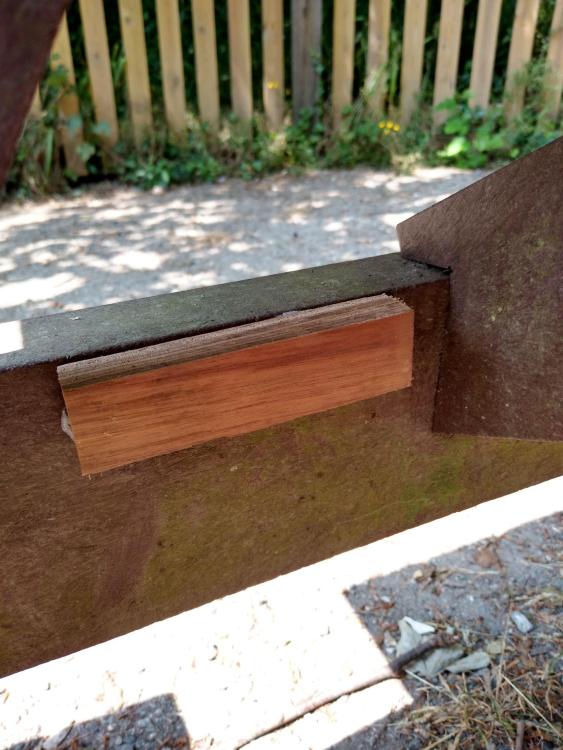
-
Thermal bridgeing with Light Tunnels?
SteamyTea replied to Norbert's topic in Skylights & Roof Windows
Is similarly to what I was thinking. Light tubes, sun pipes or whatever you like to call them are really just a shiny pipe that allows light to be reflected easily. Nothing to stop that being insulated just like a water pipe. While many have a clear acrylic dome in the top, there is no reason they cannot be a triple, quadruple gas filled bit of glazing. The inside 'light' is just a shallow dome formed from semi opaque acrylic, but again, it could be a glazed unit. A few years ago I made my own sun pipe to show someone. It was basically a half a periscope. Light came in the top, hit a mirror, then down a tunnel to a bit of semi opaque plastic. Would be dead easy to incorporate into a new build. I think I mentioned it to @pocster when he wanted to get some light into his dungeon. Then realised he would look up Scotsman's skirts. The Gay Gordon's mean something different to him. -
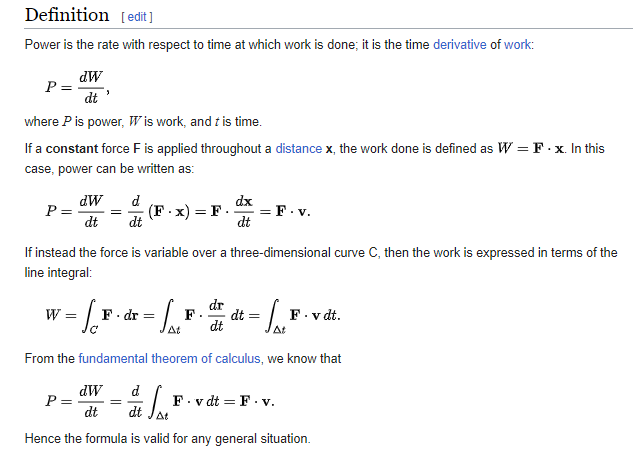
Forces and Motion. All things being equal, which they are not, the force to push something will be the same as to pull something. Because of gravity, the force to pull a screw pile upward will be greater than the force to push it downwards. This difference can be subtracted from the pushing load. As @saveasteading said, there may be a situation where the end of the screw goes into a void or softer soil. This would show up as a reduction in power to drive the screw into the ground, the reverse is that the screw hits rock/solid obstruction, the power goes up. So if you know how much work (J) is done , in how much time (s), how far the screw as been driven (m) you can calculate the force (F) in a simple case. Power = Force x Distance. I all boils down to the units of kg, m and s. Wikipedia has this to say on it.
-
Final (hopefully) bit of tape and membrane done today
SteamyTea replied to Thorfun's topic in Ventilation
-
Met someone today who spent 45k on getting pp
SteamyTea replied to CalvinHobbes's topic in Planning Permission
Was that a planning condition? One with Kate Bush is worth two in the hand. -
How dare you question Dave Jones, he never needs to shows evidence, only his opinion matters in his tiny world.